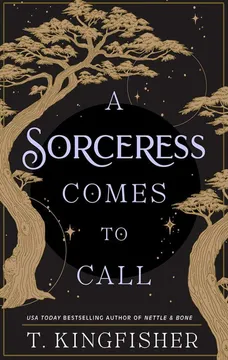


Plot Summary
The Open-Door House
At fourteen, Cordelia has learned to endure her mother’s spells by going still. While obedient, she must walk, eat, and speak as Evangeline directs, then remember everything when control lifts. At home, no door may be shut, and Cordelia keeps her real thoughts out of her daybook. Riding Falada and meeting Ellen, a kind neighbor girl, offer brief freedom.
After Evangeline’s wealthy benefactor becomes useless, she explains that she is a sorceress and plans to marry a rich man. Cordelia understands that her mother’s power is more than an eccentricity, but has no language for the danger. Evangeline expects Cordelia to marry a wealthy man too, and treats the girl’s future as another piece of her own plan.
The story begins by making coercion ordinary. Evangeline’s control is not a single spectacular violation but a domestic routine, which leaves Cordelia struggling to explain why apparently harmless commands feel like the loss of her own body. The open doors make privacy physically impossible; the bland diary shows how thoroughly she has adapted by censoring herself in advance. Falada seems to offer an escape because he lets Cordelia move freely, while Ellen supplies a modest glimpse of ordinary friendship. Both comforts depend on Cordelia’s belief that they are safe, a belief the plot will test.
Falada Chooses Mother
After Evangeline returns from an angry visit, she says her benefactor is finished and that they must move. Cordelia tries to flee with Falada, but the horse refuses to leave the road. Evangeline appears miles from home and reveals that Falada is her familiar, bound to report Cordelia’s secrets. The betrayal destroys Cordelia’s only trusted refuge.
Soon Evangeline leaves again, this time announcing a marriage plan near the coast. She returns for Cordelia with a stolen cabriolet belonging to Ellen’s father, Edward Parker, and admits she used force against him. Cordelia realizes her friend’s family has been caught in her mother’s schemes. She cannot warn Ellen or undo what has happened, so she climbs into the carriage and leaves Little Haw.
Falada’s revelation recasts Cordelia’s childhood attachment as a relationship shaped by concealed power. The horse has been refuge and confidant, but his loyalty was never his to give. Evangeline’s claim that she made both child and familiar treats care as ownership, collapsing the distinction between making a life possible and having the right to control it. Cordelia’s departure is therefore not yet an act of freedom. She leaves because her mother directs her to, carrying guilt for the stolen carriage and dread for Ellen, whose father has become another of Evangeline’s targets.
Hester Sees the Storm
Hester Chatham, the Squire’s fifty-one-year-old sister, wakes with a certainty that her safety has ended. Years earlier, she had broken off a disastrous engagement despite family pressure, and she recognizes the same warning now. When her brother Samuel brings home Lady Evangeline, Hester senses danger behind the widow’s beauty and charm.
Evangeline says she has lost her luggage and needs a place to stay while her daughter’s clothes are arranged. Samuel, easily flattered, offers both women rooms at Chatham House. Hester accepts because refusing would leave her brother alone with a guest she distrusts. Cordelia arrives exhausted and nearly invisible beside her mother. Hester notices the girl’s fear, but does not yet know its cause.
Hester’s presentiment gives the story a second center of perception. Where Cordelia has been trained to doubt her own interpretation, Hester trusts an intuition sharpened by past experience and social observation. Her earlier refusal to marry was costly, but it taught her that compliance can be more dangerous than disapproval. Still, Hester’s insight is not omniscience: she recognizes Evangeline as threatening, yet accepts the guests because her brother’s attraction makes refusal impractical. The scene sets up a conflict between private knowledge and public proof, a problem that will repeatedly delay effective action.
A Room With Locks
At Chatham House, Cordelia encounters closed doors, a room of her own, and Alice, the young maid assigned to help her. Alice asks before entering and quietly prevents Evangeline from barging in while Cordelia dresses. Hester gives Cordelia a shawl and begins teaching her embroidery, treating mistakes as fixable rather than punishable.
At dinner, Cordelia struggles with the unfamiliar place settings and cannot charm Samuel as her mother demands. The next morning, Samuel reads that Edward Parker has murdered much of his family with an axe. Cordelia faints because she knows why he did it: Evangeline’s magic drove him to violence. Hester sees the girl’s terror and Evangeline’s careful dismissal of it, deepening her suspicion.
The household’s kindness is expressed through practical boundaries. Alice closes a door, Hester lends a shawl, and neither woman demands that Cordelia perform gratitude perfectly. Those small acts expose how abnormal her upbringing has been without forcing her to name it. Her fainting at the news of the Parker murders is the first visible break in Evangeline’s carefully managed story. Yet the adults still read her response as girlish nerves. The gap between what Cordelia knows and what others will believe becomes a source of suspense, and a measure of how isolation protects the abuser.
A Rival in Green
Hester learns from Alice that Cordelia flinches when Evangeline approaches and has hidden in her wardrobe. She recruits her old friend Imogene Strauss and the household’s observant butler, Willard, to watch the situation while she tries to protect both the girl and Samuel. At the house party, Penelope Green arrives: witty, stylish, and openly at ease with Hester and Imogene.
Cordelia finds her easy to talk to, especially when they invent absurd names for birds during a slow ride. Evangeline grows jealous as Samuel enjoys Penelope’s company. Penelope then recounts a dream of a violent wind and a glowing animal watching her from the trees. Cordelia recognizes the image as possibly connected to Falada, but cannot safely explain why.
Penelope’s importance is not simply that she threatens Evangeline’s courtship. She offers Cordelia a model of social life in which wit, imperfection, and pleasure do not have to be earned through obedience. Their invented bird names create a brief relationship based on mutual play rather than surveillance. Hester, meanwhile, builds protection through a network of people who notice what rank and etiquette tend to hide. Penelope’s dream gives the uncanny plot a public trace, but its ambiguity keeps the witnesses from acting. What Cordelia recognizes, others can still dismiss as a dream.
Blood on the Balcony
One night, screams bring the household to Penelope’s room. They find Penelope holding a knife beside her murdered maid, Ruth, while Evangeline stands nearby, shaken and bloodied. Penelope cannot explain what happened; she staggers toward Evangeline, then throws herself from the balcony before Richard Evermore can reach her.
Evangeline claims Penelope attacked Ruth and tried to kill her, and Samuel comforts the apparent victim. Hester doubts the account: Penelope had seemed to fight an invisible force, and no one saw her kill Ruth. The constables accept the visible evidence rather than Hester’s suspicions. Cordelia understands that her mother has caused another death, and that silence will let Evangeline control the story.
The murder converts private coercion into a public spectacle whose apparent evidence favors the perpetrator. Evangeline does not merely remove a rival; she occupies the role of endangered woman while Samuel instinctively shields her from suspicion. Hester sees inconsistencies but cannot make intuition count as testimony. Penelope’s struggle also echoes Cordelia’s experience of being present inside a body she cannot control, though the others do not yet understand the resemblance. The scene makes the social world part of the danger: a convincing performance can outweigh a witness’s knowledge, especially when the witness has been taught to sound unreliable.
Cordelia Names the Spell
After Penelope’s death, Cordelia’s terror hardens into resolve. She tells Hester that Evangeline is a sorceress who can make people obedient, and explains that Edward Parker was compelled to attack his family. Hester is reluctant to believe such power exists, but the image of Penelope fighting an unseen force makes Cordelia’s account plausible.
She sends Richard to question Parker. While he is away, Evangeline announces that Samuel has agreed to marry her, moving faster than Hester’s defenses can stop. Cordelia has finally told someone the truth, but the disclosure has not prevented the engagement. Hester must now find a way to investigate without alerting Evangeline that her secret is known.
Cordelia’s disclosure marks a shift from private endurance to deliberate risk. She cannot offer the kind of proof Hester wants, but she speaks anyway because she understands that waiting has already cost lives. Hester’s hesitation is not simple disbelief: she recognizes that accepting the story could mean surrendering rational judgment, while rejecting it could abandon a victim. Evangeline’s engagement announcement arrives as a material consequence of delay. The two women now share knowledge, but knowledge alone has no force against a sorceress who controls both bodies and appearances.
A Courtship as Cover
Richard returns from visiting Parker with a crucial confirmation: the prisoner can discuss his stolen cabriolet, but chokes whenever asked about Evangeline. Hester and Cordelia take this as evidence that magic blocks his account.
Because confronting Evangeline could endanger everyone, Hester asks Richard to court Cordelia, giving them a reason to remain together and investigate. Richard agrees, despite his longstanding love for Hester, and the Squire grants permission. Evangeline is delighted by the match, believing it will help her daughter enter wealthy society.
She then marries Samuel in a small chapel ceremony. During the wedding, Penelope’s ghost briefly sees the living clearly, but Evangeline senses her presence. She tests Cordelia with a burst of magic, then leaves on honeymoon with Samuel.
The false courtship is a tactical answer to a world where women’s movement and reputation are policed through marriage. Hester uses the very institution Evangeline is exploiting to keep Cordelia near allies and create time for research. Richard’s willingness costs him emotionally because he still loves Hester, yet his loyalty is not framed as romantic triumph. The wedding’s water, wine, and salt also move from social ritual toward magical mechanism. Penelope’s brief manifestation supplies a witness beyond the living, but Evangeline’s ability to detect her means the dead are not automatically safe or useful.
The Ghost Finds Cordelia
At Richard’s estate, Cordelia hears Penelope’s voice while riding with him and discovers that the dead woman has followed Falada back from Chatham House. Penelope explains that Evangeline forced her body to attack Ruth and then displaced her spirit before pushing her over the balcony. Falada led her through the darkness after death.
The ghost can observe Evangeline but must avoid the familiar, who can detect her. Cordelia keeps the revelation from Hester at first, uncertain that anyone will believe her. Meanwhile, Hester, Imogene, Richard, and Cordelia search Richard’s disorderly library for a way to break sorcery. They find an alchemical ritual requiring water, wine, salt, and four participants, then realize they can test it on Falada.
Penelope’s return transforms haunting into testimony, but it does not erase the problem of credibility. Cordelia’s choice to withhold the news reflects learned caution: every disclosure carries the risk of being dismissed or used against her. Penelope can clarify how possession feels and how the death occurred, yet her limited perception and the danger posed by Falada constrain her. The research sequence shifts the group from interpretation to experiment. Their solution is not a simple weapon but a ritual whose ingredients already carry social meaning, suggesting that the boundary between religious custom and practical magic may depend on how people understand an act.
The Headless Familiar
The group binds Falada at Evermore House and attempts the ritual, with Hester invoking water and Imogene salt. Richard cannot supply the necessary wine quality, so the spell falters. They kill the familiar, cut off its head, and burn it, believing the danger has ended. Falada instead digs out of his grave, attacks Hester’s patio, and later returns to destroy a shed.
The headless creature kills the gamekeeper. As Hester and Richard draw closer under the strain, Cordelia decides she cannot wait behind locked doors while others die. She slips out before dawn to draw Falada away from the estate. The familiar meets her in the dark and offers its back, making her escape another journey under its control.
The failed rite demonstrates that courage and good intentions cannot substitute for understanding the system they are confronting. The missing element is not a missing object but a mismatch between the person and the symbolic role, which makes the alchemy depend on character as well as procedure. Falada’s return then literalizes the cost of incomplete knowledge: violence that seems finished is still active beneath the surface. Cordelia’s decision to leave is a moral response to the gamekeeper’s death, but it also repeats her earlier escape attempt. This time, however, she acts with awareness of the danger rather than mistaken trust.
The Mother Takes Control
Evangeline intercepts Cordelia in the woods, having sensed that Falada’s spells were weakening. She forces Cordelia off the horse and makes her obey, then cuts a piece of skin from her leg to extract the names of those who helped.
Cordelia gives up Richard’s name and some details, trying to protect Hester and Imogene. Evangeline reveals that Cordelia’s father rejected marriage and that she once considered killing her infant daughter before deciding the girl could marry into wealth.
She rides back toward Evermore with Cordelia under control. At the estate, Cordelia warns Richard before the spell silences her, then Evangeline makes her approach him with a knife. Cordelia strains against the command and turns the blade aside, wounding him rather than killing him.
Evangeline’s explanation exposes the logic beneath her supposed maternal care: Cordelia was preserved not as a person but as a future instrument of social advancement. That truth is devastating because it recasts childhood survival as a conditional reprieve. Yet Cordelia’s resistance is not powered by a sudden escape from fear. She has spent years learning the difference between her own will and her mother’s commands; now she uses that distinction to alter a movement by inches. Her partial success matters. The wound is real, but so is the refusal that prevents it from becoming murder.
Three Notes Against Sorcery
Evangeline attacks Hester and Richard, but Cordelia drops the knife when the spell loosens. Imogene holds Evangeline at bay while Willard restrains her. Penelope offers to serve as the missing wine element, even though the ritual may erase her.
Cordelia realizes that the chalk diagrams and church setting are not essential; shared belief makes the ground sacred. Hester provides water, Imogene salt, and Alice brandy for the wine. Cordelia leads the rite. Its three notes join, stripping Evangeline of sorcery.
Falada breaks into a monstrous, many-jointed shape and attacks his former mistress. Evangeline cannot command him; he tramples her, then fades in the daylight. The familiar that once carried Cordelia away is gone, and the spell controlling her is broken.
The solution depends on a collective act of interpretation rather than a single heroic power. Cordelia recognizes that belief has shaped both social status and ritual authority, then persuades the others to treat their immediate ground as sacred. Each participant contributes a distinct resource: Hester’s practical resolve, Imogene’s willingness to act, Alice’s trust, and Penelope’s risky presence. The rite frees Cordelia from Evangeline’s control, but it does not make violence painless or simple. Falada’s final attack is both liberation and revenge, revealing that the familiar was not merely a weapon but another captive whose obedience had been engineered.
A Future Without Permission
After Evangeline’s death, the Squire survives and promises Cordelia a dowry, while Richard offers to adopt her. Hester agrees to live at Evermore House as Cordelia’s aunt and chaperone, allowing her and Richard to build a life together without asking Hester to surrender her independence.
Willard returns to his post at Chatham House, and he and Richard consider writing a practical guide to sorcery. Cordelia visits Penelope’s grave and leaves flowers. She is still unsure whether to tell Ellen the truth about her father, who survived but remains unable to speak freely about Evangeline. For the first time, Cordelia can leave that question open until she is ready to answer it.
The resolution does not replace one controlling household with another. Richard’s adoption and Hester’s role create a structure of care, but Cordelia’s choices remain central, including her decision not to resolve every painful question at once. Her visit to Penelope’s grave makes grief concrete and unfinished: the dead woman’s humor remains a guide, not a substitute for her own judgment. The planned handbook also turns private survival into public knowledge. Where Evangeline depended on secrecy and ignorance, the survivors begin building shared tools that could make future victims easier to recognize and protect.
Epilogue
A week later, Cordelia visits Penelope’s grave and tells her what she cannot yet decide: whether to seek out Ellen, how much to learn about her father, and what sort of young woman she wants to become.
She leaves flowers beside the stone, then returns to Hester and Richard, who are waiting at the cemetery gates. The future remains uncertain, but no one is choosing it for her. Above them, a bright summer cloud passes without the shadow of a horse.
The final cemetery visit gives Cordelia an intimate measure of recovery. She can admit uncertainty without treating it as disobedience, and she can remember Penelope without reducing her to the manner of her death. Her questions about Ellen and her father remain unresolved because the story values chosen timing over compulsory closure. The cloud above the cemetery also counters the novel’s earlier association between whiteness and Falada’s deceptive beauty. Here brightness belongs to an ordinary sky, visible to everyone and hiding nothing.
Analysis
The novel treats coercive control as a problem of knowledge as much as force. Cordelia can describe what obedience feels like, but her isolation has trained her to anticipate disbelief, while Evangeline can make violence resemble a victim’s choice. Hester’s instincts, Richard’s investigation, and Penelope’s posthumous testimony gradually assemble evidence from different kinds of knowing: embodied memory, social observation, material facts, and supernatural perception. None is sufficient alone. Their alliance becomes effective when they stop demanding that every truth arrive in a form already accepted by respectable society.
The book’s domestic and Gothic elements reinforce each other. Open doors, bedroom arrangements, borrowed clothes, and table manners seem small beside sorcery, yet they determine whether Cordelia has privacy, nourishment, or a voice. Chatham House offers a contrast not because its wealth is inherently liberating, but because Alice and Hester use their authority to establish boundaries rather than erase them. The repeated attention to etiquette also exposes how rules can punish vulnerable people while rewarding convincing performances of innocence.
Falada complicates the story’s moral picture. He is both a captor and a captive, made useful through enchantment and concealed beneath a familiar shape. Cordelia’s betrayal by him echoes Evangeline’s claim to own her, but the novel does not ask the reader to confuse their harms. Cordelia’s resistance matters because she rejects the idea that being created, loved, or protected gives another person the right to possess her. The final ritual succeeds through a group rather than a chosen hero, and its force depends on participants accepting one another’s partial, imperfect knowledge. The result is not a return to innocence. It is a community capable of making room for privacy, disagreement, grief, and a future Cordelia can choose.
Review Summary
A Sorceress Comes to Call is widely praised for its compelling characters, particularly Hester, a witty 51-year-old spinster, and its dark yet humorous tone. Most reviewers highlight the chilling portrayal of coercive control and abuse through Cordelia's story. The audiobook narration receives mixed feedback. Common criticisms include a slow middle, an anticlimactic ending, and loose connections to the original Goose Girl fairy tale. Despite some inconsistencies in worldbuilding and pacing, the majority of readers found it an entertaining, eerie, and emotionally resonant read.
People Also Read








Characters
Cordelia
The watched daughterEvangeline’s fourteen-year-old daughter, Cordelia has grown up with little privacy, few friends, and the constant threat of being magically controlled. She is observant and conscientious, but her mother’s punishment has taught her to mistrust her own reactions and to make herself unobtrusive. Her fondness for riding and her attachment to Ellen show how strongly she longs for ordinary companionship. Cordelia’s quietness is not a lack of feeling; it is an adaptation to a household where even a wrong expression can invite punishment. What she wants most is not status or wealth, but the right to think, speak, and form attachments without asking permission.
Hester Chatham
The watchful auntHester is the Squire’s middle-aged sister, a sharp-minded hostess whose bad knee and dry humor do not blunt her judgment. She once refused a marriage her family wanted for her, accepting the social cost rather than ignoring her own alarm. That history has made her sensitive to coercion and to the difference between politeness and safety. She is loyal to her brother, protective of Cordelia, and reluctant to depend on anyone, even Richard, whom she still loves. Hester’s resourcefulness often takes practical forms: she recruits allies, watches household behavior, and uses her social position to create room for people who have little power.
Lady Evangeline
The polished sorceressEvangeline is Cordelia’s mother, a beautiful and socially skilled widow who treats wealth and marriage as necessities to be pursued by whatever means work. Her magic lets her impose her will on others, while her charm helps her disguise self-interest as affection or vulnerability. She is calculating, impatient with obstacles, and convinced that her daughter’s life belongs inside the future Evangeline has planned. Her history of poverty and romantic rejection helps explain her fixation on security, but it does not soften her treatment of Cordelia. Evangeline’s most dangerous quality is her ability to make domination look like protection.
Richard Evermore
The steadfast lordLord Evermore is a wealthy landowner and Hester’s longtime friend, a decent, quietly capable man more interested in practical work than social display. His loyalty to Hester is deep, though their past leaves both of them wary of asking too much from the other. He treats Cordelia with respect rather than assuming that her youth makes her foolish, and he takes the danger she describes seriously even when it sounds like an old tale. Richard’s decency is a strength, but it can also make him underestimate people willing to use cruelty without hesitation.
Penelope Green
The irreverent guestPenelope is a longtime friend of Hester and Imogene, known for her striking style, playful humor, and talent for turning a room’s attention toward her. Her smallpox scars and unconventional choices have taught her that beauty and social approval are fragile currencies. She prefers wit to solemnity and can make Cordelia feel included without demanding that the girl become someone else. Penelope’s relaxed manner conceals a perceptive mind: she notices people’s fears and uses laughter to make them easier to bear.
Falada
The shining familiarFalada appears to be Cordelia’s beautiful white horse, calm enough to seem safer than ordinary horses and central to her childhood. He is also Evangeline’s familiar, a being shaped and bound by the sorceress. Cordelia trusts him with her secrets and depends on him for the rare freedom of riding. His unnatural stillness and vivid presence distinguish him from the other animals around the estate, though Cordelia does not initially understand what that difference means.
Alice
The protective maidAlice is Cordelia’s young lady’s maid at Chatham House, practical, warm, and alert to signs of mistreatment. She respects Cordelia’s need for privacy, intervenes when Evangeline tries to enter without warning, and offers companionship without pressing for a confession. Her kindness is grounded in action rather than sentiment. Alice knows the risks of challenging a powerful employer, yet she is willing to speak to Hester and help Cordelia when the girl needs a discreet ally.
Imogene Strauss
The sharp-eyed card playerImogene is Hester’s old friend, a formidable card player with a dry wit and a practical appetite for risk. She reads character through behavior, distrusts polished appearances, and is more willing than Richard to consider ruthless solutions. Her humor can puncture tension, but it does not make her careless about danger. Imogene’s loyalty to Hester means she remains involved even after her family could safely leave the house party.
Samuel Chatham
The generous SquireSamuel is Hester’s brother and the owner of Chatham House. He is good-natured, wealthy, and susceptible to flattering attention, though not malicious. His easy manners and generosity make him a welcoming host, but his confidence in his own judgment leaves him vulnerable to people who perform the kind of charm he admires. He loves Hester and relies on her practical sense, even when he does not notice how much she is doing to protect him.
Ellen
Cordelia’s childhood friendEllen is the kind girl Cordelia meets while riding near Little Haw. She lives more comfortably than Cordelia and speaks easily about family, school, and ordinary life. Their conversations give Cordelia a rare glimpse of a world in which questions and friendships do not carry hidden risks. Ellen’s acceptance matters because she enjoys Cordelia’s company without requiring her to explain every silence.
Tom Willard
The discreet butlerWillard is the long-serving butler at Chatham House, observant, composed, and protective of the household staff. His knowledge of the home’s people and routines makes him a useful ally to Hester. He values competence and discretion, but he is not merely a servant following orders; when he sees a real danger, he is willing to help organize a response.
Edward Parker
Ellen’s wealthy fatherEdward Parker is Ellen’s father and Evangeline’s former benefactor. His wealth supports the arrangement that allows Evangeline and Cordelia to live comfortably in Little Haw. He is a distant figure in Cordelia’s life, but his position links the girl’s only friendship to her mother’s hidden dealings.
Bernard
The veteran horsemanBernard is the elderly stablemaster at Evermore House, a blunt and experienced horseman who trusts his own skill around animals. His care for the stable’s horses is stronger than deference to his lord, and he insists on approaching Falada himself when the others are frightened.
Plot Devices
The obedience spell
Turns will into captivityEvangeline’s magic can take control of another person’s body while leaving the victim conscious enough to remember what happened. For Cordelia, the spell is a recurring instrument of punishment that makes everyday actions, from sitting in church to speaking at dinner, feel like they belong to someone else. Its effects also create a problem of evidence: a controlled person may appear to act willingly, while the person who knows the truth has been trained to sound uncertain. The spell makes the conflict physical without removing Cordelia’s inner life, and her growing ability to resist begins with recognizing that her thoughts remain her own.
Falada the familiar
Makes refuge into surveillanceFalada’s apparent role as a beautiful, reliable horse gives Cordelia a place to ride, confide, and feel briefly free. In truth, he is Evangeline’s familiar, bound by layers of magic and able to report to his maker. That connection turns the story’s safest-looking space into a channel of surveillance. The familiar also embodies the danger of confusing affection with freedom: Cordelia’s feelings for him are genuine, but the relationship has never been equal. His changing appearance and resistance to ordinary limits make him a recurring source of both evidence and threat.
Water, wine, and salt
Ritual ingredients become resistanceThe three substances first appear as part of a church wedding custom said to break enchantments. An old alchemical text develops that idea into a ritual intended to strip a sorcerer of power. The first attempt fails because the participants do not match the symbolic qualities required, showing that the ingredients alone are not enough. The ritual eventually works through people who can supply the necessary qualities and through their shared belief in the ground where they stand. The device links religious practice, alchemical theory, and collective action without making any one institution the sole source of power.
Penelope’s ghost
Turns a victim into a witnessAfter her violent death, Penelope can communicate with Cordelia, though she sees the living only indistinctly and struggles to maintain contact. Her ghostly perspective reveals how Evangeline controlled Penelope’s body and helps the group understand the magical ritual. Penelope’s connection to wine also supplies an essential part of the final attempt. Her presence is not an effortless solution: she must approach danger, risks being detected, and may be lost in the process. The device gives testimony to someone otherwise misrepresented by the surviving witnesses, while preserving the limits and uncertainty of the supernatural.
About the Author
Other books by T. Kingfisher










Download PDF
Download EPUB
.epub digital book format is ideal for reading ebooks on phones, tablets, and e-readers.








