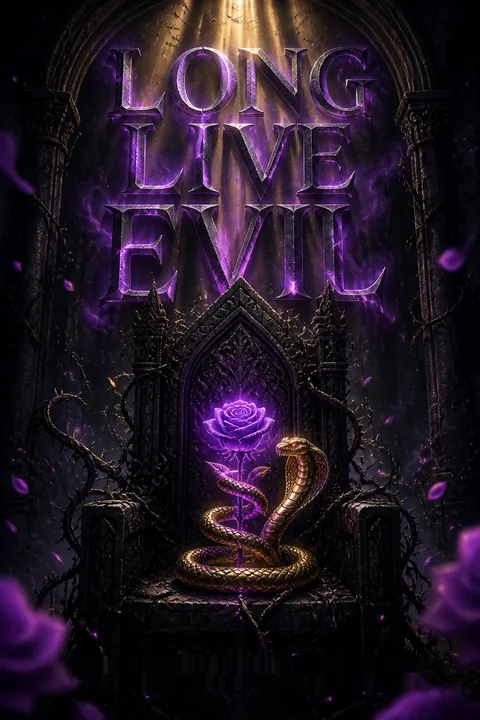


Plot Summary
The Door Through the Story
A bloodied emperor approaching a throne opens the novel as a scene from Rae Parilla’s favorite fantasy series. Then her sister Alice’s hospital reading is interrupted by the reality of Rae’s failing body: after three years of cancer treatment, her prognosis is nearly hopeless. Their argument over the books ends with an apology, a promise to share another story, and Rae collapsing beside the closed volume.
A strange woman visits with worse news: treatment will soon fail, and Rae’s family may lose everything trying to save her. She offers another chance. If Rae crosses into Eyam, inhabiting a body whose previous owner is gone, she can seek the Flower of Life and Death. It blooms once a year. Rae opens the hospital door and steps through.
Rae begins by treating fiction as a controlled place to feel what real life has made unbearable. Her fondness for violent, morally compromised characters is less a simple taste for darkness than a protest against helplessness: the Emperor can answer injury with force, while Rae’s illness has reduced her choices to treatment and endurance. The offer of Eyam therefore tempts her with agency as much as survival. Yet Alice’s hurt exposes the cost of Rae’s defensive irony. Their shared stories are not disposable entertainment; they are a form of intimacy Rae can still offer when she cannot promise a future.
Rahela's Last Night
Rae wakes pain-free in the body of Lady Rahela Domitia, the Beauty Dipped in Blood, whose execution is scheduled for morning after she framed her stepsister, Lia, for treason. Her maid Emer remembers Rahela’s cruelty, while newly appointed guard Key is a peasant outsider with a murderer’s reputation.
Rae tries to escape through a window, only to find the palace perched over the undead-filled Dread Ravine. With survival more urgent than anyone’s trust, she proposes a blood oath and promises gold.
Key accepts the binding vow; Emer does not swear, though she stays. Rae takes the two into the throne room, admits Rahela’s guilt, and claims the gods gave her visions. When her predicted foreign messenger arrives, the king spares her and declares her a prophet.
The transfer into Rahela’s body forces Rae to distinguish physical survival from moral innocence. She does not inherit a blank identity: Emer’s distrust and the execution order make Rahela’s accumulated harm immediately consequential. Rae’s first instinct is to organize a team, but the blood oath is an ethically loaded shortcut, binding Key before trust has been earned. Her successful prophecy performance also establishes the story’s central danger: knowledge can protect Rae, but only when other people accept her account of what it means.
The Cobra Knows
To reach the royal greenhouse, Rae needs the Golden Cobra, Marquis of Popenjoy, whose spies and money reach across the capital. He recognizes her modern references and reveals that he, too, came from another world after nearly dying.
In Eyam he invented the Cobra persona, built a spy network, and searched unsuccessfully for the life-restoring flower. His chance has passed, so he offers to help Rae in return for her knowledge of the books and a chance to repair the story he altered.
Rae admits she barely remembers the first volume. Their bargain is tested when she explains that Lord Marius Valerius, the Last Hope, is destined to kill the Cobra. Marius arrives, furious at the man who has blackmailed him for years, and warns Rae not to trust him.
The Cobra turns Rae’s private relationship with fiction into a shared, practical problem. He has used performance to survive, making an extravagant public identity from a life in which he once had neither status nor control. His admission of failure changes the flower from a convenient quest object into a scarce chance he cannot reclaim. Rae’s incomplete memory complicates her apparent advantage: knowing a story is not the same as possessing it reliably. Marius’s hostility also prevents the alliance from becoming an easy found-family fantasy. Everyone in Eyam has reasons to distrust the person asking them to take a risk.
The Courtyard Turns
At an archery gathering meant to bring Rae near Lia, the court’s polished rivalries turn lethal. Rae wins a shot despite the Nemeth twins’ attempt to place her where her enchanted gauntlets will fail. A guard falls from the battlements, his heart torn out, and ghouls begin climbing into the courtyard.
Rae pulls Lia away from the wall and helps Princess Vasilisa organize the ladies into barricades. Emer takes a fallen guard’s sword and fights beside them. Key arrives and cuts a path through the dead, but Vasilisa’s bodyguard Karine is killed while protecting her princess.
Lord Marius drives the ghouls back and discovers a cage baited with a corpse, evidence that someone deliberately drew them into the court. The king suspects Rae, and the attack leaves the palace on edge.
The attack converts the court’s gendered pageantry into an emergency in which rank offers little protection. The ladies were assembled to compete for royal favor, yet their survival depends on labor the court normally assigns to servants: hauling barriers, fighting, and making decisions under pressure. Rae’s instincts are useful, but the casualties prevent her from turning the crisis into a clean heroic set piece. Karine’s death also gives Vasilisa a grievance against Eyam’s customs, while the baited cage introduces political violence as something more deliberate than the ravine’s supernatural threat.
A Knife and a Sister
After escaping the king’s attempt to draw her back into his bed, Rae slips out with Key toward the Cauldron, where the city’s outlaws live beyond ordinary law. At the Death Day market, she and Key share a kiss, then Rae learns why he guards his scarred hands with gloves.
As a child, Key was forced to kill for the glassblowers’ guild; after the old man who raised him died poor, Key murdered the guild members and burned their hall.
Rae stops treating his hunger for money as a joke and gives her costly dress to Forge Strike to buy a protective grave marker for his father. Before returning to the palace, Rae visits Lia and offers one enchanted gauntlet, giving her stepsister a means to fight for herself. Lia accepts the gift but not yet Rae’s trust.
This section gives economic motives their emotional scale. Key’s money is not a shallow villain’s appetite; it is the measure of whether his father’s body can be protected from becoming one more restless dead thing. Rae’s gift matters because she recognizes that difference and pays a real cost rather than offering sentimental reassurance. Her exchange with Lia similarly replaces a plea for forgiveness with material agency. Neither woman is required to believe the other immediately. The story lets trust begin as a risky transaction before it becomes a relationship.
The Ball's Double Act
Lia secures Rae an invitation to the ball, allowing the Cobra to put their plan into motion. He and Rae stage a scandalous performance that draws the court’s eyes while he steals the king’s greenhouse key and has a copy made.
Meanwhile, Marius finally dances with Lia after the king leaves her without a partner, and the Cobra watches the scene he has long hoped to see. Marius notices the theft, follows the Cobra through a secret passage and across the rooftops, and seizes both keys.
He throws the brass duplicate into the river, spoiling Rae’s access plan, but lets the Cobra go without exposing Rae. The ball also reveals how precarious Rae’s new standing remains: she can command attention, but the court is ready to read every act as evidence of guilt.
The ball makes performance both camouflage and social currency. Rae and the Cobra can control the room’s attention for a few minutes, but attention does not equal power: Marius’s observation defeats their practical objective. His decision not to expose Rae complicates the simple hero-versus-villain arrangement, because his restraint is real even while his judgment remains severe. The romantic dance matters to the Cobra, but it also functions as a reminder that other people’s desires are not props Rae can reliably arrange. Every staged scene risks becoming consequential to the people inside it.
Six Assassins on the Balcony
During the same ball, assassins target Rae and Lia on a moonlit balcony. Rae kills one attacker herself; Key kills the rest, and a royal tattoo on the dead men reveals that palace agents were involved. Octavian refuses to investigate the threat fairly.
He strips Rae of the snake bracelet that marked her as his favorite, places it on Lia, and announces the Queen’s Trials will begin early. He also orders Key whipped for trespassing. Key survives the first punishment but returns badly injured, while Rae loses the protection and access her bracelet provided.
The public disgrace turns the sisters into unwilling rivals again, even as the king presents the trials as a legitimate contest. Rae now has less time to reach the flower and more reason to doubt the ruler she once admired.
The assassins expose a contradiction in Eyam’s justice: the king’s authority can produce violence and then define the resulting evidence as an inconvenience. Rae and Lia survive, but their survival is immediately absorbed into a contest that serves Octavian’s desire to choose a queen. The transfer of the bracelet makes royal favor visibly transferable, while Key’s whipping shows that loyalty from below offers no protection from power above. Rae’s earlier fascination with the king meets its first decisive test here. His beauty and narrative importance cannot make his treatment of others harmless.
The Manticore's Broken Chain
Before the Queen’s Trials, Rae persuades Octavian to reforge his royal sword and warns him about future invasions. When the trials begin, Lia enters under her own name and chooses to fight rather than wait for a champion. A manticore breaks its hastily made chains, and Rae joins Lia in the arena; Emer brings General Nemeth’s axe, while the recovering Key throws knives from the stands.
Lia strikes the beast’s exposed underside and kills it. The ravine then stains the sky red, and the dead call for a master. Rae uses the spectacle to proclaim Lia the winner and present her as the future queen. Lia later visits Rae’s chamber, accepts an alliance, and admits she wants power partly to improve ordinary people’s lives.
The trial revises the story’s familiar rescue pattern without erasing its costs. Lia chooses the arena, Rae gives her a weapon, and Emer and Key contribute skills the court undervalues. The victory is collective, even though the court’s pageantry will credit a monarch and a queen. The red sky makes prophecy feel less like a script and more like an unstable political force: Octavian’s apparent awakening is only beginning, yet the audience already treats it as proof. Lia’s stated ambitions also puncture the assumption that her goodness means passivity.
Vasilisa Chooses Home
At a celebration after the trials, Rae privately warns Princess Vasilisa that her brother, the King of Tagar, is in danger and that she may one day rule alone. Vasilisa takes the warning seriously and decides to return home rather than pursue Octavian, whose interest lies with Lia.
Lord Fabianus Nemeth, long dismissed as an unsuitable heir because he dislikes fighting, asks to go with her. His father admits he has always known his son’s desires and accepts him without requiring him to perform a conventional role.
Vasilisa and Fabianus choose one another, preserving the possibility of an alliance through personal affection rather than royal matchmaking. Their departure changes the political balance: Tagar investigates its king’s poisoning and comes to suspect Eyam.
Rae intends to prevent a familiar romantic disaster, but her prophecy does not control how others act on it. Vasilisa’s choice to investigate her brother is an exercise of political judgment, not a rejection of romance; Fabianus’s decision makes the same point from another direction. Their love grows outside the narrow contest for Octavian’s favor. Yet warning Vasilisa that her brother may die sends information into a diplomatic system already primed for suspicion. The section makes good intentions consequential without making them automatically wise, a crucial limit on Rae’s belief that foreknowledge can keep everyone safe.
The Lie That Kills Key
Octavian offers Rae the chance to become his queen, but she recognizes that he wants to reclaim her because she has turned elsewhere. When Key strikes the king to stop him touching Rae, the guards seize Key and Emer. Rae first uses Lia’s bracelet to secure Emer’s release, then faces Key at the whipping post. To placate Octavian, she pretends her illness was invented and denies that Key matters to her.
The king believes the performance and orders Key’s throat cut. Rae watches him die, then breaks down with Emer, who has also been punished. Rae finally tells Emer her name is Rae, not the woman Emer remembers. Emer cannot absolve her, but she stays, and their grief begins to replace the old master-servant bond.
Rae’s most damaging performance succeeds because it gives Octavian the emotional answer he wants: proof that she can be possessed and that Key is disposable. The lie protects neither of them. Its logic resembles the social scripts that have already harmed Rae, where a woman’s suffering is doubted and her refusal is treated as a challenge. Emer’s response refuses easy reconciliation. She asks whether Rahela ever loved her, forcing Rae to confront the difference between explaining an injury and repairing it. Their shared grief creates a more honest relationship than the blood oath ever did.
Marius Breaks His Vows
Seeking the truth about the Cobra, Marius pays the Oracle with his own blood. Her vision shows Eric Mitchell dying in New York after saving a child, then arriving in Eyam and surviving through invention, theft, and the kindness of a woman who became his mother.
Marius returns to confront Eric, who admits that survival drove his blackmail and his elaborate persona. As war reaches the city, Octavian orders Marius to bring back the Cobra’s head. Marius refuses that command, cuts his own skin, and binds himself to Eric through a blood oath.
Together they reach the Golden Brothel, where Eric has been sheltering people overlooked by the court. Marius helps evacuate them toward his family estate, choosing protection over obedience and accepting the danger of returning home.
Marius’s search for a secret begins as surveillance but becomes an encounter with the life his social position had made invisible. The Oracle does not simply reveal where Eric came from; she lets Marius witness how indifference and poverty shaped him. Marius then has to decide whether truth changes what he owes the king. His oath is not a sudden conversion into a softer man. It is a deliberate violation of a system that taught him loyalty meant obedience, made more difficult by the old violence and family history he must face on the road home.
The Flower and the Ravine
As the Flower of Life and Death blooms, Rae learns that Tagar’s army has entered Eyam. Vasilisa’s warning led her brother to uncover his poisoning; the returning princess was met by troops who believed Eyam responsible, and the king ignored Rae’s earlier instructions to guard the rivers.
In the greenhouse, Prime Minister Pio blocks Rae from the flower, but Octavian arrives and admits he sent assassins and released ghouls to test her prophecy. He accuses her of plotting with Tagar and threatens Lia. Rae plucks the flower, and a doorway opens to the hospital world. She could leave, but turns back, steals a sword, and confronts Octavian on the battlements. When he refuses to listen, she shoves him into the Dread Ravine.
The invasion is the consequence of a chain of interpretations, not simply a twist of fate. Rae’s warning is accurate in outline but harmful in context; Vasilisa’s response is reasonable, and Octavian’s earlier refusal to prepare leaves the city exposed. The king’s confession also collapses Rae’s distinction between a beloved fictional hero and a person capable of choosing cruelty. The open doorway makes escape materially possible, so Rae’s decision to turn back carries more weight than a conventional sacrifice. She does not yet know whether returning can undo anything, only that leaving would abandon people she has come to care about.
The Sisters Choose Each Other
With the ravine spilling ghouls into the palace, Rae gives the Flower to Horatia so it can save her dying sister, Hortensia. She and Emer reach the throne room, where Lia is imprisoned, and plan an escape through the passage to the Cauldron. Lia refuses to leave Rae behind until Rae explains that staying may buy time. She returns her gauntlet, and Emer promises to guide her through the tunnel.
Meanwhile, Marius and Eric take the refugees from the Golden Brothel toward the Valerius estate, with Captain Diarmat and his soldiers joining them. Marius’s choice to abandon Octavian’s command saves civilians, but Rae remains inside the palace as the dead batter down the doors. She expects the Emperor to come and face her.
The sisters’ relationship becomes most persuasive when care takes the form of choice rather than idealization. Rae does not ask Lia to forgive her; she gives her an exit and accepts the risk of staying behind. Lia, in turn, refuses to treat Rae as expendable, even when Rae’s plan requires separation. The flower passing to Horatia extends Rae’s attention beyond her own survival and immediate circle. In the parallel escape, Marius also rejects the assumption that only royals matter. Each act of care is practical, costly, and incomplete, which keeps it distinct from the easy absolution the characters have repeatedly been denied.
The Key Was the Emperor
The Emperor enters the throne room carrying Octavian’s severed head and wearing the ruby earring Rae gave Key. He reveals himself as Key, the godchild reborn from the ravine, and blames Rae for his death and the brutal path his life has taken. Rae recognizes that she mistook Octavian for the Emperor because she remembered a scene from the books but failed to see the clues in front of her.
The returned Key commands the dead, fastens the Abandon All Hope Diamond around Rae’s neck, and offers her a place beside his throne. Rae agrees, not because the danger has passed or the past is repaired, but because she needs time and still hopes to influence what comes next. The book closes on their uneasy, unfinished alliance.
The reveal reorganizes the novel’s central fantasy rather than simply supplying a surprise identity. Rae has mistaken the crowned, beautiful king for the figure she loved in fiction, while the ignored guard carried the signs of the story’s true center. Her error is not only imperfect memory; it is the habit of treating narrative importance as visible status. The ending makes that habit costly without dismissing her original need for escape and power. Rae’s agreement to rule beside Key is neither a happy resolution nor a surrender of all agency. It is a dangerous pause inside a story she has helped break.
Analysis
Long Live Evil treats genre expectations as a social force. Rae enters Eyam believing that she knows the story’s heroes, villains, and likely outcomes, but those categories are also judgments about whose pain deserves attention. Lia’s beauty invites automatic trust; Rahela’s sexuality makes suspicion feel reasonable; Key’s poverty turns his desire for money into a joke; Marius’s self-restraint is mistaken for uncomplicated virtue. Rae initially repeats these readings even as she resents them in her own life. Her illness has taught her how quickly people can mistake vulnerability for inconvenience, yet she assumes fictional characters are less real than she is.
The novel’s speculative premise makes interpretation materially consequential. Rae’s knowledge can save her, but it cannot guarantee that her predictions are accurate or that other people will act as she expects. A warning intended to prevent catastrophe helps produce one. A lie meant to spare Key instead gives the king permission to kill him. These failures do not argue that action is futile. They show that good intentions are not a substitute for understanding the people affected by a plan.
Power repeatedly travels through objects and institutions: the favorite’s bracelet, the enchanted gauntlets, the king’s sword, the blood oath, and the palace’s control over food, safety, and access. Rae’s changing relationship with these tools marks her ethical movement. At first she seeks power chiefly as an escape from helplessness. Gradually, she begins to share it, giving Lia a weapon and the healing flower to Horatia. Her care remains entangled with self-interest and error, which keeps her from becoming a simple moral correction to the original heroine.
The book’s deepest conflict is between being remembered as a role and being recognized as a person. Rae wants to matter to Alice, while Key wants belonging, Emer wants a life not defined by service, and Marius wants to act without becoming the monster his lineage predicts. Their stories challenge the comforting hierarchy in which only protagonists count. The cliffhanger refuses a tidy lesson: stories can help people imagine another life, but they cannot make trust, accountability, or consequences disappear.
Review Summary
Reviews for Long Live Evil are polarizing, averaging 3.84/5. Fans praise its campy, meta humor, clever subversion of fantasy villain tropes, and emotional depth rooted in the protagonist's cancer journey. Many found it wickedly entertaining with compelling characters like Key and the Golden Cobra. Critics, however, cite poor pacing, outdated humor resembling early 2010s internet culture, excessive modern slang jarring against the fantasy setting, underdeveloped characters, and heavy-handed exposition. Some DNF'd early, while others were won over by the midpoint. Most agree the ending is strong and anticipate the sequel.
People Also Read





Characters
Rae Parilla
Story-stealing survivorRae is a sharp-tongued young woman whose cancer has narrowed her life and strained her ties with nearly everyone except her younger sister, Alice. She meets fear with jokes, plans, and the conviction that being forceful is better than waiting helplessly for rescue. Her love of fantasy villains reflects a desire to see anger and ambition treated as understandable rather than automatically wicked. When she enters Eyam in Lady Rahela’s body, Rae brings both practical leadership and incomplete memories of the books. She is clever, but her confidence can make other people’s needs seem secondary. Beneath the bravado is someone who wants her life to matter to the people she loves.
Alice
Rae's beloved sisterAlice is Rae’s younger sister and devoted reader of the Time of Iron books. Thoughtful and earnest, she uses stories to make sense of feelings she has trouble expressing directly. Her devotion can become a point of friction when Rae treats a beloved series as a joke, but their shared reading is also one of the few forms of closeness illness has not erased. Alice’s faith in stories is not childish naivety; it is a way of finding language for fear, love, and the possibility of being understood.
Lady Rahela Domitia
The infamous borrowed identityLady Rahela is the beautiful, politically ambitious woman whose body Rae inhabits. Before Rae arrives, Rahela has used her favor with the king to secure status and has treated her maid Emer as an instrument of her schemes. Her public reputation rests on seduction, vanity, and treachery, while her history with Lia gives those labels a personal cost. Rahela’s role matters because Rae cannot enter Eyam without inheriting the consequences of another woman’s choices. The difference between the two women also invites the reader to ask how much of identity comes from private intention and how much is imposed by the people who tell its story.
Key
Cauldron knife at courtKey is a young palace guard from the Cauldron, quick with knives, mockery, and an unsettlingly candid view of violence. He values money because poverty has shaped nearly every choice available to him, yet he also wants belonging and responds intensely to the rare person who treats him as more than a weapon. His easy grin can conceal volatility, but it does not make him simple or emotionless. Key is skilled at reading danger and improvising under pressure; less practiced at understanding affection, he often approaches it through loyalty, service, or a joke. His presence challenges the court’s assumption that birth and rank determine a person’s worth.
Emer
The watchful maidEmer is Lady Rahela’s longtime maid, observant, disciplined, and accustomed to hiding her feelings behind a level voice. A birthmark has made her the target of superstition, while her low station leaves her vulnerable to nobles who treat service as ownership. She knows Rahela’s habits and has reasons to distrust her, but her history with Lia complicates her loyalties. Emer’s practical intelligence is easy for the court to overlook because she is a servant. She notices danger, remembers what others miss, and is more capable in a fight than her position is supposed to allow. Her deepest conflict is whether self-protection requires her to stop caring.
The Golden Cobra
The city's glittering spymasterThe Marquis of Popenjoy, known as the Golden Cobra, is an extravagant patron of the arts and the capital’s best-connected source of information. He dresses and speaks as though every room were a stage, using spectacle to distract from his shrewd attention to people and danger. His reputation as a coward and libertine sits beside a surprising generosity toward servants and the poor. He is drawn to art because it offers imaginative escape, but he is wary of becoming entangled in the lives of central figures. His relationships with Marius and Rae reveal someone who wants connection while protecting himself with performance, wit, and carefully managed secrets.
King Octavian
The charming king-in-waitingOctavian is the handsome young king of Eyam, raised amid expectations that his future may exceed the crown he wears. His charm and political instincts can make him persuasive, while loneliness and wounded pride make him possessive of those who once sought his favor. He has known Marius since boyhood and carries the loss of their former closeness. Octavian’s court rewards beauty and obedience, and he has learned to treat attention as a form of power. He can display warmth and vulnerability, but his position lets him turn personal desires into commands, making his private flaws dangerous to those below him.
Lady Lia Felice
The celebrated heroineLia is Rahela’s stepsister, famed at court for a beauty that makes people mistake her gentleness for helplessness. She is compassionate toward the sick and poor, but also attentive to how the court works and to the ways apparent weakness can preserve her choices. Her strained history with Rahela leaves her wary of easy promises. Lia’s soft manners do not mean she lacks ambition: she wants the authority to improve people’s lives. She is often physically clumsy, which makes the court’s idealized image of her more complicated. Her central struggle is to remain open to trust without surrendering her judgment or her right to choose.
Lord Marius Valerius
The feared white knightMarius is a scholar and nobleman whose imposing strength and family history make others fear the violence he works constantly to restrain. He has sworn himself to the Ivory Tower’s discipline and values truth, duty, and self-control, sometimes so rigidly that he mistakes emotional complexity for dishonesty. His old friendship with Octavian and his long, uneasy relationship with the Cobra leave him caught between loyalty and moral judgment. Marius notices more than he says, especially when protecting people in danger. Beneath his severity is a man who wants to serve a worthy cause without becoming the weapon others expect him to be.
Princess Vasilisa
The blunt foreign diplomatVasilisa arrives from Tagar as an ambassador expected to enter Octavian’s circle of potential queens. Plain by Eyam’s narrow standards of beauty, she is intelligent, formally educated, and unwilling to mistake ceremonial attention for respect. Her affection for her homeland and brother shapes her political decisions. She can be awkward in courtly conversation, but she is not timid: she challenges customs that reduce women to contestants and speaks plainly when diplomacy requires it. Her relationship with Fabianus develops through mutual recognition rather than the king’s matchmaking.
Karine
Vasilisa's flame-haired guardKarine is Vasilisa’s red-haired bodyguard, trained to protect the princess in a court where women’s safety is often treated as someone else’s concern. She is direct, capable, and willing to put herself between Vasilisa and danger. Her practical loyalty contrasts with the court’s elaborate rituals of rank and favor.
Ziyi
Vasilisa's armored companionZiyi is Vasilisa’s second guard, a black-haired fighter whose composure makes her a steady presence amid court spectacle. She is observant about Key and alert to the unspoken dangers surrounding her princess.
Lord Fabianus Nemeth
The fashion-minded heirFabianus is the eldest child of General Nemeth and an heir judged by a court that prizes martial prowess. He prefers fabrics, conversation, and the company of his sisters to battlefield glory. His apparent foolishness is partly a social mask and partly a refusal to perform the kind of masculinity expected of him. Fabianus is affectionate toward his family and capable of courage when a personal choice requires it. His interest in Vasilisa grows from respect for her mind and independence.
Lady Hortensia Nemeth
The sharp-tongued elder twinHortensia is one of General Nemeth’s twin daughters and a contender in the court’s competition for the king. She is proud, cutting, and accustomed to using her family’s status to intimidate rivals. Her harshness is paired with a fierce bond with her sister, which becomes visible when danger strips away courtly games.
Lady Horatia Nemeth
The loyal younger twinHoratia is Hortensia’s twin, usually found close enough to answer her sister’s jabs. Beneath their rivalry with other ladies is deep loyalty to her family. She is capable of sudden courage when Hortensia is threatened, and she takes responsibility seriously even when the court expects her to be decorative.
General Nemeth
The decorated family patriarchGeneral Nemeth commands Eyam’s forces and is father to Fabianus, Hortensia, Horatia, and the young Tycho. He is blunt, proud, and shaped by a military culture that judges people by their usefulness in battle. His protective devotion to his children complicates his stern public manner.
Prime Minister Pio
The calculating court ministerPio is the king’s senior political adviser, a precise and cautious man who understands how quickly court belief can become policy. He distrusts claims that cannot be proved and watches the balance of power closely. His conservatism can make him appear cold, but he is not simply a plotter or fool.
Forge Strike
The Cauldron blacksmithStrike is a skilled blacksmith who sells weapons and metalwork in the Cauldron. She knows Key from his years among the city’s outcasts and treats his charm with justified skepticism. Her craftsmanship and blunt advice make her a reliable judge of what people owe one another.
The Oracle
The mountain's truth keeperThe Oracle lives in a mountain cave and grants one answer to a petitioner who pays a personal price. Her knowledge is vast but never offered as comforting explanation. She treats prophecy as a force that consumes as well as illuminates, and she expects people to take responsibility for what they learn.
Lucius
The lost childhood friendLucius was once part of the close circle shared by Marius and Octavian. Remembered for his charm and ease with people, he remains a significant absence in their adult lives.
Plot Devices
The Flower of Life and Death
A once-yearly cureThe magical flower blooms once each year inside the royal greenhouse. According to the woman who offers Rae entry into Eyam, taking it can open a way back to her own world and cure her failing body. Its rarity creates the novel’s central deadline: Rae must survive long enough to reach it, while also navigating a court where access to the greenhouse is controlled by the king. The flower’s power makes it more than a quest prize. It represents a choice between securing one life and deciding what responsibilities remain to other people before that life can be saved.
The Blood Oath
A vow made bindingIn Eyam, a blood oath turns spoken promises into a magical bond. A noble can swear loyalty with duties of protection, provision, and service, making the ritual a form of contract that reaches beyond ordinary law. Rae uses the oath to recruit Key, offering him a substantial reward, but Emer declines to bind herself. The ritual concentrates the story’s questions about consent and dependence: an oath can create security, but it can also make a desperate person’s choice difficult to separate from the conditions forcing it. Its meaning depends on whether loyalty is treated as a transaction or a relationship.
The Oracle's Prophecy
A future people contestEyam’s prophecy predicts the return of a godchild, the opening of the ravine, and a ruler who will command the dead. Its verses shape political expectations long before anyone can agree on whom they describe. Rae borrows fragments of the prophecy to convince Octavian that she can see the future, while the king and his court interpret later supernatural signs through their own desires and fears. The prophecy therefore does not merely forecast events. It gives competing factions a language for claiming authority, and makes belief itself a force that can redirect decisions before the predicted future arrives.
Time of Iron
A story used as a mapRae’s knowledge of the fantasy series lets her anticipate characters, scenes, dangers, and political turns in Eyam. She assumes that remembering plot points will give her control, and uses that apparent advantage to avoid execution and plan access to the greenhouse. But illness has left gaps in her memory, and the people inside the story do not remain fixed when events change. The book becomes a fallible map rather than a script. Its usefulness depends on Rae’s interpretation, while its greatest danger is the confidence it gives her when she mistakes literary expectation for complete knowledge.
Eyam's Enchanted Regalia
Power carried in objectsEyam’s enchanted weapons and royal objects translate political rank into practical power. The king’s snake bracelet marks his favorite and can carry royal authority; the gauntlets amplify their wearer’s strength; the royal sword can be reforged into a weapon capable of defeating monstrous opponents. These objects are inherited, guarded, stolen, and shared, so their meaning shifts with the person holding them. Rae’s decisions around the bracelet, sword, and gauntlets repeatedly turn abstract questions of legitimacy into physical choices: who gets to act, who is protected, and whose claims the court will recognize.
Time of Iron Series Series
Download PDF
Download EPUB
.epub digital book format is ideal for reading ebooks on phones, tablets, and e-readers.








