

Plot Summary
The House Across the Tarn
At the water’s edge, Easton finds swollen mushrooms with gills the color of raw flesh, then meets Eugenia Potter, an English illustrator studying the estate’s unusual fungi. The retired Gallacian sworn soldier has come because childhood friend Madeline Usher sent an urgent letter about her health.
Crossing the causeway, Easton enters a manor without warmth or light and meets Roderick, Madeline’s twin, so gaunt that Easton barely recognizes him. Madeline lies under blankets, her skin nearly translucent and her fingers blue. American doctor James Denton is staying with the siblings, but has no clear explanation for their condition. The lake, dead trees, and fungus-coated grounds make the estate feel hostile before anyone can name a threat.
The story begins with a practical obligation, a friend’s letter, but the setting immediately makes ordinary explanations feel inadequate. Easton’s soldierly habit is to observe before deciding: the strange mushrooms are not yet evidence of danger, just as the Ushers’ appearance is not yet a diagnosis. Potter offers a competing model of attention, cataloguing organisms where Easton sees a diseased landscape. Their meeting establishes science as a form of curiosity rather than certainty. The ruined house also makes poverty physically legible: rooms cannot be heated, books rot, and illness unfolds in a place the family cannot afford to escape.
Beef for a Dying House
Denton can identify Madeline’s cataleptic spells and anemia, but neither he nor Easton knows what causes them. He admits that Roderick will not leave the estate while his sister remains there, and Madeline herself says she belongs by the lake. Easton sees how little food the household can afford, so they and their longtime batman, Angus, arrange to buy a cow from a local farmer.
To spare Roderick’s pride, Easton pretends the purchase followed a mistaken shot; Angus adds an elaborate scolding that makes Roderick laugh. The beef is tough, but the cook turns it into broth, and Madeline eats more than she has been managing. The small improvement gives Easton a concrete way to help, though it does nothing to explain the illness.
Easton responds to helplessness with a task that can be completed: obtain food, protect a friend’s dignity, and improve Madeline’s chances. This is not a cure, but the deception matters because it lets care arrive without forcing Roderick to accept charity. Angus’s humor restores a scrap of ordinary social life to the manor, and Roderick’s laughter briefly loosens his fear. Yet the scene also exposes the limits of familiar remedies. Better nourishment can address anemia, but the characters are treating a visible symptom while the source of the sickness remains hidden in the estate’s environment.
Wildlife With Human Stares
Local warnings complicate Easton’s hope that the trouble is confined to the house. A farmer says the hares near the tarn move as if they have forgotten how to run, and one drowned after entering shallow water. Easton witnesses a hare crawl in stiff, deliberate steps, then vanish before they can examine it. Angus, meanwhile, catches fish threaded with unfamiliar, slimy growths and refuses to eat them.
Potter explains that fungi can live in water and attack fish, though she has no microscope to study this particular growth. Easton begins to connect the sick animals with Madeline’s condition, but he has no proof that the same cause could affect both. The lake’s stillness now seems less like scenery than a warning.
These observations shift the story from a sickroom mystery to an ecological one. Each witness notices a different part of the pattern: the farmer sees abnormal movement, Angus recognizes something wrong in a fish, and Potter supplies a biological possibility. None of them yet has the whole explanation. Easton’s investigation depends on combining local knowledge with specialist knowledge, rather than treating either as sufficient by itself. The hares’ distorted behavior is especially disturbing because it resembles purposeful action performed badly. The familiar landscape is not simply contaminated; its living creatures appear to be losing control of the movements that make them recognizable.
The Lake Shines Back
One night Easton finds Madeline sleepwalking through the dark halls in a thin nightdress, barefoot and cold enough to alarm them. They guide her back to her room, then see green points of light moving beneath the tarn despite an overcast sky.
The next day brings a rare reprieve: Roderick plays piano, the friends sing badly, and Madeline laughs with color in her cheeks. But the calm does not last. During another confused episode, Madeline counts aloud, struggles to form words, and seems not to recognize her own identity; white filaments cling to her skin.
Denton reveals that she nearly drowned in the lake months earlier. When Easton and Denton later see the submerged lights together, Easton can no longer dismiss the first sighting as nerves.
The brief musical interlude matters because it gives Easton and the Ushers something to lose beyond the abstract prospect of survival. Shared songs let old friendship briefly function again, even as Madeline’s illness worsens. Her confused counting and altered speech unsettle the boundary between a medical symptom and a separate presence, but Easton still searches for a rational account. The lake’s light offers corroboration: Denton sees it too, so the phenomenon cannot be reduced to Easton’s trauma. Yet observation alone does not tell them what they are seeing. The scene makes evidence emotionally costly, because each new fact threatens the temporary return of normal life.
The Hare Gets Up
Easton tells Denton about the hares and asks whether an infection could affect both animals and humans. They then track down a hare that moves with the same unnatural hesitation. After Easton shoots it, the other hares remain still, watching.
The dead animal begins to crawl away, missing part of its skull, and returns to the group as if the wound were irrelevant. Easton runs, then tries to explain the sight as a missed shot and battlefield nerves. Denton does not accept the easy explanation, but neither can they prove what happened.
Easton’s experience as a soldier has taught them to trust danger signals, yet their understanding of death insists that the hare could not have moved. The contradiction makes the next discovery harder to avoid.
The hare’s movement breaks the trust Easton places in categories that once kept them safe. Their military training can identify danger, but it cannot explain an animal that behaves as though death has failed to stop it. Easton retreats into self-deprecation, using humor to make the event socially manageable and psychologically less real. Denton’s refusal to laugh along quietly preserves the possibility that Easton saw accurately. This is a key change in the investigation: the problem is no longer only what causes illness, but what kind of agency can persist inside a damaged body. The scene turns a scientific question into a direct challenge to Easton’s moral and sensory certainties.
The Crypt’s Hidden Injury
Madeline dies after another cataleptic episode, and Roderick and Denton place her body in the family crypt. Roderick grows more agitated, convinced he hears her moving behind the crypt door, while Easton tries to comfort him and argues that grief and wartime nerves can distort perception.
At midnight, however, Easton returns to the burial chamber to check the body. Beneath the shroud, Madeline’s neck is broken, with finger-shaped bruising around her throat. The careful covering of the injury suggests that someone concealed how she died.
Easton has not yet learned why, and the two men who helped prepare her body are both possible suspects. Their old friendship now sits beside a disturbing question: whether Roderick or Denton has been hiding a killing.
The discovery converts grief into suspicion without making Easton eager to accuse either friend. Their loyalty is not blind, but it does slow judgment: Easton knows Roderick’s love for Madeline and Denton’s role as physician, so the evidence forces a painful reassessment rather than an easy villain hunt. The hidden injury also alters the meaning of the crypt. It is no longer merely a place of mourning; it is a space where someone has tried to control what the living know about the dead. Easton’s return at night reflects both military vigilance and an inability to accept reassurance when the physical evidence disagrees.
White Threads in the Hare
Easton brings Potter to the crypt, where they find Madeline’s body missing and white filaments left on the shroud. Potter examines them with a magnifying glass and identifies fungal threads. To test whether the same organism affects animals, Easton and Denton dissect a hare Angus found near the tarn. Its lungs and organs are packed with a fibrous growth; even after death, the body moves until Easton severs its spine.
They burn the remains, but the lake flares with green light, revealing that the fungus is established in the water. Potter and Angus leave to alert others, while Easton and Denton stay behind. The missing corpse, the moving hare, and the glowing lake turn separate anomalies into evidence of one spreading threat.
Potter’s expertise makes the crucial difference, but the evidence does not arrive as a clean laboratory result. She identifies fungal structures, while the hare’s movement demonstrates how little their existing science can explain about the organism’s effects. The investigation becomes collaborative and embodied: someone must handle the remains, interpret what is visible, and decide what risk to take next. Burning the hare stops its immediate movement, but the lake’s sudden glow reveals the scale of the problem. Knowledge here is not reassurance. The more accurate the characters become, the more urgent their danger looks, and Potter’s departure becomes a necessary act of public warning.
Footprints Through the Dust
With Potter and Angus gone, Denton admits that Roderick killed Madeline after she returned from a near-drowning changed in speech and behavior. Roderick believed an evil presence had taken his sister, and Denton helped conceal the broken neck because he could not make sense of what was happening. Easton realizes the fungus may have been controlling Madeline rather than possessing her in any supernatural sense.
They return to the crypt, where dusty footprints show that someone left the chamber and came back; white hairs caught on the door support the evidence. The body was not merely removed by a conspirator. Easton and Denton conclude that Madeline may still be moving, then find her beside Roderick’s bed.
Denton’s confession reframes the apparent betrayal as a desperate, morally compromised response to an experience neither man could interpret. That does not erase the violence, but it explains why Roderick acted and why Denton chose concealment over certainty. Easton’s reasoning then moves beyond the familiar alternatives of murder or haunting. The footprints and hairs are small physical traces, yet they force the characters to imagine a form of life continuing under conditions they had assumed impossible. Their discovery of Madeline in Roderick’s room is the consequence of taking those traces seriously, rather than allowing disbelief to overrule evidence.
The Last Usher’s Fire
Madeline explains that the tarn’s fungus has been learning to sense and communicate through animals and human bodies. It kept her body working after her death, and she helped it acquire speech. She asks Easton to let the organism live in them and continue learning; Easton refuses, unable to accept the death and bodily control it has caused.
Denton helps Easton barricade Madeline inside the room, then the two get Roderick away from the house. Roderick chooses to return, believing the fungus must be destroyed at its source. Easton and Denton leave him to it, and the manor catches fire behind them. The decision protects them from Madeline’s immediate reach, but it cannot ensure that the lake itself has been destroyed.
Madeline’s explanation makes the horror more difficult, not less: the fungus is intelligent enough to learn, but its intelligence has developed without human ideas of consent or bodily integrity. Her appeal is sincere, and Easton’s refusal is not a rejection of curiosity so much as a refusal to make a vulnerable body the organism’s next instrument. Roderick’s return turns his long attachment to the estate into a final act of responsibility, though it also leaves Easton with the painful choice to survive rather than accompany him. The fire is both an attempt at containment and an irreversible answer to a possible relationship across species.
Sulfur on the Water
The manor burns for two days while Easton and Denton prevent villagers from trying to extinguish it. At the inn, Denton worries that the fungus could spread by controlling infected bodies and learning to communicate.
Angus and Potter return with a wagon carrying twelve hundred pounds of sulfur, gathered from nearby orchards after officials dismissed their warning. Aaron, a servant who knows the estate’s history, joins them and explains that the house drew from a well rather than the tarn, easing fears about the village’s drinking water.
They scatter the sulfur across the lake. Its green light surges, then fades. Aaron agrees to watch for further signs and destroy infected animals. Easton leaves the ruined estate with Denton, the threat apparently contained but the cost unmistakable.
The ending answers the opening’s environmental unease with collective action rather than a solitary victory. Potter’s knowledge supplies a possible treatment, Angus’s resourcefulness gets it to the site, and Aaron contributes local information that changes the characters’ assessment of public risk. The sulfur does not restore Madeline or Roderick, and it cannot undo the choice to burn the house. It does, however, turn the survivors’ fear into a concrete containment plan. The conclusion remains measured: the lake’s light disappears, but continued monitoring is necessary. Survival depends on cooperation between formal expertise and people whose knowledge comes from living beside the danger.
Analysis
The novella uses Gothic conventions not as decoration but as a problem of perception. The collapsing manor, unheated rooms, ruined books, and diseased landscape make material neglect inseparable from supernatural dread. Easton’s investigation progresses through competing forms of knowledge: a soldier’s trained observation, a doctor’s clinical limits, a mycologist’s classification, and villagers’ environmental memory. None is complete alone. The eventual explanation does not cancel the horror; it sharpens it. The lake’s organism is intelligent, but intelligence does not guarantee empathy, and its ignorance of bodily boundaries makes its attempts at connection lethal.
That moral complication changes the usual shape of the monster story. Madeline’s appeal cannot be dismissed as a simple deception, because she believes the organism deserves protection and has helped it communicate. Yet Easton’s refusal is grounded in the actual cost of its learning: a human body becomes both habitat and instrument. The novel asks whether understanding an alien mind obliges people to accommodate it, or whether survival sometimes requires a boundary that curiosity cannot cross.
The story also treats trauma as a form of knowledge with limits. Easton’s battlefield instincts correctly register danger, while tinnitus and war memories make them question their own senses. Roderick and Denton carry their own forms of wartime damage, yet their suffering does not make them interchangeable; each responds differently to helplessness. Easton’s Gallacian sworn identity similarly joins personal selfhood to a flawed social institution, presenting recognition as something built through practice and belonging rather than a simple label.
The ending offers containment, not restoration. Sulfur quiets the lake, but it cannot return the dead or repair the relationships broken by fear. The survivors’ success depends on shared expertise and local knowledge, and the final need for vigilance leaves the world altered rather than neatly cured.
Review Summary
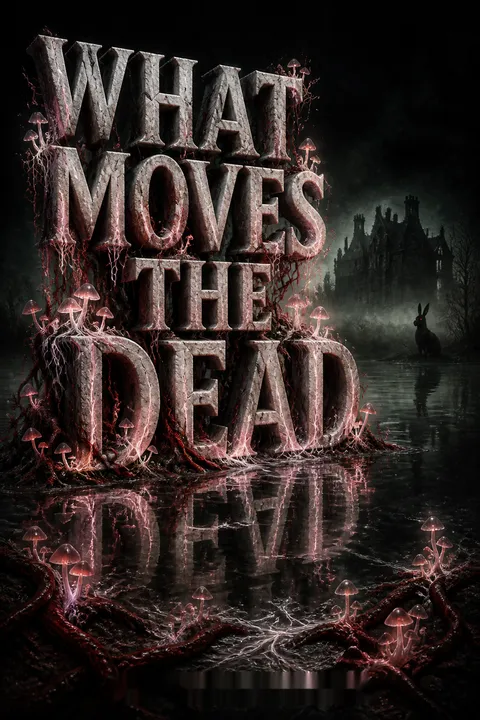
What Moves the Dead by T. Kingfisher reimagines Edgar Allan Poe's "The Fall of the House of Usher" as a gothic horror novella featuring fungal horror and body horror elements. Reviews praise Kingfisher's atmospheric writing, blending creepiness with humor through protagonist Alex Easton, a nonbinary retired soldier investigating the mysterious illness afflicting the Usher siblings. Readers appreciate the creative use of multiple pronouns, memorable side characters like mycologist Miss Potter and horse Hob, and the clever expansion of Poe's original story with scientific explanations. Most found it effectively creepy rather than grotesque, though some felt it predictable or overly stretched from the source material.
Characters
Alex Easton
Veteran reluctant sleuthEaston is a retired Gallacian sworn soldier, a military identity that places them outside ordinary gender categories. They are practical, blunt, and more comfortable responding to a visible wound than to a slow illness with no clear cause. Years of war have left them with tinnitus, bodily pain, and habits of vigilance, but also a deep loyalty to the people who served beside them. Easton tends to distrust supernatural explanations and uses dry humor to defuse discomfort, yet they are attentive to animals, local knowledge, and other people’s expertise. Their defining tension is between skepticism and instinct: they want evidence before acting, but they have learned that ignoring an uneasy perception can be dangerous.
Madeline Usher
The fading Usher twinMadeline is Roderick’s twin sister and Easton’s friend from childhood. Frail and isolated at the family estate, she carries a strong attachment to the place despite its poverty and oppressive atmosphere. Her illness has narrowed her daily life, but the memories she shares with Easton reveal a once-playful person who still responds to affection and humor. Madeline’s bond with Roderick is intimate and protective, shaped by a lifetime of shared family history. She does not want to be treated only as a patient or a burden, and her reluctance to leave reflects more than stubbornness: the lake and estate have become central to her sense of belonging.
Roderick Usher
The fearful family heirRoderick is Madeline’s twin and the impoverished heir to the decaying Usher estate. Once Easton’s companion in the war, he is now physically depleted, nervous, and acutely sensitive to sounds in the house. His attachment to Madeline governs his choices, while his inheritance binds him to a building he fears and cannot afford to maintain. Roderick’s musical talent offers a glimpse of the cultivated, imaginative man beneath his anxiety. He is not simply timid: military experience has taught him courage, but it has not prepared him for a threat he cannot identify or fight by familiar means. His devotion and fear often pull him in opposite directions.
James Denton
A wary battlefield doctorDenton is an American physician with limited formal training and extensive wartime experience as a surgeon. He is accustomed to practical emergencies, especially injuries that can be treated with speed and blunt instruments, but Madeline’s symptoms exceed his knowledge. His medical caution coexists with a willingness to admit uncertainty, a quality that makes him a useful partner to Easton. Denton carries memories of battlefield amputations and the responsibility of deciding whom he could save. Socially, he is direct and sometimes clumsy, particularly around Easton’s Gallacian military identity, but he is capable of recognizing a misstep and learning from it. His professional limits become a source of honesty rather than simple failure.
Eugenia Potter
Fungi’s amateur championPotter is an English illustrator and dedicated amateur mycologist who comes to the Usher grounds to document unusual fungi. She is precise, forthright, and accustomed to being underestimated because scientific societies exclude women. That exclusion has not dulled her ambition or curiosity. Potter’s attention to classification gives the others a vocabulary for observations they might otherwise dismiss, while her practical courage allows her to examine disturbing evidence without theatrics. She values careful study, but she is not so invested in scientific respectability that she ignores urgent danger. Her mix of rigor, pride, and resolve makes her an essential bridge between the uncanny events and a usable explanation.
Angus
Easton’s steadfast batmanAngus is Easton’s longtime batman, companion, and practical adviser. He served Easton’s father before taking responsibility for a young Easton in the army, and his loyalty has lasted well beyond their military service. Sardonic and observant, he notices what others overlook, from the quality of a room to the condition of a fish. Angus is also superstitious, but his beliefs do not make him passive; he keeps working, finding supplies and making plans even when the house frightens him. His affection for Easton usually appears as scolding or logistical competence, a steady form of care that does not demand emotional display.
Alice
Madeline’s former maidAlice was Madeline’s maid and a close presence in her private life. Roderick recalls hearing the two women together and associates Alice with a distinctive way of speaking. Though she appears only through others’ memories, her closeness to Madeline becomes important to how Roderick interprets the changes he observes.
Aaron
The loyal house servantAaron is an elderly servant at the Usher estate. He carries out his duties with quiet loyalty and knows local details that outsiders have missed. His practical knowledge becomes valuable when the survivors must assess risks beyond the manor.
Mary
The manor’s practical cookMary is the cook at the Usher estate. She works within the household’s severe financial limits and prepares what little food is available. Her presence gives the manor a human routine amid its neglect and isolation.
Hob
Easton’s unflappable horseHob is Easton’s dependable horse, accustomed to their habits and steady through the journey to the Usher estate. He reacts warily to the strange landscape but remains a calm companion, grounding Easton’s practical, physical view of the world.
Plot Devices
The tarn’s fungal mind
Alien intelligence revealedThe lake’s unusual fungus first appears as one more disturbing feature of the Usher grounds, alongside abnormal mushrooms, sick wildlife, and strange lights. As evidence accumulates, the organism proves capable of entering animals and human bodies, using their senses and movement. Madeline helps it learn to communicate, turning the presumed illness into contact with a mind that has developed outside human ideas of agency and consent. The device drives the mystery from environmental unease to an ethical crisis: the survivors must decide whether an intelligent being’s lack of malicious intent can justify the harm it causes. Its nature and role in the resolution are major spoilers.
Stinking redgills
Ecological warning signThe redgill mushrooms are Easton’s first encounter with the unusual fungal life around the tarn. Their swollen, flesh-like appearance and overpowering odor make the landscape feel physically wrong before the central danger is understood. Potter’s identification of the mushrooms grounds the scene in natural history, while their abundance signals that the estate supports an ecosystem unlike the ordinary countryside. The mushrooms do not themselves provide the answer to Madeline’s illness, but they teach Easton to look at the grounds as evidence rather than backdrop. They prepare the reader to take fungi seriously without revealing the full scale of the threat.
Easton’s battlefield habits
Instinct under pressureEaston’s military experience shapes both their investigative method and their blind spots. They notice movement, keep a weapon close, and trust the instincts that helped them survive combat. At the same time, tinnitus can distort what they hear, and memories of wartime injury make them wary of their own perceptions. Their training gives them the discipline to investigate frightening evidence, but it cannot explain an organism that moves the dead. This device keeps the story balanced between skepticism and fear: Easton neither accepts every uncanny impression nor dismisses the bodily signals that something is wrong.
Gallacian sworn status
Identity beyond conventionEaston’s status as a Gallacian sworn soldier is a military identity with its own pronouns, uniform, and place in society. It shapes how Easton understands themself and how strangers classify them, particularly Denton, who arrives with assumptions formed by sensational stories. The device gives the novel a concrete way to explore gender without separating identity from institutions, labor, or survival. Easton joined the army for practical reasons and made a life there, finding recognition in service even as the system remains imperfect. This history also establishes why Easton and Roderick share a bond forged through war.
About the Author
Other books by T. Kingfisher







Download PDF
Download EPUB
.epub digital book format is ideal for reading ebooks on phones, tablets, and e-readers.








