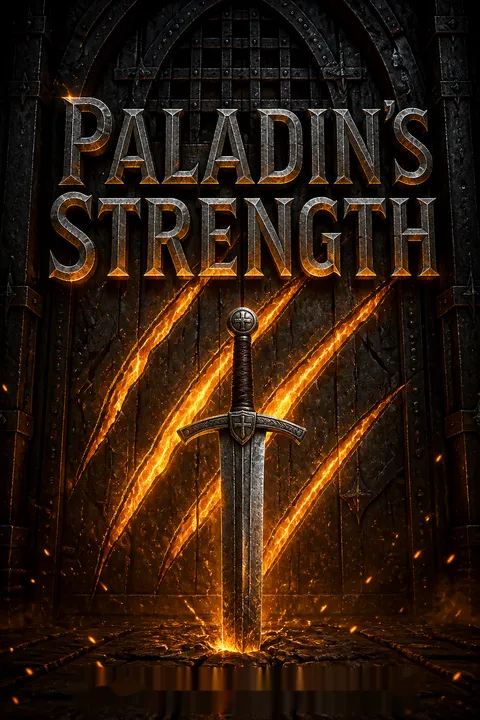


Plot Summary
A Forfeit at the Tent
Clara, a lay sister from the burned convent of St. Ursa, kneels outside Istvhan's tent with a sword and armed Arral relatives behind her. Istvhan has killed a young man who challenged him, though he tried to avoid the duel; Clara explains that accepting the dead man's sword settles the family debt and prevents further bloodshed.
The payment also includes Clara, who was given to Istvhan's party as a household captive. He refuses to own her, but returning her would insult the Arral and provoke a new duel. Clara reveals that raiders burned her convent and carried off her sisters. She is following their trail east, so Istvhan agrees to escort her rather than leave her to travel alone.
The story begins with a social custom that makes violence legible to its participants but perilous to outsiders. Istvhan's accidental killing is not enough to end the dispute; he must perform acceptance correctly, while Clara translates the human cost hidden inside the ritual. Her apparent calm is a practiced means of staying effective, not evidence that captivity has left her untouched. By accepting the escort, Istvhan converts a transaction meant to dispossess Clara into a limited act of solidarity. Neither character yet knows how much that choice will ask of them.
Barrels, Acorns, and Rumors
Istvhan's party includes red-haired second-in-command Galen, gnole driver Brindle, and distiller Brant, whose wagon carries precious Emperor Oak barrels. Brant plants acorns wherever the caravan stops, hoping the rare trees will outlive him.
Clara earns her place by explaining Arral customs and helping Istvhan gather local news. At a market, women confirm that a headless body was found beside a different, headless woman's corpse. Istvhan and Galen know more than they admit: they are secretly tracking unnatural killers, not merely escorting barrels.
Clara catches the lie, but neither side has earned the other's full confidence. Meanwhile, her conversations with the Arral women revive memories of the convent and threaten the composure she has relied on since her escape.
The caravan's ordinary labor gives the novel a measured social texture before its violence intensifies. Brant's planting is an especially useful counterpoint: his care is practical, patient, and aimed at a future he may never witness, unlike the secret mission's immediate demand to identify danger. Clara and Istvhan each withhold information for understandable reasons, so suspicion here is not a simple moral failing. It is a survival skill that also obstructs intimacy. Clara's brief encounter with women who treat her as kin reveals how much she has lost before she permits herself to grieve it.
The Road Turns Bloody
After days of uneasy travel and watchers on distant ridges, bandits ambush the caravan with slings and swords. Clara fights with a tent-stake sledgehammer, protecting the mules and helping Istvhan's outnumbered troops. In the battle's confusion, Istvhan kisses her fiercely, then immediately withdraws, horrified that he acted without asking.
The danger has also triggered Galen's battle madness: he turns on Clara until Istvhan stops him and brings him back to himself. Two mercenaries are dead, one is dying, and several others are wounded. Istvhan moves the survivors away from the bodies, while Clara and Galen fetch water and agree to set aside blame for the moment. The group buries Haller and continues toward the nearest town.
The ambush collapses several forms of control at once. Clara's disciplined self-command is tested by combat, Galen's condition turns a comrade into a possible threat, and Istvhan's impulsive kiss exposes desire without the restraint he normally considers essential. The scene does not treat violence as a clean proof of competence: victory leaves dead friends, injured survivors, and a moral debt that cannot be paid by good intentions. Clara's and Galen's quick apology matters because it restores cooperation without pretending that the danger was harmless. Their road forward depends on choosing repair while grief remains unfinished.
The Bear on the Road
At the edge of Arral territory, seven mounted men intercept the caravan and demand Clara, claiming they can reunite her with her sisters. Their leader knows she is valuable, and a net makes clear that capture, not negotiation, is intended.
Istvhan steps between Clara and the riders. When their leader charges, Clara transforms into an enormous bear, scattering the horses and killing the man who falls beneath them. Istvhan mistakes the bear for the creature that crushed Clara, then stabs it in the leg; the bear changes back, wounded and naked.
Brindle helps cover and treat her while Istvhan faces the mercenaries' alarm and Andrel's hostility. Istvhan strikes Andrel for insulting Clara, then chooses to leave with her rather than abandon her to the pursuers.
Clara's transformation changes the meaning of earlier details without making them false: her strength, her caution around emotional surges, and her insistence that she can escape all acquire a new explanation. The reveal is also painful rather than triumphant. She saves Istvhan's party, yet he wounds her because he cannot understand what he is seeing. His response after the shock, protecting her from Andrel and continuing beside her, becomes more meaningful than instinctive acceptance would be. Clara's fear now includes not only capture, but the possibility that people she has begun to trust will reduce her to a threat.
Across the Snowline
Clara and Istvhan leave the remaining mercenaries behind and cross the mountains on foot, with Istvhan carrying their supplies. Clara explains that the women of St. Ursa's order share her ability to become bears, and that fire and confinement helped the raiders capture them.
In a cave, she turns human while asleep and wakes with Istvhan's head against her bare chest; his embarrassed retreat deepens her belief that he cannot want her once he knows what she is.
They later find more headless bodies and two severed heads, confirming Istvhan's secret pursuit. He finally explains that he serves the Temple of the White Rat and is tracking clay-headed killers that animate corpses. He and Clara continue toward Morstone, where both trails appear to lead.
The mountain crossing makes intimacy possible through shared vulnerability rather than confession alone. Clara's body is not an emblem she can set aside: it determines how she travels, how she is pursued, and how she interprets Istvhan's reactions. His account of the dead god behind his former paladin order gives her a parallel rather than a solution. Both understand an inner force that can overwhelm judgment, yet each still fears being treated as monstrous. The discovery of more victims joins their private journeys to a common threat, making continued companionship necessary even as their emotional risks grow.
The Roadside Stage
Near Morstone, Clara and Istvhan meet Doctor Mason, a traveling tonic salesman, and his granddaughter Tolly after their wagon sinks into mud. They help free it, and Tolly mends Clara's torn robes while the pair travel with the family.
At Mason's public performances, Istvhan plays a supposedly sickly relative whose health improved on the tonic, while Clara watches the crowd. Tolly tells Clara she hopes to become a traveling trader; Clara offers practical advice from her years selling convent goods.
The road gives the pair time to talk about their unusual natures and past relationships, but Clara envies Tolly's apparent chance at a straightforward romance with Istvhan. When Tolly makes a private advance, Istvhan declines, claiming an oath of celibacy rather than exposing his growing attachment to Clara.
Mason's performance turns commerce into a protective social disguise. His tonic is not a miracle, but he gives customers a show and modest relief without promising to defeat death. That ethic contrasts with the spectacle and exploitation waiting in Morstone. Tolly's ambitions also give Clara a glimpse of the life she once had: a mobile trade, useful knowledge, and the freedom to choose where she goes. Her envy is not simply romantic jealousy. It points to her fear that the life she built may be impossible to reclaim, even if she survives the search for her sisters.
The Beast of the Leeward
In villages west of Morstone, Istvhan buys drinks to draw out stories about the old Beast of the Leeward, while Clara questions women who are less impressed by tavern boasting. An elderly witness describes a limping creature with a human face growing from its back, seen near abandoned pottery works years earlier.
The account resembles the clay-headed killers, so Clara and Istvhan follow the lead to a derelict porcelain factory and then to Stachys, a reclusive potter. Stachys remembers making a clay bust that came to life through his love, then creating more heads for it.
His first creation killed people to obtain bodies and eventually took Stachys's hands, leaving him dependent on it. Stachys's confused, affectionate account makes him both the source of the danger and its victim.
The investigation's breakthrough comes from a witness whose story was dismissed as implausible, not from an authority with a complete account. The creature's history then unsettles the familiar division between creator and monster. Stachys has caused immense harm, but his impaired memory, dependence, and attachment resist a clean judgment of guilt. Istvhan's old certainty would have supplied an immediate verdict; without his god, he hesitates. Clara sees the practical danger more clearly, but her compassion keeps her from reducing a damaged person to a problem that can simply be removed.
Clay Men Close In
As Clara and Istvhan discuss taking Stachys to the Temple of the White Rat, smooth men attack from behind. Clara knocks Istvhan clear and changes into a bear, crushing one attacker, but the rotting body's stench overwhelms her and the bear bolts into the woods. Istvhan tears apart another clay man and destroys its head, then fights the remaining attackers as the battle tide takes him.
Clara eventually regains control and returns to find Istvhan alive among the shattered bodies. They hurry back to Morstone, intending to bring Stachys to the Temple, but arrive too late: the smooth men have taken him. A witness confirms they carried him away by boat, leaving the investigators to return without their crucial source of knowledge.
This reversal makes the cost of Clara's divided self concrete. The bear saves Istvhan and then abandons him because its priorities are not human loyalty; Clara has to regain control before she can return. Istvhan's battle tide similarly preserves him while threatening to consume his judgment. Their survival depends on forces neither can fully command. Stachys's removal is the consequence of their hesitation, though the novel refuses to frame that hesitation as simple weakness. Their attempt to act ethically has left the enemy time to respond, and now they must pursue the crisis with less information.
A Rescue on Paper
Back in Morstone, Istvhan and Clara tell Bishop Raulann and her aide Faizen what they know. The city's Temple of the White Rat is overwhelmed by illness and poverty, but it offers informants and a safe house. Clara reveals her bear form to the priests so they understand why the raiders seized her order.
Their network learns that roughly a dozen St. Ursa sisters were delivered to the colosseum under the Shipbreakers' seal. Clara and Istvhan plan to enter with a supply wagon, free the captives, and lead them to the docks, where the sisters can swim to a signal fire.
When Galen reaches Morstone, Istvhan sends him to report the clay-men threat to the wider Temple instead of joining the rescue. Clara and Istvhan become lovers, though neither can promise what comes after the mission.
The Temple's limits matter as much as its help. Its people can gather intelligence and organize a route, but they cannot simply deploy an army against the Sealords without endangering those already reliant on them. The rescue therefore becomes a coalition built from imperfect resources: Clara's knowledge, Istvhan's combat skill, and the Rat's scattered informants. Their intimacy grows under a deadline, giving tenderness no power to erase uncertainty. Istvhan's decision to send Galen away is both strategic and costly; he chooses to strengthen the larger response rather than keep his closest comrade at his side.
The Wrong Door Opens
Clara and Istvhan enter the colosseum disguised as laborers carrying barrels. After killing a guard at the beast-level door, they split up: Istvhan draws the patrols toward himself while Clara slips into the animal runs dressed as a cleaner.
She finds the barred cage where her sisters are held, but a keeper catches her before she can unlock it and threatens her with a bear spear. The captives welcome Clara, then tell her that the Abbess died after refusing to transform for the people who bought them.
The raiders had injured the Abbess until the other sisters revealed their bear forms. Clara learns that her sisters have been kept as a promised arena attraction, not merely as prisoners, and that the rescue must now happen from inside the colosseum.
Clara's failed rescue exposes the difference between reaching people and being able to free them. Her familiarity with the building's map and her ability to pass as a cleaner bring her to the cage, but the keeper's expertise and leverage stop her at the threshold. The Abbess's death also changes the moral shape of the sisters' captivity: their refusal was an attempt to preserve dignity, while compliance became a desperate effort to survive. Clara can no longer imagine rescue as a clean return to the past. The convent she seeks is already marked by loss.
A Sword Against the Drowgos
Istvhan is sent into the arena as food for Sealord Antony's undefeated drowgos, corpses animated for public combat. He dismembers the dead fighters to keep them from reaching him, then hears pottery crack when his blows strike their chests.
Opening one body, he finds a small clay head lodged inside; smashing it stops the corpse. He repeats the tactic, discovering that the drowgos are being controlled by clay figures rather than ordinary necromancy.
His unexpected survival enrages Antony and draws the attention of Shipbreaker MacLaren, whose faction has brought the St. Ursa sisters as a rival attraction. The arena announcer presents the women as the next spectacle. Istvhan realizes Clara's rescue plan has failed, but Clara and her sisters are now entering the arena alive.
The arena transforms Istvhan's private investigation into public proof. The drowgos' apparent invulnerability is a carefully maintained spectacle, and the clay heads hidden inside them expose the mechanism beneath it. Istvhan wins by observation rather than divine certainty: he notices the sound of pottery and revises his tactics. That distinction matters to his recovery from the Saint of Steel's death. He can still judge and act, but the authority now comes from attention, experience, and choice. His survival also buys time for Clara, though it cannot shield her sisters from being forced into the same spectacle.
Bears in the Arena
The dead fighters advance on the sisters, who transform into bears rather than submit to being torn apart as humans. Clara and the experienced Sigrid lead the defense, while the younger novices struggle to control their fear. The bears smash the drowgos, but three sisters die in the melee, and Sigrid breaks an arm.
After the remaining drowgos fall, the colosseum staff treat the women as victorious gladiators, not escaped prisoners. Istvhan seizes MacLaren and demands a route off the island, while Clara and Sigrid use the commotion to lead the sisters toward the docks.
Clara unlocks the animal cages to draw guards away, and the released predators fill the corridors with panic. Most sisters enter the water, but Sigrid stays with Clara and Istvhan, unable to swim and determined to help them find the force behind the drowgos.
The arena's supposed victory is morally grotesque: the spectators celebrate because the sisters have survived a fight they never chose. Their transformation is an act of self-defense and a refusal to perform helplessness, but it does not protect them from death. The three losses make the rescue's cost irreversible. Clara and Sigrid then use the colosseum's own machinery of spectacle against it, turning captive animals and frightened staff into a distraction. Sigrid's decision to remain is not a rejection of the other sisters; it reflects her injury, her loyalty to Clara, and the need to confront the threat before it can produce more victims.
The Creator's Last Choice
Clara, Istvhan, and Sigrid return through the colosseum to the room where the drowgos are stored. They find Stachys sick and guarded by the first clay bust he brought to life, now preserved in a salt-cured human body. The creature claims that its kind uses the bodies of arena dead because those people were already destined to die.
It raises more drowgos, including three dead St. Ursa sisters whose bodies have been fitted with clay heads. Stachys finally objects to the killings and lunges to stop his creation. Istvhan's knife wounds him, and Stachys dies holding the blade. His death breaks the magic: the drowgos and smooth men collapse, including the clay-bodied creature, whose bust shatters on the floor.
The climax makes love's ambiguity literal. Stachys's creation arose from affection, but it has used that origin to demand obedience and excuse murder. Stachys's final resistance does not erase his responsibility; it is a costly break from the relationship that has governed him. Istvhan, meanwhile, must act without the divine certainty he once relied on, and the death of the maker becomes the only way to stop the army. The dead sisters' bodies force the rescuers to confront the violence already done, even as the collapse of the constructs prevents further use of the dead.
The Bear Takes the Sea
A terrible scream from the dying magic leaves Clara and Istvhan temporarily deafened. They flee toward the docks, where Sigrid stays behind to hold off the pursuing guards. Istvhan refuses to swim, but Clara turns into a bear and lets him secure himself to her with the rope belt from her robe.
She carries him into the freezing sea and swims south toward the signal fire, while he fights cold and nausea and clings to the rope. On shore, Clara drags him out and tries to revive him until Doctor Mason and Tolly find them.
Mason warms the pair in his wagon and confirms that Istvhan is alive. Faizen reports that the other sisters reached safety; Sigrid is missing. Clara grieves for her, then tells Istvhan she loves him, and he returns the confession.
The escape reverses the usual distribution of rescue: Istvhan has repeatedly protected Clara, but now her strength and knowledge carry him through the danger he cannot face alone. His fear of water is not cured; he survives by trusting her and maintaining his grip. The relief of reaching shore cannot cancel Sigrid's absence or the sisters who died, so Clara's grief arrives alongside joy rather than after it. Their mutual declaration does not promise an uncomplicated future. It does give the relationship a truthful beginning, grounded in reciprocal dependence rather than rescue as a debt.
Analysis
Paladin's Strength sets two kinds of embodied force beside each other: Clara's bear and Istvhan's battle tide. Neither is simply a superpower. Each is a condition that can protect its bearer, unsettle other people, and override intention. Their parallel helps intimacy develop through recognition rather than cure. Clara does not need Istvhan to make her human, and Istvhan cannot recover the god who once guaranteed that his violence served justice. They learn to trust each other's judgment while admitting that neither can fully control what lives inside them.
The book also complicates the language of care. Stachys creates through love, then allows attachment to become an excuse for obedience and murder. The Temple of the White Rat offers a contrasting model: care means food, information, safe passage, and respect for limits, not mastery over another person. Brant's acorns extend that ethic into the future. He acts without proof that he will see a tree grow, just as Clara and Istvhan act without certainty that their rescue will succeed.
Morstone's arena makes exploitation visible as entertainment. The Sealords interpret survival as consent and victory as a reason to keep captives confined. Against that logic, the sisters' transformation is not a show they freely perform but a refusal to die by someone else's terms. The novel allows their victory to remain costly: deaths, grief, and Sigrid's absence cannot be converted into a neat triumph. The ending offers a relationship, not a cure for the damage. Clara and Istvhan reach one another by sharing risk, respecting agency, and letting care be reciprocal.
Review Summary
People Also Read






Characters
Clara
The steel-calm lay sisterClara is a tall, broad-built lay sister of St. Ursa who spent years traveling as a trader for her convent. Practical, observant, and quick with dry humor, she is skilled at reading customs and finding a useful next step when others freeze. Her composure can look like fearlessness, but it is also a discipline she uses to keep grief and anger from overwhelming her. Clara values independence, partly because solitude has let her choose the shape of her life, and partly because she has learned how dangerous it is to let others define her. She is drawn to people who offer respect without demanding that she become smaller or simpler for their comfort.
Istvhan
The lapsed paladinIstvhan is a large, scarred former paladin of the Saint of Steel who now works with the Temple of the White Rat. His humor and courtesy are not signs of softness so much as deliberate ways of managing the power his size and skill give him. The death of his god has left him wary of the righteous certainty that once guided his violence, and he struggles to decide what justice means without divine direction. He is loyal to his companions and unusually attentive to consent, even when he fails under pressure. Clara attracts him because she meets him as an equal, with her own strength, judgment, and appetite for life.
Galen
The laughing second-in-commandGalen is Istvhan's red-haired second-in-command and fellow survivor of the Saint of Steel's fallen order. He uses jokes and flirtation to make difficult company easier, but his battle madness can make him dangerous when it takes hold. His loyalty to Istvhan is intimate and hard-earned, more like brotherhood than ordinary military obedience. Galen is frank about the damage he and the other surviving paladins carry, even when humor is the only language he can manage for it.
Brindle
The blunt gnole driverBrindle is a gnole mule driver hired through the Temple of the White Rat. He speaks of himself and his people with a distinct collective phrasing, and has strong opinions about the superiority of oxen. Beneath his grumbling is steady care: he keeps the animals safe, notices what humans miss, and judges people by how they treat vulnerable creatures. His practical loyalty helps make the caravan feel like a working community rather than a band of hired swords.
Brant
The patient tree stewardBrant is a distiller entrusted with rare Emperor Oak barrels and deeply protective of his family's last grove. He is earnest, easily absorbed in his work, and committed to planting acorns wherever he can. That modest habit reflects a faith expressed through care rather than certainty: he does not need proof that each seed will thrive before he plants it. Brant's quiet decency offers Clara and Istvhan a reminder that not every act of hope requires a grand promise.
Sigrid
Clara's blunt elder sisterSigrid is one of Clara's fellow sisters of St. Ursa, direct, protective, and unsentimental about danger. She has the confidence of someone accustomed to taking responsibility for younger women, but her bluntness also makes room for affection and laughter. Sigrid is willing to challenge Clara when the younger sister's self-control becomes another way to avoid acknowledging what she wants. She treats loyalty as action, not sentiment.
Tolly
The aspiring traderTolly is Doctor Mason's capable granddaughter and partner on the road. She manages the mules and wagon, helps repair Clara's clothes, and quietly plans a future as a traveling merchant. Her practical intelligence is often hidden beneath modesty, especially when speaking around her more theatrical grandfather. Tolly and Clara recognize a shared appetite for mobility and self-direction, though their circumstances and stages of life are quite different.
Doctor Mason
The traveling showmanDoctor Mason is an elderly traveling tonic seller whose grand performances conceal a more cautious and compassionate man. He knows that his herbal medicine offers limited relief, so he avoids promising cures and reserves his real care for people in need. Years on the road have taught him how to entertain strangers, read a crowd, and keep moving before trouble settles. His loyalty to Tolly is affectionate without being possessive.
Stachys
The distracted potterStachys is a gifted potter who lives apart from the main roads and struggles to keep his memories and thoughts in order. He is lonely, gentle, and prone to explaining events through the stories that shaped his imagination. His attachment to his work and to the people he loves makes him vulnerable to being led by others. Stachys is neither a simple innocent nor an easy villain, and his confusion asks others to weigh compassion against the consequences of what he has enabled.
Bishop Raulann
The overburdened bishopBishop Raulann leads the Temple of the White Rat in Morstone, where hunger, sickness, and unstable housing outstrip the temple's resources. She is candid about what her people can and cannot do, and she offers practical help without pretending that goodwill can defeat a city's entrenched power. Her humor and clear-eyed restraint make her a trustworthy organizer in a place where promises are cheap.
Faizen
The Rat's city organizerFaizen is a senior organizer at the Morstone Temple of the White Rat. He is stretched thin by the city's needs, but listens carefully and directs Clara and Istvhan toward people who can help. His role links the temple's relief work to its network of informants, showing how practical service can also become a form of civic resistance.
Proctor Ethan
The keeper of odd animalsEthan is a White Rat proctor who cares for animals displaced by Morstone's crowded and precarious conditions. Curious to the point of distraction, he is fascinated by unusual creatures and tends to ask questions before noticing how personal they are. His work reflects the Rat's practical ethic: people are more likely to seek help when they know their animals will not be abandoned.
Bastian
The desperate young challengerBastian is a young Arral man burdened with supporting his widowed mother and sisters. His attempt to challenge Istvhan arises from desperation and poor judgment rather than personal hatred. His death sets the opening conflict in motion and exposes how rigid customs can make a desperate gamble seem like a family's only option.
Andrel
The resentful mercenaryAndrel is one of Istvhan's hired fighters, taciturn and hostile when Clara's presence complicates the group's assumptions. His resentment reveals how quickly fear of difference can turn into aggression, even among people who have shared a road and a battle.
Shipbreaker MacLaren
The ambitious SealordMacLaren is one of Morstone's powerful Sealords, associated with the Shipbreakers. He understands public spectacle as a way to challenge rivals and gather influence. His confidence in the arena's customs reveals how power can mistake a captive's survival for willing participation.
Sealord Antony
The arena's patronAntony is a Sealord who takes pride in the undefeated dead fighters displayed in his arena. He treats spectacle as proof of authority and sees competitors as instruments in a political contest. His ambitions help make the colosseum a place where living people and the dead alike are used for entertainment.
Halishi
The Rat's spymasterHalishi oversees the White Rat's discreet information network in Morstone. Patient and wry, he understands that intelligence is gathered through people who cannot safely be named or seen. He and his associate Sparrow help turn fragments of rumor into a workable rescue plan.
Sparrow
The map-minded informantSparrow is one of the White Rat's informants and knows the colosseum's routes, choke points, and escape risks. Her practical caution prevents Clara and Istvhan from confusing a way in with a way out.
Plot Devices
St. Ursa's bear-change
Power with a pulseClara and the women of St. Ursa can become bears, a gift that is also an internal force with its own instincts and limits. Fear, anger, strong smells, and confinement can wake the bear, while repeated transformations exhaust Clara. The change gives her extraordinary strength and the ability to survive conditions that would defeat a human, but it can also disrupt trust and cooperation. The raiders exploit the sisters' vulnerability to fire and cages, while Clara must learn when to yield to the bear and when to keep human judgment at the surface.
The battle tide
A warrior's lost restraintIstvhan and Galen were once paladins empowered by the Saint of Steel. After their god's death, their battle madness became an unpredictable force known as the tide. It can make them devastating fighters, but it can also blur judgment and put allies at risk. Istvhan's struggle with it parallels Clara's effort to guide her bear: each must act with an inner power that no longer comes with reliable divine direction.
Ceramic heads and bodies
A murderer's borrowed bodiesThe smooth men are clay-headed constructs that animate corpses, using the dead as temporary bodies. Their victims' heads and bodies may be separated, and their hosts eventually decay. The secret of the clay figures supplies the mystery that Istvhan is following and leads from old reports of the Beast of the Leeward to the potter Stachys. In the colosseum, related clay heads are hidden inside the drowgos, giving Istvhan a physical weakness to exploit.
The White Rat's network
Help without an armyThe Temple of the White Rat offers relief, healing, legal aid, and information gathering rather than a conventional fighting force. In Morstone, the temple is overwhelmed and cannot openly challenge the Sealords, but its organizers and informants can trace the kidnapped sisters and map the colosseum. Their limited resources shape the rescue into a covert operation. The network's strength comes from trust, local knowledge, and practical service, not the ability to command the city.
Brant's oak acorns
Hope planted by handBrant plants Emperor Oak acorns at stops along the caravan route, despite the small chance that any particular seed will grow. The practice begins as a personal habit and becomes a quiet sign of the kindness Clara finds among her companions. The acorns embody a form of hope that does not depend on certainty or immediate reward. Clara carries them through the dangers of the journey and plants them when she and Istvhan return from the fight with the smooth men.
About the Author
Other books by T. Kingfisher






Download PDF
Download EPUB
.epub digital book format is ideal for reading ebooks on phones, tablets, and e-readers.








