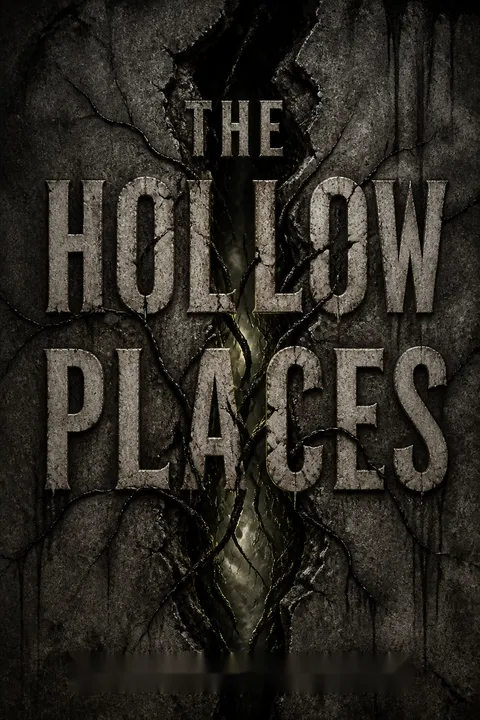


Plot Summary
A Room Above the Curiosities
At thirty-four, freelance designer Kara1 finds that her marriage to Mark5 has ended not in a dramatic rupture but in years of quiet unhappiness. With no money for an apartment, she faces moving in with her mother,6 a prospect she fears more than the divorce. Her uncle Earl,3 a cheerful collector who runs the cramped Wonder Museum in Hog Chapel, offers her a room behind the exhibits instead.
Kara1 accepts, bringing her books and her grief to the place where she grew up among stuffed animals, dubious curiosities, and Earl's3 generous welcome. Cataloging the clutter gives her a job and a foothold; for the first time since the marriage collapsed, she can imagine a life that does not depend on Mark.5
Kara's refuge is deliberately modest: not a new career or a clean break, but a spare room in a museum she already knows by touch. Her divorce has exposed how thoroughly she treated stability as something granted by marriage, rather than something she could make for herself. Earl offers practical shelter without demanding that she recover on a schedule. His museum, with its jumble of belief and evidence, also establishes the novel's humane baseline: strangeness can be harmless when met with curiosity and kindness. That contrast will make later supernatural danger feel like an invasion of home, not simply an encounter with the unknown.
The Carving Finds Its Place
Kara1 settles into the museum's routine, helping Earl3 as his back and knees worsen and beginning a spreadsheet catalog of the exhibits. A shipment from Earl's3 friend Woody7 includes an unsettling wooden carving shaped as an otter on one side and a shrouded corpse on the other. Kara1 places it near the museum's prized stuffed giant otter, then turns to other work.
When Earl3 leaves for knee surgery, Kara1 takes charge. After discovering a hole in the wall behind the otter display, she asks Simon,2 the eccentric barista next door, to help repair it. His inspection reveals not a cavity or plumbing, but a silent concrete corridor where the building's wall should be. Curiosity defeats caution, and the two cut an entrance.
The supernatural breach grows from an act of ordinary caretaking. Kara is cataloging objects, tending Earl's business, and repairing damage, so the passage enters her life through the same practical responsibilities that have made the museum a refuge. The carving's placement beside the real otter quietly links the museum's collection to the corridor, but neither Kara nor Simon has reason to recognize it as significant. Earl's absence matters too: the person whose kindness shaped the museum is temporarily removed, leaving Kara to decide what counts as a manageable problem. Her first response to impossibility is still logistical: could the space be useful?
A Door Into Daylight
The corridor leads to a vast circular room, far larger than the building could contain. A rusted metal door stands at its edge, while another route ends at a cramped bunkroom where Kara1 and Simon2 discover a human skeleton on a stained mattress. They retreat, then realize the wall between the museum and corridor behaves differently on each side: a cut that looks like plaster from home is six inches of stone from the other side.
Certain that ordinary repair cannot explain this, Simon2 pries open the rusted door. Beyond it, stairs rise to daylight over a silent river, where fog drifts among dozens of small grassy islands. Each island holds a metal bunker door. Their accidental passage has not opened onto a hidden room, but onto another world.
The skeleton turns a puzzle into a history of failed survival. Its presence suggests that the bunkers have served people before, while the incompatible wall materials make ordinary explanations collapse in the characters' hands. Yet the revelation does not produce mastery. Kara and Simon can identify that they have crossed worlds, but they cannot infer the world's rules from its landscape. The bunkers promise structure and refuge; the river and fog immediately undermine that reassurance. The passage also changes the story's central question. It is no longer whether the corridor exists, but whether two people who entered it casually can find a way back.
Bunkers Under the Willows
Kara1 and Simon2 wade between the bunker islands, marking their original entrance with a stick and trying to map the unfamiliar shore. They find a stranded school bus, its color and lettering almost familiar but subtly wrong. A sudden storm drives them inside. Simon's2 unease keeps Kara1 from sitting among the rows of seats; when the empty bus seems to fill with children pushing against its upholstery, both flee into the rain.
The river has risen, erasing their tracks and washing away their marker. Unable to identify their own bunker among the near-identical doors, they search as dusk falls. A passing boatman11 moves silently across the water, and they hide rather than risk being seen. They take shelter in another bunker for the night.
The bus is frightening because it makes the impossible intimate: children are not merely missing, but trapped within the ordinary object meant to carry them safely. Simon's warning is an instinctive act of care that Kara cannot explain, foreshadowing the value of his unusual perception. The vanished marker then converts wonder into a practical crisis. Their mistake is not a grand transgression but a failure to account for rain and sameness. The world punishes assumptions of familiarity: a bus can be almost a school bus, a man can look ordinary, and neither resemblance tells them whether approaching is safe.
Warnings on Concrete
Inside the bunker, Kara1 and Simon2 find large warnings scratched into the walls, including one that says their thoughts can be heard and another urging whoever reads it to hope the hunters12 are hungry. They discover spent shell casings, signs of violence, and a second chamber with cots, footlockers, and a rosary.
Simon2 can sense that the bus driver was present in a way Kara1 could not see, as if the woman occupied a direction beyond ordinary space. They sleep fitfully, rationing their supplies and trying not to dwell on the messages. At dawn, pale light animates enormous shapes in the willow branches, then a darker presence passes through the trees and makes them retreat to the bunker.
The bunker offers a fragile form of containment, not safety. Its human traces invite interpretation, but every clue deepens uncertainty: the shell casings suggest resistance, the rosary suggests a search for protection, and the warnings address a threat the writers could not explain. The instruction about thought becomes especially destabilizing because fear itself requires attention to the danger. Simon's perception gives the pair different access to the same reality, but not enough to create a reliable map. The brief beauty of the willow forms is therefore not relief. It shows that the landscape can become animate without becoming benevolent.
Sturdivant in the Water
Searching for their entrance, Kara1 and Simon2 hear a low, resonant hum and eventually find a gaunt man in a flooded bunker. He identifies himself as Martin Sturdivant,8 a park ranger who entered the world through a mass of kudzu and has been trapped for a long time. He says the willows belong to the place and that their strange light can animate shapes, while unseen inhabitants hunt12 or reshape travelers.
The bunkers offer only temporary shelter; water and debris are letting the roots creep inside. As he explains what the hunters12 do to people they do not eat, Kara1 and Simon2 see that Sturdivant's8 body has been grotesquely altered. They flee before they can help him, carrying his warnings into the open world.
Sturdivant gives Kara and Simon information without giving them control. His knowledge is embodied in a ruined body, so every explanation arrives as evidence of what understanding has cost him. Kara's impulse to help competes with the instinct to escape, exposing a moral bind rather than a simple failure of courage: compassion cannot repair a danger whose mechanisms remain incomprehensible. His description also distinguishes the willows' light from the hunters themselves. The world is not one monster with one motive, but an ecology of forces that can animate, shelter, lure, and destroy in different ways.
The River Hears Them
Kara1 and Simon2 continue searching along the river, passing an abandoned ship overgrown with willows. The familiar hum swells until branches bend around a presence12 neither can see directly.
Simon2 senses something moving beneath or behind the world's surface,12 while Kara1 keeps her thoughts occupied with petty grievances and a childhood song. They hide inside the wreck until the pressure moves away. The shelter buys time, not certainty, and they return to the bunker islands to resume their search.
In one bunker they recognize Simon's2 dropped toolbox, proof they have found their original route. They race through the corridor and fall back into the museum, where fluorescent lights, floorboards, and the familiar clutter confirm that they are home.
The invisible hunter makes attention itself dangerous. The characters cannot defeat or even observe it in any stable way, so Kara's deliberate mental distraction becomes a makeshift survival skill. Her choice of trivial thoughts is psychologically exact: the ordinary irritations she once treated as burdens now provide a boundary against cosmic terror. The toolbox offers an unheroic but potent sign of recognition, turning a piece of equipment into a breadcrumb home. Their return does not resolve the danger; it only restores the world in which they can act on it. Home is recovered as a place, while safety remains an open question.
A Journal From Elsewhere
Back in Hog Chapel, Kara1 and Simon2 cover the passage with a crude drywall patch, then invent a hospital story to explain their absence to Kara's alarmed mother.6 Kara1 tries to resume museum work, even dismissing Mark's5 disclosure that he had been seeing another woman before the marriage ended; after the willow world, the betrayal feels painfully small.
She finds a Bible from the bunker and reads its margins, written by a soldier9 on an expedition through a military portal called the vacuae. His notes describe teammates vanishing, a newcomer named Singer,10 and hunters12 that can be evaded when pain empties the mind of thought.
The final entries leave the soldier's9 and Singer's10 fates uncertain. Meanwhile, Kara1 discovers gouges in the patch and realizes she has been sleepwalking toward it.
The journal widens the story from an isolated accident to a repeated human encounter. Military preparation, language, and equipment do not protect the expedition from the same failures Kara and Simon faced; the notes offer precedent rather than a solution. Kara's response to Mark also registers a changed scale of concern. She is not cured of heartbreak, but the old marital script no longer commands her attention. The gouges in the wall interrupt any easy return to normality. Her body is still responding to the other world in sleep, suggesting that escape has not ended contact and that the breach now threatens the boundary she thought she had restored.
The Boatman Returns
Simon2 helps Kara1 test a plan to keep her from reaching the damaged patch while asleep. That night, however, she finds herself on the bunker steps, drawn toward the boatman,11 whose raft has merged with willow roots and whose legs are rooted to its boards.
Simon,2 also sleepwalking, pulls her back just as the creature11 attacks. They escape through the corridor before it can force its way inside. Simon2 covers the breach with heavy sheet metal and uses a massive Bigfoot statue to block access, while Kara1 ties herself to her bed.
The barrier holds for the moment. Their experience suggests that the call may be exploiting their exposure to the other world, though neither can tell whether the force comes from the boatman,11 the willows, or something else.
The return of the boatman transforms aftermath into renewed pursuit. Kara's sleepwalking makes the threat intimate: the enemy does not need to break down the door if it can enlist the victim's own body. Simon's intervention matters both physically and relationally, since their survival now depends on mutual vigilance rather than individual bravery. Their improvised defenses are comic in their materials, but not in their stakes. A sheet of metal and an oversized statue become meaningful because the characters have no institutional help and little technical understanding. The scene's uncertainty preserves the horror: recognizing a pattern does not yet identify its cause.
The Missing Raccoon
A display case breaks, an albino raccoon disappears, and Kara1 initially suspects theft. After Beau the museum cat4 fights a pale shape in the dark, Kara1 finds the raccoon gutted behind a case and persuades herself a rat must have been nesting inside it. Later, a stuffed fisher attacks her, biting her shoulder with its dry, rigid mouth.
Kara1 strikes it down with her cane and sees the corpse-otter carving lodged inside its chest. She recognizes the carving as the object that fell through the original hole and repeatedly rolled from its display place. It has been trying to return to the other world, and its movements and influence explain the missing specimens, the sleepwalking, and the widening danger in the museum.
The revelation turns a sequence of comic museum mishaps into a chain of evidence. Kara's cataloging habit, initially a practical chore, lets her connect the numbered carving to the objects that have gone missing. Yet the discovery also complicates blame. The carving has not behaved like a conventional villain with an intelligible plan; it appears driven by the same homesickness Kara felt while trapped across the passage. Recognition generates empathy without making it safe. Kara can understand the desire to get home and still confront the consequences of an object that has begun using other bodies to reach it.
The Museum Wakes
The carving's influence spreads through the museum in silver light, and the taxidermy begins to move. Kara1 watches the great otter break from its case and batter the metal barrier, while other exhibits stir around it. Beau's4 warning cry draws the otter's attention, forcing Kara1 to flee upstairs.
The elk head Prince,13 whom Kara1 loved as a child, lowers his antlers and impales the predator long enough for the museum's other odd creatures to attack. The intervention gives Kara1 a chance to escape, but the otter tears free and follows. Kara1 realizes the carving has found a host powerful enough to reach the passage, and that keeping the creature inside the museum could expose the whole town to the willowlight.
The museum's grotesque collection becomes a defense through accumulated affection rather than through its owner's theories about the supernatural. Kara has long treated the exhibits as familiar, slightly ridiculous objects; now that familiarity gives her an emotional reason to trust them even as they become frightening. Prince's intervention pays off a childhood bond, not a rule of magic Kara can verify. That ambiguity is crucial. The scene allows care to matter without reducing the uncanny to a tidy moral reward. The otter, meanwhile, is not simply a monster invading home: it is a powerful host carrying the carving's desperate attempt to return.
Pain Opens the Exit
Kara1 crawls back through the passage, hoping the otter will follow the carving home and leave the museum behind. The willows have reached the bunker entrance, and the predator pursues her through the river, slashing her already injured leg.
The hunters'12 humming closes in. In a flooded bunker, Sturdivant8 emerges and distracts the otter, giving Kara1 time to escape, though she cannot know what becomes of him. She reaches the open air as the hunters12 begin cutting funnel-shaped wounds in the water and sees one12 forcing its way through reality.
Remembering the soldier's account, Kara1 deliberately drops her weight onto her damaged knee. The pain blanks her thoughts; the hunters12 lose her. She drags herself through the passage and returns to the museum at dawn.
Kara's escape depends on accepting injury as a tool, a grim reversal of the ordinary wish to protect the body at all costs. The soldier's journal has prepared this tactic, while her earlier observation that thought attracts danger gives it psychological force. Her return is not a triumph over the hunters; she survives by becoming temporarily unreadable to them. Sturdivant's intervention links the present crisis to the human cost already visible in his body, without promising rescue for him. The sunrise offers no cleansing revelation. It marks only the moment Kara has crossed back into a world where pain can be treated and the museum still stands.
A Wall Made Solid
After Kara1 tells Earl's3 friend Woody7 what happened, he admits he found the carving on a Danube island where willow growth and holes had made the area dangerous. He believed distance would keep it dormant and had tucked a warning into an unopened book that arrived with the artifacts. Simon2 and Kara1 build a barrier of quick-setting concrete, then patch the opening itself with wall material until the wall appears whole.
A later inspection shows only drywall and studs beyond it. Kara's1 knee remains badly damaged, and nightmares persist, but she stays at the museum. Earl3 returns, Simon2 remains beside her, and she understands the odd collection as a place shaped by affection, now worth defending despite what may still lie beyond its walls.
Closure here is practical rather than absolute. The concrete wall and repaired plaster can block a known route, but nobody has defeated the larger ecology of the willows or explained every breach between worlds. Woody's failed attempt to contain the carving echoes Kara and Simon's own improvised decisions: good intentions do not substitute for understanding. Yet Kara's choice to stay is not denial. The museum has become a community of material attachments, from Earl's care to Simon's loyalty and the childhood bond with Prince. Her home is no longer innocent, but neither is it merely a place to flee.
Analysis
The novel makes the supernatural frightening not by supplying an elaborate mythology, but by allowing ordinary perception to fail in specific, costly ways. A school bus is nearly familiar; a corridor fits inside a building that cannot contain it; an apparently empty space has occupants. Kara1 and Simon2 gather evidence, yet every discovery enlarges the uncertainty rather than mastering it. The hunters12 'relation to thought makes attention a survival problem: fear is unavoidable, but dwelling on fear can expose a person. Kara's1 eventual use of pain is not victory over the unknown so much as a brutal interruption of its access to her.
Against that hostile instability, the Wonder Museum offers a countermodel built from care rather than certainty. Earl's3 objects are often dubious, but his welcome is not. Kara's1 cataloging gives names and order to a cluttered collection, while her childhood affection for Prince13 makes that familiarity emotionally consequential. When the exhibits move, the novel refuses to decide whether love literally inhabits the taxidermy or whether Kara1 needs that belief to live with what happened. Either way, the museum's history of human attachment becomes a form of protection that the bunker walls cannot provide.
Kara's1 recovery also refuses a clean division between personal heartbreak and cosmic danger. The end of her marriage initially feels like the collapse of her whole future; after the other world, Mark's5 betrayal shrinks in scale, but it does not become meaningless. Instead, Kara1 discovers that her capacity to act was never dependent on the life she thought she had to preserve. She stays at the museum not because it is safe, but because it is hers and because other people depend on it. The ending offers no guarantee that the wall will remain closed. It offers a more credible consolation: companionship, practical work, and a home worth defending even when certainty is impossible.
Review Summary
The Hollow Places garners mostly positive reviews for its unique blend of horror and humor. Readers praise Kingfisher's witty writing, engaging characters, and creepy atmosphere. Many find the story original and entertaining, with a perfect balance of scares and laughs. Some criticize the pacing and repetitive elements, while others feel the humor detracts from the horror. Overall, reviewers appreciate the book's quirky charm and cosmic horror elements, though opinions vary on its effectiveness as a true horror novel.
People Also Read






Characters
Kara
The museum's stubborn caretakerKara is a freelance graphic designer whose dry humor and habit of cataloging details help her manage uncertainty. She has spent much of her adult life treating marriage and financial stability as fixed structures, so the end of her relationship with Mark5 leaves her unsure how to support herself. Returning to Uncle Earl's3 museum gives her practical work and a familiar refuge, but it also asks her to take responsibility for a place she loves. Kara is neither fearless nor naturally adventurous. She gets frightened, complains, and keeps acting anyway, often by converting panic into a task she can complete. Her eye for design and evidence makes her attentive to patterns, while her loyalty repeatedly draws her toward other people's needs.
Simon
The barista with strange sightSimon runs the Black Hen coffee shop next to the museum and becomes Kara's1 closest ally. He dresses flamboyantly, tells improbable stories about surviving childhood, and meets fear with irreverent humor. A rare condition has left him with an unusual eye and compromised depth perception; he sometimes perceives aspects of the world that others miss, though he cannot reliably explain what he sees. Simon is cautious enough to worry about horror-movie decisions, but curiosity and loyalty keep him beside Kara1. His humor is not indifference. It is a way to share fear without letting fear dictate every action, and his practical skills make him an indispensable partner.
Uncle Earl
The museum's generous keeperEarl owns the Glory to God Museum of Natural Wonders, Curiosities, and Taxidermy, a crowded collection reflecting his appetite for oddities and his sincere religious faith. He believes many incompatible things at once, yet his deepest habit is generosity: he welcomes visitors, cares about the people others might condemn, and makes room for Kara1 when her marriage ends. Physical pain and limited mobility make him rely on Kara1 to help run the museum, though he resists complaining. Earl's gentle pragmatism shapes the museum as more than a business. It is an extension of his belief that even an untidy world deserves patience and a place to belong.
Beau
The museum's formidable catBeau is the museum's large, confident tabby, valued for catching mice and feared for his blunt skull and formidable claws. He treats affection as something to grant on his own terms, often headbutting Kara1 before returning to his patrols. His ordinary feline instincts make him a source of comic relief, but they also make him quick to notice movement and defend his territory. Beau belongs to the museum as surely as the displays do, and his presence gives Kara1 a living companion in a building otherwise filled with silent faces.
Mark
Kara's accommodating exMark is Kara's1 former husband. Their marriage ends through a long drift into mutual dissatisfaction rather than a single dramatic confrontation. He wants to remain gracious and preserve a friendly account of the separation, but he is uncomfortable when conversations depart from the script he expects. His careful public presentation contrasts with Kara's1 growing impatience for emotional performance. Mark matters less as a villain than as evidence of a relationship that has already become small and remote by the time it ends.
Kara's mother
The loving family stormKara's mother loves her daughter1, but their similar temperaments make prolonged closeness volatile. Both know that a little distance helps them get along, so Kara's1 prospect of moving back home feels daunting even before practicalities intervene. She is anxious, forceful, and quick to act when she fears Kara1 is in danger. Her care is real, though it often arrives as pressure, giving Kara1 a complicated model of family loyalty.
Woody Morwood
Earl's far-flung donorWoody is one of Earl's3 friends, an avid seeker of unusual objects who sends the museum artifacts with whatever history he can uncover. He approaches strange discoveries as problems to be researched and contained, though his confidence can exceed what he actually knows. His relationship with Earl3 connects the small museum to a wider network of collectors and oddities. Woody's instinct to preserve an object rather than destroy it reflects the same curiosity that animates the museum, with less certainty about the risks.
Martin Sturdivant
The stranded park rangerSturdivant is a park ranger encountered in the other world, where he has survived long enough to acquire hard-won knowledge of the willows and their dangers. His speech and fading strength make him difficult to understand, but he tries to warn newcomers about what he has learned. He represents the human cost of entering the place without a map or dependable shelter. Even under extreme suffering, he retains the impulse to communicate what might help the next traveler.
The field-journal writer
A soldier recording the missionThis unnamed soldier keeps a Bible as a journal during an expedition into the other world. His blunt, informal notes record fear, irritation, loyalty, and the practical routines of a team losing members. He is not a detached observer: his writing becomes a way to preserve ordinary identity while the mission's explanations fail. The journal lets Kara1 encounter another person's private voice across worlds and time.
Singer
The multilingual researcherSinger is a civilian researcher from another world who joins the stranded soldiers after losing most of her own team. She speaks several languages and brings a different vocabulary for interpreting the hunters12. Her knowledge is incomplete, but she is observant, resilient, and willing to challenge the soldiers' assumptions.
The boatman
A lure on the riverThe boatman first appears as an ordinary-looking figure silently poling across the river. His calm passage unsettles Kara1 and Simon2 because the landscape has made familiar appearances unreliable. He is tied to the river and the danger of approaching travelers, embodying the possibility that a human outline may conceal an altered purpose.
The hunters
Predators beyond perceptionThe hunters are beings that move through or behind the world's visible surface. Their resonant calls signal proximity, and their presence is associated with strange wounds, disappearances, and bodily alteration. Human observers cannot consistently see or understand them, and attention itself seems to make travelers easier to find. They are not a conventional antagonist with a comprehensible motive; their unknowability is central to the danger they pose.
Prince
Kara's childhood elkPrince is the mounted head of a Roosevelt elk in Earl's3 museum. When Kara1 was a child, Earl3 changed the display plaque to honor the name she had given him, making the animal a marker of the uncle's tact and her own early affection. The great antlers and familiar presence make Prince one of the museum's most recognizable exhibits to Kara1.
Plot Devices
The corpse-otter carving
The breach's hidden keyA small wooden carving depicts an otter on one side and a wrapped corpse on the other. Earl's3 friend Woody7 sends it to the museum, where Kara1 places it near the stuffed giant otter. The carving can move slightly and is connected to openings between worlds; its presence ultimately explains why the passage appears in the museum and why the exhibits begin to stir. It also gives the horror an emotional complication: the object seems driven toward its own home, echoing Kara's1 desperate wish to return from the willows. Its operation remains only partly understood, even after the immediate danger is contained.
The bunker passage
A doorway between worldsA hole in the museum wall leads to a concrete corridor, bunkers, and a river world crowded with willow-covered islands. The passage behaves differently from each side, appearing as ordinary wallboard from the museum and solid stone from the corridor. Other travelers have reached the same world through different openings, suggesting that it touches multiple realities. The bunkers provide temporary shelter and preserve traces of previous expeditions, but they do not guarantee safety. The passage makes escape possible while leaving open the risk that a breach can reopen or lead somewhere unexpected.
Willowlight and thought
A dangerous field of attentionA strange light in the willows animates shapes and appears to awaken dead matter. Separate from that phenomenon, the unseen hunters12 announce themselves with a resonant hum and seem able to detect or follow focused thought. Kara1 and Simon2 survive encounters by hiding, distracting themselves, or breaking their concentration through pain. These rules are never presented as a complete scientific system. Their partial consistency gives the characters just enough leverage to act, while preserving the sense that they are navigating forces they cannot see or control.
The soldier's Bible
A record from prior victimsA field-journal writer9 uses the margins of a Bible to record an expedition through a military opening called the vacuae. The notes document the team's preparations, disappearances, Singer's10 arrival, and their attempts to understand the hunters12. Kara1 reads the entries after returning home, learning that other people encountered the same world and that pain can interrupt the hunters' attention. The journal provides crucial clues without resolving the writer's9 fate or explaining the larger cosmology. Its handwritten voice makes the earlier expedition feel personal rather than like a mere set of plot clues.
The Wonder Museum
Home made of odditiesEarl's3 cramped museum is both the novel's ordinary setting and its central emotional refuge. Its crowded taxidermy, handmade curiosities, and improvised displays give the characters practical obstacles, comic relief, and a distinctive vocabulary for the uncanny. The exhibits are objects shaped by years of Earl's3 care and Kara's1 familiarity, so their eventual movement feels different from the hostility of the willow world. The museum's ordinary clutter also conceals the first breach and later becomes a defense against the creature carrying the carving.
About the Author
Other books by T. Kingfisher




Download PDF
Download EPUB
.epub digital book format is ideal for reading ebooks on phones, tablets, and e-readers.








