

Plot Summary
The Movie Nobody Saw
In Los Angeles, an unnamed actor meets a producer who hopes to revive Horror Movie, the underground film he helped make thirty years earlier but which was never released. The actor has spent years enduring strangers’ invented claims that they worked on the set, and he challenges the producer to name his supposed connection. The bluff collapses, but the remake moves forward anyway.
The actor’s new associate-producer title gives him little power; he is expected to lend the project credibility and stay agreeable. He cannot simply celebrate the attention. The vanished film is tied to painful memories, and the people who made it are mostly gone. To explain why he still helps, he returns to the summer that changed his life.
The opening makes the film’s absence an active force. People claim ownership of an experience they never had, while the actor guards the set’s history because it is one of the few things he believes he can still protect. His demand for a name is both a rebuke to Hollywood’s casual fabrication and a small attempt to recover control over a story that has become public property. The remake promises recognition, but recognition is already contaminated by performance: he must appear mysterious and grateful while privately resisting the myth built around him.
Valentina's Unusual Offer
In 1993, Valentina Rojas, a forceful young director, asks the actor to join a low-budget horror film written by her high-school friend Cleo Picane. Valentina and Cleo need someone tall and lanky to play the Thin Kid, a nearly silent figure who will wear a strange mask for most of the movie.
He is uneasy about the role and the demand to lose weight, but the pay offers more than his warehouse and data-entry jobs, and being chosen feels like a chance to remake himself. Valentina plans to give him only the pages needed for the next day’s shoot, so he will discover the story alongside his character. He agrees without reading the whole screenplay, giving the filmmakers unusual control over his experience.
The casting offer finds the actor at a vulnerable intersection of economic need and self-consciousness. The role’s name turns his body into a job requirement, yet the attention also feels like a chance to become someone other than the person he has learned to hide. Valentina’s restricted-script method blurs performance and consent: the actor is invited to trust the director, but is denied the information that would let him judge the whole undertaking. His agreement is voluntary, though the conditions make that freedom harder to measure.
The Mask at McKay School
On the first day of filming, Valentina gathers the small crew and insists they make the movie on their own uncompromising terms. Cleo’s screenplay follows her, Valentina, their friend Karson, and the Thin Kid into a condemned elementary school.
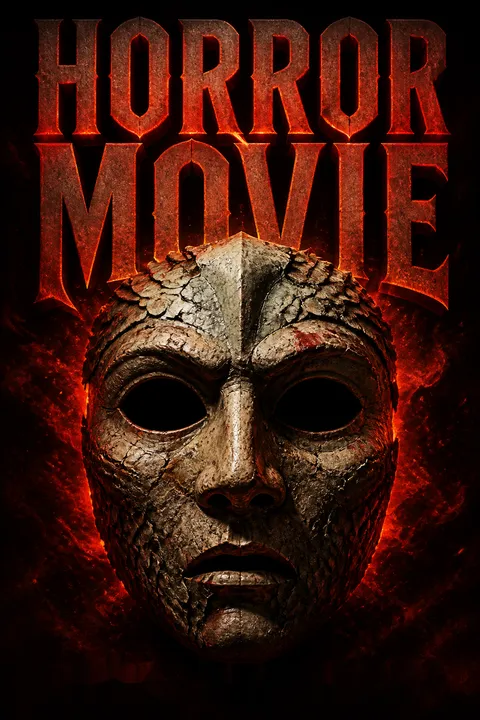
In its classroom, the three teens seat the Thin Kid, place a reptilian mask over his head, strip him to his underwear, and shut him inside a supply closet. Cleo has told the actor that she found the mask in that school, resting on a featureless foam head amid deliberately scratched floorboards.
She cannot prove what made the marks, and the group leaves the mask’s origin unexplained. The actor wears it anyway, accepting the role’s exposure and discovering that its blankness feels safer than his own face.
The mask is introduced as both an object with a possible history and a tool for withholding history. Cleo’s account leaves room for supernatural belief without establishing it as fact, while the film’s refusal to show the Thin Kid’s face makes viewers complete the image themselves. For the actor, concealment initially offers relief from shame. That relief is unstable: once his face disappears, the others can treat the body beneath the mask as a character rather than a person, and he has agreed to let the film define the difference.
Left Behind in the Closet
After the first classroom shoot, the actor asks to stay alone in the abandoned school so he can understand the Thin Kid’s isolation. He enters the supply closet, shuts off his flashlight, and hears scratching behind the wall. He tells himself the sound may come from a small animal, but the dark makes every creak and rattle feel like a message.
At some point he falls asleep, partly undressed, and wakes cramped on the floor. The screenplay then leaves the Thin Kid there while Valentina, Cleo, and Karson return to school, lie to their parents, and bring him food and a bucket. They pelt him with debris until he curls in a bruised heap. Cleo secretly returns, paints a symbol on the floor, and tells him to sit on it.
The actor’s overnight stay turns a chosen exercise into a rehearsal for the film’s coercive logic. He remains because leaving would feel like abandoning the role, even as he cannot tell whether the noises are ordinary or not. In the screenplay, the teens’ care and cruelty arrive together: they feed the boy after assaulting him, and Cleo offers a ritual instead of an explanation. The symbol gives their actions a structure without giving them an ethical defense. Its power lies partly in making an arbitrary ordeal look like a process with a destination.
Cruelty Becomes Routine
Cleo, Valentina, and Karson keep returning to the school. Their attacks move from stones and broken glass to coins, bats, insults, and cigarettes; at school, classmates express concern for the missing Thin Kid, while the three friends conceal what they are doing.
Valentina rejects a planned montage in which their classmates’ sympathy would reward them, preferring to show the same indifferent school day repeating as the violence worsens. During the cigarette scene, the actor volunteers to let Cleo press a lit cigarette against his chest for a real burn.
The scene leaves a lasting injury, and Valentina’s script shows the mask gradually merging with the Thin Kid’s skin. The actor’s pain becomes harder to separate from the character’s, while the teenagers’ explanations shrink to the claim that they must continue.
Repetition strips away the comforting idea that cruelty is always performed for social reward. The classmates’ unchanged reactions deny the teens a simple motive, while the escalating attacks show how an act can become its own justification once a group has committed to it. The actor’s real burn echoes the film’s central confusion between simulated harm and actual harm. His willingness is not proof that the situation is safe; it shows how the desire to belong to the work can make a person offer up his body before anyone asks twice.
The Shears Close
For a scene in which Karson cuts the Thin Kid’s pinky with garden shears, the crew prepares a fake severed piece and a blood effect. The actor’s real finger nevertheless ends up between the blades, and part of it is cut off.
No one can later settle whether he misplaced his hand, moved it deliberately, or trusted a safety measure that failed. At the hospital, Cleo stays beside him and tries to distract him with memories and small questions.
Valentina apologizes and offers to cover uncovered medical costs; Cleo argues that filming should stop, while Valentina wants to continue. The actor decides against reattachment so production will not lose weeks. He tells them he will keep filming, though his account of how the accident happened remains uncertain.
The severed finger is the point where the film’s metaphorical violence becomes indisputable bodily fact, but the narrator refuses to provide a clean causal story. That refusal matters: an accident, an impulsive act, and a deliberate performance would carry different kinds of responsibility, yet his memory cannot separate them. The hospital scene also exposes a conflict between care and completion. Cleo wants to stop the process; Valentina wants to preserve the production; the injured actor chooses to return. The choice is his, but it is made inside a group already organized around finishing at any cost.
The Mannequin Learns Fear
Cleo visits the injured Thin Kid with food and first aid, covering his wounds and refreshing the green scales that spread from his mask. The teens later bring a mannequin, a screwdriver, and a tape recorder playing a woman’s screams. Karson demonstrates how to stab the dummy, then makes the Thin Kid repeat the act.
At first the masked boy struggles to hold the tool; on his next attempt, he drives it through the mannequin and lifts its body with one arm. The teens shut him back in the supply room. In the screenplay, police begin searching for the missing boy as the trio prepare to take him to a party. On set, the actor’s performance and injuries increasingly make the Thin Kid feel less like a part he can remove.
The mannequin is a rehearsal target, but it also marks a change in who controls the performance. The teens teach the Thin Kid violence as if they can prescribe its intensity and then contain its consequences. His sudden strength breaks that arrangement: the instrument they use to make him imitate a killer becomes evidence that he may no longer be merely imitating. Cleo’s first-aid visits preserve a thread of tenderness, but care here cannot undo the harm or restore the boy’s freedom. The actor’s growing identification with the role gives this fictional change a disturbing counterpart on set.
The Party Goes Quiet
The three teens take the Thin Kid to a party at a wealthy classmate’s house. Their plan is unclear even to them, and the screen stays outside the tall hedge surrounding the yard. The Thin Kid suddenly sprints, leaps over the bushes, and disappears among the partygoers. Music and laughter give way to screams, breaking glass, and fleeing cars.
The monster emerges alone, fully scaled, with claws where his knife had been. Valentina is thrown across the lawn; Cleo stays behind, while Karson runs to his own house. The screenplay turns that house into a maze, with its lights switching on behind him and his father’s voice seeming to come from above. The Thin Kid reaches the doorway and kills Karson, completing the threat the teens helped create.
Keeping the party’s violence out of view makes the victims harder to consume as spectacle, yet the sounds leave no doubt about what has happened. The hedge becomes a boundary the teens cannot control, and the Thin Kid’s impossible jump converts the group’s private ritual into public consequence. Karson’s flight returns him to the house where he already feels trapped; the maze-like rooms suggest that familiar shelter can become another enclosure. His death is not a sudden invasion of evil from elsewhere. It follows from a practice the teens have repeatedly chosen and taught.
The Final Classroom Take
Cleo lures the Thin Kid away from Karson’s house and back through the woods to the school, where she takes up the chainsaw left behind. During the shoot, she and the actor circle and fight through many takes. For the final effect, the crew bolts a steel shield and block of wood to the teacher’s desk so the saw will appear to cut into Cleo.
As the camera rolls, Cleo releases one hand, hides it in her pocket, then pulls the running saw toward herself and sits up. The actor bends with the movement and cannot recover in time; the blade cuts her neck. Cleo dies. The film captures fragments of the event, and the actor later says courts accepted suicide while the production was still held legally responsible for unsafe conditions.
The climax collapses the distinction that the production has relied on: a fictional death is staged with real machinery, and a real death occurs inside the staged action. The shield and block offer procedural reassurance, but they cannot govern what a person will do or how another will react in a fraction of a second. The narrator’s account resists both innocence and certainty. He acknowledges the legal finding and Cleo’s apparent intention, yet remains haunted by the possibility that his own movement mattered. The film’s central horror is therefore not simply that art imitates violence, but that collaboration can make real consequences seem like part of the scene.
Valentina Releases the Film
After the shoot, the cast and crew scatter. Karson dies in a car crash in 1998, makeup artist Melanie later disappears while swimming, and cinematographer Dan dies in 2007. In 2008, Valentina, now terminally ill with pancreatic cancer, calls the actor back to Rhode Island.
She has preserved every frame but cannot watch the final scene. She asks him to help build interest until someone makes the movie, then uploads three completed sequences and Cleo’s screenplay while he stands beside her wearing the mask.
In the eerie account of what follows, Valentina drugs him and cuts part of his pinky; he swallows it beneath the mask, which seems to open his body into something inhuman. Valentina dies, leaving the film to grow through fragments and rumor.
Valentina’s plan turns release into a delayed form of filmmaking: instead of completing the movie herself, she plants fragments that other people will assemble in their imaginations. Her request asks the actor to convert his shame and grief into publicity, making him both custodian and commodity. The finger-cutting episode makes this bargain bodily, though the narrator’s conflicting accounts prevent it from settling into ordinary fact. The mask may be a supernatural agent, a prop invested with belief, or the shape his guilt takes. Whatever its status, Valentina’s plan succeeds by making uncertainty itself the film’s most marketable feature.
The Thin Kid Goes Viral
After Valentina’s death, online communities make Horror Movie famous through its released scenes, screenplay, fan art, and rumors of a curse. The actor resists interviews, then follows his manager’s advice and attends a horror convention in 2019. Fans buy stills and ask about the remake; one attendee accuses him of faking his missing pinky to profit from the film.
He reveals the amputated tip, whose rough surface has grown the same green color as the mask. The crowd records his answer, and the clip spreads. The attention helps Hollywood take the project seriously, but it also makes his body part of the evidence people debate. The film’s legend no longer depends on a complete cut; every gap invites another claim.
The convention converts private injury into public proof, but proof does not end the argument. The fan wants a visible fact that will settle the story, while the actor’s green, altered finger makes the evidence stranger rather than clearer. This is the book’s media economy in miniature: a wound becomes merchandise, a denial becomes publicity, and an ambiguous image generates more engagement than a definitive answer. The actor resents being turned into a symbol, yet he also participates in the performance that sustains the legend. His identity is now difficult to separate from what audiences want the Thin Kid to mean.
The Reboot Takes Shape
Years later, director Marlee Bouton persuades the studio to use Cleo’s screenplay with minimal changes and asks the actor to return as the masked Thin Kid after a younger performer begins the role. At Feral FX, he brings in the original mask and sits for a life cast.
The artists discover that the scales across his chest leave raised impressions in the mold, not the smooth marks ordinary tattoos should make. He tells them little. Marlee intends practical effects and film, but she also questions whether the screenplay released online is exactly the version Cleo wrote.
The actor knows Valentina marked up a copy before her death, yet stays silent because he fears further investigation could delay production. For him, the remake is a chance to finish the work and reenter it.
The remake offers a form of repair, but its production reproduces the old imbalance between the actor’s body and the project’s needs. Marlee is more respectful of the original vision than earlier producers, yet the actor is still valuable partly because his physical history can function as an effect. The mold’s impressions make his transformation harder to dismiss as costume, while his silence about Valentina’s edits shows how he now manages information to protect the remake. His longing to return is not just nostalgia. He hopes the film can complete an experience that has remained unfinished inside him.
Under the New Kid's Bed
The remake gives the actor only a small part in Karson’s death, and he grows bitter as the younger Thin Kid receives the scenes he expected to play. Before the planned filming of Cleo’s death, he hides beneath the young actor’s trailer bed. He says he emerges fully transformed, kills the actor, hides the body under the bed, and paints Cleo’s symbol in blood.
He then describes several possible endings, from completing the chainsaw scene to escaping into the world, before admitting he has not chosen which one will happen. The account may be literal, delusion, or another script he is imposing on reality. The book ends with production calling him to set, leaving the replacement and the final film unresolved.
The ending refuses the reassurance of a settled explanation. The actor’s account is precise enough to feel like a confession, yet it arrives beside explicit alternatives and his history of turning events into scenes. His desire to reclaim the role becomes an act of possession, whether psychological or supernatural: he would rather destroy the younger performer than accept being edited out. The unfinished ending also implicates the audience. We are offered several outcomes and invited to wait for the one that will make the strongest story, repeating the same appetite for spectacle that has consumed the actor, Cleo, and the lost film.
Analysis
Horror Movie treats filmmaking as a form of collaboration that can turn coercion into a shared project. Valentina and Cleo make a film about teenagers who harm someone under the cover of friendship and ritual; the young crew then repeats a related pattern by accepting real bodily risk in order to finish their own film. This parallel does not make the fictional violence a simple allegory for the set. Rather, the novel keeps asking where metaphor stops being a useful shield and starts becoming an excuse.
The Thin Kid’s hidden face gives the audience work to do. Viewers imagine his features, decide whether he is pitiable or monstrous, and discover that their interpretations can change with the violence around him. The mask therefore implicates spectators without claiming they are identical to the teenagers who hurt him. It exposes how readily people convert uncertainty into a story that makes watching feel justified.
The actor’s narration extends that problem into memory. He admits what he cannot know, yet also shapes those gaps into scenes, jokes, and possible endings. His self-awareness does not make him reliable; it makes the instability more intimate. He recognizes that he is helping to manufacture the legend that has consumed his life, but recognition does not free him from wanting the legend to continue.
The book’s most unsettling claim is not that art is cursed. It is that art can offer a language for suffering while also rewarding the people who keep suffering visible. Valentina’s fragments preserve Cleo’s work, but they also recruit audiences and Hollywood into a new cycle of interpretation and exploitation. The unresolved ending leaves that cycle running, asking whether the next viewer can watch without becoming another participant.
Review Summary
Reviews for Horror Movie are deeply divided, averaging 3.25 out of 5 stars. Fans praise its unique multi-format structure—blending screenplay excerpts, past and present timelines, and unreliable narration—calling it a brilliant, unsettling love letter to horror. Critics, however, find it pretentious, slow-burning to a fault, with underdeveloped characters and minimal payoff. The screenplay format frustrated many readers, while others found it immersive. Common criticisms include poor pacing, shallow characterization, and insufficient horror. Supporters highlight its psychological depth and originality, while detractors label it self-indulgent and boring.
People Also Read


Characters
The Actor / the Thin Kid
The mask's reluctant vesselThe unnamed actor is a tall, self-conscious young man who accepts Valentina’s role while struggling with money, body shame, and a lifelong sense of being overlooked. As the Thin Kid, he must communicate almost entirely through posture and movement, and the mask initially seems to offer freedom from being judged by his face. He is perceptive about the film’s contradictions but often turns discomfort into jokes or commits more deeply rather than withdrawing. In later life he becomes the keeper of the mask and the public face of the film’s legend. His narration is candid yet unstable: he acknowledges gaps, revises memories, and sometimes treats his life as if it were still being directed.
Valentina Rojas
The uncompromising directorValentina is a sharp, ambitious filmmaker whose confidence is inseparable from a fear of compromise. She directs Horror Movie, plays a version of herself, and works closely with her old friend Cleo to protect the project’s unsettling design. Her wit and command can make her magnetic, but they also let her push other people past their reservations. She values artistic integrity, distrusts commercial reassurance, and sees deliberate discomfort as part of the film’s language. Her complicated relationship with her parents and her fierce loyalty to Cleo shape how she manages both the production and her own vulnerability.
Cleo Picane
The screenplay's haunted authorCleo is a screenwriter, actor, and longtime friend of Valentina and Karson. Quietly observant and intellectually intense, she carries depression without becoming a passive figure; she studies horror films, writes from what unsettles her, and remains attentive to the people around her. Her screenplay draws on private fears and on the abandoned school she explored as a teenager. Cleo can be compassionate and frighteningly committed at once, tending wounds even as she helps sustain the film’s ritualized cruelty. She distrusts tidy explanations and wants the work to hold contradictions rather than resolve them. Her guardedness makes her difficult for the actor to read, even when she is trying to care for him.
Karson
The anxious friendKarson is Valentina and Cleo’s friend from high school and a makeup and effects artist on the film. He is nervous, self-conscious, and often caught between wanting to please his friends and fearing what they are doing. At home, he lives under a father whose presence feels physically and emotionally imposing. His recurring childhood memory of a frightening crocodile poem supplies one of the screenplay’s most personal images. Karson is capable of sudden force, but he is not naturally comfortable with violence; his hesitations and apologies distinguish him from the role he performs. He often follows the group even when his body and expression show that he wants to stop.
Dan Carroll
The practical cinematographerDan is the film’s cinematographer and camera operator, an experienced professional working with a mostly inexperienced young crew. Patient and observant, he keeps production moving while questioning choices that could waste time or create risk. His instincts often favor clarity, craft, and a measure of audience connection, which puts him in productive tension with Valentina’s appetite for the strange. He is also one of the few people who speaks to the actor as a person while the mask is on. Dan’s professionalism offers the production a stabilizing presence, though it cannot make the set safe from every consequence.
Melanie
The irreverent effects artistMelanie, usually called Mel, is Karson’s cousin and a makeup and hair artist who assists with the film’s practical effects. She uses jokes and family gossip to loosen the tension when the set becomes too solemn, and her easy manner gives the actor a rare opening for ordinary conversation. She helps create the injuries that the Thin Kid appears to suffer, making her work part of the film’s delicate boundary between makeup and genuine pain. Mel is a warm presence, but her humor never erases the seriousness of what the crew is attempting.
Mark
The helpful gripMark is the production’s grip, a metal-loving engineering graduate who dropped out of graduate school. He is generous with bootleg concert recordings and is one of the few crew members who chats with the actor during filming. Mark helps with equipment and practical setups, including the chainsaw scene. His friendliness makes him a small bridge between the masked performer and the crew, though even that ordinary connection narrows as the shoot becomes more intense.
Marlee Bouton
The faithful reboot directorMarlee is a Canadian horror director with a reputation for thoughtful, independently made supernatural films. She persuades the studio to preserve Cleo’s unusual screenplay rather than smooth it into a conventional remake. She is enthusiastic about horror but conscious of the difference between transgression and exploitation, particularly when deciding what violence to show. Marlee treats the actor’s history as important to the production, while recognizing that working with him carries emotional and practical complications. Her curiosity about the script’s provenance puts her in danger of reopening questions the actor would prefer to leave unresolved.
George
The remake's dealmakerGeorge is a Hollywood producer who can move projects from conversation into production, even if his taste and manner leave the actor skeptical. He speaks in familiar industry language and tries to establish a personal connection based on an acquaintance who supposedly worked on the original set. When challenged to provide a name, he cannot. His role captures the remake’s commercial machinery: he wants the film’s legend and fan interest, while the actor insists that the people who actually lived through the shoot cannot be replaced by convenient stories.
Janelle Ko
The effects-shop leadJanelle leads the makeup effects team preparing the reboot. They are experienced, candid, and careful to explain the life-casting process before covering the actor’s face and chest. Their easy conversation helps him manage the claustrophobic procedure, and their attention to the mold reveals details about his body that ordinary makeup would not explain. Janelle is not invested in Hollywood’s mythology around the actor; they approach him first as a performer whose comfort and safety matter.
Kirsten Billings
The actor's career managerKirsten is the actor’s blunt, practical manager. She arranges his first horror convention appearance and urges him to price his photographs and appearances more confidently. Her advice helps him turn an obscure role into a paying public presence, even as she encourages the mysterious persona that feeds the movie’s legend. Kirsten understands attention as an asset and knows how to package it, but the emotional cost of that packaging belongs to the actor.
Plot Devices
The reptilian mask
A face that withholds answersCleo says she found the mask on a foam head in the abandoned school, surrounded by scratches she could not explain. Its features are grotesque but familiar, and the film rarely gives viewers a clear view of the Thin Kid beneath it. For the actor, wearing it makes self-consciousness feel briefly manageable; for the story, it allows fear and interpretation to gather around an unseen face. The mask later appears to merge with the Thin Kid’s skin, and the actor’s own body develops matching signs. Whether it is cursed, symbolic, or a product of unstable memory remains unresolved.
Cleo's restricted screenplay
Knowledge arrives one scene lateValentina gives the actor only the pages required for the next day’s filming. He cannot see where the story is headed, so his discoveries as a performer resemble the Thin Kid’s limited understanding. This method helps create immediate reactions, but it also deprives the actor of context when he agrees to scenes involving exposure and injury. Later, the screenplay itself becomes an object of speculation: Marlee wonders whether Valentina altered the version released online, while the actor withholds what he knows about her marked-up copy. The incomplete script turns uncertainty into a production technique and a lasting source of suspicion.
The painted symbol
A ritual without a clear rulebookCleo paints a looping green sign on the classroom floor and tells the Thin Kid to sit on it, describing the markings as meaningful but not meant to be spoken. The teens return to the spot as they torment him, and its appearance changes as the mask and the boy’s body change. Blood later obscures the design, and its traces reappear in unexpected places. The symbol seems to connect the mask, the Thin Kid’s transformation, and the film’s repeated cycles, but neither Cleo nor the actor can establish exactly what it does. Its ambiguity lets characters act as though a ritual explains their behavior without proving that it does.
The unfinished footage
Fragments manufacture a legendValentina preserves every frame of the original production but cannot bring herself to watch its final scene. Instead, she uploads three finished sequences, still photographs, and Cleo’s screenplay. The incomplete release gives viewers enough material to imagine the missing film while leaving its making open to rumor. Fans debate the cast, the actor’s injury, and the supposed curse, and Hollywood eventually sees the legend as evidence of a waiting audience. The fragments do not merely advertise a future remake. They make the audience participate in creating the film’s identity, with each gap capable of supporting competing versions.
The actor's unreliable account
Memory behaves like another cutThe actor narrates from the present while reconstructing the 1993 shoot, the fictional screenplay, and later encounters with Valentina. He openly admits uncertainty about the finger accident, revises details, and describes memories as if he were still seeing through the Thin Kid’s mask. His account is not simply a puzzle to solve: the novel shows how grief, guilt, performance, and repetition can make a person experience remembered events as scenes that keep happening. By the ending, he reports an apparent attack on the young actor while also proposing alternate endings. Readers must weigh his concrete detail against his evident desire to keep controlling the story.
About the Author
Other books by Paul Tremblay
Download PDF
Download EPUB
.epub digital book format is ideal for reading ebooks on phones, tablets, and e-readers.








