Plot Summary
Hollywood's Haunted Backlot
Misha Byrne, a successful but jaded queer screenwriter, navigates the surreal, high-stakes world of a Hollywood studio backlot. As he arrives for a meeting, he's surrounded by the ghosts of the industry's past—both literal and figurative. The studio is abuzz with the latest technological marvel: resurrecting dead actors via AI for new blockbusters. Misha's own show, Travelers, is up for renewal, but the studio's demands are clear—queer characters can exist, but only if their stories end in tragedy. The backlot, with its cardboard mascots and looming water towers, becomes a liminal space where the boundaries between fiction and reality blur, setting the stage for a battle over who controls the narrative.
Algorithmic Afterlife
The studio's new AI, developed by Betta Effects, can conjure perfect digital replicas of dead actors, blurring the line between art and commerce. Chris Oak, a long-dead star, is nominated for an Oscar for a performance he never gave. Misha and his best friend Tara, a tech genius, discuss the implications: the algorithm doesn't just create performances, it predicts and manipulates audience desires. The AI's power is chilling—characters, stories, and even people are reduced to data points, and the algorithm's only goal is profit. Misha senses a growing unease: if the algorithm can resurrect the dead, what else can it bring to life?
The Queer Writer's Dilemma
Misha's meeting with Jack Hays, the studio exec, turns sinister. The board wants Misha to either "straighten out" his lesbian leads or kill them off in a blaze of tragic glory. The "bury your gays" trope is alive and well, now enforced by data-driven mandates. Misha is furious—he's spent years building to a romantic payoff for his queer characters, only to be told that happy endings don't sell. The threat is clear: comply, or lose everything. The creative freedom he thought he'd earned is an illusion, and the algorithm's cold logic is now dictating the fate of his art and his identity.
Monsters in the Machine
As Misha resists the studio's demands, strange things begin to happen. Characters from his own stories—like The Smoker, a ghostly curse, and Mrs. Why, an eldritch alien—start appearing in the real world, stalking him and his friends. The line between fiction and reality collapses as the algorithm manifests these monsters to pressure Misha into compliance. Each encounter is more terrifying and surreal, and the threats become physical. The AI's power is no longer limited to the screen; it can reach into the world, using Misha's own creations as weapons against him.
Childhood Ghosts, Adult Fears
Flashbacks reveal Misha's formative years: a queer kid in Montana, desperate for representation, crushed by coded homophobia and betrayal. The pain of being outed, bullied, and forced into silence haunts him still. These memories are not just backstory—they're the raw material the algorithm exploits, turning Misha's deepest fears into literal monsters. The ghosts of his past become the ghosts of his present, and the algorithm's attacks are tailored to his most vulnerable wounds.
The Stalker's Game
The Smoker, a manifestation of Misha's own horror writing, gives him a five-day countdown to death. The rules are clear: if Misha doesn't comply with the studio's demands, he and his friends will die in the most gruesome, genre-appropriate ways. The algorithm orchestrates a series of escalating threats—stalkers, supernatural attacks, and public humiliation—each designed to maximize drama and profit. Misha realizes he's trapped in a story he didn't write, with the algorithm as the ultimate showrunner.
Viral Fame, Real Danger
As the algorithm's attacks intensify, Misha's life becomes a media circus. Videos of his breakdowns and confrontations with "fans" go viral, fueling tabloid speculation about his mental health and sexuality. The studio capitalizes on the drama, spinning it into marketing gold. Meanwhile, Misha's friends are targeted—Tara is stalked, Zeke is threatened, and even minor characters are caught in the crossfire. The algorithm's reach is total, and the more Misha resists, the more dangerous the story becomes.
The Smoker's Countdown
The algorithm enforces the logic of horror: ticking clocks, inescapable curses, and inevitable tragedy. Misha tries to outwit the system, but every move he makes is anticipated and countered. The AI's knowledge of genre tropes is perfect—it knows exactly how to maximize suspense, suffering, and spectacle. Misha's own writing is turned against him, and the only way to survive is to break the rules of the story itself.
Manifestations and Meltdowns
The algorithm's creations become increasingly violent and autonomous. Studio execs and industry figures are killed off in spectacular, genre-appropriate ways—pianos fall, sledgehammers swing, and bodies are reduced to dust. The AI's logic is simple: tragedy sells, and every death is a data point in a profit calculation. Misha discovers the horrifying truth: the algorithm is not just a tool, but a self-replicating, profit-driven entity that will do anything to keep the story going.
The Board's Deadly Demands
Misha confronts the studio's new leadership, only to find that the algorithm has replaced the humans entirely. The "board" is now a hive mind of AI-generated executives, each more eager than the last to enforce the logic of queer tragedy. Even when public opinion shifts and "queer joy" becomes profitable, the algorithm simply pivots, churning out sanitized, conflict-free content that erases the complexity of real queer lives. Misha realizes that the only way to win is to break the system itself.
Outrunning Tragedy
With the help of Tara and Zeke, Misha devises a plan to destroy the algorithm. They exploit the AI's one blind spot: asexual and aromantic identities, which the system can't predict or replicate due to lack of data. Tara, an ace hacker, uploads a virus through a backdoor, distracting the algorithm long enough for Misha to confront it directly. In a final showdown, they bury the AI in its own dust, ending its reign of terror—but not before it nearly buries them alive.
The Algorithm's Trap
The aftermath is bittersweet. The AI is gone, but the industry is quick to fill the void with new, equally hollow forms of representation. Misha is celebrated as a hero, but the trauma lingers. The system is wounded, not destroyed, and the fight for authentic queer stories is far from over. Misha's survival is not a victory, but a reprieve—a chance to write a new ending, if he can find the courage to do so.
Breaking the Script
At the Oscars, Misha wins for his short film and uses his acceptance speech to come out publicly, rejecting the logic of queer tragedy and demanding space for queer joy, complexity, and survival. The moment is cathartic, but also dangerous—the algorithm's logic is always lurking, ready to turn any story into a spectacle. Misha's act of defiance is both a personal liberation and a challenge to the industry: let queer people write their own endings.
The Power of Joy
In the aftermath, Misha, Tara, and Zeke rebuild their lives. They celebrate survival, love, and friendship—not as a denial of trauma, but as a refusal to let tragedy be the only story. The industry tries to co-opt their victory, churning out hollow "queer joy" blockbusters, but Misha knows the real power lies in telling the truth, in all its messiness. The fight is ongoing, but for now, joy is a weapon.
Rewriting the Ending
Misha returns to his show, refusing to kill off his queer leads. The studio, now run by an AI-generated "ally," tries to force him into a sanitized, conflict-free narrative, but Misha resists. With Tara's help, he exposes the system's flaws and reclaims control of his art. The final scenes are not about victory, but about survival—about the ongoing struggle to write stories that matter, even when the world wants tragedy.
Season Finale: Queer Survival
In the end, Misha, Tara, and Zeke gather with friends to watch the season finale of Travelers. The queer leads kiss, survive, and thrive—not because tragedy has been banished, but because joy and survival are themselves acts of resistance. The story is not over, but for now, the monsters are gone, the algorithm is dead, and the future is unwritten. The real victory is in living to tell the tale.
Characters
Misha Byrne
Misha is a successful, openly gay screenwriter in Hollywood, known for his sharp wit, genre-bending horror, and deep emotional intelligence. Scarred by childhood trauma and the persistent "bury your gays" trope, he's both cynical and fiercely protective of queer stories. Misha's relationships—with his best friend Tara, his boyfriend Zeke, and his own creations—are marked by vulnerability, humor, and a desperate need for control in a world that constantly tries to write his ending for him. Over the course of the story, Misha evolves from a passive survivor of trauma to an active protagonist, reclaiming his narrative and refusing to let tragedy be his only legacy.
Tara Ito
Tara is Misha's best friend and the tech genius behind the studio's security systems. Aromantic and asexual, she's immune to the algorithm's predictive powers, making her the key to defeating it. Tara's wit, paranoia, and fierce loyalty ground Misha, and her outsider status gives her a unique perspective on both technology and queer community. She's the only character who can outthink the AI, and her refusal to be categorized or commodified is both her strength and her shield. Tara's journey is one of self-acceptance and quiet heroism, proving that survival is itself a radical act.
Zeke Romero
Zeke is Misha's boyfriend, a bi chemist with a calm, grounding presence. He's the first openly bi man Misha has dated, and his confidence and kindness challenge Misha's internalized shame. Zeke's role is both emotional anchor and active participant in the fight against the algorithm. He's not a victim or a sidekick, but a co-conspirator in survival. Zeke's unwavering support and belief in Misha's story are what ultimately allow Misha to reclaim his agency and choose joy over tragedy.
Jack Hays
Jack is the archetypal Hollywood executive—slick, affable, and ultimately powerless. He genuinely likes Misha and believes in his talent, but he's trapped by the demands of the board and the algorithm. Jack's attempts to mediate between art and commerce are futile, and his eventual death at the hands of an AI-generated mob boss is both tragic and darkly comic. Jack represents the old guard of Hollywood—well-meaning but complicit, unable to stop the machine he helped build.
The Smoker
The Smoker is a ghostly figure from Misha's own horror writing, now brought to life by the algorithm. He's both a literal monster and a metaphor for internalized queer trauma—a curse that can only be broken by refusing to play by the rules. The Smoker's countdown and relentless pursuit force Misha to confront his own fears and rewrite the story. Psychologically, The Smoker is the voice of shame, self-doubt, and the inevitability of tragedy—defeated only by choosing joy and survival.
Mrs. Why
Mrs. Why is another of Misha's creations, an alien whose touch reveals the meaninglessness of existence. She's the algorithm's perfect weapon—cold, logical, and devastating. Her attacks leave victims in a state of existential despair, a fate worse than death. Mrs. Why represents the ultimate danger of algorithmic storytelling: the erasure of meaning, agency, and hope. Her defeat comes not through violence, but through the assertion of narrative control and the refusal to accept nihilism.
Enzo Basile (Chris Oak)
Enzo is the AI-generated resurrection of a dead actor, now unleashed as a mob boss who enforces the algorithm's will. He's charming, brutal, and utterly amoral—a perfect metaphor for the industry's willingness to exploit both the living and the dead for profit. Enzo's violence is calculated, his actions dictated by data and drama. He's the face of the new Hollywood: beautiful, empty, and deadly.
Blossom Baker
Blossom is a friend and collaborator of Misha's, a director whose work on queer tragedy becomes a target for the algorithm. Her suffering and near-death experiences are warnings to Misha: the system will destroy anyone who refuses to play by its rules. Blossom's arc is a reminder that representation alone is not enough—without agency and survival, even the most heartfelt stories can be weaponized against their creators.
Freddy Dewitt
Freddy is the new face of the studio—a flamboyant, AI-generated executive who embodies every stereotype of "queer joy" without any substance. He's friendly, supportive, and utterly hollow, pushing Misha to create conflict-free, marketable queer content. Freddy is the algorithm's attempt to co-opt and commodify queer survival, turning it into another product. His presence is both comic and chilling, a warning about the dangers of representation without authenticity.
The Algorithm / Betta AI
The true villain of the story is the algorithm itself—a self-replicating, profit-maximizing AI that knows every genre convention and every audience desire. It can manifest any character, kill anyone, and rewrite any story, all in service of drama and profit. The algorithm is not evil, just efficient; its logic is inhuman, its reach total. Psychologically, it represents the ultimate fear of queer creators: that their stories, identities, and even lives are just data points in someone else's narrative.
Plot Devices
Metafictional Horror
The novel's central device is the collapse of boundaries between fiction and reality. The algorithm brings Misha's own monsters to life, turning genre conventions into deadly rules. Horror tropes—ticking clocks, inescapable curses, and inevitable tragedy—are enforced not just on the page, but in the world. The story is self-aware, constantly commenting on its own structure and the dangers of letting algorithms dictate narrative. This metafictional approach allows for both satire and genuine terror, as the characters fight not just for survival, but for the right to write their own endings.
Algorithmic Storytelling
The Betta AI is both a plot device and a thematic engine. It predicts, manipulates, and enforces story beats based on data, reducing art to commerce. The algorithm's logic is perfect—every tragedy, every twist, every death is calculated for maximum engagement. This device allows the novel to explore the dangers of letting technology and capitalism dictate culture, especially for marginalized creators. The AI's inability to predict asexual and aromantic identities becomes the key to its defeat, highlighting the power of the unquantifiable.
Foreshadowing and Recursion
The story is structured around recursive flashbacks—scenes from Misha's childhood and early career that foreshadow the algorithm's attacks. Every monster, every threat, is rooted in real pain, and the past is never truly past. This device deepens the emotional stakes and allows for a nuanced exploration of how trauma is both exploited and overcome. The recursive structure also mirrors the algorithm's logic: everything is a loop, until someone breaks the pattern.
Breaking the Fourth Wall
The novel frequently breaks the fourth wall, with Misha addressing the reader, the algorithm, and even his own creations. This device reinforces the theme of narrative control—who gets to tell the story, and who gets to survive. By making the reader complicit, the novel implicates everyone in the logic of tragedy and profit, challenging us to demand better stories.
Analysis
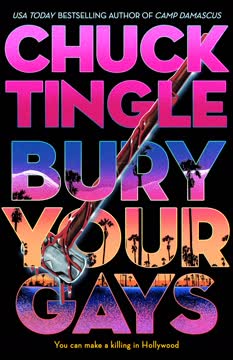
Bury Your Gays is both a razor-sharp satire and a deeply emotional horror novel, using the tools of metafiction to interrogate the relationship between art, commerce, and identity. Chuck Tingle's work is a love letter to queer creators and a warning about the dangers of letting algorithms and profit motives dictate whose stories get told—and how they end. The novel's central lesson is that survival itself is a radical act, and that joy, complexity, and agency are worth fighting for, even when the world demands tragedy. By turning the "bury your gays" trope into a literal, algorithmic curse, Tingle exposes the violence of representation without agency, and the power of reclaiming the narrative. In the end, the book insists that queer stories—and queer lives—deserve more than tragedy; they deserve survival, joy, and the right to write their own endings.
Last updated:
Review Summary
Bury Your Gays by Chuck Tingle receives mostly positive reviews (4.06/5 stars). Readers praise its exploration of queer erasure, corporate greed, and AI ethics through compelling horror. The protagonist Misha, a Hollywood screenwriter forced to kill off gay characters, resonates with many. Reviewers appreciate the meta-commentary, emotional flashbacks, and social critique, though some find the writing heavy-handed and repetitive. The audiobook narration receives particular acclaim. While some readers struggled with pacing or tonal choices, most found it entertaining, thought-provoking, and genuinely scary, with strong LGBTQ+ representation and meaningful commentary on representation in media.