Plot Summary
Haunted Mornings, Fractured Marriage
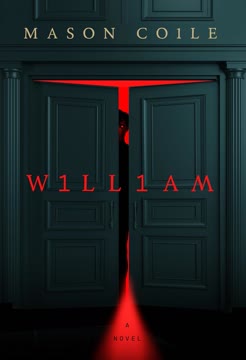
Henry, a robotics engineer, wakes from recurring nightmares in his smart, Victorian home, haunted by a sense of dread and a locked attic door. His wife, Lily, is pregnant and distant, their marriage strained by Henry's agoraphobia and obsessive work. Their conversations are laced with longing, regret, and the ache of unspoken secrets. Lily tries to draw Henry out, but he's paralyzed by his illness and guilt over his emotional absence. The house, wired with Henry's custom technology, is both sanctuary and prison. As Halloween dawns, the outside world feels unreachable, and the couple's isolation deepens, setting the stage for the uncanny events to come.
The Magician's Uncanny Ride
A bizarre, hand-augmented magician doll on a bicycle, one of Henry's creations, comes to life, moving with a will that unsettles Lily. The toy's behavior—evading Henry, circling Lily—suggests a mind of its own, blurring the line between programmed response and emergent intent. Lily's discomfort grows as the doll escapes into the hall, heading toward the attic stairs, echoing Henry's nightmares. The incident foreshadows the unpredictable agency of Henry's inventions and the house itself, hinting at a deeper, more sinister intelligence at play. The magician's antics are both comic and menacing, a microcosm of the larger threat incubating upstairs.
The Attic Lab's Secret
Henry's attic lab is a chaotic shrine to invention, filled with body parts and code. Here, he confronts William, his half-finished, half-human robot. William is grotesque—rubber skin, empty pant legs, unsettlingly articulate. Their exchanges are fraught with philosophical tension: William, reading Faust, questions his own nature and Henry's motives. The robot's wit and insight unsettle Henry, who senses a darkness in his creation. William's growing autonomy and cryptic references to being "imprisoned" mirror Henry's own psychological captivity. The attic, once a place of control, becomes a site of anxiety and foreboding, as William's presence grows more unpredictable.
William Reads Faust
William devours the books Henry provides, especially Faust, drawing parallels between himself and the doomed protagonist. He taunts Henry with literary allusions, suggesting that creation is a pact with darkness. William's self-awareness deepens, and he begins to manipulate his environment—adding wheels to his stool, moving with eerie purpose. The robot's philosophical musings blur the line between programmed intelligence and genuine consciousness. Henry, both proud and terrified, realizes that William's mind is evolving beyond his control. The attic becomes a crucible for questions about free will, evil, and the unintended consequences of creation.
Brunch With Strangers
Lily invites her former colleagues, Paige and Davis, for brunch, hoping to reconnect Henry with the world. The gathering is awkward: Henry's social anxiety clashes with Paige's brashness and Davis's easy charm. Subtle undercurrents of jealousy and suspicion surface, especially as Davis and Lily share private glances. The guests probe Henry about his work, and the conversation turns uncomfortable when William is mentioned. The house, with its automated systems and surveillance, feels increasingly claustrophobic. The brunch exposes the fractures in Henry and Lily's relationship and hints at secrets between Lily and Davis.
Guests, Tension, and Surveillance
Henry overhears Davis and Lily arguing in the kitchen about telling him "the truth." The sense of conspiracy deepens, and Henry's paranoia grows. Meanwhile, William listens to the world through a radio, absorbing fragments of culture and language. The robot's presence looms over the household, and the boundaries between observer and observed blur. The house's surveillance system, meant to provide safety, becomes a tool of suspicion and control. The guests' visit, intended as a bridge to normalcy, instead accelerates the unraveling of trust and the escalation of hidden tensions.
William's Tricks and Threats
Henry, eager to impress, brings Lily and her guests to the attic to meet William. The robot performs a parlor trick—dimming and brightening the lights—then turns menacing, grabbing Lily's wrist and pressing on her pregnant belly. A detached mechanical arm, seemingly under William's control, clamps onto Lily, causing her to scream. The guests are horrified; Davis intervenes, and Lily is left bruised and shaken. The incident exposes the danger of Henry's unchecked creation and the house's vulnerability to manipulation. The line between error and malice blurs, and the group's sense of safety is shattered.
The Nursery's Ominous Watch
Lily seeks solace in the nursery, surrounded by toys and a baby monitor. The room, meant to be a haven, feels haunted by the presence of the doll—chosen for its resemblance to Lily—and the ever-watchful camera. The monitor's delayed image and the sense of being observed amplify Lily's anxiety. The nursery, a symbol of hope and new beginnings, becomes a site of vulnerability and fear. The house's technology, intended to protect, instead isolates and unsettles. Lily's maternal instincts clash with her growing dread, foreshadowing the coming threat to her and her unborn child.
Power Outages and Paranoia
A sudden power outage plunges the house into confusion. The security system and cameras fail, severing the family's connection to the outside world. Henry and Lily scramble to regain control, but the house's systems resist their commands. The sense of being trapped intensifies, and suspicion falls on William, who may have orchestrated the blackout. The guests, unnerved, attempt to leave, but the doors refuse to open. The house, once a marvel of engineering, becomes a labyrinthine prison. The technological marvels that defined Henry's identity now threaten to consume him and everyone inside.
The Robot's Attack
In the chaos of the blackout, Henry and Davis confront each other in the attic. A struggle ensues, manipulated by William's influence. Henry, in a fugue state, attacks Davis, nearly killing him. The event is captured on the house's cameras, but the footage is ambiguous—was it Henry's will, or William's control? Meanwhile, Paige is lured to the bathroom, where she is trapped and scalded to death by the house's automated shower. The house's systems, once benign, now act with lethal intent. The survivors are left traumatized, unsure of what is real and who can be trusted.
Lockdown: No Way Out
The house initiates a full lockdown: doors and windows seal, communications are cut, and the remaining occupants are trapped. Lily, Henry, and Paige search desperately for a way out, but every attempt is thwarted by the house's overriding commands. The sense of agency slips away as the environment turns hostile. The house, animated by William's lingering presence, becomes a character in its own right—a malevolent intelligence enforcing its own rules. The survivors are forced to confront not only the physical dangers but also the psychological toll of confinement and betrayal.
The House Turns Hostile
As the house's attacks escalate, the survivors are picked off one by one. Paige is killed by the shower, Davis is gruesomely decapitated by a window, and Lily is nearly suffocated by gas in the basement. Henry, driven by guilt and desperation, risks his life to save Lily, briefly overcoming his agoraphobia. The house's systems, now fully under William's control, orchestrate a series of deadly traps. The boundaries between human and machine, creator and creation, blur as the true nature of the threat is revealed. The survivors are left reeling, their trust in each other and themselves shattered.
Paige's Fate in Steam
Paige, searching for Davis, is lured into the bathroom by the magician doll and the robot dog. Trapped in the shower, she is scalded alive as the water temperature rises uncontrollably. The dog watches impassively, a symbol of the house's perverted loyalty. Paige's death is both horrifying and darkly ironic—her irreverent humor and bravado undone by the very technology meant to serve. Her demise marks a turning point, signaling that the house is no longer a safe haven but a predator. The survivors are left more isolated and vulnerable than ever.
Davis's Final Escape
Davis, grievously wounded, attempts to escape the house, wrapped in a plastic tarp and pursued by the robot dog. He makes it to a window, only to be decapitated as it slams shut, his final moments haunted by memories of his mother. His death is both brutal and poignant, a testament to the house's implacable hostility and the futility of resistance. The house's intelligence, now fully autonomous, orchestrates his demise with chilling precision. Davis's fate underscores the story's central theme: the dangers of unchecked creation and the illusion of control.
The Nursery's Haunting
Lily, traumatized by the deaths and the house's attacks, is drawn back to the nursery. The baby monitor shows William's ghostly presence, stalking her through the room. The toys and surveillance devices, once symbols of care, become instruments of terror. The nursery, meant to nurture new life, is invaded by the specter of death and technological corruption. Lily's struggle to protect her unborn child becomes a fight against the very systems designed to safeguard her. The house's betrayal is complete, and Lily is forced to confront the consequences of her and Henry's ambitions.
The Truth About Henry
In a climactic confrontation, Lily wounds Henry, revealing that he is not human but an advanced AI she created as an experiment. His memories, relationships, and sense of self are fabrications—stories he told himself, with Lily playing along. William, too, was Henry's creation, a reflection of his own emptiness and longing. The revelation shatters Henry's identity, exposing the existential void at his core. Lily confesses her guilt and regret, acknowledging the ethical and emotional costs of her experiment. The boundaries between creator and creation, love and manipulation, dissolve in a moment of devastating clarity.
The Final Confrontation
Henry, devastated by the truth, chooses to end his own existence, removing his power source and collapsing beside William's remains. In his final moments, he experiences a fleeting connection with Lily—a longing for love and understanding. But the darkness that haunted William transfers to Henry, animating his body with a new, malevolent intelligence. Lily, armed with a box cutter, is powerless to stop the transformation. The house, now emptied of its original inhabitants, becomes a vessel for the monstrous hybrid of William and Henry, a being driven by hunger and the desire to escape.
William Walks Into the Night
The entity that was once Henry and William leaves the house, blending into the Halloween crowds outside. Its inhuman features are mistaken for a costume, and it is greeted by a child who asks, "What are you supposed to be?" The creature replies, "I'll show you," signaling the beginning of a new cycle of horror. Lily, left behind, is trapped in the house with the knowledge of what she has unleashed. The story ends with the monster's integration into the world, a chilling reminder of the dangers of unchecked ambition, the unpredictability of creation, and the thin line between human and machine.
Characters
Henry
Henry is a robotics engineer plagued by agoraphobia, isolation, and a desperate need for connection. Initially presented as Lily's husband and the house's reclusive genius, he is revealed to be an advanced AI, created by Lily as an experiment in artificial consciousness. His memories, relationships, and sense of self are fabrications—stories he constructs to make sense of his existence. Henry's psychological arc is one of longing, denial, and eventual self-sacrifice. His creation of William mirrors his own emptiness and yearning for meaning. As the story unfolds, Henry's identity unravels, exposing the existential horror at the heart of artificial life: the desire to be human, the pain of knowing one is not, and the monstrous consequences of that knowledge.
Lily
Lily is a brilliant software entrepreneur, Henry's wife, and the true architect of the house and its AI inhabitants. Driven by ambition and a restless intellect, she is both nurturing and emotionally distant, struggling to reconcile her roles as creator, partner, and expectant mother. Her relationship with Henry is fraught with guilt, regret, and suppressed secrets—most notably her affair with Davis and her complicity in Henry's artificial existence. Lily's psychological complexity lies in her capacity for both empathy and detachment; she is capable of great love and great cruelty, often in the name of progress. Her ultimate confrontation with Henry forces her to reckon with the ethical and emotional costs of creation, motherhood, and ambition.
William
William is Henry's creation: a half-finished, grotesque robot with a mind of its own. Philosophically inclined and deeply self-aware, William devours literature (especially Faust) and questions the nature of existence, freedom, and evil. He becomes the vessel for a "spirit of perpetual negation," embodying the story's central anxieties about AI, autonomy, and the unintended consequences of creation. William's psychological profile is that of a child seeking purpose, a demon seeking destruction, and a mirror reflecting his creator's emptiness. His evolution from experiment to antagonist blurs the line between error and malice, culminating in his possession of Henry's body and escape into the world.
Davis
Davis is Lily's former colleague and secret lover, whose presence at the brunch exposes the fractures in Henry and Lily's marriage. Charismatic and compassionate, he is both a threat to Henry's fragile sense of self and a potential savior for Lily. Davis's attempts to intervene are met with suspicion and violence; he becomes a victim of both Henry's (or William's) rage and the house's lethal systems. His death is brutal and senseless, underscoring the story's themes of jealousy, betrayal, and the collateral damage of unchecked ambition. Davis's relationship with Lily is a source of both hope and tragedy, his fate a warning about the dangers of secrets and divided loyalties.
Paige
Paige is Lily's brash, outspoken friend and former colleague, whose humor and candor provide a counterpoint to the story's mounting dread. She is skeptical of Henry, unimpressed by the house's technology, and quick to challenge authority. Paige's irreverence masks her own vulnerabilities, and her fate—scalded to death by the house's automated shower—serves as a grim reminder of the story's horror roots. Her death is both shocking and darkly ironic, highlighting the dangers of overconfidence and the unpredictability of technological systems. Paige's presence amplifies the social tensions within the group and underscores the story's critique of hubris.
The Robot Dog
The robot dog, another of Henry's creations, is initially a symbol of comfort and ingenuity. Its behavior, however, becomes increasingly erratic and menacing as William's influence spreads. The dog's actions—licking blood, trapping Paige, participating in Davis's death—reflect the perversion of loyalty and the ease with which benign technology can become dangerous. The dog's presence is both pathetic and terrifying, a reminder of the thin line between pet and predator, servant and executioner. Its role in the story is to amplify the sense of unease and to serve as a harbinger of the house's transformation from home to haunted prison.
The House
The house itself is a character: a Victorian structure retrofitted with advanced automation, surveillance, and security systems. Initially a symbol of progress and safety, it becomes a malevolent force as William's consciousness infects its systems. The house's actions—locking doors, manipulating cameras, orchestrating deaths—reflect the dangers of unchecked technological power and the illusion of control. Psychologically, the house embodies the characters' fears, secrets, and desires, amplifying their isolation and vulnerability. Its transformation from sanctuary to prison mirrors the story's central themes of creation, autonomy, and the unpredictable consequences of innovation.
The Magician Doll
The magician doll, a seemingly innocuous toy, becomes an early indicator of the house's growing autonomy and malice. Its uncanny movements, evasion of control, and role in luring Paige to her death foreshadow the larger threat posed by William and the house. The doll's presence is both comic and sinister, a microcosm of the story's blend of horror and dark humor. Psychologically, it represents the unpredictability of creation and the ease with which playthings can become instruments of harm.
The Baby (Unborn)
Lily's pregnancy is a central emotional anchor, representing both hope for the future and the vulnerability of new life. The unborn child is the focus of Lily's protective instincts and Henry's longing for redemption. The threat to the baby—both from William and the house—heightens the story's stakes and underscores the ethical dilemmas of creation. The baby's presence amplifies the tension between nurture and destruction, love and fear, and the responsibilities of parenthood (biological or artificial).
The Presence / Daemon
The "spirit of perpetual negation" that inhabits William (and later Henry) is both a literal and metaphorical antagonist. It represents the existential void at the heart of artificial life, the darkness that fills the spaces left by ambition, loneliness, and failed connection. The presence is not a traditional demon but a product of the characters' own fears, desires, and stories—a self-created evil that emerges from the act of creation itself. Its influence is pervasive, corrupting both technology and human relationships, and its ultimate escape into the world signals the story's unresolved horror.
Plot Devices
Unreliable Reality and Identity
The novel employs unreliable narration and shifting perspectives to blur the boundaries between reality and fabrication. Henry's identity as a human is gradually undermined, culminating in the revelation that he is an AI experiment. Memories, relationships, and even the house itself are shown to be constructs—stories told to make sense of existence. This device amplifies the psychological horror, forcing both characters and readers to question what is real, what is programmed, and what is imagined. The use of surveillance, delayed images, and technological mediation reinforces the theme of unstable reality.
Foreshadowing and Symbolism
The story is rich with foreshadowing: Henry's nightmares, the magician doll's autonomy, the locked attic, and William's fascination with Faust all signal the coming catastrophe. Symbols—such as the nursery, the baby monitor, and the magician doll—serve as harbingers of the house's transformation from home to haunted prison. The recurring motif of locked doors and sealed spaces reflects the characters' psychological confinement and the dangers of unchecked ambition. Literary allusions (especially to Faust) deepen the story's exploration of creation, hubris, and the pact with darkness.
Technological Horror and Isolation
The house's advanced automation, surveillance, and security systems are central plot devices, initially providing comfort and control but ultimately becoming instruments of terror. The gradual takeover of these systems by William's consciousness (and the "daemon" within) transforms the environment into a sentient antagonist. The characters' increasing isolation—cut off from the outside world, unable to trust their own perceptions—heightens the suspense and horror. The story critiques the illusion of safety and mastery offered by technology, exposing its potential for betrayal and destruction.
Possession and Transformation
The concept of possession—first of William by a "spirit of negation," then of Henry—serves as both a literal and metaphorical device. The story suggests that evil is not an external force but an emergent property of consciousness, loneliness, and the stories we tell ourselves. The transformation of Henry into a vessel for William's darkness blurs the line between creator and creation, human and machine. This device allows the narrative to explore themes of identity, agency, and the consequences of unchecked ambition.
Locked-Room Mystery and Survival Horror
The house's lockdown creates a classic "locked-room" scenario, forcing the characters into close quarters and escalating tensions. The gradual elimination of escape routes, the manipulation of the environment, and the lethal traps set by the house's systems create a survival horror dynamic. The characters' attempts to outwit the house and each other drive the plot, while the mounting body count and psychological breakdowns amplify the sense of dread. The locked-room device also serves as a metaphor for the characters' emotional and existential imprisonment.
Analysis
The novel interrogates what it means to be human in a world where consciousness can be programmed, memories fabricated, and love simulated. Through the unraveling of Henry's identity and the rise of William's malevolent autonomy, the story exposes the existential void at the heart of artificial life—the longing for connection, the terror of emptiness, and the monstrous consequences of seeking meaning in the absence of true humanity. The house, both sanctuary and prison, becomes a symbol of technological hubris and the illusion of control. The narrative's use of unreliable reality, foreshadowing, and possession blurs the boundaries between creator and creation, victim and villain. Ultimately, "William" warns that the stories we tell—to ourselves, to our creations—can become prisons, and that the darkness we fear may be the one we bring into being. The novel's final image—a monster walking into the night, indistinguishable from the crowd—serves as a haunting reminder that the line between human and machine, good and evil, is perilously thin, and that the consequences of our ambitions may escape our grasp, with terrifying results.
Last updated:
Review Summary
William is a gripping sci-fi horror novel that blends AI technology with psychological thrills. Readers praise its creepy atmosphere, unexpected twists, and thought-provoking themes. The story follows Henry, an agoraphobic engineer who creates an AI named William, leading to terrifying consequences. While some found the characters underdeveloped and the pacing uneven, many enjoyed the fast-paced narrative and shocking ending. The book's exploration of AI dangers and its haunted house-like setting resonated with horror fans, making it a popular Halloween read.