

Plot Summary
Prologue
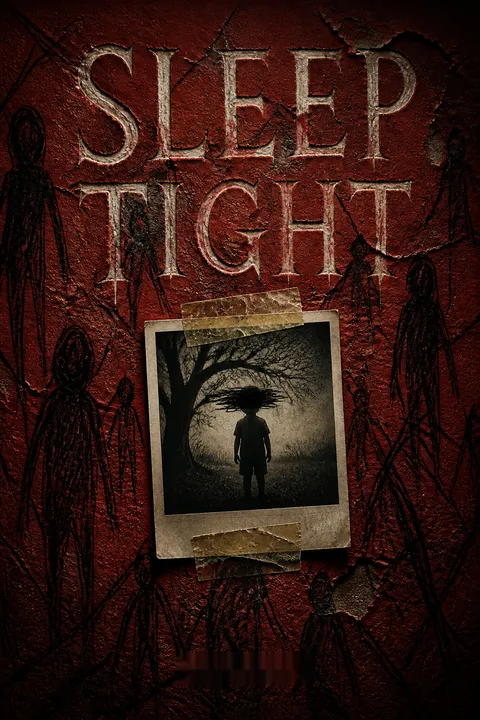
After surviving Father Silence’s captivity, Noah Nichols fills page after page with black eyes, pressing so hard that his crayons snap. When his mother storms toward his locked bedroom, he is frightened by the picture he has just finished: it bears the name Dean, one of several identities he does not recognize.
His mother threatens to send him to the small closet she calls the ark, and Noah pins the drawing beside the others. The eyes on the wall suggest that something from the house where he was imprisoned has followed him home.
The opening makes a child’s drawing function as both evidence and symptom. Noah cannot explain the names or the images, so the reader encounters trauma before anyone can interpret it. His mother’s threat to confine him in the ark echoes the captivity he has already endured, turning home into another place where fear is administered rather than relieved. The broken crayons make his effort to control the image visible and physical. By beginning with Dean’s name, the novel plants a mystery about identity that will later complicate the difference between memory, dissociation, and a presence that seems to survive inside another person.
Candles Against the Storm
Missoula detective Tess Claiborne comes home to a daughter still awake and a marriage already split by her husband Justin’s affair. Nine-year-old Julia misses the father who has moved out, while Tess struggles to be both the strict parent and the comforting one. Their closest friends, Danny and Eliza Gomes, try to steady the household, but a storm rolls in, sharpening Tess’s lifelong fear of thunder.
She and Julia retreat to the closet with candles and paper, using a quiet drawing game to endure the blackout. Julia falls asleep beside her mother, who watches the clock and thinks of her parents in a cabin far away. At midnight in Kentucky, serial killer Jeff Pritchard is due to die in the electric chair.
The domestic opening gives the coming horror a precise emotional target: a family already divided by ordinary betrayals and old fears. Tess’s storm phobia is not merely atmosphere, because she must manage it while her daughter asks when Justin will return. Their candlelit game shows how intimacy can be improvised even when the person who once invented the ritual is absent. The looming execution ties private distress to a public event, but Tess has no way to know that the past she has tried to outgrow is about to enter her own home. Her detective’s vigilance and her parental uncertainty coexist from the first scene.
The Outcast Calls
After the execution, Tess’s father, retired detective Leland Patterson, tells her that Pritchard spoke at the end, but withholds the words. The next morning, a caller claiming to be the Outcast reports that Leland and Tess’s mother, Betsy, are dead at their cabin. Tess reaches the crime scene and finds both parents struck with a hammer, their closed eyes painted black.
A newspaper article about Pritchard’s execution has been pinned to the wall, making the killings look like revenge. Then Tess notices Julia’s school portrait is missing from Leland’s wallet. At school, she learns Julia was marked absent; her book bag was left behind, and a note claims the girl is safe. A Polaroid in the stolen Jeep shows Julia beside an unknown boy.
The sequence makes the investigation inseparable from grief: the killer uses Leland’s own connection to Pritchard to turn his daughter into the next witness. The painted eyes are a signature, but also a deliberate message that the crime is staged for Tess to read. Her discovery of the missing school portrait is the hinge between a family murder and a child-abduction case. The Polaroid further unsettles the apparent revenge motive by placing an unidentified boy beside Julia. Tess’s professional attention gives her a way to act, yet every clue is also a fresh injury to her identity as a daughter and mother.
Two Children, One Note
At the school, Julia’s friend Maggie explains that a man wearing sunglasses asked her to carry Julia’s bag inside, claiming to be the girl’s uncle. Tess and Justin have no siblings, and the note in the bag confirms that the abductor chose Julia deliberately.
Police find Leland’s Jeep abandoned by a church, with the children’s Polaroid still inside. Detectives identify the boy as Richard Moore, an eight-year-old orphan taken from a Boise residential home two days earlier.
A priest remembers seeing the sunglasses-wearing man praying with both children, who seemed calm and willing to follow him. Later, the Outcast phones Tess through a nurse he has bound in her home, lets Julia briefly speak, and says the children are going to a place called the Playhouse.
The abduction is frightening partly because it exploits trust rather than force. The man recruits a child to move Julia’s bag, then borrows the authority of family and religion to make his claim plausible. Richard’s identification changes the case from a personal attack into a pattern involving vulnerable children, although Julia does not fit the pattern. The priest’s account and Julia’s apparent calm resist the simple assumption that the children are being held at gunpoint. That ambiguity intensifies Tess’s helplessness: the kidnapper can sound protective while controlling every choice, and his brief access to Julia gives him power over both parents at once.
The Briefcase in the Closet
Tess searches her father’s cabin for his old Pritchard files and finds his briefcase concealed in a closet. His final note warns her about the person who escaped, but does not explain who that person is.
The clue revives Tess’s memory of Noah Nichols, the only child rescued alive from Pritchard’s basement, who later killed his abusive father and carved the word Outcast into the man’s chest. As Tess reads the case record, she also confronts her own history: teenage blackouts, nightmares, and the painkiller addiction Justin once helped her overcome.
Now, desperate and isolated, she takes leftover hydrocodone from her parents’ home. The murders and kidnapping point toward Twisted Tree, Kentucky, where Leland and his old partner first investigated Pritchard.
The briefcase turns Leland’s lifelong need to understand Pritchard into an inheritance Tess did not ask for. Its warning gives her a direction but no certainty, requiring her to work inside the gaps left by her father and by her own memory. Her relapse is not a separate weakness pasted onto the investigation. It is a response to the same old injuries that the case is forcing into view, and it risks clouding the judgment she relies on. The return to Twisted Tree therefore carries two kinds of exposure: she is pursuing a killer while approaching the experiences her mind has spent years keeping inaccessible.
Back to Twisted Tree
Tess, Justin, and Danny travel to Kentucky after learning that Burt Lobell, Leland’s former partner, has been murdered in his home. Burt’s eyes are painted black, and cult symbols cover the room, but his throat was cut rather than struck with a hammer.
The different method suggests that the Outcast may not be acting alone. Detectives describe a local group calling itself the Lost Children of Silence, whose young followers wear animal masks and gather in the woods. Tess’s return triggers flashes of rubber masks and storm-dark trees.
At Berringer Hills, the state hospital where Noah Nichols is confined, Tess and Justin meet the guarded, bearded man. Noah says he remembers nothing of Pritchard’s house, but admits that his mind sometimes does not belong to him.
Twisted Tree is not simply a return to the crime scene of Tess’s childhood; it is a town where violence has acquired an audience. The cult’s imitation of Pritchard suggests that a notorious killer can become a usable identity for people seeking power or belonging. Burt’s different murder method complicates the idea of one offender and forces Tess to question the coherence of the case. Meanwhile, her involuntary sensory memories show that investigation and personal history are becoming difficult to separate. Noah’s guarded account introduces another uncertainty: the person who committed past violence may not be the only self occupying his body.
Noah’s Borrowed Voices
Justin questions Noah about his shifting identities, while Tess asks about the dark eyes that appear in the killer’s drawings and victims’ faces. Noah suddenly changes into a frightened child called Dean, who knows the kidnapped children are headed to the Playhouse.
Another identity then takes over: the stuttering Outcast, who wears sunglasses and claims the murders are only preparing for something larger. He recognizes Tess and refers to a memory she cannot place.
Noah lunges at the warden before guards restrain him, leaving Tess unsure whether she has confronted the kidnapper, an imitation, or a personality inside Noah. Outside the hospital, Tess spots masked cultists. She shoots one who charges her, while another escapes into the trees.
The asylum scene makes the novel’s central problem epistemic: a voice may carry real information without giving investigators a reliable account of who is speaking. Dean’s fear and the Outcast’s confidence emerge through the same body, so neither the legal identity nor the physical evidence can settle responsibility. The Playhouse clue advances the rescue effort, while the reference to Tess’s past makes the encounter feel targeted. The subsequent assault outside the hospital turns that uncertainty into immediate danger. Tess must act before she can understand what she has seen, a pressure that mirrors the way trauma can demand a response before memory becomes coherent.
Masks in the Woods
The masked follower Tess wounds is Kyle Penters, a former local student who slashes his own wrists rather than be captured. Elsewhere, a guard assigned to protect Foster Bergman is killed by his partner, Officer Jeter Janks, who wears a sheep mask and takes the retired priest.
Tess and Justin search the woods and find Foster’s body propped against a tree, its eyes painted black. Jeter and another masked follower evade them. The Outcast’s movements cannot explain every killing, and Tess begins to suspect coordinated perpetrators.
Justin recognizes that she is blacking out again, while she remembers only rubber, storms, and fragments of a chase. Her fear of losing time now threatens her ability to follow the trail as it spreads through the town.
The attack exposes the cult as more than a fringe spectacle: one of its members has entered law enforcement and can turn protection into access. The deaths of Kyle and Foster also show the difference between spectacle and responsibility. Kyle’s suicide is his own final act, while Foster’s murder is part of a calculated effort to silence people tied to Pritchard’s arrest. Tess’s blackouts leave her especially vulnerable to misreading the pattern, but Justin’s recognition of them offers a counterweight. Their professional partnership and damaged marriage are forced into the same task: he must help her without treating her as a case, and she must accept help without surrendering agency.
The River Route
Lisa Buchanon, the woman who owns Pritchard’s former house, tells Justin that she sometimes experiences visions connected to the property. He doubts her until she predicts that the kidnapper may be using the rivers rather than roads or airports.
Police find an abandoned boat near the Missouri River, along with a priest’s clothing and Polaroids of the children. One picture shows Julia staring blankly, and another bears a label that casts her as a betrayer. The boat confirms that the abductor has moved the children far beyond the search area.
Lisa’s warning makes her useful, but her certainty about the house also makes her difficult to assess. Meanwhile, Danny travels to Bowling Green to seek a witness who refused to speak during Leland’s investigation.
Lisa’s vision shifts the search from a conventional transport network to the river system, showing how an apparently irrational account can still generate a testable lead. The abandoned boat confirms that the children’s route is deliberately hard to reconstruct, while the photographs reveal the kidnapper’s symbolic thinking. Julia is being cast into a role inside someone else’s story, rather than treated as the beloved child she is. This is a particularly cruel form of control because it threatens to transform affection into apparent betrayal. Lisa’s usefulness does not resolve the question of her reliability; instead, the novel asks whether knowledge can be valuable even when its source remains suspect.
The Orphanage’s Secret
At a cloistered monastery, Danny meets Sister Mary Rose, once a nun at the orphanage where Pritchard lived. Writing on paper, she identifies Diane Cherry as his younger companion and says Diane killed Blake Sims, a man who had raped her, then cut out Sister Mary Rose’s tongue to keep her silent. Diane had been pregnant and disappeared after the orphanage’s residents fled.
Danny searches Diane’s abandoned room and finds dolls, satanic symbols, and a message about a mother’s love. A headstone outside names Lisa Buchanon, a girl who died decades earlier. Danny realizes that the woman in Pritchard’s house may have taken that dead child’s name. A masked intruder shoots Danny, but his bulletproof vest saves his life.
Sister Mary Rose’s testimony reframes the past as a history of women and children silenced by institutions that could not protect them. Diane’s violence is linked to sexual assault, but the novel does not make that link an absolution; it shows how injury can be converted into further harm. Danny’s discovery of the dolls and borrowed name gives the present-day mystery a material trail, while the shot through his vest turns research into bodily risk. His survival also depends on a protection he remembered to wear, a practical counter to the supernatural and psychological explanations surrounding the case.
The Eighth Window
In another interview, Noah shifts into Tom and Stephen, identities whose ages match four children killed in Pritchard’s basement. Justin realizes that Noah may have taken on the dead children’s identities as a way to survive their shared captivity. A childhood drawing of Pritchard’s house shows eight windows, each occupied by a figure.
Tess and Justin identify several names, but miss the figure at the top. The children tell them that Oskar and Ruth know more than the others, yet both are locked away inside Noah’s mental ark. The Outcast’s identity is also present among the figures. Convinced the real ark in Noah’s childhood home may unlock the sealed memories, Justin and Tess persuade the warden to take Noah there under guard.
The drawing converts an abstract diagnosis into a spatial model: each window holds a self, but the image also exposes the investigators’ incomplete assumptions. Noah’s identities are neither neat disguises nor a simple list of personalities; they are tied to the children whose deaths he survived. The ark gives this internal architecture a physical counterpart in the childhood home, making treatment and investigation dangerously inseparable. Justin’s willingness to test the connection is driven by the missing children, but it also reveals how much he still trusts psychological interpretation. The drawing’s missing figure warns that the case contains an identity the adults have not yet learned to see.
The Ark Comes Open
During a storm at Noah’s childhood home, Noah breaks open the closet his mother called the ark. Oskar takes control, overpowers the guards, and escapes through a bedroom window. Justin later meets him there, bringing matches and sweets in exchange for information. Oskar reveals that Lisa Buchanon is Diane Cherry, the violent identity he calls Mother, and says she has directed Pritchard’s killings and the cult’s plans.
He also names Benjamin Knowles as the man who escaped Pritchard’s basement and now runs the Playhouse. Oskar pours gasoline through the old house, sets it alight, and drives away in Justin’s car, leaving Justin to get back on foot. Before leaving, he gives Justin the location of the children.
The ark’s opening is both a physical escape and a collapse of the boundary between past and present. Oskar’s emergence supplies the missing explanation, but his candor is transactional: he takes Justin’s car and destroys the house that holds Noah’s history. The revelation that Lisa is Mother joins the killer’s domestic mythology to a real person who has repeatedly presented herself as a helpful witness. Oskar is not a dependable ally, yet he becomes indispensable because he knows how the separate identities and conspirators connect. The scene’s moral discomfort is deliberate: rescuing one group of children may require trusting a volatile figure who refuses ordinary accountability.
Father Friday Unmasked
Lisa warns that the priest at St. Michael’s may be in danger. Tess and Justin arrive as masked followers attack Father Leonard, but the church’s music director, Benjamin Knowles, drives them off with his cane. Tess recognizes the same man as the Outcast and learns he has been visiting Noah as Father Friday. Benjamin has painted eyes beside a calendar marked repeatedly on the third day of each month.
The cult believes Pritchard will rise after three days, and the latest third day is near. In Bowling Green, Danny finds that Lisa’s birth name was Diane and that she was raised at the former Buckner farm. He is shot while investigating her past but survives in his vest. Lisa later kills Sheriff Kingsley at her house.
The revelation of Benjamin’s identity transforms the apparent priestly disguise into a recurring strategy: authority and ritual are tools for gaining access to children. The calendar gives the cult’s belief a deadline, converting a symbolic resurrection into an operational threat. Yet Benjamin’s warning signs complicate his role; he has been helping the cult while also trying to resist it. Danny’s discovery supplies the biographical link that the investigation lacks, but his shooting shows the cost of pursuing it. Lisa’s murder of Kingsley confirms that she is not merely a source of visions. The story’s religious imagery is now attached to human choices, not supernatural absolution.
Julia’s Message in the Maze
Tess and Detective Andy Evans reach the colorful Playhouse at the abandoned Harlow Distillery, but the children are gone. Rooms arranged for games, art, music, and lessons show how Benjamin has turned captivity into a counterfeit home. Masked followers attack; Evans is shot, and Tess kills Jeter Janks when he comes after her.
Jeff Pritchard’s lawyer, Barrett Stevens, captures Tess and locks her in the Playhouse’s Bad Room. There she finds Julia’s drawing: a rose, an eye, and a line pointing to Rose Island, also called the Devil’s Backbone. Tess sends the clue before Stevens takes her away. At the island, the cult gathers around Pritchard’s stolen body and prepares a ritual with Tess as its intended sacrifice.
The Playhouse’s abundance is what makes it disturbing: the rooms imitate care, but their names and routines exist inside a system where Benjamin controls every exit. Julia’s drawing reverses that design. A child uses the shared visual language she built with her mother to make a route out of confinement. Tess’s escape from immediate danger is incomplete, but the message restores a connection the kidnapper tried to sever. Stevens’s capture of Tess and the cult’s arrival at Rose Island turn the search into a ritualized confrontation. The private game of making pictures readable becomes a practical survival skill.
Rose Island’s Last Supper
At Rose Island, Lisa, wearing a wolf mask, places the kidnapped children around a concrete pool while Barrett and other cultists beat Tess. Benjamin arrives with hammers and strikes Lisa and Barrett, then ushers the children away.
The blows and storm return Tess’s buried memory: as a teenager, she and Benjamin killed football stars Grisham Graham and Jeremy Shakes after the boys assaulted Amy Dupree, and they agreed to conceal what happened. Tess’s parents moved west to protect her.
Police storm the island; Tess reunites with Julia and Justin, who has been wounded, while officers shoot Benjamin as he tries to shield the children. In the aftermath, investigators find more bodies, Danny survives his shooting, and the children are placed in safer homes.
The climax joins the present rescue to the secret that shaped Tess’s adolescence. Her recovered memory does not erase her responsibility; it explains why her mind hid the event and why returning to Twisted Tree has made her body react before her conscious memory can catch up. Benjamin’s violence is both protective and catastrophic, directed at the woman who formed him and at the cult that has taken his children. Tess and Justin reclaim Julia, but the reunion arrives amid deaths and unresolved injury. The ending resists a clean distinction between monsters and victims: people harmed in childhood can protect children and still inflict grave harm.
Epilogue
Four weeks later, Tess, Justin, and Julia are home together again. Julia sometimes wakes from nightmares about animal masks, and her parents keep her close while they work to repair their marriage. Investigators have identified many of the adults buried at the Playhouse, including people accused or convicted of abusing children.
Then a postcard arrives from Oskar, sent from San Francisco. He says Noah is in good hands, thanks Justin for freeing him, and hints that he and Ruth are still on the run. The family has returned to ordinary life, but the case has not entirely released its hold.
The epilogue gives the family a fragile restoration rather than a clean reset. Tess and Justin are together, but Julia’s nightmares and their protective vigilance show that safety is now an ongoing practice, not a condition they can simply reclaim. The investigation’s discoveries make Benjamin’s violence legible as revenge against abusers, without making his abductions or deaths harmless. Oskar’s postcard then refuses the comfort of a closed case. His escape preserves the novel’s instability around identity and accountability: a person can be both survivor and threat, and the family’s reunion does not settle what remains loose in the world.
Analysis
Sleep Tight makes the search for Julia a collision between three forms of captivity: the physical, the psychological, and the social. Children are confined in basements, rooms, and the apparently benevolent Playhouse; adults are trapped by memories they cannot retrieve or by histories they have no incentive to disclose. The novel’s central horror is not simply that trauma persists, but that people convert their own explanations of suffering into permission to control someone else. Pritchard calls murder mercy. Benjamin calls abduction protection. Lisa turns injury into a rationale for revenge. Their self-justifications differ, but each replaces a child’s needs with an adult’s story about what is best. Tess’s investigation is powerful because it refuses to keep family life separate from professional evidence. Her storm phobia, painkiller relapse, and blackouts interfere with her work, but they also signal that the case has entered the part of her experience she cannot consciously narrate. Her eventual memory of the teenagers’ deaths does not function as a tidy answer. It makes her both investigator and participant, forcing her to confront how secrecy can protect a child in the moment while shaping a life around fear afterward. Julia’s drawings offer a countermodel: images can conceal, as Noah’s eyes do, but they can also carry precise information between people who know how to read them.
The novel also treats care as morally ambiguous. Justin’s psychological expertise helps him understand Noah, yet his habit of interpreting Tess can repeat the very loss of agency he hopes to repair. Benjamin’s devotion to unwanted children is real, but it does not make his kidnappings acceptable. The final rescue restores Julia to her parents without restoring innocence or certainty. The lingering postcard from Oskar keeps the moral accounting open: survival is not the same as healing, and understanding a person’s damage does not absolve the harm they cause.
Review Summary
People Also Read






Characters
Tess Claiborne
The haunted detectiveA Missoula homicide detective and Julia’s mother, Tess has built her identity around observation, discipline, and the example of her father, Leland. At home, those strengths can become distance: she works too much, struggles with storms, and has trouble admitting what she needs from Justin. Her devotion to Julia is fierce, but guilt over motherhood and her own buried childhood experiences complicate how she expresses it. Tess’s investigative instincts make her effective under pressure; her blackouts and reliance on painkillers expose the costs of treating control as the same thing as safety. She is driven by a need to find the truth, even when that truth implicates her.
Justin Claiborne
The psychologist husbandJustin is a psychologist, Tess’s estranged husband, and Julia’s father. Warm, sentimental, and attentive to the emotional lives of others, he is skilled at noticing what people conceal, though that skill can make him intrusive at home. His affair has broken Tess’s trust, and his desire to repair their marriage does not entitle him to her forgiveness. In the investigation, he brings expertise about dissociation and remains committed to finding Julia, even when his emotional involvement compromises his judgment. His deeper challenge is to offer care without trying to manage Tess’s inner life as though she were his patient.
Julia Claiborne
The perceptive daughterJulia is the nine-year-old daughter of Tess and Justin. Bright, observant, and deeply attached to both parents, she notices their separation and sometimes tests Tess’s authority by comparing it with Justin’s gentler routines. Her artistic games with Tess give them a shared language for fear and affection. Julia is not simply a vulnerable child in the story; she reads situations closely and uses what she knows to communicate when adults cannot reach her. Her need for reassurance coexists with a lively independence, which makes her emotional life more complex than the adults’ assumptions about what a child understands.
Danny Gomes
Tess’s loyal partnerDanny is Tess’s police partner and Justin’s longtime friend. More improvisational and openly emotional than Tess, he balances her intensity with humor, loyalty, and a willingness to act. His wife and children give him a strong sense of what family protection means, and he treats Julia as one of his own. Danny is professionally capable, even when his impulsiveness complicates matters, and he is deeply affected by the danger facing the Claibornes. His friendship with Justin is strained by the affair, but his devotion to Tess and Julia keeps him involved in the case.
Eliza Gomes
The steadfast friendEliza is Danny’s wife, a social worker, and Tess’s closest friend. Raising five children while working with vulnerable families has made her practical and emotionally perceptive. She offers Tess food, company, and firm reassurance without pretending that distress can be reasoned away. Eliza is also willing to confront the assumptions women are expected to make about marriage, motherhood, and sacrifice. Her support is a steady counterweight to Tess’s isolation, while her knowledge of social services helps the investigation reach people and records the police might overlook.
Jeff Pritchard
The silent serial killerA former parochial-school janitor who impersonated a priest to approach victims, Jeff Pritchard became notorious as Father Silence after refusing to speak during years on death row. His victims included people whom society had neglected, a fact that does not soften his crimes but helps explain the warped logic he used to justify them. Pritchard’s childhood involved isolation, troubling family circumstances, and a fixation on relieving suffering. His apparent quietness and helpfulness concealed an ability to exploit trust. Even after his execution, his case remains a source of fear, imitation, and unanswered questions.
Leland Patterson
Tess’s retired detective fatherLeland is a decorated former detective who helped arrest Pritchard and spent years trying to understand the killer’s motives. He is affectionate with Tess, but his instinct to protect her often means withholding information. His notebooks and case files preserve details that prove crucial after his death. The investigation changed him, leaving him with nightmares and a dependence on alcohol, yet he continued to pursue questions that others considered settled. To Tess, he is both a model of investigative work and a source of painful omissions.
Burt Lobell
Leland’s former partnerBurt worked beside Leland on the Pritchard investigation and shared the danger of entering the killer’s home. He remained part of the family’s history after Tess moved to Montana, though distance and grief gradually weakened his contact with Leland. Burt’s practical, methodical nature complemented Leland’s instincts, and his connection to Tess gives the old case a personal dimension beyond professional history. His family remains part of the community that remembers Pritchard’s crimes.
Noah Nichols
The survivor with divided memoriesNoah is the only child known to have survived Pritchard’s captivity, and he has spent much of his adult life in a hospital for the criminally insane. He was neglected and abused at home before his abduction, and his memories of both periods are fractured. Noah describes losing time and experiencing other identities, which makes him difficult to interview and easy for others to dismiss. His drawings and the behavior of his different selves provide clues to the past, but he is not a transparent witness. He is a person trying to live inside a mind shaped by extreme trauma.
Benjamin Knowles
The gifted church musicianBenjamin is a parish music director, painter, and craftsman whose work shows unusual patience and technical skill. He is physically imposing but speaks hesitantly, and his manner can seem both gentle and unsettling. His life has been shaped by childhood isolation and by a strong desire to care for children who have been neglected. Benjamin’s religious surroundings and artistic gifts give him ways to create order, beauty, and routine. His motives and judgment are difficult for others to read, especially when his protective instincts collide with his capacity for violence.
Lisa Buchanon
The house’s southern ownerLisa is the polished, single owner of Pritchard’s former home in Twisted Tree. She renovated the property, insists that it belongs to her family’s history, and has learned to defend herself against trespassers and local hostility. She claims that the house sometimes gives her visions, a belief that makes others doubt her even when her warnings prove useful. Beneath her gracious manner are painful memories of childhood loss and a strong attachment to the house. Lisa is adept at controlling what other people know about her, which makes trust an uneasy question whenever she enters the investigation.
Sister Mary Rose
The silenced witnessOnce a nun at the Sisters of Mercy orphanage, Sister Mary Rose now lives in a cloistered Poor Clare community. She lost her tongue in a violent attack and communicates through careful handwriting. Her faith has not erased her memories, but it has given her a disciplined way to live with them. She knew Pritchard as a young man and retains knowledge that the original investigation could not obtain. Her quiet presence contrasts with the violence she witnessed, and her testimony depends on the patience of people willing to listen without demanding that she speak.
Oskar
Noah’s defiant protectorOskar is one of the identities Noah describes as having emerged in childhood. He is brash, confrontational, and quick to use humor or menace to control an exchange. He claims to protect Noah and has an intimate knowledge of events that Noah cannot recall. Oskar’s self-interest is unmistakable, yet he also understands how much survival has depended on taking pain on behalf of others. He distrusts authority and resists being treated as a clinical puzzle, making him both a valuable source of information and a dangerous ally.
Ruth
The guarded inner presenceRuth is another identity associated with Noah’s fractured inner life. She is described as forceful, clever, and difficult to summon, and Oskar treats her with a mixture of attraction and caution. Little is initially known about her history, and her silence makes her presence feel especially consequential. Ruth represents the limits of what Noah and the investigators can access: some parts of a person remain protected even when others are ready to speak.
Richard Moore
The missing orphanRichard is an eight-year-old boy taken from a residential children’s home in Boise. His orphan status and history of running away make him vulnerable to being overlooked, while his disappearance becomes an early sign that Julia is not the kidnapper’s only target. He is one of the children caught in the adults’ competing plans.
Father Beacon
The parish witnessFather Beacon is the priest who unknowingly encounters the man taking Julia and Richard. His careful recollection of the stranger’s appearance gives investigators their first usable description. He is compassionate toward people who need shelter or food, a quality the abductor exploits. Beacon’s willingness to revisit the encounter helps the police build a picture of their suspect.
Father Leonard
The threatened priestFather Leonard leads St. Michael’s parish in Twisted Tree and has known Tess’s family through the community. He relies on Benjamin Knowles as a musician and artist, and his trust in the man reflects how convincingly Benjamin can fit into parish life. Leonard is shaken when violence reaches his church, but he cooperates with the detectives and helps them trace Benjamin’s connection to the parish.
Andy Evans
The local lead detectiveDetective Andy Evans works the Twisted Tree case and coordinates with Tess, Justin, and Danny. He is cautious about allowing Tess to investigate because her family is personally involved, but he recognizes her experience and understands her urgency as a parent. Evans brings local knowledge and practical judgment to a case where the cult’s reach is difficult to measure.
Barrett Stevens
Pritchard’s former lawyerStevens defended Pritchard through the long legal process and is one of the people connected to the original case. His professional role placed him close to the killer without making his motives clear to others. As investigators compile a list of those who might be in danger, his absence becomes a source of concern.
Amy Dupree
Tess’s teenage acquaintanceAmy is a high-school athlete in Twisted Tree whose presence becomes tangled with Tess’s buried memories of the old murders. She is vulnerable to the influence of older students and carries distress that the adults around her do not adequately understand. Her brief connection to Tess leaves a lasting mark.
Grisham Graham and Jeremy Shakes
The town’s fallen athletesGrisham and Jeremy are high-school football stars whose deaths near the Crawley Mansion become a defining mystery for Twisted Tree. Their public promise and popularity conceal behavior that the town is slow to acknowledge. The boys’ case forms part of the childhood history Tess has tried to forget.
Plot Devices
The black eyes
A signature and a mapBlack paint over victims’ eyes links the present killings to Noah’s childhood drawings. In several scenes, painted eyes also direct Tess toward hidden evidence or warn her that she is being watched. The motif moves between forensic clue, traumatic image, and private signal, so its meaning changes as the investigation deepens. It first seems to identify an imitator of Pritchard, then becomes part of the language connecting Tess, Noah, and Benjamin.
The ark and the windows
A mind made visibleNoah’s childhood closet, called the ark by his mother, gives physical shape to the confinement and mental fragmentation that define his history. His drawings of Pritchard’s house add another structure: a set of windows occupied by figures that represent identities and memories he cannot easily access. Together, the closet and drawing guide Justin and Tess toward Noah’s sealed recollections. The device links childhood punishment with the adult asylum, suggesting that a person’s methods of surviving trauma may become another kind of prison.
The Playhouse
Care turned into captivityBenjamin’s hidden home contains rooms for art, music, meals, exercise, and games. The child-friendly routines make the building look like a refuge, especially to children who have experienced neglect, but Benjamin controls the rules and the doors. Julia’s experience reveals the gap between comfort and freedom: the children may play and eat, yet they cannot choose where to go. The Playhouse becomes the physical center of the abduction plot and exposes how the language of protection can conceal coercion.
Priestly and animal disguises
Trust disguised as threatPritchard’s stolen clerical clothes let him approach people under the cover of religious authority. Benjamin later uses the same tactic to move Julia, while the Lost Children wear animal masks during their gatherings and attacks. The disguises make identity unstable: a priest’s clothing can hide a kidnapper, and an animal mask can turn a follower into a performer or executioner. Their repeated use connects the old crimes to the present cult and makes appearance itself a central investigative problem.
The Ohio River route
A route beyond the roadblocksThe river network gives the kidnapper a way to move children without using the roads and airports the police are watching. Lisa’s vision prompts Justin to consider this route, and the abandoned boat proves that the idea has practical value. The river also binds the geography of Twisted Tree to the search in Montana and Kentucky, turning the landscape into part of the puzzle. It is both a transport system and a reminder that a trail can vanish into a broad, moving body of water.
Download PDF
Download EPUB
.epub digital book format is ideal for reading ebooks on phones, tablets, and e-readers.








