

Plot Summary
Prologue
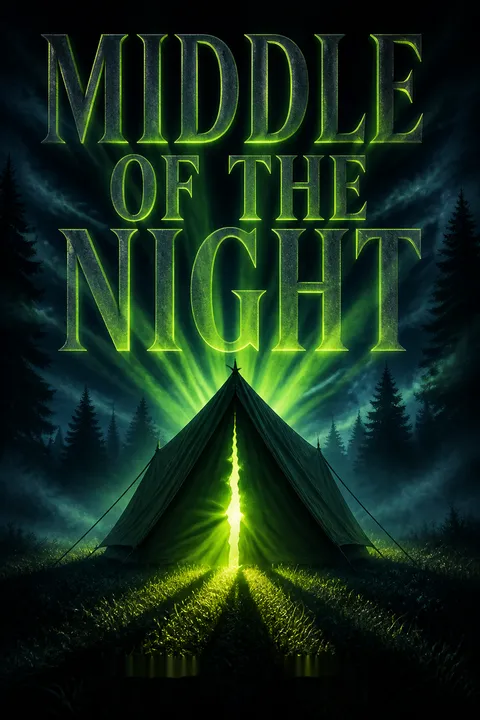
At ten, Ethan Marsh wakes inside the backyard tent he shared with his best friend, Billy Barringer. A long cut splits the fabric, and the space beside him is empty. Ethan does not yet understand that Billy has vanished, only that someone who was there when he fell asleep is gone.
The morning begins in confusion, before the adults grasp the scale of what happened. For Ethan, that first look through the torn tent becomes the beginning of a thirty-year life shaped by guilt, unanswered questions, and a recurring dream.
The opening binds the mystery to a child’s narrow understanding of danger. Ethan can register the physical evidence, a cut and an empty sleeping bag, before he can interpret either. That gap between seeing and knowing becomes the novel’s central psychological problem: whether memory has failed him, whether guilt has distorted it, and whether his inability to act was itself part of the catastrophe. The tent is both shelter and crime scene, making the loss of childhood feel immediate rather than retrospective. By identifying this as Ethan’s last carefree morning, the prologue gives every later return to the yard the weight of a life interrupted.
Lights Circle Hemlock
Thirty years later, Ethan is forty, sleepless, and newly back in his parents’ house on Hemlock Circle. His parents have moved to Florida, while he is struggling after his wife Claudia’s death and the collapse of their marriage over whether to have children. One night, motion lights ignite in sequence around the cul-de-sac, though Ethan sees no one crossing the empty driveways.
The pattern draws him outside, where he feels a presence he associates with Billy. He knows the feeling cannot be proof: Billy has been missing since childhood. Yet the old fear returns with the lights, and Ethan spends the rest of the night looking again at the case that has defined his life.
Ethan’s return collapses several kinds of displacement into one setting. He has lost Claudia, left his former home, and moved back into the landscape of his first unresolved loss. His insomnia makes him a witness by habit, but that vigilance is also a form of self-punishment: if he stays awake, perhaps no disaster can happen unseen again. The lights do not establish the supernatural; they activate Ethan’s old interpretive reflex, turning ordinary suburban security equipment into a possible signal. The scene makes Hemlock Circle feel both safe and exposed, showing how trauma can make familiar surroundings function as evidence.
Bones Below the Falls
The next morning, a baseball appears in Ethan’s yard, recalling the secret signal Billy once used to summon him to play. Vance Wallace, now frail and confused, insists he saw a boy running through the neighborhood overnight.
Ethan calls Ragesh Patel, the local detective listed on Billy’s missing-person file, hoping for news. Ragesh tells him that human remains were found at the base of the falls on the Hawthorne Institute grounds, two miles through the woods. Dental records confirm they belong to Billy, and the evidence points to murder.
Ragesh shares the news privately with Ethan, Ashley Wallace, and Russ Chen while police try to notify Billy’s family. Ethan’s hope that Billy might have returned is replaced by a more urgent question: who killed him?
The discovery provides an answer that is emotionally worse than uncertainty. Ethan has spent decades preserving the possibility that Billy survived, and confirmation of death forces him to mourn a real person rather than an unfinished case. The location sharpens the mystery instead of closing it: Billy’s remains lie near a place the children visited shortly before he disappeared, one police never searched at the time. Ragesh’s controlled delivery contrasts with the others’ shock, suggesting how official knowledge can be both necessary and inadequate. The investigation begins not with a fresh crime scene but with a landscape that has held its secret within walking distance of Ethan’s home.
Baseballs After Midnight
Ethan tries to identify the ball by asking Russ, then Ashley, who has recently returned to Hemlock Circle with her son, Henry. Neither recognizes it. After Vance again claims that Billy was outside, Ethan buys a motion-activated trail camera and straps it to a magnolia tree.
It catches animals, then a small human-shaped shadow at the forest’s edge. Looking for an explanation, Ethan retrieves Billy’s old book about ghosts and finds that Billy marked a page about shadow figures as real.
The clues tempt Ethan to believe Billy is haunting the yard, especially when another baseball appears where Ethan has just been standing. Ashley dismisses the supernatural explanation, but Ethan’s camera gives him a record he cannot easily blame on memory alone.
The camera changes Ethan’s relationship to uncertainty. Instead of relying only on a dream or a bodily sense of presence, he has a device that produces images, though those images remain ambiguous enough to invite projection. The baseball is potent because it carries a private meaning, while the shadow offers a shape onto which Ethan can place his hope. Ashley’s skepticism introduces an alternative rooted in grief and cognition, not simple disbelief. The old ghost book connects Billy’s imagination to the present investigation, but it does not prove that his beliefs were true. The tension rests in Ethan’s growing conviction that evidence can be both observable and radically misread.
The Wall and Mausoleum
Ethan’s recovered memories take him back to the day Billy led him, Russ, Ashley, and Ragesh into the woods. After crossing a road their parents had forbidden them to pass, the children slip through a breach in the wall around the Hawthorne grounds and reach the falls. Ragesh needles Billy about his belief in ghosts, then leads them to a mausoleum.
When Ragesh shuts its iron gate, the latch jams with Billy, Russ, and Ethan inside. Russ squeezes between the bars; Ethan and Billy struggle through as an employee approaches. Russ and Ashley run. Ethan hesitates, then follows them, leaving Billy stuck behind. The group later agrees not to tell anyone. Ethan’s silence turns a frightening afternoon into a secret that follows him for decades.
The childhood excursion is a chain of small choices, each made under pressure to seem brave, loyal, or normal. Ethan’s fear of punishment matters less than his fear of losing status with Billy and Ashley, so he repeatedly follows the group against his instincts. The crucial betrayal is not a deliberate plan but a bodily decision to run when Billy needs help. That distinction explains why Ethan can neither dismiss nor fully condemn his younger self. The group’s agreement to stay silent compounds the original abandonment, converting a temporary failure of courage into a durable moral injury. The novel’s adult mystery therefore grows from both a crime and a remembered choice.
Fritz Opens the Institute
Billy had explored the Hawthorne grounds alone the day before the group’s outing, hoping to find the ghosts he believed lived there. Fritz Van de Veer, Hemlock Circle’s polished neighbor, caught him trespassing and warned him away.
After the others flee the mausoleum, Fritz frees Billy and brings him to the mansion rather than sending him home. There, Billy meets Ezra Hawthorne, the elderly founder, who tells him that the institute studies unexplained phenomena and that he has communicated with spirits.
Billy, already devoted to ghost stories, listens eagerly and is invited to return. The encounter gives him a reason to keep secrets from Ethan. It also establishes that Billy knew the institute and its staff before the night he disappeared.
Billy’s visit shows how his oddness is also a form of intellectual hunger. He seeks out the institute not to rebel for rebellion’s sake but to find adults who take his questions seriously. Ezra’s welcome offers recognition, something Billy rarely receives from other children. That attention makes the institution appealing while creating an asymmetry of power: an imaginative boy is being invited into an adult world whose rules he cannot assess. Fritz’s gentleness complicates the setting’s threatening appearance, leaving the reader unable to tell whether the institute is dangerous, merely eccentric, or both. The scene also explains why Billy might approach a familiar adult without fear.
Joyce's Hidden Witness
Searching old records, Ethan finds a photograph of his mother, Joyce, at the Hawthorne Institute. He asks his parents directly, and Joyce admits she worked there briefly before Billy vanished. The previous night, she returned to retrieve a birthday gift for her husband and saw a circle of black-robed men around a fire, with Ezra holding a bloodied heart.
Her boss fired her and made her sign a nondisclosure agreement. Joyce never told even her husband, afraid of the institute’s money and influence. The revelation makes Ethan wonder whether the institute wanted her silenced permanently and whether a child in the tent was mistaken for him. His suspicion turns the investigation toward a secret his family has guarded for three decades.
Joyce’s account recasts domestic silence as a survival strategy. She was not simply withholding a story from her family; she had been threatened with legal and financial power she could not match. Ethan’s suspicion that he might have been the intended target arises from a familiar trauma logic: if he can find a reason for the event, perhaps its randomness will become bearable. At the same time, the revelation exposes how little he knew about his mother’s private ambitions and vulnerabilities as a child. Her work represented an attempt to claim purpose beyond caregiving, a desire abruptly erased by the institute’s coercive response.
Ragesh Names the Stranger
Ethan trespasses into the mansion during a tour and slips into its dusty basement, where he photographs old records and finds an image of Johnny Chen beside Ezra Hawthorne. Ragesh catches him and drives him home, then explains that he and Johnny once volunteered at the institute for ESP tests.
Ragesh was given unseen cards to guess; Johnny kept returning after their formal service ended. Ethan also asks about the camouflage-clad stranger reportedly seen near Hemlock Circle before Billy vanished.
Ragesh admits he was that teenager, lost in the woods while struggling with grief and confusion after Johnny’s death. He had hidden the truth because neighbors’ suspicions felt humiliating. His admission removes one apparent outsider from the suspect list while revealing how much pain the neighborhood had kept private.
This disclosure replaces a convenient bogeyman with a recognizable neighbor. The camouflage figure had allowed the community to imagine danger as something arriving from outside, but Ragesh’s confession shows how quickly racial difference and secrecy can turn an ordinary teenager into a suspect. His history with Johnny also complicates Ethan’s assumptions about who has carried grief and how visibly. The archive photograph suggests the institute’s influence reached beyond its walls, yet Ragesh’s account does not establish that it caused Johnny’s troubles. The section’s investigative movement is deliberately double: each answer narrows one theory while opening another, and the human relationships become harder to read than the supposed paranormal clues.
Fritz Explains the Veil
Ethan recognizes his mother in an institute photograph and confronts Fritz, who confirms that she witnessed a Druid ceremony using a pig’s heart, not a human sacrifice. He describes the institute as a research center for parapsychology and says Ezra believed some spirits remain between the living and the dead when unfinished business or resentment holds them there.
Fritz also reveals that Billy met Ezra after trespassing and discussed ghosts with him. Ethan has already sensed Billy in the woods and seen the baseballs, so Fritz’s account strengthens his belief that Billy is trying to communicate. The explanation is not proof, but it gives Ethan a new way to interpret the signs. He begins to think Billy may be bound by a grudge.
Fritz offers a system for interpreting the supernatural while carefully withholding certainty. His explanation allows Ethan to imagine that the signs are purposeful, but it also makes resentment the possible engine of haunting. That possibility unsettles Ethan because he knows he wronged Billy, even if he cannot yet recall the full night. The institute’s past is neither exonerated nor condemned by Fritz’s account; its practices are recast as sincere inquiry shaped by secrecy and wealth. Most importantly, Billy’s meeting with Ezra confirms that his interest in ghosts was more than a private fantasy. The novel lets belief become emotionally useful before it becomes evidentially reliable.
Mary Ellen Under Suspicion
After a sharper version of his recurring dream, Ethan finds his notebook missing and then discovers it bearing a private childhood phrase only he and Billy shared. Detective Cassandra Palmer visits and argues that Billy likely knew his abductor: he left the tent without screaming, and the killer knew the falls as a place to hide a body.
Palmer narrows her suspicion to someone close to the family, eventually naming Billy’s anxious mother, Mary Ellen. Ethan remembers her later desperation to make him recall the night, but cannot accept that grief-stricken woman as a killer.
Palmer cannot get useful answers from her because she is now institutionalized. With the case stuck and his own dream changing, Ethan decides he must recover what his memory has hidden.
Palmer’s reasoning is persuasive because it turns absence into evidence: no scream, no struggle, no alarm from the neighborhood. Yet the same facts can support multiple stories, and Ethan’s emotional knowledge of Mary Ellen resists the detective’s neat suspect profile. His notebook’s altered message bridges the external case and the internal one, making memory itself feel contested. The section exposes a central risk in detective work and trauma alike: a coherent explanation can feel like truth before it has been tested. Ethan’s decision to pursue memory is therefore both an investigative act and an attempt to reclaim authority over a past that others have interpreted for him.
Claudia's Unsent Future
Ashley finds Ethan in a newly erected tent, attempting to recreate the setting of Billy’s disappearance. When he insists Billy is haunting him, she suggests his grief over Claudia may be shaping what he sees. Ethan finally faces the reason he refused children: Billy’s disappearance taught him that a child could vanish without warning.
He retrieves Claudia’s phone, listens to the last message he left before learning she had died, and hears himself agree to have a baby. He then records a final goodbye and deletes her contact. The act does not erase his love, but it releases him from pretending she might answer. He stays in the tent, ready to confront the memory he has avoided.
Ethan has mistaken emotional avoidance for certainty. His refusal to have a child was not a settled preference but a fear built around Billy’s disappearance, one he could not articulate even to Claudia. Listening to his old message makes the lost future concrete: he had changed his mind too late, and his wife never heard it. Saying goodbye becomes a choice to stop using the possibility of supernatural contact as a substitute for mourning. This does not invalidate his sense of Billy’s presence; instead, it clarifies that grief can contain more than one loss. The tent now serves not just as a crime scene, but as a deliberate setting for memory work.
The Knife Behind the Slit
Ethan asks Palmer to slash the tent while he tries to fall asleep inside it. The sound triggers the missing instant in his dream: he sees Russ at the fabric, not a stranger entering to seize Billy. Ethan confronts Russ, who admits that jealousy and resentment drove him to take a kitchen knife and cut the tent, hoping to ruin the boys’ campout and force Ethan to include him.
Russ insists he left without touching Billy. His mother, Misty, then admits she found the knife and buried it because she believed Russ was a good boy. Police take Russ away, but Ethan remains unconvinced that the truth is complete. His friend caused the opening through which Billy left, yet the murder remains unexplained.
The recovered memory gives Ethan a culprit for the damage without giving him a murderer. That distinction is crucial: Russ’s act was malicious, but his motive was a child’s desperate bid for belonging, not a plan to kill. Misty’s concealment repeats a familiar parental bargain, protecting a son from consequences while allowing harm to persist. Ethan’s anger is justified, yet the revelation also exposes how easily a single remembered image can absorb the whole crime. The tent’s slash is both a literal opening and a misleading explanation. The investigation advances by separating responsibility into layers rather than collapsing every injury into one villain.
Andy Takes Henry
As police remove Russ, Ashley discovers that Henry has disappeared. Ethan checks the trail camera and sees a hooded man enter the tent, then lead Henry away. The man is Andy Barringer, Billy’s younger brother, who has been hiding near the institute since learning that Billy’s remains were found.
Andy used the baseballs, the notebook, and the appearance of a shadow to make Ethan remember, but when those signs failed, he took Henry to force a confession. At the falls, Andy accuses Ethan of killing Billy because he heard Ethan’s cruel words through the tent wall on the night Billy vanished. Ethan denies harming his friend, but Andy keeps Henry near the precipice while demanding the truth.
Andy’s actions turn the mystery’s haunting into a human campaign of grief. He has imitated the signs Ethan attributed to Billy because he believes that forcing a memory into the open is the only route to justice. His method is abusive and dangerous, but its emotional source is the same helplessness that has governed Ethan’s life. The confrontation also gives Andy’s childhood silence a long afterlife: he heard Ethan’s cruelty, then accepted the public story that a stranger had taken Billy. Henry becomes leverage in a conflict between adults who have failed to resolve the past. The falls gather the story’s competing explanations into one physical edge.
A Confession at the Edge
As Andy holds Henry over the water, Ashley confesses that she hit Billy with her car. Fifteen and driving without a license after drinking at a party, she struck him on the forest road as he walked barefoot toward the institute. She stayed with his body, then wrapped him in a blanket and pushed him into the lake to hide her crime.
Andy releases Henry, and Ethan understands that Billy left the tent alive, believing the cut was made by a ghost. When Henry loses his footing near the precipice, Ethan lunges after him and plunges into the dark water. Ashley’s confession ends the mystery of Billy’s death, but it arrives just as another child’s life is in immediate danger.
The answer is neither a calculated murder nor a supernatural abduction. Billy walks into danger because his curiosity and loneliness lead him to mistake a cut tent for a summons from the unseen world; Ashley’s panic then turns an accident into decades of concealment. The truth is morally complicated without being morally neutral. Her fear explains why she hid the body, but the silence multiplied harm across families and generations. The timing denies Ethan the comfort of processing the confession: Henry falls before the adults can decide what justice means. The novel makes accountability inseparable from care, forcing the protagonist to act before he can grieve.
A Hand in Dark Water
Underwater, Ethan cannot find a direction or locate Henry. As his breath runs out, an unseen boy takes his hand and guides him toward the surface. Ethan reaches air, then finds Henry struggling nearby and carries him to shore. Henry says a boy pulled him from the water too, confirming Ethan’s belief that Billy intervened.
Ashley is arrested, and the investigation finally has a truthful account of how Billy died. Ethan’s rescue does not restore the lost years or erase his anger at Ashley, but it changes his relation to the past: he can remember Billy without treating himself as the person who failed to save him. The boy he once abandoned has now helped him save another child.
The rescue gives the novel its clearest supernatural event while preserving a trace of ambiguity: the boys may have experienced a shared vision at the edge of death, yet the narrative invites belief in Billy’s agency. This moment reverses Ethan’s defining childhood failure without pretending that the past can be repaired. He could not save Billy then, but he can respond to Henry now. The hand in the water transforms memory from a private punishment into a relationship that can still offer care. Ethan’s movement toward the surface is literal, but it also marks a shift from compulsive vigilance toward an imperfect willingness to live.
Epilogue
By New Year’s Eve 2025, Ashley is serving her sentence, and Ethan has legally adopted Henry with her consent. Ethan and Russ are no longer friends, though neither has turned the other into an enemy. Most of the original Hemlock Circle families have moved away, and new children have filled the neighborhood.
Ethan teaches at Henry’s school and helps him keep his curiosity intact. On the last night of the year, Henry discovers Billy’s old book about ghosts. Ethan gives it to him, and they turn a page together. The story closes not with the past erased, but with a new bond formed where a once-lost boy’s book can be held gently.
The epilogue measures healing through altered relationships and ordinary acts, not through a claim that grief has ended. Ethan becomes a father after spending years treating parenthood as a danger he could prevent by refusing it. His adoption of Henry is not a replacement for Billy or Claudia; it is a commitment made with full knowledge that love cannot guarantee safety. The neighborhood’s changing population matters too. Hemlock Circle no longer functions as a sealed stage where everyone is trapped by suspicion. The final shared reading preserves Billy’s imaginative legacy while moving it into a living relationship. The book passes forward without requiring its new reader to inherit the old trauma.
Analysis
Middle of the Night treats memory as an unstable witness, not an empty container waiting to be opened. Ethan’s recurring dream gives him a sensory fragment, but guilt supplies the story he attaches to it. The investigation repeatedly tests how people turn incomplete evidence into conviction: a shadow becomes a ghost, a camouflage-clad neighbor becomes an outsider, and the cut tent appears to explain a murder it did not cause. Each correction leaves a residue of responsibility rather than a clean release.
The book’s strongest moral distinction is between causing harm and intending it. Russ’s jealous vandalism creates the opening in the tent, but Ashley’s impaired driving kills Billy, and her concealment extends the damage for decades. Misty’s protection of Russ, the neighborhood’s silence, and Ethan’s childhood flight show how adults and children alike choose secrecy when the truth threatens their place in a family or community. The consequences are not equal, but the novel refuses to make culpability disappear beneath motive.
Its supernatural dimension works less as a puzzle than as an emotional possibility. Billy’s signs may be staged by Andy, but Ethan’s final experience in the water is presented as a genuine encounter, or at least one that carries genuine meaning. The distinction matters: a ghost cannot undo the past, yet the possibility of Billy’s presence lets Ethan experience connection without turning grief into a demand for proof.
Ethan’s eventual parenthood reverses his defensive refusal to love a child who might be lost. Adopting Henry does not cure his fear; it makes care a conscious risk rather than an abstract fantasy. The ending’s hope is therefore modest and earned. People move, relationships remain damaged, and justice cannot return Billy’s life. But Ethan no longer treats vigilance as the only form of love. He can stay awake when needed, then allow himself to sleep.
Review Summary
Middle of the Night received mixed reviews from readers. Many praised its atmospheric setting, nostalgic 90s references, and compelling mystery. Some found it a slow-burn thriller with unexpected emotional depth, while others felt it lacked the suspense of Sager's previous works. The dual timeline and character development were generally well-received. However, some readers found the pacing slow and the plot predictable. Overall, opinions varied widely, with ratings ranging from 1 to 5 stars.
People Also Read





Characters
Ethan Marsh
The sleepless witnessEthan is a teacher of English literature whose adult life is shaped by an event he cannot fully remember. As a child, he was Billy Barringer’s closest friend; as an adult, he returns to Hemlock Circle carrying chronic insomnia, guilt, and the bereavement of his wife, Claudia. He watches over others partly from kindness and partly from a compulsive belief that vigilance can prevent catastrophe. His instinct to imagine the worst makes him perceptive but also vulnerable to false patterns. Ethan’s central struggle is not simply recovering a fact. It is learning to distinguish responsibility from omnipotence, and to remain emotionally present even when love cannot make anyone safe.
Billy Barringer
The imaginative lost boyBilly is Ethan’s childhood best friend, a sensitive and eccentric boy who feels more at home with books about ghosts than with the games other children prefer. His fascination with spirits grows from a longing to find companions who understand what it is like to be unseen. Billy’s private baseball signal gives his friendship with Ethan a playful ritual, while his willingness to explore the Hawthorne Institute reveals a serious curiosity about the world beyond Hemlock Circle. He is neither merely a symbol of Ethan’s guilt nor simply a mystery to solve. Billy has his own desires, loyalties, and vulnerability, especially when his closest friendship begins to shift under the pressure to fit in.
Ashley Wallace
The returning caretakerAshley was Ethan’s teenage babysitter and a kind, independent presence in his childhood. As an adult, she returns to Hemlock Circle to care for her father, Vance, and raise her perceptive son, Henry. She is practical, funny, and protective, but her confidence has been shaped by years of making difficult choices without reliable support. Ashley understands how fear can distort a person’s judgment, which is why she challenges Ethan’s supernatural explanations even while remaining close to him. Her history connects the neighborhood’s past to its present, and her relationship with Ethan is grounded in old affection, new grief, and an adult recognition of each other’s flaws.
Russ Chen
The overlooked neighborRuss grew up feeling like a lesser version of his admired older brother, Johnny, and as an unwanted third member of Ethan and Billy’s friendship. Quick to anger as a boy, he struggles to manage grief, insecurity, and the crowded thoughts that make him feel perpetually behind everyone else. He later becomes a capable businessman, husband, and father, but old injuries remain beneath his easygoing adult manner. Russ’s bond with Ethan is complicated by the childhood tragedy that brought them closer and by the unequal way each remembers Billy. He embodies the possibility of growth without pretending that time automatically repairs damage.
Andy Barringer
Billy's watchful brotherAndy is Billy’s younger brother, a child who often wants to join his brother’s adventures but is left at home because of his age. He watches the older boys from the margins, trying to understand their friendships and the adult world that surrounds them. Andy’s perspective is shaped by the fear of being excluded and by the need to make sense of an event that transforms his family. As an adult, he remains difficult to read because he has spent so much of his life alone with his memories. His story asks how a witness’s silence can harden into conviction when no one returns to ask what he heard.
Henry Wallace
The curious young readerHenry is Ashley’s ten-year-old son, a formal, bookish child who prefers reading to sports and is alert to the ways other people judge him. He can be exacting and dryly funny, but beneath that composure he wants reassurance that being different will not leave him alone. Ethan’s awkwardness around children makes their connection tentative at first. Henry’s questions about weirdness and friendship draw out the gentler side of Ethan, while his own curiosity recalls the kind of imaginative openness that adults often try to protect or suppress.
Ragesh Patel
The neighborhood detectiveRagesh grew up on Hemlock Circle and knew the children whose lives were altered by Billy’s disappearance. As a boy he was a sharp-tongued bully, carrying grief and confusion after the loss of his close friend Johnny. As an adult, he works as a local detective and handles the old case with professional restraint, though personal history complicates his role. Ragesh is wary of Ethan’s theories, but he is also capable of acknowledging past harm and apologizing. His character shows how a person can outgrow cruel behavior without escaping the grief that helped produce it.
Cassandra Palmer
The determined investigatorCassandra Palmer is the state detective leading the renewed investigation into Billy’s case. She has followed the disappearance since childhood and now approaches it with a blend of professional rigor and personal investment. Palmer presses Ethan to consider evidence he resists, especially the possibility that Billy knew the person who took him. Her questions are direct, but she does not reduce the case to a simple theory. She serves as a counterweight to Ethan’s intuition, insisting that grief and memory can mislead even sincere witnesses.
Joyce Marsh
Ethan's guarded motherJoyce is Ethan’s mother, a devoted homemaker who takes a job at the Hawthorne Institute in search of purpose beyond family responsibilities. She is anxious by temperament and protective of her son, but also curious and eager to contribute in a world that has often defined her through caregiving. Her experience at the institute gives her a secret she is afraid to share, even with her husband. Joyce’s choices reveal the cost of power imbalances that can make silence seem safer than truth.
Fritz Van de Veer
The polished neighborFritz is one of Hemlock Circle’s original residents, a composed and sociable man whose neat appearance masks a long association with the Hawthorne Institute. He is comfortable with uncertainty and tends to manage problems rather than interrogate their moral meaning. His calm manner can feel reassuring or evasive, depending on what Ethan asks. Fritz offers context about the institute’s work and its beliefs, but his explanations do not settle whether those beliefs correspond to anything real. He is a figure through whom the novel explores the difference between keeping order and telling the whole truth.
Claudia
Ethan's beloved wifeClaudia is Ethan’s wife, a thoughtful and outdoors-loving woman he met as a college student. She understands the history of Billy’s disappearance and tries to make space for Ethan’s grief, but she also wants a future that includes a child. Her changing hopes expose the limits of the agreement she and Ethan once made about parenthood. Claudia’s presence in the story is filtered through Ethan’s memories, messages, and regrets, yet she remains more than a lost ideal: she is a person who asked for honesty and a shared decision.
Mary Ellen Barringer
Billy's anxious motherMary Ellen is Billy and Andy’s mother, a woman whose deep sensitivity often presents as worry. She fears the dangers her children may encounter and has difficulty accepting that love cannot control every outcome. Her concern can become intense, especially when she believes a child is in danger or an answer is being withheld. Ethan remembers her both as a neighbor and as a grieving parent who needed him to recall the night Billy vanished. Her character complicates the assumption that visible distress is evidence of guilt.
Misty Chen
Russ's protective motherMisty is Russ and Johnny’s mother, a practical gardener whose grief over family loss has made her intensely attentive to her remaining child. She wants Russ to thrive, but her instinct to protect him can override the need to confront his behavior. Misty’s relationship with her sons is shaped by comparison, regret, and the fear of losing another child. She represents a form of parental love that is sincere yet capable of enabling secrecy.
Vance Wallace
Ashley's declining fatherVance is Ashley’s elderly father, a former boxing-gym owner whose blunt, forceful manner remains even as his memory becomes unreliable. He can mistake people and places, creating uncertainty for those around him, but his confusion does not erase the emotional reality of his fear. Ashley has returned to care for him, a duty that reshapes her life and brings her back to Hemlock Circle. Vance’s presence makes the neighborhood’s claims about what has been seen both more unsettling and harder to verify.
Johnny Chen
Russ's brilliant older brotherJohnny is Russ’s older brother, admired for his intelligence and achievements. His private struggles are less visible to the neighborhood than his trophies and reputation. To Russ, Johnny is both a model to imitate and a source of painful comparison. His association with the Hawthorne Institute gives the family’s history another connection to the place.
Ezra Hawthorne
The institute's founderEzra is the wealthy founder of the secluded Hawthorne Institute, an eccentric man interested in parapsychology and spiritual questions. He attracts researchers and curious visitors with the promise of studying phenomena that conventional institutions dismiss. His manners and old-fashioned appearance make him seem remote, but he can show personal interest in young people who share his curiosity.
Fred Marsh
Ethan's steady fatherFred is Ethan’s father, a Princeton professor whose measured, patient manner offers a counterweight to Joyce’s anxiety. He is a devoted parent who tries to give Ethan age-appropriate independence while remaining attentive to his family. His calm presence is part of the secure childhood Ethan remembers, even as the adults around him carry concerns he cannot yet understand.
Plot Devices
The Slashed Tent
A wound in memoryThe cut in Ethan’s childhood tent is the first physical evidence of Billy’s disappearance and the image that returns in Ethan’s recurring dream. For decades, Ethan treats it as proof that a stranger entered and took his friend, while the missing moment in his memory prevents him from knowing who made it. Recreating the cut finally restores the image of Russ with the knife, but that answer does not identify Billy’s killer. The tent therefore separates one act of harm from another and shows how a vivid clue can become a misleading explanation.
The Baseball Signal
A private summonsAs children, Billy tosses a battered baseball into Ethan’s yard to mean that he wants Ethan to come over. The ritual turns an ordinary object into a private language shared by the two boys. When baseballs begin appearing in Ethan’s yard decades later, they seem to link the present to Billy and encourage Ethan to investigate. The signal’s emotional force depends on its intimacy: other people can recognize a ball, but only Ethan understands what it once meant. It becomes a tool for reaching him and a way to test whether he will answer the past.
The Trail Camera
Evidence with blind spotsEthan buys a motion-activated camera to catch whoever is entering his backyard. It sends images of animals, shadows, and neighborhood activity directly to his phone, giving him evidence beyond his own sleepless perceptions. Yet the images are partial, sometimes blurred, and vulnerable to interruption. Ethan’s belief that he has captured a ghost illustrates how a recording can make a suspicion feel factual without proving its interpretation. Later, the camera helps identify the person taking Henry, turning the same device from a source of paranormal speculation into a practical investigative tool.
The Ghost Book
A map of beliefBilly’s illustrated book about ghosts reveals the seriousness of his interest and records the figures he considered real. Ethan finds it in his old bedroom and compares one marked illustration with a shadow captured by the trail camera. The book gives him a vocabulary for interpreting strange events, but it can also lead him toward conclusions shaped by longing. It links Billy’s childhood imagination to the Hawthorne Institute’s research into spirits and becomes an inheritance that later passes into Henry’s hands. Its function is both investigative and emotional: it preserves Billy’s curiosity without reducing him to the mystery of his disappearance.
The Hawthorne Institute
A secretive false centerThe walled institute lies near Hemlock Circle and the falls, making it an apparent explanation for Billy’s disappearance. Its researchers studied parapsychology, its founder claimed contact with spirits, and its private grounds were never searched during the original investigation. The institution draws the children into danger and gives Ethan a plausible theory decades later. Yet its secrets do not provide the simple criminal answer he expects. The site instead concentrates the novel’s uncertainty about belief, wealth, and authority, while the lake below it becomes both the hiding place of a body and the setting for a final act of rescue.
FAQ
Synopsis & Basic Details
What is Middle of the Night about?
- Haunted by the past: The story follows Ethan Marsh, who returns to his childhood home after thirty years, haunted by the disappearance of his best friend, Billy Barringer, who vanished from their backyard tent.
- Unraveling a mystery: Ethan is drawn into a web of strange occurrences, including recurring nightmares and eerie lights, leading him to believe Billy's spirit is trying to communicate with him.
- Seeking the truth: As Ethan investigates, he uncovers long-buried secrets and confronts the possibility that someone close to him might be responsible for Billy's disappearance, setting him on a path to find the truth.
Why should I read Middle of the Night?
- Intricate mystery: The novel offers a complex and suspenseful mystery that keeps readers guessing until the very end, with unexpected twists and turns that challenge assumptions.
- Emotional depth: It explores themes of guilt, loss, and the lasting impact of childhood trauma, creating a deeply emotional and thought-provoking reading experience.
- Atmospheric suspense: Riley Sager masterfully creates a chilling and atmospheric setting, using subtle details and eerie occurrences to build tension and keep readers on the edge of their seats.
What is the background of Middle of the Night?
- Suburban setting: The story is set in a seemingly idyllic suburban neighborhood in New Jersey, where the sense of safety is shattered by a horrific crime, highlighting the darkness that can lurk beneath the surface of everyday life.
- 1990s nostalgia: The narrative is set in both 1994 and the present day, creating a sense of nostalgia for the 90s while also exploring the lasting impact of past events on the present.
- Psychological thriller: The novel delves into the psychological complexities of its characters, exploring their motivations, fears, and the ways in which trauma can shape their lives.
What are the most memorable quotes in Middle of the Night?
- "Hakuna matata, dude.": Billy's last words to Ethan, a seemingly carefree phrase that becomes a haunting reminder of his lost innocence and the tragedy that followed.
- "You can't sleep because you think you might miss another chance to stop something terrible from happening.": A therapist's assessment of Ethan's insomnia, highlighting the deep-seated guilt and anxiety that drive his actions.
- "This world gets crazier every day.": A line spoken by multiple characters, reflecting the growing sense of unease and the feeling that the world is becoming increasingly unpredictable and dangerous.
What writing style, narrative choices, and literary techniques does Riley Sager use?
- Dual timelines: Sager employs a dual timeline structure, alternating between the summer of 1994 and the present day, creating suspense and revealing information gradually.
- First-person perspective: The story is told from Ethan's first-person perspective, allowing readers to experience his thoughts, emotions, and unreliable memories, enhancing the sense of mystery and unease.
- Foreshadowing and red herrings: Sager uses subtle foreshadowing and red herrings to mislead readers and create a sense of uncertainty, keeping them guessing until the final reveal.
Hidden Details & Subtle Connections
What are some minor details that add significant meaning?
- The Umbro shorts: Billy wearing Umbro shorts the night he disappears, a seemingly insignificant detail that highlights the specific time period and adds a layer of realism to the story.
- The crystal bowl: A crystal bowl left on the carpet in the living room symbolizes the disjointed and temporary feel of Ethan's return to his childhood home, reflecting his emotional state.
- The NIN T-shirt: Ashley's NIN T-shirt, a detail from Ethan's childhood, represents her coolness and the unattainable nature of his crush, adding depth to their relationship.
What are some subtle foreshadowing and callbacks?
- The baseball as a secret code: The recurring appearance of baseballs in Ethan's yard foreshadows Billy's attempts to communicate from beyond, connecting their childhood games to the present mystery.
- The mention of the Hawthorne Institute: The repeated references to the Hawthorne Institute, initially presented as a mysterious place, foreshadow its significance in Billy's disappearance and the eventual discovery of his remains.
- The phrase "Hakuna matata, dude": Billy's last words, initially a casual farewell, become a haunting callback, emphasizing the loss of innocence and the tragedy that followed.
What are some unexpected character connections?
- Fritz Van de Veer and Fred Marsh: The subtle tension between Fritz and Ethan's father, revealed through Fritz's mention of Ethan's mother but not his father, hints at a deeper connection or conflict between the two men.
- Ragesh Patel and Johnny Chen: The revelation that Ragesh and Johnny volunteered at the Hawthorne Institute together adds a layer of complexity to their relationship and suggests a shared history that might be relevant to the mystery.
- Ashley Wallace and Ethan Marsh: The fact that Ashley was Ethan's babysitter as a child adds a layer of nostalgia and a sense of shared history to their relationship, making their reunion more poignant.
Who are the most significant supporting characters?
- Ashley Wallace: As Ethan's former babysitter and a key figure in the events of the past, Ashley's return to Hemlock Circle and her eventual confession are crucial to the plot's development.
- Russ Chen: As Ethan's neighbor and a childhood acquaintance, Russ's presence provides a link to the past and his actions contribute to the unfolding mystery, revealing a complex character with hidden motivations.
- Detective Ragesh Patel: As a former bully turned detective, Ragesh's involvement in the investigation adds a layer of complexity to the story, highlighting the ways in which the past can shape the present.
Psychological, Emotional, & Relational Analysis
What are some unspoken motivations of the characters?
- Ethan's guilt: Ethan's unspoken motivation is his deep-seated guilt over Billy's disappearance, which drives his insomnia, his obsession with the case, and his desire to find answers.
- Russ's insecurity: Russ's unspoken motivation is his insecurity and desire for acceptance, which leads him to seek validation from Ethan and to act out in ways that ultimately contribute to the tragedy.
- Ashley's burden: Ashley's unspoken motivation is her overwhelming guilt and desire for redemption, which drives her to confess her role in Billy's death and to protect her son from the same fate.
What psychological complexities do the characters exhibit?
- Ethan's trauma: Ethan exhibits symptoms of PTSD, including insomnia, recurring nightmares, and a heightened sense of anxiety, all stemming from the trauma of Billy's disappearance.
- Russ's anger: Russ displays a pattern of anger and insecurity, stemming from his brother's death and his own feelings of inadequacy, which leads him to make impulsive and destructive decisions.
- Ashley's guilt: Ashley is burdened by a deep sense of guilt and shame over her role in Billy's death, which manifests in her desire to protect her son and her eventual confession.
What are the major emotional turning points?
- The discovery of Billy's remains: The confirmation of Billy's death shatters Ethan's hope and forces him to confront the reality of his loss, marking a turning point in his emotional journey.
- Ashley's confession: Ashley's admission of accidentally killing Billy is a moment of catharsis, releasing years of pent-up guilt and shame, and changing the course of the investigation.
- Ethan's realization of his own role: Ethan's realization that he might have been the intended target and that his words might have contributed to Billy's death is a moment of profound guilt and self-reflection.
How do relationship dynamics evolve?
- Ethan and Billy: The relationship between Ethan and Billy, initially presented as a close friendship, is revealed to be more complex, with underlying tensions and unspoken resentments that contribute to the tragedy.
- Ethan and Russ: The relationship between Ethan and Russ, initially strained by their different personalities, is further complicated by Russ's actions, leading to a breakdown of trust and a sense of betrayal.
- Ethan and Ashley: The relationship between Ethan and Ashley, initially based on a shared history, evolves into a complex mix of guilt, understanding, and a shared desire for redemption, ultimately leading to a new form of family.
Interpretation & Debate
Which parts of the story remain ambiguous or open-ended?
- The nature of the haunting: The extent to which Billy's spirit is actively involved in the events of the story remains ambiguous, leaving readers to question the nature of the supernatural elements.
- The true motivations of the characters: The characters' motivations are often complex and multifaceted, leaving room for interpretation and debate about their true intentions and the extent of their culpability.
- The possibility of closure: While the mystery of Billy's death is resolved, the story leaves open the question of whether true closure is possible, highlighting the lasting impact of trauma and loss.
What are some debatable, controversial scenes or moments in Middle of the Night?
- Ashley's confession: Ashley's confession of accidentally killing Billy is a controversial moment, raising questions about the nature of guilt, responsibility, and the possibility of redemption.
- Ethan's actions in the tent: Ethan's harsh words to Billy in the tent, and his subsequent decision to leave him behind, are a source of debate, raising questions about the nature of friendship and the impact of words.
- The role of the Hawthorne Institute: The Hawthorne Institute's true purpose and its connection to Billy's death remain open to interpretation, with some readers questioning whether it was a place of research or something more sinister.
Middle of the Night Ending Explained: How It Ends & What It Means
- The truth revealed: The ending reveals that Ashley accidentally killed Billy, and that Andy, Billy's brother, was trying to get Ethan to remember the events of that night.
- A cycle of guilt and grief: The ending highlights the cyclical nature of guilt and grief, as the characters grapple with the consequences of their actions and the lasting impact of loss.
- A new beginning: Despite the tragedy, the ending offers a glimmer of hope, as Ethan embraces his role as Henry's father and finds a new sense of purpose, suggesting that healing and new beginnings are possible even after profound loss.
About the Author
Other books by Riley Sager



Download PDF
Download EPUB
.epub digital book format is ideal for reading ebooks on phones, tablets, and e-readers.








