

Plot Summary
Prologue
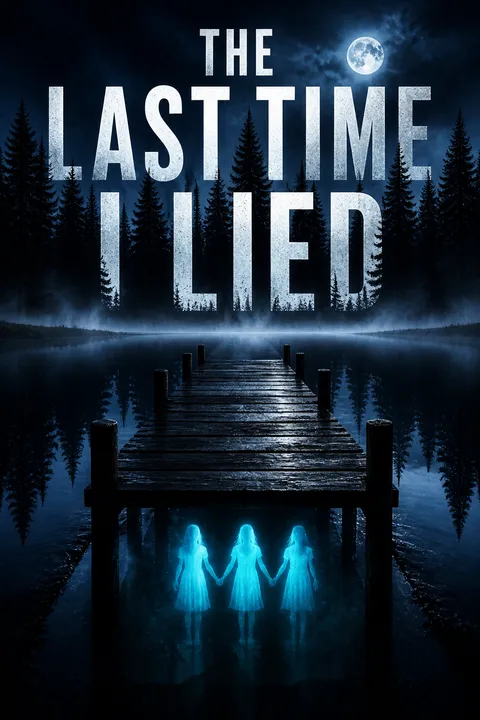
At dawn, thirteen-year-old Emma wakes in Dogwood cabin to find the three older girls who share it gone. Vivian, Natalie, and Allison have left their belongings behind, and the rest of Camp Nightingale seems deserted.
Emma searches the latrine, cabins, and locked buildings before wading into Lake Midnight, where the forest and water offer too many places to hide someone. Her fear outruns explanation. She screams for help, not yet knowing that this empty cabin will govern the next fifteen years of her life.
The opening turns absence into an event before it gives the reader the history that makes the absence meaningful. Emma’s search moves through ordinary spaces, the latrine, cabins, and mess hall, until the lake enlarges the mystery into a landscape. Her scream is both a plea for help and the first sign of the guilt that will shape her adult life. By withholding names and context, the scene makes the reader experience Emma’s helplessness before learning how unreliable memory, shame, and incomplete testimony will complicate the search for what happened.
The Forests Behind Her
Emma Davis has built an art career painting small figures of three girls, then burying them under dense, dark forests. At her first major gallery opening, wealthy Francesca Harris-White recognizes her and buys a painting. The next day, Franny asks Emma to return to Camp Nightingale, the Adirondack camp where the girls vanished fifteen years earlier, and teach art during its reopening.
Emma’s friend Marc urges her to accept, but the invitation touches the wound beneath her success: she has not painted anything else in months and still believes her silence contributed to the girls’ disappearance. She agrees, hoping to search the camp for a clue and escape the compulsive cycle of painting and erasing her lost friends.
Emma’s paintings turn a private failure of memory into a public career. The girls are present in every canvas, yet Emma’s method hides them, repeating the emotional structure of her silence: she preserves the evidence and obscures it at once. Franny’s invitation is therefore not simply a return to a crime scene. It offers Emma a chance to revisit the place where her guilt began, while also tempting her with the promise that artistic paralysis can be solved by recovering facts. Her decision is driven less by confidence than by a need to stop letting uncertainty dictate what she can make.
Vivian Takes the Newcomer
Fifteen years earlier, Emma arrives late at Camp Nightingale after her mother announces the trip with almost no warning. With the junior cabins full, Franny places her in Dogwood with older campers Vivian Hawthorne, Natalie, and Allison.
Emma is intimidated, but Vivian’s boldness draws her in: she welcomes Emma after the younger girl meets her teasing with a sharp retort. Vivian helps Emma through her first period, calls herself Emma’s summer big sister, and makes the neglected child feel chosen.
Emma also develops an intense crush on Theo, Franny’s handsome adopted son, who teaches her to float in Lake Midnight. Vivian’s attention gives Emma belonging, but it also teaches her to watch Vivian closely and shape herself around the older girl’s approval.
The friendship begins as an exchange between two girls who recognize neglect in each other, though Emma can see only the rescue and not the resemblance. Vivian offers practical care, but she also controls the terms of intimacy through dares, teasing, and selective disclosure. Emma’s crush on Theo further sharpens her dependency: attention from an older, confident person seems like proof that she is becoming desirable and adult. The camp’s close quarters accelerate these attachments, making ordinary acts of kindness feel like vows and ordinary acts of exclusion feel devastating.
Dogwood Opens Again
At twenty-eight, Emma reaches the reopened camp and meets Chet, Franny’s younger son, and his fiancée Mindy, who helps run the summer program. Franny’s overcrowding leaves Emma sharing Dogwood with Sasha, an anxious, inquisitive thirteen-year-old; Krystal, a shy comic-book artist; and Miranda, a provocative older teenager.
Emma asks for the same cabin where she once lived with Vivian, Natalie, and Allison. While settling in, she opens Vivian’s old trunk and finds a concealed photograph of a distressed long-haired woman and a rough map of Lake Midnight, marked with an X across the water.
The discovery gives her first concrete reason to search beyond the cabin. It also confirms that Vivian had been hiding something before the night she disappeared.
Returning Emma to Dogwood makes memory spatial and material. The cabin has not changed enough to offer the comfort of distance, and the hidden paper turns the past from a feeling into an investigative problem. The new girls also create a living counterpoint to Emma’s old cabinmates. Their distinct temperaments invite her to become a mentor rather than a frightened younger follower, though she is not yet sure she can do so. The map matters because it is evidence left by Vivian, but its secrecy also repeats the pattern Emma must learn to question: an intimate bond can contain information deliberately withheld.
The Camera in the Pines
Emma’s first night back brings more than memories. She notices a motion-triggered camera aimed at Dogwood and catches a fleeting shadow watching her through the old gap in the latrine wall.
That gap recalls her adolescent decision to spy on Theo while he showered, a trespass she later tries to undo by sealing it with clay. Franny and Theo soon explain that the camera was installed because a background check uncovered Emma’s teenage diagnosis of schizophreniform disorder, after she once saw the missing girls as hallucinations.
They call the surveillance protective, but Emma hears distrust in their reasoning. Their explanation leaves her feeling watched both by the camp’s cameras and by the history she hoped she could confront on her own terms.
The camera literalizes the novel’s central problem of who gets to observe whom. Emma once crossed a boundary by spying on Theo, and now the Harris-Whites cross one by watching her without warning. Neither act is morally identical, but each makes privacy feel conditional and turns looking into a form of power. Emma’s diagnosis adds a further complication: people can dismiss her observations as symptoms even when she is accurately detecting danger. The scene asks the reader to distinguish between psychological vulnerability and factual unreliability, refusing the easy assumption that a person with a mental-health history cannot also be a credible witness.
A Map Across Midnight
Emma takes Sasha, Krystal, and Miranda across Lake Midnight, following Vivian’s map toward a decaying gazebo and a line of boulders. Near the marked X, beneath another oak, she uncovers a waterproofed diary buried in the earth. Its early entries show that Vivian had been investigating something at the Lodge, searching the woods, and planning to reveal a discovery with Natalie and Allison.
The last entry says she is frightened, but the pages that might explain why are missing. Emma hides the journal from the campers and carries it back to Dogwood. Later, Chet explains that Emma’s old accusation against Theo helped drive his brother into a suicide attempt and ruined his reputation, revealing why the family has invited her back.
The diary converts the disappearance from an inexplicable vanishing into a planned investigation, but it supplies motive without resolution. Vivian’s entries complicate Emma’s memory of her as merely charismatic and cruel: she was capable of sustained inquiry and of fear. Chet’s account then makes Emma’s return ethically double-edged. Her presence may help repair Theo’s reputation, but it also reopens damage caused by her own false certainty. The secret book and the family’s request both place Emma in the role of investigator and potential offender, forcing her to confront how easily a search for truth can become another way to manage guilt.
The Door Says Liar
After Emma reads Vivian’s diary, someone watches her cabin and paints a red accusation across its door. The camp camera records no culprit, and Mindy suggests Emma may have staged the vandalism herself. Franny later tells Emma she has terminal ovarian cancer and hopes to spend one last summer restoring the camp.
Emma asks why Vivian searched the Lodge, then follows a number in the diary to a local library book about women’s asylums. A photograph of Peaceful Valley Asylum matches the initials and name on an old box Vivian once showed her in the woods. The evidence suggests the asylum may connect to Lake Midnight, though Emma cannot yet tell whether Vivian uncovered a family crime or misunderstood the camp’s history.
The word on the door exploits Emma’s weakest point: her own history of lying, concealing, and being disbelieved. Its source remains unknown, so the warning works simultaneously as threat and social verdict. Franny’s illness gives the reopening a deadline and recasts her generosity as a final act rather than a permanent project, but it also makes Emma wary of how much the family is withholding. The asylum clue expands the mystery beyond one night of missing campers. It links institutionalized women, family property, and local legend, while leaving open the possibility that a pattern of harm has been mistaken for proof of a single conspiracy.
Peaceful Valley's Address
Emma searches the Lodge study and finds a wooden box marked as property of Peaceful Valley. Inside are portraits of women whose names appear to describe their hair colors rather than their identities.
Lottie, Franny’s longtime assistant, explains that her ancestor Charles Cutler ran the asylum and sold patients’ hair to support the struggling institution, but arranged new homes for them before Buchanan Harris flooded the valley. The discovery weakens Emma’s theory that Franny concealed the women’s deaths.
In the same room, Emma spots an old photograph proving that Becca Schoenfeld, the reserved photographer now at camp, and Vivian had once been close friends. She finds Becca’s name scratched into her trunk and realizes Vivian’s relationship with her was another part of the past Emma never understood.
The study produces a crucial distinction between evidence and interpretation. The portraits and asylum records are real, but their existence does not prove the sinister explanation Emma has begun to construct. Lottie’s account reframes inherited family power as a mixture of exploitation and care: Cutler sold hair, yet also sought safer placements for patients. The photograph of Vivian and Becca then redirects the investigation toward social history rather than institutional history. Emma’s search repeatedly risks turning fragments into a complete story too soon, a habit shaped by guilt and by the seductive clarity of conspiracy.
Becca's Missing Years
Confronted with the photograph, Becca admits that she and Vivian were once best friends. After Vivian’s older sister Katherine drowned, Vivian drifted toward Natalie and Allison, leaving Becca excluded and resentful. Becca shares photographs from the old summer, including what may be the last image of Vivian, holding a sparkler at the Fourth of July campfire.
Their conversation makes Emma reconsider her assumption that she alone understood Vivian. Later, drunk and shaken, Emma tells Sasha, Krystal, and Miranda what she has hidden: she saw Vivian with a man in the latrine, fought with her, and said she hoped Vivian would never return. The girls listen as Emma finally admits that her guilt is tied to what she did after they left.
Becca’s photographs preserve moments Emma could not see, challenging the private mythology she built around Vivian. The images make Vivian socially legible as someone who had other attachments and losses, not simply the figure who chose or rejected Emma. Emma’s confession to the new campers changes her role: she stops managing their perception with omission and allows them to witness the source of her shame. Yet disclosure is not the same as repair. The scene’s emotional risk lies in Emma revealing a truth while still not fully understanding its consequences, a distinction the coming disappearance will make painfully concrete.
The Locked Cabin
Fifteen years earlier, Emma watched Vivian having sex with the camp groundskeeper, Ben Schumacher, but assumed the man was Theo. In anger, she exposed the encounter during a game, and the argument that followed drove Vivian, Natalie, and Allison from Dogwood. When they returned and knocked, Emma kept the door locked. The next morning, they were gone.
She told police Theo might have harmed them and never corrected the lie. In the present, Sasha, Krystal, and Miranda disappear from the same cabin after hearing Emma’s confession. Emma wakes to another search, another empty Dogwood, and another set of unanswered questions. Detective Flynn begins questioning her before a broad search can establish what happened.
The two disappearances rhyme without being identical. Emma’s adolescent actions do not prove she caused the first girls’ deaths, but they give her guilt a concrete basis: she chose retaliation and silence when the girls returned. In the present, that memory makes the new disappearance feel like punishment and repetition rather than coincidence. The novel uses the repeated cabin to make trauma structurally active: Emma does not merely remember the past, she interprets every new event through it. Her testimony is compromised by shame, but the shame itself does not establish guilt for the current crime.
The Wrong Man Returns
Police footage appears to show the three campers leaving Dogwood only minutes before Emma, making her look as if she followed them. A canoe later drifts back with Sasha’s broken glasses and Emma’s missing charm bracelet, strengthening Detective Flynn’s suspicion.
Emma discovers that Ben had a sexual encounter with Vivian on the night the first girls vanished and admits he found his camp keys missing afterward. Theo also clarifies that Emma had mistaken Ben for him in the shower, the misunderstanding behind her old accusation.
Becca studies her photographs and notices that Lottie was absent when the camp rushed to answer Emma’s screams. The evidence points in several directions, leaving Emma isolated and uncertain which people are protecting a secret and which are simply frightened.
The case turns on artifacts that seem persuasive but are not self-interpreting: video timestamps, a bracelet, glasses, and a missing key. Each can be read as evidence of Emma’s guilt or as something arranged to frame her. The delayed correction about Ben exposes the cost of Emma’s earlier assumption, while Theo’s willingness to explain it tests whether trust can survive repeated accusation. Becca’s observation about Lottie offers a new lead, but the novel keeps suspicion mobile. Rather than granting Emma a clean investigator’s viewpoint, it makes her reason under pressure, with every conclusion entangled in her prior mistakes.
The Asylum Beneath
Research sent by Marc confirms that Peaceful Valley stood on the Harris property, and Emma confronts Franny and Lottie. Lottie explains that Cutler relocated his patients before the valley was flooded; the asylum’s submerged building is real, but its patients were not drowned there.
Soon after, Emma follows comic-book pages left as breadcrumbs through the woods and reaches the root cellar. Sasha, Krystal, and Miranda have been locked inside, bruised and exhausted. Emma frees them, but Theo arrives before they can get away.
Still convinced he may be responsible, Emma sends the girls toward the canoe and flees from him. She hides inside a narrow cave beneath a giant boulder, slides down its flooded passage, and falls into an underground pool.
The asylum revelation corrects one false theory while preserving the physical danger of the setting. The campfire story was distorted, but the flooded institution remains a literal landmark, and its presence will matter for reasons Emma does not yet know. The comic pages show the younger girls thinking strategically and trying to leave a route back, an echo of Vivian’s earlier trail of flowers. Emma’s decision to flee Theo is understandable within her history but dangerous in the present. Her descent into the cave makes the cost of interpreting new evidence through old guilt bodily: she is literally trapped beneath the story she has constructed.
Chet's Revenge Surfaces
Emma finds a submerged tunnel and swims out of the cave into Lake Midnight, where Chet meets her in a motorboat and then attacks her with an oar. He admits he engineered the surveillance, the painted warning, the trapped crows, and the planted bracelet to make Emma look guilty. He also altered camera records so the girls seemed to leave only minutes before her.
Chet wanted her to suffer as Theo had after Emma’s accusation; now he intends to drown her near the sunken asylum. Emma fights back, and a police shot breaks the oar, sending her into the water and through the asylum roof. Beneath the lake she sees human bones and Vivian’s locket. Theo pulls Emma to the surface while Flynn arrests Chet.
Chet’s plan transforms the book’s repeated motifs into instruments of revenge. Surveillance, false evidence, and Emma’s psychiatric history are not merely eerie details; they are mechanisms for controlling which account others will believe. His motive grows from a real injury, Theo’s public ruin, but he converts that injury into an elaborate attempt to reproduce it in Emma. The submerged asylum is both crime scene and historical residue, joining present violence to the novel’s inherited landscape. Emma survives not by achieving certainty in advance, but by acting under uncertainty, while the physical evidence below the lake finally breaks open the story she could not solve from shore.
Birds Released at Last
The three younger campers recover in hospital, and Emma spends two days there with Miranda. Police charge Chet, who plans to plead guilty, while the search of the lake continues. Camp Nightingale closes for good. Emma returns briefly to see Franny, who apologizes for the harm Chet caused and forgives Emma for her old accusation against Theo.
Theo meets Emma by the lake, gives back her charm bracelet, and accepts a fresh beginning between them. Emma drops the bracelet into the water rather than keep relying on it as protection. The gesture does not erase what happened, but it marks her decision to face fear without treating the talisman, the paintings, or silence as substitutes for truth.
The immediate resolution is deliberately partial. The second group of girls is safe, Chet is in custody, and Emma and Theo can begin again, but the camp itself cannot be restored to innocence. Franny’s forgiveness is not a legal absolution or a claim that Emma did nothing wrong; it recognizes that a frightened adolescent can cause serious harm and still remain capable of change. Discarding the bracelet makes that change tangible. Emma gives up a device meant to contain her fear, not because her vulnerability has vanished, but because she no longer wants to make protection depend on denying what she sees.
Epilogue
Franny dies in September. Months later, as Emma prepares for another gallery opening, police confirm that the bones beneath Lake Midnight belong to Natalie and Allison, while Vivian remains missing. A woman who looks like the grown Vivian approaches Emma at the gallery and reveals that Natalie and Allison had watched Katherine drown after daring her onto the ice.
Vivian lured them to the asylum and killed them, then escaped. She tells Emma that Vivian is dead, but that is the lie. Emma paints a portrait exposing the woman’s present-day face and sends it to Detective Flynn, refusing to conceal her again.
The final revelation breaks the emotional bargain that has organized Emma’s life: guilt had made her imagine that her failure to open the cabin door caused the girls’ deaths, when Vivian had already set a separate violence in motion. Yet the truth does not simply free Emma. Vivian’s survival means that the figure Emma painted and mourned was also a calculating person who committed murder and escaped accountability. Emma’s final act is not to forgive or avenge her, but to make her visible. The change in her painting practice is therefore ethical as well as artistic: she stops turning an unresolved person into a private symbol she can repeatedly cover.
Analysis
The novel builds its suspense around a problem of interpretation rather than a simple question of location. Emma has reason to distrust her perceptions: she has experienced hallucinations, lied to protect herself, and once accused Theo without adequate evidence. Yet those vulnerabilities do not make her observations meaningless. The plot repeatedly forces a distinction between uncertainty and unreliability, asking whether a witness can be psychologically fragile and still tell the truth.
Camp Nightingale’s physical geography gives that problem a form. The cabins, latrine, woods, and lake are familiar enough to invite memory, but each place contains a blind spot: a wall crack, a hidden camera, a buried diary, or a flooded building. Looking is never neutral. Emma’s adolescent spying on Theo and her adult fear of surveillance mirror one another, while Becca’s camera preserves evidence that memory cannot. Chet’s manipulation of the camera demonstrates that recorded images can be as vulnerable to distortion as recollection.
The story also examines how guilt recruits the imagination. Emma turns her refusal to open the cabin door into a total explanation for the girls’ disappearance, carrying responsibility beyond what the evidence supports. That self-accusation makes her easy to suspect and easy to manipulate. Her artistic practice repeats the same pattern: she paints the girls, then covers them, preserving their presence while denying them visibility. The final portrait changes the function of art from private containment to public disclosure.
The asylum history gives the mystery a broader ethical dimension. Women’s confinement and exploitation are not merely atmospheric backstory; they show how easily authority can define vulnerable people as problems to be managed. Vivian’s final revelation complicates any comforting account of victimhood. Grief may explain her fixation on Katherine, but it does not excuse murder. Emma’s growth consists not in becoming certain of everyone’s innocence, but in accepting responsibility for what she actually did, resisting stories that exceed the evidence, and making hidden harm visible.
Review Summary
The Last Time I Lied received mostly positive reviews, praised for its atmospheric summer camp setting, twists, and suspenseful plot. Readers enjoyed the dual timeline, unreliable narrator, and shocking ending. Some criticized the believability of certain plot elements and character actions. The book was described as creepy, gripping, and a page-turner. Many reviewers appreciated Sager's writing style and ability to keep them guessing. While some found the ending divisive, most agreed it was an enjoyable and thrilling read.
People Also Read









Characters
Emma Davis
The painter returningEmma is an artist whose forest paintings repeatedly conceal three girls from her childhood, even as the images make her career. Neglected by her parents and hungry for belonging, she once attached herself intensely to the confident older camper Vivian. As an adult, she is observant and capable, but guilt and a history of hallucinations make her distrust her own perceptions. She tends to turn uncertainty into self-blame, then tries to manage it through omission rather than confession. Her return to Camp Nightingale places her between two roles: a mentor responsible for younger campers and a witness still trying to understand her own past. Art gives her a language for memory, but it can also become a way to hide from it.
Vivian Hawthorne
The magnetic older camperVivian is charismatic, sharp-tongued, and skilled at reading what other people want from her. She can offer genuine tenderness, as when she helps Emma through an unfamiliar bodily change, while also using dares, lies, and attention to control a room. The death of her older sister leaves her with a private grief that helps explain her volatility without excusing her cruelty. Vivian’s confidence is partly performance: she keeps secrets, changes alliances, and treats social life as a contest in which vulnerability can be exploited. To Emma, she becomes a surrogate sister and an ideal of female boldness, which makes it difficult for Emma to distinguish affection from manipulation.
Theo Harris-White
The camp's compassionate doctorTheo is Franny’s older adopted son, a pediatrician whose easy warmth first makes him the object of Emma’s adolescent crush. His attention to Emma is kind but not romantic when she is thirteen, a distinction she is too young and inexperienced to interpret comfortably. After the camp’s old tragedy, public suspicion and Emma’s accusation destabilize his life. As an adult, he is more guarded, marked by the consequences of that period, yet he remains attentive to other people’s distress. Theo’s story complicates the idea of forgiveness: he can be generous without being untouched by harm, and his compassion does not mean he has forgotten what Emma did.
Franny Harris-White
The camp's determined founderFranny is the wealthy, unconventional owner of Camp Nightingale and the matriarch of the Harris-White family. She prefers to treat campers as equals, pairing her privilege with a genuine affection for the wilderness and the girls who visit it. She is also a practiced host who knows how to frame a difficult request as an act of generosity. The old disappearance cost her family, reputation, and camp dearly, yet she remains attached to the place and wants it inhabited again. Franny’s composure can comfort people, but it can also make her motives hard to read. Her sense of duty is sincere, though it is shaped by the power she has inherited.
Charlotte Lottie
Franny's longtime confidanteKnown as Lottie, Charlotte has worked beside Franny for years and understands the family’s routines, history, and unspoken rules. Her calmness makes her useful in a crisis, while her quiet tact allows her to move between loyalty and independent judgment. She has her own past and ambitions, including an earlier hope of becoming an actress, but financial realities and family ties drew her into the Harris household’s orbit. Lottie’s familiarity with the Lodge gives her access to its secrets, though she rarely volunteers information without a reason. She is both employee and intimate witness, a position that asks her to balance affection with discretion.
Chet Harris-White
The younger Harris sonChet is Franny’s younger adopted son, a tall, reserved man whose quiet manner can make him seem less forceful than his brother. As a child, he watched Theo endure the fallout from Emma’s accusation, and he carries strong loyalty to his family. He is practical and comfortable around camp life, helping with the reopening and its daily work. Chet’s long memory gives him a deep sensitivity to unfairness, but it also makes him vulnerable to treating old injury as a debt that must be repaid. His relationship with Mindy and his position in the family place him between inherited privilege and the wish to define himself on his own terms.
Rebecca Becca Schoenfeld
The watchful photographerBecca is a former camper who returns as a successful photojournalist, still carrying a camera as a way to interpret the world around her. As a teenager she was quiet and often treated as an outsider, but her photographs show an instinct for catching what others miss. She has a complicated history with Vivian and does not sentimentalize the people she once loved. Becca’s professional eye helps her preserve evidence, yet photography can also create distance: she is accustomed to observing pain before deciding how close to come. Her guardedness is not indifference so much as a practiced defense against both old hurt and the disturbing events she has witnessed.
Natalie
The athletic cabinmateNatalie is a strong, athletic camper and one of Vivian’s longtime companions. She resists Vivian’s attempts to control her, especially around food and appearance, but remains tied to the group’s shared history. Her bluntness and physical confidence contrast with Allison’s quieter manner. To Emma, Natalie initially appears mostly as part of Vivian’s circle, a limitation that later troubles Emma as she realizes how little she knew about her as an individual.
Allison
The quiet peacemakerAllison is pretty, subdued, and accustomed to smoothing over tension between Vivian and Natalie. She comes from a theatrical family and often presents herself as cheerful, even when she is hurt or anxious. Her soft-spoken manner can make her easy to overlook, especially beside Vivian’s force of personality. Emma remembers Allison as a friend, but recognizes that she paid too little attention to Allison’s independent thoughts and needs.
Miranda
The fearless mystery readerMiranda is the oldest girl in Emma’s cabin, stylish, sharp, and accustomed to projecting confidence. She enjoys mysteries and imagines a future solving crimes, while her bravado sometimes masks hurt, especially around romantic rejection. She tests adults with teasing questions and resists being treated as a child. Her loyalty to Sasha and Krystal shows a more protective side beneath the flirtation and swagger.
Krystal
The comic-book artistKrystal is a quiet, guarded teenager who draws original superheroes and finds in comics models of ordinary people discovering unexpected strength. She is more comfortable expressing herself through sketches than through conversation. Her imagination is not an escape from reality so much as a way to give courage a visible shape. Emma’s willingness to respect her drawing rather than insist on painting helps Krystal feel seen.
Sasha
The curious researcherSasha is a bright, anxious thirteen-year-old whose curiosity ranges from natural hazards to obscure facts. She gathers information to make the unfamiliar feel manageable, though each new fact can give her another reason to worry. Her questions challenge Emma to be honest rather than perform adult certainty. Sasha’s caution coexists with a strong desire to understand the world firsthand.
Ben Schumacher
The camp groundskeeperBen works for the Harris family as a groundskeeper and maintenance man, fixing buildings and keeping the property functional. He grew up with fewer advantages than the campers and is accustomed to being overlooked by them. His gruff manner and physical confidence make him difficult to read, while his long history at the camp means he knows its buildings and routines well. Ben’s presence links the ordinary work of the property to the secrets hidden within it.
Mindy
Chet's ambitious fiancéeMindy is Chet’s fiancée and an energetic organizer who throws herself into making the reopened camp run smoothly. Her polished, sometimes sanctimonious manner initially irritates Emma, who assumes Mindy has never known insecurity. In fact, Mindy grew up on a dairy farm and worked hard to win the educational and social status she now enjoys. Her ambition is partly a strategy for escaping the circumstances she came from, and she is sensitive to being dismissed as merely decorative or privileged.
Casey Anderson
The veteran counselorCasey is a former camper turned counselor, a red-haired English teacher with a dry wit and an enduring connection to Camp Nightingale. She knows the camp’s customs and legends, and she remembers Vivian as a charming troublemaker rather than an uncomplicated victim. Casey carries some responsibility for what happened during the old summer, though she is unsure whether greater attention could have changed anything. Her humor helps her tolerate the camp’s tensions, but it sometimes disguises regret.
Marc Stewart
Emma's steadying best friendMarc is Emma’s closest friend, a restaurant owner and cook who offers practical support without pretending to be a therapist. He helped connect her paintings to the art world and knows how easily her self-doubt can become paralysis. His jokes soften difficult conversations, but he takes Emma’s safety seriously and encourages her to confront the past rather than remain trapped by it. Marc’s loyalty is steady without being unquestioning.
Nathan Flynn
The skeptical investigatorDetective Flynn investigates the campers’ disappearance, approaching Emma’s account with the caution required by the evidence and her history. His focus on timelines, witnesses, and physical traces sometimes makes him seem dismissive, especially when Emma describes events no one else can verify. He is not simply hostile, however; he is working within the limits of what can be proven. Flynn’s investigative method places pressure on the difference between a compelling story and a corroborated fact.
Katherine
Vivian's beloved sisterKatherine is Vivian’s older sister, whose death becomes a lasting source of grief and a defining absence in Vivian’s life. Vivian remembers her as someone who offered guidance and sisterly care. What happened to Katherine influences Vivian’s loyalties and her understanding of betrayal, though Emma initially knows only fragments of that history.
Randall
Emma's gallery dealerRandall is the art dealer who mounts Emma’s first major gallery show and helps turn her forest paintings into a career. He is socially fluent and commercially alert, quick to recognize the appeal of her work. His enthusiasm supports Emma’s success but also brings pressure to produce more paintings when she is unsure what she can make next.
Plot Devices
Two Truths and a Lie
Truth hidden in playThe campers’ game asks each player to offer two true statements and one falsehood, making deception part of ordinary intimacy. Vivian uses it to test what others know and to encourage Emma to treat lies as a social skill. In adulthood, Emma revisits the game with her new cabinmates and uses its structure to approach confessions she cannot otherwise voice. The device links childhood bonding, manipulation, and the novel’s shifting accounts of what happened. It also trains readers to question whether a statement is false, misleading, or simply missing context.
Vivian's Map and Diary
A trail through secretsA rough map hidden in Vivian’s old trunk leads Emma across Lake Midnight to a buried diary. The map’s X, the diary’s missing page, and a coded library reference create a chain of clues that carries the investigation from the cabin to the woods, the library, and the Lodge. The diary reveals Vivian’s research and fears but withholds the decisive explanation, forcing Emma to infer the rest. Its contents are not a neutral guide: they reflect Vivian’s perspective, and Emma’s guilt makes her prone to interpret clues as confirmation of whatever she already fears.
The Cabin Camera
Surveillance as suspicionA motion-triggered camera is installed outside Dogwood after Emma returns to camp. Franny’s family describes it as a precaution because of Emma’s past mental-health crisis, but the camera also records the newer girls leaving and later becomes central to the investigation. Missing footage and altered timing make it difficult to know what the recordings prove. The device turns the camp’s atmosphere of watchfulness into practical evidence, while demonstrating how easily evidence can be shaped or withheld. It places Emma under observation and makes the reader consider whether surveillance protects people or merely supplies a convincing story about them.
Lake Midnight
A landscape that concealsThe lake was artificially created by the Harris family, flooding a valley and leaving structures beneath its surface. Its hidden history inspires campfire stories about a drowned village, while its depth and submerged trees frustrate searches for the missing campers. Drought exposes unusual parts of the shore and the remains of the old asylum, making the water both setting and archive. The lake’s beauty encourages people to treat it as a refuge, but its concealed terrain makes that comfort unreliable. It holds the distinction between what has vanished and what is simply hidden.
The Three Bird Bracelet
A fragile anchor to realityEmma’s therapist gave her a charm bracelet with three small birds after her adolescent hallucinations. Emma wears it constantly and touches it when she fears she is seeing the missing girls again. The bracelet functions as a grounding ritual, but its emotional importance also makes it useful as planted evidence when it disappears from Emma’s wrist and turns up in a canoe. Its meaning changes over the story: it begins as protection against fear, becomes a tool used to implicate her, and ultimately represents a coping strategy Emma can choose to leave behind.
FAQ
Synopsis & Basic Details
What is The Last Time I Lied about?
- Haunted by the past: Emma Davis returns to Camp Nightingale, the site of her friends' disappearance fifteen years prior, seeking closure and answers.
- Unraveling a mystery: She discovers a hidden diary and a mysterious map, leading her to uncover dark secrets about the camp and its history.
- Confronting inner demons: Emma battles her own mental health struggles and past accusations as she navigates the camp's eerie atmosphere and seeks the truth.
Why should I read The Last Time I Lied?
- Intricate mystery: The novel offers a complex and suspenseful plot with twists and turns that keep readers guessing until the very end.
- Psychological depth: The characters are well-developed, with complex motivations and emotional struggles that add depth to the narrative.
- Atmospheric setting: The eerie and haunting atmosphere of Camp Nightingale creates a chilling backdrop for the unfolding mystery.
What is the background of The Last Time I Lied?
- Fictional setting: The story takes place at Camp Nightingale, a fictional summer camp in upstate New York, owned by the Harris family.
- Historical context: The camp's history is intertwined with the Harris family's past, including the creation of Lake Midnight and the family's wealth from lumber.
- Psychological elements: The story explores themes of mental health, guilt, and the impact of trauma, adding a psychological layer to the mystery.
What are the most memorable quotes in The Last Time I Lied?
- "You're too young for this, Em.": Vivian's words to Emma before disappearing, foreshadowing the danger and mystery surrounding the girls' actions.
- "Sometimes the only way out is through.": Marc's advice to Emma, highlighting the theme of confronting the past to move forward.
- "Everything is a game, Em. Whether you know it or not. Which means that sometimes a lie is more than just a lie. Sometimes it's the only way to win.": Vivian's perspective on truth and deception, revealing her manipulative nature.
What writing style, narrative choices, and literary techniques does Riley Sager use?
- Dual timelines: The story alternates between the present and the past, gradually revealing the events leading up to the girls' disappearance.
- First-person perspective: The narrative is told from Emma's point of view, allowing readers to experience her thoughts, emotions, and unreliable perceptions.
- Foreshadowing and red herrings: Sager uses subtle clues and misdirection to create suspense and keep readers guessing about the true nature of the mystery.
Hidden Details & Subtle Connections
What are some minor details that add significant meaning?
- The charm bracelet: Emma's constant wearing of the charm bracelet with three birds symbolizes her connection to the missing girls and her attempts to control her anxiety.
- The names of the cabins: Each cabin is named after a tree, which subtly connects to the camp's history and the family's lumber business.
- The red color: The recurring use of red, especially in the Lodge's door and the paint on Dogwood, foreshadows danger and violence.
What are some subtle foreshadowing and callbacks?
- The mention of the lake's creation: The story of how Buchanan Harris created Lake Midnight foreshadows the dark secrets hidden beneath its surface.
- Vivian's knowledge of the latrine: Vivian's familiarity with the crack in the latrine wall foreshadows her secret activities and her connection to the camp's past.
- The repeated phrase "You're too young for this": This phrase, initially spoken by Vivian, becomes a recurring motif, highlighting Emma's vulnerability and the dangers she faces.
What are some unexpected character connections?
- Lottie's family history: Lottie's connection to the Harris family through her great-grandfather, Charles Cutler, reveals a hidden link to the asylum's past.
- Becca and Vivian's friendship: The revelation that Becca and Vivian were once close friends adds a layer of complexity to their interactions and Becca's motivations.
- Theo and Emma's shared past: The revelation of Theo's troubled past and Emma's role in it creates a complex dynamic between them, highlighting themes of guilt and forgiveness.
Who are the most significant supporting characters?
- Lottie: As Franny's assistant, Lottie is a key figure in the camp's operations and a link to its past, with her family's history intertwined with the Harris family.
- Casey Anderson: A former camper and counselor, Casey provides insight into the camp's history and Vivian's personality, while also serving as a source of support for Emma.
- Detective Flynn: The state police detective investigating the disappearances, he represents the external forces trying to uncover the truth and hold those responsible accountable.
Psychological, Emotional, & Relational Analysis
What are some unspoken motivations of the characters?
- Franny's desire for redemption: Franny's decision to reopen the camp is driven by a desire to atone for the past and create a positive legacy for her family.
- Theo's need for forgiveness: Theo's actions are motivated by a need to prove his innocence and find closure after being falsely accused of harming the girls.
- Chet's thirst for revenge: Chet's actions are driven by a desire to punish those he believes wronged his family, particularly Emma.
What psychological complexities do the characters exhibit?
- Emma's unreliable narration: Emma's mental health struggles and past hallucinations make her an unreliable narrator, blurring the lines between reality and perception.
- Vivian's manipulative nature: Vivian's charm and charisma mask a manipulative personality, driven by a need for control and a desire to uncover the truth.
- Chet's hidden rage: Chet's seemingly calm demeanor hides a deep-seated anger and a desire for revenge, making him a dangerous and unpredictable character.
What are the major emotional turning points?
- Emma's discovery of Vivian's diary: This discovery triggers a wave of guilt and a renewed determination to uncover the truth about the past.
- Emma's confrontation with Franny and Theo: This confrontation forces Emma to face her past accusations and the impact they had on others.
- Emma's realization of the asylum's history: This revelation deepens her understanding of the camp's dark past and the motivations of the characters involved.
How do relationship dynamics evolve?
- Emma and Theo's complex relationship: Their relationship evolves from suspicion and mistrust to a tentative understanding and a shared desire for truth.
- Emma and Mindy's initial animosity: Their relationship shifts from animosity to a grudging respect as they bond over their shared experiences at the camp.
- Emma and Becca's strained connection: Their relationship is marked by unspoken truths and a shared history, highlighting the complexities of female friendships.
Interpretation & Debate
Which parts of the story remain ambiguous or open-ended?
- The true nature of Vivian's motives: While her diary reveals her suspicions, the full extent of her motivations and her plan remains somewhat ambiguous.
- The exact circumstances of the girls' disappearance: The details of how the girls vanished and what happened to them in the woods are left to the reader's imagination.
- The long-term impact on Emma: The story ends with Emma starting to move on, but the long-term effects of her experiences and her mental health remain open to interpretation.
What are some debatable, controversial scenes or moments in The Last Time I Lied?
- Emma's accusation of Theo: Emma's initial accusation of Theo, based on her own biases and fears, raises questions about the reliability of her perspective.
- The nature of Vivian's actions: Vivian's manipulative behavior and her use of others to achieve her goals raise questions about her morality and her true intentions.
- The morality of revenge: Chet's actions, driven by a desire for revenge, raise questions about the ethics of seeking retribution and the consequences of such actions.
The Last Time I Lied Ending Explained: How It Ends & What It Means
- Emma's confrontation with Chet: The climax of the story involves a confrontation between Emma and Chet, revealing his role in the disappearances and his desire for revenge.
- The discovery of the asylum: The revelation that Camp Nightingale was built on the site of Peaceful Valley Asylum provides a historical context for the camp's dark secrets.
- Emma's journey to healing: The ending suggests that Emma has finally found a way to move on from the past, but the long-term effects of her experiences remain open to interpretation.
About the Author
Other books by Riley Sager







Download PDF
Download EPUB
.epub digital book format is ideal for reading ebooks on phones, tablets, and e-readers.








