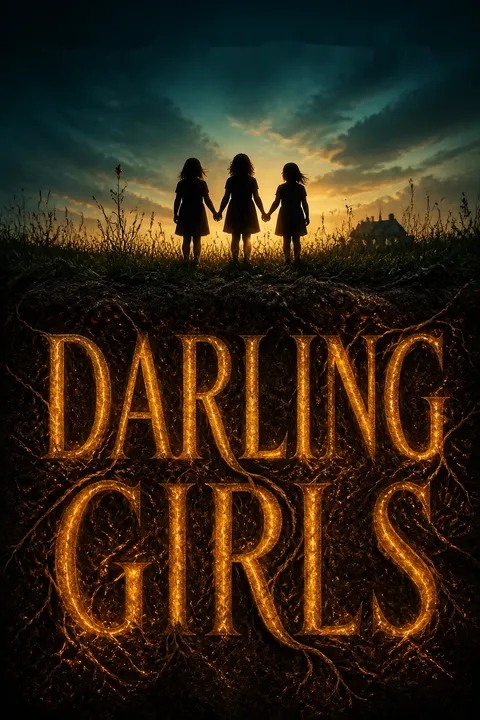


Plot Summary
Bones Beneath Wild Meadows
Jessica Lovat, a successful home organiser who keeps her anxiety under chemical control, is called by Detective Ashleigh Patel while driving between clients. Excavators clearing Wild Meadows, the foster home where Jessica grew up, have uncovered human remains beneath the site.
Norah Anderson, her impulsive foster sister, receives the same call during a disastrous date; Alicia Connelly, now a child-protection social worker, hears it while caring for a distressed toddler.
The women gather at Jessica's house, where she resists returning to Port Agatha and fears that police scrutiny will expose their childhood. Alicia and Norah argue that refusing to help will look suspicious. Their shared history, once a private source of safety, becomes the reason they must face the place again.
The discovery turns ordinary habits into signs of strain: Jessica is driving to a client, Norah is managing a date as a transaction, and Alicia is comforting a child. Each woman has built an adult life around a coping strategy learned in care. The body forces those strategies into the same room. Their disagreement about returning also establishes the central tension: they depend on each other, but shared loyalty can protect them from danger or keep old silences intact.
A Darling Girl's Bargain
After Jessica's mother dies, social worker Scott Michaels takes four-year-old Jessica to Wild Meadows and presents the placement as good fortune. Holly Fairchild welcomes her with lavish attention, lets her call her Mummy, and makes the grieving child feel chosen.
Jessica responds by clinging to Holly and working hard to please her. When school introduces friends and time apart, Holly's warmth sharpens into control. She leaves Jessica dangerously unsupported in the pool, then uses the fright to teach her that safety depends on Holly alone.
Jessica adapts by watching Holly's moods, obeying routines, and cleaning the large house. Years later, when Holly takes in another girl, Jessica worries that affection can be withdrawn as quickly as it was offered.
Jessica's orderliness begins as adaptation, not temperament. She has lost her mother and is told to feel fortunate, so gratitude becomes a condition of belonging. Holly's alternating tenderness and threat teaches Jessica to monitor other people's needs before naming her own. The pool episode is especially formative: dependence is presented as rescue after Holly has created the danger. This pattern explains why adult Jessica confuses loyalty with safety and why even harmful attention can remain emotionally compelling.
Norah Enters Wild Meadows
At ten, Norah arrives after a string of abusive foster placements, carrying her belongings in a garbage bag and trusting no promise without checking the exits. Holly initially offers rules and apparent safety, then grips Jessica hard enough to leave marks when Norah's arrival disrupts their closeness.
Norah sees the speed with which Holly returns to a smile and keeps her distance. At school, she knocks down a girl bullying Jessica and turns Jessica's unpaid homework into a small business, declaring them sisters so classmates will not single Jessica out as a foster child.
When Holly forces soap into Jessica's mouth for speaking back, Norah intervenes. The girls become wary allies, bound by a household where protection must come from children.
Norah's aggression is a learned instrument. Earlier placements have taught her that force can clarify who holds power, so she uses it both to defend Jessica and to negotiate school life. Her declaration of sisterhood is strategic, but Jessica's pleasure in it gives the gesture emotional weight. Norah does not yet trust the household; she trusts a code among foster children. The soap punishment exposes the limit of mere observation and moves her from self-protection toward active responsibility for another child.
Alicia Loses Grammy
Alicia arrives as a temporary placement after her beloved grandmother, Grammy, is hospitalised. Used to abundant meals and unembarrassed affection, she is stunned when Holly shames her for asking for more food and later makes her eat beans from the floor. Jessica and Norah quietly share stolen snacks, and Alicia answers their kindness with jokes that slowly draw the guarded girls into conversation.
When a social worker tells her that Grammy has died, Alicia loses the home she expected to return to. Norah lists the worse foster homes she has survived, then offers a pinkie promise that the three girls can become sisters. Alicia accepts, choosing the fragile family available to her over another unknown placement.
Alicia's grief becomes inseparable from bodily deprivation. Holly does not merely ration food; she recasts hunger as a moral defect, prompting Alicia to blame herself for needing care. The sisters' hidden snacks and bedtime jokes offer a counterexperience: comfort can be given without humiliation or payment. Norah's promise is not sentimental escape. It is a practical response to a system that has repeatedly separated children from stable bonds. Alicia's acceptance marks the group's emotional foundation, built from small acts of chosen care.
The Child Named Amy
Holly takes in a succession of babies for short respite stays, then leaves Jessica, Norah, and Alicia to manage their care when the infants frustrate her expectations. The pattern changes when she brings home toddler Amy and announces that she will adopt her. Amy has an extra toe, a small physical difference her birth parents supposedly rejected, and Holly presents herself as the child's rescuer.
The sisters grow attached as Amy seeks their company and resists Holly's smothering attention. Jessica finds a dusty handmade doll in the basement bearing the same name, but the girls cannot explain it and set the oddity aside. Amy's dependence on the three girls deepens while Holly insists that only she should mother her.
The babies reveal that Holly's care is conditional on the emotional return she expects. Infants who cry, flinch, or fail to attach become burdens, while Amy's apparent adoption gives Holly a chance to claim a permanent bond. The sisters' attention works differently: they respond to the child as she is, not as proof of their own worth. The doll is a material clue without an interpretation, showing how trauma and limited authority can make children notice evidence yet lack the power to make adults take it seriously.
The Girl Who Vanished
When Jessica, Norah, and Alicia see Holly holding Amy beneath the pool water, they run to rescue the child and decide they can no longer protect her by staying quiet. They report Holly to the police through their school principal. By the time officers search Wild Meadows, Amy and every trace of her are gone. Social services has no record of her placement, and Scott and the stable hand deny seeing her.
The police find the old doll from the basement, and adults conclude that the girls have imagined Amy together. The sisters are removed from Wild Meadows and eventually placed in a group home, but their account is dismissed. They learn that even three consistent witnesses can be overruled when the evidence has been erased.
The girls act on a sound judgment that reporting abuse may endanger their fragile unity, yet the institutions meant to protect them convert missing records into proof against their memories. The doll becomes a cruel substitute for a child: tangible enough to validate that something is wrong, but easy for adults to use as evidence of fantasy. Their shared disbelief is not simply a mistaken diagnosis. It is an institutional failure that teaches each girl to distrust her own perception and gives Holly control over the story.
Return to the Excavation
In Port Agatha, Patel and her colleagues interview the sisters separately, pressing them on their time at Wild Meadows. Norah claims her dogs are service animals so they can stay with her, while Jessica tries to manage every question as if it were a business crisis.
The women also meet Rhiannon, Bianca, and Zara, former foster children drawn to the investigation. At the pub, Patel reveals that the remains belong to a young child, possibly an infant. Alicia breaks down, the first time her sisters have seen her cry since Grammy died.
Holly arrives soon afterward, presenting herself as eager to help while implying that traumatised foster children may become perpetrators. Her careful public posture makes the sisters' history look like a motive.
The discovery confirms the sisters' fear without yet confirming their explanation. The remains are a child, but the identity is unknown, so memory becomes both evidence and vulnerability. Holly's public framing exploits a familiar bias: behaviour shaped by abuse is treated as evidence that abused children are dangerous. Alicia's tears interrupt her professional composure, revealing how much she has contained. The gathering of former placements also widens the story from three sisters to a community whose records and memories may hold missing pieces.
Miss Fairchild Turns the Table
Holly needles the sisters in public, accusing Norah of violence and hinting that the women may have harmed a child. Norah grabs Holly during a pub confrontation, giving her a fresh assault allegation to use against them.
Meanwhile, Norah's recent date, Kevin, threatens to report the broken nose she gave him unless she sends increasingly explicit sexual material. Jessica, already dependent on Valium, steals pills from clients and struggles to keep her business and reputation intact.
Alicia turns to Meera Shah, a child-protection lawyer she has long desired but kept at a distance. The sisters are now caught between a homicide inquiry, a public smear, Norah's legal jeopardy, and Jessica's addiction, while each tries to shield the others by keeping secrets.
Holly does not need to prove the sisters guilty; she needs their coping mechanisms to look like evidence. Norah's forceful response gives that strategy a visible result, while Jessica's medication dependence makes her increasingly unreliable to herself and others. Kevin's coercion echoes the powerlessness Norah learned to answer with sex or violence, but now those tactics expose her to exploitation. Alicia's turn toward Meera signals a different possibility: accepting help without first converting intimacy into a debt.
The Sister Who Told
Jessica overhears Holly and the stable hand arguing outside their cottage, then confronts Holly and is drawn into her old longing for maternal approval. When Norah interrupts Holly embracing Jessica, Holly reveals that Jessica used to report the sisters' plans to her.
Jessica admits she warned Holly that they intended to tell police about Amy, acting from jealousy and lifelong conditioning to win Holly's favour. She believes that disclosure may have enabled Amy's disappearance.
Overwhelmed by shame and already misusing Valium, Jessica takes a dangerous quantity of pills. Alicia and Norah find her unconscious and call an ambulance. At the hospital, doctors support her breathing while Phil arrives and recognises that her addiction had been hidden in plain sight.
The betrayal is psychologically credible because Jessica's allegiance formed before the sisterhood did. Holly trained her to treat disclosure as a route to closeness, and Jessica's confession exposes how abuse can recruit a victim into enforcing the abuser's control. Yet responsibility is not the same as blame: Jessica's sisters understand the grooming even while she cannot forgive herself. The overdose makes her private strategy physically visible. Phil's presence begins a shift from silent accommodation toward a marriage in which painful facts can finally be spoken.
A Different Child's Bones
While Jessica remains hospitalised, Norah and Alicia go to the station with Meera. Dirk Winterbourne arrives and admits that he did see the toddler years earlier. Holly had threatened to expose his conviction involving a fifteen-year-old if he contradicted her account, so he denied Amy existed.
The forensic examination brings a second shock: the remains are from a child under one year old and roughly fifty years old, with no sign of the extra toe associated with the toddler the sisters remember. The body therefore predates their time at Wild Meadows. Just as they begin to doubt their identification, Zara says she once had six toes on her left foot and shows the small scar left by their removal.
The evidence separates two mysteries the sisters had fused together: the child they remember and the child buried beneath the house. Dirk's admission validates one part of their memory while showing how coercion can enlist witnesses in erasure. The remains' age dismantles the simplest theory, but the extra-toe clue gives Zara's history a physical anchor. For once, bodily evidence does not replace a child's account; it helps the adults finally test that account against the past.
Zara's Missing Toe
A photograph from Zara's early childhood convinces Alicia, Norah, and Jessica that she is the toddler they knew as Amy. Her adoptive parents had been told little about her origins; she was taken into care after neighbours heard her crying while they attended an English class.
Scott Michaels, the sisters' former social worker, arranged her adoption outside the proper system. The identification solves the sisters' vanished-child mystery, but it does not identify the much older infant in the grave.
Holly's visible distress at the news hints that the buried child's story is closer to her own than the investigators understand. Zara, who came seeking information about her past, is suddenly faced with a history of adults making life-changing decisions without her knowledge.
Zara's identity is recovered through a small bodily difference and an ordinary family photograph, not through the official records that should have protected her. The revelation repairs the sisters' credibility but does not grant Zara a complete past or immediate justice. Her story also exposes the double meaning of rescue: a child can be removed from danger yet still be trafficked through adults who claim to act for her welfare. Holly's reaction is a warning that the central mystery has shifted, not ended.
Three Sisters Rebuild
In the months after the discovery, Holly is charged with kidnapping and obstructing the investigation, then held on remand after attempting to flee. Scott admits his role in illegal adoptions.
Norah serves eleven days in prison for assaulting Kevin; Meera helps expose his sexual extortion, and he receives a four-month sentence. Jessica enters rehabilitation, hands her business to Sonja, apologises to clients, and begins repairing her marriage to Phil. Nine months later she is pregnant and visits Holly in prison, refusing to let Holly's need for approval govern her choices.
Alicia and Meera build a family with Theo and Aaron, whom they adopt. A year later, Zara is preparing to reconnect with her birth parents, while Norah considers moving to Port Agatha to be near Ishir.
The resolutions are deliberately practical. Jessica's recovery requires relinquishing control of her business and accepting Phil's knowledge of her pain; Alicia makes care reciprocal by building a family rather than only serving other people's; Norah learns that distance from her sisters need not mean abandonment. Legal consequences remain partial: Holly faces charges, but the childhood abuse itself is difficult to prosecute. The ending measures repair not by erasing trauma but by expanding each woman's choices beyond the survival roles she once needed.
Holly's Invented Past
The book's final account reframes the sessions with Dr Warren: the supposed patient describing imprisonment and abuse is Holly, crafting a story to support a mental-impairment defence. Her account of John abusing her and fathering a child is false. In reality, Holly's mother and stepfather had a baby named Amy, and Holly, jealous of the infant's claim on her mother's love, deliberately threw her against a wall while babysitting.
Her mother buried the baby beneath Wild Meadows to protect Holly. Years later, Holly turned to Scott for a child and acquired Zara through an illegal arrangement; when Zara bonded with the foster sisters, Holly sent her away. The body was not the toddler the sisters remembered. It was the baby Holly killed.
This last reversal makes narration itself part of the crime. Holly has learned to use the language of trauma not to disclose harm but to redirect culpability, exploiting Dr Warren's eagerness and the legal system's appetite for a coherent explanation. Her fabricated victimhood mirrors the manipulation she once practised as a foster mother: she controls which child is visible and which disappears. The truth does not erase the sisters' mistaken identification, but it vindicates their insistence that something real had been buried. Their memories were incomplete, not invented.
Analysis
Darling Girls is structured around a conflict between lived memory and institutional proof. Jessica, Norah, and Alicia remember a toddler named Amy, but the people and systems with authority deny that the child existed. Their failure to persuade adults is not presented as a simple problem of unreliable childhood memory. Holly controls the household, Scott controls the records, and the police initially mistake a missing paper trail for evidence that the girls are mistaken. The excavation reverses that hierarchy: material evidence forces authorities to revisit testimony they once dismissed, though it does not immediately reveal the truth.
The novel also distinguishes care from possession. Holly offers Jessica affection, but makes that affection contingent on exclusive devotion. She takes in children while expecting them to satisfy her emotional needs, and regards their independent attachments as rejection. The sisters, by contrast, build kinship through reciprocal acts: Norah protects Jessica at school, Alicia feeds and entertains the others, and each girl accepts a bond without demanding gratitude. Their adult roles extend that ethic, especially Alicia's work with vulnerable children. Her eventual family with Meera, Aaron, and Theo makes care a shared practice rather than a performance of rescue.
Each sister's survival strategy carries a cost. Jessica turns order into a defence against panic and approval-seeking into a route to safety. Norah uses aggression and sexual bargaining to reclaim agency, until Kevin turns that strategy into coercion. Alicia gives others the tenderness she struggles to accept herself. The investigation brings these adaptations into conflict, then opens room for change through honesty, treatment, legal support, and chosen family.
The final frame complicates the idea that a convincing account is a truthful one. Holly's fabricated history borrows the language of victimhood to escape responsibility, while the sisters' confused memories contain genuine knowledge. The novel's moral distinction is not between people who remember perfectly and those who do not. It is between testimony that makes room for another person's reality and testimony designed to erase it.
Review Summary
Darling Girls is a compelling psychological thriller about three foster sisters reuniting to confront their traumatic past. With alternating timelines and multiple perspectives, the novel explores themes of abuse, sisterhood, and resilience. Readers praised Hepworth's character development, plot twists, and ability to balance dark subject matter with moments of humor. While some found the pacing slow at times, many appreciated the emotional depth and satisfying conclusion. Overall, it's a gripping, well-researched story that keeps readers invested until the final shocking revelation.
People Also Read









Characters
Jessica Lovat
Order as armorJessica is the oldest of the three foster sisters and a highly successful home organiser. She relies on schedules, immaculate presentation, and constant work to hold anxiety at bay. As a child, she attaches herself intensely to Holly Fairchild, whose affection gives Jessica a sense of safety she has lost with her mother. That devotion leaves her vulnerable to approval and rejection, even after she builds an independent adult life. Jessica is loyal to Norah and Alicia, but often expresses care by taking charge rather than revealing fear. Her marriage to Phil offers a quieter kind of support, though she struggles to let him close. Her central psychological conflict is between control as protection and vulnerability as the route to genuine connection.
Norah Anderson
The guarded brawlerNorah is Jessica and Alicia's foster sister, a brilliant, sharp-tongued woman who runs an online testing business and lives with three unruly dogs. Childhood placements taught her to expect danger and to use aggression, wit, and sexual bargaining to keep some control over her life. She distrusts sentiment, questions other people's motives, and often treats relationships as exchanges because an exchange seems safer than dependence. Her devotion to Jessica and Alicia is fierce, even when she hides it behind insults or practical help. Norah's intelligence makes her quick to notice inconsistencies, but her reflex to strike first can put her at risk. She is most at ease with people who let her choose closeness rather than demand it.
Alicia Connelly
The protective advocateAlicia is the sisters' foster sibling and a social worker who dedicates her career to children in care. Raised with warmth by her grandmother, she enters Wild Meadows after that stable world collapses, carrying a persistent fear that she is not worth choosing. She can respond to other people's pain with extraordinary patience, yet struggles to receive kindness without feeling exposed. Alicia's habit of entering difficult relationships and undervaluing herself reflects what she learned about love after loss. Her bond with Jessica and Norah is both her refuge and her strongest motivation. She wants children to receive the security she and her sisters lacked, but must learn that caring for others does not require abandoning her own needs.
Holly Fairchild
The polished foster motherHolly is the elegant, image-conscious owner of Wild Meadows and the foster mother whose home shapes the sisters' childhoods. She can be attentive and theatrical, presenting herself as a rescuer devoted to vulnerable children. Her care is entangled with a demand for loyalty and admiration, and she reacts badly when children behave as independent people rather than extensions of her wishes. Holly is skilled at managing appearances, especially before outsiders, and her composure can make troubling behaviour difficult to challenge. She wants to be seen as generous and indispensable. Her polished manner and volatile private conduct create the uncertainty that makes the girls' memories so hard for adults to trust.
Zara
The former foster childZara is a young woman who comes to Port Agatha after learning that she once lived at Wild Meadows. Adopted as a toddler, she has little information about her earliest years and hopes the investigation will give her a clearer account. She is observant and persistent, willing to approach the sisters and ask questions even when they cannot immediately place her. Zara's search is not simply curiosity about a case; it is an effort to understand the gaps in her own history. Her presence reminds the sisters that what adults fail to record can shape a person's identity long after childhood.
Phil
Jessica's quiet anchorPhil is Jessica's husband, a contented greenskeeper whose steadiness contrasts with her relentless drive. He is affectionate and patient, often showing care through small acts rather than demands. Their marriage has grown quiet because Jessica's work and loyalty to her sisters leave little room for mutual intimacy. Phil does not always know how to reach her, but he wants a relationship in which both can speak honestly. His calm is supportive, though it can also become a way of avoiding difficult conversations. He offers Jessica a form of family she has never quite learned to trust.
Meera Shah
A lawyer who staysMeera is a child-protection lawyer and Alicia's close colleague. Intelligent, principled, and direct, she pursues the best outcome for children rather than the easiest administrative solution. Alicia is attracted to her but repeatedly retreats when Meera reciprocates, fearing that a lasting relationship will expose her to loss. Meera does not confuse patience with passivity: she offers practical legal help, names emotional avoidance, and remains present without taking control of Alicia's choices. Her steadiness gives Alicia the chance to experience affection as mutual rather than something she must earn.
Detective Ashleigh Patel
The patient investigatorPatel is a homicide detective leading the investigation into the remains found at Wild Meadows. Professional and persistent, she questions the sisters separately and tests their accounts against the evidence. Her suspicion is understandable within a murder inquiry, but it initially repeats the institutional distrust the women experienced as children. Patel gradually recognises that the investigation has inherited gaps from the earlier failures around Wild Meadows. She is careful about procedure, yet willing to confront how damaging an unsupported official conclusion can be.
Scott Michaels
The negligent caseworkerScott is the sisters' social worker during their years at Wild Meadows. He controls placements and is supposed to check on children's welfare, but his visits are cursory and his attention is often directed toward adults rather than the children in his care. The girls learn not to rely on him for protection. His familiarity with Holly and his role in arranging placements make him a consequential figure in the sisters' history, even when he is absent from the household.
Dirk Winterbourne
The stable handDirk looks after the horses near Wild Meadows and gives the girls an occasional glimpse of freedom beyond Holly's routines. He is young when they know him and more concerned with keeping his job than challenging an adult who has leverage over him. Years later, the sisters question the part he played in their memories. His character shows how fear and self-protection can turn a bystander into part of a child's isolation.
Aaron
The aging-out teenAaron is a teenager in foster care who is close to leaving the system. Wry and guarded, he uses sarcasm to protect his independence, but he also notices when a child is frightened and offers practical comfort. Alicia encourages him to consider university and helps him look for scholarships. His bond with toddler Theo reveals the tenderness beneath his defensiveness and gives Alicia a new way to think about family and long-term care.
Theo
The frightened toddlerTheo is a very young child removed from an unsafe home and initially so frightened that he hides beneath a table and refuses food. He responds slowly to patient care, first accepting small offerings and later allowing Aaron to help him. His early silence makes clear how much upheaval a child can carry without being able to explain it. Theo's need for safety becomes central to Alicia's work and to her hopes for family.
Ishir
The returning publicanIshir works at his family's pub in Port Agatha after returning to town following his father's death and his own divorce. He remembers Norah from school and approaches her with an openness that disarms her. Unlike Norah's usual dates, he does not treat her attention as a transaction or ask her to perform control. His straightforward interest gives her a glimpse of intimacy without bargaining.
Kevin
The exploitative dateKevin meets Norah through a dating app, where he presents himself as useful around the house. Norah finds him irritating and later breaks his nose. He becomes a source of legal and sexual pressure in her already precarious life. His conduct exposes how Norah's transactional habits can be turned against her.
Anna Ross
The sisters' counselAnna is a lawyer who represents the sisters after Holly's public accusations complicate the investigation. Confident and incisive, she probes the inconsistencies in their account without treating them as unreliable by default. Her questions help the women organise what they remember and separate what they know from what they fear. She provides legal direction while respecting their right to decide what to disclose.
Dr Warren
The forensic assessorDr Warren conducts psychiatric assessments connected to the criminal proceedings. He appears attentive to the person telling him a painful history, but his interest is difficult to read. The sessions associated with him form a parallel strand in the novel, inviting readers to consider how an official listener can shape a story as much as receive it. His role links personal testimony to the legal system's search for an explanation.
Rhiannon
A former foster infantRhiannon spent a brief period at Wild Meadows as a baby and has no clear memories of it. She comes to Port Agatha after police contact her, curious about the home that briefly shaped her childhood. Her adult recollections and family stories offer another perspective on the number of children who passed through Holly's care.
Bianca
A fellow Wild Meadows childBianca is another former placement at Wild Meadows, one of several women drawn back by news of the excavation. As a baby, she arrived with an eye injury caused by an adult in her family. Her presence reminds the sisters that their household held many children's stories, even though the official record captured so little of them.
Trish
The committed foster carerTrish is Theo's foster carer and Aaron's home provides a stable place for both boys. She works with Alicia to help Theo settle, even when his early distress makes care difficult. Trish is warm but honest about the limits of what she can offer, representing the conscientious foster parents who try to give children dependable care.
Neil
Norah's blunt therapistNeil is Norah's therapist, who challenges her belief that sex is best understood as an exchange. Norah resists his attempts to connect her adult choices with childhood experiences, but his questions continue to echo when she faces coercion. He is a practical, recurring counterweight to her certainty that vulnerability is always a losing bargain.
Plot Devices
The Wild Meadows remains
The buried past resurfacesConstruction work uncovers a child's remains beneath the former foster home, giving police a reason to call Jessica, Norah, and Alicia back to Port Agatha. The discovery turns an old, discredited memory into a live investigation, but its age and identity are initially unknown. It first seems to confirm the sisters' fear that the toddler they called Amy died at Wild Meadows. Forensic evidence later separates that disappearance from the older infant in the grave. The remains are the novel's central physical clue and the force that reopens both the sisters' memories and the question of which adult controlled the truth.
Amy's handmade doll
A clue mistaken for fantasyJessica finds an old knitted doll in the Wild Meadows basement, with the name Amy sewn across its chest. When the sisters report that a real toddler named Amy has disappeared, police discover the doll but no child, no placement record, and no evidence that adults outside the home saw her. The doll is then used to support the explanation that the girls shared a delusion. Its meaning changes as the investigation continues: it connects the lost toddler to a larger history at the property but cannot, by itself, prove who made it or which child the sisters remember.
The missing care records
Bureaucracy erases a childThe absence of official records for Amy makes the sisters' testimony easy to dismiss. Scott Michaels is responsible for placements and checks at Wild Meadows, so his denial carries institutional weight, while Holly can present herself as the reasonable adult. Years later, investigators discover that the records themselves cannot be trusted because Scott arranged illegal adoptions. The gap is therefore more than a clerical omission: it is a mechanism that hides children from oversight and leaves their accounts unsupported. The device links the sisters' childhood isolation to Zara's incomplete identity and to the investigation's long delay.
Dr Warren's sessions
Testimony becomes misdirectionInterspersed sessions with Dr Warren initially appear to be therapy in which a woman gradually recounts the abuse she suffered at Wild Meadows. His persistent questions and fascination with her maternal history create an intimate, uneasy frame around the sisters' story. At the end, the sessions are revealed as a psychiatric assessment, and the speaker is Holly, not one of the foster sisters. Her account of imprisonment and sexual abuse is a fabricated defence strategy. The frame asks readers to distinguish emotional vividness from truth and shows how a skilled manipulator can exploit a listener's expectations.
The extra toe
A body becomes identificationThe toddler the sisters remember had an extra toe, which they retain as a vivid physical detail even after adults tell them she never existed. When forensic examination finds no such feature on the much older infant's remains, the sisters' theory falters. Zara then reveals that she was born with six toes on her left foot, and a scar and childhood photograph connect her to the girl the sisters knew. This physical trait provides evidence the care records never supplied. It identifies one missing child while clarifying that the buried infant is a separate mystery.
FAQ
Synopsis & Basic Details
What is Darling Girls about?
- Foster sisters confront past: Darling Girls follows Jessica, Norah, and Alicia, three women who grew up in the seemingly idyllic Wild Meadows foster home, as they are forced to revisit their traumatic childhood when a body is discovered buried on the property.
- Secrets beneath the surface: The discovery triggers a police investigation that unearths long-buried secrets about their time at Wild Meadows and their manipulative foster mother, Miss Fairchild, forcing the sisters to question their memories and face the possibility of being suspects.
- Sisterhood and survival: As the investigation unfolds, the sisters rely on their fierce bond, forged through shared hardship, to navigate the present dangers and psychological fallout, ultimately seeking truth and justice for themselves and other children who passed through Wild Meadows.
Why should I read Darling Girls?
- Deep dive into trauma: The novel offers a compelling and nuanced exploration of childhood trauma, its lasting psychological impact, and the complex ways survivors cope and heal.
- Powerful portrayal of sisterhood: It showcases an intense, non-biological sisterhood forged in adversity, highlighting the strength, loyalty, and sometimes complicated dynamics of chosen family.
- Engrossing mystery and suspense with emotional depth: Beyond the central mystery of the body, the book weaves together psychological suspense, emotional drama, and social commentary on the foster care system, keeping readers invested in both the plot and the characters' journeys.
What is the background of Darling Girls?
- Set in rural Australia: The story is primarily set in and around Port Agatha, a small country town in Australia, contrasting the picturesque rural setting of Wild Meadows with the dark events that occurred there.
- Focus on the foster care system: The narrative is deeply embedded in the context of the Australian foster care system in the 1990s, exploring its vulnerabilities, the challenges faced by both children and carers, and the potential for abuse within the system.
- Inspired by real stories: The author's acknowledgements reveal the book was inspired by conversations with women raised in foster care, lending authenticity to the themes of displacement, powerlessness, and the complex assertion of being "lucky" despite hardship.
What are the most memorable quotes in Darling Girls?
- "You bury them. Good and deep.": Jessica's philosophy on dealing with feelings ("How do you deal with your feelings in the real world?" Norah asked. "You bury them," Jessica replied. "Good and deep.") encapsulates her lifelong struggle with emotional repression, a coping mechanism learned in childhood that ultimately leads to her addiction issues.
- "You have us. That's not nothing.": Norah's simple yet profound statement to Alicia after their grandmother's death ("I want Grammy. She was all I had. Now I've got nothing." ... "You have us," she said. "That's not nothing.") defines the core theme of chosen family and the sisters' reliance on each other as their primary source of love and security.
- "According to our records, Amy doesn't exist.": Sergeant Grady's statement to the sisters after searching Wild Meadows ("According to our records, Amy doesn't exist.") is the pivotal moment of gaslighting that makes the girls doubt their own sanity and memories for decades, highlighting the systemic failure to believe vulnerable children.
What writing style, narrative choices, and literary techniques does Sally Hepworth use?
- Multiple first-person perspectives: The story is primarily told through the alternating first-person perspectives of Jessica, Norah, and Alicia, offering intimate access to their individual experiences, memories, and psychological states, often shifting between "Before" (childhood) and present timelines.
- Frame narrative with therapy sessions: Interspersed chapters feature one of the sisters (later revealed to be Holly Fairchild) speaking to a psychiatrist, Dr. Warren, providing a meta-commentary on memory, truth, and the process of recounting trauma, while also serving as a subtle misdirection.
- Psychological suspense and domestic thriller elements: Hepworth employs techniques like subtle foreshadowing, unreliable narrator, and escalating tension to build suspense, focusing on the psychological manipulation and emotional abuse within the seemingly domestic setting of the foster home.
Hidden Details & Subtle Connections
What are some minor details that add significant meaning?
- The basement door splintering: The description of the door under the stairs being splintered ("The door underneath the stairs was splintered.") is initially presented as evidence of Norah's violence, but later gains chilling significance as the place Miss Fairchild locked the girls, particularly Norah, and where the doll named Amy was found, symbolizing the physical and psychological damage inflicted there.
- Miss Fairchild's changing ties: Dr. Warren's observation of Miss Fairchild's changing tie colors ("He is wearing a different tie – green today... He is wearing a blue tie...") is a subtle clue that the person in therapy is not one of the sisters, as they would likely focus on her clothing or appearance rather than his, hinting at the narrative misdirection regarding the therapy sessions.
- The knitted toys in the basement: The discovery of old, handmade knitted toys, including a doll named Amy, in the basement boxes ("Amy pulled out a knitted doll... Across its chest a name had been sewn... AMY.") initially seems like a strange detail, but later becomes crucial evidence supporting the sisters' claims about Amy's existence and linking her to Miss Fairchild's past trauma and her own mother's knitting.
What are some subtle foreshadowing and callbacks?
- Jessica's fear of pools: Jessica's intense dislike and fear of pools ("Jessica hated pools. Every so often she considered filling it in.") is a direct result of Miss Fairchild's terrifying "swimming lessons" where she was deliberately allowed to struggle underwater, foreshadowing the similar incident with Amy and highlighting the cyclical nature of Miss Fairchild's abuse.
- Norah's moustache fetish: Norah's seemingly quirky "moustache fetish" ("Norah had always had a weird moustache fetish... she merely found them sexy.") is a callback to her uncomfortable interactions with her social worker, Scott Michaels, who had dirt under his fingernails and whose gaze lingered too long, subtly linking her discomfort with certain male figures to her past experiences with Scott.
- Alicia's car idling outside Meera's: Alicia's unconscious habit of driving to Meera's house when distressed ("Looking out the window, she wasn't exactly shocked to find herself outside Meera's house... as if her body just knew where she wanted to be.") foreshadows the deepening of their relationship and highlights Meera as a source of comfort and safety, contrasting with Alicia's struggle for connection due to her past trauma.
What are some unexpected character connections?
- Scott Michaels' dual role: Scott Michaels, the social worker who placed the girls at Wild Meadows and visited periodically, is later revealed to be the man who illegally facilitated Amy's adoption (Zara's adoption) and blackmailed Miss Fairchild, exposing a corrupt underbelly of the foster system and connecting him directly to both the sisters' trauma and Amy's disappearance.
- Dirk Winterbourne's secret: Dirk, the stablehand, is revealed to have lied about seeing Amy due to being blackmailed by Miss Fairchild over a past conviction for having intercourse with a minor, creating an unexpected connection between his personal history and the cover-up surrounding Amy.
- Zara's biological parents: The discovery of Zara's biological parents in Russia, who were told she was permanently removed after leaving her alone briefly, reveals a tragic connection between their story and the systemic failures and deceptions within the adoption process facilitated by Scott Michaels.
Who are the most significant supporting characters?
- Miss Fairchild: As the foster mother, she is the central antagonist whose manipulative behavior, psychological abuse, and dark secrets drive the plot and shape the sisters' lives, embodying the theme of hidden dangers within seemingly safe environments.
- Scott Michaels: The social worker, initially appearing as a minor figure, becomes crucial as the facilitator of illegal adoptions and the blackmailer, representing the corruption and systemic failures that enabled Miss Fairchild's actions and contributed to the sisters' trauma and Amy's disappearance.
- Meera Shah: Alicia's colleague and later partner, Meera provides legal support, emotional grounding, and unwavering belief in the sisters, representing healing, healthy relationships, and the possibility of finding love and security after trauma.
Psychological, Emotional, & Relational Analysis
What are some unspoken motivations of the characters?
- Jessica's need for Miss Fairchild's approval: Despite the abuse, Jessica harbors a deep, unspoken yearning for Miss Fairchild's love and approval ("I only ever wanted to love her." ... "I've been so proud of your success. You must have heard me, cheering you along." ... "I was jealous. I knew how to ingratiate myself with Miss Fairchild. And so I did what I always did: I told her what we were planning to do."), driving her people-pleasing and ultimately leading to her betrayal of her sisters regarding Amy.
- Norah's use of aggression as self-protection: Norah's hot-bloodedness and tendency towards violence are not just anger issues but a deeply ingrained survival mechanism developed in previous abusive placements ("Before long, Norah had learned to brace for the first punch. Not long after that, she learned to throw it."), used to establish boundaries and protect herself and her sisters when adults failed to do so.
- Alicia's avoidance of intimacy: Alicia's difficulty forming lasting romantic relationships stems from her childhood trauma and Grammy's death, leading her to seek out dysfunctional partners or push away healthy connections like the one with Meera ("Having spent her adult life seeking out dysfunctional, commitment-phobic and even abusive partners, Alicia hadn't known what to do with reciprocated attraction."), fearing vulnerability and the pain of loss.
What psychological complexities do the characters exhibit?
- Trauma-induced coping mechanisms: Each sister exhibits complex coping mechanisms developed in response to trauma: Jessica's obsessive need for control and later addiction, Norah's aggression and transactional view of relationships, and Alicia's emotional repression and difficulty with intimacy, all highlighting the diverse ways childhood adversity manifests in adulthood.
- Gaslighting and fractured memory: The sisters' shared experience of being told Amy was imaginary leads to profound self-doubt and questioning of their own memories ("That Amy was a figment of my imagination brought on by childhood trauma."), illustrating the psychological impact of gaslighting and the difficulty of discerning truth when your reality is constantly denied by trusted figures.
- Complex relationship with the abuser: Jessica's continued yearning for Miss Fairchild's love, even after acknowledging the abuse, demonstrates the complex psychological bonds that can form between victims and abusers, particularly in childhood, where the abuser is also the source of care and attention.
What are the major emotional turning points?
- The discovery of the body: The initial discovery of the body under Wild Meadows is the catalyst that shatters the sisters' carefully constructed adult lives and forces them to confront the buried trauma of their childhood.
- Alicia's first tears after Grammy: Alicia crying in the pub after hearing the body was a child's ("Patel was looking at Alicia. When Jessica followed her gaze, her heart gave a tiny lurch. Alicia was crying.") is a major emotional breakthrough, signifying the thawing of her long-repressed grief and trauma after Grammy's death.
- Jessica's overdose and confession: Jessica's overdose and subsequent confession to Phil and her sisters about her addiction and her role in telling Miss Fairchild about reporting her ("If hers is the body under the house, it's my fault.") represent a rock bottom that forces her to confront her deepest shame and begin the path to recovery and genuine connection.
How do relationship dynamics evolve?
- Sisterhood strengthens under pressure: The sisters' bond, already strong, is tested and ultimately deepened by the investigation and their shared confrontation of Miss Fairchild and their past, reinforcing their reliance on each other as their primary family unit.
- Jessica and Phil's renewed connection: Jessica's addiction and overdose force her and Phil to confront their emotional distance, leading to open communication and a stronger, more authentic connection based on mutual vulnerability and support ("I'm so sorry." ... "Thank you for telling me about the house you grew up in. It makes sense now.").
- Alicia and Meera's relationship blossoms: Meera's unwavering support and understanding help Alicia break through her emotional barriers and embrace the possibility of a healthy, loving relationship, culminating in their decision to adopt Theo and Aaron together.
Interpretation & Debate
Which parts of the story remain ambiguous or open-ended?
- The exact circumstances of baby Amy's death: While the coroner suggests a blow or fall and the police conclude John Wagner likely caused it, the narrative doesn't definitively show the moment of death, leaving a slight ambiguity around the precise events leading to the baby's burial.
- Miss Fairchild's true level of remorse: Despite moments of apparent vulnerability or self-pity in prison, Miss Fairchild never fully accepts responsibility for her actions, particularly the psychological abuse and manipulation of the sisters, leaving her true capacity for remorse open to interpretation.
- The long-term impact of trauma on the sisters' healing: While the ending shows significant progress and hope for the sisters (Jessica's recovery and pregnancy, Norah's potential move and relationship, Alicia's adoption and relationship), the narrative acknowledges that trauma is a lifelong journey, implying that their healing is ongoing rather than fully complete.
What are some debatable, controversial scenes or moments in Darling Girls?
- Miss Fairchild's "swimming lessons": The scenes where Miss Fairchild deliberately lets Jessica and later Amy struggle underwater are deeply disturbing and raise questions about the nature of her intent – was it purely malicious, a twisted form of discipline, or a reenactment of her own trauma?
- The police/social services' failure to believe the sisters: The fact that multiple adults (police, social workers, therapists) dismissed the sisters' consistent accounts of Amy's existence as a shared delusion is highly controversial and sparks debate about systemic failures, the credibility afforded to children, and the impact of bias against foster children.
- Jessica's betrayal regarding Amy: Jessica telling Miss Fairchild about the plan to report her, driven by jealousy and a desire for approval, is a morally complex moment that sparks debate about culpability, the long-lasting effects of grooming, and whether her actions are forgivable given her own trauma.
Darling Girls Ending Explained: How It Ends & What It Means
- The body is Miss Fairchild's daughter: The forensic evidence reveals the body is a female infant, approximately 50 years old, with no sixth toe. This, combined with Miss Fairchild's therapy sessions (revealed to be Holly Fairchild, the foster mother), confirms the body is her biological daughter, Amy, killed by her stepfather John Wagner decades before the foster home existed.
- Amy (Zara) is alive: Zara, who has a scar from a removed sixth toe and was illegally adopted via Scott Michaels, is revealed to be the Amy the sisters knew at Wild Meadows. Scott had illegally placed her with Miss Fairchild, who then illegally placed her with Zara's adoptive family after the sisters threatened to report her.
- Justice, healing, and new beginnings: Miss Fairchild is charged with kidnapping and perverting the course of justice. Scott Michaels is also arrested for illegal adoptions. The sisters find validation for their memories, begin paths to healing (Jessica's recovery, Alicia's adoption, Norah's relationship), and form a connection with the adult Amy (Zara), signifying hope and the possibility of chosen family and a brighter future despite their traumatic past. This Darling Girls ending analysis highlights themes of truth prevailing, the long road to recovery from abuse, and the enduring power of sisterhood.
About the Author
Other books by Sally Hepworth


Download PDF
Download EPUB
.epub digital book format is ideal for reading ebooks on phones, tablets, and e-readers.








