

Plot Summary
Prologue
The story opens on the pull death exerts over the living: the estranged return, the grieving gather, and old injuries rise with them. A knock marks the moment before another family secret enters the house. For the Thomas family, mourning will not simply bring them together. It will make them look again at what they believed had vanished.
The opening frames death as a force that gathers people, but the novel complicates that promise almost immediately. The Thomas siblings reunite because their mother is dying, yet grief does not restore their old intimacy. Instead, it draws buried conflicts into the same room. The knock establishes a threshold between private mourning and outside consequence, while the prologue’s broad reflection acquires a precise meaning as the family discovers that what has been hidden can still call the living back to account.
A Warning at Sunset
Beth1 has spent months caring for her mother,4 Laura,4 whose cancer has spread too far to treat. As Laura4 dies, she leaves Beth1 with a broken warning: their father5 did not simply disappear, and someone should not be trusted. Beth1 cannot question her further. Her brother Michael3 arrives after the death, returning to Wisconsin after seven years away, while their sister Nicole2 is taken to hospital after an attack.
Nicole2 has bruised ribs, a concussion, and a cast, but she is also twenty-nine days into sobriety. Beth1 collects her from the hospital, and the three siblings return to their childhood home with grief, resentment, and Laura's unexplained warning between them.
Laura's final words turn bereavement into an investigation before Beth has time to absorb the loss. Their timing gives the warning unusual authority, yet its fragmentary form also leaves Beth vulnerable to interpreting it through old hopes about her missing father. Michael and Nicole return in compromised states: one is estranged, the other injured and newly sober. The family is physically reunited, but their emotional histories remain unequal. Beth cared for Laura daily, while her siblings arrive at the aftermath. That imbalance explains why even practical acts, such as collecting Nicole, carry the weight of accusation.
An Inheritance with Keys
Laura's4 lawyer, Craig Davidson, explains that Beth1 inherits the house and furniture, Nicole2 receives Laura's4 car and journals, and Michael3 gets most of their father's5 possessions. The siblings may each choose two items belonging to their father.5 Laura4 also leaves a new lockbox key for Beth1 and asks that her ashes be scattered across the property.
A separate bank account holds money Michael3 sent for her care, but Laura4 has arranged for it to go to a missing-persons charity. Each child receives a sealed letter to open after the funeral. While they sort the attic, Nicole2 finds the family VHS tapes. The siblings choose one from 1999, unaware that its footage will overturn their understanding of their parents.
The will transforms grief into a contest over who gave, who received, and who was owed. Michael believed his money supported Laura; Beth believed she had carried the bills alone. Both are partly right, which makes the revelation more painful than a simple accusation. Laura's choices also preserve distinct routes into the past: journals for Nicole, a key for Beth, and letters for all three. The family archive is not merely sentimental storage. It is an inheritance structured to delay knowledge until the children are ready, or until they can no longer avoid it.
Emma on the Tape
The VHS footage begins as an ordinary summer gathering, then shifts to night. Laura4 records Brian5 hurrying through the dark with blood on his shirt and follows him to the creek beneath the highway. There lies Emma Harper,7 the twelve-year-old neighbor who disappeared during the town's 1999 festival. Laura4 wants the police called, but Brian5 insists they cannot be involved and tells her the death was an accident.
The recording ends as he tries to erase it. Beth1 recognizes Emma,7 and her siblings understand that their parents knew what happened while the Harpers searched for the girl7 for years. The video does not show where Emma's7 body went, or exactly how she died, but it makes the family's old story impossible to trust.
The tape's power comes from its change in scale. It begins as a record of family life, a medium Laura used to preserve ordinary moments, then accidentally becomes evidence against that life. The children have to reinterpret their parents' public acts of support for the Harpers in light of the footage. Brian's claim of accident is not proof, and Laura's panic does not establish what she knew or chose. The recording therefore supplies certainty about concealment while withholding the central facts. That gap becomes the engine of the siblings' inquiry.
Lucas Returns to the Grove
Lucas,6 Beth's1 former boyfriend and Emma's older brother,6 comes to offer condolences. Beth1 knows the tape could answer his family's oldest question, but she cannot yet tell him what it showed. On a later walk, they speak about loss, their failed marriages, and the different ways each has carried Emma's7 disappearance.
Their old tenderness returns, deepening Beth's1 guilt. Meanwhile, Nicole2 contacts Casey Dunn,11 a former school friend who now works as a detective, and persuades him to lend her Emma's case file under the pretense of writing a book.
She wants evidence before the siblings decide whether to report what they found. The investigation begins privately, with Beth1 pulled toward Lucas6 and Nicole2 moving toward records neither sister can safely interpret alone.
Beth's renewed closeness with Lucas makes the secret relational rather than abstract. Telling him could offer a family answers, but it could also destroy the fragile connection they have just recovered. Nicole chooses a different kind of intimacy with the past: she recruits Casey and studies official records. Her action is partly investigative and partly a way to claim competence while her recovery remains uncertain. The sisters respond to the same evidence through opposing risks. Beth fears what disclosure will do to someone she loves; Nicole fears that silence will preserve the very harm the family created.
A Message from Dad
Someone ransacks the Thomas home, scattering the boxes but leaving the incriminating tape in place. Soon afterward, Beth1 receives an email from Brian,5 apologizing for his absence and claiming to be nearby. Michael3 traces its internet address to a farmhouse in Juda, Wisconsin.
Beth1 refuses to join Nicole2 and Michael,3 unwilling to risk another round of hope; the siblings find the house empty. Nicole2 then asks Michael3 to stop at the motel where she has been staying.
A dealer confronts her over five hundred dollars, and Michael3 bursts in, beats him, and pays the debt. He tells Nicole2 she owes nothing, but she begs him to keep the incident from Beth.1 Their search for a father5 has instead revealed how precarious Nicole's2 recovery and safety remain.
The apparent email from Brian exploits the family's most enduring wound: uncertainty. Nicole reads proximity as a chance to restore her father, while Beth recognizes how much that hope has already cost her. Michael's technical skill gives the message a veneer of proof, though a location is not a person. At the motel, his protective violence offers Nicole immediate safety but does not resolve her vulnerability to drug-dealing networks. Her request for secrecy also repeats the family's larger pattern: each person protects someone by hiding facts, then calls that concealment care.
Two Missing Girls
Nicole's records reveal that Christie Roberts,8 another teenager from Allen's Grove, vanished five months after Emma.7 Police treated Christie8 as a runaway. The Emma7 investigation, by contrast, focused on local outcast Charles Gallagher13 after an anonymous tip and the discovery of children's belongings at his home.
Charles13 confessed after prolonged questioning, but Emma's7 bicycle appeared while he was in custody, and the case against him collapsed. Charles13 himself later went missing. Laura's journals and saved newspaper clippings suggest she kept watching these cases long after the town moved on.
The siblings argue over whether Laura4 was paranoid or knew more than she recorded. Each clue widens the mystery: the family may have concealed Emma's7 death, but the evidence hints that other people were harmed too.
The records expose how a town's demand for closure can substitute a convenient suspect for a reliable account. Charles's confession looks definitive until coercive questioning and the bicycle's discovery complicate it. Christie's disappearance adds a second absence, but the siblings have not yet earned the right to connect it to their parents. Laura's archive becomes a counter-record to the official files, preserving details institutions neglected. Yet private records can be incomplete or misleading too. The family must learn to distinguish a pattern from a fear-driven story, even as the cost of waiting for certainty grows.
Ashes and a Cruel Letter
At sunset, the siblings scatter Laura's4 ashes across the property as she requested. Lucas6 brings his frail mother, Susan,9 who has dementia. Susan9 mistakes Michael3 for Brian,5 then insists Laura4 had once promised to reveal where Emma7 was. Lucas6 gently takes her home, leaving Beth1 shaken by the possibility that Laura4 tried to confess. After the funeral, Nicole2 opens her sealed letter.
Instead of comfort, it contains a cutting message that makes her feel unwanted by her mother.4 She leaves the house and turns toward the bank, where the lockbox key may hold something valuable. The sisters are now moving in different directions: Beth1 searches the land for what Laura4 left unsaid, while Nicole2 follows the key and her own urgent need for relief.
The funeral gathers the Harpers and Thomases in the same place, but Susan's confusion prevents the gathering from offering clean closure. Her claim could be a fragment of remembered truth or dementia's disordered return to the past; Beth cannot know which. Nicole's letter makes the inheritance emotionally dangerous. A mother's handwriting, usually a sign of continuity, delivers a wound instead. The sisters' separate departures show how grief can isolate even people who share the same loss. Their next actions are driven less by a plan than by the particular injuries each can no longer contain.
Bones Beneath the Pets
Using Laura's journal and a shovel, Beth1 searches beneath the highway bridge, where the tape showed Emma's7 body. She finds nothing there and follows the property's pet graves into the woods.
Beneath crosses marked with family nicknames, she uncovers three human skeletons: one she recognizes as Emma,7 one wearing Brian's5 wedding ring, and a third whose identity is unclear. At the same time, Nicole2 uses the bank key to enter Laura's safe-deposit box.
Inside are a letter marked as the truth, a money-order receipt, a piece of fabric, Emma's7 first-place ribbon, and her mood ring. Nicole2 reads Laura's account and calls emergency services as she drives home. The hidden history is no longer confined to tapes and paper; it lies physically beneath the family land.
The graveyard beneath the pet crosses makes the family landscape literal evidence. Beth's search starts from a specific image on the tape, but the bodies do not fit neatly into the explanation she expected. Brian's ring confirms his death without explaining who put him there, and the third skeleton resists easy identification. Nicole's discovery offers a second form of evidence, one assembled from objects that once belonged to Emma. Their simultaneous searches suggest that knowledge is arriving through separate routes, neither of which can restore the past without exposing the living to danger.
Michael's Version of Events
Lucas6 finds Beth1 near the graves, but before they can make sense of the remains, Michael3 strikes him with a shovel and orders Beth1 back into the clearing at gunpoint. Michael3 says he frightened Emma7 while they were playing near the bridge, causing her to fall and hit her head.
He claims Brian5 helped conceal the body, then says Brian5 later attacked him and died when Michael3 acted in self-defense. The account contradicts the family's belief that Brian5 left Wisconsin alive.
Michael3 admits he used Beth's1 email account to send the false message, erased the tape, and tore pages from Laura's journals to keep the house's secrets buried. Beth1 listens, recognizing that his story still leaves the third body unexplained and cannot be trusted simply because he has told it.
Michael's story offers a coherent surface explanation, but its coherence is strategic. He supplies enough detail to redirect blame toward childhood panic and Brian's supposed aggression, while controlling the evidence and holding Beth at gunpoint. His admission that he fabricated the email reveals how carefully he has managed his sisters' attention. The moment also reverses the familiar family roles: Michael, once the younger sibling protected by his parents, now controls the scene through force. Beth's refusal to accept his account as complete is an act of judgment under immediate threat.
The Shot in the Rain
Nicole2 arrives as Michael3 continues to threaten Beth.1 She strikes him with a shovel, but he hits her back and reaches for his gun. Beth1 and Nicole2 grapple with him in the mud, each trying to keep the weapon from turning on them. A shot rings out before police reach the property. Michael3 is wounded in the stomach and taken for emergency surgery; Lucas,6 struck in the head, is sent for scans.
Beth1 and Nicole2 survive the fight, injured and soaked, while Detective Casey Dunn11 and other officers begin securing the graves. The siblings have stopped Michael3 from controlling the evidence, but no one can yet say which sister fired the shot. The immediate danger ends with sirens, not certainty.
The climax turns the family's long habit of concealment into physical struggle. Nicole, whose addiction has often made others doubt her reliability, becomes the person who intervenes when Beth is trapped. Beth and Nicole do not need to agree on every past decision to protect each other in the present. The uncertain gunshot keeps the scene from offering a clean moral release: survival is immediate, responsibility still needs investigation. Police arrival changes the graves from private family property into public evidence, breaking the siblings' inherited pattern of deciding alone what should remain hidden.
Laura's Truth Comes Out
After the shooting, Nicole2 gives Beth1 the letter from Laura's safe-deposit box. It explains that Michael3 deliberately shoved Emma7 from the bridge, and that their parents hid her body to protect him. Christie8 photographed the killing, demanded money and help leaving town, and was sent south under a new identity rather than killed.
Brian5 later blamed Charles13 for Emma's7 disappearance through an anonymous tip; after Charles13 was acquitted, Emma's father,10 Eddie,10 beat him to death, and Brian5 concealed that crime too.
In 2015, Brian5 and Michael3 fought after Brian5 suspected Michael3 had killed his girlfriend. Brian5 strangled Michael,3 and Michael3 struck him with a trophy. Laura4 helped bury Brian5 and staged his disappearance. Michael3 had also swapped his and Nicole's2 letters, giving her the cruel note meant for him.
Laura's confession dismantles the family's competing versions without pretending that explanation erases harm. Michael's childhood violence was not an accident, his parents' protection became complicity, and Eddie's grief turned him into a killer. Christie, presumed lost, emerges as a survivor who chose escape over testimony. The letter also reframes Laura's earlier omissions: she tried to control when and how truth reached her children, but that control could not undo the damage. Michael's letter swap shows that even after death, family communication remained vulnerable to manipulation. The third skeleton's identity remains unresolved.
A Home Beyond the Grove
Three years later, Beth1 lives several towns away with Lucas,6 whom she has married, and their adopted three-year-old son, Jack. Her daughter Marissa12 is home and helping her cook, evidence that mother and daughter have repaired their strained relationship.
Nicole2 is sober, dating Casey,11 and has published a memoir about the family's history. Michael3 survived his injuries and is serving a long prison sentence; Beth1 writes to him, though he does not answer. The sisters no longer live in the house where their parents buried the past.
They have not made the family innocent, but they have stopped treating silence as protection. Nicole's2 public account gives the story a new form, while Beth's1 kitchen holds the ordinary future their family once tried to secure through lies.
The ending refuses both total reconciliation and permanent estrangement. Michael remains incarcerated and silent, while Beth keeps writing to him without demanding a response. Nicole turns private history into a memoir, changing her old habit of writing only to contain pain into public authorship. Beth's repaired bond with Marissa and her life with Lucas do not erase the years she lost, but they give care a form not dependent on secrecy. Moving away matters because the old house was not merely a setting; it was the family's physical method of keeping the past out of sight.
Analysis
The novel's central crime is not only the death of Emma Harper,7 but the family's decision to treat protection as a private right. Laura4 and Brian5 hide what their son3 did because they believe parents should absorb consequences on behalf of a child. That choice does not contain the damage. It redirects it toward Emma's family,9 Charles Gallagher,13 Christie Roberts,8 and eventually the Thomas siblings themselves. Each act of concealment creates another person who must live inside an incomplete story.
The three siblings inherit different ways of managing pain. Beth1 searches and cares, often confusing responsibility with the belief that she must carry everything alone. Nicole2 writes, uses drugs, and investigates, moving between self-erasure and the desire to make a record that can be trusted. Michael3 relies on competence and control, turning technical skill into a means of shaping what others see. Their sibling conflict is therefore not incidental friction. It is the family system reproduced in miniature: one child absorbs, one escapes, and one manages the account.
Objects give the thriller its moral architecture. A camcorder preserves a truth its owner could not face; journals retain a voice Laura4 withheld from her children; a ring identifies the father5 whose absence they had mistaken for departure. The house is both shelter and evidence, a place where care and concealment have occupied the same rooms. Even the unknown third skeleton resists the comfort of a fully solved case. The family learns a great deal, but not every harm becomes legible.
The ending locates repair in changed behavior rather than absolution. Nicole's2 sobriety, Beth's1 renewed relationship with Marissa,12 and the sisters' mutual protection do not make their family history harmless. They establish a different response to it. Speaking publicly, writing letters, and leaving the Grove are acts of accountability and boundary-making. The book suggests that love becomes dangerous when it excuses secrecy, but can become sustaining when it permits truth, limits, and care to coexist.
Review Summary
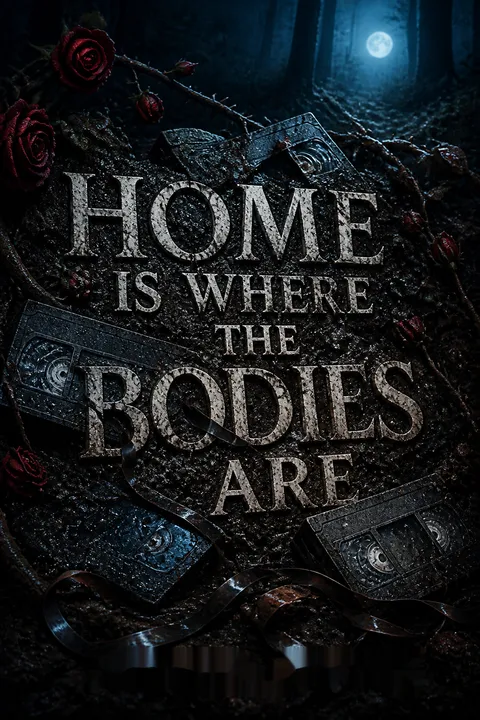
Home Is Where the Bodies Are received mixed reviews. Many readers praised its gripping plot, fast pace, and engaging family drama. The multiple POVs and nostalgic 90s references were appreciated. However, some found it predictable and criticized the portrayal of addiction. Readers enjoyed the sibling dynamics and twists, though opinions varied on character likability. The book's cover design was widely praised. Overall, it was seen as an entertaining domestic thriller, albeit with some flaws in character development and predictability.
People Also Read










Characters
Beth Thomas
The dutiful eldest daughterBeth is the oldest Thomas sibling, a factory worker, and the mother of Marissa12. She stayed in Allen's Grove and cared for Laura4 through her final illness, giving her a sense of duty that often curdles into resentment toward Nicole2 and Michael3. She has spent years trying to locate her missing father5, a pursuit that strained her marriage and her relationship with her daughter. Beth is practical and watchful, but grief can make her cling to old attachments and postpone difficult choices. Her bond with Lucas6 carries both the tenderness of their youth and the pain of the life they did not share. She wants truth, though she fears what it may cost the people she still loves.
Nicole Thomas
The writer in recoveryNicole is the middle Thomas sibling, a gifted writer whose drug addiction has damaged her health and her relationships. She records thoughts in notebooks when she cannot speak them aloud, using language both as refuge and as a way to examine herself. Her humor and sharp perception coexist with secrecy, impulsiveness, and a persistent craving that can overrule her intentions. She has a complicated bond with Beth1, whom she loves but resents for withdrawing help, and a distant connection to Michael3, whose success magnifies her sense of failure. Nicole wants to be seen as more than her addiction, though she does not yet fully trust that change is possible. Her curiosity about the past gives her a task beyond surviving the present.
Michael Thomas
The ambitious youngest siblingMichael is the youngest Thomas sibling, a successful technology entrepreneur who left Wisconsin for California. He is intelligent, controlled, and accustomed to solving problems by analyzing them, but his confidence can shade into condescension. He regards himself as the sibling who escaped the limits of Allen's Grove, while Beth1 and Nicole2 experience his success as a reminder of their unequal paths. His long absence has left him both a stranger to his sisters and a source of old hurt. He can show genuine protectiveness, especially toward Nicole2, yet he often keeps his own grief private and mistakes practical help for emotional repair. His return forces him to face the family he believed he could leave behind.
Laura Thomas
The keeper of family memoriesLaura is the siblings' mother, a devoted keeper of family records who uses home videos, journals, and small saved objects to preserve the lives around her. She grew up with significant losses and values the rituals that make people feel connected. Her affection is practical: she remembers preferences, supports her children's interests, and tries to make an ordinary home feel secure. She is also private, reluctant to discuss death or painful history, and inclined to carry burdens without asking her children to share them. Laura's desire to protect her family shapes the way she speaks, what she saves, and what she leaves unresolved.
Brian Thomas
The absent family patriarchBrian is Laura's4 husband and the father of Beth1, Nicole2, and Michael3. A factory worker and proud caretaker of the family property, he raised his children to value composure and self-control. His children remember him as capable, protective, and playful, a father who turned chores into games and supported their ambitions. His disappearance seven years before the novel begins has left each sibling with a different version of abandonment. Beth1 continues to search for him, Nicole2 preserves his number as a lifeline, and Michael3 carries unresolved conflict about their relationship. Brian's absence governs the family's imagination long before they learn what it means.
Lucas Harper
Beth's first loveLucas is Emma's older brother7 and Beth's1 former high-school boyfriend. After years away, he returns to Allen's Grove to care for his mother9, Susan9. His life has been shaped by his sister's7 disappearance and the grief that followed, leaving him cautious about hope and uncertain about parenthood. He and Beth1 still understand one another's silences, but shared history cannot spare them from new truths. Lucas is gentle without being untouched by anger, and his loyalty to his family remains central to his choices.
Emma Harper
The missing neighborhood girlEmma is Susan9 and Eddie Harper's10 twelve-year-old daughter, remembered as bright, energetic, and determined to win the games at Allen's Grove's summer festival. Her disappearance reshapes her family and the small town around them. She is also connected to Beth's1 first love, Lucas6, and to Laura's4 habit of documenting family and community life. Though absent from most of the present-day action, Emma remains a person rather than merely a mystery: her ambition, relationships, and ordinary childhood are what make the family's silence consequential.
Christie Roberts
The teenage photographerChristie is a local teenager who wants to be friends with Beth1 and often approaches her with a camera hanging from her neck. She is observant, lonely, and difficult for the other children to read, partly because she has been sheltered by her parents. Her habit of photographing the people around her gives her a perspective others underestimate. Christie is associated with a second disappearance in Allen's Grove, one that the town explains away more readily than it investigates.
Susan Harper
Emma's grieving motherSusan is Emma7 and Lucas's mother6 and Laura's4 close neighbor. Warm and sociable, she helps Laura4 organize the town festival and trusts the community to keep children safe. Emma's7 disappearance leaves Susan with grief that never fully settles. Years later, declining health and dementia complicate her memories, sometimes returning her to the days when she was still searching for her daughter7. Her vulnerability makes the difference between knowing a fact and being able to live with it painfully visible.
Eddie Harper
Emma's grieving fatherEddie is Susan's9 husband and the father of Emma7 and Lucas6. He is a working father whose family life is irrevocably altered by Emma's7 disappearance. His grief develops alongside the town's search and the pressure to identify someone responsible. Eddie is connected to the Thomas family through years of neighborhood familiarity, making the boundaries between private sorrow and public justice difficult to maintain.
Casey Dunn
The deputy turned detectiveCasey is a former school friend of Nicole's2 who now works in the county detective bureau. His early connection to her gives him a reason to respond when she asks about Emma's7 case, while his professional role places limits on what he should share. He is steady, compassionate, and still willing to help Nicole2 when she is struggling. Their history carries unspoken affection, but Casey's connection to Nicole2 also risks drawing him into an investigation with consequences beyond friendship.
Marissa Thomas
Beth's distant daughterMarissa is Beth's daughter1, a Navy servicemember stationed in South Korea when the story begins. Years of distance and Beth's1 fixation on finding her father5 have strained their relationship. Marissa is independent, disciplined, and capable of connecting with Nicole2 through letters even when she struggles to reach her mother1. Her place in Beth's1 life reflects the cost of grief passed from one generation to the next, as well as the possibility of rebuilding contact.
Charles Gallagher
The town's easy suspectCharles is a socially isolated Allen's Grove resident whose neglected property and awkward manner make him a target of local suspicion. He lives with his mother and has little standing in a town that already regards him as strange. His connection to the investigation reveals how quickly rumor can become evidence when a community wants a case closed. Charles is difficult for the town to understand, but being misunderstood does not make him a credible culprit.
Tom
Beth's former husbandTom is Beth's former husband1 and Marissa's father12. Beth1 married him after becoming pregnant, but her prolonged search for Brian5 strained their marriage. He represents the ordinary family life Beth1 tried to sustain while grief kept pulling her attention elsewhere.
Plot Devices
The VHS home movies
Family memory becomes evidenceLaura's4 labeled home-video tapes first appear to be keepsakes, preserving birthdays, festivals, and the children's childhood. One recording contains accidental footage from the night Emma Harper7 disappeared. Its shift from family ritual to evidence changes how Beth1, Nicole2, and Michael3 understand their parents. Later, the tape's disappearance becomes another sign that someone is controlling what the siblings can know. The device works because the camera was meant to remember what a family could otherwise forget, yet the footage preserves an event its owner could not bear to record deliberately. The tapes bind nostalgia to investigation and make the past visible without making it immediately understandable.
Laura's archive
Secrets surface in fragmentsLaura4 leaves the siblings journals, sealed letters, newspaper clippings, a bank key, and a safe-deposit box. Each item provides a different kind of partial account: personal reflection, official record, physical evidence, or a final confession. The delayed opening of the letters creates suspense, while the bank box gives Nicole2 a way to find evidence outside the family home. The archive reflects Laura's4 impulse to preserve what she could not openly discuss. It also shows the limits of preservation: pages are missing, letters are switched, and no single artifact explains everything. The siblings have to compare fragments rather than trust one document as a complete history.
The Thomas property
Home conceals physical historyThe family property is both a cherished landscape and the place where the siblings' childhood unfolded. Its creek, highway bridge, valley, woods, and pet cemetery repeatedly direct attention to the past. Beth1 searches first where the video showed Emma7, then follows the marked pet graves into the woods and finds human remains. The setting is not simply atmospheric: the familiar routes and family landmarks provide clues to the location of concealed bodies. Laura's4 wish for her ashes to remain on the land also gives the property emotional importance for each child, making the discovery there an attack on the family's idea of home.
The missing-person files
Official stories come under scrutinyNicole2 obtains Emma Harper's case file and later asks Casey11 for records connected to Christie Roberts8 and Charles Gallagher13. The files supply timelines, witness claims, suspect details, and an account of the investigation that differs from what the family remembers. Their authority is compromised by a coerced confession, an anonymous tip, and the town's assumptions about who seemed dangerous. The records help Nicole2 connect disappearances that others dismissed as unrelated, but they cannot identify the truth by themselves. Their dramatic function is to make the siblings test the boundary between documented fact and community belief, rather than treating a police report as a final answer.
Brian's false email
Hope becomes a diversionAn email apparently from Brian5 claims he is alive and nearby, prompting Michael3 to trace its internet address and Nicole2 to search for him. The empty farmhouse destroys the immediate promise, while the message keeps the siblings focused on a false trail. Its plausibility depends on Beth's1 years of unanswered emails and Nicole's2 longing for a family reunion. Later, the deception reveals that digital evidence can be manufactured as easily as a paper record. The email functions both as a plot diversion and as a measure of the siblings' different relationships to hope: Nicole2 follows it, Beth1 resists it, and Michael3 knows more than he initially admits.
FAQ
Synopsis & Basic Details
What is Home Is Where the Bodies Are about?
- Family secrets unravel: The story centers on the Thomas siblings, Beth, Michael, and Nicole, who return home after their mother's death and uncover a series of dark family secrets, including their father's mysterious disappearance and a hidden crime.
- Past and present collide: The narrative alternates between the present-day siblings grappling with their mother's death and the past, revealing the events that led to their family's fractured state.
- Truth and consequences: The siblings must confront the truth about their parents and their own roles in the family's history, leading to a reckoning with the past and a search for redemption.
Why should I read Home Is Where the Bodies Are?
- Twisty family thriller: The novel offers a suspenseful and twisty plot that keeps readers guessing, with shocking revelations and unexpected turns that challenge the reader's perception of the characters.
- Complex character dynamics: The story explores the complex relationships between the siblings, their parents, and other characters, delving into their motivations, flaws, and emotional struggles.
- Exploration of dark themes: The book delves into themes of family secrets, guilt, betrayal, addiction, and the consequences of past actions, offering a thought-provoking and emotionally charged reading experience.
What is the background of Home Is Where the Bodies Are?
- Small-town setting: The story is set in the fictional small town of Allen's Grove, Wisconsin, a place where secrets are easily buried and the past has a long reach.
- Family history: The narrative is deeply rooted in the Thomas family's history, exploring the events that led to their fractured relationships and the dark secrets they have kept hidden for years.
- Cultural context: The story touches on themes of small-town life, family loyalty, and the impact of secrets on a community, reflecting the cultural context of rural America.
What are the most memorable quotes in Home Is Where the Bodies Are?
- "Your father. He didn't disappear. Don't trust . . .": These are Laura's final words, a cryptic message that sets the plot in motion and hints at a deeper family secret, driving Beth's search for the truth.
- "Home is where the bodies are.": This quote, which is also the title, encapsulates the central theme of the novel, highlighting the dark secrets and buried truths that lie beneath the surface of the Thomas family's home.
- "If you're afraid of falling, you'll never fly. If you're afraid of failing, you'll never try. If you're afraid of dying, you'll never truly be alive.": This quote, from Nicole's writing, reflects her character's struggle with addiction and her desire to live life to the fullest, despite her past mistakes.
What writing style, narrative choices, and literary techniques does Jeneva Rose use?
- Multiple perspectives: The story is told from the perspectives of different characters, primarily Beth, Michael, and Nicole, allowing readers to see the events from multiple angles and understand their individual motivations.
- Non-linear timeline: The narrative shifts between the present and the past, gradually revealing the events that led to the family's current state, creating suspense and keeping readers engaged.
- Foreshadowing and callbacks: Rose uses subtle foreshadowing and callbacks to create a sense of unease and to hint at future revelations, adding layers of meaning to the story.
Hidden Details & Subtle Connections
What are some minor details that add significant meaning?
- The tomato-mayo sandwich: Beth making her mother's favorite sandwich, despite her mother's inability to eat, highlights Beth's deep love and nostalgia for her mother and their shared past.
- The Rolex watch: Michael's expensive watch, which he wears casually, symbolizes his success and the distance he has created between himself and his sisters, who have struggled financially.
- The chipped red paint: The chipped and faded red paint on the front door symbolizes the neglect and decay of the family home, reflecting the fractured state of the Thomas family.
What are some subtle foreshadowing and callbacks?
- The "Blair Bitch Project": The siblings' childhood movie-making, using their father's insect fogger, foreshadows the dark secrets and dangerous situations they will later encounter.
- Mom's love for flowers: Laura's love for flowers, which she says remind her of life, foreshadows her own death and the way she will be remembered, with her ashes spread around the property.
- The recurring phrase "You can't go backward, only forward": This phrase, repeated by Laura, foreshadows the characters' inability to change the past and their need to move forward, despite the pain and loss they have experienced.
What are some unexpected character connections?
- Lucas and Beth's shared past: The rekindled connection between Beth and Lucas, her high school sweetheart, adds an emotional layer to the story, highlighting the impact of the past on their present lives.
- Casey and Nicole's friendship: The reveal of Casey Dunn as Nicole's friend from high school, who is now a police officer, adds a layer of complexity to the plot, as he becomes a source of information and a potential love interest.
- Laura and Susan's friendship: The close friendship between Laura and Susan, Emma's mother, adds a layer of tragedy to the story, as Laura is forced to keep a dark secret from her friend.
Who are the most significant supporting characters?
- Cathy, the hospice nurse: Cathy's presence provides a sense of compassion and understanding during Laura's final days, and she also plays a role in alerting the lawyer of Laura's passing.
- Craig Davidson, the lawyer: Craig's role in revealing Laura's will and the existence of a secret bank account adds a layer of mystery to the plot, and he also serves as a catalyst for the siblings' conflict.
- Susan Harper, Emma's mother: Susan's grief and her interactions with the Thomas family highlight the devastating impact of Emma's disappearance and the weight of the secrets they have kept.
Psychological, Emotional, & Relational Analysis
What are some unspoken motivations of the characters?
- Michael's need for control: Michael's desire to buy the house and take charge of the situation stems from his need to control his family's narrative and to bury the past, rather than confront it.
- Beth's desire for justice: Beth's determination to uncover the truth about her father's disappearance and Emma's death is driven by her need for justice and her desire to honor her mother's final words.
- Nicole's search for identity: Nicole's addiction and her desire to write a book about her family's past stem from her search for identity and her need to make sense of her own life and her family's history.
What psychological complexities do the characters exhibit?
- Beth's survivor's guilt: Beth's guilt over being the one who was present for her mother's death and her inability to save her, as well as her guilt over her past treatment of Nicole, drives her actions and her emotional state.
- Michael's repressed emotions: Michael's inability to express his emotions and his tendency to overanalyze situations stem from his repressed guilt and his need to maintain control over his life.
- Nicole's addiction and self-destruction: Nicole's addiction is a manifestation of her deep-seated pain and her inability to cope with the trauma of her family's past, leading to self-destructive behaviors.
What are the major emotional turning points?
- The discovery of the videotape: The discovery of the videotape revealing their father's involvement in Emma's disappearance is a major emotional turning point, forcing the siblings to confront the dark truth about their family.
- Laura's final letter: The revelation of Laura's final letter, confessing to her role in the cover-up, is another emotional turning point, forcing the siblings to grapple with their mother's actions and their own feelings of betrayal.
- The discovery of the graves: The discovery of the graves on the family property is a shocking and emotional turning point, confirming the extent of the family's secrets and the tragic consequences of their actions.
How do relationship dynamics evolve?
- Sibling rivalry to unity: The initial tension and resentment between the siblings gradually evolve into a sense of unity and understanding as they work together to uncover the truth and heal from their shared trauma.
- Parent-child betrayal to forgiveness: The siblings' relationships with their parents are tested by the revelations of their past actions, but they eventually come to terms with their parents' flaws and find a way to forgive them.
- Past lovers to present connection: The rekindled connection between Beth and Lucas highlights the enduring power of love and the possibility of finding solace in shared experiences, despite the pain of the past.
Interpretation & Debate
Which parts of the story remain ambiguous or open-ended?
- The exact circumstances of Emma's death: While Michael confesses to causing Emma's death, the exact circumstances remain somewhat ambiguous, leaving room for interpretation and debate about his true intentions.
- The identity of the third body: The identity of the third body found on the property is never fully revealed, leaving readers to speculate about who it might be and what their connection to the Thomas family was.
- The extent of Laura's knowledge: The extent of Laura's knowledge about Michael's actions and her motivations for covering up the truth remain somewhat ambiguous, leaving readers to question her true intentions.
What are some debatable, controversial scenes or moments in Home Is Where the Bodies Are?
- The cover-up of Emma's death: The decision of Laura and Brian to cover up Emma's death, rather than report it to the authorities, is a controversial moment that raises questions about their morality and their motivations.
- Michael's actions and motivations: Michael's actions and motivations throughout the story are open to interpretation, with some readers viewing him as a victim of circumstance and others as a manipulative and dangerous character.
- The ending and the future of the siblings: The ending of the story, with the siblings moving on with their lives, is open to interpretation, with some readers finding it hopeful and others finding it unsatisfying.
Home Is Where the Bodies Are Ending Explained: How It Ends & What It Means
- The cycle of secrets: The ending reveals that the cycle of secrets and lies that began with Emma's death continues to impact the Thomas family, with Michael's actions and the discovery of the graves highlighting the destructive power of the past.
- The search for truth: The ending emphasizes the importance of seeking the truth, even when it is painful, as the siblings' journey to uncover their family's secrets ultimately leads to a sense of closure and understanding.
- The possibility of redemption: Despite the tragic events of the past, the ending offers a glimmer of hope for the future, with Beth and Nicole finding a way to heal and move forward, suggesting that redemption is possible, even in the face of the darkest secrets.
About the Author
Other books by Jeneva Rose





Download PDF
Download EPUB
.epub digital book format is ideal for reading ebooks on phones, tablets, and e-readers.








