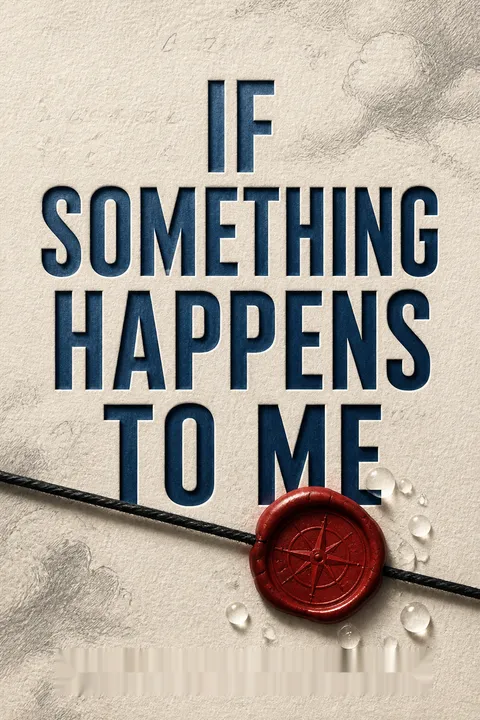


Plot Summary
Prologue
On the last night before college separates them, Ryan and Alison slip away to Lovers’ Lane, their familiar refuge beneath an oak tree. A storm drives them back into her father’s BMW, where their nervous affection finally gives way to intimacy.
Then the car door is torn open. Alison screams, someone strikes Ryan, and his next clear memory comes with daylight: he is alone on wet grass, and both Alison and the BMW have vanished.
The opening makes the abduction a theft of an imagined future, not merely a crime. Ryan and Alison are poised between adolescence and adulthood, and their choice to be together carries the tender awkwardness of a first commitment. The storm interrupts them, then becomes part of the sensory memory Ryan cannot escape. Because the attack follows a private moment of trust, his later guilt attaches itself to love itself: he remembers not only failing to protect Alison, but the last hours in which their shared life still seemed possible.
The BMW Beneath Suncatcher
Five years later, Deputy Poppy McGee begins work in Leavenworth just as amateur divers locate Alison’s father’s BMW at the bottom of Suncatcher Lake. Poppy helps shield the recovery from cameras and sees two murdered men in the front seats. Alison is not there, but her handbag is. The discovery reopens a case the town had come to associate with serial killer Benedict Cromwell, whose own death seemed to close it.
In Italy, law student Ryan Richardson is still living under another name, after public suspicion drove him from basketball and left him estranged from his old life. His father calls with news of the car, while an anonymous note arrives beneath Ryan’s door, warning that its sender knows who he is.
The car forces two buried histories into the present at once. For Poppy, it is the first real assignment in a job she accepted out of necessity, a chance to prove her military experience can matter at home. For Ryan, the discovery threatens the fragile distance he has built from Alison’s disappearance. The two bodies complicate the town’s ready-made explanation, while the missing woman remains the story’s central absence. The parallel openings also establish a useful contrast: Poppy approaches the case as evidence to be sorted, while Ryan experiences every new fact as a return of personal guilt.
A Note Finds Ryan
Ryan’s classmates see a guarded, gifted law student, but he has spent years carrying the suspicion that he invented the attacker who took Alison. He abandoned basketball, changed his surname, and watched the internet turn him into a suspect after Cromwell was linked to her disappearance.
In Tuscany, Nora Watanabe notices his evasions, while a second note orders him to meet at Montepulciano’s town hall. Ryan sees the sender near a hot-air balloon launch: the plain-faced man from his recovered memory, missing both little fingers.
He goes to the meeting with Nora nearby and a small tracking tag hidden in his pocket. The stranger urges Ryan to keep blaming Cromwell, then flees after a call leaves him visibly terrified. He warns that Alison may be alive and in danger.
Ryan’s secrecy has been a defense against a public narrative he cannot control, but the stranger’s appearance turns avoidance into a choice with consequences. The memory he once dismissed as a guilt-born fantasy now has a living face, and that recognition destabilizes his account of the past. Nora’s presence matters because she offers attention without forcing disclosure; Ryan begins to risk being known before he has proof. The stranger’s demand that Ryan protect a false story also establishes the thriller’s central conflict: truth may be dangerous, but silence has already cost Ryan five years of his life.
The Purse’s Hidden Cipher
KBI analyst Chantelle Luna finds a sealed makeup bag inside Alison’s waterlogged purse. It contains an envelope meant to be opened if Alison suffered some danger, and a coded message whose source is unknown. The note makes the case feel less like a random abduction and more like a threat Alison anticipated.
Poppy reads the thin, incomplete police file and finds that investigators accepted Cromwell as the likely culprit after Alison’s hair appeared on his sleeping bag. At a press conference, FBI agent Jane Fincher quietly challenges the sheriff’s polished version of the old search and gives Poppy her contact details, despite the sheriff’s warning to avoid her.
Poppy also discovers that former investigator Daryll Buckman left little behind. His anger and cryptic warning that the problem lies close to home deepen her suspicion that the case was deliberately narrowed.
The coded note turns Alison from a passive missing person into someone who anticipated danger and took steps to leave a message. That small act changes the emotional shape of the investigation: Poppy is no longer simply sorting tips, but trying to recover a young woman’s own account from institutions that may have failed her. Fincher’s presence complicates authority rather than clarifying it. Poppy must decide whether professional obedience is still responsible when the official file is conspicuously thin and the people who handled it discourage questions. Her instinct to investigate is both a strength and a risk.
A Father’s New War
In Philadelphia, crime boss Shane O’Leary learns that his thirteen-year-old son, Anthony, has been humiliated by classmates at an elite academy. The video shows Anthony bound in plastic, mocked, and pelted while students laugh; Taylor Harper, Alison’s former identity, is among the children reflected in the room.
Anthony dies by suicide before his father can understand the extent of the bullying. O’Leary and his wife Gina seek answers from the school, but its headmaster minimizes what happened and protects the influential families involved.
O’Leary’s accountant, Michael Harper, had already tried to get the school to intervene, and his daughter Taylor had been part of the group. When Chaz Donnelly uncovers the recording and the cover-up, O’Leary’s grief hardens into a demand for vengeance.
Anthony’s death gives the criminal plot a painfully ordinary origin: a child’s distress is dismissed by adults who value institutional reputation and social rank. O’Leary’s response is shaped by a genuine parental wound, but his power converts private grief into public danger. The novel refuses to make that conversion morally simple. His love for his son is real, yet his method of seeking justice repeats the violence and coercion that made his family dangerous in the first place. Taylor’s presence in the video plants a causal link between a school cruelty and the later pursuit of Alison, while showing how a moment of adolescent complicity can acquire consequences far beyond its intended scale.
Dash’s Sidecar Secret
Poppy questions Alison’s former friends. Ruby Quinn offers no explanation, but directs her to Poppy’s brother, Dash. Former investigator Buckman gives Poppy a second warning about the people she works beside, and a true-crime podcast supplies an overlooked witness: someone saw a motorcycle with a sidecar near Lovers’ Lane that night.
Dash owns just such a motorcycle. When Poppy finds Alison’s Bon Jovi shirt and coded notes in his old room, Dash admits he followed Alison to the lake after the abduction.
He had seen the fingerless man, then watched their father, Mac, and Sheriff Ken Walton arrive. Alison’s father rescued her from the car. He then shot two men who came to claim her, and Mac and Ken helped hide their bodies in the BMW before sinking it.
Poppy’s discovery collapses the comfortable boundary between her family and the case. Dash’s silence was not proof that he took Alison, but it concealed a witnessed killing and a cover-up protected by their father and his closest friend. His account also corrects the old story: Alison did not simply disappear into the hands of a serial killer. Poppy must hold two realities together, the brother she loves and the evidence he kept from her. The revelation that Alison was rescued alive transforms the investigation’s goal. The question is no longer only what happened to her, but why an entire network spent years making her seem dead.
The Monster Has a Face
Ryan follows the man from Italy to England, where the stranger is living as Peter Jones in the village of Lackford. Before explaining why he took Alison or who the dead men in her car were, Peter panics and runs from their meeting.
Ryan tracks him through an inn’s guest book to the church where Peter works as groundskeeper. Inside Peter’s cottage, Ryan finds Peter and his wife dead, their bodies mutilated. British police arrest Ryan because he had been asking around for Peter, but local camera footage later shows a masked figure carrying an axe to the church and leaving in Peter’s car.
Detective Tracy Suhr releases Ryan, though the killer remains unidentified. Ryan now knows the abductor was real, but the murder has destroyed his chance to hear the full truth from him.
Ryan’s pursuit is driven by a need to replace a self-accusation with an accurate memory. Finding Peter confirms that his childhood account was not an invention, but the murders immediately prevent certainty from becoming comfort. The violence against Peter and his wife also reframes the threat: someone is willing to kill to keep the old events buried, and that person may have known Peter’s location before Ryan arrived. Ryan’s decision to cross borders without a clear plan is reckless, yet emotionally coherent. He is trying to recover not only Alison, but the credibility of his own perception.
The Evidence Was Planted
Poppy visits Ziggy de la Cruz, a young true-crime podcaster who has reexamined the evidence against Cromwell. Using outside DNA analysis, Ziggy finds that the hair from Cromwell’s sleeping bag and the comparison sample from Alison’s brush came from the same hairbrush.
The match had been planted to make Cromwell appear responsible. His episode also includes the overlooked witness who saw the sidecar near Lovers’ Lane. Meanwhile, KBI traces one dead man’s bespoke suit to Patrick Donnelly, an O’Leary soldier.
Poppy sends Ryan the coded note, and he recognizes its key as a plaque at the Louvre that Alison once used for a message to him. Its decoded directions point toward her family’s hilltop home in France. Ryan realizes the note is a deliberate route to Alison, not a random cipher.
Ziggy’s work exposes how evidence can acquire authority simply because it supports an already convenient explanation. The planted hair did more than mislead investigators; it gave the town permission to stop asking questions after Cromwell died. By bringing a child’s persistence into conflict with professional complacency, the novel asks who gets treated as a credible knower and why. The coded note then shifts the investigation from retrospective reconstruction to active search. Alison had prepared a message for Ryan specifically, suggesting that her past relationship remains a source of trust even after years of enforced separation.
Three Names, One Flight
As Poppy investigates the suit and Donnelly’s disappearance, Fincher finally explains the wider pattern. Alison had once been Taylor Harper, Michael Harper’s daughter. At the academy, Taylor helped lure Anthony O’Leary into the room where classmates tormented him.
After Anthony’s death, Shane O’Leary’s organization pursued Taylor and Michael, who had escaped with money from O’Leary’s accounts. Fincher tried to arrange protection through witness security, but a compromised contact redirected them into an ambush.
Michael and Alison survived with help from Mac and Walton, then built new lives in Kansas. O’Leary’s men later recognized Alison in the viral schoolyard video and sent Peter to abduct her for a handoff to Donnelly and another soldier. Poppy learns that Fincher herself had been compromised, and that Walton has vanished.
The revelation makes identity both refuge and burden. Taylor became Alison, and later another self, not because she could erase responsibility, but because survival required a life strangers could not trace. The story complicates the moral category of victim: Alison was targeted by violent adults, yet she also remembers her role in Anthony’s humiliation. Fincher’s betrayal makes the failures institutional, not merely personal. Protection systems can be turned into traps when the people inside them serve private loyalties. Poppy’s case now joins the family story she thought she understood to a criminal history that has crossed generations and borders.
Cordes Opens Its Door
Ryan follows Alison’s note to Cordes-sur-Ciel and finds her working in an art gallery under another name. Before they can speak, an armed attacker enters and fires at them. Ryan fights him with a heavy sculpture, refusing to let the man reach Alison; her father arrives and kills the attacker when he threatens her again.
The violence confirms that O’Leary’s pursuit is still active. In a parallel move, O’Leary’s brother Brian takes Michael and demands the return of the stolen money, while an accomplice holds Alison at gunpoint.
Michael pretends the transfer must be completed in person, then detonates an explosive at the bank when he sees no safe way to protect her. Brian is killed. Michael, Alison, and Ryan flee France for Kansas, where Poppy tries to arrange a safer meeting with federal authorities.
The reunion offers Ryan the answer he has chased, but it does not restore the lost years or make Alison’s life safe. Their first encounter is immediately interrupted by another attempt to control her through force. Ryan’s physical intervention echoes the helplessness of Lovers’ Lane, yet this time he acts rather than freezes. Michael’s explosive decision likewise shows the cost of a life organized around concealment: even escape becomes a tactical operation. The gallery is a fitting meeting place because Alison has made art into a chosen identity, but the attacker demonstrates that no new name can guarantee freedom while the old power structure remains intact.
The Carousel Turns Deadly
Poppy brings Michael, Alison, and Ryan to Kansas, then helps arrange a meeting at the crowded carousel museum. The plan is compromised: Fincher has been feeding information to O’Leary, who takes Michael at gunpoint.
Chaz holds Alison, Ryan, and Poppy while Shane and Gina confront Michael on the Centennial Bridge. Rather than let O’Leary take his daughter again, Michael accelerates their car into the river, apparently killing himself, Shane, and Gina.
Chaz hears what happened and releases the three captives, choosing not to continue the violence. Poppy then confronts Fincher and knocks her down before KBI agents arrive to arrest her. Sheriff Walton remains missing, and Mac is gravely ill, but the immediate hunt for Alison and Michael has ended.
The carousel setting places a childlike public pleasure beside the adult consequences of failed protection. Michael’s final act is not a victory in any clean sense: he saves Alison from immediate capture by sacrificing himself and ending the confrontation on his terms. Chaz’s decision to free the others marks a break in the inherited logic of retaliation, strengthened by his concern for his grandson and his recognition of what the violence has cost. Poppy’s blow against Fincher is not a substitute for legal accountability, but it expresses the anger of someone who has watched procedure be weaponized. The ending offers release, not restoration.
Epilogue
A year later, Poppy has become Leavenworth’s sheriff and is repairing her bond with Dash, who remains close to their recovering father. She also seems ready to bring KBI analyst Chantelle into her family life. Ryan, now working at a public defender’s office, walks through Washington with Nora after she becomes editor in chief of their law journal.
Alison has opened a gallery in France and returned briefly to Philadelphia for an exhibition. Chaz, pulled out of retirement to lead the unsettled O’Leary organization, watches his grandson Davie perform in a school play. Afterward, a rival mobster waits in Chaz’s vehicle and shoots him. Ryan chooses to stay in the rain with Nora, while the criminal world’s violence claims another life.
The epilogue grants the survivors forms of life that are not identical to a neat happily-ever-after. Poppy has authority and a repaired family connection; Ryan has chosen work that answers Chaz’s challenge to do good; Alison has built a practice and public life around art. Their futures remain separate, which recognizes that reunion does not undo time or restore first love to its old shape. Chaz’s murder undercuts any fantasy that one merciful choice can cleanse a criminal legacy. Yet Davie’s performance and Poppy’s tentative intimacy point toward something the older generation could not secure: care that does not have to be enforced by fear.
Analysis
The novel’s central question is not simply who abducted Alison, but how a community decides which account of a crime is believable. Ryan’s memory is dismissed because it is incomplete and inconvenient; Cromwell’s guilt appears settled by forensic evidence that was manipulated; Poppy’s questions threaten a department whose personnel have personal reasons to preserve silence. Against those failures, the book places ordinary acts of verification: a child podcaster requests records, a lab analyst traces a suit, a deputy notices a motorcycle, and a coded note turns old intimacy into usable information. The plot argues that truth is rarely recovered by one heroic investigator. It emerges through people willing to compare fragments that institutions have kept apart.
The characters are also shaped by competing definitions of protection. Michael hides and changes identities to keep Alison alive. Ken and Mac conceal the lake killings to protect a family they care about. Shane O’Leary uses criminal power to avenge his son. Each action begins in loyalty or grief, but the consequences differ according to the power behind it. The book is especially wary of care that removes another person’s choices: Alison is protected through secrecy, Anthony is failed by adults who treat reputation as more urgent than his distress, and O’Leary’s vengeance turns his grief into fresh harm.
Reinvention offers survival but not absolution. Alison’s successive names shield her while leaving her to carry guilt about Anthony; Ryan’s new surname does not quiet his shame; Poppy’s uniform cannot guarantee that her own office is trustworthy. Their movement toward freedom comes when they accept incomplete knowledge, act with others, and stop treating self-punishment as proof of responsibility. The final rain scene makes that change concrete for Ryan: rather than flee a sensory reminder of the abduction, he chooses to remain beside Nora. The past has not vanished, but it no longer dictates every step.
Review Summary
If Something Happens to Me is a thrilling, fast-paced novel that captivated most readers with its twisty plot and engaging characters. Many praised the short chapters and multiple perspectives, which kept them turning pages. While some found certain elements far-fetched, most enjoyed the suspenseful ride. The book follows Ryan, whose girlfriend disappeared years ago, as he seeks answers. Readers appreciated the intricate plot connections and unexpected revelations. Overall, it's considered a solid thriller that showcases Finlay's storytelling skills, though a few felt the ending was too neatly wrapped up.
People Also Read








Characters
Ryan Richardson
Haunted former athleteRyan is a tall, gifted basketball player whose life becomes defined by one night at Lovers’ Lane and the public suspicion that follows. He changes his surname, leaves the sport, and studies law partly because he wants to understand how an investigation can fail someone he loves. His guardedness protects him from exposure but also keeps friends at a distance. Ryan is alert to other people’s pain, particularly when he sees someone being mocked or excluded, yet he struggles to extend the same compassion to himself. His story is driven by the tension between his need for certainty and the risk of acting before certainty is available.
Alison Lane
Artist with buried pastAlison is a talented, private young woman who resists the performance of popularity even when she occupies its center. She prefers drawing, books, and intimate loyalties to social media, and she has a strong instinct to intervene when someone is being bullied. Her independence can look like confidence, but she is also careful about what she reveals and to whom. The gap between her outward composure and her guarded inner life shapes her relationships, especially with Ryan. Alison’s pursuit of art reflects a desire to make a life by deliberate choice rather than accept the identity others assign her.
Poppy McGee
Reluctant hometown investigatorPoppy returns to Leavenworth after military service ends abruptly and her mother’s death leaves her helping care for her ill father. She is small, direct, and often underestimated, but her military police training has given her discipline and a strong instinct for inconsistencies. Poppy’s impatience with protocol comes from a sincere belief that evidence and people deserve attention, not from a taste for conflict. She has spent much of her life measuring herself against a more charming brother and an imagined career in federal law enforcement. Investigating Alison’s disappearance forces her to decide what loyalty means when the people she loves may be implicated.
Michael Lane
Protective, resourceful fatherMichael is Alison’s father, a former soldier and skilled financial operator whose first instinct is to create a plan before danger arrives. He is intensely devoted to his daughter and willing to carry secrets, money, and guilt if he believes they will keep her safe. His competence can become a form of control: he tries to solve threats alone, even when secrecy isolates the people he is protecting. Beneath his practical manner is a man shaped by service, grief, and difficult choices made under pressure. His relationship with Alison is loving but strained by the years in which survival required him to decide what she could know.
Shane O’Leary
Grieving crime bossShane O’Leary is a Philadelphia crime boss who understands power as both a weapon and a responsibility to the neighborhood around him. His love for his wife and son is genuine, and it exposes a tenderness that his violent profession otherwise keeps hidden. He tries to be more humane than the father who raised him, but his version of protection remains tied to intimidation and control. Shane’s concern about his son’s isolation reveals a man capable of noticing vulnerability, even when he cannot imagine a nonviolent way to answer it. His family loyalty and criminal authority are not separate parts of his life; they continually sharpen one another.
Nora Watanabe
Perceptive law studentNora is Ryan’s Georgetown classmate, a sharp legal thinker who notices when people hide behind polished answers. She combines ambition with a practical sense of proportion, resisting the pressure to turn every mistake into a permanent verdict on someone’s character. Her interest in Ryan begins with curiosity about the reason he chose law, but she does not force him to disclose more than he is ready to share. Nora is decisive when danger appears, helping Ryan prepare and refusing to confuse concern with passivity. Her steadiness gives Ryan a model of closeness that does not require him to pretend he is unhurt.
Dash McGee
Charming older brotherDash is Poppy’s older brother, a former basketball player whose easy smile and warmth have helped him find a place in town. He is generous and affectionate, but he can avoid difficult conversations and retreat into the memories of his school years. His bond with their father is especially strong, built through sports and shared routines. Dash’s history with Alison gives him a secret he has carried for years, while his relationship with Poppy shows how silence can coexist with real love. He is not naturally suited to confrontation, which makes his eventual honesty especially consequential.
Ken Walton
Steady local sheriffKen Walton is the Leavenworth sheriff and an old military friend of Poppy’s father. His calm manner and neighborly ease make him a reassuring presence in a small office under public scrutiny. Ken values loyalty, discretion, and the judgment formed through shared danger, sometimes more than transparent procedure. He recognizes Poppy’s courage and wants to guide her without extinguishing it. His friendship with the McGee family gives him a personal stake in the case, complicating the boundary between a sheriff’s public duty and the private debts he believes he owes.
Chaz Donnelly
Old-school family fixerChaz is the longtime adviser and fixer to the O’Leary family, a man who has survived by being useful, observant, and emotionally restrained. He has known Shane since childhood and often sees the frightened boy beneath the powerful adult, though that recognition has not always made him brave enough to intervene. Chaz is also a grandfather, and his tenderness toward Davie exposes the paternal failures he regrets. He treats loyalty as a duty, but the novel shows him questioning what that duty has cost his family and whether his grandson must inherit the same code.
Jane Fincher
Unorthodox FBI agentFincher is an FBI agent who approaches people with unusual anecdotes and deliberately unsettling questions. She studies status, appearance, and institutional behavior, believing that outsiders sometimes see what established authorities have trained themselves to ignore. Her methods can be perceptive, but they also make it difficult to know whether she is inviting trust or manipulating a conversation. Fincher’s interest in Poppy reflects her search for someone willing to challenge a polished official account. She is intelligent and composed, with a personal investment in the case that she does not readily disclose.
Anthony O’Leary
Gentle boy at schoolAnthony is Shane and Gina O’Leary’s thirteen-year-old son, a gentle child struggling to find his footing at an elite school. His sensitivity contrasts with the violent reputation surrounding his family, and he is not naturally equipped to answer humiliation with aggression. His parents’ hopes for a better education place him among classmates whose privilege does not make them kinder. Anthony’s experience reveals how adults can mistake access and opportunity for protection, while his presence tests whether his father can recognize vulnerability without turning it into a grievance answered by force.
Gina O’Leary
Protective, grieving motherGina is Shane’s wife and Anthony’s mother, a practical woman who responds to family trouble by searching for something she can do. She understands her husband’s authority and knows how to remind him of the confidence he can lose when he worries about their son. Her warmth and humor keep the O’Leary household from becoming only an extension of the criminal organization. Gina’s fierce attachment to her family can also reinforce Shane’s instinct to treat retaliation as protection. She is a person with her own emotional force, not merely an influence behind her husband’s decisions.
Eddie
Ryan’s candid classmateEddie is Ryan’s roommate and fellow law student, an awkward, talkative man who often says more than the room wants to hear. His social misfires conceal a real desire to be liked and a capacity to recognize loneliness in someone else. Eddie makes jokes at his own expense, but he is more perceptive than Ryan first assumes. His bluntness helps puncture the law students’ polished personas, and his loyalty becomes clearest when Ryan’s guarded life begins to unravel. He offers friendship without demanding that Ryan perform gratitude or explain himself on schedule.
Chantelle Luna
Tenacious forensic analystChantelle works in the Kansas Bureau of Investigation laboratory and becomes Poppy’s energetic partner in following evidence. She is scientifically minded, curious, and unembarrassed by enthusiasm, even when a lead is uncertain or a task is tedious. Chantelle brings technical expertise to the case but also offers Poppy companionship at a moment when she has few local friends. Her easy warmth contrasts with the guarded atmosphere of law enforcement offices. She sees investigation as collaborative work and is willing to pursue an unconventional lead when the evidence suggests that ordinary channels have failed.
Ziggy de la Cruz
Child cold-case investigatorZiggy is a young true-crime podcaster whose interest in murder investigations began with his father’s death. He is serious about evidence and resents being treated as a novelty because of his age. His independent research gives him patience with records requests and a willingness to challenge accepted conclusions. Ziggy can be blunt, especially when an investigator has failed to do basic research, but his skepticism is grounded in documented details rather than performance. He represents a form of public scrutiny that can expose both genuine investigative errors and the assumptions that allow them to persist.
Peter Jones
Elusive village groundskeeperPeter is an American living under an assumed name in an English village, where he works quietly as a church groundskeeper. He is guarded and visibly shaped by fear, with missing little fingers that make him impossible for Ryan to mistake. His presence carries the unresolved history of Alison’s disappearance and the uncertainty surrounding Ryan’s memory. Peter is difficult to read because he appears to be both a dangerous participant and a man trying to escape consequences. He functions as a reminder that people who carry out violence may also be trapped by the larger systems that employ them.
Patrick Donnelly
O’Leary family soldierPatrick is Chaz’s son and a trusted member of the O’Leary organization. He is ambitious, volatile, and intent on proving himself within a family whose expectations are shaped by violence. His conduct as a father contrasts sharply with Chaz’s gentler relationship with Davie. Patrick’s role connects the Philadelphia criminal world to the unresolved killings in Kansas, while his history illustrates how family loyalty can become a justification for treating other people as disposable.
Daryll Buckman
Disgraced former investigatorBuckman once worked the Alison Lane case for the Leavenworth sheriff’s office, but he left the force after a dispute with the department. He is defensive, rough, and unwilling to offer Poppy an orderly account of what went wrong. His bitterness makes him an unreliable source in manner, but his frustration points toward omissions in the investigation file. Buckman represents the damage left by an institution that can lose evidence, bury mistakes, and then expect a new employee to inherit the public version without asking how it was assembled.
Tracy Suhr
English case detectiveSuhr is the detective who investigates the deaths at the Lackford church and initially questions Ryan. She is observant and controlled, withholding judgment while the evidence is still incomplete. Her attention to local camera footage gives Ryan a route out of suspicion without pretending the murders are solved. Suhr is a professional counterpoint to the failures in the original Kansas investigation: cautious, skeptical, and willing to revise an initial impression when new evidence appears.
Mac McGee
Poppy’s ailing fatherMac is Poppy and Dash’s father, a former military bomb technician whose illness leaves his family worried and uncertain. He is a close friend of Ken Walton and Michael, bound to them by years of shared service and danger. His instinct to protect his children has shaped what he tells them and what he withholds. Mac’s strength is less about force than a practical ability to remain steady under pressure, a quality Poppy admires even as she begins to question the secrets that steadiness has helped preserve.
Margaret
Sheriff’s office anchorMargaret manages the sheriff’s office front desk and acts as an informal guide to its routines and history. She is warm toward Poppy but not naïve about the department’s weaknesses. Her knowledge of Buckman and the missing case records gives Poppy context she cannot find in the official file. Margaret’s quiet competence makes her one of the office’s stabilizing presences, even when she cannot answer the questions Poppy most needs resolved.
Plot Devices
The coded envelope
A message across yearsAlison places a coded note in her purse with an envelope meant for the possibility that something might happen to her. The note survives in the submerged BMW and becomes a bridge between her hidden life and Ryan’s memory of their relationship. Poppy first treats it as a book cipher, while Ryan recognizes that its key is a plaque at the Louvre. Decoding it points him toward Alison’s family home in France. The device makes private knowledge actionable: the message can guide Ryan only because it depends on a shared history that investigators cannot easily reconstruct.
The submerged BMW
A buried case reopenedAlison’s father’s car rests at the bottom of Suncatcher Lake for five years, concealing two murdered men and Alison’s personal effects. Its recovery overturns the simple story that she vanished at the hands of a lone serial killer. The car also preserves the physical evidence that connects a Philadelphia crime family to a Kansas disappearance. Its discovery gives Poppy a new case, draws public attention back to Ryan, and forces the investigators to distinguish what is actually present from what earlier authorities wanted the vehicle to mean.
The planted hair sample
A false resolutionA strand of Alison’s hair on Benedict Cromwell’s sleeping bag appears to connect him to her disappearance and helps authorities settle on him as the culprit. Ziggy’s comparison shows that the questioned strand and the reference sample came from the same hairbrush, undermining the claimed match and exposing the possibility of deliberate planting. The evidence device explains how the case acquired a persuasive but false endpoint. It also demonstrates that forensic results do not interpret themselves: the chain by which a sample was collected and compared matters as much as the scientific language attached to it.
Changing identities
Survival through reinventionAlison and her father repeatedly use new names and guarded routines to stay beyond the reach of Shane O’Leary’s organization. The shifts allow them to settle in Kansas and later build another life in France, but each identity requires them to conceal history from the people who might otherwise help. Ryan also changes his surname after suspicion poisons his old life, though for a different reason. The repeated renaming makes identity both protection and loss: a person can escape detection, but cannot simply discard memory, responsibility, or the relationships that shaped the name left behind.
The viral schoolyard video
A past made visibleA phone video captures Alison intervening when two boys bully a younger student. The clip first presents her as a courageous teenager, but its later circulation exposes her identity to people who have been searching for her. The same video also helps Poppy remember Alison’s character and, in a separate Philadelphia thread, connects the O’Leary family to the school where Anthony was tormented. A brief recording therefore carries opposite meanings: it documents an act of courage, yet its broad audience turns that visibility into a danger Alison had tried to avoid.
FAQ
Synopsis & Basic Details
What is If Something Happens to Me about?
- A Haunting Disappearance: The story centers on the disappearance of Alison Lane after a night out with her boyfriend, Ryan Richardson, and the subsequent investigation that spans years.
- Unraveling a Conspiracy: Years later, the discovery of Alison's car and a coded note leads to a complex web of secrets, betrayals, and a dangerous conspiracy involving powerful figures.
- A Quest for Truth: The narrative follows Ryan, now a law student, and a local deputy sheriff, Poppy McGee, as they seek to uncover the truth behind Alison's disappearance and the forces that seek to keep it hidden.
Why should I read If Something Happens to Me?
- Intricate Mystery: The novel offers a compelling mystery with unexpected twists and turns, keeping readers engaged and guessing until the very end.
- Complex Characters: The characters are well-developed, with their own motivations, flaws, and secrets, making them relatable and adding depth to the story.
- Emotional Depth: The story explores themes of love, loss, guilt, and redemption, creating an emotionally resonant experience for the reader.
What is the background of If Something Happens to Me?
- Small-Town America: The story is set in Leavenworth, Kansas, a town with a history of secrets and a close-knit community, which adds to the sense of isolation and mystery.
- Organized Crime: The narrative delves into the world of organized crime, with a focus on a powerful Philadelphia family and their reach into law enforcement and government.
- Military Connections: The characters' military backgrounds, particularly the shared history of Alison's father, Poppy's father, and Sheriff Walton, play a significant role in the plot and the relationships between characters.
What are the most memorable quotes in If Something Happens to Me?
- "It just feels like the end, not the beginning, of something. A goodbye.": This line from the prologue foreshadows the tragic events to come and highlights the sense of foreboding that permeates the story.
- "I have the cure.": This quote, spoken by Alison, is a callback to a previous conversation with Ryan and is a poignant moment of intimacy before the tragedy.
- "If something happens to me.": This phrase, found on the coded note, encapsulates the central mystery and the sense of impending danger that drives the plot.
What writing style, narrative choices, and literary techniques does Alex Finlay use?
- Dual Timelines: Finlay employs a dual timeline structure, alternating between the past and present, which builds suspense and gradually reveals the full scope of the mystery.
- Multiple Perspectives: The story is told from multiple points of view, allowing readers to see the events from different angles and gain a deeper understanding of the characters' motivations.
- Foreshadowing and Red Herrings: Finlay uses subtle foreshadowing and red herrings to keep readers guessing and to create a sense of unease and uncertainty throughout the narrative.
Hidden Details & Subtle Connections
What are some minor details that add significant meaning?
- Missing Pinky Fingers: The detail of the man with missing pinky fingers, initially dismissed as a nightmare, becomes a crucial identifier, linking the past to the present and confirming Ryan's memories.
- The Sketch: The sketch of Ali's grandparents' home, kept by Ryan, serves as a symbol of their past love and a key to finding her in the present, highlighting the enduring power of their connection.
- The Bon Jovi T-shirt: The vintage Bon Jovi concert tee that Alison wears the night she disappears becomes a haunting reminder of her lost innocence and a tangible link to the past.
What are some subtle foreshadowing and callbacks?
- The Storm: The brewing storm during Ryan and Alison's night at Lovers' Lane foreshadows the tragic events to come, creating a sense of impending doom.
- "I have the cure": Alison's playful use of this phrase, initially referring to a cure for Ryan's shivering, is later echoed in a darker context, highlighting the tragic irony of their situation.
- The Prom-posal Code: The coded message used in Alison's prom-posal to Ryan foreshadows the coded note found in her car, establishing a pattern of communication and a connection between their past and present.
What are some unexpected character connections?
- Michael Lane and Sheriff Walton: The revelation that Alison's father and Sheriff Walton served together in the military adds a layer of complexity to their relationship and the cover-up of Alison's disappearance.
- Patrick Donnelly and Jane Fincher: The romantic relationship between Patrick Donnelly and Jane Fincher, a corrupt FBI agent, reveals a deeper level of corruption and betrayal within law enforcement.
- Dash McGee and Alison Lane: The connection between Dash and Alison, revealed through the coded notes and his presence at Lovers' Lane, adds a layer of complexity to the story and reveals a hidden motive.
Who are the most significant supporting characters?
- Poppy McGee: As a deputy sheriff, Poppy's determination to uncover the truth and her connection to the case through her father make her a crucial ally for Ryan and a driving force in the investigation.
- Chantelle Luna: As a KBI forensic analyst, Chantelle's expertise in DNA and cryptography provides crucial leads and insights, helping to unravel the mystery.
- Eddie: As Ryan's law school classmate, Eddie's loyalty and tech skills prove invaluable in tracking down Alison and uncovering the truth, highlighting the importance of friendship and support.
Psychological, Emotional, & Relational Analysis
What are some unspoken motivations of the characters?
- Ryan's Guilt: Ryan's unspoken motivation is his deep-seated guilt over not being able to protect Alison, which drives his relentless pursuit of the truth and his desire for redemption.
- Alison's Fear: Alison's unspoken motivation is her fear of being found by those who seek to harm her, which leads her to live under a new identity and to create coded messages as a form of protection.
- Michael's Protection: Michael's unspoken motivation is his fierce desire to protect his daughter, which leads him to make difficult choices and to take extreme measures to ensure her safety.
What psychological complexities do the characters exhibit?
- Ryan's Trauma: Ryan exhibits symptoms of PTSD, including nightmares and flashbacks, stemming from the traumatic events of Alison's abduction, which affect his ability to trust and form relationships.
- Alison's Identity Crisis: Alison struggles with her dual identities, grappling with the guilt of her past actions and the fear of her present circumstances, which leads to a sense of isolation and uncertainty.
- Michael's Moral Conflict: Michael is torn between his desire to protect his daughter and his need for revenge, which leads him to make morally ambiguous choices and to question his own values.
What are the major emotional turning points?
- Ryan's Discovery of the Note: The discovery of the coded note in Alison's car reignites Ryan's hope and sets him on a path to confront his past and seek answers, marking a turning point in his emotional journey.
- Ryan and Alison's Reunion: The reunion between Ryan and Alison in France is a bittersweet moment of recognition and reconciliation, as they confront the choices that led them to this point.
- Michael's Sacrifice: Michael's decision to sacrifice himself to protect his daughter is a powerful moment of selflessness and love, highlighting the depth of his commitment to her safety.
How do relationship dynamics evolve?
- Ryan and Alison's Love: The relationship between Ryan and Alison evolves from a youthful romance to a complex bond forged by shared trauma and a deep understanding of each other's pain.
- Poppy and Ryan's Partnership: The relationship between Poppy and Ryan evolves from a professional partnership to a bond of mutual respect and trust, as they work together to uncover the truth.
- Michael and Ken's Friendship: The friendship between Michael and Ken is tested by the secrets they share and the choices they make, highlighting the complexities of loyalty and betrayal.
Interpretation & Debate
Which parts of the story remain ambiguous or open-ended?
- The Identity of the Killer: While the man with the axe is implied to be connected to the O'Leary family, his specific identity and motivations remain somewhat ambiguous, leaving room for interpretation.
- The Future of Ryan and Alison: The ending leaves the future of Ryan and Alison open-ended, suggesting that while they have found each other again, their path forward is uncertain and filled with challenges.
- The Extent of Corruption: The novel hints at a larger web of corruption within law enforcement and government, but the full extent of this corruption and its consequences remain somewhat ambiguous.
What are some debatable, controversial scenes or moments in If Something Happens to Me?
- Michael's Actions: Michael's decision to take matters into his own hands and kill the men who were after his daughter raises questions about the morality of vigilantism and the lengths a parent will go to protect their child.
- The Role of Law Enforcement: The portrayal of corrupt law enforcement officials, including Jane Fincher, raises questions about the trustworthiness of authority figures and the potential for abuse of power.
- The Nature of Justice: The novel explores the complexities of justice, suggesting that sometimes the pursuit of justice requires bending or breaking the rules, leading to debates about the means versus the ends.
If Something Happens to Me Ending Explained: How It Ends & What It Means
- Confrontation and Sacrifice: The ending sees Michael confronting Shane O'Leary, leading to a tragic showdown on the bridge, highlighting the destructive nature of revenge and the lengths a parent will go to protect their child.
- Uncertain Future: While the immediate threat is resolved, the ending leaves the future of Ryan and Alison uncertain, suggesting that they will continue to grapple with the trauma of their past and the challenges of their present.
- Hope and Resilience: Despite the tragic events, the ending offers a glimmer of hope, suggesting that even in the face of overwhelming odds, the human spirit can endure and find a path toward healing and a new beginning.
About the Author

Download PDF
Download EPUB
.epub digital book format is ideal for reading ebooks on phones, tablets, and e-readers.








