

Plot Summary
Prologue
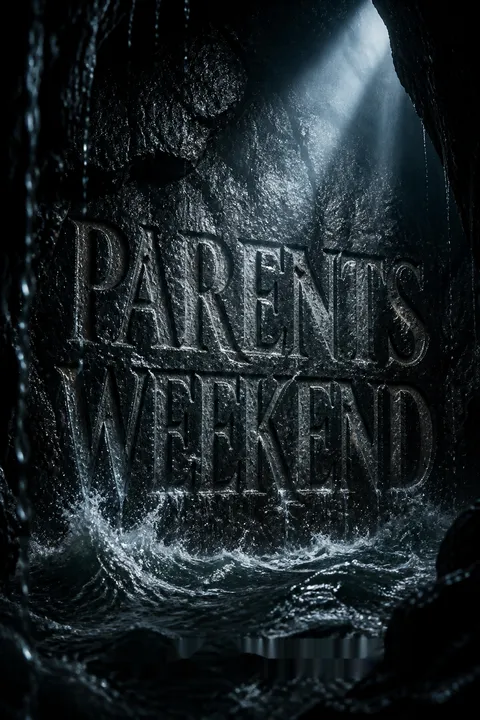
Five college students race across a beach toward a sea cave, with surf behind them and approaching flashlights ahead. They link hands to cross jagged rocks and hide in the dark, listening for whoever is searching.
Trapped between rising water and discovery, they fear the police may find evidence of what brought them there, or find them dead. Their identities and the cause of their terror remain hidden; the scene opens on the danger they must survive before the story rewinds to Parents Weekend.
The opening turns the cave into a promise of both concealment and consequence. The students are not simply fleeing a pursuer: they are already wondering what evidence will expose their choices, so danger and guilt arrive together. By withholding their identities and the source of the fear, the scene makes the reader experience the same cramped uncertainty as the group. The cave is a physical trap, but also a narrative one: the story will have to return to this moment and explain how five young people, gathered for an ordinary college weekend, came to fear the people looking for them.
Five Families Arrive
At Santa Clara University, Parents Weekend brings five freshmen and their families into the same orbit. Blane Roosevelt, raised under the protection surrounding his high-ranking State Department mother, is eager to belong at college; Stella Maldonado arrives with parents David and Nina, whose marriage is strained by his infidelity.
Libby Akana comes with her grieving parents, Judge Ken and Amy, while scholarship student Felix Goffman hopes to make his single mother, Alice, proud. Mark Wong hides the shame attached to his imprisoned father.
Their capstone group has its own troubles, especially Stella’s friendship with Natasha Belov, a volatile student who has recently disappeared. Then Natasha’s body is found in a sea cave, and the university calls her death an accidental drowning.
The opening distributes vulnerability across families that seem to have little in common. Blane’s security detail, Alice’s financial strain, the Akanas’ bereavement, and the Maldonados’ marital fracture all shape what each parent can see and what each student hides. Natasha’s reported drowning gives the campus a shared loss before the five disappear, but its apparent explanation encourages people to treat the danger as a sad accident rather than a warning. The contrast between privileged protection and private helplessness becomes central: money, status, and professional authority may offer resources, but none gives these parents reliable access to their children’s lives.
Empty Seats at Dinner
The capstone families gather at The Hut, expecting their children to join them, but no student arrives. Blane’s mother, Cynthia, and the other parents trade uneasy jokes while their unanswered calls turn the dinner into a vigil. Ken and Amy learn that Stella argued with Libby and broke Libby’s phone; Libby had borrowed her roommate Deepa’s device.
Alice receives a silent call from Felix, then finds a pink hoodie stained with what appears to be blood in his laundry. Earlier, all five students’ phones stopped reporting near Rancho San Antonio County Park. Their absence is no longer ordinary college mischief: five young people have disappeared together, and their families have almost no trustworthy account of where they went or why.
The dinner makes parental knowledge visibly inadequate. Each family has a different explanation ready: a daughter who can be difficult, a son who likes parties, a roommate who may know more. Yet the group disappearance defeats these individual stories. The broken phone and bloody garment are especially effective because they convert domestic details into evidence without immediately explaining them. Alice’s laundry is not a neutral household chore; it is a reminder that she remains materially entangled in Felix’s life even as he tries to build one apart from her. The scene shifts the novel from family reunion to investigation through small, alarming absences.
The Fraternity Van
FBI agent Sarah Keller joins campus police chief Jay McCray and starts tracing the students’ last movements. Campus footage shows Blane’s father, Hank, briefly helping him after a skateboard fall, while separate recordings place Stella and Libby leaving their dorm in distress.
At the fraternity house, Keller learns that Blane borrowed a green van painted like the Mystery Machine, with Mark beside him. His fraternity brothers cannot explain where the pair went, and their evasions deepen suspicion.
Keller also hears that Mark was on probation after an allegation, while Cynthia’s background check revealed his father’s history of sexual assault. The case expands from four missing students to five, but the van and the apparent fraternity scandal still offer no clear motive.
Keller’s early work shows how investigation depends on treating fragments as provisional rather than self-explanatory. Hank’s appearance could implicate a resentful ex-husband; fraternity secrecy could indicate hazing; Mark’s family history could distort how others judge him. Each clue is real, but none yet establishes guilt. Keller’s willingness to work with Annie Hafeez, a student intern who understands campus customs, also counters the fantasy that authority alone produces insight. The investigation advances when professional method is joined to local knowledge, and the reader is encouraged to feel how easily a plausible story can form around incomplete evidence.
The Wrong Man’s Shadow
David Maldonado is injured after a man chases him along the Half Moon Bay shore and he falls from a bluff. In hospital, he admits that years earlier he had an affair with Zoe Carpenter, whose husband killed himself after discovering them together. Zoe’s son, Cody, witnessed the death and has since carried a fixation on David.
Keller finds Cody’s disturbing drawings at UC Santa Cruz, then learns that he has gone to the Golden Gate Bridge after sending his mother a farewell message. Keller reaches him on a narrow ledge and tackles him away from the drop. Cody is alive, but the attack on David and the students’ disappearance prove unrelated. Another emotional emergency has consumed time without explaining where the five are.
Cody’s story gives the investigation a convincing false center: a damaged young man, an old betrayal, and a parent attacked near the missing students’ campus. Keller must respond to the immediate threat without mistaking urgency for relevance. Her rescue also tests the difference between solving a case and keeping a person alive; she cannot know whether Cody will provide answers, but she acts before certainty is possible. David’s history exposes the harm of treating infidelity as a private indulgence. His choice helped rupture a family, and Cody inherited the memory of that rupture, even though his pain does not make him responsible for the disappearance.
A Tracker in the Tire
Keller learns that Ken and Amy Akana’s tires were slashed, and a hidden GPS tracker was attached to the one left intact. Amy identifies the man on the garage footage as Bruce Lockwood, a police officer she met while her son Timmy was being treated for cancer. Their affair ended, but Bruce continued to follow her. Ken later finds Bruce at the motel where the couple is staying.
When Bruce holds Amy at gunpoint, Ken charges him over a railing; Bruce dies before police can intervene. The attack explains the tracker and the slashed tires, but it does not explain why five students vanished. Ken’s action also exposes the grief and anger he has long contained beneath his reputation for composure.
The Akana subplot mirrors the larger crisis without solving it. Bruce’s surveillance converts intimacy into control: the tracker gives him access to Amy’s movements while her shame about the affair keeps her from seeking protection. Ken’s restrained public persona has helped him function through his son’s illness, but it has also left Amy alone with grief and a dangerous secret. When Ken intervenes, his violence is neither a simple triumph nor a clean restoration of safety. It is a desperate response that leaves the couple confronting how silence, private guilt, and concealed danger have shaped their marriage.
The List in Alice’s Trunk
Annie helps Keller investigate campus gossip, while Alice finally gives the FBI a file she had taken from the dean’s office. The anonymous Creep Lists label Mark and Felix as predators, accuse Professor Turlington, and name Libby, Stella, and Blane as enablers. Alice also hands over the bloodstained hoodie she had hidden in her car, unable to face what it might mean for Felix.
Turlington tells Keller that Natasha once accused him of harassment, then withdrew the claim after a university investigation. He presents himself as the target of an unfair whisper campaign. With the students’ reputations already being tried online, Keller has to weigh the evidence without allowing rumor to become proof.
The lists turn social media into both a record and a weapon. Their claims may preserve a genuine grievance, but anonymity strips away context and gives the accusations power without accountability. Alice’s hesitation is not mere obstruction: she fears that evidence will confirm the worst about the son she has protected and raised alone. Turlington’s polished account further complicates judgment, because the person most fluent in defending fairness may still be hiding facts. The scene asks Keller, and the reader, to resist two opposite errors: dismissing accusations because they are anonymous, and treating accusation itself as a verdict.
The Smurf Van Burns
A FedEx truck’s onboard camera captures the Mystery Machine heading toward Rancho San Antonio with Blane and Mark inside, then leaving with a masked driver. The van is later found burned, and blood nearby suggests the students were moved into another vehicle. Keller runs down other leads: Hank is cleared, and Mark’s father says Mark had visited him asking about a lawyer but offers no explanation.
Annie uncovers a prank video posted the night Natasha was last seen, showing fake blood placed on a passed-out girl at a beach bonfire. Natasha’s phone is the lone outside device in the geofence around the park when the students’ phones go dark. The overlapping clues finally point Keller toward the sea caves.
The case changes when apparently frivolous artifacts become evidentiary. A fraternity van, a prank site, and a phone’s location data carry more weight than the elaborate theories circulating online because they can be placed in time and space. Yet each discovery remains ambiguous: the prank video proves cruelty, not murder, and Natasha’s phone at the park raises the question of who carried it. Keller’s persistence matters because she follows a clue that earlier teams might have dismissed as noise. The scene also links the students’ social world to the investigation’s material one: digital traces outlast the stories people tell about themselves.
Water in the Cave
The five had been summoned to the park and seized by Natasha’s parents, Ivan and Iza Belov. Blane and Mark tried to escape the van; Mark was shot, and the captors transferred the group to a U-Haul before forcing them toward the caves. Now rising water fills the chamber. Stella admits she shared private details with Natasha, whose online lists branded her friends as creeps and enablers.
The students had answered those accusations with a cruel fake-blood prank, then failed to understand what happened after they fled. Felix reveals that he found Natasha unconscious and carried her away, believing she was already dead. He leaves the cave to confront Ivan and stop the revenge before the tide closes their only exit.
The cave forces the students to replace accusation with responsibility. They are not the monsters the lists made them, but they have inflicted real humiliation and abandoned Natasha in a moment when she needed help. Felix’s choice to carry her away began as a mistaken attempt to protect his friends, yet secrecy gave the mistake lasting consequences. Stella’s confession matters because it breaks the group’s habit of preserving itself through selective truth. Their predicament is morally more complicated than a simple contest between innocent captives and evil kidnappers: the Belovs’ grief is understandable, but their punishment of the students is still an act of violence.
The Butterfly’s Last Flight
Keller and McCray reach the caves as Ivan Belov wounds McCray and holds Keller at gunpoint. Bob arrives with the task force, and Iza is secured, but Ivan takes Felix away. Felix’s account and Natasha’s saved messages direct Keller to Turlington’s home. There, Ivan has Felix dead and holds Turlington’s wife hostage.
Natasha’s phone plays a recording of her fleeing from someone who followed her on the beach. Turlington admits he was with Natasha and came after her that night; Keller recognizes that he was the man who killed her and staged the drowning. Ivan shoots Turlington, and Keller shoots Ivan. The other four students survive the cave, but Felix and McCray are left gravely wounded; McCray survives.
The final revelation recasts the novel’s competing narratives without absolving anyone. The Belovs correctly sensed that Natasha had been harmed, but grief and selective evidence led them to punish the wrong people. Turlington’s authority and fluency had made his version persuasive, while Natasha’s reputation made hers easy to doubt. Felix is caught between both failures: his panicked concealment helped obscure the truth, and his attempt to correct it costs him his life. Keller’s intervention closes the investigation through evidence rather than status or online consensus, but the result is not a neat restoration. The truth arrives with irreversible losses.
Epilogue
Three years later, Blane graduates with Mark beside him; Cynthia and Hank have repaired their relationship enough to share the celebration, and Blane plans to study in Washington. Ken and Amy arrive in time to see Libby graduate, and she chooses work helping families at St. Jude’s over law school. Stella graduates too and is heading to medical school, while Nina and David remain separated but supportive parents.
Alice leaves the dean’s office with Felix’s photograph, choosing a life beyond the place that holds his absence. Keller attends Annie’s FBI graduation with Bob, their twins, and McCray. At the beach, Blane, Stella, Libby, and Mark return to honor Natasha and Felix before walking into separate futures.
The three-year coda measures recovery through changed choices rather than a claim that trauma has vanished. Libby turns the family’s experience of childhood illness toward service; Alice takes a first step away from the identity built around protecting Felix. Ken and Amy recover some intimacy by speaking and travelling together, while Cynthia and Hank work toward a less hostile shared parenthood. Keller’s presence at Annie’s graduation makes mentorship another form of repair. The final return to the beach gives the four survivors a ritual that acknowledges Natasha and Felix without pretending the group can be restored. Their lives continue, but remembrance remains part of the way forward.
Analysis
Parents Weekend builds its thriller around the gap between what people know and what they think they know. The parents arrive with established explanations for their children: Blane is reckless but protected, Libby is thriving, Felix is sweet, Mark is the funny friend, Stella is merely difficult. The investigation repeatedly tests those labels against physical evidence. A broken phone, a stained hoodie, a tracker, a van camera, anonymous posts, and Natasha’s saved recordings each revise the story, but no clue interprets itself.
The book is especially alert to the unequal credibility assigned to people. Natasha’s erratic behavior makes her easy to dismiss; Alice’s maternal certainty makes her easy to discount; Turlington’s professional fluency helps him appear trustworthy. Online accusation can expose hidden harm, but the Creep Lists also flatten people into labels and turn suspicion into social punishment. The novel’s answer is not to choose between digital rumor and institutional authority. It is to demand corroboration, context, and a willingness to reconsider an appealing explanation.
Family love is likewise shown as imperfect knowledge, not automatic understanding. The parents care deeply, yet their own grief, ambition, shame, and marital conflict keep them from seeing what their children are carrying. Ken’s composure and Amy’s self-sacrifice once helped the family endure loss, but those strategies also narrowed their communication. Cynthia’s security apparatus protects Blane while making ordinary closeness difficult. Alice’s devotion sustains Felix while making evidence almost unbearable to face.
The ending refuses a clean moral ledger. The four surviving students are not innocent of cruelty, Felix’s secrecy has serious consequences, and the Belovs’ grief does not justify revenge. Still, the truth matters because it distinguishes culpability from accusation. The survivors’ return to the beach acknowledges that remembering Natasha and Felix is part of growing beyond the weekend, not a way to erase what happened.
Review Summary
Parents Weekend is a fast-paced thriller about five college students who go missing during a university event. FBI Agent Sarah Keller investigates, uncovering family secrets and potential motives. Readers praise the book's engaging plot, short chapters, and multiple perspectives. While some found the large cast of characters challenging to follow, many enjoyed the twists and Agent Keller's return. Critics note the book's entertainment value but suggest it lacks depth compared to Finlay's previous works. Overall, it's described as a quick, suspenseful read with mixed character development.
People Also Read








Characters
Sarah Keller
The persistent FBI agentA financial-crimes agent temporarily assigned to the Bay Area, Keller approaches the missing-student case with discipline, curiosity, and a willingness to follow unglamorous leads. She is a mother of twins and a partner to Bob, so the danger to young people is never purely professional. Keller can act decisively under pressure, but she also knows that confidence can become tunnel vision. Her best work comes from listening to local officers, students, and families rather than assuming a badge gives her complete knowledge. The case tests her ambition and her caution, asking her to balance duty to strangers with responsibility to the family waiting for her.
Bob Keller
Keller’s steady partnerBob is Keller’s husband, a former sound engineer and devoted father who brings humor and warmth into tense rooms. His optimism is not naïveté; it is a practiced way of keeping family life from being ruled by fear. He understands the costs of Keller’s work, especially when her courage puts her in danger, and he makes space for her to decompress without demanding that she become someone else at home. His care for his own family and for people in distress reflects a generous, quietly brave temperament.
Blane Roosevelt
The protected freshmanBlane is a sociable freshman who has embraced California, fraternity life, and the freedom to define himself beyond his powerful mother’s security detail. His childhood abduction has become a story he can use to impress people, though that ease does not mean the experience left no mark. He likes pranks, friendship, and the feeling of belonging to a group, and he often uses humor to manage tension. His bond with Mark is important because it offers a version of loyalty that is chosen, not imposed by family or status.
Stella Maldonado
The restless social sparkStella is confident, sharp-tongued, and drawn to people who seem unafraid to live on their own terms. Her independence can make her seem careless with the feelings of those who admire her, especially Libby and Felix. She is also perceptive about her parents’ problems and resents being treated as though she cannot see them. Stella’s social boldness is both a source of influence and a way to avoid vulnerability: she can pull a group into an adventure more easily than she can admit what she needs from them.
Libby Akana
The dutiful daughterLibby has spent much of her life trying to be exemplary, especially after her younger brother’s illness redirected her parents’ attention and energy. At college she wants to experiment with a less controlled identity, but she still measures herself against other people’s approval. Her friendship with Stella and feelings for Felix make her vulnerable to jealousy and exclusion. Libby’s apparent cheerfulness can conceal exhaustion; she is learning that being the dependable child does not mean she must erase her own needs.
Felix Goffman
The quiet scholarship studentFelix is Alice’s quiet, observant son, shaped by a difficult childhood and years of being treated as an outsider. College offers him a rare chance to belong to a group that jokes with him and invites him along. His attachment to Stella and the warmth he feels from Libby make friendship especially powerful to him. Felix wants to be seen as kind rather than strange, and that desire can make him protect other people at his own expense. He is both sensitive to rejection and deeply loyal once he believes he has found a place.
Mark Wong
The comic loyalistMark is Blane’s large, funny friend and a fraternity pledge who has learned to make himself the joke before others can use his family history against him. His mother is gone, and his father’s crimes have become a stigma Mark cannot control. Humor gives him a way to join a room without explaining his pain, but it also hides how deeply rejection can wound him. Mark’s friendship with Blane offers solidarity without pity, an important distinction for someone accustomed to being reduced to his father’s actions.
Cynthia Roosevelt
The guarded diplomatCynthia is a senior State Department official whose public authority comes with a constant security threat and little privacy. She has learned to conceal fear, manage a room, and keep personal needs subordinate to work. Her relationship with Blane is strained by the protections and absences her career has brought into his life, while her history with Hank remains emotionally unresolved. Cynthia is not simply a powerful parent; she is someone who understands that control can protect a person and still keep them at a distance.
Ken Akana
The composed judgeKen is a respected judge and Libby’s father, known for punctuality and disciplined composure. His family has endured the illness and death of a young son, leaving him and Amy with grief they have managed in different ways. Ken values order and responsibility, but his habit of containing emotion can leave the people closest to him feeling alone. He brings legal knowledge and determination to the search for Libby, while the crisis challenges the distance his professional self-control has created at home.
Amy Akana
The grieving motherAmy is a former lawyer who stepped away from work to care for her son during his cancer treatment. His death changed her marriage and left her feeling as though her own ambitions had disappeared. She remains devoted to Libby, but perfection and cheerfulness have made it difficult for her daughter to speak honestly. Amy is observant and emotionally perceptive, even when fear or guilt makes her hesitate. Her struggle is not a lack of love, but the difficulty of offering it without hiding her own grief.
David Maldonado
The image-conscious surgeonDavid is a successful plastic surgeon who is accustomed to confidence, attention, and the ability to repair what others see as flaws. In private, he is less certain: his infidelity has damaged his marriage and his relationship with Stella. He wants to be forgiven without fully understanding how much harm his choices have caused. His pursuit of distraction, including running and flirtation, shows how he avoids shame rather than confronting it. Beneath that evasiveness, he loves his daughter and fears that she has no reason to trust him.
Nina Maldonado
The estranged motherNina is a yoga teacher whose calm, health-conscious manner contrasts with the anger and disappointment she carries in her marriage. David’s betrayal has made her wary, but she still wants to preserve a caring relationship with Stella. She is attentive to her daughter’s moods and notices when something is wrong, even when she cannot get Stella to explain it. Nina’s challenge is to stop confusing endurance with loyalty and to make room for a life that is not organized around David’s choices.
Alice Goffman
The protective single motherAlice works in the dean’s office and has raised Felix on limited means after escaping an abusive relationship. She is proud of his education and protective of the gentle boy she knows, sometimes to the point of withholding information that frightens her. Years of instability have left her vulnerable to panic, but also taught her how to begin again when circumstances become unbearable. Alice’s love is practical and fierce: she budgets, worries, and tries to make a safe future possible for her son.
Jay McCray
The campus police chiefMcCray leads Santa Clara’s campus police and understands the rhythms and blind spots of university life. He is experienced, steady, and willing to cooperate with federal agents rather than protect his own authority. His care for students is genuine, not merely procedural, and he treats Keller as a partner while keeping his local knowledge central to the search. McCray’s calm judgment helps balance the pressure created by powerful parents, media attention, and an increasingly crowded task force.
Natasha Belov
The troubled studentNatasha is a Bulgarian student whose first years at Santa Clara give way to academic trouble, heavier partying, and estrangement from former friends. Her parents remain deeply concerned, though the people around her are accustomed to her disappearances and erratic behavior. Natasha’s shifting reputation makes it easy for classmates and authorities to interpret distress as irresponsibility. She is more than the campus gossip surrounding her: a young woman trying to manage private pain while the adults and peers around her misread its signs.
Ivan and Iza Belov
Natasha’s devoted parentsIvan and Iza are Natasha’s Bulgarian parents, a couple whose love for their daughter is intensified by fear and uncertainty. They arrive at the university desperate for news and unwilling to accept how little the institution can tell them. Their grief is private, but their concern soon presses against the limits of patience and reason. Together they embody a parent’s need to make sense of a child’s suffering, even when the available information is incomplete and painful.
Professor Turlington
The government professorTurlington teaches government at Santa Clara and presents himself as a conscientious instructor who takes both academic standards and student welfare seriously. He has a young family and a professional reputation to protect. When anonymous accusations circulate, he describes the damage of being judged without a clear account of the evidence. His composed, articulate manner makes him persuasive, but it also illustrates why authority and credibility should be examined rather than accepted at face value.
Annie Hafeez
The campus-savvy internAnnie is a Santa Clara student interning with campus police. Bright, sociable, and curious, she knows how students communicate and where campus gossip travels. She hopes to find a career that feels like her own choice rather than simply meeting her family’s expectations. Annie’s enthusiasm can run ahead of official procedure, but she brings Keller useful perspective and a willingness to pursue digital clues others might overlook.
Cody Carpenter
The grieving studentCody is Zoe Carpenter’s son, a college student carrying the trauma of witnessing his father’s suicide after David Maldonado’s affair with his mother. He has withdrawn from others and struggles with depression. His fixation on David grows from a wound he has never learned to manage, making him a source of danger as well as a young person in need of help.
Deepa Patel
Libby’s perceptive roommateDeepa is Libby’s roommate and one of the few people who sees the tension surrounding Libby before her parents do. She lends Libby her phone and knows the students’ plans have become unusual. Deepa is cautious about interfering, but her observations help the adults reconstruct the last hours before the disappearance.
Hank Roosevelt
Blane’s estranged fatherHank is a novelist whose career and marriage have faltered while Cynthia’s political life has risen. He and Cynthia share a complicated history, and his relationship with Blane is shaped by the divorce and years of family conflict. He can be defensive and self-pitying, but he remains emotionally attached to his son and wants a chance to be present in his life.
Plot Devices
The sea cave
A rising-water trapThe caves at Panther Beach appear to be a place Natasha explored while partying, but their tides make them dangerous even without a pursuer. The opening prologue places five students inside one before explaining why they are there. Later, the cave becomes the site of their captivity and forces them to decide whether to risk escape or wait for the water to recede. Its physical danger binds the missing-student mystery to Natasha’s fate and gives the story’s final rescue a strict deadline.
The Mystery Machine
A traceable getaway vehicleA fraternity van painted like the cartoon vehicle attracts attention and becomes a practical clue once Blane borrows it with Mark. Investigators find that conventional campus footage cannot explain where it went, but a FedEx truck’s onboard camera records the van travelling toward the park and later returning with a masked driver. The conspicuous paint job and commercial dashcam network turn a piece of college frivolity into a crucial record of the abduction route.
The Creep Lists
Rumor becomes evidenceAnonymous posts accuse Mark and Felix of predatory behavior, name Turlington, and label Libby, Stella, and Blane as enablers. The lists create an immediate social explanation for the group’s conflict, but they offer no transparent source or reliable context. Their removal from the platform makes them harder to investigate, while Alice’s saved file preserves what others thought had vanished. The lists connect Natasha, the students, and the professor, but initially distort the case as much as they illuminate it.
Natasha’s phone
A delayed digital witnessLocation records place Natasha’s phone near the other students’ devices at Rancho San Antonio after her body has already been found. That contradiction tells Keller someone else possessed it and helps identify the Belovs’ role. The phone also contains saved messages and a recording from the night Natasha died, material that undermines the first explanations offered by the students and Turlington. Its evidence arrives in pieces, making the device less a single revelation than a witness the investigation has to learn how to hear.
Stage blood video
A prank with consequencesA prank video posted online shows fake blood poured on a passed-out girl at a beach bonfire, with another student reacting in alarm. Initially, it seems like proof of a cruel but harmless college stunt. Its date connects the prank to Natasha’s last night alive, and its images help Keller reconstruct why the students fled and how Felix came to believe Natasha was dead. The video exposes the group’s carelessness without, by itself, proving who later harmed Natasha.
FAQ
Synopsis & Basic Details
What is Parents Weekend about?
- College weekend turns nightmare: The novel centers on Parents Weekend at Santa Clara University, where five freshmen from the same capstone group mysteriously disappear, leaving their parents frantic and an FBI investigation scrambling for answers.
- Interwoven family dramas: As authorities search for the missing students, the narrative delves into the complex lives and hidden secrets of their parents – a high-powered government official, a celebrity judge, a plastic surgeon, and a single mother – revealing how their past traumas and present dysfunctions may connect to the crisis.
- Digital age mystery: The investigation navigates the complexities of modern life, utilizing social media posts, anonymous online forums, and digital surveillance data to piece together the students' last movements and uncover a web of secrets, pranks, and accusations that led to their vanishing.
Why should I read Parents Weekend?
- Propulsive, multi-perspective thriller: The story offers a gripping mystery told through shifting viewpoints of students, parents, and investigators, creating a layered narrative that keeps readers guessing until the final revelations.
- Deep dive into family secrets: Beyond the suspenseful plot, the novel provides a poignant exploration of parent-child relationships, the burden of unresolved trauma, and the corrosive impact of secrets within families.
- Timely social commentary: The book tackles relevant themes like the dangers of social media, the consequences of online gossip and bullying, and the pressures faced by young people and their parents in the digital age.
What is the background of Parents Weekend?
- Inspired by real-life event: Author Alex Finlay conceived the idea while attending Parents Weekend at Santa Clara University with his son, using the setting and event as a springboard for a fictional thriller, as noted in the "Reader's Note."
- Exploration of modern anxieties: The novel taps into contemporary fears surrounding child safety, the impact of technology on privacy and reputation, and the intense scrutiny faced by public figures and their families.
- Setting contrasts beauty and danger: Santa Clara University's picturesque campus and the scenic California coast, including Panther Beach and Rancho San Antonio Park, serve as a backdrop that starkly contrasts with the dark events unfolding, highlighting how danger can lurk beneath a seemingly idyllic surface.
What are the most memorable quotes in Parents Weekend?
- "What clues will they find? Or will they find nothing but their cold, lifeless bodies?": This line from the Prologue immediately establishes the high stakes and existential terror facing the students, foreshadowing the life-or-death situation they are in.
- "The woman's bathroom is your sanctuary. There are no men, no cameras, and no one will judge you if you cry.": Cynthia Roosevelt recalls this advice from a mentor, revealing the immense pressure she faces in her public life and hinting at the hidden emotional toll beneath her controlled exterior.
- "They said that in that fleeting moment they realized that all of the things that had brought them to where you are right now—all of their problems—could be fixed, except for one... They couldn't fix the decision to jump.": Agent Sarah Keller uses this powerful, widely cited sentiment from Golden Gate Bridge jump survivors to connect with Cody Carpenter, highlighting the theme of regret and the possibility of choosing a different path even in despair.
What writing style, narrative choices, and literary techniques does Alex Finlay use?
- Alternating perspectives build suspense: Finlay employs a multi-POV structure, shifting between the students, parents, and Agent Keller, which gradually reveals fragmented pieces of the mystery and heightens tension by showing events from different emotional and informational vantage points.
- Pacing accelerates with plot: The narrative begins with simmering family dramas but quickly escalates into a fast-paced thriller as the students disappear and the investigation gains urgency, mirroring the characters' rising panic.
- Integration of digital elements: The story seamlessly weaves in modern technology – social media posts (Rizz, PrankStool, TikTok), cell phone data (pings, geofencing, texts), and surveillance footage (CCTV, dashcams) – not just as plot devices but as forces that shape character actions and public perception.
Hidden Details & Subtle Connections
What are some minor details that add significant meaning?
- Three slashed tires, one spared: The detail that only three of the Akana's car tires were slashed, leaving the front passenger one intact, initially seems like random vandalism but later becomes crucial evidence when Agent Keller finds the GPS tracker precisely on that wheel well, revealing Amy Akana's stalker knew exactly where to place it.
- Felix's pink hoodie: Alice Goffman finds a pink hoodie stained with what looks like blood in Felix's laundry, a detail that terrifies her and fuels suspicion about her son, but is later revealed to be stage blood from the PrankStool video, linking Felix directly to the prank and Natasha's last night.
- Natasha's waterproof phone case: The fact that Natasha Belov had her phone in a waterproof case and tucked into her underwear is a small detail that explains why the phone survived being submerged in the sea cave, allowing her father to later find the crucial video evidence of her final moments.
What are some subtle foreshadowing and callbacks?
- Prologue in the sea cave: The opening scene of the five students hiding in a sea cave, fearing for their lives, directly foreshadows their eventual captivity in that same type of location, turning a symbolic fear into a terrifying reality.
- Professor Turlington's "sausage" comment: Dean Pratt's dismissive "I don't need to know how the sausage is made" to Alice Goffman subtly foreshadows the university administration's potential lack of transparency or willingness to look too closely at uncomfortable truths, particularly regarding the professor later accused of predatory behavior.
- Bob Keller's "Airport Rules": Bob's playful term "Airport Rules" for indulging in things like early morning cocktails or excessive snacks, initially a lighthearted detail of his personality, is later echoed by Sarah Keller when she uses her airline miles to upgrade only Bob's seat, showing her willingness to bend rules or make sacrifices for her family, mirroring the lengths parents go to in the crisis.
What are some unexpected character connections?
- Amy Akana and Bruce Lockwood: The revelation that Libby Akana's seemingly stoic mother had a secret affair with a police officer, Bruce Lockwood, who then became her stalker, is a significant and unexpected connection that initially presents Lockwood as a potential suspect in the students' disappearance, adding a layer of personal danger to the Akana family's ordeal.
- David Maldonado and Cody Carpenter: The connection between Stella Maldonado's father, Dr. David Maldonado, and Cody Carpenter, the son of his former mistress, is a shocking link rooted in past infidelity and tragedy (Cody witnessing his father's suicide after discovering the affair), which leads to Cody seeking revenge against Maldonado and becoming a red herring in the missing students case.
- Natasha Belov and Professor Turlington: The connection between the deceased student Natasha Belov and Professor Turlington, initially presented through anonymous online accusations, is revealed to be far deeper and darker, culminating in the discovery that Turlington was Natasha's harasser and ultimately responsible for her death, linking the initial missing person case directly to the students' disappearance.
Who are the most significant supporting characters?
- Jay McCray, Campus Police Chief: Chief McCray serves as Agent Keller's primary local contact and ally, providing crucial campus context, coordinating local efforts, and demonstrating competence and empathy despite being initially dismissed by federal agents and high-powered parents.
- Annie Hafeez, Campus Intern: Annie, the enthusiastic campus police intern, acts as a vital source of information on student culture, social media trends (like Rizz and PrankStool), and campus gossip, her digital savvy and willingness to dig providing key leads that the more experienced investigators might miss.
- George G. Peacoat, FedEx Manager: Mr. Peacoat, the meticulous and proud FedEx facility manager, becomes an unexpected hero by providing access to truck dashcam footage, which captures the Mystery Machine van and the Smurf-masked driver, offering the first visual evidence of the abduction vehicle and a potential suspect.
Psychological, Emotional, & Relational Analysis
What are some unspoken motivations of the characters?
- Stella's need for validation: Stella's actions, including her pursuit of the "cool" friend who supplied psychedelics and her casual dismissal of Felix's feelings, are subtly driven by a deep-seated need for external validation, stemming from her parents' dysfunctional marriage and her father's infidelity, which made her feel unseen and unworthy.
- Mark's desire for acceptance: Mark's willingness to participate in risky pranks and his initial infatuation with the "crashy" junior girl are motivated by a profound desire for acceptance, particularly within the fraternity and among his peers, as he grapples with the stigma of his father's crimes and seeks to define himself apart from that legacy.
- Alice's protective instincts: Alice Goffman's initial hesitation to turn over the bloody hoodie and the Rizz file is driven by an overwhelming, almost primal, protective instinct towards her son Felix, a manifestation of her past trauma escaping an abusive relationship and her fear that the world will unjustly harm her "sweet boy."
What psychological complexities do the characters exhibit?
- Trauma and coping mechanisms: Characters display complex psychological responses to trauma; Cynthia Roosevelt exhibits hyper-vigilance and emotional control after her son's abduction, while David Maldonado uses infidelity and running as avoidance strategies following the tragic consequences of his affair.
- Grief and emotional distance: Ken and Amy Akana demonstrate the complex ways grief can manifest and impact relationships; Ken adopts a stoic "No Drama" persona that creates emotional distance, while Amy's unresolved pain and search for connection lead to a secret affair.
- Dissociation and denial: Cody Carpenter exhibits signs of dissociation and denial following the trauma of witnessing his father's suicide, manifesting in disturbing artwork and a detachment from reality that culminates in his suicidal ideation on the Golden Gate Bridge.
What are the major emotional turning points?
- Parents realizing kids are missing: The moment the parents at The Hut dinner realize none of their children have shown up and aren't answering their phones marks a collective emotional turning point from mild annoyance to dawning panic and fear.
- Amy Akana's confession: Amy Akana's decision to confess her affair and reveal her stalker's identity to Agent Keller and her husband is a major emotional turning point, breaking years of silence and secrecy and allowing the investigation to pursue a new, albeit ultimately misleading, lead.
- The students' confessions in the cave: Trapped in the rising tide, the students' raw confessions about their regrets, their roles in Natasha's death, and their hidden feelings for each other represent a powerful emotional turning point, stripping away their defenses and revealing their vulnerability and remorse.
How do relationship dynamics evolve?
- Parent-child communication breakdown: The crisis highlights the existing communication breakdowns between the parents and their children; the parents are largely unaware of their children's struggles, secrets, and online lives, demonstrating a significant generational and emotional gap.
- Marriages under pressure: The stress of the disappearance exacerbates existing marital problems; the Maldonados' marriage collapses under the weight of past infidelity and blame, while the Akanas, despite their pain and secrets, ultimately find a path towards reconciliation and renewed connection.
- Student group fractures and reunites: The capstone group's dynamics are initially shaped by jealousy, unrequited love, and secrets (Libby's feelings for Felix, Felix's perceived stalking, Stella's influence), fracturing after Natasha's death and the Creep Lists, but ultimately strengthening through their shared trauma and survival in the cave.
Interpretation & Debate
Which parts of the story remain ambiguous or open-ended?
- The full extent of the students' actions: While the students confess their roles in the prank and their subsequent cover-up regarding Natasha, the precise details of what happened immediately after the PrankStool video ends and before Felix finds Natasha near the dunes remain somewhat ambiguous, leaving room for interpretation about their level of culpability.
- The long-term impact on the survivors: The Graduation Weekend epilogue shows the surviving students and parents moving forward and finding purpose, but the narrative leaves open the full, lasting psychological impact of their trauma, hinting that while they are resilient, the experience has fundamentally changed them ("None of them are the same").
- The university's accountability: While the dean is shown as stressed and concerned about public image, the novel doesn't fully explore the university's institutional accountability regarding Professor Turlington's past accusations, the handling of the Rizz reports, or the safety protocols that failed the students, leaving the degree of their responsibility open to debate.
What are some debatable, controversial scenes or moments in Parents Weekend?
- Amy Akana's affair and secrecy: Amy Akana's decision to engage in an affair while grieving her son and then keep it secret, even when her lover becomes a stalker, is a controversial element that sparks debate about her choices, her coping mechanisms, and whether her secrecy was justified to protect her husband's reputation.
- Alice Goffman hiding evidence: Alice Goffman's choice to hide the Rizz report naming her son and the bloody hoodie, even as the investigation is desperate for clues, is a highly debatable moment that pits a mother's protective instincts against the demands of justice and the potential cost to others.
- Agent Keller's actions on the bridge: Agent Sarah Keller's decision to approach Cody Carpenter alone on the Golden Gate Bridge, despite being told to wait for trained negotiators, is a controversial moment that, while resulting in a rescue, sparks debate about the line between heroic instinct and reckless disregard for protocol and personal safety.
Parents Weekend Ending Explained: How It Ends & What It Means
- The Truth Revealed: The climax reveals that Professor Turlington, not Felix Goffman, was Natasha Belov's harasser ("Dr. Creep"). After the prank on the beach, Natasha, disoriented but alive, encountered Turlington, who, enraged by her and the renewed Rizz accusations, drowned her and staged it as an accidental cave drowning.
- Vengeance and Loss: Natasha's parents, Ivan and Iza Belov, consumed by grief and misled by Natasha's phone records and online rumors, abduct the five students to make them suffer as Natasha did. Ivan kills Felix Goffman, whom he wrongly believes is "Dr. Creep," before Agent Keller intervenes. Ivan is killed by Keller, and Iza is apprehended.
- Survival and Moving Forward: The four surviving students are rescued from the sea cave. The epilogue, set three years later at graduation, shows them and their families grappling with the trauma and loss but finding paths toward healing and purpose (Libby working for St. Jude's, Blane pursuing public service, Stella reconciling with her mother, Agent Keller mentoring new FBI recruits), signifying resilience and the possibility of a new beginning after profound tragedy.
About the Author


Download PDF
Download EPUB
.epub digital book format is ideal for reading ebooks on phones, tablets, and e-readers.








