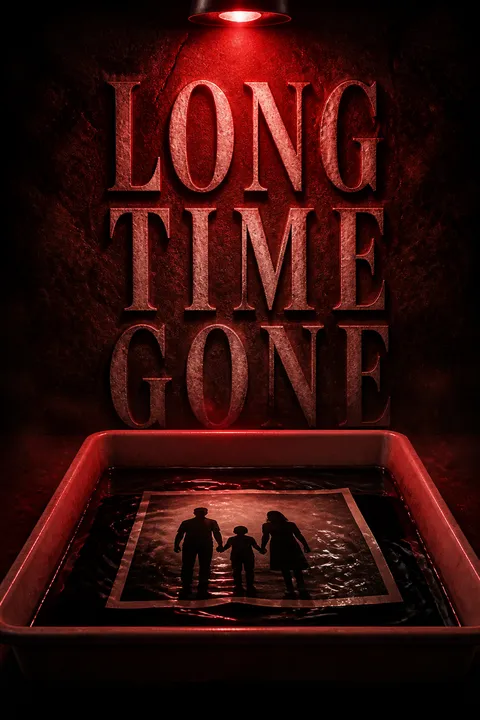


Plot Summary
Prologue
On July 13, 1995, Sheriff Sandy Stamos sits trapped in his cruiser, unable to move after an attacker drugs him. The killer injects him with heroin, then sends the car rolling into Cedar Creek. A Cooper’s hawk lifts from the hood as the water closes over the vehicle.
The scene is arranged to look like an overdose and accident, but Sandy had been investigating the disappearance of the Margolis family and had uncovered something dangerous. His death opens a second mystery beside the missing parents and baby: what had the sheriff learned, and who needed him silenced?
The opening makes the book’s central problem bodily and immediate: the official story of a death can be manufactured, while the victim is left unable to correct it. Sandy’s drugged stillness contrasts with the motion of the cruiser and the hawk, a witness that cannot testify. The staged overdose also plants the novel’s concern with forensic evidence as something vulnerable to power. Before Sloan appears, the reader knows that the missing-family case has already cost a life, and that its truth has been submerged rather than resolved.
A Fellowship in Genealogy
At twenty-nine, Sloan Hastings begins a forensic pathology fellowship under celebrated medical examiner Livia Cutty, expecting her research year to sharpen the scientific skills she will later use in homicide work.
Cutty assigns Sloan forensic and investigative genealogy, the practice of using DNA matches from public family databases to identify unknown relatives and suspects. Sloan chooses not to study a famous solved case. She contacts James Clayton, a young genealogist, and agrees to submit her own DNA so she can learn the process firsthand.
Adoption has never unsettled her bond with dentists Todd and Dolly Hastings, who raised her, but the test introduces a private question into a professional project. Sloan believes she is simply learning how ancestry databases work.
Sloan’s expertise begins in a deliberate tension between clinical detachment and personal exposure. She approaches DNA as a research instrument, but the sample comes from her own body and therefore makes abstract methods intimate. Her adoption has been integrated into family life rather than hidden, which explains why she does not initially regard searching as an act of rejection. The choice nevertheless reveals her characteristic strategy: when uncertainty appears, she moves toward it through procedure. That habit will make her effective as an investigator, while also drawing her into questions no professional boundary can contain.
The Missing Margolis Baby
A week after the sample is processed, James tells Sloan that her DNA connects her to Ellis and Nora Margolis of Cedar Creek, Nevada. His research identifies her biological parents as Preston and Annabelle Margolis, whose infant daughter Charlotte vanished with them on July 4, 1995.
Sloan’s birth certificate confirms that she was born Charlotte Margolis two months before the disappearance. When she shows the evidence to Todd and Dolly, they are stunned.
They explain that they adopted Sloan through a private arrangement with a woman calling herself Wendy Downing, not through an agency, and that the woman did not resemble Annabelle. Their paperwork cannot explain how a missing baby reached them. They urge Sloan to involve the police, turning an ancestry search into an investigation of possible kidnapping.
The revelation does more than replace one name with another. It breaks the story Sloan has lived inside into two incompatible histories: a loving childhood and a birth family apparently torn apart by violence. Her adoptive parents’ shock matters because it removes the simplest explanation, that they knowingly concealed her origins. Their private adoption was motivated by a long, painful wait for a child, but that longing placed them inside a process they did not understand. The scene resists a neat opposition between biological and chosen family. Sloan’s next task is not to choose between them, but to learn what happened without treating either bond as disposable.
The Sheriff at Her Door
Federal testing confirms Sloan’s match to the infant’s preserved evidence, and FBI agents investigate Todd and Dolly before clearing them of knowingly taking a kidnapped child. They suspect the adoption was brokered by people using false names.
As the Hastings family endures days of questioning, Cedar Creek Sheriff Eric Stamos arrives in Raleigh to ask Sloan about the old case. He is the son of Sandy Stamos, the sheriff who died shortly after the Margolises disappeared.
Eric believes his father was murdered for getting close to the truth, and suspects a staged hit-and-run death is linked to the family’s disappearance. Because the Margolises dominate local government, he asks Sloan to enter the family as Charlotte. She agrees to help, while concealing their partnership from the FBI and family.
The investigation acquires a second emotional center through Eric. Sloan’s origin is not only a private loss; it is the unfinished work of a dead father whose son has inherited the burden without knowing whether the old suspicions are true. Eric’s secrecy is pragmatic, shaped by a town where institutional authority has been captured by one family. Sloan’s participation is equally complex. She is not simply returning to claim a place among relatives, but using the access her identity affords. The undercover plan turns reunion into performance, making trust both a human need and an investigative risk.
The Margolis Welcome
Before leaving Raleigh, Sloan receives a message from Nora Margolis, the genealogist whose public family tree helped reveal their connection. Nora welcomes her in Cedar Creek and describes Preston and Annabelle’s troubled place within the powerful family.
Preston had broken an approved engagement to Stella Connelly and married Annabelle, whom his parents considered socially unsuitable. Nora says Annabelle loved her baby and found a confidante in her.
At Nora’s studio, Sloan meets the wider family, including grandparents Reid and Tilly, then studies photographs Annabelle took during her short time as a mother. The images give Sloan a rare, concrete link to the woman she never knew. Nora also identifies two possible leads: Stella, and Lester Strange, the family handyman.
Nora becomes the first person who can offer Sloan more than records: she supplies remembered texture, including Annabelle’s enthusiasms and social isolation. Photography provides a form of contact that is neither proof nor fantasy. Sloan can see the life her birth mother observed, though she cannot yet know what those images omit. The family’s welcome is also unstable. Their affection is genuine, but it comes from a dynasty that has long controlled the town and judged Annabelle by class and usefulness. Sloan’s new kinship therefore carries warmth and danger at once, a contradiction she must hold without surrendering her own judgment.
The Autopsies Disagree
At Eric’s secluded cabin, Sloan reviews the 1995 files on the hit-and-run death of Margolis law partner Baker Jauncey and Sandy Stamos’s death. The official report blames Annabelle’s car for Baker’s fatal head injury, yet the body was transferred from Reno to a local coroner with Margolis ties.
Sloan sends both reports to Livia Cutty. Cutty finds that Baker was struck by a rounded wooden object before a vehicle ran over him, and Sandy had died before his cruiser entered the creek.
Eric and Sloan also find evidence that investigators detected a large pool of Annabelle’s cleaned blood in her kitchen, while empty closets suggested the couple had packed to leave. The evidence points toward foul play, but not yet toward a clear sequence or culprit.
Forensic expertise becomes a corrective to institutional storytelling. The reports contain clues, but their conclusions have been bent to fit a public account that protects powerful interests. Cutty’s review demonstrates how evidence can retain the truth even when its interpretation is compromised. The blood and emptied closets complicate rather than solve the case: one suggests a violent event, the other a planned departure. Sloan must resist treating either clue as a complete narrative. Her professional discipline is valuable precisely because it requires her to distinguish observation from inference, even when the personal stakes make certainty tempting.
The Story Goes Public
FBI assistant Zoë Simpson leaks case details to true-crime podcaster Ryder Hillier, who verifies Sloan’s identity and announces that baby Charlotte has resurfaced. Reporters descend on Raleigh and Cedar Creek, while Ryder searches for Sloan herself. In Cedar Creek, waitress Margot Gray recognizes the name Wendy Downing from the adoption story and tracks Sloan to her rental.
Margot confesses that, in 1995, an attorney called Guy Menendez paid her to care for an infant and pose as the child’s mother during an adoption. She had never known the baby was Charlotte or that she had been taken from her parents. Margot gives Sloan Menendez’s phone number, a possible route to the person who arranged her adoption, and agrees to meet Eric.
The media leak changes the case’s scale and its ethics. Ryder’s audience can surface a witness the official investigation has not found, but the same publicity exposes Sloan to intrusion and gives a criminal notice that the past is reopening. Margot’s confession is morally compromised without being emotionally simple. She accepted money and avoided questions, then spent decades rationalizing the harm because she believed the child would be loved. Her belated decision to speak is an attempt to repair what cannot be undone. Sloan’s response is strategic compassion: she protects the frightened witness because Margot’s account may be the only bridge to the adoption’s architect.
A Witness Disappears
Sloan leaves Margot at the Cedar Creek Inn while she drives to Eric’s cabin. Margot, terrified that the authorities will prosecute her, calls the attorney who has checked on her for decades. Menendez arrives quickly, asks what she told Sloan, and kills her with a garrote. He removes her body in a suitcase.
Ryder, who has bribed an inn employee for access, records a suited man leaving Margot’s room, though she misses Sloan. When Sloan returns with Eric, Margot and her car are gone. The threat becomes immediate: the person behind the false adoption is nearby and willing to kill. Meanwhile, reporters corner Sloan at her rental, and Nora helps her escape through a back route as the family arranges transport out of Cedar Creek.
Margot’s death converts an old crime into an active present danger and reveals the cost of delay. Her fear is not irrational: the person who benefited from her silence has maintained control through money and access for decades. Ryder’s footage, produced through ethically dubious intrusion, nevertheless preserves evidence that may later identify the killer. Publicity functions here as both threat and accidental witness. Sloan’s departure from town is not surrender; it is an urgent shift in terrain. The escape also deepens her reliance on Nora, whose loyalty is becoming personal rather than merely familial.
The Camera Remembers
At Margolis Manor in Oregon, Nora retrieves Annabelle’s Nikon and discovers an undeveloped roll from July 4, 1995. Sloan and Nora develop the film in the estate’s darkroom. The first image shows a Cooper’s hawk near Annabelle’s house; the next captures Ellis Margolis, Preston’s brother, arriving at the home. Further photographs show Annabelle and Tilly fighting in the kitchen.
Because the film was triggered by Charlotte’s kicking feet in her bassinet, the camera recorded moments no witness had intended to preserve. The images establish that the family did not simply vanish together, but leave Sloan and Nora desperate to know who took the photographs and what happened after the struggle began.
The camera turns domestic routine into accidental testimony. Annabelle’s interest in photography had seemed a gentle way for Sloan to imagine her mother, but the surviving film transforms that hobby into evidence. Its mechanism is crucial: the infant’s movement triggers images, allowing the camera to record without a conscious witness. The darkroom slows discovery into a physical process, each picture appearing in stages rather than arriving as instant certainty. That delay mirrors the investigation itself. Sloan and Nora must look carefully and tolerate incomplete knowledge, while the intimate setting forces Nora to confront the family history she has preserved in boxes.
Ellis Is Menendez
As Sloan and Nora work through the negatives, Eric and retired investigator Marvin Mann open the safe deposit box Marvin kept untouched for nearly thirty years. Its financial documents show that Baker Jauncey had uncovered a scheme siphoning millions from Margolis & Margolis through shell companies and false expenses.
A note in Sandy’s handwriting identifies Guy Menendez as Ellis Margolis. The connection explains why Ellis could arrange Charlotte’s false adoption and why he had reason to silence Baker and Sandy.
Back in Oregon, the final images reveal Tilly holding a knife and Ellis holding a baseball bat. The records and photographs converge: the family’s private wealth, the forged official reports, and the missing child are parts of the same crime.
The case’s two evidence streams finally meet. The photographs recover a scene, while the bank records recover a motive and identity. Neither would be sufficient alone: images can show presence without explaining purpose, and financial paperwork can expose fraud without proving murder. Their convergence demonstrates how collaborative inquiry outperforms the lone detective myth. Marvin’s long silence also carries psychological weight. He preserved the evidence but avoided its implications to protect his family. His return does not erase that fear; it shows that accountability sometimes begins only when silence becomes more dangerous than disclosure.
The Fourth Of July Truth
The completed roll shows the truth of the night Charlotte disappeared. Tilly stabbed Annabelle during a confrontation over Preston’s plan to leave Cedar Creek. Ellis arrived, found Preston attacking his mother, and struck Preston with the baseball bat, killing him.
He then removed the bodies, cleaned the blood, and took Charlotte to Margot, arranging the fraudulent adoption. Earlier, Ellis had killed Baker after the lawyer discovered the embezzlement, then staged the hit-and-run to implicate Annabelle.
He also drugged Sandy and drowned him in his cruiser to stop the investigation. The final photographs, including Ellis with the bat, make the family’s public mystery legible at last. Sloan now knows that her parents were murdered, not voluntary runaways.
The truth is not a single revelation but a chain of choices made to preserve money and family authority. Tilly’s violence is driven by control over Preston’s life; Ellis’s crimes serve both financial self-preservation and the protection of his secret. Their different motives converge in the destruction of Annabelle, Preston, and Sandy. Charlotte’s survival is not an act of mercy by a benevolent system, but a practical decision by Ellis to avoid killing an infant and to remove her from the crime scene. Sloan’s identity therefore emerges from both love and criminal calculation, a painful origin that does not negate the life she built.
The Vineyard Ambush
Before Sloan and Nora can leave the darkroom, Ellis breaks in. They escape through the wine caves and discover Reid and Tilly shot dead in the tasting room. Deeper in the tunnel, they find Lester handcuffed and beaten; he warns that Ellis plans to blame him. Sloan frees Lester with a sledgehammer, but Ellis fires at them as they run into the vineyard, wounding Nora in the leg.
Sloan binds the wound and carries her toward cover, refusing to abandon her. When Ellis closes in, Sloan tackles him and fights for his gun. Lester reaches the fence-post driver he had been operating that morning and activates it, driving a heavy post through Ellis and ending the pursuit. Police are already responding to Eric’s call.
The climax reverses the family’s familiar hierarchy of power. Ellis tries to control the story by manufacturing a scapegoat, just as earlier he manipulated autopsies and adoption papers. Sloan counters through direct action, using medical training to assess Nora and physical strength to keep her alive. Lester, long treated as a useful background presence, becomes an agent rather than an instrument of the Margolises. The fence-post machine is both ordinary estate equipment and the means of stopping Ellis, an unplanned consequence that breaks his carefully constructed narrative. Survival comes through cooperation among people the family’s power had kept at its edges.
Names Returned To The Dead
FBI investigators use ground-penetrating radar and cadaver dogs to locate Preston and Annabelle’s remains beneath the vineyard, confirming the photographs’ account. Margot’s body is also recovered, and Ryder’s inn footage helps establish Ellis’s movements.
Sloan later gives Avery Mason an interview to correct the public story, then presents her forensic genealogy research to a packed room at the medical examiner’s office. Eric attends, grateful that his father’s death has finally been explained.
A year after her discovery, Sloan is nearing the clinical half of her fellowship and receives an offer to join the FBI’s forensic unit. Nora sends her Annabelle’s camera and a framed image of the hawk. Sloan’s professional future now rests on evidence that restored names, bodies, and histories.
Resolution is measured through several forms of recognition. The recovered remains give Preston and Annabelle a physical resting place; the interview gives Sloan a chance to replace decades of speculation with accountable facts; the dissertation converts trauma into knowledge other investigators can use. Yet the book avoids suggesting that explanation restores the lost years. Sloan remains the daughter of Todd and Dolly while reclaiming her birth history, and her possible FBI career grows from that layered identity. Nora’s gift of the camera and hawk image offers no new answer. It acknowledges that Sloan can carry the past without being confined to it.
Analysis
Long Time Gone builds its mystery around the difference between a recorded fact and an accepted story. Sloan’s DNA match is accurate, but it does not explain how she was separated from her parents. The old autopsies contain physical observations, yet their official conclusions conceal what those observations mean. Annabelle’s photographs preserve a more direct record, though they become legible only when Sloan and Nora patiently develop them. In each case, evidence exists before anyone can safely interpret it.
The book also treats family as both refuge and instrument of power. Todd and Dolly’s love is real, even though a fraudulent adoption made their family possible. Nora’s affection for Annabelle survives the Margolises’ class judgments, while Tilly and Ellis use familial loyalty to enforce control and protect their interests. Sloan’s task is therefore not to exchange one family for another, but to hold affection and accountability together. Her biological history does not cancel her childhood, and her adoptive parents’ goodness does not make the theft harmless.
The media plot sharpens this tension. Ryder’s audience can locate Margot, but public attention also warns the person responsible and makes Sloan’s life newly vulnerable. Truth does not arrive through publicity alone; it requires corroboration, careful forensic work, and witnesses willing to risk speaking. The ending gives Sloan a future in which her personal catastrophe becomes professional knowledge, without pretending that knowledge restores the people she lost. Her final inheritance is not a complete family or a clean past, but the capacity to investigate responsibly and choose what to do with what she learns.
Review Summary
Long Time Gone receives mostly positive reviews for its gripping plot involving DNA genealogy and a cold case. Readers praise Donlea's storytelling, pacing, and character development. Many found it unputdownable, with unexpected twists. Some criticize the ending as implausible or over-the-top. The dual timeline and multiple POVs are generally well-received. A few reviewers note inconsistencies in historical details. Overall, it's considered an engaging thriller that keeps readers guessing until the end.
People Also Read










Characters
Sloan Hastings
Forensic investigatorSloan is a disciplined forensic pathology fellow raised by Todd and Dolly Hastings, whose dental careers shaped a loving but lightly contentious family life. She is ambitious, physically rigorous, and inclined to meet uncertainty with work rather than retreat. Her adoption has never made her feel less like her parents’ daughter, so the discovery of her biological origins unsettles her without erasing that bond. Sloan’s clinical habits help her separate evidence from assumption, while her personal stake makes that restraint difficult. She is curious about the woman who gave birth to her and determined to learn what happened, but she does not mistake biological connection for instant intimacy. Her growing capacity to hold both histories defines her.
Eric Stamos
Sheriff seeking answersEric is the Harrison County sheriff and the son of Sandy Stamos, whose death shadowed Eric’s childhood. He grew up inside a law-enforcement family and inherited both its public responsibility and its unresolved questions. His suspicion that local power has compromised the truth is grounded in years of watching the Margolis family influence civic life. Eric is guarded, practical, and willing to work outside official channels when he believes those channels are unsafe. He approaches Sloan first as a source of access, but their shared investigation develops into genuine trust. Physical training gives him an outlet for stress, while his persistence reflects a son’s effort to turn inherited grief into evidence rather than legend.
Nora Margolis
Family photographerNora is Ellis Margolis’s wife, Preston’s sister-in-law, and a professional photographer who built her business without relying on the family fortune. Her interest in genealogy leads her to maintain the family tree that reconnects Sloan to the Margolises. Having once been treated as an outsider herself, Nora recognizes Annabelle’s isolation and becomes her confidante. She is emotionally open, observant, and protective, though her loyalty to the family coexists with a clear-eyed awareness of its controlling habits. Nora’s photographs and memories give Sloan access to a mother she never knew. Her studio, darkroom, and patient explanations make her a bridge between family intimacy and investigative discovery.
Ellis Margolis
Preston’s polished brotherEllis is Preston’s brother, an attorney in the family law firm, and Nora’s husband. He moves easily through the Margolis world of wealth, influence, and professional authority. To others, he can appear composed and socially capable, someone accustomed to keeping family affairs orderly. His position gives him access to both the firm’s finances and the family’s private life. Ellis is shaped by the pressure to preserve status and by a capacity for compartmentalization that makes his public self difficult to read. He is a central presence in Sloan’s return to Cedar Creek, though she initially has no reason to distinguish him from the rest of the family.
Margot Gray
A troubled witnessMargot is a fifty-two-year-old waitress who has spent much of her adult life moving between jobs and places without finding the stability she hoped for. As a young woman, she was financially desperate and vulnerable to a persuasive offer from a man who presented himself as an adoption professional. She has spent decades trying to believe that the child she helped place received a better life, even as guilt kept returning. Margot is neither a mastermind nor a simple innocent; she made a consequential choice while lacking the full truth, then delayed facing its meaning. Her love of true-crime podcasts unexpectedly brings her back into contact with the case.
Annabelle Margolis
Sloan’s birth motherAnnabelle is Preston’s wife and Charlotte’s mother, a young woman who enters the Margolis family without its wealth or social approval. Nora remembers her as devoted to her infant daughter, eager to learn photography, and increasingly isolated from her in-laws. Annabelle’s camera offers the most intimate surviving record of her final day, revealing how carefully she observed ordinary life around Cedar Creek. She is not defined only by her place in the family conflict: she has artistic curiosity, a strong attachment to Preston and Charlotte, and a desire to build a life outside the family’s control. Sloan’s effort to understand her begins through images and other people’s memories.
Preston Margolis
The family’s defiant sonPreston is Annabelle’s husband, Charlotte’s father, and a young attorney at Margolis & Margolis. As the youngest son of Reid and Tilly, he has been raised within a family that expects its influence to shape his choices. His relationship with Annabelle challenges those expectations, particularly after he ends an engagement approved by his parents. Preston’s legal position gives him access to the firm’s records and places him near the machinery of family power. Nora remembers a man deeply attached to Annabelle and their baby, while the historical investigation shows that he is also confronting a dangerous secret inside the firm. His private loyalties are central to the mystery of the family’s disappearance.
Tilly Margolis
The family matriarchTilly is Reid’s wife and the mother of Preston and Ellis. She presides over a family accustomed to shaping its own homes, careers, and public reputation. Nora describes her as part of the social force that judged Annabelle as an unsuitable match for Preston. Tilly’s attachment to her family is intense, but it is expressed through authority and expectations as much as tenderness. She is socially polished and protective of the Margolis name, traits that make her difficult for outsiders to read. In Sloan’s first meetings, she appears capable of warmth and genuine emotion, complicating Nora’s sharper memories of the family’s past.
Reid Margolis
The family patriarchReid is Tilly’s husband and the patriarch of the Margolis family, whose reach extends through business, law, and local politics. He is controlled, watchful, and accustomed to managing both people and public perception. Reid’s concern for the family is sincere in its own terms, but he treats reputation and authority as responsibilities that must be actively protected. His reserved manner makes Sloan feel observed during their first meetings. He embodies the family’s capacity to turn private preference into civic influence, which gives his welcome to Sloan both an emotional and political dimension.
Sandy Stamos
The old case sheriffSandy is Eric’s father and the Harrison County sheriff who began investigating the Margolis disappearance and Baker Jauncey’s death in 1995. He is remembered as a principled small-town lawman who understands that local power can distort an investigation. Sandy works carefully, limiting what he shares because he knows information can travel through compromised institutions. His son’s memories and the surviving case files reveal a man who relied on patience, trusted relationships, and forensic evidence rather than public spectacle. The unresolved circumstances of his death become a defining inheritance for Eric.
Lester Strange
The Margolis handymanLester has worked for the Margolis family since he was a young man, overseeing construction and maintaining properties from Cedar Creek to the Oregon winery. His long service makes him familiar with the family’s homes, routines, and machinery. He is usually treated as a practical fixture in the Margolis world, valued for competence and loyalty rather than invited into its inner circle. His work around Preston and Annabelle’s house places him close to the events of 1995, and Sloan’s investigation makes his old connection newly significant.
Todd Hastings
Sloan’s adoptive fatherTodd is Sloan’s adoptive father, an orthodontist who hoped she might join the family dental practice. His teasing about her career masks pride and deep affection. When Sloan’s DNA results expose an irregular adoption, Todd and Dolly respond with honesty rather than defensiveness, sharing their paperwork and cooperating with investigators. Todd’s willingness to affirm that Sloan is his daughter while supporting her search gives her a stable base from which to face a newly complicated past.
Dolly Hastings
Sloan’s adoptive motherDolly is Sloan’s adoptive mother and a dentist who has always treated her daughter’s independence with more ease than Todd does. She offers warmth without trying to direct Sloan’s choices, and she remains present when the FBI’s questions turn the family home into an interview site. Dolly’s own experience of raising Sloan does not lessen when the truth about the adoption emerges. Her care helps preserve the emotional continuity of Sloan’s life even as its origin is reexamined.
Livia Cutty
Sloan’s forensic mentorLivia is the celebrated chief medical examiner who leads Sloan’s fellowship. She is demanding but fair, and she treats rigorous preparation as a form of respect for the dead and the living. Her expertise allows her to identify defects in the old autopsy reports, giving Eric and Sloan a scientific basis to challenge the official accounts. Livia also protects Sloan from the professional and media pressure generated by the case, while keeping the distinction clear between an expert opinion and a proven fact.
Ryder Hillier
The true-crime podcasterRyder hosts the popular podcast Unsolved and invites listeners to contribute tips to cold cases. She is ambitious, relentless, and skilled at turning an audience into an investigative network. Her reporting can uncover overlooked witnesses, but her pursuit of exclusive access also presses against the privacy of people already caught in public tragedy. Ryder’s coverage brings the Margolis story back into national view and shows how contemporary true-crime media can both aid and endanger an investigation.
Marvin Mann
The keeper of evidenceMarvin is a former legal investigator for Margolis & Margolis and the owner of a private investigation firm. He worked closely with Baker Jauncey and once helped Sandy Stamos preserve evidence connected to the law firm. Fear for his wife and children kept him from reopening the matter for decades, even as he maintained the safe deposit box. Marvin is cautious rather than cowardly; he understands the danger of confronting a family with influence over local institutions. His eventual willingness to speak gives Eric a crucial link to his father’s investigation.
Zoë Simpson
The FBI office leakZoë is a young assistant to FBI agent John Michaels and a devoted true-crime follower. Her fascination with Ryder Hillier blurs the line between access to a case and the thrill of being close to one. She sees the Margolis investigation as a story before fully reckoning with the people whose lives it concerns.
James Clayton
The genealogistJames is a professional genealogist who helps Sloan understand DNA matching and family-tree research. He is efficient, approachable, and accustomed to working with adopted clients. His work turns Sloan’s sample into the first reliable connection between her present life and the Margolis family.
Stella Connelly
Preston’s former fiancéeStella is an attorney from a wealthy Cedar Creek family who was once engaged to Preston. Her social standing made her an approved match in the eyes of Reid and Tilly, and her relationship with Preston’s new family became a source of local tension. Her history with Preston gives Sloan a reason to ask whether resentment shaped the events of 1995.
John Michaels
The FBI case agentJohn Michaels leads the FBI investigation into Charlotte Margolis’s disappearance and Sloan’s adoption. He is methodical and candid about the risks of media attention, and he works first to establish whether Todd and Dolly knowingly participated in a crime. Michaels represents the formal federal inquiry, operating alongside Sloan and Eric’s more personal investigation.
Plot Devices
Forensic genealogy
DNA finds the missing childSloan submits her DNA to an ancestry database to study how genetic matches can help solve cold cases. The profile connects her to Ellis and Nora Margolis, then to Preston and Annabelle, identifying her as their missing infant daughter. Genealogy moves the plot from professional research into personal investigation, while also raising questions about privacy, consent, and who controls genetic information. The database supplies a lead, not a complete answer; Sloan still has to test family stories against records and physical evidence.
Annabelle’s camera roll
Accidental photographs preserve evidenceAn undeveloped roll of film remains inside the camera Annabelle used on the day she vanished. Developed decades later in Nora’s darkroom, the images record the house and the people who entered it. Charlotte’s movement in the bassinet triggers the shutter, giving the photographs their accidental, uncontrolled quality. The images transform Nora’s preservation of Annabelle’s hobby into forensic evidence and allow Sloan to reconstruct a crime that official investigators failed to solve.
Compromised autopsies
Forensics challenges the official storyThe old reports classify Baker Jauncey’s death as a vehicle accident and Sandy Stamos’s as drowning after a heroin overdose. Livia Cutty’s review of the notes and photographs shows that neither conclusion fits the physical evidence. The discrepancy exposes the role of political influence in shaping an official account, while giving Sloan and Eric a testable basis for their suspicions. The bodies themselves retain facts that the reports attempted to conceal.
The hidden firm records
Embezzlement supplies the motiveBaker Jauncey’s documents trace settlement money through shell companies and false expense accounts, revealing a long-running theft inside Margolis & Margolis. Marvin preserves the paperwork in a Reno bank vault after Baker and Sandy die. The records connect the law firm’s financial crime to the physical violence surrounding the family’s disappearance, and Sandy’s note identifying Guy Menendez gives Eric the link between the false adoption and the Margolis inner circle.
The Cooper’s hawk
A witness beyond human speechThe black-tailed Cooper’s hawk appears at the opening death scene and in Annabelle’s final photographs. Its repeated presence links Sandy’s staged drowning to the family’s last day and gives the narrative a visual marker for observation, flight, and survival. The bird does not solve the case, but its image becomes part of Sloan’s inheritance from Annabelle and a quiet counterpoint to the human effort to control what is seen and remembered.
FAQ
Basic Details
What is Long Time Gone about?
- A search for identity: The story follows Sloan Hastings, a forensic pathology fellow, who discovers she is actually Charlotte Margolis, a baby who disappeared with her parents in 1995. This revelation sends her on a quest to uncover the truth about her past.
- Unraveling a cold case: Sloan's journey intertwines with the investigation into her birth parents' disappearance and the mysterious death of a local sheriff, revealing a web of secrets, lies, and corruption in a small Nevada town.
- A blend of mystery and suspense: The narrative combines elements of a thriller with a deep dive into family secrets, exploring themes of identity, justice, and the impact of the past on the present.
Why should I read Long Time Gone?
- Intriguing mystery: The novel presents a complex and compelling mystery that keeps readers guessing until the very end, with unexpected twists and turns that challenge assumptions.
- Compelling characters: The characters are well-developed and relatable, each with their own motivations and secrets, making their interactions and relationships engaging and emotionally resonant.
- Exploration of identity: The story delves into the theme of identity, exploring how the past shapes who we are and how we navigate the complexities of family and personal history.
What is the background of Long Time Gone?
- Small-town secrets: The story is set in Cedar Creek, Nevada, a town controlled by a powerful family, the Margolises, whose influence and secrets play a central role in the plot.
- Forensic science: The novel incorporates elements of forensic science, particularly forensic genealogy, which is used to uncover Sloan's true identity and connect her to the past.
- Media influence: The story highlights the impact of media coverage on both the original disappearance and Sloan's present-day quest, showcasing the power of public perception and the challenges of navigating a media frenzy.
What are the most memorable quotes in Long Time Gone?
- "Photographs open doors into the past but they also allow a look into the future.": This quote, used as an epigraph, foreshadows the importance of photography in uncovering the truth and connecting Sloan to her past.
- "You're just another Harrison County junkie now.": This chilling line, spoken to Sheriff Stamos before his death, reveals the corruption and power dynamics at play in Cedar Creek and the lengths people will go to protect their secrets.
- "I think my dad was close to figuring out what happened to Charlotte Margolis and her parents. Someone didn't want the truth to come out, so they killed him and made it look like a heroin overdose.": This quote highlights the central mystery of the story and the lengths to which people will go to protect their secrets.
What writing style, narrative choices, and literary techniques does Charlie Donlea use?
- Dual timelines: Donlea employs a dual timeline structure, alternating between the events of 1995 and Sloan's present-day investigation, creating suspense and gradually revealing the truth.
- Multiple perspectives: The story is told from multiple perspectives, allowing readers to see the events from different angles and understand the motivations of various characters.
- Foreshadowing and red herrings: Donlea uses foreshadowing and red herrings to create suspense and keep readers guessing, while also providing subtle clues that ultimately lead to the truth.
Hidden Details & Subtle Connections
What are some minor details that add significant meaning?
- The Cooper's Hawk: The recurring presence of the Cooper's hawk, first at Sheriff Stamos's death and later at Sloan's arrival in Cedar Creek, symbolizes a watchful presence and foreshadows the interconnectedness of events.
- The red-white-and-blue blanket: The description of baby Charlotte on a red-white-and-blue blanket at the Split the Creek Gala foreshadows the tragic events that follow, highlighting the contrast between the festive setting and the dark secrets hidden beneath the surface.
- The Margolis Victorian homes: The detail that all Margolis family homes are identical Victorians symbolizes the family's control and conformity, and the lack of individuality within their ranks.
What are some subtle foreshadowing and callbacks?
- The mention of the Golden State Killer: The early discussion of the Golden State Killer case foreshadows the use of forensic genealogy in Sloan's own case, highlighting the power of DNA in uncovering long-hidden truths.
- The description of the darkroom: The detailed description of the darkroom and the process of developing photos foreshadows the importance of Annabelle's photos in revealing the truth about her disappearance.
- The recurring phrase "Up and Vanished": The phrase "Up and Vanished," used in tabloid headlines about the Margolis family, becomes a haunting echo throughout the story, emphasizing the mystery and the enduring questions surrounding their disappearance.
What are some unexpected character connections?
- Margot Gray and Sloan Hastings: The connection between Margot Gray, the woman who posed as Sloan's birth mother, and Sloan herself is unexpected, revealing the complex web of deceit and the human cost of the adoption scheme.
- Eric Stamos and Sloan Hastings: The alliance between Eric Stamos and Sloan Hastings, both seeking answers about their families' pasts, highlights the interconnectedness of their stories and the shared desire for justice.
- Nora Margolis and Annabelle Margolis: The friendship between Nora and Annabelle, two women who were both outsiders to the Margolis family, reveals a bond that transcends family ties and provides a unique perspective on the family's dynamics.
Who are the most significant supporting characters?
- Nora Margolis: As Sloan's aunt, Nora provides emotional support, access to family history, and a unique perspective on the Margolis family, making her a crucial ally in Sloan's quest for answers.
- Eric Stamos: As the son of Sheriff Stamos, Eric's personal connection to the case and his determination to uncover the truth make him a valuable partner for Sloan, and his knowledge of the town and its history is essential to the investigation.
- Margot Gray: As the woman who posed as Sloan's birth mother, Margot's confession provides a crucial breakthrough in the investigation, revealing the black-market adoption scheme and the identity of Guy Menendez.
Psychological, Emotional, & Relational Analysis
What are some unspoken motivations of the characters?
- Reid and Tilly Margolis's desire for control: The Margolis family's desire to maintain control over their family and their town is a driving force behind their actions, leading them to manipulate events and cover up the truth.
- Ellis Margolis's addiction and greed: Ellis's addiction and greed are unspoken motivations that drive his actions, leading him to embezzle funds from the law firm and ultimately commit murder to protect his secrets.
- Sloan Hastings's need for belonging: Sloan's unspoken need for belonging and understanding her origins drives her quest for answers, as she navigates the complexities of her newfound identity and her connection to the Margolis family.
What psychological complexities do the characters exhibit?
- Sloan's identity crisis: Sloan's discovery of her true identity as Charlotte Margolis leads to an internal conflict as she grapples with her past and her present, questioning her sense of self and her place in the world.
- Eric's obsession with his father's death: Eric's obsession with uncovering the truth about his father's death reveals his deep-seated grief and his need for closure, driving him to pursue the investigation at all costs.
- Nora's guilt and loyalty: Nora's guilt over her family's actions and her loyalty to both her husband and Sloan create an internal conflict, as she struggles to reconcile her love for her family with her desire for justice.
What are the major emotional turning points?
- Sloan's DNA reveal: The moment Sloan discovers her true identity as Charlotte Margolis is a major emotional turning point, setting her on a path of self-discovery and prompting her to confront her past.
- The discovery of Annabelle's photos: The discovery of Annabelle's photos, particularly the ones taken on the day of her disappearance, is a major emotional turning point, revealing the truth about her final moments and the events that led to her death.
- The confrontation with Ellis: The confrontation with Ellis Margolis is a major emotional turning point, as Sloan faces the man responsible for her parents' deaths and fights for her own survival, bringing the story to a dramatic climax.
How do relationship dynamics evolve?
- Sloan and her adoptive parents: Sloan's relationship with her adoptive parents evolves as she learns about her true origins, highlighting the complexities of adoption and the enduring power of love and family.
- Sloan and Nora: Sloan's relationship with Nora evolves from a professional connection to a deep friendship, as they bond over their shared history and their desire to uncover the truth.
- Sloan and Eric: Sloan's relationship with Eric evolves from a professional alliance to a deep connection, as they navigate the challenges of their investigation and find solace in their shared experiences.
Interpretation & Debate
Which parts of the story remain ambiguous or open-ended?
- The full extent of the Margolis family's corruption: While the novel reveals the financial fraud and the cover-up of Baker Jauncey's murder, the full extent of the Margolis family's corruption and influence remains somewhat ambiguous, leaving room for speculation about their other misdeeds.
- The motivations of Guy Menendez: The true identity and motivations of Guy Menendez, the lawyer who facilitated Sloan's adoption, remain somewhat ambiguous, leaving readers to wonder about his role in the larger conspiracy.
- The long-term impact on Sloan: While the novel concludes with Sloan finding closure and embracing her identity, the long-term impact of her experiences on her personal and professional life remains open-ended, leaving room for speculation about her future.
What are some debatable, controversial scenes or moments in Long Time Gone?
- The ethics of using forensic genealogy: The use of online genealogy databases to solve cold cases raises ethical questions about privacy and the rights of individuals who submit their DNA, sparking debate about the balance between law enforcement and personal freedom.
- The portrayal of the Margolis family: The portrayal of the Margolis family as powerful and corrupt figures raises questions about the nature of power and the potential for abuse, prompting debate about the responsibility of those in positions of authority.
- The violence and bloodshed: The graphic violence and bloodshed in the novel, particularly the deaths of Annabelle, Preston, and Ellis, may be considered controversial by some readers, raising questions about the author's use of violence and its impact on the narrative.
Long Time Gone Ending Explained: How It Ends & What It Means
- Justice for the victims: The ending provides a sense of justice for the victims of the Margolis family's crimes, as the truth about their deaths is finally revealed and the perpetrators are held accountable.
- Sloan's path forward: The ending sees Sloan embracing her identity as Charlotte Margolis and finding a new purpose in forensic pathology, suggesting that she will use her skills to help others find closure and justice.
- The enduring power of truth: The ending emphasizes the enduring power of truth and the importance of uncovering hidden secrets, suggesting that even the most powerful forces cannot suppress the truth forever.
About the Author
Other books by Charlie Donlea


Download PDF
Download EPUB
.epub digital book format is ideal for reading ebooks on phones, tablets, and e-readers.








