Plot Summary
The Rush and the Aftermath
In the sweltering summer of 1979 Chicago, a man known as The Thief finds his only solace in the dark ecstasy of murder. His ritual is both intimate and horrifying, a dance of strangulation that brings him to the edge of consciousness and pleasure. After each kill, he returns home, hiding his bruises and his secret life from his wife, Angela. The city is gripped by fear as women vanish, and the killer's compulsion grows, even as the risk of exposure increases. The Thief's duality—loving husband and remorseless predator—sets the stage for a story where the boundaries between victim and perpetrator, love and violence, are blurred by obsession and the need for control.
Broken Dolls, Broken People
Rory Moore, a forensic reconstructionist with her own compulsions, is lured back from hiatus by a cold case: the unsolved murder of Camille Byrd. The case is personal, introduced through the restoration of a shattered childhood doll, symbolizing the brokenness of both victim and investigator. Rory's world is one of meticulous order, a defense against the chaos she sees in her work and her own mind. As she takes on the case, she is forced to confront her father's sudden death, the dissolution of his law practice, and the emotional weight of unfinished business. The doll's restoration becomes a metaphor for Rory's quest to piece together not just crimes, but her own fractured identity.
The Case Reopened
Detective Ron Davidson, Rory's trusted ally, brings her into the investigation of Camille Byrd's murder, a case that has gone cold amid Chicago's relentless tide of violence. Rory's unique ability to connect with victims and reconstruct their final moments sets her apart, but it comes at a cost—emotional exhaustion and isolation. As she delves into Camille's life and death, Rory's methodical approach is contrasted with the indifference of the system. The case is more than a puzzle; it's a lifeline pulling Rory back into the world, even as she struggles with grief and the burden of her father's legacy.
Angela's Obsessions
Angela Mitchell, the Thief's wife, is haunted by her own obsessive-compulsive disorder and a growing sense of dread. She becomes fixated on the pattern of missing women, meticulously cataloging news clippings and constructing theories that the police overlook. Angela's mind, both a gift and a curse, drives her to seek order in chaos, but her suspicions are dismissed by those around her. Her friendship with Catherine Blackwell offers some solace, but Angela's isolation deepens as she realizes the danger may be closer than anyone suspects. Her compulsions, once manageable, threaten to consume her as she edges closer to the truth.
The Thief's Shadow
Decades later, The Thief—now known as Thomas Mitchell—awaits parole after forty years in prison. His notoriety has faded, but the approach of freedom rekindles old obsessions. The narrative shifts between past and present, revealing the killer's calculated nature and the city's failure to connect the dots. Thomas's alter ego, "Forsicks," is a mask he wears in prison, but his true self remains unchanged. The looming parole hearing brings together old secrets, legal maneuvering, and the unresolved trauma of his crimes. The killer's memory is selective, haunted by one woman he cannot forget—Angela.
Patterns in the Dark
Angela's research leads her to a chilling discovery: the disappearances are not random, but part of a decade-long pattern of murder. She shares her findings with Catherine, who is skeptical but concerned. Angela's obsessive mind sees connections where others see coincidence, and her fear intensifies when she encounters a stranger in her alley—an event that triggers a spiral of paranoia and self-destruction. The city's collective anxiety mirrors Angela's private terror, as she realizes the killer is not only real but possibly someone she knows. Her investigation becomes a race against time, as the walls of her world close in.
The Stranger in the Alley
Angela's encounter with a mysterious man in her garage shatters her fragile sense of safety. Her compulsions escalate, and she becomes convinced that the killer is within her social circle. The discovery of personal items belonging to missing women in her own home confirms her worst fears. Angela's attempts to alert others are met with disbelief, and her mental state deteriorates under the weight of isolation and terror. The line between reality and obsession blurs, as Angela's intuition proves more reliable than the authorities' investigations. Her husband's behavior becomes increasingly suspicious, and Angela is forced to confront the possibility that the monster she fears is the man she married.
The Past Awakens
Rory inherits not just her father's law practice, but also his secrets. Among the files is the case of Thomas Mitchell, the Thief, whose parole is imminent. Judge Boyle insists Rory take over the case, binding her to a man whose crimes echo through her own life. As Rory investigates, she uncovers her father's long-standing involvement with Mitchell, including financial entanglements and a personal quest to find Angela. The past bleeds into the present, as Rory realizes her own history is intertwined with the unresolved mysteries of 1979. The search for Angela becomes both a professional and personal obsession.
The Search for Angela
Frank Moore, Rory's father, is revealed to have spent years searching for Angela Mitchell, convinced she survived her husband's violence. His investigation leads him through psychiatric records, distant relatives, and the rural farmhouse of Greta Schreiber, Angela's confidante. The narrative uncovers a hidden network of women who protected Angela, and the lengths to which Frank went to keep her safe from Thomas. The search is fraught with moral ambiguity, as Frank balances his duty to his client with his conscience. The legacy of this search shapes Rory's understanding of her own origins and the true nature of justice.
The Farmhouse Secret
At Greta's farmhouse, the truth of Angela's fate is revealed. Angela, pregnant and desperate, fakes her own death with Greta's help, escaping the Thief's grasp. The farmhouse becomes a sanctuary, but also a place of sacrifice and loss. Angela dies in childbirth, and Greta, a midwife, raises the child as her own. Frank and Marla Moore, unable to have children, adopt the baby—Rory. The secret is buried deep, protected by layers of deception and love. The farmhouse, with its rows of restored dolls, symbolizes both the preservation of innocence and the cost of survival.
The Inheritance of Fear
As Thomas Mitchell is released from prison, Rory grapples with the revelation of her true parentage. The inheritance she receives is not just material, but psychological—a legacy of trauma, secrecy, and resilience. The killer's freedom threatens to unravel the fragile peace constructed over decades. Rory's investigation into her own past becomes inseparable from her pursuit of justice for the women lost to the Thief. The convergence of personal and professional stakes forces Rory to confront the darkness within herself and her family, as she prepares for a final reckoning.
The Parole and the Plan
Thomas Mitchell's parole is granted under strict conditions, with Rory as his reluctant steward. The cabin at Starved Rock becomes his new home, a place haunted by the ghosts of his victims. As he settles in, Thomas resumes his search for Angela, convinced she is still alive. His meticulous records and graveyard map reveal the extent of his crimes. Meanwhile, Rory, driven by dreams and intuition, realizes the danger is not over. The stage is set for a confrontation that will determine the fate of both hunter and hunted.
The Graveyard at Starved Rock
Rory's investigation leads her to the cabin, where she discovers the graves of the missing women and the killer's plans for one last act of violence. Catherine Blackwell, Angela's old friend, becomes the latest victim, and Rory is forced to act. In a tense and symbolic confrontation, Rory turns the killer's own methods against him, ensuring he cannot harm anyone else. The discovery of the graveyard brings closure to the families of the victims, but also exposes the depth of the city's failure to protect its most vulnerable. The past is unearthed, and the cycle of violence is finally broken.
The Final Restoration
With the killer dead and the truth revealed, Rory returns to her work of restoration—both literal and metaphorical. She completes the repair of Camille Byrd's doll, delivering it to the grieving father as a symbol of hope and remembrance. The loss of Greta, her true mother, leaves Rory with unanswered questions and a sense of longing. Yet, through her work and her relationships, she finds a measure of peace. The act of restoration becomes an act of resistance against the darkness, a way to honor the lost and reclaim agency in a world marked by violence.
The Truth in the Shadows
Rory comes to terms with the secrets that have shaped her life. The revelation of her adoption, her connection to Angela, and the sacrifices made by those who loved her force Rory to reevaluate her sense of self. The conspiracy theories about Angela's fate swirl in the public imagination, but Rory alone knows the truth. She chooses to protect the legacy of those who saved her, keeping their secrets safe from a world that would exploit them. The shadows that once threatened to consume her become a source of strength, as Rory embraces her identity and her role as a guardian of the past.
The Choice Made
The story's resolution hinges on the choices made by its characters—Angela's decision to disappear, Greta's commitment to protect her, Frank's moral courage, and Rory's determination to seek justice. Each act of agency is fraught with risk and consequence, but together they form a tapestry of resistance against evil. The final choice is Rory's: to honor the truth, to protect the innocent, and to continue the work of restoration. The narrative affirms the power of individual action in the face of overwhelming darkness, and the possibility of redemption through love and memory.
The End of the Thief
Thomas Mitchell's death marks the end of an era of fear and violence. The discovery of the graveyard at Starved Rock brings long-awaited closure to the families of his victims. The city, once paralyzed by terror, begins to heal. Rory's role in the killer's demise is both cathartic and troubling, a necessary act that blurs the line between justice and vengeance. The legacy of the Thief is not just one of horror, but also of resilience—the survivors and their allies who refused to be silenced. The story ends with a sense of hard-won peace, tempered by the knowledge that evil can never be fully eradicated.
Roses for the Lost
In the final chapter, Rory returns to the farmhouse where her life began. She lays a bouquet of roses at the edge of the property, honoring Angela, Greta, and all those who were lost. The act is both a farewell and a promise—to remember, to protect, and to continue the work of healing. The roses, once a symbol of beauty cut short, become an emblem of hope and renewal. The story closes with Rory at peace, having made her choice, and ready to face whatever comes next with courage and compassion.
Characters
Rory Moore
Rory is a forensic reconstructionist whose obsessive-compulsive tendencies and social anxiety both hinder and empower her. Raised by adoptive parents, she is unknowingly the daughter of Angela Mitchell, the Thief's wife, and is shaped by a legacy of trauma and resilience. Rory's relationships are few but deep—her bond with her great-aunt Greta (her biological grandmother) is central to her healing. Her work restoring dolls mirrors her quest to piece together broken lives and unsolved crimes. As she uncovers the truth about her origins and the Thief's crimes, Rory's journey becomes one of self-acceptance, agency, and the reclamation of her own narrative from the shadows of the past.
Angela Mitchell
Angela is a woman marked by autism, obsessive-compulsive disorder, and a relentless drive to find order in chaos. Her marriage to Thomas Mitchell, the Thief, places her at the epicenter of a decade-long killing spree. Angela's intellect and intuition allow her to see patterns others miss, but her warnings go unheeded. In a desperate bid for survival, she fakes her own death with the help of Greta, escaping her husband's violence. Angela's final act is one of sacrifice—dying in childbirth to give her daughter a chance at life. Her legacy is one of courage, intelligence, and the enduring power of maternal love.
Thomas Mitchell / The Thief
Thomas is a serial killer whose outward normalcy masks a profound darkness. His compulsion for "The Rush" drives him to murder, while his ability to blend in allows him to evade suspicion. As the Thief, he is both a product and a manipulator of fear, exploiting the city's anxieties for his own gratification. In prison, he becomes "Forsicks," but his true self remains unchanged. His obsession with Angela persists even after her disappearance, fueling a decades-long search. Thomas's ultimate downfall is precipitated by the very women he sought to dominate, and his death is both a reckoning and a release.
Greta Schreiber
Greta is a nurse and midwife who becomes Angela's confidante and savior. Her farmhouse is a sanctuary for the lost, a place where secrets are both buried and preserved. Greta's compassion and resourcefulness enable Angela's escape and the birth of Rory. As dementia claims her mind, Greta's memories become fragmented, but her love endures. She is both a mother and a grandmother to Rory, shaping her childhood and providing the tools for healing. Greta's final act is one of defiance, refusing to betray Angela's secret even in the face of death.
Frank Moore
Frank is Rory's adoptive father and the attorney who represents Thomas Mitchell. His professional obligations are complicated by his personal quest to find and protect Angela. Frank's investigation is marked by empathy, diligence, and a willingness to bend the rules for a greater good. His relationship with Greta and Marla is built on trust and shared purpose. Frank's legacy is one of quiet heroism, ensuring that the sins of the past do not destroy the future. His death leaves Rory with both burdens and answers, propelling her toward her own reckoning.
Marla Moore
Marla is Frank's wife and Rory's adoptive mother. Unable to have children of her own, she embraces Rory with unconditional love. Marla's role is often in the background, but her presence is a stabilizing force in Rory's life. She is a participant in the secret that protects Rory from the Thief, and her acceptance of the unconventional adoption is an act of courage and compassion. Marla's death is a quiet loss, but her influence endures in Rory's resilience and capacity for love.
Lane Phillips
Lane is a former FBI profiler and Rory's long-term partner, both professionally and personally. His expertise in criminal psychology complements Rory's reconstruction skills, and together they run the Murder Accountability Project. Lane's understanding of darkness—both in others and in Rory—makes him a rare source of comfort and acceptance. His presence grounds Rory, offering her a safe space to confront her fears and vulnerabilities. Lane's own history with trauma and violence creates a bond of empathy and mutual support.
Catherine Blackwell
Catherine is Angela's closest friend and the keeper of her secrets. Her loyalty is tested by Angela's revelations, and her initial skepticism gives way to advocacy. Catherine's survival is a testament to the power of friendship and the importance of bearing witness. Her efforts to find Angela, even decades later, reflect a refusal to let the past be forgotten. Catherine's fate at the hands of the Thief is a tragic reminder of the costs of truth-telling, but her legacy lives on in Rory's quest for justice.
Ron Davidson
Ron is a seasoned detective who recognizes Rory's unique talents and supports her unconventional methods. His pragmatism and integrity make him a reliable ally in a world of bureaucracy and indifference. Ron's role is both facilitator and protector, ensuring that Rory has the resources and autonomy she needs to pursue her cases. His presence is a reminder that justice is a collective effort, requiring both individual brilliance and institutional support.
Camille Byrd
Camille is the young woman whose unsolved murder draws Rory back into the world of forensic reconstruction. Her shattered doll becomes a symbol of innocence lost and the possibility of restoration. Camille's presence lingers throughout the narrative, guiding Rory toward the truth and offering solace in moments of doubt. Her case is a microcosm of the larger story—a reminder that every victim deserves to be seen, remembered, and avenged.
Plot Devices
Dual Timelines and Interwoven Narratives
The novel employs a dual timeline structure, alternating between the events of 1979 and the present day. This device allows for a gradual unveiling of secrets, as the reader pieces together the connections between characters and events across decades. The interwoven narratives of Angela, Rory, and Thomas create a tapestry of suspense, empathy, and revelation. Flashbacks, dreams, and recovered memories serve as bridges between timelines, deepening the emotional resonance and thematic complexity. The structure mirrors the process of forensic reconstruction—assembling fragments to form a coherent whole.
Symbolism of Dolls and Restoration
Dolls, both shattered and restored, symbolize the vulnerability and resilience of the characters. Rory's work as a restorer parallels her quest to mend the wounds of the past, both personal and collective. The act of restoration is both literal and metaphorical—a means of reclaiming agency, honoring the lost, and resisting the forces of destruction. The motif extends to the narrative itself, as the story reconstructs the lives and deaths of the victims, offering the possibility of redemption through memory and care.
Obsession, Compulsion, and Pattern Recognition
The characters' obsessive-compulsive tendencies are not merely afflictions, but sources of insight and survival. Angela's ability to see patterns in chaos enables her to uncover the killer's methods, while Rory's compulsions drive her to seek truth and order. The narrative explores the fine line between pathology and genius, suggesting that what society deems as weakness can be a form of strength. The psychological realism of the characters grounds the suspense, making their victories and failures deeply felt.
Foreshadowing and Red Herrings
The novel is rich in foreshadowing, with early hints—such as the roses, the necklace, and the garage—gaining significance as the story unfolds. Red herrings and misdirection keep both characters and readers off-balance, heightening the tension and emotional stakes. The gradual revelation of the Thief's identity, Angela's fate, and Rory's origins is managed through carefully planted clues, ensuring that the final twists are both surprising and inevitable.
Thematic Use of Choice and Agency
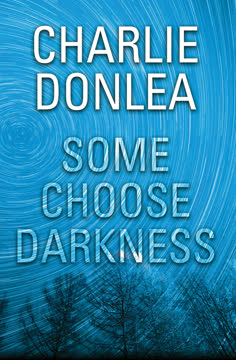
The title, "Some Choose Darkness," encapsulates the central theme of agency in the face of evil. Each character is confronted with choices—whether to act or remain silent, to protect or betray, to seek justice or vengeance. The narrative interrogates the nature of evil, suggesting that darkness is both chosen and imposed. The characters' decisions, especially in moments of crisis, define their identities and legacies. The story affirms the possibility of resistance, even when the odds seem insurmountable.
Analysis
Some Choose Darkness is a masterful exploration of the interplay between trauma, agency, and the search for truth. Through its dual timelines and psychologically rich characters, the novel interrogates the ways in which evil can infiltrate the most intimate spaces—marriage, family, friendship—and how survival often depends on the courage to see what others refuse to acknowledge. The symbolism of broken and restored dolls underscores the central message: that healing is possible, but only through the painstaking work of remembrance and repair. The story's structure, with its interlocking mysteries and gradual revelations, mirrors the process of forensic reconstruction, inviting readers to become detectives in their own right. Ultimately, the novel is a meditation on the power of choice—how some are drawn to darkness, while others, through acts of love and defiance, choose to bring light. The lessons are clear: justice requires vigilance, compassion, and the willingness to confront uncomfortable truths. In a world where the past is never truly buried, the act of remembering becomes both a form of resistance and a path to redemption.
Last updated:
Review Summary
Some Choose Darkness receives overwhelmingly positive reviews, averaging 4.23/5 stars. Readers praise Charlie Donlea's intricate storytelling featuring two brilliant autistic women—Rory Moore, a forensic reconstructionist, and Angela Mitchell from 1979—investigating a serial killer called "The Thief." Reviewers highlight the exceptional character development, dual timelines, dark atmosphere, and authentic autism representation. Many appreciate the well-plotted suspense and unexpected twists, though some figured out revelations early. The novel's strength lies in its compelling female protagonists who use their unique perspectives to solve crimes others miss. Most readers highly recommend this gripping, fast-paced thriller.