

Plot Summary
Prologue
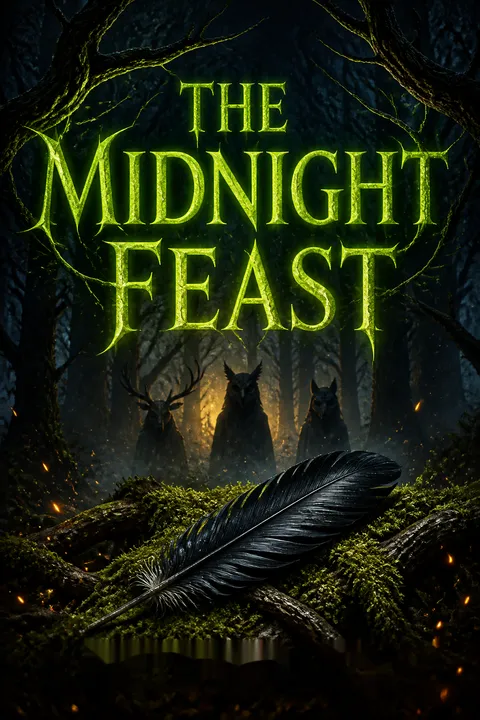
After dark, figures in bird masks gather in an ancient woodland clearing. Nearby, Arthur Meadows sits dead in his study, a black feather on the desk. His death is presented without explanation, while the masked gathering suggests that the old local legends are not merely stories.
The two images establish the novel’s central unease: a wealthy family’s carefully managed estate stands beside a community with its own hidden authority, and something has disturbed the balance between them.
The opening puts death and ritual beside one another but refuses to explain their relationship. That uncertainty makes the woodland feel like an active presence rather than a backdrop, while the feather acts as a small, material clue that resists the polished world of the hotel. By placing Arthur’s body beside the gathering, the novel also complicates the idea of authority: the dead man once held power through status and influence, but the masked figures answer to a different, older order. The scene invites suspicion without yet identifying who is responsible or what justice might mean here.
A Feast Meets Protest
On The Manor’s opening night, Bella Springfield arrives alone, using a carefully invented identity and a rented wardrobe to pass as the kind of guest the hotel welcomes. Owner Francesca Meadows presides over a lantern-lit woodland reception until local protesters force their way through, insisting that the ancient woods and paths belong to the community.
Francesca quietly has staff let them pass, but the guests’ ease is broken. Bella watches Francesca with a fixation that goes beyond ordinary resentment. The next morning, fishermen see the hotel burning and a mutilated body below the cliffs. The opening weekend has already become a crime scene, though the cause of the fire and the identity of the dead person remain unknown.
The hotel sells escape as a luxury product, but its opening ceremony depends on excluding the people whose lives are bound to the land. Bella’s false identity places her inside that contradiction: she can enter only by performing the kind of guest Francesca wants. The protest makes the dispute tangible, while the later fire and body convert a polished launch into public evidence of deeper damage. The gap between reception and catastrophe is the novel’s structural engine. It asks whether a place can be remade through design and branding when the history underneath it has not been settled.
Martinis and Clippings
Eddie Walker, a nineteen-year-old dishwasher hoping to become a bartender, serves Bella two martinis in her woodland cabin. Their tentative intimacy falters when he finds a stack of articles about Francesca, including one defaced with a vicious insult, before Bella returns from the bathroom and he slips away.
Bella has come under false pretences because an unexplained article about Francesca jolted her into returning to Dorset, where her infant daughter Grace is staying with Bella’s mother.
Meanwhile, manager Michelle sends Eddie to confront young people on the beach. Nathan Tate knocks him down, and Eddie faces his ex-girlfriend Delilah among the group. Delilah wears a black feather necklace connected to a disturbing discovery she and Eddie once made in the woods.
The first encounter is shaped by unequal power in two directions. Bella is a guest with money and authority over Eddie’s working life, yet she is emotionally unsettled; Eddie wants to be helpful and promoted, so his difficulty refusing her matters. Their flirtation is therefore less a romantic beginning than a collision between need, performance, and status. Bella’s clippings make her private purpose visible without explaining it, and the feather transfers the story’s unease into Eddie’s local past. His wish to escape Dorset through work at the Manor already ties his personal ambition to the conflict he hopes to leave behind.
The Summer of Sparrow
Fifteen years earlier, sixteen-year-old Alison, holidaying at a caravan park, finds a fossil on the beach and meets Francesca, then called Frankie. Frankie invites her to Tome Manor, gives her the nickname Sparrow, and draws her into a summer of swimming pools, woods, and midnight adventures.
Alison is dazzled by the house and by Frankie’s confidence, but learns that Frankie’s twin brothers, Hugo and Oscar, treat people as disposable amusements.
Hugo corners Alison in the pool house and sexually assaults her; she keeps the incident from Frankie, afraid of losing her friendship or being blamed. Meanwhile, Frankie befriends Cora, an older local woman who works at the pub and needs a job. Alison begins to notice that Frankie’s generosity can turn possessive.
Alison’s attraction to Frankie is not simply admiration for wealth. Frankie offers a temporary escape from the smallness Alison fears in her own life, while the Manor seems to confirm that another identity is possible. The nickname Sparrow turns that transformation into a gift with a cost: Frankie gets to define who Alison is. Hugo’s assault exposes the danger hidden beneath the family’s cultivated ease, and Alison’s silence shows how dependence can disguise coercion as friendship. Cora’s presence quietly unsettles the rich girl’s fantasy of freedom, because she has adult responsibilities and economic vulnerability that Frankie can treat as background.
The Brownie Cover-Up
Frankie stages eerie Bird sightings to frighten the twins, using stolen clothes, blood, and a makeshift effigy. When Alison finds wild mushrooms in the woods, Jake Walker, a local boy she likes, warns that they are dangerous, but Frankie later mixes them into brownies and serves them at a party. Cora eats one, becomes violently ill, and dies in the woods.
Jake tries to help, but Frankie’s grandfather, Arthur Meadows, arrives before the authorities and takes control. He threatens Alison and Jake’s families, then gives the teenagers money to keep quiet and implicates them in the death. Cora’s son, known locally as Shrimp, is left behind. Jake disappears soon afterward, while Alison carries the guilt and the memory of a burial place.
Frankie’s prank makes the Birds seem like a game she can invent and dismiss; Cora’s death reveals the lethal difference between staged fear and actual harm. Arthur then uses class power to turn a child’s death into a managed inconvenience, converting money and threats into instruments of silence. Alison and Jake are not equally responsible, but both are made to feel complicit, a psychological trap that follows them into adulthood. Shrimp’s abandonment gives the buried crime another consequence: the cover-up does not only erase Cora, it distorts her son’s understanding of why she vanished.
The Journal Returns
In 2025, Bella retrieves the old Summer Journal from a hidden tunnel in a cove she remembers from childhood. Its final map marks a place in the woods, while its pages preserve the summer she has tried to bury. At the cove she encounters Owen Dacre, Francesca’s architect husband, surfing alone.
Bella later sees that the hotel’s construction plans threaten the woods, and a note addressed to Frankie summons Francesca to the Tree with a Hundred Eyes. Owen finds the message and grows suspicious of his wife’s hidden history. Bella’s presence also unsettles Francesca, who secretly watches the guest cabins through hidden cameras and recognizes her former friend despite the disguise.
The journal changes memory from an internal burden into evidence that can be handled, hidden, and eventually read by another person. Bella’s return is therefore not just a confrontation with Frankie but an effort to make private knowledge legible. The cove links the archive to the body of the landscape, while the map makes the woods a potential crime scene. Francesca’s surveillance and Owen’s secret tracking of her show that the Manor’s promise of safety is built on watching and controlling others. Everyone claims to be protecting something, but their methods repeatedly violate the very trust they profess to value.
The Architect Was Shrimp
Owen’s careful identity begins to crack when manager Michelle recognizes him as Shrimp, the poor local boy who once brought fish to the pub with his father. Years earlier, Owen left Dorset after his mother disappeared, believing she had abandoned him. He has become a celebrated architect and Francesca’s husband, but his return to Tome is not as clean a break as he pretends.
A dead white cockerel is nailed to the couple’s door, and Owen finds a woodland summons addressed to Frankie. Michelle warns him that Francesca is not what he believes. When Owen cuts down trees marked by local warnings, the tree surgeon refuses to touch the elders. The woods are resisting the hotel’s expansion in both practical and symbolic ways.
Owen’s polished professional identity is a refuge from childhood shame, but Michelle’s recognition makes that refuge contingent on other people continuing to see only what he presents. His contempt for local workers repeats the hierarchy that once wounded him, revealing how easily escape can become imitation of the powerful. Francesca’s vision of the Manor depends on transforming the woods into an amenity, while the tree surgeon’s refusal marks a limit that cannot be negotiated through money alone. The dead cockerel and the note are not yet proof of a supernatural force, but they make the past impossible for Owen to keep outside his marriage.
Blood Beneath the Trees
As the solstice approaches, Eddie’s father, Harold, seems evasive after the farm’s ailing bull Ivor goes missing. Francesca dismisses the disappearance as a local inconvenience, while Eddie is ordered to clean blood from the woods so guests will not see it. He and another worker find Ivor’s harness, a huge bloodstain, and the remains of a fire.
Later, Eddie and Bella hide as masked figures gather in the clearing, light torches, and raise Ivor’s severed head. They escape without being caught. The next morning, Eddie finds an antique bird mask and feathered cloak hidden at home and assumes his father belongs to the masked group. He steals the costume, hoping to prevent his father from returning to the woods.
Eddie’s loyalties are divided among a struggling family, an exploitative employer, and a local past he barely understands. Francesca’s payment for cleaning the blood tries to convert complicity into a routine work task. The ritual makes the conflict feel larger than a dispute over property, but Eddie’s discovery of the costume offers a human explanation for at least part of the mystery. His decision to hide it is protective and impulsive at once: he wants to stop violence without yet knowing who has committed it. The false conclusion about his father shows how secrecy makes even love vulnerable to mistaken suspicion.
Cora Comes to Light
On the morning of the feast, Bella uses the journal’s map to redirect an excavator to the spot where she believes Cora was buried. Owen discovers a body wrapped in blue tarpaulin beneath the soil and recognizes his mother by her broken tooth and familiar jewellery. He realizes she did not abandon him.
Bella finds Cora’s silver ring in the pit and carries it into the evening celebration, where she tells Eddie what happened in 2010. Eddie learns that Jake was present when Cora died and that Arthur’s cover-up helped fracture his family. The revelation gives Owen a truth he has sought without knowing it, and gives Eddie a reason to hear Bella out rather than dismiss her as a troubled guest.
The excavation is a literal disturbance of a landscape that the hotel has tried to make picturesque. Owen’s recognition turns an abstract local crime into a personal history, while Bella’s ring gives the past a surviving witness that cannot be buried with the body. Eddie’s family story also shifts: his older brother’s disappearance is no longer simply a private shame or unexplained failure. The scene links class violence to domestic injury, showing how one powerful family’s effort to contain scandal can reorganize several other families’ lives. The truth arrives late, but it still changes what the living can understand about one another.
The Feast Goes Feral
Francesca’s solstice celebration begins with willow crowns, expensive cider, and a staged woodland atmosphere. Delilah unexpectedly takes the stage with Nathan Tate’s band and reveals a striking singing voice, but Nathan and his friend have also spiked the cider.
As guests become disoriented, a crowd gathers around a towering Bird figure burning on the beach. Bella confronts Francesca in the library and demands that she acknowledge Cora’s death and the cover-up.
Francesca denies responsibility, strikes Bella with a heavy object, locks her inside, and leaves with Bella’s bag. Outside, Nathan prepares petrol, angry at the Manor and its damage to his father’s livelihood. The celebration has become a collision of revenge, intoxication, and old secrets.
Francesca’s event is designed to turn privilege into a shareable experience, but the night’s disorder exposes how little control she actually has over the people and histories she has packaged. Nathan’s drugging of the cider makes the guests’ apparent freedom another form of manipulation, while the Bird sculpture turns folklore into public spectacle. Bella’s demand is narrower and more morally serious: she wants Francesca to name the harm rather than aestheticize it. Francesca answers with violence, confirming that her polished language of healing cannot survive direct accountability. Nathan’s grievance is real, but his plan risks reproducing the same indiscriminate harm he resents.
Fire, Flight, and the Fall
Bella breaks out through a window and sees Francesca driving away in Owen’s Aston Martin. Eddie races after her in the stolen Bird costume, using the mask and cloak to frighten her into swerving. She crashes, runs toward the cliff edge, and falls while fleeing him. Francesca had set fire to the Manor herself, using the chaos to frame local attackers and escape; Nathan’s petrol and anger had given her an apparent cover.
Eddie returns to help evacuate guests, but Hugo and Oscar die after being trapped in the wine cellar. Owen, devastated by the discovery of his mother’s remains and Francesca’s revelation that she knew about them, cannot stop his wife. The hotel burns, and Francesca’s body is found below the cliffs.
Eddie’s transformation into a Bird is both a practical ruse and a surrender to the anger he has tried to keep harmless. He intends to stop Francesca, but the pursuit becomes fatal, leaving him with responsibility that cannot be softened by the town’s praise for his rescue work. Francesca’s decision to burn her own hotel is the clearest expression of her governing instinct: when the story turns against her, destroy the setting and write a new version. The deaths in the cellar make the spectacle’s cost brutally concrete. The fire does not cleanse the past; it creates new victims and evidence.
Jake Comes Home
At the fire scene, Detective Inspector Walker introduces himself to Eddie as Jake, his long-absent older brother. Jake reveals that he survived the night he disappeared and later became a detective specializing in cold cases. He brought Bella and Owen back to Tome because Francesca’s redevelopment plans threatened the farm and because he wanted Cora’s disappearance investigated.
He had sent Bella the article that drew her to the Manor. Bella and Jake meet again, no longer teenagers bound to silence, while Eddie begins to understand why his brother left. Francesca is gone, Cora’s remains have been found, and the family can begin speaking about the loss that had shaped their lives without explanation.
Jake’s return is not a conventional rescue: he cannot undo the years of separation or erase what Eddie has done. His work on cold cases gives his return an ethical logic, a long attempt to restore attention to people whose stories powerful families have suppressed. Yet his strategy of bringing key witnesses back into danger also carries a cost, because he cannot control what they will do once the past is reopened. The reunion gives Eddie a more truthful account of his family, not an instant reconciliation. The novel treats recovery as the beginning of difficult conversation rather than a clean reward for solving the mystery.
Epilogue
Two months later, Owen keeps the Manor land and plans a public gallery, community centre, pool, and allotments, reopening the woods to locals. Eddie’s family cautiously reunites after Jake’s return, though Eddie hides the guilt of having caused Francesca’s fatal fall. Then his mother reveals that she, not Harold, is one of the Night Birds.
She killed the suffering bull, helped confront Arthur, and says the group acts to protect the community. Eddie understands the appeal of becoming something stronger than himself, but cannot escape what he did in the mask. Bella, meanwhile, accepts that she may never be free of the past, yet believes she can now face her daughter without hiding the truth from herself.
The final revelations refuse to restore a simple moral order. Eddie’s mother is both a tender parent and a participant in a secret justice system; Eddie is both rescuer and killer. The Birds offer the community power where formal institutions have failed, but their violence remains morally unsettled rather than automatically righteous. Owen’s redesign of the estate makes restitution material: public access replaces exclusion, and local art replaces the luxury brand. Bella’s closure is quieter. She cannot recover the years or force a confession, but she can stop treating inherited guilt as proof of her own culpability. Healing begins not with purity, but with an honest account of what happened.
Analysis
The novel makes land the medium through which power is remembered. The Manor’s lawns, woods, beach, and buried remains are never neutral scenery: each has been claimed, renamed, fenced, or repurposed by people with different degrees of power. Francesca’s resort offers a modern fantasy of healing, but it depends on excluding locals and converting their landscape into an experience for wealthy visitors. Her language of wellness functions as a tool of self-exemption. She can describe control as care and harm as an unfortunate complication, provided she remains the author of the story.
Bella’s return challenges that authority through testimony rather than status. Her journal is not a perfect instrument of justice, but it preserves what the powerful tried to erase and gives her a way to distinguish shame from responsibility. The contrast between Bella’s private guilt and Francesca’s public self-curation is especially sharp: one has carried too much blame, the other refuses to carry enough. Owen’s discovery of his mother’s body shows the intimate cost of concealment, while Eddie’s final action complicates the idea that truth automatically produces justice. He stops Francesca, but his violence leaves him with a moral burden rather than uncomplicated heroism.
The Night Birds embody both the appeal and the danger of local justice. Their existence answers a history in which wealth can obstruct formal accountability, yet their secrecy and violence make them impossible to idealize. The ending therefore resists a neat opposition between corrupt elites and righteous locals. Nearly everyone acts from grievance, love, fear, or a wish to repair damage, and nearly everyone risks turning those motives into permission. Owen’s public transformation of the estate offers the clearest alternative: not erasure or revenge, but a material redistribution of access. The woods open again, though the people who survived must still learn how to live with what they did.
Review Summary
The Midnight Feast received mixed reviews, with an average rating of 3.59 out of 5. Praised for its atmospheric setting, multiple perspectives, and unexpected twists, some readers found it gripping and suspenseful. However, others felt it had too many characters, confusing timelines, and a slow pace. The book's folklore elements and gothic atmosphere were appreciated, but some found the plot predictable. While some hailed it as Foley's best work yet, others felt it fell short of her previous novels.
People Also Read








Characters
Bella Springfield
The returning witnessBella is a South London estate-agent receptionist and a new mother who arrives at The Manor under an invented identity. She is observant, self-conscious, and capable of intense resolve, but years of guilt have taught her to doubt her own right to act. Her history with Francesca combines admiration, dependence, fear, and resentment, making the return emotionally more complicated than a search for evidence. Bella is also trying to understand what kind of person she can be for her daughter. She studies details others overlook, yet her deepest struggle is not simply discovering the truth; it is separating responsibility from the shame that has shaped her life.
Eddie Walker
The gentle localEddie is nineteen, broad-shouldered, allergic to cows, and working his way up from the Manor’s dish pit because he wants a different life from the farm. His good manners are genuine, but they also make it difficult for him to resist people with authority. He loves his parents and carries the ache of an older brother who vanished from family life. Eddie is drawn to belonging and recognition, especially when others treat him as more than a local boy. His instinct is to avoid violence, yet the story tests whether gentleness can survive anger, inherited secrets, and a community’s demand for justice.
Francesca Meadows
The wellness queenFrancesca is the charismatic owner of The Manor, a wellness entrepreneur who turns an inherited estate into an exclusive retreat. She is adept at presenting ambition as care and control as harmony, and she expects staff and guests to help sustain that image. Her attention to aesthetics is matched by keen social calculation: she understands publicity, local politics, and the desires of wealthy visitors. Francesca’s self-belief protects her from shame, but it also limits her capacity to recognize other people as fully real when they threaten her plans. Her public serenity and private intensity make her both compelling and difficult to trust.
Owen Dacre
The architect in disguiseOwen is a celebrated architect whose designs shape The Manor’s modern identity. He is reserved, physically restless, and far more insecure than his expensive clothes and professional success suggest. He wants to believe that beauty and achievement can repair the damage of an unhappy childhood, and his devotion to Francesca is tangled with that longing. Owen tends to curate himself, revealing only the parts of his history that fit the person he has become. His relationship to the estate is therefore double: he has helped remake it, yet the place also holds a past he has tried not to revisit.
Jake
The absent big brotherJake is Eddie’s older brother, remembered through family photographs and fragments of childhood. As a teenager, he is practical, protective, and more attentive to danger than the other young people around the Manor. Bella remembers his warmth and his ability to make her feel seen without turning her into a project. His relationship with Eddie is defined by a long absence that has left the younger boy with unanswered questions. Jake represents both the possibility of escape from a damaged family and the cost of leaving without explanation.
Michelle
The watchful managerMichelle manages The Manor’s staff with sharp efficiency and an appetite for Francesca’s approval. She knows how to perform service, but she is not as deferential as Francesca assumes. Her local roots give her a perspective the hotel’s curated atmosphere tries to suppress, and she notices what others would prefer to keep hidden. Michelle is ambitious, observant, and careful about when she reveals what she knows.
Delilah Rayne
The restless exDelilah is Eddie’s former girlfriend, a young woman trying to escape the limits of Tome through social media, beauty work, and music. She is bold, self-inventing, and keenly aware of how others look at her, though bravado can conceal her uncertainty. Her history with Eddie gives him a personal connection to the local crowd, while her involvement with Nathan places her close to the night’s escalating risks. Delilah wants recognition on her own terms and resists being reduced to someone else’s girlfriend.
Nathan Tate
The volatile localNathan is a local troublemaker and former acquaintance of Eddie’s older brother. He uses swagger, jokes, and a cultivated reputation for danger to command attention, but his anger is rooted in the decline of his family’s holiday park and his father’s collapse. He resents the Manor’s arrival as both a personal insult and a symbol of locals being pushed aside. Nathan’s grievances are understandable, but his impulsiveness makes him dangerous to people who share them.
Cora Deeker
The overlooked motherCora is an older local woman who works at the pub and lives with economic uncertainty. Her eyeliner, tattoos, and broken tooth make her seem worldly to the teenagers who meet her, but she is also a mother carrying responsibilities they do not know about. She enjoys the temporary freedom of being treated as a friend rather than as someone’s caretaker. Cora’s connection to both the Manor’s young visitors and the local community makes her vulnerable to people who see her needs as leverage.
Arthur Meadows
The powerful grandfatherArthur is Francesca’s grandfather, a former political power broker who represents the old family’s influence over the estate and the surrounding community. He is controlled, pragmatic, and skilled at making coercion sound like reasonable compromise. His status allows him to treat other people’s fear and economic vulnerability as tools. Even in old age, Arthur’s authority shapes how the younger generation understands what can be hidden.
Harold Walker
The strained farmerHarold is Eddie’s father, a struggling farmer whose land and livelihood are threatened by the Manor’s expansion. Grief has narrowed his emotional life, and drink sometimes deepens the distance between him and his family. He takes pride in the farm but struggles to express affection directly, leaving Eddie to interpret silence as disappointment. Harold’s vulnerability makes him both a target of local resentment and a source of painful misunderstanding at home.
Eddie’s mother
The caring matriarchEddie’s mother keeps the family’s daily life moving through practical care, humour, and close attention to her sons. She has endured injury, financial strain, and the long shadow of family grief, yet still tries to make home feel safe. Her kindness is not passivity: beneath her mild manner is a capacity for anger and independent action. She wants to protect her family, though the secrets she keeps complicate that protection.
Ruby
The candid receptionistRuby is a Manor receptionist with London experience, sharp humour, and plans to pursue an English postgraduate degree. She sees through the hotel’s wellness language and the entitlement of its guests, but remains attentive to co-workers who have less power. Her friendship gives Eddie a place to be honest and unpolished. Ruby’s practical instincts help make visible how the Manor’s polished surface depends on staff work.
Hugo Meadows
The entitled twinHugo is one of Francesca’s twin brothers. He is socially confident, casually cruel, and accustomed to treating other people’s discomfort as entertainment. His privilege gives him room to behave without considering consequences.
Oscar Meadows
The quieter twinOscar is Francesca’s other twin brother. He follows Hugo’s lead and shares the family’s sense of entitlement, though he is less forceful in expressing it. His presence reinforces the insulated world the siblings grew up in.
Detective Sergeant Heyer
The junior investigatorHeyer works alongside DI Walker on the investigation. Energetic and ambitious, she is willing to question a witness’s seemingly implausible account and press for useful evidence. Her directness also exposes her own assumptions, which Walker sometimes challenges.
Julie
The local healerJulie is an older local practitioner whom Francesca employs at the Manor’s wellness centre. She is direct, grounded, and connected to forms of knowledge Francesca treats as useful when convenient. Her presence links the hotel’s commercial spirituality to older local practices.
Graham Tate
The ruined park ownerGraham is Nathan’s father and the former owner of the holiday park beside the Manor. Now isolated and heavily dependent on drink, he embodies the damage left by economic decline and the family’s lost livelihood. His claims about the Birds are easy for outsiders to dismiss.
Plot Devices
The Summer Journal
Memory made into evidenceBella’s teenage journal records the summer she spent at Tome Manor, including her growing friendship with Frankie, the frightening woodland pranks, and her later guilt. A hand-drawn map at the back marks the location where she believes Cora was buried. The journal lets the novel reveal its history in fragments while giving Bella a physical record she can return to and eventually share. It also makes memory active: once the map reaches the present, Bella can direct an excavation and force the hidden past into view.
The Night Birds
Folklore with real forceLocal legend describes masked figures who answer grievances in the woods. The Birds’ costumes, carved signs, feathers, and woodland meeting place allow human actions to take on a supernatural appearance. Francesca once exploits that belief to frighten her brothers, but later events suggest that the tradition exists beyond her games. The group gives the community an alternative form of authority when formal justice appears inaccessible, while leaving open the troubling question of whether communal protection can be separated from vengeance.
The Hidden Grave
A buried crime resurfacesCora’s remains are wrapped in tarpaulin and hidden beneath the Manor grounds after her death at a teenage party. Bella’s map leads to the burial site, while Owen’s recognition of his mother gives the discovery its personal force. The body turns a long-standing suspicion into material evidence and connects the hotel’s present-day development to the crime it was built over. The grave also makes the Manor’s landscaping a form of concealment: the elegant grounds depend on keeping an actual person out of sight.
The Manor’s Surveillance
Control disguised as careFrancesca has hidden cameras in guest rooms and public spaces, claiming they protect the hotel and its visitors. Owen secretly tracks Francesca through an app on her phone, seeking reassurance about their relationship. These parallel intrusions expose the difference between the Manor’s language of trust and the private habits of its owners. Surveillance also gives Francesca information about Bella’s movements and lets Owen monitor the person he idealizes, turning intimacy into observation rather than mutual knowledge.
The Spiked Feast
Celebration becomes a weaponNathan and his associate tamper with the cider served at Francesca’s solstice event. The guests’ increasingly erratic behaviour intensifies the danger and makes it harder to distinguish staged spectacle from deliberate sabotage. Francesca’s feast already uses costumes, ritual imagery, and local folklore as entertainment; the drugged drinks push that curated atmosphere into real physical disorder. The device also gives Francesca an opportunity to blame local attackers for the night’s chaos, even as she makes her own destructive choices.
FAQ
Synopsis & Basic Details
What is The Midnight Feast about?
- Luxury hotel opening weekend: The Midnight Feast centers around the grand opening of The Manor, a luxury hotel on the Dorset coast, coinciding with the summer solstice.
- Secrets and hidden agendas: The narrative unfolds through multiple perspectives, revealing a web of secrets, hidden agendas, and long-buried tensions among the guests, staff, and locals.
- Past and present collide: As the weekend progresses, a series of mysterious events, including a fire and a death, expose the dark history of the estate and its connection to local legends, blurring the lines between the past and present.
- Investigation and unraveling: A detective investigates the unfolding events, uncovering a complex network of relationships and motives, ultimately leading to a confrontation with the truth and a reckoning for those involved.
Why should I read The Midnight Feast?
- Atmospheric suspense and mystery: Lucy Foley crafts a suspenseful and atmospheric mystery, drawing readers into the opulent yet unsettling world of The Manor and its inhabitants.
- Complex characters and relationships: The novel features a diverse cast of characters with hidden depths and intertwined relationships, creating a compelling exploration of human nature and the impact of the past.
- Exploration of themes: The Midnight Feast delves into themes of tradition versus progress, social class, guilt, and the power of the past, offering a thought-provoking reading experience.
- Twists and turns: The narrative is filled with unexpected twists and turns, keeping readers guessing until the very end as the truth behind the events at The Manor is gradually revealed.
What is the background of The Midnight Feast?
- Dorset Coast setting: The story is set on the Dorset coast, a region known for its dramatic cliffs, ancient woodlands, and rich history, providing a backdrop of natural beauty and local folklore.
- Class divisions and tensions: The novel explores the social and economic divisions between the wealthy hotel guests and the local community, highlighting the tensions that arise from the intrusion of luxury into a traditional rural setting.
- Pagan traditions and folklore: The story incorporates elements of pagan traditions and local legends, particularly those surrounding the summer solstice and the mysterious "Birds," adding a layer of supernatural intrigue to the mystery.
- Post-pandemic societal anxieties: The novel subtly reflects contemporary anxieties about climate change, social inequality, and the search for meaning and connection in a rapidly changing world.
What are the most memorable quotes in The Midnight Feast?
- "Keeping people away from the land – from their land – like this, it's evil. It's a kind of murder.": Highlights the theme of dispossession and the conflict between the locals and the wealthy owners of The Manor, emphasizing the deep connection between people and their ancestral lands.
- "I wanted to create a place for our guests to escape their super stressful lives in the city, somewhere they can find peace. I know some might say that the average person can't afford it, but I wanted this place to be perfect and perfection is expensive.": Reveals Francesca's elitist worldview and her justification for creating an exclusive and unaffordable retreat, highlighting the theme of social inequality.
- "There are times when it's better to keep a secret from our loved ones than to hurt them with the truth. Right?": Explores the complexities of relationships and the burden of secrets, suggesting that sometimes withholding information can be a form of protection, even if it comes at a cost.
What writing style, narrative choices, and literary techniques does Lucy Foley use?
- Multiple perspectives and timelines: Foley employs a multi-perspective narrative, shifting between different characters' viewpoints and timelines to create suspense and reveal information gradually.
- Atmospheric descriptions and setting: The author uses vivid and evocative descriptions of the Dorset coast and The Manor to create a strong sense of atmosphere, enhancing the mystery and suspense.
- Foreshadowing and red herrings: Foley skillfully uses foreshadowing and red herrings to mislead the reader and create a sense of unease, keeping them guessing until the final reveal.
- Psychological suspense and character development: The novel focuses on the psychological complexities of the characters, exploring their motivations, secrets, and inner conflicts, adding depth and intrigue to the narrative.
Hidden Details & Subtle Connections
What are some minor details that add significant meaning?
- The black feather motif: The black feather, initially a seemingly random detail in the opening scene, becomes a recurring symbol linked to death, the "Birds," and the dark secrets of The Manor, foreshadowing the tragic events to come.
- The names of the Woodland Hutches: The seemingly innocuous names of the Woodland Hutches, like "The Burrow" or "The Nest," subtly reinforce the connection to the natural world and the underlying pagan themes, adding to the atmospheric tension.
- Francesca's black opal ring: Francesca's black opal ring, described as signifying purification and protection against negative energy, ironically contrasts with her own actions and the negative energy she generates, highlighting her hypocrisy.
- The brand names and labels: The constant name-dropping of designer brands and labels subtly underscores the characters' social status and the superficiality of their lives, emphasizing the theme of class divisions.
What are some subtle foreshadowing and callbacks?
- Graham Tate's stories: Graham Tate's local legends about the "Birds" and past tragedies at Tome Manor initially seem like folklore, but they foreshadow the resurgence of these ancient forces and the impending doom.
- The recurring image of the tree with a hundred eyes: The tree with a hundred eyes, a landmark in the woods, serves as a recurring motif, symbolizing the all-seeing presence of the past and the characters' inability to escape their history.
- The mention of Midsommar: Ruby's comment about the Midsommar aesthetic foreshadows the dark and unsettling events that unfold during the solstice celebration, hinting at the sinister undercurrents beneath the surface of the festivities.
- The significance of the weather: The oppressive heatwave foreshadows the rising tensions and the impending explosion of violence, mirroring the characters' inner turmoil and the destructive forces at play.
What are some unexpected character connections?
- Eddie and Jake's relationship: The revelation that Eddie is Jake's younger brother adds a layer of emotional depth to the story, connecting Eddie to the past and giving him a personal stake in uncovering the truth about what happened to his brother.
- Michelle's true identity: The discovery that Michelle, Francesca's seemingly subservient assistant, is actually Shelly from the fish and chip shop reveals a hidden connection to the local community and a long-held resentment towards Francesca and her family.
- Owen's connection to Cora: The revelation that Owen is Cora's son adds a tragic dimension to his character, explaining his inner turmoil and his complex relationship with Francesca, who is indirectly responsible for his mother's death.
- Bella and Jake's past: The connection between Bella and Jake, revealed through the summer journal, establishes a shared history and a bond that transcends time, driving Bella's determination to seek justice for him.
Who are the most significant supporting characters?
- Michelle: Driven by resentment and revenge, Michelle's seemingly subservient role masks a deep-seated resentment towards Francesca and the wealthy elite, making her a key player in the unfolding events.
- Graham Tate: Keeper of local lore, Graham Tate's knowledge of local legends and his connection to the land make him a significant figure, providing insights into the history of Tome and the forces at play.
- Ruby: Observant and insightful, Ruby's sharp wit and keen observations provide a counterpoint to the opulence and superficiality of The Manor, offering a grounded perspective on the events unfolding around her.
- The Meadows twins: Symbols of privilege and entitlement, Hugo and Oscar's presence adds to the atmosphere of unease and foreshadows the darker aspects of the family's history, highlighting the themes of class and power.
Psychological, Emotional, & Relational Analysis
What are some unspoken motivations of the characters?
- Francesca's need for control: Driven by insecurity and a desire for validation, Francesca's need to control every aspect of The Manor and the lives of those around her stems from a deep-seated insecurity and a fear of losing her carefully constructed image.
- Owen's desire for acceptance: Seeking validation and belonging, Owen's attraction to Francesca and his dedication to The Manor project are driven by a desire for acceptance and a need to escape his troubled past, making him vulnerable to manipulation.
- Bella's quest for redemption: Haunted by guilt and regret, Bella's return to Tome is motivated by a desire for redemption and a need to confront the past, seeking to atone for her perceived role in the tragic events of that summer.
- Michelle's thirst for revenge: Fueled by resentment and a sense of injustice, Michelle's actions are driven by a desire for revenge against Francesca and the wealthy elite who have exploited and marginalized her community, seeking to reclaim power and restore balance.
What psychological complexities do the characters exhibit?
- Francesca's narcissistic tendencies: Masking insecurity with grandiosity, Francesca exhibits narcissistic tendencies, characterized by a need for admiration, a lack of empathy, and a belief in her own superiority, driving her manipulative behavior and her disregard for others' feelings.
- Owen's self-destructive patterns: Driven by a troubled past, Owen's self-destructive patterns, including his substance abuse and his tendency to fall into codependent relationships, stem from a deep-seated sense of unworthiness and a need for external validation.
- Bella's survivor's guilt: Haunted by past trauma, Bella struggles with survivor's guilt, blaming herself for the events of that summer and carrying the burden of responsibility for the death of Jake, leading to a chronic condition of "soul-sickness."
- Eddie's passivity and people-pleasing: Struggling with self-assertion, Eddie's passivity and his tendency to prioritize others' needs over his own stem from a lack of self-confidence and a desire to avoid conflict, making him vulnerable to manipulation and exploitation.
What are the major emotional turning points?
- Bella's discovery of the hidden journal: Confronting the buried past, Bella's discovery of the hidden journal triggers a flood of repressed memories and emotions, forcing her to confront the truth about what happened that summer and her role in the events.
- Owen's discovery of his mother's fate: Shattering his carefully constructed world, Owen's discovery of his mother's fate shatters his carefully constructed world and forces him to confront the lies and secrets that have defined his life, leading to a crisis of identity and a desperate search for truth.
- Eddie's realization of his brother's fate: Unveiling a painful truth, Eddie's realization of the truth about his brother's death and the circumstances surrounding it triggers a wave of grief, anger, and a desire for justice, transforming him from a passive observer into an active participant in the unfolding drama.
- Francesca's loss of control: Facing the unraveling of her carefully constructed world, Francesca's loss of control over the events at The Manor and the exposure of her past triggers a descent into paranoia and desperation, leading to a violent confrontation and a tragic end.
How do relationship dynamics evolve?
- Bella and Francesca's power dynamic: From friendship to animosity, The relationship between Bella and Francesca evolves from a seemingly innocent friendship to a complex power struggle, driven by jealousy, resentment, and the weight of the past, culminating in a violent confrontation.
- Owen and Francesca's marriage: From idealized love to betrayal, The marriage between Owen and Francesca crumbles under the weight of secrets and lies, as Owen discovers the truth about his wife's past and her manipulative nature, leading to a tragic and destructive climax.
- Eddie and Bella's connection: From strangers to allies, The connection between Eddie and Bella deepens as they share their stories and work together to uncover the truth, forming a bond based on shared trauma and a desire for justice.
- Eddie and Jake's fractured family: From estrangement to reconciliation, The relationship between Eddie and Jake, fractured by years of silence and misunderstanding, begins to heal as they confront the past and find a way to reconnect, offering a glimmer of hope amidst the darkness.
Interpretation & Debate
Which parts of the story remain ambiguous or open-ended?
- The extent of the Birds' influence: Supernatural or human agency?, The true nature of the "Birds" and their influence on the events at The Manor remains ambiguous, leaving it open to interpretation whether they represent a supernatural force or simply a manifestation of human actions and beliefs.
- The motivations of the local community: Justice or revenge?, The motivations of the local community and their involvement in the events at The Manor are left somewhat open-ended, raising questions about the line between justice and revenge and the ethics of taking matters into one's own hands.
- The possibility of redemption: Can the characters truly escape their past?, The possibility of redemption for the characters, particularly Owen and Eddie, remains ambiguous, leaving it up to the reader to decide whether they can truly escape the shadows of their past and find a path towards healing and forgiveness.
What are some debatable, controversial scenes or moments in The Midnight Feast?
- Francesca's actions towards the locals: Entitlement vs. community rights, Francesca's dismissive attitude towards the local community and her attempts to control their access to the land are likely to spark debate, raising questions about entitlement, privilege, and the rights of marginalized groups.
- The portrayal of the wealthy guests: Stereotypes vs. reality, The portrayal of the wealthy guests at The Manor as superficial and out-of-touch may be seen as stereotypical, prompting discussion about class representation and the complexities of human nature.
- The use of violence and revenge: Justifiable or excessive?, The use of violence and revenge as a means of achieving justice is likely to be a controversial topic, raising ethical questions about the morality of taking the law into one's own hands and the consequences of such actions.
The Midnight Feast Ending Explained: How It Ends & What It Means
- Francesca's tragic demise: Driven by paranoia and fear, Francesca's tragic demise, resulting from her own actions and the forces she unleashed, serves as a cautionary tale about the dangers of unchecked ambition, the burden of secrets, and the destructive power of the past.
- Owen's path to redemption: Seeking atonement and healing, Owen's decision to transform The Manor into a space for the community represents a path towards redemption and a commitment to honoring his mother's memory, offering a glimmer of hope amidst the darkness.
- Eddie's acceptance of his brother's legacy: Embracing the past and finding purpose, Eddie's acceptance of his brother's legacy and his decision to stay in Tome, working to support his family, signifies a coming-of-age and a newfound sense of purpose, suggesting that even in the face of tragedy, healing and growth are possible.
- The cyclical nature of history: Repeating patterns and unresolved conflicts, The ending underscores the cyclical nature of history, suggesting that the tensions and conflicts that have plagued Tome for generations may continue to resurface, highlighting the importance of learning from the past and breaking the cycle of violence and revenge.
About the Author
Other books by Lucy Foley

Download PDF
Download EPUB
.epub digital book format is ideal for reading ebooks on phones, tablets, and e-readers.








