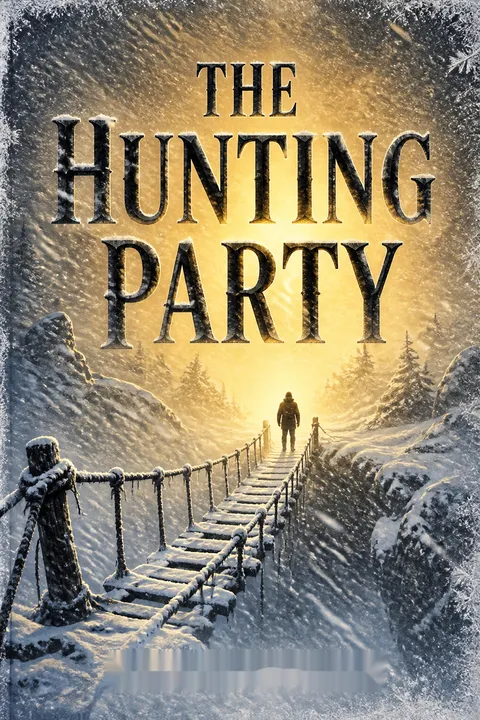


Plot Summary
The Holiday Emma Planned
Emma Taylor3 has arranged a New Year gathering at Loch Corrin for her boyfriend,7 Mark,7 their old Oxford friends, and their partners. She wants the carefully chosen Highland retreat to make her feel fully accepted by a group whose history predates her. Katie,5 arriving alone, already feels out of place; Miranda,4 her dazzling oldest friend,4 has lately spent more time with Emma.3
The train journey brings champagne, old jokes, and small slights, including Katie's5 isolated seat. At the tiny station, gamekeeper2 Doug2 collects the party in his Land Rover. The guests learn that the estate can be cut off by heavy snow, but Emma's3 provisions and elaborate plans make the danger sound almost like part of the holiday.
Emma's planning is both hospitality and a bid for status. She hopes a flawless setting will convert her borrowed place in the group into a secure one, while the seating mishap exposes how readily old hierarchies reassert themselves. Katie's exclusion is quiet rather than openly hostile, which makes it easy for the others to dismiss and hard for her to challenge. The remote estate turns those small social arrangements into consequential conditions: once weather shuts the roads, the friends cannot simply withdraw from one another. The novel begins by making belonging feel like a practical problem, one Emma tries to solve through logistics.
Glass Lodge, Black Forest
At the modern glass Lodge, Emma3 discovers that an Icelandic couple, Ingvar14 and Kristin,15 have also been booked on the estate, despite her expectation that the friends would have the place to themselves. The manager,1 Heather,1 explains that the couple will stay in a separate bunkhouse.
Their arrival unsettles the party, especially Emma,3 whose plans depend on everyone enjoying the retreat. Heather1 describes the nearby ruins of the Old Lodge, where a fire killed twenty-four people, and warns the guests about sudden weather, poachers, and dangerous terrain.
The group drinks through the unease. Miranda4 flirts with Doug2 at dinner, while Ingvar's14 enthusiasm for hunting strikes the others as unnerving. Beyond the windows, the dark landscape makes their bright gathering feel exposed.
The Lodge's glass walls promise openness while making its occupants visible against the dark, a useful contradiction for a story built on concealed lives. The Icelandic visitors challenge the group's assumption that the wilderness belongs to them, and the friends respond as if privacy were a privilege they had purchased. Heather's warnings are concrete, not decorative: weather can cut off rescue, poachers may be armed, and the ruin has a history of mass death. Yet the guests convert risk into entertainment. Their casual treatment of danger establishes a pattern in which the wilderness is first consumed as scenery, then becomes an active force they cannot control.
The Party's Old Ghosts
After dinner, the group drinks and takes pills, then plays Twister as Doug2 tends the fire. During the game, Mark7 touches Miranda4 in a way she has not invited. She pulls away, and Mark7 corners her afterward, saying he knows a damaging secret about Julien.6
Miranda4 refuses to hear more, protecting herself from whatever the revelation might implicate. Later, she tells the group about a stalker who stole personal belongings and sometimes returned them with anonymous notes.
She presents the history as a macabre anecdote, but Katie5 remembers how frightened Miranda4 once was. Doug,2 meanwhile, sees Julien6 walking alone after the party has quieted. He notices the man's6 guilty manner but does not know what it means. The group's jokes cannot quite bury the tension.
The party's games create permission for boundary crossing, but they do not erase responsibility. Mark's unwanted touch turns his long-standing admiration of Miranda into a threat, and his knowledge of Julien's secret gives the threat leverage. Miranda's casual performance of her stalking history similarly conceals fear beneath wit; Katie's memory quietly corrects the story Miranda tells in public. Meanwhile, Doug's observation of Julien adds another image of secrecy without resolving it. The scene establishes a key social mechanism: these friends protect their shared ease by laughing away what would otherwise demand confrontation. That habit allows injuries to accumulate under the surface.
Blood on the Heather
On New Year's Eve, Doug2 takes the guests stalking on the hillside. He teaches them to handle rifles, then leads them toward the Old Lodge and a herd of deer. Emma3 proves unexpectedly accurate: she shoots an aging hind, and Doug2 finishes the animal with a knife before marking Emma's3 face with its blood. The group has now shared a killing, though only Emma3 fired.
Katie5 notices a camouflaged figure moving through the heather, then losing sight of him before she can warn the others. Doug2 finds a discarded cigarette near the ruin and pockets it, suspecting someone has been there recently. The friends return to the Lodge with the day's blood still in their minds, and Emma3 begins adapting her planned dinner around venison.
The hunt makes violence ceremonial and social. Doug frames the kill as necessary population management, but the guests experience it as a test of nerve and competence, a souvenir they can carry back into the Lodge. Emma's accuracy briefly gives her authority independent of her place as Mark's girlfriend. Katie's sighting and Doug's cigarette stub introduce evidence that the estate contains unseen human activity, but neither observation becomes a group priority. The characters' attention stays fixed on their own reactions. The hunt therefore functions as a rehearsal: the party learns how quickly an act of violence can be absorbed into shared ritual.
The Dare in the Loch
Before the New Year's Eve dinner, Katie5 takes a pregnancy test and discovers she is expecting, though she has not told anyone. The evening turns strained as Miranda4 needles Emma's3 domestic competence and the group plays Truth or Dare. Mark7 is forced to drink an entire bottle of champagne, then the game turns on Katie:5 Miranda4 orders her into the freezing loch.
Katie5 obeys, emerging blue-lipped and furious. The party lurches onward. Mark7 and Julien6 crash into a glass table, while Giles11 sprays champagne across the room. At midnight, the friends sing by the water, but their celebration has lost its ease. Miranda4 is drunk, Katie5 is carrying a secret, and the group's ritual of togetherness no longer hides how sharply they can hurt one another.
The dare converts a private hierarchy into a public test of obedience. Miranda uses her influence over Katie as if their lifelong intimacy grants her unlimited access, while Katie's refusal to remain the compliant friend begins to surface as anger. Her undisclosed pregnancy makes the plunge more dangerous and gives her sudden resistance an additional, private weight. Mark's forced drinking and the men's subsequent destruction of the Lodge show how the group's idea of fun depends on treating humiliation and damage as temporary. Midnight offers no clean reset. The celebration instead exposes how the friends use ritual to postpone accountability.
The Sauna's Betrayal
In the early hours of New Year's Day, Miranda4 wakes and finds Julien6 missing. At the sauna, she discovers him having sex with Katie.5 Katie's5 pregnancy becomes visible, and Miranda4 understands that the affair has become more than a drunken lapse. She tells Julien6 she will expose his insider trading and leave him. Then she goes to Emma's3 cabin, where a Chinese puzzle box spills out Miranda's long-missing belongings.
Emma3 tries to gather the objects, but Miranda4 recognizes the stolen keepsakes and remembers an old party Emma3 could only know about by having been there. A photograph on Miranda's4 phone confirms that Emma3 attended Oxford under another appearance. The woman Miranda4 had treated as a newcomer has been watching her for years.
Two betrayals collide in one room: Julien's affair and Emma's hidden fixation. Miranda's response to the affair is not simply heartbreak; it is also a threatened exposure of the financial crime that binds her to Julien. The puzzle box turns a collection of sentimental objects into material evidence, making Emma's private mythology visible to someone she has idealized. Miranda's recognition punctures the fantasy that devotion can excuse surveillance. The scene's power comes from the loss of narrative control: Miranda can no longer cast herself as the glamorous center of a playful ghost story, and Emma can no longer hide behind the agreeable persona she constructed.
The Bridge Gives Way
Miranda4 leaves Emma's3 cabin and heads through the trees, intent on reaching the station and escaping the group. Emma3 follows, still trying to explain herself. On the bridge above a frozen waterfall, Miranda4 rejects Emma's3 claim to friendship and makes clear she wants a life apart from her. Emma3 grabs Miranda4 by the throat.
When Miranda4 goes limp, Emma3 pushes her away, forgetting that they are standing above the ravine. Miranda4 falls onto the rocks below. Emma3 sees the blood around her friend's4 head, then walks away as falling snow begins to cover her footprints. Iain,13 the estate's handyman,13 has been nearby checking a hidden drug stash. He sees the killing but says nothing, choosing to protect his own operation.
Emma experiences rejection as the collapse of an identity she built around Miranda, not merely the loss of a friendship. That distinction explains her fixation but does not excuse her violence: she chooses force when the person she idealized asserts a boundary. The bridge makes the emotional rupture physically irreversible, while the snow offers Emma a temporary illusion of erasure. Iain's silence introduces a separate moral failure. He witnesses a murder but weighs it against his criminal interests, allowing the body to remain undiscovered. The scene's two secrets, obsession and trafficking, now occupy the same landscape without yet becoming visible to the group.
Footprints Under Snow
Miranda's4 disappearance is reported, but Heather1 and Doug2 cannot get help to the estate. Heavy snow blocks the road and grounds helicopters, leaving them to search the vast grounds on foot. Heather1 checks shelters and walks to the station, where Alec16 denies seeing anyone leave. CCTV at the gate shows no vehicle escaping, but the falling snow makes the footage difficult to read.
More than a day passes without a trace. Doug2 finally returns to the Lodge shaken: he has found a body near a waterfall. Heather1 follows him through the trees and sees Miranda4 below the bridge, with bruising around her neck as well as a bloodied head. The position and marks suggest she did not simply fall. The guests are now trapped with a killer among them.
The search turns the estate's remoteness from luxury into an investigative constraint. Heather's former experience around death makes her able to recognize what the body suggests, but it cannot restore the institutional support normally available to her. The empty station and useless gate footage do not prove that no one left; they only narrow the possibilities while snow erases physical traces. Doug's distress complicates his role as discoverer, and Heather's inspection makes accident increasingly unlikely. The novel shifts from social suspense to a closed-circle inquiry, where every familiar relationship becomes possible evidence and ordinary hospitality becomes a form of containment.
Doug's Blank Hours
Heather1 calls the police and learns that DCI Alison Querry18 cannot reach the estate until the weather improves. Querry18 asks Heather1 to keep the guests together and recall anything unusual. Heather1 remembers a light moving toward the Old Lodge during the night, but is unsure whether exhaustion distorted what she saw. Doug's2 injured hand and his evasive account of it trouble her.
Searching his name online, Heather1 finds that he once received a conviction for attempting to strangle a man in a Glasgow bar. Doug2 explains that the man had taunted him about surviving an attack in Afghanistan, where Doug2 hesitated to shoot a young boy suspected of carrying a bomb. The resulting deaths left him with PTSD and episodes of lost time.
Doug's past makes the novel's suspicion emotionally plausible without making it conclusive. His violence is not presented as an abstract symptom: it is tied to combat trauma, shame, and a specific moment of hesitation whose consequences still haunt him. Heather's attraction to him complicates her judgment, as does her wish to believe that someone who has trusted her deserves trust in return. Her uncertain memory of the moving light offers a clue she has not yet tested. The section asks readers to distinguish explanation from exoneration, while showing how trauma can make a person appear both dangerous and deeply vulnerable.
The Old Lodge Opens
Heather1 notices that Iain's13 truck never appears leaving the estate on the gate footage, despite everyone assuming he went home. She takes a rifle and climbs toward the locked stable block beside the Old Lodge. Through loosened boards, she sees packages hidden inside. Iain13 catches her, strikes her, and confines her at gunpoint.
He admits that he has been moving drugs through the estate, using the railway and Alec's16 cooperation, and that the owner is involved. Doug2 follows Heather's1 tracks and shoots Iain13 in the shoulder before he can kill her. Wounded, Iain13 insists he did not murder Miranda.4 He says he saw a fair-haired woman strangle her and push her from the bridge, identifying Emma3 as the likely killer.
The investigation's apparent domestic mystery opens onto an organized criminal system. Heather's attention to the missing truck and the locked building connects details previously dismissed as background: the railway, the owner's control of the estate, and Iain's warnings. Her decision to investigate alone is also psychologically revealing; she is trying to act rather than remain paralyzed by grief, but risks repeating the self-destructive escape she has used before. Doug's rescue does not erase his capacity for violence, yet he uses it to stop Iain. The murder now has a witness, and the estate's commercial respectability is exposed as cover.
A Rifle in the Snow
With the snow easing, a police helicopter approaches the estate. Heather1 and Doug2 hurry back from the Old Lodge, leaving Iain13 injured but alive. At the Lodge, Emma3 has taken a rifle and drawn Katie5 outside. She blames Katie5 and Julien's6 affair for Miranda's4 distress, insisting that the betrayal caused the cruel words that preceded the killing.
Katie5 realizes Emma3 murdered Miranda,4 but has no time to defend herself. Emma3 fires. Heather1 sees the shot coming and throws herself between them, taking the bullet in the abdomen. Doug2 reaches the women as Heather1 falls into the snow. The helicopter's arrival means help is finally close, but the friends' private catastrophe has already demanded another victim.
Emma's attack turns grief into a justification for further violence. She transfers responsibility for Miranda's death onto Katie, reducing a complicated betrayal to a simple accusation that lets Emma preserve her own self-image. Katie's affair did contribute to the crisis, but it did not cause Emma's choice to strangle Miranda or to raise a rifle. Heather's intervention is the opposite kind of action: she risks herself to prevent another death, acting before calculation can overtake compassion. The setting's rescue arrives at the threshold of catastrophe, underlining how narrow the margin is between isolation and help.
The Net Closes
The police helicopter lands after the snowfall lets up, and officers take control of the Lodge and the old stable block. Heather1 is rushed for treatment; Katie5 survives, while Emma3 is arrested for the shooting and Miranda's4 death.
Iain,13 in pain and under guard, gives investigators the account he has withheld: he saw Emma3 kill Miranda,4 and the packages were part of a drug route running from Iceland through Loch Corrin to London. The Icelandic travelers were couriers, Alec16 helped move shipments by train, and the estate owner financed the operation.
Heather's1 discovery turns a murder investigation into a major criminal case. The beautiful retreat that Emma3 booked as a bid for acceptance becomes the scene where the group's secrets and the owner's business are finally exposed.
The rescue resolves the immediate question of whether anyone can reach the isolated estate, but it does not restore the moral world that existed before the trip. Several forms of concealment collapse together: Emma's account of Miranda's death, Iain's silence, Alec's complicity, and the owner's respectable public face. The estate's past as a route for illicit whisky now echoes in a modern drug pipeline, making the present crime feel embedded in a longer local history. Yet exposure is not the same as justice; the epilogue shows how institutions interpret evidence through social expectations, especially when a defendant appears harmless.
Epilogue
Heather1 wakes from surgery to find Doug2 beside her, and later sees her family and friends arrive from Edinburgh. She understands that grief over her husband Jamie17 had narrowed her life until she mistook isolation for safety. Iain13 confesses to the trafficking network, and the estate owner is arrested while trying to flee.
Emma3 is tried for Miranda's4 death, but the jury rejects murder and convicts her of manslaughter; she receives four years. Katie,5 pregnant with Julien's6 child, continues her work and mourns Miranda4 while accepting that the old group has broken apart. Heather1 plans to return to Edinburgh and cautiously make room for Doug2 and for life beyond the estate.
The aftermath refuses a neat moral balance. Emma is punished, but the manslaughter verdict reflects how her polished presentation and Miranda's messy private life shape the jury's judgment. Katie's survival does not absolve her of betrayal, and her grief remains tangled with guilt. Heather's recovery is less a return to her former self than a willingness to belong to the living again. By leaving Loch Corrin, she rejects the idea that a landscape can contain pain indefinitely. The group disperses because history alone cannot sustain intimacy once its members have seen what they are capable of doing to one another.
Analysis
The Hunting Party makes social familiarity both shelter and hazard. The friends have known one another long enough to predict each other's jokes, appetites, and weak spots, but that knowledge does not guarantee care. Often it enables cruelty: Miranda4 can humiliate Katie5 because she understands her history, Mark7 can threaten Julien6 because he knows his secret, and Emma3 can imitate the group because she has studied its habits. The old circle survives by treating painful conduct as a passing episode, a drunken game, or an anecdote. The remote estate removes the ordinary exits that make such avoidance possible.
The novel also contrasts different kinds of violence without flattening them into equivalence. Doug's2 combat trauma and fear of his own anger help explain his history, but do not erase its consequences. Emma's3 obsession grows from loneliness and an unstable sense of self, yet the story makes clear that longing becomes dangerous when another person is treated as property. Miranda's4 cruelty and Julien's6 dishonesty contribute to the group's collapse, but neither makes Emma's3 murder inevitable. The distinction between context and excuse is central to the book's moral logic.
The wilderness intensifies the characters' choices rather than purifying them. The hunt gives privileged visitors a staged encounter with death; the snow then removes the comforts that made the encounter feel recreational. The estate's history of smuggling also shows that isolation can be engineered and exploited, not merely endured. By the end, rescue and exposure arrive, but justice proves imperfect: Emma's3 conviction falls short of murder, while Katie5 and Heather1 must build lives beyond the relationships that shaped them. The novel's sharpest conclusion is not that old friends are secretly monsters. It is that history can make harm feel ordinary until circumstances strip away the familiar story people use to excuse it.
Review Summary
The Hunting Party received mixed reviews, with an average rating of 3.61 out of 5. Readers appreciated the atmospheric setting, intriguing premise, and classic whodunit elements. Many found it to be a suspenseful page-turner, though some felt the pacing was slow. The characters were generally disliked, which some readers found enhanced the mystery while others found it off-putting. The plot twists and reveals were praised by some but considered predictable by others. Overall, it was seen as an entertaining but not groundbreaking entry in the murder mystery genre.
People Also Read








Characters
Heather
Grieving estate managerHeather manages Loch Corrin after leaving her work as a paramedic and the life she shared with her husband17, Jamie17. She is observant, practical, and accustomed to containing distress so other people can function. Her competence has a cost: she often presents control where she feels grief, fear, or exhaustion. The isolated estate gives her distance from reminders of her loss, but it also makes her vulnerable to treating withdrawal as recovery. Heather's attention to small inconsistencies and her instinct to protect others shape the investigation. Her guarded relationship with Doug2 reflects her uncertainty about whether trust can be rebuilt without denying what either of them has survived.
Doug
Traumatized gamekeeperDoug is the estate's gamekeeper2, a former Marine whose physical toughness contrasts with his withdrawn manner and private guilt. He understands the land, the deer, and the risks of bad weather better than the city guests do, but he distrusts their easy confidence around danger. His past includes combat trauma and a violent incident that left him wary of his own anger. Doug chooses isolation partly to protect others from what he fears he may become. His tenderness toward the dogs and his careful attention to Heather1 reveal capacities that his rough appearance conceals, without making his history less serious.
Emma Taylor
The group's eager newcomerEmma is Mark's7 partner and the organizer of the Loch Corrin holiday. She is attentive to meals, arrangements, and other people's comfort, and she takes pride in making a gathering feel effortless. Beneath that helpfulness is a strong desire to be accepted by friends whose shared history makes her feel like a late arrival. Emma is perceptive about other people's habits and skilled at presenting herself as agreeable, but she is also highly sensitive to rejection. Her cooking and planning give her a visible role in the group, even as she struggles to believe that she belongs without continually earning her place.
Miranda
The group's magnetic centerMiranda is Katie's5 oldest friend and Julien's6 wife, a beautiful, socially commanding woman who can make a room follow her lead. She is generous and fiercely loyal when she chooses to be, but she can also use charm, mockery, and attention to control the people closest to her. Her confidence is partly performance: she is privately anxious about her marriage, her future, and whether life has moved on without her. Miranda tends to make herself the central figure in a story, sometimes as a joke and sometimes as a defense. She values her long friendship with Katie5 even when jealousy and possessiveness complicate it.
Katie
The watchful old friendKatie is a successful lawyer and Miranda's4 oldest friend. In the group she is often the quiet observer, though her professional life requires decisiveness and authority. She has spent years measuring herself against Miranda's4 beauty and force of personality, and their closeness contains affection alongside resentment. Katie values independence but has trouble naming her needs before they become shame or anger. Her tendency to watch rather than intervene lets her notice details others miss, yet silence can also make her complicit in the group's evasions. Her private life is far less settled than her career suggests.
Julien
Miranda's polished husbandJulien is a charismatic financier, raised with less money than the affluent world he now inhabits. He is handsome, persuasive, and attentive to appearances, but his appetite for status and security can outrun his judgment. His marriage to Miranda4 began in a charged attraction that has become strained by unspoken disappointment and incompatible expectations. Julien dislikes confrontation and often tries to charm his way out of consequences, especially when his ambitions have put others at risk. His surface ease makes him socially influential, while his fear of losing the life he has built shapes his private decisions.
Mark
Emma's volatile partnerMark works in advertising and is an old friend of Julien's6. He can be affectionate and funny, but his temper and physical strength make his anger unsettling. He grew up with violence at home and fears becoming like the father who hurt him. His admiration for Miranda4 complicates his loyalty to Emma3 and Julien6, while his history of standing by Julien6 has blurred the line between friendship and enabling. Mark wants to be seen as harmless, though past incidents have shown that his impulses can cause real damage.
Nick
Katie's sharp-eyed confidantNick is an architect and Katie's5 longtime friend. Precise, stylish, and intellectually direct, he is often the person willing to puncture the group's polite evasions. His relationship with Miranda4 is strained by an old breach of trust, and he does not hide his skepticism of her charm. Nick's loyalty to Katie5 is steady, though the years and his partnership with Bo9 have changed their closeness. He values honesty and dislikes being treated as an accessory to the Oxford circle.
Bo
Nick's generous partnerBo is Nick's8 American partner and works for the BBC. Warm and observant, he often notices when someone is struggling while louder members of the group dominate the room. His past addiction has made him attentive to the ways people use substances to manage pain, though he does not define himself solely by recovery. Bo is socially easygoing but not naïve, and his kindness does not mean he misses the tensions around him.
Samira
A new mother among friendsSamira is a management consultant, Giles's11 partner, and Priya's12 mother. At Oxford she was energetic, competitive, and always involved; motherhood has shifted her priorities and narrowed the time she can give the old group. She is protective of her baby12 and more guarded than her friends remember. Samira's polished composure can conceal anger, and she has a long memory for injuries. Her presence shows how adulthood changes a friendship not through one dramatic rupture, but through daily responsibilities that others may dismiss.
Giles
The group's comic doctorGiles is a hospital doctor, Samira's10 partner, and the group's familiar joker. His easygoing manner helps him smooth over awkwardness, but humor can also keep difficult questions at a distance. He is devoted to Samira10 and their baby12, though the old friendships still pull him into habits that do not fit his family life. Giles's professional role suggests calm care, while his behavior among friends can be less attentive than that reputation implies.
Priya
Samira and Giles's babyPriya is Samira10 and Giles's11 six-month-old daughter. Her needs shape the couple's choices throughout the trip, repeatedly interrupting the adults' assumption that the holiday can revolve around them.
Iain
The estate's handymanIain performs repairs and brings supplies to Loch Corrin, working under the estate owner's direction. He is taciturn and practical, with a history that has left him wary of conventional employment. His access to the estate's buildings and routines makes him an important presence even when the guests barely notice him. Iain tends to keep his opinions to himself, which makes it difficult for Heather1 to know what he sees or whom he trusts.
Ingvar
The Icelandic travelerIngvar arrives with Kristin15 and unsettles the London guests with his intense interest in hunting and the group's behavior. He is comfortable in harsh conditions and watches the others more closely than they realize.
Kristin
The Icelandic travelerKristin travels with Ingvar14 and stays in the estate's separate bunkhouse. Better equipped for the weather than the holidaymakers, she seems at ease in the landscape and remains largely outside their social circle.
Alec
The station masterAlec runs the tiny station serving Loch Corrin and controls access to its ticket office and upstairs flat. His brusque manner discourages questions, adding to the station's air of secrecy.
Jamie
Heather's late husbandJamie was Heather's1 husband, a firefighter who believed in risking himself to save others. His death reshapes her understanding of safety, love, and the future. Heather1 carries his influence into her work and her instinct to protect people, even when she has not yet found a way to live with the loss.
Alison Querry
The investigating detectiveDCI Alison Querry is an experienced investigator temporarily assigned to another serious case in the Highlands. She questions Heather1 by phone and gives her practical instructions while poor weather prevents a quick arrival.
John MacBride
The replacement detectiveDCI John MacBride takes over the investigation when Querry18 is called away. His approach is largely conveyed through the officers who communicate with Heather1 as they work to reach the estate.
Plot Devices
The snowbound estate
Isolation becomes a trapLoch Corrin's remote location is first presented as a luxury: a private Highland retreat with cabins, a glass Lodge, and dramatic scenery. Heather1 and Doug2 explain that severe winter weather can close the road and stop trains or helicopters. Once the snow falls, those warnings become the practical terms of the mystery. The guests cannot leave, investigators cannot arrive, footprints disappear, and the estate's staff must manage both a search and a growing threat. The weather does not merely create atmosphere; it limits evidence, delays rescue, and forces old friends to remain together after their familiar social protections have failed.
Rotating viewpoints
Secrets change the storyThe novel shifts among Heather1 in the present and the guests' accounts of the days before the body is found. Each viewpoint reveals only part of the group's history, and a character's private account may complicate what another character has said. The structure lets readers experience the reunion as a social gathering before gradually seeing its betrayals, then revisits clues such as Julien's6 night walk, the missing belongings, and Doug's2 lost time. The movement between present investigation and recent past creates suspense without requiring the investigators to know what the reader has already learned.
The old railway
History hides modern crimeHeather1 tells the guests that the estate's station was built at a laird's insistence and became associated with the movement of illicit whisky. That history seems like local color until Heather1 discovers that the railway still offers a discreet route for contraband. The old story prepares the reader to see how infrastructure, private wealth, and local access can work together. The railway is not an ornamental clue: it links the estate's past reputation to a contemporary criminal operation and makes the secluded property useful rather than inconvenient to the people running it.
The stalking rifles
Ritual rehearses violenceDoug's2 guided hunt teaches the guests to handle rifles and gives Emma3 the experience of shooting a deer. He explains where to aim and why an accurate shot matters, while the group discovers that competition and blood can turn an outing into something more charged. The rifles later matter beyond the hunt: they are stored in a secured barn, their count becomes a clue, and one is used in the final confrontation. The device connects the guests' casual desire for an authentic wilderness experience to the real force of a weapon in inexperienced hands.
Miranda's missing objects
Keepsakes expose a hidden watcherFor years, Miranda4 has described a stalker who took small personal belongings and sometimes returned them with notes. The objects are easy to dismiss because Miranda4 often loses things and recounts the episodes as entertaining stories. Their sentimental value gives them a different weight: they mark intimate knowledge and repeated access to her life. When a hidden collection spills from a puzzle box, the old anecdotes become evidence of sustained surveillance. This device turns a familiar ghost story into a physical record of obsession, while revealing how Miranda's4 public performance has obscured genuine fear.
FAQ
Synopsis & Basic Details
What is The Hunting Party about?
- Isolated group, deadly secrets: A group of old friends gathers at a remote Scottish lodge for New Year's, but their reunion turns deadly when a body is discovered, revealing hidden tensions and dark secrets among them.
- Claustrophobic setting, mounting suspense: The story unfolds in a snowbound, isolated location, creating a sense of claustrophobia and heightening the suspense as the characters become both suspects and potential victims.
- Multiple perspectives, unraveling truth: The narrative is told through shifting perspectives, gradually revealing the complex relationships and hidden motivations of each character, leading to a shocking climax.
Why should I read The Hunting Party?
- Atmospheric suspense, page-turning plot: The novel masterfully builds suspense through its isolated setting and the gradual unveiling of secrets, making it a compelling and page-turning read.
- Complex characters, psychological depth: The characters are flawed and multi-layered, each with their own hidden motivations and vulnerabilities, adding psychological depth to the narrative.
- Intricate relationships, dark themes: The story explores the complexities of friendship, betrayal, and obsession, delving into the darker aspects of human nature and the fragility of social bonds.
What is the background of The Hunting Party?
- Remote Scottish Highlands setting: The story is set in a secluded lodge in the Scottish Highlands, a location chosen for its isolation and harsh winter conditions, which contribute to the sense of unease and danger.
- Modern-day, social dynamics: The novel is set in the present day, exploring the dynamics of a group of friends who have known each other since university, highlighting the tensions and secrets that can develop over time.
- No specific historical or political context: The story is primarily character-driven, with the setting and social dynamics serving as a backdrop for the unfolding drama, rather than being tied to specific historical or political events.
What are the most memorable quotes in The Hunting Party?
- "I think you pick them so that they'll be like the angel on your shoulder, telling you: she's not a good'un, that one. Steer clear.": This quote, spoken by Miranda about Katie's boyfriends, reveals the complex dynamic between the two friends and hints at Miranda's manipulative nature.
- "Sometimes solitude is the only way to regain your sanity.": This quote, spoken by Heather, reflects her own reasons for seeking isolation and hints at the deeper psychological struggles of the characters.
- "Humans are hunters, it's in our very DNA. We need to find an outlet for those needs. The blood lust.": This quote, spoken by Ingvar, foreshadows the violent events to come and highlights the primal instincts that drive some of the characters.
What writing style, narrative choices, and literary techniques does Lucy Foley use?
- Multiple POV, shifting timelines: Foley employs a multi-POV narrative, shifting between characters and timelines, creating suspense and revealing different perspectives on the same events.
- Atmospheric descriptions, vivid imagery: The author uses vivid descriptions of the setting, particularly the harsh winter landscape, to create a sense of isolation and foreboding, enhancing the overall mood of the story.
- Foreshadowing, red herrings: Foley uses subtle foreshadowing and red herrings to misdirect the reader, keeping the mystery engaging and the true killer's identity hidden until the climax.
Hidden Details & Subtle Connections
What are some minor details that add significant meaning?
- The broken coffee table: The seemingly minor detail of the broken coffee table during the New Year's Eve party foreshadows the fractured relationships and the impending chaos within the group.
- The missing lighter: Miranda's missing lighter, a seemingly trivial detail, becomes a symbol of her past stalker and the sense of being watched, adding to the overall unease.
- The statues around the loch: The statues, initially seen as artistic features, become unsettling symbols of the isolation and the feeling of being observed, hinting at the hidden dangers of the setting.
What are some subtle foreshadowing and callbacks?
- The Old Lodge fire: The story of the Old Lodge fire, initially presented as a historical anecdote, foreshadows the destructive potential of hidden anger and the possibility of a deliberate act of violence.
- The gamekeeper's past: Doug's past in the Marines and his violent incident in a bar are subtly hinted at, foreshadowing his capacity for violence and his role in the unfolding events.
- The mention of the Highland Ripper: The news of the Highland Ripper, initially presented as a background detail, creates a sense of unease and foreshadows the possibility of a killer among them, adding to the suspense.
What are some unexpected character connections?
- Emma and Miranda's shared history: The revelation that Emma was present at a party in Oxford where Miranda got stuck in the bathroom, a detail only known to Miranda, reveals Emma's long-standing obsession and her hidden presence in Miranda's life.
- Julien and Mark's shared secret: The revelation that Mark knew about Julien's insider trading and was involved in it, highlights the complex web of secrets and betrayals within the group.
- Iain and the boss's connection: The connection between Iain and the boss, revealed through the drug smuggling operation, highlights the corruption and hidden agendas that exist beneath the surface of the seemingly idyllic setting.
Who are the most significant supporting characters?
- Iain, the odd-job man: Iain's role as the estate's odd-job man and his involvement in the drug smuggling operation make him a key figure in the plot, highlighting the hidden criminal element within the seemingly peaceful setting.
- Alec, the station master: Alec's presence at the isolated train station and his connection to Iain reveal the extent of the criminal network and the complicity of those who seem to be on the periphery.
- DCI Alison Querry: DCI Querry's initial involvement in the investigation and her subsequent removal highlight the complexity of the case and the limitations of the authorities in the face of the remote setting.
Psychological, Emotional, & Relational Analysis
What are some unspoken motivations of the characters?
- Emma's desire for acceptance: Emma's meticulous planning of the trip and her eagerness to please the group reveal her deep-seated desire for acceptance and her insecurity about her place among the old friends.
- Miranda's need for control: Miranda's attempts to orchestrate the group's activities and her need to be the center of attention stem from her deep-seated insecurities and her desire to maintain control over her life.
- Julien's fear of failure: Julien's involvement in insider trading and his desire to maintain a lavish lifestyle reveal his fear of failure and his need to maintain a certain image, even at the expense of his relationships.
What psychological complexities do the characters exhibit?
- Emma's obsessive tendencies: Emma's obsessive behavior, revealed through her collection of Miranda's belongings and her meticulous planning, highlights her deep-seated insecurities and her distorted sense of self.
- Miranda's performative nature: Miranda's need to be the center of attention and her tendency to create drama reveal her underlying vulnerability and her struggle to maintain a sense of control over her life.
- Doug's repressed trauma: Doug's taciturn nature and his violent past reveal the deep-seated trauma he carries, which manifests in his isolation and his difficulty forming meaningful connections.
What are the major emotional turning points?
- Miranda's discovery of the affair: Miranda's discovery of Julien and Katie's affair in the sauna is a major emotional turning point, leading to her feelings of betrayal and setting the stage for her tragic end.
- Emma's exposure as the stalker: The revelation of Emma's obsession with Miranda and her role as the stalker is a major emotional turning point, exposing her dark side and leading to her violent actions.
- Heather's realization of the truth: Heather's realization of the truth about Doug's past and the drug smuggling operation is a major emotional turning point, forcing her to confront the danger she is in and to take action.
How do relationship dynamics evolve?
- Friendships unraveling: The long-standing friendships among the group are tested and ultimately destroyed by the emergence of secrets, betrayals, and long-held resentments.
- Power dynamics shifting: The power dynamics within the group shift as secrets are revealed and alliances are broken, leading to a chaotic and unpredictable environment.
- New connections forming: Despite the destruction of old relationships, new connections form, such as the bond between Heather and Doug, highlighting the possibility of finding solace and support in unexpected places.
Interpretation & Debate
Which parts of the story remain ambiguous or open-ended?
- The full extent of the drug operation: While Iain's involvement is revealed, the full scope of the drug smuggling operation and the boss's motivations remain somewhat ambiguous, leaving room for interpretation.
- The true nature of Doug's character: Despite his confessions, the true nature of Doug's character and his capacity for violence remain open to debate, leaving the reader to question his motivations and his potential for redemption.
- The long-term impact on the survivors: The novel leaves the long-term impact of the events on the survivors somewhat open-ended, allowing the reader to imagine the different paths they might take and the lasting effects of the tragedy.
What are some debatable, controversial scenes or moments in The Hunting Party?
- The depiction of Emma's obsession: The portrayal of Emma's obsession with Miranda and her actions as a stalker can be seen as both a commentary on the destructive nature of envy and a potentially problematic representation of mental illness.
- The portrayal of Mark's behavior: Mark's actions, including his casual racism and his violent outburst, can be seen as both a reflection of toxic masculinity and a potentially problematic portrayal of male aggression.
- The justification of the deer hunt: The novel's depiction of the deer hunt and the justification for it can be seen as both a commentary on the human desire for control over nature and a potentially problematic glorification of violence.
The Hunting Party Ending Explained: How It Ends & What It Means
- Emma's capture, justice served: The ending sees Emma's capture, but not before she attempts to kill Katie, highlighting the destructive nature of her obsession and the consequences of her actions.
- Heather's escape, new beginning: Heather's decision to leave the lodge and return to Edinburgh signifies her desire for a fresh start and her attempt to move beyond the trauma of her past.
- Broken friendships, lasting impact: The ending emphasizes the lasting impact of the events on the group, with their friendships shattered and their lives forever changed by the tragedy and the secrets that were revealed.
About the Author
Other books by Lucy Foley



Download PDF
Download EPUB
.epub digital book format is ideal for reading ebooks on phones, tablets, and e-readers.








