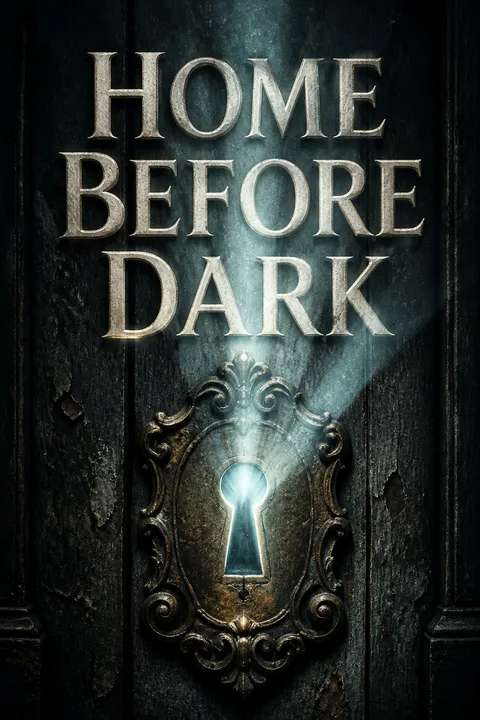


Plot Summary
Prologue
In the summer of 1995, Ewan Holt checks beneath his five-year-old daughter Maggie’s bed, inside her closet, and in the carved armoire she fears. Finding nothing, he tries to calm her, but Maggie insists that a shadowy man visits her at night and warns that the family will die in Baneberry Hall.
Ewan blames the child’s fear on the unfamiliar house and its restless noises. He cannot yet know how much of her terror comes from people entering her room, or how the warning will shape the story he later tells.
The opening plants the novel’s central uncertainty inside a parent-child exchange: Maggie’s fear may be imagination, memory, or a response to something adults have failed to see. Ewan’s search reassures him more than it reassures his daughter, establishing a gap between what he believes he has checked and what Maggie experiences. The warning also gives the house a narrative voice before the reader can decide whether that voice is supernatural. Its eventual reinterpretation makes the scene less a promise of a haunting than an early example of how adults can mistake protection for understanding.
A House in the Inheritance
After her father Ewan dies, Maggie Holt visits his lawyer expecting money and the rights to his bestselling account of a haunted house. Instead, she learns that he secretly kept Baneberry Hall, the Vermont estate her family fled when she was five. On his deathbed, Ewan had warned her away from it, but never explained why.
Maggie has spent her life denying the book’s story and resenting the way strangers treat her as its frightened child. Now the keys make the old mystery hers to enter. At lunch, her mother Jess admits that Ewan invented the haunting to sell a novel as nonfiction. The family’s reason for leaving, however, remains hidden, so Maggie decides to visit the house herself.
Maggie inherits more than property: she inherits the machinery that has shaped how other people see her. The book made her childhood publicly legible while her parents kept its real circumstances private. Ewan’s final warning renews the contradiction rather than resolving it, and the keys turn that contradiction into a physical choice. Maggie’s return begins as an act of self-authorship, but it also shows how secrecy can make even an apparently debunked story exert power. She does not believe in ghosts; she believes her parents have withheld something important enough to keep her away.
The Lie Behind the Bestseller
Jess explains that Ewan had struggled to place fiction with publishers, so the couple pretended their new home was haunted and presented the invented account as fact. The Carver family tragedy was real: Curtis Carver killed his daughter Katie and himself, while the ceiling damage blamed on a ghost came from a burst pipe. Maggie’s childhood night terrors gave Ewan material for the supernatural episodes.
Jess and Ewan kept the truth from Maggie because they feared she would condemn them and because the book soon supported the family financially. Their shared deception later helped break their marriage. Jess offers to buy Baneberry Hall so Maggie can avoid it, but Maggie hears the old prohibition beneath the offer and quietly keeps the keys.
Jess’s explanation replaces one mystery with another. The haunting was a calculated fiction, yet the parents’ silence was not a single clean lie: it began as a tactic, became a lucrative public identity, and then hardened into a family rule. Maggie’s injury is not only that she was misrepresented in print, but that her parents treated her capacity to know the truth as a threat. Jess’s offer to buy the house repeats the protective logic that has excluded Maggie from her own history. Her refusal is therefore both investigative and relational: she wants evidence, but she also wants to be treated as someone entitled to it.
The House Takes Them In
Twenty-five years earlier, Ewan and Jess Holt tour Baneberry Hall with young Maggie. The estate is cheap, enormous, neglected, and marked by a recent family crime: Curtis Carver murdered his six-year-old daughter Katie, then killed himself.
Jess worries that the tragedy will poison their fresh start, but Ewan sees the house as a chance to give his family space and revive his writing. They buy it. The caretaker, Walt Hibbets, and housekeeper Elsa Ditmer offer help, while Maggie rejects the chilly bedroom that once belonged to Indigo Garson, a daughter from the house’s past.
Ewan’s later account describes strange noises, bells, and Maggie’s fear of unseen visitors. Whatever the causes, her unease begins almost as soon as the family moves in.
The purchase is driven by a recognizably practical longing: the Holts want more room, financial breathing space, and a future that feels less cramped than their apartment. That need makes Ewan more willing than Jess to treat the house’s history as manageable. The warning signs are not simply Gothic decoration; they are embedded in real estate decisions and family compromise. Maggie’s immediate refusal of Indigo’s room gives her perceptions weight before adults interpret them away. The scene also introduces the inheritance of place: a house can be bought cheaply, but its prior uses and public reputation cannot be separated so easily from the new owners’ lives.
Snakes Through the Ceiling
In Ewan’s published version, the family’s first days bring interrupted sleep, Maggie’s claims of invisible companions, and a sleepover with Elsa’s daughters, Hannah and Petra. Ewan worries about Maggie but dismisses what he cannot explain.
Then a damaged kitchen ceiling gives way, spilling snakes into the room and forcing Jess, Ewan, and Maggie to flee to the Two Pines motel. They return after the snakes are removed, but the account escalates: bells ring, a record player starts by itself, and Ewan says Maggie is threatened by a spirit.
On July 15, he claims, the family escapes Baneberry Hall for good. The dramatic story becomes the public version of their departure, though Maggie’s later discoveries will show that its details cannot be trusted as a whole.
This turning point deliberately presents the father’s narrative as an account rather than settled fact. Its vivid incidents give the reader the experience of being persuaded by the same theatrical sequence that made the book famous, while the framing reminds us that Ewan had a motive to shape events. The snakes are especially effective because they make a mundane structural problem resemble an attack. In the family’s story, each failure of explanation becomes evidence of a haunting; in Maggie’s present, the same details become clues to the difference between physical danger, staged fear, and memory altered by storytelling.
Maggie Opens the Gate
Maggie reaches Baneberry Hall intending to assess and renovate it. At the gate she meets Dane Hibbets, Walt’s grandson and the current caretaker, who tells her Ewan kept paying the staff and returned once a year, always on July 15.
The visits contradict Ewan’s public claim that he never went back. Inside, Maggie finds her childhood clothes and toys, her father’s old mail, and a note demanding to know where someone is. An elderly Elsa Ditmer wanders into the house and mistakes Maggie for her missing daughter Petra; Elsa’s younger daughter Hannah comes to take her home.
Maggie also recognizes that the Carvers’ furniture and photographs remain. The house is no longer only a disputed legend. It contains evidence of what her family left behind.
The discovery of Ewan’s annual visits changes the meaning of his warning. If he returned himself, his insistence that Maggie stay away cannot be explained by a simple fear of the house. The possessions left in place similarly challenge the polished account of a hurried escape. Maggie’s encounter with Elsa adds an intimate human cost to the estate’s history: Petra is not merely a name in a book but a daughter whose absence has reshaped her family. Physical remnants begin to compete with printed testimony, and Maggie’s professional habit of reading houses becomes a method for reading her own childhood.
The Girl in the Floor
While Maggie begins renovation work with Dane, a damaged section of kitchen ceiling collapses and drops a canvas bag of human bones onto the table. Police chief Tess Alcott seals the house as a crime scene and sends the remains for identification.
Maggie immediately suspects Petra Ditmer, the teenager who vanished on the night her family left Baneberry Hall. Hannah arrives when the body is brought outside and identifies Petra by the gold crucifix found among her belongings.
The discovery makes Ewan’s yearly visits look sinister and turns Maggie’s search into a murder investigation. Chief Alcott asks whether Ewan could have killed Petra; Maggie cannot confidently dismiss the possibility. The family story that began as a ghost tale now conceals a real death.
The remains collapse the distinction Maggie has tried to maintain between the book’s fiction and her family’s history. An actual body makes the house’s past material and legal, not merely symbolic. Hannah’s recognition through a personal object gives the discovery a family scale that official procedure cannot contain. Meanwhile, Maggie’s inability to defend Ewan with certainty is a painful consequence of his secrecy: affection survives, but it can no longer function as evidence. The police investigation also reverses the book’s original spectacle. The focus shifts from whether a house is haunted to who was harmed, who was protected, and whose account has been allowed to stand.
Letters Beneath the Floor
Maggie searches the house and local records for an explanation of Petra’s death. In the earlier account, Ewan and Petra discover letters from Callum Auguste, an artist who planned to elope with Indigo Garson, and learn that Indigo died after her father opposed the match.
Maggie finds Gazette archives documenting other young girls who died at Baneberry Hall, often while in their fathers’ care. She also learns that Marta Carver, Katie’s mother, never returned to the house after finding her family.
Brian Prince, the local reporter who publicized Ewan’s original story, confirms Petra vanished on July 15 and says Ewan had once planned a new interview. These overlapping clues make Baneberry Hall’s history look less like one isolated tragedy and more like a pattern.
The archive offers a different kind of haunting: repetition preserved in newspaper columns, family objects, and half-told local stories. The pattern of girls dying near fathers tempts Maggie to turn recurrence into a single explanation, especially when the house’s history already carries a Gothic legend. But the records also show how institutions distribute attention unevenly. Earlier authorities failed to pursue Indigo’s death seriously, while Petra’s disappearance could be dismissed as a runaway case. Maggie’s research is therefore both pattern-seeking and corrective, an effort to restore specificity to people flattened into sensational headlines.
Hannah's Hidden Door
Hannah tells Maggie that she began taking objects from Baneberry Hall when her mother’s illness made money scarce. Since Maggie returned, Hannah has entered through a concealed rear door and staged disturbances to frighten her off, including the bells and record player. She denies taking Petra’s teddy bear, Buster, and says the secret entrance was known in her family.
Maggie discovers the passage behind ivy and realizes it connects the outside of the house to the armoire in her childhood room. That route explains how someone could visit her unnoticed. Hannah also says Petra had been sneaking out to meet a boy shortly before she disappeared, deepening suspicion around Ewan and anyone who knew the house’s hidden ways.
Hannah’s confession restores ordinary agency to several events that seemed supernatural. She is not a generic prankster: poverty, caregiving, and years of unanswered anger have made Baneberry Hall both a source of income and a place she distrusts. The concealed passage is a literal breach in the family’s confidence about who could enter Maggie’s room. It also alters the function of the armoire, previously a childhood fear and a storybook object, into an access point. The book’s central method is at work here: a vivid supernatural explanation must be tested against the unglamorous but consequential actions of living people.
The Portrait's Hidden Face
Dr. Lila Weber recalls that five-year-old Maggie firmly believed unseen figures visited her room, although the doctor cannot verify they were real. Elsa warns that daughters are not safe in Baneberry Hall, while Marta tells Maggie that Curtis killed Katie and left a note proving it.
Maggie studies the house’s documented deaths and becomes convinced Indigo Garson’s spirit has driven fathers to harm their daughters. In Ewan’s account, bells and a Ouija board appear to confirm that theory.
He uncovers an older version of Indigo’s portrait beneath paint, revealing a snake where a rabbit had been. These clues intensify Maggie’s fear that the haunting is real, even as the secret passage and Hannah’s tricks supply practical explanations for other disturbances.
Maggie’s investigation repeatedly crosses from evidence into interpretation. A doctor can confirm her childhood conviction without confirming its object; a portrait can reveal alteration without proving a ghost; a sequence of deaths can suggest a pattern without identifying its cause. Her mind is not simply gullible. It is trying to reconcile a damaged memory with records, family testimony, and physical traces that do not agree. The snake beneath the rabbit becomes an image of revision itself: the reassuring surface was painted over something more troubling, but uncovering an older layer does not automatically reveal the whole truth.
Dane in the Photograph
Maggie finds Dane’s teenage face in a Polaroid taken during repairs at Baneberry Hall, recognizable by the Rolling Stones shirt he still wears. She realizes he was the boy Petra secretly met and wonders whether he killed her. When Dane comes to help move the armoire, Maggie confronts him with the photograph. He admits knowing Petra but denies killing her, then tries to take Maggie’s phone and stop her from calling police.
She escapes into the Indigo Room and crosses the opening where floorboards were removed during the investigation. Dane charges after her and falls through the gap into the kitchen below. Police and an ambulance arrive. Maggie has found a compelling suspect, but his fall and denial do not answer who killed Petra.
The photograph converts a faint background figure into a present threat, showing how evidence can change meaning as relationships change. Maggie’s suspicion is understandable: Dane withheld his past, had access to the house, and was connected to Petra. Yet his aggression in the confrontation makes him dangerous without proving he is a murderer. The open floor becomes a physical consequence of the investigation and a test of who knows the house best. Maggie survives by using the architecture rather than trusting a reassuring story, but she is still left with a central uncertainty: the most plausible suspect may not be the person responsible.
The Truth at the Stairs
Maggie’s mother arrives with Ewan’s letter. He admits that he and Jess found Petra dead at the stairs after returning from a motel date, believed Maggie had pushed her, hid the body beneath the Indigo Room floor, and invented the haunting to distract the town.
But Maggie’s recovered memory corrects their assumption: Marta had been entering her room to watch her sleep, Petra discovered her, and Marta struck Maggie while trying to stop Petra from reaching help. Petra fell down the stairs.
Marta later brings Maggie pie laced with baneberries and tries to smother her; Elsa arrives and pushes Marta down the stairs, saving Maggie. While Maggie is poisoned and barely conscious, Jess tells police what the family concealed. The real crime is finally separated from the story built around it.
The revelation dismantles two forms of certainty at once. Ewan’s letter exposes his compassionate motive and his grave wrongdoing, but it also records a mistaken explanation of Petra’s death. The parents protected Maggie from a crime she did not commit, while their silence ensured the true killer could remain unchallenged. Marta’s attack repeats the violence of the Carver tragedy, turning the pillow from an emblem in the false haunting into a real instrument. Elsa’s intervention breaks the cycle not through supernatural force but through a person acting at the moment others have been incapacitated.
A Story Finally Hers
Maggie survives after doctors treat the poisoning and her injuries. Marta is dead, and Elsa’s Alzheimer’s leaves her story fragmented, but the truth of Petra’s death is no longer buried under the house or Ewan’s bestseller. Jess pleads guilty to concealing a body, accepting possible punishment for helping hide Petra. Maggie forgives her, recognizing that fear drove the cover-up without making it right.
Dane leaves town after recovering from his fall, while Hannah and Elsa move away. Maggie stays long enough to renovate Baneberry Hall, rebuild the broken wall, and seal the passage. The public continues to argue about ghosts, but Maggie no longer needs the house to explain her past. She begins writing her own account on Ewan’s typewriter.
The resolution refuses the fantasy that truth automatically repairs what secrecy damaged. Jess’s confession gives Maggie an honest relationship to the past, but it cannot return Petra to her family or undo Hannah’s years of uncertainty. Maggie’s forgiveness is not a declaration that her parents acted correctly; it is a judgment made with fuller knowledge of their fear and love. Renovating the house strips away the ornate atmosphere that once helped sustain its legends. Writing at Ewan’s typewriter lets Maggie inherit his craft without inheriting his claim to speak for everyone.
Epilogue
By autumn, Maggie has finished a restrained renovation and is preparing to sell Baneberry Hall. Jess awaits sentencing for concealing Petra’s body, and Maggie has forgiven her. Hannah and Elsa have left town, and Dane has moved away.
The house remains a magnet for ghost hunters, though Maggie has sealed its hidden entrance and strengthened its security. She stays in Bartleby until the legal case is settled, then sits at Ewan’s typewriter and begins the account he could never give: one that names what happened without disguising it as a haunting.
The ending gives Maggie a form of authorship distinct from Ewan’s. His book converted fear and concealment into a public performance; her proposed account begins from responsibility, including her parents’ failures and the harm done to Petra’s family. The renovated house no longer preserves its ornate past as an aesthetic attraction, yet the decision to write keeps its history from being erased. Maggie’s future remains uncertain, but her relation to uncertainty has changed: she can acknowledge what she does not know without filling every gap with a ghost story.
Analysis
Home Before Dark makes the haunted-house question serve a more intimate mystery: how a family’s account of a crisis can become more powerful than the people and facts it was meant to protect. Ewan turns Baneberry Hall into a successful book, but the story’s commercial life distorts his daughter’s identity and damages the town’s understanding of Petra’s disappearance. Maggie’s return is an attempt to reclaim her own past, yet each new clue tempts her to replace one authoritative story with another, whether a ghost legend, a local rumor, or her own suspicion of Ewan.
The novel’s strongest structural move is its layering of evidence. A body beneath the floor, a hidden passage, a childhood memory, an old photograph, and a confession each appear to settle the mystery, then expose a further gap. The house encourages supernatural explanation because it is old, secretive, and full of repeated tragedy; the same qualities also make it an ideal place for human concealment. This ambiguity is not merely a puzzle mechanism. It dramatizes the psychological cost of living with an explanation that cannot be tested, especially when adults decide a child is better off not knowing.
The parents’ cover-up is driven by love and fear, but the novel does not allow benevolent intention to erase its consequences. Their choice protects Maggie from immediate punishment while withholding the truth from Petra’s family and preserving the conditions for further harm. Maggie’s final authorship offers a different ethical model from Ewan’s: not total certainty, and not a clean absolution, but a willingness to distinguish what is known from what was invented. The house can be sold and its hidden entrances sealed. The story cannot be undone, but it can finally be told without making the people inside it into props.
Review Summary
Most readers loved Home Before Dark, praising its atmospheric haunted house setting, clever dual-narrative structure alternating between present-day Maggie and her father's book, and genuinely unsettling moments. Many called it Sager's best work, highlighting its Hill House vibes and page-turning suspense. Critics, however, found the ending implausible and overly derivative, arguing the resolution undermined the tension built throughout. The book holds a strong 4.04 average rating, with the majority of readers recommending it as a standout thriller of 2020.
People Also Read






Characters
Maggie Holt
The inheritance investigatorMaggie is Ewan and Jess Holt’s daughter, an interior designer who has spent her life resisting the public identity her father’s book assigned her. She is practical, observant, and accustomed to treating houses as records of the people who occupied them. Her skepticism is genuine, but it also protects her from memories she cannot access clearly. She distrusts curiosity that treats her as a novelty and values people who see her as capable rather than fragile. Returning to Baneberry Hall forces her to distinguish her own recollections from her parents’ explanations and the book’s version of her childhood. Her need for truth is personal, but her attention increasingly extends to the people whose histories her family’s story obscured.
Ewan Holt
The charismatic storytellerEwan is Maggie’s father, a gifted journalist and writer whose ambitions and affection for his family shape the story he tells about Baneberry Hall. He is warm and attentive with Maggie, encouraging her curiosity and intellectual independence, yet he also keeps essential truths from her. His instinct to turn experience into narrative helps him survive professional disappointment, but it blurs the line between shaping a story and taking control of other people’s lives. Ewan’s public confidence contrasts with a private need to protect his family and manage guilt. Maggie remembers both sides: the father who believed in her and the author whose version of her childhood followed her everywhere.
Jess Holt
The guarded family anchorJess is Maggie’s mother and Ewan’s wife during the family’s time at Baneberry Hall. She is cautious, empathetic, and more alert than Ewan to the emotional cost of buying a house with a violent history. She values stability and tries to protect Maggie from frightening knowledge, though silence becomes one of the ways she maintains that protection. Her practical judgment often counters Ewan’s appetite for possibility, but she also accepts compromises when the family’s future seems at stake. In adulthood, she remains guarded about the past, partly from shame and partly from fear of what truth could do to Maggie. Her relationship with her daughter is shaped by both deep attachment and years of withheld explanation.
Marta Carver
The wary local bakerMarta is a Bartleby baker whose history is bound to Baneberry Hall and whose quiet public manner conceals an immense private grief. She is courteous with strangers but deeply uncomfortable when the house or her family becomes a subject of spectacle. Her decision to remain in town suggests a strong attachment to place and memory, even as she tries to build a working life around an experience she cannot simply put away. She approaches Maggie with both recognition and apprehension, understanding that the younger woman is also defined by the house. Marta’s reserve is not indifference: she weighs every disclosure against the pain it may reopen.
Petra Ditmer
The protective older sisterPetra is Elsa Ditmer’s older daughter and Hannah’s sister. At sixteen, she is independent, capable, and more willing than her family expects to make choices for herself. She helps care for younger children and forms a connection with Maggie during the Holts’ stay at Baneberry Hall. Her confidence and playful manner contrast with the strict household rules around her. Petra’s private life is largely unknown to the adults around her, making her easy to misread even by people who believe they know the family.
Hannah Ditmer
The resentful younger sisterHannah is Petra’s younger sister and Elsa’s surviving daughter, shaped by a childhood in which family rules and grief leave little room for freedom. She is blunt, resourceful, and more openly rebellious than Petra, with a sharp sense of when adults are avoiding a subject. Her memories of Baneberry Hall are entangled with anger at the way Petra’s disappearance was handled and at the attention given to Ewan’s book. Hannah’s choices reflect both practical need and long-held resentment. She can be defensive and difficult to trust, but her knowledge of the house and its history makes her an important witness.
Dane Hibbets
The handsome caretakerDane is Walt Hibbets’s grandson, a local contractor who maintains Baneberry Hall and knows its grounds well. He is confident, teasing, and skilled at reading both buildings and people, though he can be guarded about his own past. His work relationship with Maggie develops a charge that complicates her willingness to trust him. Dane wants steady work and a chance to be judged by more than his reputation, but his silence about important facts creates exactly the suspicion he hopes to avoid.
Elsa Ditmer
The devoted housekeeperElsa is a quiet, religious woman whose family has worked at Baneberry Hall for generations. She cares deeply for Petra and Hannah and brings an attentive, protective manner to her work with the Holts. Her beliefs include folk customs and warnings about the house, which other characters may dismiss as superstition. As her memory becomes unreliable, her longing for family connection remains powerful. Elsa’s devotion is expressed through small gestures, rituals, and care for the children around her.
Tess Alcott
The skeptical police chiefTess Alcott is the local police chief who first encountered the Holts when she was a young officer. She is direct, self-possessed, and aware that small-town policing can leave vulnerable people unheard. Her professional skepticism makes her wary of stories about ghosts, but she is willing to revisit old assumptions when new evidence appears. Tess balances the demands of procedure with a personal sense of responsibility for cases that were neglected.
Brian Prince
The local paper's reporterBrian is the Bartleby Gazette’s reporter and editor, the journalist whose early coverage helped carry the Holt family story beyond town. He is persistent, ambitious, and drawn to a story that might restore the paper’s relevance. His attention can feel intrusive, especially to Maggie, but he also remembers details and connections that the official account left unresolved. Brian’s commitment to finding a story’s next angle makes him both a source of information and a reminder of how journalism can turn private pain into public property.
Indigo Garson
The house's historical daughterIndigo is the daughter of William Garson, the nineteenth-century owner who built Baneberry Hall. Her portrait and family history remain woven into the house’s legends. Through the account of her romance with Callum Auguste and her father’s authority over her future, she becomes a figure around whom later residents construct explanations for the estate’s tragedies. The contrast between her graceful portrait and the unsettling details beneath its surface makes her a persistent presence in the characters’ investigations.
Callum Auguste
The devoted portraitistCallum is the artist who painted the Garson family portraits and hoped to marry Indigo. His letters reveal a romantic attachment constrained by William Garson’s wealth and authority. His devotion gives the family history a private, human dimension beyond the public legends surrounding the estate.
Dr. Lila Weber
Maggie's childhood psychologistDr. Weber is the child psychologist who met Maggie during the family’s first stay at Baneberry Hall. Calm and attentive, she remembers Maggie’s intense certainty about the figures she believed visited her. Her perspective offers a clinical account of a child’s imagination without pretending to settle every question about what Maggie experienced.
Allie
Maggie's renovation partnerAllie is Maggie’s close friend and business partner, responsible for construction work while Maggie designs their renovation projects. Warm, funny, and practically minded, she offers Maggie a connection to life outside the family’s haunted-house reputation. Her concern grows as Maggie’s work at Baneberry Hall becomes more dangerous, and she remains a voice urging her friend to consider the cost of continuing.
Walt Hibbets
The longtime caretakerWalt is the caretaker who has worked at Baneberry Hall for years and knows its grounds and local stories. His warnings to the Holts suggest that he understands the house’s reputation more deeply than he initially admits.
Plot Devices
House of Horrors
The public family legendEwan’s bestselling account gives the Holts’ departure a supernatural explanation and turns Maggie into a character known to strangers. It combines real locations and tragedies with invented or reshaped events, making it difficult for Maggie to separate evidence from her father’s construction. The book also provides a financial motive for the family’s silence and a public record that can be compared with physical clues at Baneberry Hall. Its power is not limited to whether readers believe in ghosts: it affects Maggie’s childhood, the town’s reputation, and the way Petra’s disappearance is interpreted.
Baneberry Hall
A house that keeps evidenceThe estate is both setting and archive. Its furniture, portraits, old clothes, hidden floor sections, damaged ceiling, and concealed passage preserve traces of the families who lived there. Each discovery revises what Maggie thinks she knows about the Holt family and the people who came before them. The house’s Gothic layout encourages supernatural readings, while its practical spaces offer routes, hiding places, and explanations for supposedly impossible entrances. Its reputation attracts outsiders, yet its real significance lies in the way private histories remain physically embedded in it.
The Hidden Passage
A route into childhoodA small entrance behind the ivy leads through the wall and staircase to a concealed doorway in Maggie’s childhood armoire. The passage gives people who know the house an unmonitored way into the bedroom, undermining the family’s belief that locked doors and windows guarantee safety. It helps explain how visitors could appear in Maggie’s room without leaving obvious signs of entry. The discovery also transforms an object associated with childhood fear into architectural evidence, forcing Maggie to consider that some of her remembered presences may have been actual people.
The Wall of Bells
A housewide message boardThe old service bells connect the kitchen to rooms throughout Baneberry Hall. In Ewan’s account, they ring as if the house were trying to communicate; Maggie later uses their positions as a crude alphabet to interpret patterns. At the same time, Hannah exploits the bells to manufacture disturbances and frighten Maggie away from the house. Their function remains deliberately unstable until the characters distinguish staged intrusions from the larger mystery. The bells make sound travel through the building, turning its layout into an apparent voice.
The Polaroid Camera
A test of hidden presenceThe camera captures the Holts, the Ditmer sisters, and figures at the edge of Baneberry Hall’s rooms and grounds. Maggie initially treats the photographs as physical proof that her father’s book contains truth, then uses them to identify Dane in an old image. Their grainy borders make interpretation uncertain: a dark shape may be a person, a shadow, or an artifact of the picture. The camera therefore supplies evidence without making that evidence self-explanatory, echoing the novel’s larger conflict between what can be seen and what can safely be concluded.
About the Author
Other books by Riley Sager





Download PDF
Download EPUB
.epub digital book format is ideal for reading ebooks on phones, tablets, and e-readers.








