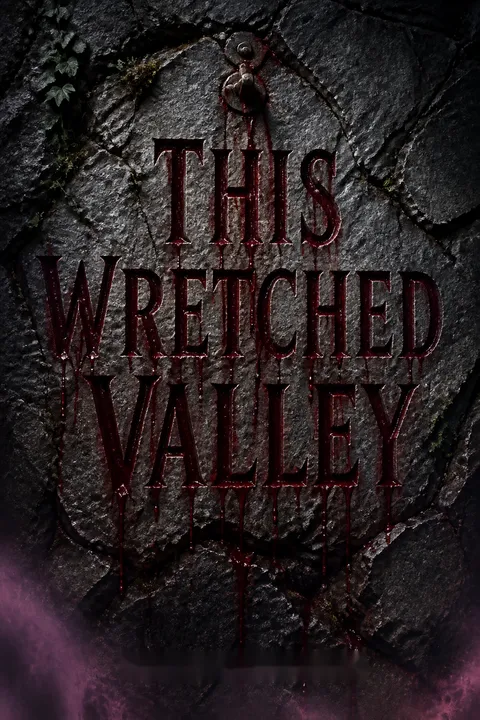


Plot Summary
Prologue
In October, investigators find three members of a missing climbing party in the Kentucky woods. Clay Foster is brutally mutilated, Luke Woodhaven is preserved with parts missing, and Sylvia Burnett has become a cleanly arranged skeleton. Dylan Prescott is nowhere to be found.
Their ruined campsite, dead electronics, and impossible remains offer no explanation. Seven months earlier, the four friends had entered the forest to explore a newly mapped cliff. The investigation frames their disappearance as a puzzle, but its strangest evidence is that the rock face they went to climb cannot be found.
The opening gives the reader the aftermath before the causes, making the search for answers part of the suspense. Its forensic perspective is precise but powerless: photographs, dental records, and careful cataloguing cannot explain what happened. Sylvia’s skeleton becomes a public object of fascination, while the people she was with become a set of unsolved anomalies. The missing cliff is the story’s first contradiction. The investigators can measure the bodies, yet the landscape that drew the climbers seems to have erased its own evidence.
A Wall Appears in Data
Geology graduate student Clay Foster has spent winter flying over Kentucky with pilot Tabitha and a borrowed LiDAR scanner, hoping to find new climbing terrain that could distinguish his dissertation and launch a career. One scan reveals a dramatic cliff in Rockcastle County. When Clay compares it with a familiar climbing area, the images appear identical, then change while he and his advisor are looking.
He dismisses the shifting data as a glitch and recruits botanist Sylvia Burnett, professional climber Dylan Prescott, and Dylan's boyfriend, Luke Woodhaven, to investigate. Dylan sees the trip as a chance to prove her new sponsor backed the right athlete. Luke agrees to leave his job and bring Slade, his beloved dog.
Clay’s discovery grows from a real mixture of curiosity and status anxiety. The technology gives him a way to convert a private ambition into apparently objective proof: if the scan says the wall exists, then his career can follow. Yet the image’s instability is an early warning that measurement will not control this place. Dylan’s sponsorship and Clay’s professional hopes also make the expedition vulnerable before anyone reaches the woods. Each climber arrives with a different investment in the same landscape, so the valley can exploit more than physical isolation.
Warnings at Route 490
On March 8, the four drive toward Route 490, carrying weeks of camping and climbing equipment. In a local diner, the waitress warns that people enter the woods and return changed, if they return at all. Sylvia finds reports of missing hunters, but Clay waves them aside. His GPS first directs them back to the diner, then leads them to an unmarked patch of forest.
They park beside a rusting no-trespassing sign and start the three-mile hike. The road noise vanishes behind them; Slade balks at unseen things, and the hikers find old cans, clothing, and a discarded hatchet. No trail leads them onward, but the GPS keeps insisting they are close.
The warning is specific enough to be useful and easy enough to dismiss. The group treats local knowledge as superstition while trusting a device that has already failed in plain sight. Their confidence is not simply foolishness: each has a reason to discount doubt. Clay needs his discovery to be real, Dylan needs the opportunity, and Luke does not want to derail her plans. The hike therefore begins as a series of small choices to continue, each one making retreat less practical. The old debris suggests that others have come this way, but offers no evidence that anyone found a way back.
The Valley Takes Notice
At dusk, the trees open around a bowl-shaped valley, its central rock shining above a grassy campsite. Dylan feels pulled toward the wall; Slade refuses to descend, and the trees’ sap runs dark red when Dylan and Luke carve their initials into a trunk. Sylvia notices poisonous plants clustered around camp.
The place has long been avoided by Indigenous communities, while an eighteenth-century settler congregation, lured by fertile ground, found its crops poisoned and its families destroyed. The hikers have no knowledge of that history. At dawn Dylan touches the cliff and climbs without a rope, stopping after a short fall. When Luke discovers Slade has escaped their tent, the expedition’s first crisis begins.
The valley makes desire feel like an external force. Dylan’s ambition and the rock’s attraction become difficult to separate, while the bloodlike sap turns an ordinary mark of affection into a violation of the landscape. The historical account establishes that the place does not merely frighten visitors; it recruits them through promises of abundance, then turns the conditions of survival against them. Slade’s refusal to enter is an animal warning the humans cannot interpret. Their camp is already inside the valley’s reach, even as they continue to behave as if this is a normal field trip.
First Ascents, First Blood
Luke and Dylan search for Slade, but the forest loops them back toward camp. Luke glimpses a gaunt, yellow-eyed dog feeding on something in the trees; Dylan doubts him and resumes climbing. She completes several routes with unnatural ease, while Sylvia records the climbs and discovers a foundation of petrified wood beneath the cliff.
On the next day, Dylan climbs a route that seems to circle back on itself. Later, her safety clips tear out of the rock and the rope breaks. Luke, belaying without a helmet, is struck as she falls. Dylan survives with bruises, but Luke suffers a concussion and likely broken wrist and ankle. Their phones and emergency beacon cannot reach anyone.
The first ascents appear to reward Dylan’s skill, but their effortless quality blurs the line between athletic achievement and the valley’s manipulation. The rock offers exactly what she wants, then makes the normal safety systems fail. Luke’s injury shifts the cost of Dylan’s ambition onto the person who has supported it, and her brief temptation to return to the wall despite his condition exposes how thoroughly the place has narrowed her attention. Sylvia’s petrified foundation gives the cliff a human history, while its placement beneath the rock suggests that the valley has repeatedly absorbed what people try to build there.
Every Trail Returns
The group tries to carry Luke up the steep valley slope, using a makeshift crutch and a sling fashioned from the broken rope. At night, their GPS leads them back to camp instead of the Jeep. Clay sets out alone the next morning, but the repeating trees and trail disorient him. He finds an old bottle of moonshine and sees a procession of eighteenth-century settlers.
One woman carries a dead infant and wears blood around her mouth. The episode echoes the congregation’s 1779 winter, when hunger, poisoned food, and murder consumed the settlement. Luke meanwhile sees spectral soldiers, including a Confederate general associated with a burning circle in the woods. The group is cut off from both rescue and ordinary time.
The failed escape makes the valley’s power concrete: it does not need to imprison the hikers behind a visible barrier when distance itself can be made unreliable. The historical visions also complicate the idea that the danger is one monster with one motive. Different eras and forms of violence occupy the same ground, and the living are forced to experience fragments they cannot verify. Clay’s reliance on the GPS persists even as its guidance becomes useless. His mistake is not trusting technology once, but continuing to treat it as a neutral authority after the landscape has begun to rewrite its instructions.
Dylan Climbs for Signal
While Clay is away, Dylan searches the valley for service and uncovers an old copper still near the creek. The water carries rust-colored strands, and the still smells recently used. With no signal below, she climbs a difficult route alone, barefoot and without safety gear, reaching the top before discovering that her phone still cannot connect.
She returns with a cut beneath her chin and hides the climb from Luke and Sylvia. Clay comes back shaken, claiming he found a trail and saw a horrifying procession. He and Dylan search for the route he marked, but the trail and his tape markers vanish. His account sounds increasingly unstable, though the valley has already shown Dylan that impossible things can happen.
Dylan’s solo climb is both a feat of extraordinary competence and a symptom of the valley’s hold. She takes a genuine risk for a practical reason, but the wall also offers an escape from guilt, fear, and a career suddenly derailed by Luke’s injury. Her silence afterward reflects the isolation of experience: she expects the others to disbelieve her, so the achievement becomes something she cannot use to earn help or recognition. Clay’s failed trail further weakens the group’s ability to agree on what is real, turning shared danger into private, competing accounts.
The Camp Is Ransacked
By morning, food containers and the cooler have been punctured, their contents scattered, while most of the water has leaked away. Luke’s injury worsens, and he fixates on figures in the trees. Clay drinks from the seemingly inexhaustible moonshine bottle he found; its history reaches back to 1924, when brothers made tainted liquor from bloody corn, and one killed the other for the final drink before clawing out his own eyes.
Hungry, frightened, and increasingly paranoid, Clay searches Sylvia’s notebooks and sees blank pages where she sees her detailed field notes. He accuses her of sabotaging his research, then strangles her in the woods. He covers her body with leaves and returns to camp alone.
Material deprivation accelerates a psychological collapse already prepared by the valley. The food attack gives Clay a concrete enemy to blame, while the moonshine turns his exhaustion into a spiral of distorted perception and grievance. His conflict with Sylvia is especially revealing because he converts uncertainty into intentional betrayal: if the evidence disagrees with him, she must be conspiring against him. The notebooks make reality itself socially contested, but Clay resolves that instability through violence. His murder is his choice, even as the valley’s influence and the liquor help loosen the restraints that might have stopped him.
Blood Beneath the Trees
When Dylan moves ahead of the others, she discovers Sylvia’s body among five desiccated teenagers and a rising pool of blood. The dead resemble victims from a 1982 episode, when bored local teens attempted a séance in the woods and were killed by the apparitions they summoned.
Back at camp, Dylan confronts Clay, who admits he strangled Sylvia while insisting the valley made him do it. Luke and Dylan leave him behind. The forest then reveals a dinner party of dead figures, and a ring of fire forces them deeper into the woods. The valley’s history has become immediate: its victims appear together, while the living are pushed toward the same bloody ground.
The discovery of Sylvia’s body destroys the last possibility that the group’s crisis can be explained as hallucination alone. The teenagers’ history connects the present to a recurring pattern of local violence, but it does not make every event identical: each generation encounters the valley through its own fears and circumstances. Clay’s confession is less a moment of insight than a deflection, an attempt to surrender responsibility to the place. Dylan and Luke’s decision to leave him is both necessary and morally painful. Survival now requires separating from someone who was once their friend.
The Valley Eats Clay
Alone with Sylvia’s corpse, Clay sees the teenagers return to life and pursues what seems to be a road. The apparition of the settler woman and her dog joins them. Clay cannot see clearly, and the figures surround him before tearing open his body and feeding. The scene recalls the valley’s earlier stories, including the 1861 burning of Union prisoners and soldiers under Confederate General Zollicoffer.
Dylan and Luke, meanwhile, come upon a ghostly cabin split by the cliff, where a murdered woman’s fate replays beside a fire. Dylan approaches the structure; a huge man with a hatchet emerges and chases her. Luke crawls after them despite his broken body, carrying a small knife.
Clay’s end literalizes the appetite that has operated metaphorically throughout the story, but it does not absolve him of what he did to Sylvia. The valley’s victims are gathered into a spectacle of violence, where historic deaths recur without becoming lessons the living can easily apply. Dylan and Luke encounter the past as an active threat rather than a story told by locals. Luke’s decision to follow Dylan marks a shift from passive helplessness to action. His body is badly damaged, yet attachment still moves him toward danger.
A False Slade Turns Them
Luke reaches Dylan as the hatchet-bearing figure catches her. Together they attack it, and Luke cuts its throat; the apparition dissolves into dark fluid. But while following her through the woods, Luke finds a dog that resembles Slade with Dylan’s knife lodged in its neck.
The body is not actually Slade, though Luke’s grief and concussion prevent him from noticing the mismatched markings and ears. Convinced Dylan killed the dog, he turns his anger on her. The valley has transformed a familiar source of comfort into false evidence, and Luke pursues Dylan through the trees, no longer acting as her partner but as another threat she must survive.
The false dog exploits Luke through the very bond that once made him protective. His grief is real, but the conclusion he draws is manufactured from misleading evidence and a mind already injured by the fall. Dylan has to recognize that love cannot guarantee safety when perception has been commandeered. The reversal is especially cruel because Luke first helps her defeat the hatchet figure, then becomes dangerous himself. The valley does not merely create fear; it reroutes care into accusation, turning intimate knowledge into a weapon.
Dylan Kills Luke
The apparitions herd Luke and Dylan into a shrinking ring of fire. Luke attacks with the knife, driven by the false belief that Dylan killed Slade. Though badly injured, Dylan uses her climbing strength to resist him, breaks his wrist, and finally stabs him when he continues toward her.
Luke briefly regains himself and reaches for her hand before dying. Dylan remains alone beside his body as the flames die. She starts a livestream on her phone, pleading for help and identifying the area near Route 490. The screen shows a ghost behind her, then gains a signal just long enough for viewers to respond before the battery dies.
The climax forces Dylan to survive through an act that contradicts the tenderness of her relationship with Luke. She does not kill him in triumph; she acts because he will not stop, then receives only a brief return of the person she loved. The fire makes the conflict feel staged by the valley, but the physical struggle remains painfully human. Her livestream converts private terror into a desperate public record. The signal arrives too late to rescue her, yet it matters: the valley can distort evidence and location, but it cannot entirely prevent the outside world from seeing a trace.
The Cliff Collapses
At dawn, Dylan returns to the campsite and chooses the cliff over the endless forest. She climbs again, injured, exhausted, and without proper gear. Near the top, a figure wearing Luke’s face reaches down to help. Dylan recognizes the gathering ghosts behind him and refuses to be pulled onto the summit.
She braces against the wall, breaking away a piece of rock, and falls. The cliff begins to fracture and collapses into the earth, leaving open Kentucky sky where the valley’s central landmark stood. In April, Tabitha returns by plane and realizes the mapped wall has vanished. She contacts police, but their searches find only trees, and Dylan’s fate remains unconfirmed.
Dylan’s last climb repeats her earlier acts of mastery while stripping away their promise of career, recognition, and rescue. The false Luke offers comfort in the exact form she most wants, but she refuses the emotional bait because she has learned that the valley can imitate what it takes. Breaking the cliff is a final gesture of resistance, even though it costs her life. The ending refuses conventional escape: the landscape itself disappears, leaving witnesses and investigators with no stable object to explain. Tabitha’s search preserves the human need to keep looking, despite evidence that place and memory no longer align.
Epilogue
In April, Tabitha flies over the coordinates Clay had sent her and finds no cliff or valley. She alerts the Livingston police, who search repeatedly but discover only woods. Reports from Dylan’s social media livestreams bring attention to the missing party, yet the authorities cannot locate the site.
Months later, a motorist finds the Jeep and the bodies of Clay, Luke, and Sylvia. Dylan is still missing. Investigators puzzle over the remains, while online theories multiply. The valley has apparently waited until its appetite is satisfied before allowing the evidence to be found, then disappears from the landscape that first revealed it.
The closing section returns the story to the investigators’ limited tools and the public’s appetite for an explanation. Tabitha’s repeated searches make friendship persist beyond the point where evidence can support hope. Meanwhile, the discoveries of the bodies do not solve the case; they generate new theories and turn private suffering into spectacle. The missing wall is the final breach in ordinary causality. Unlike a hidden killer or an undiscovered trail, the valley cannot be pinned to a map. Its disappearance leaves the characters’ deaths real but their cause almost impossible to establish.
Analysis
This Wretched Valley turns the familiar language of outdoor competence against its characters. Maps, training, equipment, and field notes normally reduce risk by making a landscape legible. Here, each tool initially works just well enough to earn trust, then fails at the moment its user depends on it. The horror comes not only from supernatural attacks but from the breakdown of shared reality: Sylvia’s full notebook appears blank to Clay, the trail Clay insists he found disappears, and Luke mistakes a lookalike dog for Slade. Fear becomes most dangerous when it converts uncertainty into certainty.
The expedition also links ambition to vulnerability without treating ambition itself as a moral flaw. Dylan wants recognition for difficult work; Clay wants a career that will make discovery his livelihood. The valley answers those desires with a cliff and a path to fame, making its lure intimate rather than arbitrary. Their goals do not cause the supernatural violence, but they influence what each person notices, dismisses, or risks. Dylan’s climbing skill offers genuine agency, even as the rock’s attraction increasingly compromises her judgment.
The historical episodes make the valley’s violence cumulative. Settler hunger, wartime cruelty, poisoned liquor, and teenage boredom leave different marks, yet each generation becomes part of the same place-bound cycle. The ghosts are not a clean explanation for every action: Clay remains responsible for killing Sylvia, and Dylan’s final acts occur within choices she must make under pressure. The landscape’s appetite does not erase human responsibility; it intensifies the conditions in which responsibility is tested.
The ending denies the usual promise that evidence will restore order. Investigators find bodies but not the cliff, while Tabitha sees the landscape change from the air. Public speculation multiplies because the disappearance is partially visible and impossible to verify. The valley survives as a gap between what people witnessed and what they can prove. The most disturbing consequence is not simply that the hikers vanish, but that their traces become material for other people’s theories.
Review Summary
This Wretched Valley receives mixed reviews, averaging 3.25/5. Praised elements include its atmospheric setting, effective gore, strong opening chapter, and its inspiration from the Dyatlov Pass incident. Comparisons are frequently drawn to The Ruins, The Descent, and Annihilation. Common criticisms include one-dimensional characters, repetitive pacing, predictable plot beats, and an unsatisfying ending. Many readers felt the book started strong but lost momentum. Some appreciated the survival horror elements and unique wilderness setting, while others found the writing inconsistent and the characters frustratingly illogical.
People Also Read







Characters
Dylan Prescott
The sponsored first ascensionistDylan is a gifted climber newly signed by Petzl, a gear company, and the expedition offers her a rare chance to develop new routes and prove her value. She is disciplined, physically confident, and practiced at presenting an upbeat version of herself online, but that public persona intensifies private doubts about whether her success is deserved. Her relationship with Luke is affectionate, though she can prioritize her career when their needs conflict. Dylan’s climbing is not just a sport; it is the arena where she feels most competent and most fully herself. Her ambition makes her vulnerable to the cliff’s pull, while her technical skill and ability to endure discomfort become crucial to navigating danger.
Clay Foster
The data-hungry geologistClay is a geology doctoral student who uses LiDAR to search for uncharted climbing walls. He wants a career built around discovery rather than academic routine, and the prospect of finding a major new crag feeds both his professional hopes and his hunger for recognition. He is resourceful and energetic when his plans seem to be working, but he has little patience for obstacles and often treats other people’s expertise as secondary to his own. His history with Dylan makes the expedition personal, while his longstanding connection to Sylvia gives their collaboration the appearance of trust. Clay’s ambition can turn practical judgment into stubbornness.
Luke Woodhaven
The anxious loyal partnerLuke is Dylan’s boyfriend and Slade’s devoted owner. He is caring, attentive, and prone to imagining the worst, especially when the dog behaves strangely or seems unwell. His concern can look like needless worry to Dylan, but it comes from a strong sense of responsibility for those he loves. Luke supports Dylan’s climbing career even when doing so costs him a job and the security of their home. He dislikes performing for cameras and sometimes feels pushed to the edge of her public-facing ambition. His loyalty is genuine, though the expedition tests how much fear and helplessness he can bear.
Sylvia Burnett
The field botanistSylvia is a graduate student studying native plants and geology, invited to document Clay’s fieldwork and contribute her botanical knowledge. She is observant, careful, and ethically minded, attentive to how human activity affects an ecosystem. Her paper map, detailed notes, and habit of identifying poisonous plants make her a counterweight to Clay’s confidence in technology. She also wants her work taken seriously, so the promised coauthorship matters. Sylvia is not an outdoors expert, and she knows it; her caution comes from an effort to compensate through preparation rather than bravado. She often notices environmental details the climbers overlook.
Slade
The watchful cattle dogSlade is Luke and Dylan’s brindle Australian cattle dog, a familiar companion on their climbing trips. Energetic and easily startled, he reacts to the woods before the humans understand that anything is wrong. Luke’s protectiveness toward him is rooted in the responsibility he felt after rescuing him as a puppy. Slade’s presence brings domestic warmth into an expedition increasingly stripped of ordinary comforts.
Tabitha
Clay's pilot and old friendTabitha is Clay’s friend since middle school and a licensed pilot who flies him over Kentucky while he searches for climbing terrain. Her skill makes the LiDAR survey possible, and her practical friendship gives Clay access to an expedition he could not easily organize alone. She remains outside the forest during the main events, but her unanswered questions help carry the search into the aftermath.
The waitress
The local warning voiceThe diner waitress serves the group before their hike and knows local stories about disappearances in the woods. Her blunt warnings make the danger legible before the climbers are willing to believe it. To the visitors, her manner can seem theatrical or bored, which helps them dismiss knowledge rooted in the town.
Professor Berry
Clay's skeptical advisorProfessor Berry supervises Clay’s dissertation and examines the strange LiDAR scans with him. He is cautious about the apparent match between the new cliff and a known climbing area, but accepts Clay’s explanation of a computer glitch. His brief presence establishes the academic context Clay hopes to outgrow.
Plot Devices
The changing valley
A landscape that trapsThe Kentucky valley interferes with ordinary orientation, communication, and memory. GPS devices malfunction, trails return travelers to camp, and familiar features repeat or vanish. Its poisonous plants, strange water, and apparent attraction toward visitors make it more than a backdrop. The valley offers people what they most want, especially the climbers’ glittering rock face, then uses that desire to keep them close. Its history suggests that the place has drawn and consumed people across generations.
LiDAR scans
A map to the impossibleClay’s LiDAR equipment uses laser measurements to create a detailed image of terrain beneath the trees. It reveals a cliff that ordinary maps do not show and gives Clay a reason to organize the expedition. The scans briefly appear to reproduce a familiar climbing area, then change, foreshadowing that the technology cannot provide stable evidence of the valley. Later, the missing cliff makes the original data seem less like a reliable survey than an invitation.
The apparitions
History made predatoryThe dead appear in forms tied to violent events in the valley’s past: settlers, soldiers, moonshine makers, and local teenagers. Their scenes overlap in the present, confusing the hikers’ understanding of time and making the woods feel inhabited by several eras at once. The apparitions are not merely visions that frighten the characters. They influence perception, redirect movement, and take part in the violence that unfolds around the living.
The moonshine
A bottle that blurs realityClay finds a green glass bottle of moonshine in the forest and drinks from it as exhaustion and fear mount. The liquor seems never to run out, and its history connects to a 1924 batch made from corrupted corn. As Clay becomes more dependent on it, his perceptions and suspicions worsen. The bottle is both a practical temptation in a starving expedition and an uncanny instrument that makes it harder for him to distinguish hallucination from the valley’s actual horrors.
Phones and livestreams
A failing thread to homePhones promise navigation, emergency contact, and public witness, but their signals and records fail in the valley. Dylan’s climbing posts attract attention outside the woods, and her final livestream briefly reaches viewers, yet the information is distorted and insufficient to direct rescuers. The devices preserve fragments of the expedition without making the location findable. This creates an uneasy contrast between being visible online and being physically unreachable.
Download PDF
Download EPUB
.epub digital book format is ideal for reading ebooks on phones, tablets, and e-readers.








