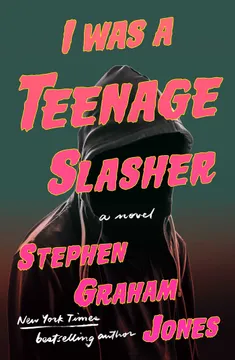


Plot Summary
The Night at Deek's
In July 1989, seventeen-year-old Tolly Driver arrives at a party with Amber Dennison, his closest friend and fellow outsider in Lamesa, Texas. Since his father died in a road accident, Tolly has tried to outrun other people's pity by drinking too much and acting reckless. He is also fixated on Stace Goodkin, the serious, admired senior who once babysat him.
At Deek Masterson's house, Amber draws attention to Tolly, and Stace welcomes him into the party. Her kindness feels like an opening he has waited for, but he is too nervous to speak to her. Instead, he keeps refilling his cup, turning grief and insecurity into a performance the other teenagers can laugh at.
Tolly's first danger is social before it is supernatural. His peanut allergy has made him conspicuously fragile, while his father's death has made him an object of communal sympathy. He answers both forms of exposure with spectacle, choosing drunken humiliation over the helplessness others assign him. Amber offers a quieter alternative: companionship without pity. Stace offers a different possibility, recognition from someone Tolly idealizes. His inability to meet that possibility directly makes the party's later cruelty possible. The opening establishes a boy trying to control how others see him, just as the mask will later let him stop being seen at all.
Peanuts on the Patio
After Tolly splashes Mel Boanerges and her college-age companion at the pool, Mel's marching-band friends strap him to a lounge chair with their uniform belts. Mel gives him a drink containing peanuts, though she later insists the exposure was not deliberate.
Tolly's throat swells shut; he convulses and chokes while the party mistakes his distress for more drunken misbehavior. Stace spots the emergency through a window. She races to Amber's unlocked Volkswagen pickup, finds Tolly's EpiPen in the glove compartment, and vaults across the pool to inject him.
Amber stays beside Tolly as the party empties and the marching band tries to shape a cover story. The injection revives him, but his survival leaves him bound, frightened, and surrounded by the people who treated his life as entertainment.
The scene converts a familiar social role into bodily peril. Tolly is the boy everyone knows must be protected from peanuts, yet that knowledge has become part of the party's comedy and the restraint of his body. Stace acts where the group has stopped perceiving him as a person in danger. Amber's presence matters differently: she supplies the emergency medicine and refuses to abandon him afterward. Their two kinds of care, decisive rescue and intimate loyalty, become the ethical counterweight to the crowd's casual cruelty. The event also leaves Tolly physically vulnerable at the exact moment when his old identity is about to fracture.
Justin Joss Returns
Four years earlier, Deek and his friends initiated Justin Joss by daring him to ride a working pumpjack. Deek restarted it while Justin was climbing aboard; the counterweights tore away his leg and part of an arm. Now, while Tolly recovers at the party, Justin appears in the backyard wearing a balloon mask and carrying an oilfield drillbit in place of a hand.
He attacks the group that set him up, killing Trey, Abel, Grandlin, Ezzy, and Mandy as they scatter. Deek escapes into the dark. Stace stays behind, uses a tarp to clog the drillbit, then loops a cable around Justin and ties him beneath the diving board. The others look away, and Justin disappears. Tolly and Amber flee without knowing whether Stace's improvised trap has held.
Justin's return is vengeance made literal, but the novel refuses to make revenge a clean restoration of justice. His tormentors are responsible for the stunt that mutilated him, yet his retaliation expands beyond the original instigators and turns the backyard into a slaughterhouse. Stace's effort to save Justin years earlier complicates the category of guilt: she participated in the same group, but tried to prevent the fatal outcome. Her practical intelligence, not purity, makes her the night's strongest counterforce. The pumpjack, first used as an initiation device, returns as the story's image of a community's machinery: ordinary, locally understood, and lethal when people treat another person's risk as a joke.
Blood Across the Cut
As Amber drives Tolly away, they jolt over a cattle guard; he smears the two drops of Justin's blood on his forehead into a small cut left by the pickup windshield. By morning, police find Deek dead at a pumpjack and Stace badly injured nearby. Tolly and Amber conceal what they witnessed when Sheriff Lacey Burke questions them.
Later, at the hardware store, Tolly reaches for a loose spray-paint can just as a truck driven by the deputy's fiancée rounds the loading dock. It strikes him hard enough to fold him over its bumper and send him across the brick street. His coworkers gather around what should be a fatal accident. Tolly sits up intact, leaving his mother and everyone watching with a question they cannot explain.
Two kinds of impact meet here: Justin's blood enters Tolly's cut, while the truck tests whether ordinary injury can still govern his body. The sequence does not offer a neat causal explanation, and that uncertainty is essential. Tolly has already learned to narrate events as chains of what-ifs, especially around his father's death. Now his own survival becomes another event he may misread as luck, denial, or evidence of a new condition. Burke's investigation introduces a public account that competes with his private knowledge. Tolly and Amber's lie protects them briefly, but it also leaves them isolated with the truth.
The Truck That Wouldn't Kill
Tolly's mother, Brenda, brings him home after the collision, and they try to resume their old routine with rented movies. During An Officer and a Gentleman, the colors drain from Tolly's vision, replaced by a sharper, unfamiliar palette.
A seizure sends him into his parents' closet, where he wakes amid pain and broken memories. He leaves the house and walks to the abandoned Fireworks Camper, a place local teenagers use for privacy. His vision narrows through angular shadows, and he realizes that something covers his face.
A possum emerges from the weeds, but Tolly's attention fixes on the camper instead. The change in his senses has not merely followed the accident; it is drawing him toward people and places with a purpose he cannot yet name.
The transformation arrives through perception rather than a declared identity. Color does not simply vanish; Tolly notices distinctions that ordinary vision missed, while his field of attention narrows toward a target. The change gives him a strange competence, but it also strips away the broad context in which moral choice happens. He can see the possum, the camper, and his own altered face, yet not understand the system connecting them. The episode echoes his earlier efforts to control appearances: the mask promises release from self-consciousness, but the relief comes with a loss of agency. His new clarity is therefore also a form of capture.
The Fireworks Camper
At the camper, Tolly sees Shannon Larkweather, a classmate, climb out after being intimate with Lesley Cantor, a marching-band student. His face is hidden, his breathing labored, and rage overrides his ordinary hesitation.
He slams Shannon's head against the aluminum wall until she dies. Lesley flees around the nearby grain elevator, but Tolly catches him with a belt and uses it to strangle him against a utility pole. When Tolly's awareness returns, he is standing over the bodies with blood on his hands.
He cannot recall the walk there or fully recognize what he has done. By Sunday morning, he has reached Amber's family farm, where her parents find him injured and confused. Shannon and Lesley are missing, and Tolly's memories offer no safe explanation.
The first killings are narrated as an experience of divided agency, not as a simple blackout that absolves Tolly. He remembers enough to describe the violence and later insists that the acts were his, even while imagining himself as a rider inside his own body. The contrast between the intimate setting and the mechanical brutality matters: the camper is a refuge teenagers have made from a town with few private spaces, then becomes a trap. His confusion afterward does not undo the victims' reality. Instead, it establishes the central ethical problem of the book: whether a person can be responsible for actions performed under a force they did not choose.
Amber Names the Monster
At the Dennison farm, Amber notices the belts Tolly has brought from his mother's closet and learns that Shannon and Lesley are unaccounted for. She tests him rather than accepting his explanation: Tolly moves faster than a stopwatch can measure, senses a police car before it appears, and handles tools with impossible accuracy.
When he lifts a knife, it makes a theatrical scraping sound that Amber cannot reproduce. Drawing on horror films she watched with her Army brother, she recognizes a slasher pattern: Tolly is compelled toward those connected to the original harm, while someone like Stace or Mel may become the final girl who can oppose him. Amber's diagnosis frightens them both. She stays with Tolly anyway, searching for a way to interrupt what she believes is coming.
Amber's horror-film knowledge works as a survival literacy, not a collection of genre trivia. She treats Tolly's claims as hypotheses and tests them against observable changes: speed, prediction, strength, and the sounds produced by weapons. This method gives her partial control over a supernatural crisis, while Tolly's joking resistance protects him from accepting the implications. Their friendship shifts from mutual refuge to a relationship in which Amber must interpret and manage a danger Tolly cannot reliably perceive. Yet her naming of the slasher role is not a verdict. It is an attempt to create a map before the next night makes the map necessary.
Caged in Cotton Wire
Amber persuades Tolly to help her prepare for another episode, then leads him into the Dennison farm's cluttered barn. She assembles chicken wire inside an abandoned cotton stripper basket, wraps Tolly with the belts from his mother's closet, and braces the cage with a come-along and a cotton trailer. She asks him to watch for the returning colorless vision and to signal her if it begins.
The arrangement is practical but desperate: Amber knows the restraints may fail, yet wants to keep Tolly away from classmates and his family. After she leaves to answer the household bell, the light fades. Tolly later finds himself out of the cage, with no memory of escaping. By dawn, his hunger for revenge has carried him toward the stock tank.
Amber's plan is an act of care that borrows the language of confinement. She knows Tolly is frightened by what he may do, but the cage also makes their friendship asymmetrical: she becomes keeper, investigator, and protector at once. The farm's discarded machinery gives her materials without offering a true solution. That limitation is important. Her knowledge can predict the genre's likely pressures, but cannot make its rules obedient. Tolly's unexplained escape confirms that physical restraint is not enough, while his movement toward the stock tank suggests that the force inside him has begun to select its own route.
The Stock Tank Massacre
Near dawn, Tolly reaches a stock tank where Wes Stripling and Jenna Gonzales are behaving as if compelled into a horror-film scene. He spears Wes to a windmill with a broken pipe, then ruptures the tank wall to drag Jenna into the open and strangles her with her own hair. Mel appears with a baton and strikes Tolly, but he loses track of her.
In the bed of Wes's truck, he finds another young woman and drives a baton through her mouth; he believes she is Mel until he sees her clearly and recognizes Janice Dickerson. The real Mel has survived and fled. Tolly's violence has now spread beyond the classmates he remembers as responsible, and his certainty about who is in front of him has become dangerously unreliable.
The stock tank sequence turns the slasher's logic into a failure of perception as well as judgment. Tolly believes he is punishing a defined group, but his confusion between Mel and Janice exposes how easily the role consumes distinctions between people. The setting carries a local specificity: a cattle watering place becomes a stage for the town's youth, with a windmill and irrigation pipe repurposed as weapons. Tolly's physical survival and tactical skill do not make him more morally capable. They make it harder for others to stop him. The mistaken identity marks a decisive widening of harm beyond his own grievance.
The Josses Fall, Burke Knows
After the stock tank killings, Tolly reaches town and learns from Amber that Justin's parents have died in a violent confrontation with Sheriff Burke. Their presence had drawn suspicion away from the actual killer; with them gone, Burke's attention turns toward Tolly, whose stories and injuries place him near several crime scenes.
Amber takes him back toward the damaged stock tank, where he recognizes signs of the bodies he left behind. Tolly asks whether fire or a weapon could end his condition and even tightens a belt around his own neck, but Amber stops him before he suffocates.
She agrees that he should surrender before more people are hurt. As evening approaches, she drives him toward town, and Tolly sees his vision begin to drain of color again.
The Josses' deaths remove the convenient explanation that Justin's parents are responsible for the violence, but they do not give the police a supernatural account to replace it. Burke has to work with ordinary evidence, and Tolly has to face the possibility that the law is closing in on him. His attempt to strangle himself shows that he understands the danger without yet believing he can choose another course. Amber's intervention is again physical and intimate, but her promise to help him surrender is a more public form of responsibility. The fading colors announce that the crisis is returning even as they seek safety.
Mel Marks the Wall
When the color drains at the Sky-Vue drive-in, Tolly throws himself from Amber's pickup to keep the transformation from reaching her. A car strikes Amber's little Volkswagen, and Tolly uses his new speed to pull her clear.
He then follows Mel to the graduates' wall, where she has painted a tally of his killings. She sprays paint into his face and escapes his attack; dogs gather around him, but Amber arrives in the deputy's fiancée's truck and drives them back. Mel reaches Tolly's home, where Sheriff Burke corners her.
Mel shoots Tolly in the shoulder, then empties her gun at the darkness. As Burke turns to help a wounded officer, Tolly slips into the cruiser and strangles Mel in its back seat. The final girl is dead, but Tolly's violence has not stopped.
Mel is not a passive emblem of innocence. She names Tolly's harm publicly on the wall, fights him with what she has, and uses the town's animals and geography to escape. The painted tally converts private violence into civic evidence, even though Tolly cannot read it in his transformed state. Amber's truck rescue repeats her role as protector, but Tolly's decision to leave her and pursue Mel shows how little friendship can govern him during the episode. Killing Mel seems to satisfy the genre's expected showdown, yet the continued compulsion exposes the flaw in treating a final girl as a switch that simply turns the killer off.
Seven Stories of Dark
Believing the violence must end with his death, Tolly climbs the abandoned grain elevator. Amber follows and admits, through her changed behavior, that the story has made her his final girl: she had braked his pickup on the night of the first party, causing the cut that let Justin's blood enter him.
Inside the elevator, she is forced through a corridor of the victims Tolly has arranged or the genre has conjured, including Shannon, Lesley, Jenna, and Wes. At the top, Tolly advances on her. Amber smears peanut butter across his face, exploiting the allergy that began his torment. His throat closes and he falls seven stories. The fall kills him, but the peanut butter's presence keeps his body from staying dead.
The elevator brings the story's two competing explanations together: the supernatural rules Amber has learned and the personal history Tolly keeps using to excuse or condemn himself. Amber's role as final girl is not a reward for moral purity; it grows from an accident of friendship that made her part of the chain of events. Her use of peanut butter is psychologically exact. She turns the original vulnerability that once made Tolly a target into the only effective restraint she has. The fall seems to offer a conventional ending, but the body that will not stay dead preserves the story's hardest question: what does stopping mean when survival itself is part of the curse?
Northbound, Not Finished
Amber clears the peanut butter and breathes life into Tolly, who wakes after the fall and runs rather than attack her. His mother, Brenda, finds him on the road and gives him her truck keys and a drive-in Chihuahua, directing the police toward his father's grave so Tolly can escape.
A trucker carries him north, and Tolly eventually settles at a Colorado salvage yard, where he works among wrecked vehicles and writes his account for Amber. Years later, he sees Amber arrive with a child to find her old Volkswagen pickup, which Tolly has kept. He plans to consume the peanut butter he has saved so he cannot rise again, but the account ends with that intention, not proof that he has carried it out.
The resolution offers separation rather than absolution. Brenda chooses to protect her son while redirecting the investigation, a costly act of maternal love that echoes her earlier efforts to keep him alive. Tolly's flight preserves other people from his immediate presence, but it also leaves him with no legal reckoning and no chance to repair what he has done in person. Writing becomes his substitute for confession and contact. His plan to die before Amber reaches him is both an attempt at accountability and another attempt to control how she remembers him. The ending refuses certainty: the reader receives a promise of self-erasure, not confirmation that the cycle has ended.
Analysis
The novel makes horror out of the social life of a small town, not simply out of a masked killer. Lamesa's teenagers inherit a world of familiar roads, school rituals, oilfield machinery, and reputations that seem permanent. Justin's initiation shows how cruelty can pass as tradition when a group distributes responsibility among its members. Tolly's transformation magnifies that same logic: the slasher genre assigns roles, turns old injuries into a list of targets, and makes the person inside the mask feel both compelled and absolved. Yet Tolly's narration repeatedly refuses clean exoneration. He knows he was frightened, grieving, and sometimes unable to control his body, but he also recognizes the difference between explaining harm and undoing it.
Amber provides the book's strongest counterargument to fatalism. She studies the genre, tests its rules, builds a cage, and keeps acting when each solution fails. Her knowledge does not make her omnipotent; it gives her enough understanding to choose whom to protect and what risks to take. Stace's and Mel's contrasting forms of resistance further complicate the final-girl ideal. Neither is merely a symbol of innocence. They are students with histories, judgments, and imperfect decisions, and their actions alter the course of the violence.
The book also treats storytelling as a form of responsibility. Tolly's account is written for Amber, the person who knew him before his crimes and tried to stop them. Its corrections and uncertainties reveal how memory can protect the self, but its vivid attention to victims keeps that protection from becoming complete. The ending offers no legal settlement and no easy reunion. Instead, it leaves Tolly with a choice he can only imagine making: to prevent another return by turning his own vulnerability against the force that keeps him alive. The emotional resolution lies not in forgiveness, but in his attempt to stop making others pay.
Review Summary
I Was a Teenage Slasher receives mostly positive reviews, with readers praising its unique perspective as a slasher memoir told from the killer's viewpoint. Many highlight its balance of gore, humor, and heartfelt themes of friendship and love, set against nostalgic 1980s West Texas. Fans of Stephen Graham Jones appreciate his signature stream-of-consciousness style, though some critics find the writing overly slow and meandering. The supernatural elements surprise some readers expecting a straightforward slasher story. Overall, horror enthusiasts, particularly slasher fans, are most likely to enjoy it.
People Also Read




Characters
Tolly Driver
Grieving boy turned threatTolly is a skinny, academically uneven teenager who is often defined by his severe peanut allergy and his father's recent death. He uses jokes, drinking, and reckless stunts to push back against the pity that makes him feel small. His closest relationship is with Amber, whose loyalty lets him imagine being known without being handled. He idealizes Stace and wants recognition, but struggles to act honestly when he feels ashamed or afraid. As an older narrator, he reconstructs the events with sharp detail and frequent doubt, scrutinizing his own excuses as carefully as he recalls the damage. His account is driven by a need to tell Amber what he could not tell her in person.
Amber Dennison
Tolly's loyal counterforceAmber is Tolly's best friend, a quick-minded farmer's daughter who knows how to drive, repair, and read the social weather of Lamesa. She is Indigenous and acutely aware of how others judge her, yet she rarely lets prejudice define the limits of her action. Her humor keeps Tolly company without pretending that his behavior is harmless. She has learned horror-film conventions from her Army brother and applies that knowledge with practical curiosity rather than blind faith. Amber wants a life beyond the farm and expects to have to make it herself. Her courage is grounded in attention: she notices danger, gathers tools, and keeps trying to protect people even when the cost is personal.
Stace Goodkin
The principled seniorStace is a disciplined student who takes schoolwork, team obligations, and other people's safety seriously. She once babysat Tolly, a fact that feeds his adolescent idealization of her, but she is more than his distant crush. Her attention to risk makes her notice what others dismiss, and her training in gymnastics gives her physical confidence as well as composure. She is part of the same school world as Deek and his friends, but does not share their appetite for careless humiliation. Stace's character is defined by an instinct to intervene: she expects responsibility to mean acting, not merely expressing concern afterward.
Justin Joss
The excluded classmateJustin is a socially marginal student whose longing to be included makes him vulnerable to people who treat acceptance as something he must earn through humiliation. His history with Deek's group begins in school and becomes bound to the dangerous rites of West Texas teenage life. Others remember his awkward attempts to win approval, but too often mistake that vulnerability for permission to use him. He stands at the center of the book's questions about bullying, collective guilt, and what happens when a victim's grievance becomes a weapon.
Deek Masterson
The privileged instigatorDeek is a recent graduate whose family's money and indulgence give him unusual freedom in Lamesa. He gathers a tight crew around himself and treats risky pranks as entertainment, especially when someone lower on the social ladder can be made to perform. His confidence depends on the assumption that consequences can be avoided or managed by the group. He knows the local roads and equipment, but that practical familiarity does not make him careful with other people.
Mel Boanerges
The baton-twirling rivalMel is one of Lamesa High's baton twirlers, forceful, observant, and comfortable commanding a crowd. She participates in the party's treatment of Tolly and has a sharper edge than the saintly image associated with final girls. Her behavior is shaped by the town's competitive school culture, where standing out can mean controlling the joke before someone else does. Mel's confidence in public contrasts with the vulnerability everyone tries to assign to girls, and she is capable of turning performance into confrontation.
Brenda Driver
Tolly's steady motherBrenda runs a hardware store and has spent years balancing work with care for her husband and son. Practical and attentive, she knows how to watch Tolly for signs of an allergic reaction and how to keep daily rituals alive after loss. Her grief over her husband is never separate from her concern for Tolly, but she does not reduce him to his vulnerabilities. Brenda's love is expressed through food, supervision, work, and the instinct to reach for him when he comes home.
Sheriff Lacey Burke
The town's first woman sheriffLacey Burke is the county's first woman sheriff, working in a community where her authority unsettles men accustomed to unquestioned power. She investigates the deaths with persistence and asks Tolly and Amber direct questions, though she has to build her case from ordinary evidence. Her role tests the boundary between law enforcement and local assumptions: she can recognize that something is wrong without immediately knowing what kind of wrong she faces.
Mack Driver
The absent oilfield fatherMack is Tolly's late father, an oilfield pumper who taught him to measure crude, keep records neatly, and pay attention to the machinery of daily work. His humor and steady presence remain part of Tolly's internal standard long after his death. Tolly remembers him less as a source of advice than as the person whose ordinary companionship he cannot replace.
Lesley Cantor
A guarded band studentLesley is a marching-band student whose school life is shaped by the need to conceal a part of himself in a hostile town. He has a complicated history with classmates who repeat rumors rather than understand him. His presence in Tolly's story exposes how easily small-town cruelty can be disguised as gossip, discipline, or a harmless joke.
Shannon Larkweather
A familiar classmateShannon has known Tolly since childhood, including the school years when their classmates turned small incidents into lasting reputations. She belongs to the marching band and to the same tight social world that makes the party feel both familiar and difficult to escape. Her history with Tolly gives his later recollections of her a painful intimacy.
Wes Stripling
The track-focused seniorWes is a talented runner who treats his body as a promise of future opportunity. He joins marching band partly to avoid the demands of football and basketball, and his discipline sets him apart from classmates who drink and take risks more casually. His ambitions make him a clear example of the future Tolly imagines other teenagers are taking for granted.
Jenna Gonzales
The ambitious cheerleaderJenna is a future head cheerleader who fills her schedule with school and church activities. She is publicly associated with conventional respectability, but she also wants access to the excitement and freedom her peers claim for themselves. Her divided image makes her legible to the town in ways that do not necessarily reflect her private desires.
Janice Dickerson
The other baton twirlerJanice is Lamesa High's second baton twirler and is often mistaken for Mel because the two girls share a school role and appearance. She belongs to the marching-band circle whose members spend the summer preparing for competition. Her brief presence in the story underscores how easily a person can be reduced to a category when fear and violence take control.
Ezzy Martinez
The bold team memberEzzy Martinez, Abel's twin sister, joins Deek's leadership group and is physically confident, with experience as a barrel racer. She is willing to demonstrate dangerous stunts when the group turns Justin's initiation into entertainment.
Trey Meeks
Deek's eager followerTrey belongs to Deek's close circle and takes part in the group's rough humor and risky games. His place in the crew reflects the way social belonging can depend on applauding the person who sets the rules.
Abel Martinez
The team's football muscleAbel is Ezzy's twin and an all-district linebacker, giving Deek's group physical confidence. He joins the crowd around Justin's initiation and represents the protective force the group believes its numbers provide.
Grandlin Chalmers
The heedless teammateGrandlin is part of Deek's leadership-team circle, known for moving through the world without noticing the harm or mess he leaves behind. A small act of carelessness at Tolly's father's funeral becomes one of the images Tolly connects to the summer's chain of events.
Osh Kosh
Amber's watchful llamaOsh Kosh is the llama Amber's brother brought home after a broken engagement. Curious and oddly observant, he wanders the Dennison farm and becomes a quiet witness to Tolly's confused arrivals and Amber's attempts to protect him.
Bo
The kind traveling welderBo is a welder who crosses paths with Tolly at the Town & Country store. His easy confidence and unforced generosity briefly offer Tolly an encounter untouched by suspicion, even as Tolly struggles to accept kindness.
Plot Devices
Slasher and final-girl rules
A genre becomes a trapAmber uses the horror films she watched with her brother to interpret the events around Tolly. The slasher seeks revenge on those connected to an old injury, while a final girl becomes the person capable of resisting him. The rules explain uncanny speed, sudden disappearances, masked identity, and the way ordinary people seem pushed into familiar horror roles. They are useful but incomplete: Amber can anticipate patterns, yet the characters cannot assume that recognizing a convention will let them control it.
Peanut allergy and blood
Vulnerability becomes contagionTolly's severe peanut allergy first makes him physically vulnerable and socially conspicuous. Later, Justin's blood reaches the small cut on Tolly's forehead, linking the supernatural transformation to a wound acquired during the escape from Deek's party. The allergy remains consequential even after Tolly becomes difficult to injure: peanut butter can still provoke the reaction that ordinary violence cannot. This device binds the beginning and climax through Tolly's body, turning an everyday medical danger into both the origin and possible limit of his violence.
Belts as mask and restraint
A face concealed, a body heldThe belts that the marching band uses to restrain Tolly become part of the mask he wears when the slasher transformation takes hold. They also recur as weapons and as Amber's attempt to contain him. Their ordinary domestic origin matters: Brenda's practical clothing becomes the material of Tolly's anonymity, while the restraint imposed by classmates is carried into the role he inhabits. The belts connect humiliation, concealment, violence, and the possibility of restraint without turning any one use into a simple solution.
West Texas machinery
Local tools turn lethalPumpjacks, drillbits, cattle guards, cotton equipment, a stock tank, and a grain elevator shape both the setting and the violence. These are not exotic weapons imported into Lamesa; they are familiar parts of work and rural recreation. The pumpjack that kills Justin begins as a hazing spectacle, while later tools become weapons because the characters know how to find and handle them. The landscape makes escape difficult, but its machinery also offers improvised means of defense and attack.
Tolly's retrospective account
Memory becomes an unstable witnessThe older Tolly writes to Amber from a salvage yard, revisiting the four days of 1989 while correcting, revising, and questioning his own memories. He distinguishes what he saw from what he inferred, and even admits that one remembered encounter with a welder was embellished. This method makes his testimony emotionally intimate but not perfectly secure. The account's uncertainty is part of its meaning: Tolly wants to accept responsibility, yet the genre's supernatural logic gives him endless ways to explain why he acted as he did.
About the Author


Download PDF
Download EPUB
.epub digital book format is ideal for reading ebooks on phones, tablets, and e-readers.








