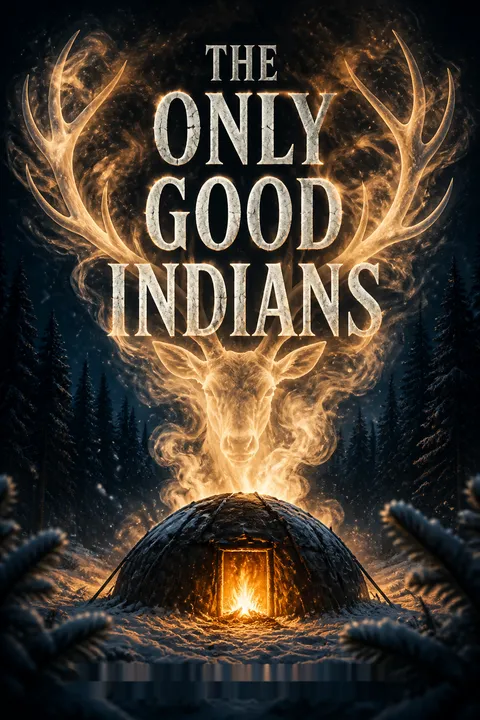


Plot Summary
Prologue
In North Dakota, Ricky Boss Ribs7 has fled the reservation after his younger brother15’s death. Outside a crowded bar, a confrontation with white oil workers sends him running through a parking lot of crashing alarms and damaged trucks.
Then the men vanish from his path, replaced by a huge elk,6 and Ricky7 sees green eyes waiting beyond the fence. The newspaper will call his death a dispute outside a bar. The label is neat; the night is not. Ricky7’s terror opens a story in which old violence has not stayed buried, and animals remember what people try to leave behind.
Ricky’s opening scene establishes the novel’s double vision. His danger is not imaginary: racism and violence make the bar’s parking lot a plausible killing ground. Yet the elk that interrupts the pursuit also makes the landscape feel like an agent with its own history. The newspaper’s flattened account anticipates the book’s recurring conflict between lived events and public explanations. Ricky sees that the ordinary story will not contain what happened, but he cannot make anyone else see it in time.
The Elk Under the Fan
Ten years after leaving the Blackfeet reservation, Lewis Clarke1 lives in Great Falls with his wife,5 Peta,5 and works at the post office. While climbing a ladder to fix a troublesome ceiling light, he looks through the spinning fan and sees the young elk6 he killed years ago, laid across his living-room carpet.
Its eye opens. Lewis1 falls, and Peta5 saves him by shoving him away from the brick hearth. The animal6 vanishes, leaving Lewis1 to call the vision guilt or exhaustion. But the light flickers again, and he cannot dismiss what he saw. His ordinary life, built far from the reservation and the hunt, has acquired a witness.
The fan makes perception itself unstable: its moving blades expose an image, then erase it. Lewis’s first response is to treat the sight as a private malfunction, a strategy that protects his self-image while leaving the past untouched. Peta’s quick rescue is the counterweight: his life is not merely an inward reckoning, because other people now depend on the man who once fled. The haunting begins in a home he helped build, not in the old hunting grounds, suggesting that distance has delayed memory rather than removed it.
Harley at the Fence
Lewis1 reconnects with Cass4 and Gabe,3 two of the friends who shared his final hunt, and begins to ask what they remember. At home, his elderly dog Harley13 has been clearing a six-foot fence, though Lewis1 cannot explain why. When Lewis1 brings coworkers to watch, they find Harley13 hanging by his chain.
Silas16 helps lift him free, but the train roaring past startles the injured dog into biting Silas16’s face. Peta5 nurses Harley,13 while Lewis1 wonders whether the dog sensed the elk6 that he saw through the fan. Days later, Peta5 finds Harley13 crushed in the garage. Lewis1 recognizes the violence as something more than a dog’s injury, but has no evidence to explain it.
Harley’s fate converts Lewis’s private fear into a shared bodily cost. The dog’s impossible escape may be an attempt to flee the house, while the train’s noise turns rescue into injury. Lewis’s inability to read Harley’s distress mirrors his refusal to interpret his own past. The violence also threatens the fragile domestic community he has made with Peta and his coworkers. His fear is no longer only that he may be haunted, but that his silence and confusion are exposing others to harm.
Nine Elk, One Calf
Lewis1 tells Shaney Holds,8 a Crow coworker, what happened on the last Saturday before Thanksgiving ten years earlier. With Gabe,3 Cass,4 and Ricky,7 he crossed into land reserved for elders, where Cass4’s truck nearly plunged over a ledge. Below them stood a herd of elk. The four men fired until nine animals lay dead or wounded, then butchered them as snow closed in.
Lewis1 shot a young cow6 twice more when she continued to struggle. He later discovered her unborn calf and buried it, then dressed the mother completely, determined that no part of her would be wasted. Game warden Denny Pease12 caught them. The men surrendered the meat and accepted a permanent ban from hunting on the reservation.
The hunt is framed as communal provision and exhilaration, but its setting and scale make that justification collapse. The men violate the elders’ boundaries, kill far beyond what their truck can carry, and turn a living herd into a test of masculine competence. Lewis’s attention to the wounded cow makes him more conscientious than his friends, but it does not undo the violence. His insistence on using every part becomes both an ethic of respect and a bargain with guilt, one whose terms he cannot control.
The Dog Dies Twice
After Harley13’s death, Lewis1 finally tells Peta5 the fuller account of the hunt. He describes the unborn calf, the storm, and the elders’ meat he delivered door to door. Each parcel bore a raccoon stamp borrowed from a child’s roll of stickers. Peta5 listens and helps Lewis1 reconstruct the elk6’s shape on the carpet with masking tape, rather than dismissing him as foolish.
Lewis1 also tells her that he left the reservation because he could no longer hunt. When he later finds the garage light flickering and the dog’s death impossible to explain, he turns to the old meat: perhaps a final package has thawed after an elder’s freezer was cleared, releasing what he thought he had contained.
Peta’s response gives Lewis a chance to exchange secrecy for intimacy, but his explanation of the meat also reveals the limits of his accounting. He believed that distributing the elk honored her and fulfilled his promise; the raccoon stamp, however, obscured what the package contained. His theory that thawed meat has reopened the past gives supernatural form to an ethical failure: what is removed from sight is not necessarily resolved. Peta’s practical help offers a more sustaining response than Lewis’s attempt to calculate guilt into a finished transaction.
Shaney in the Spokes
Lewis1 reads Shaney8’s interest in fantasy books and her knowledge of the taped elk as signs that she is more than a coworker. He decides the woman who visited his home is the avenger,6 though his clues remain uncertain. When Shaney8 comes by to collect a motorcycle part, he keeps her in the garage, starts his partly dismantled Road King, and lets its spinning rear wheel catch her long hair.
She dies before he can reconsider. Lewis1 then searches her teeth for elk ivory, the test he believes will identify the creature. The result does not settle his fear. His attempt to turn suspicion into proof has made him a killer, and he hides her body beneath blankets.
Lewis’s reasoning is built from real observations but arranged to protect a conclusion he has already chosen. The fantasy novels, the basketball, and Shaney’s knowledge become evidence because they fit his need to locate the threat outside himself. The motorcycle, which he had been rebuilding as proof that his life could move forward, becomes the instrument of irreversible harm. This is not simply paranoia replacing reason: it is guilt using fragments of evidence to authorize violence while making Lewis feel defensive rather than responsible.
A Calf Comes Home
Peta5 returns while Lewis1 is still hiding Shaney8’s body. As she climbs the ladder to inspect the faulty light, she slips and strikes her head on the hearth. Lewis1 does not catch her. He pries out her teeth to check for ivory, then discovers that neither Peta5 nor Shaney8 had elk teeth.
A calf pushes from Peta5’s swelling belly, and Lewis1 cuts it free, wraps it in the old hide, and heads north. Armed men find him on the plains and shoot him. A newspaper later reports that a teenage Indian girl6 attacked the search party, killing three men and injuring one. The calf, carried away from the killing ground, has become part of the violence rather than its end.
The domestic disaster is both accident and moral consequence. Lewis’s fixation on identifying a monster has made him unable to respond to the person directly before him. The calf’s birth transforms his old promise to waste nothing into a grotesque, living responsibility. Yet his attempt to carry it home meets another familiar force: armed men deciding what an Indigenous body means before they know its story. The newspaper’s sensational account extends the book’s critique of official narratives, while the surviving girl suggests that the hunt has produced a new actor, not a clean conclusion.
The Herd Finds a Girl
The narrative enters the elk6’s awareness, where memory moves through a herd rather than belonging to one animal. The revenant6 remembers the hunt, the broken body, and the calf Lewis1 carried away. After his death, she travels in a girl’s shape, taking clothes and a ride toward the reservation. Her recollections include older elk killed beside railroad tracks, whose descendants learned to fear trains.
Back home, Denorah Cross Guns2 glimpses a strange girl6 near her school. At the same time, her father,3 Gabe,3 sees a figure in a basketball jersey and cannot tell whether it is his daughter. The returning presence6 is now close to the men who survived the hunt, and to the child2 who may inherit its cost.
The shift in viewpoint replaces the individual ghost with a distributed consciousness. The elk’s revenge grows from a communal archive in which human violence, train danger, and the herd’s learned routes coexist. That perspective unsettles any simple division between supernatural memory and animal instinct. The girl’s movement toward the reservation also links the old hunt to children who were not present when it happened. Denorah becomes the crucial point of contact: she belongs to the family history of the hunters, but her life has been shaped by basketball, not by their old account of themselves.
A Sweat Goes Wrong
Gabe3 and Cassidy4 prepare a sweat for Nathan Yellow Tail,10 a troubled teenager whose father, Victor,11 hopes the ceremony will help him. Cassidy4 is newly settled with Jo,9 while Gabe3 remains estranged from Denorah2 and tries to support her from a distance. A large herd appears near Cassidy4’s camp. During the sweat, the revenant6 kills Cassidy4’s dogs and Victor.11
Jo9 goes beneath Cassidy4’s old truck to retrieve money hidden there. A dispute over the cash and a ring planted among Gabe3’s belongings turns the friends against each other; the truck collapses on Jo.9 In the confusion, Gabe3 shoots Denorah,2 then kills Cassidy.4 The revenant6 confronts Gabe3 and forces him to take his own life. Nathan10 is wounded but survives.
The sweat is meant to create a protected space where a younger generation can receive care, but old injuries and present-day mistrust invade it. The revenant exploits the men’s habits of concealment, especially Gabe’s lies and Cassidy’s fragile new happiness, until accusation becomes more persuasive than memory. Their deaths are not detached from colonial violence, but neither does that history excuse the harm they inflict on loved ones. Nathan’s survival matters because the ceremony’s intended recipient remains capable of carrying its meaning forward, even after its caretakers fail.
Denorah Takes the Court
The next morning, Denorah2 comes to Cassidy4’s place for the money her father3 promised. There she meets Shaney,6 who challenges her to basketball. Denorah2’s trained footwork and fearless improvisation keep her ahead, and the score reaches eighteen to sixteen.
As Shaney6’s shirt darkens with blood, Denorah2 sees her eyes change and hears that the elk6 remembers meeting her father3 ten years earlier. Victor11 returns, wounded, and shoots at the creature.6 Denorah2 runs toward him, then finds the sweat lodge full of bodies, including her father3 ’s.
She escapes before the revenant6 can reach her. Her game has not been a diversion: it has shown her that skill, discipline, and the confidence inherited from Gabe3 can help her resist the creature6 rather than simply flee it.
Basketball gives Denorah a language of attention and choice. She studies Shaney’s timing, refuses to confuse height with dominance, and keeps playing even after the contest becomes a confrontation with family history. The game also exposes the cost of turning a child into a symbol: the revenant treats Denorah as an extension of her father, while Denorah insists on being a player with her own decisions. Once she discovers the bodies, athletic confidence cannot spare her grief, but it supplies a practiced method for moving through danger.
The Long Run to Duck Lake
Denorah2 runs through deep snow toward Duck Lake, hoping to reach a phone and report the killings. She uses abandoned boxcars to delay the revenant,6 whose elk nature makes the train-shaped barrier frightening. Later she finds Nathan,10 badly wounded but still mounted on Cassidy4’s horse, Calico. She sends him toward town to find Denny Pease,12 while she draws the creature6 away.
Exhaustion brings Denorah2 to the site of the old hunt, where scattered bones confirm the story her stepfather12 told her. The revenant6 digs into the frozen ground and retrieves the calf Lewis1 buried there. Denny12 arrives with a rifle and sights on the mother.6 Denorah2 understands that another shot would renew the same cycle.
Denorah’s route turns inherited geography into knowledge. The boxcars, Duck Lake, the old killing ground, and the bones are not scenery but evidence she must read while exhausted. Her decision to separate from Nathan is tactical, not heroic posturing: she sends for help and accepts the danger of buying time. At the bones, the revenant’s motive becomes unmistakably maternal. Denorah can recognize the grievance without accepting the revenge, a difficult distinction that neither simple sympathy nor simple condemnation could make.
No More Shots
When Denny12 raises his rifle, Denorah2 places herself between him and the elk mother6 with her calf. She refuses to let her stepfather12 answer violence with another killing. Denny12 lowers his weapon and gives the hand signal that means the action is over. The revenant6’s human shape collapses; an elk cow6 rises, licks the calf, and leads it toward the waiting herd.
Years later, Denorah2’s sportsmanship on the basketball court becomes an image admired well beyond the reservation. The ending carries her forward not as a symbol of revenge, but as a young woman able to honor opponents without surrendering her own strength. The old hunt’s circle breaks because she chooses protection over retaliation.
The resolution hinges on a gesture rather than a victory over the monster. Denny’s lowered rifle and Denorah’s intervention interrupt a repetition that had seemed inevitable. The elk mother’s return to animal form does not erase the dead or settle the history, but it allows the calf to leave with the herd instead of being possessed by human vengeance. Denorah’s later public recognition matters because she carries the story into a future shaped by skill and respect, not by the hunters’ old performance of power.
Analysis
The novel makes memory a contested form of evidence. Lewis1 remembers the hunt as a personal failure that he can repay through careful use of the animal, a permanent hunting ban, and distance from home. The revenant6’s perspective refuses that private scale. Her memory belongs to a herd, carries earlier encounters with hunters and trains, and makes the men’s single afternoon part of a longer history of animal displacement and Indigenous dispossession. The conflict therefore cannot be solved by deciding whether the elk6 is morally justified. Its violence is devastating, but the human violence that precedes it is not neutral or accidental.
The men also inherit scripts for surviving: Gabe3 uses bravado, Cassidy4 uses jokes and practical labor, Lewis1 uses self-deprecation and stories, while Nathan10 resists ceremonial expectations he has not chosen. These strategies help them endure, but they also conceal what they owe one another. Lewis1’s greatest failure is not simply that he killed the elk.6 It is that, under pressure, he treats suspicion as proof and leaves the people closest to him unprotected. His inner story becomes more compelling to him than the living person in front of him.
Denorah2 offers another model. Basketball gives her a practiced vocabulary for reading bodies, changing direction, and persisting under pressure, but the decisive act is not winning. She recognizes the elk mother6’s claim and still refuses to let Denny12 shoot. By placing herself between weapon and animal, she neither excuses the dead nor reenacts their choices. The ending proposes no easy reconciliation: loss remains, and history cannot be repaired by one brave gesture. But a cycle can be interrupted when someone sees both the injury and the next act of violence before it happens.
Review Summary
The Only Good Indians received mostly positive reviews, praised for its unique blend of horror and Native American culture. Readers appreciated Jones' atmospheric writing, complex characters, and social commentary. Many found it genuinely scary and thought-provoking. Some readers struggled with the pacing and writing style, finding it confusing or slow at times. The book's graphic violence, particularly towards animals, was difficult for some. Overall, it was seen as an innovative and impactful addition to the horror genre, though not universally enjoyed.
People Also Read



Characters
Lewis Clarke
The guilt-haunted exileLewis is a Blackfeet man who left the reservation for Great Falls, where he works for the post office and shares a life with Peta5. He uses self-mocking headlines and jokes to manage shame, while fantasy novels offer him a private refuge from the life he has built. His relationship to hunting is complicated: it connects him to friends, land, and communal provision, but also to a decision he cannot stop revisiting. Lewis wants to be decent and useful, yet often substitutes explanation for direct responsibility. His restless humor, mechanical tinkering, and longing for home reveal a man trying to assemble a stable identity from parts he would rather not examine.
Denorah Cross Guns
The fearless point guardDenorah is Gabe3’s daughter, a gifted middle-school basketball player whose discipline is matched by a taste for daring moves. She practices free throws, tracks her grades, and understands that a scholarship could widen the possibilities available to her. Her relationship with Gabe3 is affectionate but strained by his drinking, unreliability, and distance from her daily life. Denorah’s mother14 and stepfather12 provide a more structured home, but she carries her father3’s boldness into the way she plays and makes decisions. She is not simply a prodigy or a symbol of tribal pride: she is a teenager negotiating loyalty, ambition, grief, and the right to define herself.
Gabe Cross Guns
The reckless loyalistGabe is one of Lewis1’s oldest friends and Denorah2’s father. Funny, charismatic, and impulsive, he trusts bravado to carry him through danger, conflict, and the consequences of drinking. He remains proud of Denorah2’s talent, even when estrangement and a restraining order keep him from openly supporting her. Gabe’s appetite for risk is balanced by real tenderness toward his friends and daughter2, though he struggles to convert affection into reliability. He draws on old stories and phrases to make sense of the present, sometimes with genuine reverence and sometimes as a shield against shame. His loyalty is deep, but it can become possessive when he feels powerless.
Cassidy Thinks Twice
The uneasy peacemakerCassidy, sometimes called Cass, is another of Lewis1’s childhood friends. He is a practical, joking man who has begun building a steadier life with Jolene9, a Crow woman, and her presence gives him reason to imagine a future beyond old habits. He works, cares for horses and dogs, and prepares a sweat lodge for a younger man10 who needs support. His humor often covers insecurity about whether he is traditional enough or capable of change. Cassidy wants to protect the people and possessions that make his new life feel real, yet his history with Gabe3 keeps pulling him back into familiar patterns of trust and rivalry.
Peta
Lewis’s steadfast partnerPeta is Lewis1’s wife, a practical and intensely capable woman who works around aircraft and brings athletic discipline into ordinary life. She met Lewis1 on the reservation and followed him into a life away from it, without pretending that love requires her to romanticize his home or identity. Peta is quick to act when Lewis1 is in danger and patient with his eccentricities, but she also expects honesty and partnership. Her vegetarianism reflects a serious ethical conviction, not a pose. She provides Lewis1 with a form of home grounded in daily care, shared history, and the willingness to face difficult truths together.
Elk Head Woman
The remembered avengerElk Head Woman is a supernatural presence associated with a violent hunt and the memory of the herd. She moves between animal and human forms, watching people who believe the past can be settled by leaving it behind. Her perspective holds more than individual grievance: it carries the learned dangers and losses of elk across generations. She is frightening because her pursuit is patient and purposeful, but the force behind it is not abstract evil. Her story binds maternal protection, animal survival, and human retaliation, making her both antagonist and a challenge to the hunters’ claims about what counts as justice.
Ricky Boss Ribs
The fleeing friendRicky is one of Lewis1, Gabe3, and Cassidy4’s childhood friends. After his younger brother15 dies, he leaves the reservation for work in North Dakota, carrying family rifles and plans to move on again. He is alert to danger and quick to joke, but the opening finds him isolated among men who see him as an outsider. Ricky’s memories of the old hunt and his sense of belonging to his friends connect the novel’s distant locations.
Shaney Holds
The athletic coworkerShaney is a Crow woman who works with Lewis1 at the post office. She is confident on a basketball court, direct in her curiosity, and more perceptive than Lewis1 expects. Her presence unsettles the easy assumptions other people make about the two Indigenous coworkers, while her interest in Lewis1’s books and memories gives him an unexpected audience. She is connected to Jolene9’s family and to the reservation’s wider community.
Jolene
Cassidy’s Crow partnerJolene, often called Jo, is Cassidy4’s partner and Shaney8’s cousin. She works nights at a grocery store and has built a practical, affectionate life with Cassidy4 at his remote home. Her humor and independence keep her from being merely an audience to Cassidy4’s attempts at self-improvement. She supports his care for Nathan10 while maintaining her own obligations to family and work.
Nathan Yellow Tail
The reluctant initiateNathan is Victor Yellow Tail11’s teenage son, struggling with grief and a sense that the adults around him expect him to embody a version of Indigenous identity he does not recognize as his own. He is sharp, skeptical, and uncomfortable with ceremony when it feels imposed. The sweat is offered as care, not punishment, though Nathan has to decide what it means for himself. His interest in basketball and his relationship with Denorah2 give him a peer connection beyond his father11’s hopes.
Victor Yellow Tail
The watchful fatherVictor is a tribal police officer and Nathan10’s father. He tries to guide his son10 through a difficult period while respecting the parts of Nathan10 that resist instruction. His work has exposed him to the reservation’s accumulated grief, and he takes the sweat seriously even while remaining an officer responsible for safety. Victor’s care is practical and persistent, expressed through presence and effort rather than easy speeches.
Denny Pease
The reservation game wardenDenny is the game warden who enforces hunting rules on the reservation. Lewis1 and his friends remember him as a hard-ass who protects the animals, while the community recognizes that he has a broader role in its life. Denny’s authority is neither merely bureaucratic nor free from the pressures of history. His decisions force the hunters to confront the difference between access, entitlement, and responsibility.
Harley
Lewis’s old dogHarley is the large, aging dog Peta5 gave Lewis1 early in their relationship. Scarred by years of scrapes and close calls, he is stubbornly attached to the household and difficult to contain. Lewis1 sees him as a companion who helped make a new town feel like home, which makes his unexplained behavior especially alarming.
Trina Trigo
Denorah’s protective motherTrina is Denorah2’s mother and Gabe3’s former partner. She is protective, disciplined, and unwilling to let Gabe3’s charm erase the effects of his drinking or inconsistency. Her focus on Denorah2’s safety and opportunities can make her seem strict, but it is rooted in the work of keeping a child’s future open. She maintains a difficult boundary with Gabe3 while allowing Denorah2 to have her own relationship with him.
Cheeto
Ricky’s younger brotherCheeto is Ricky7’s younger brother, whose overdose prompts Ricky7 to leave home. His death continues to shape Ricky7’s memories and sense of what he has abandoned.
Silas
Lewis’s motorcycle friendSilas is a quiet coworker who rides with Lewis1 and the other postal workers. He helps free Harley13 from the fence and suffers the dog’s startled bite.
Neesh Yellow Tail
The remembered counselorNeesh is an elder and counselor remembered by Gabe3 and Cassidy4. His teachings about resilience, ceremony, and community remain in their minds, even when they struggle to live by them.
Plot Devices
The Thanksgiving hunt
The original transgressionThe friends’ unauthorized hunt in the elders’ section begins the chain of consequences. They kill nine elk, including a young pregnant cow6, and Lewis1 tries to honor the animal by using her meat and burying her calf. The hunt binds the four men through shared excitement and shared guilt, while the ban imposed afterward gives their separation a concrete cause. Its memory returns in visions, arguments, and the revenant6’s pursuit. The hunt is not merely an origin story for horror; its scale, location, and treatment of the wounded cow make it a specific breach that the characters cannot reduce to bad luck.
The herd’s memory
A history carried collectivelyThe elk6’s perspective treats memory as something distributed through a herd and passed between animals. It includes the Thanksgiving hunt, older killings near railroad tracks, and learned ways to avoid human danger. This device makes the supernatural threat more than one wounded animal returning for revenge. The revenant6’s choices emerge from a shared archive of loss and survival, while the human characters’ memories remain partial, defensive, and shaped by what they can bear to recall.
Fan and train
Unstable windows of sightThe spinning ceiling fan and the passing freight train create brief visual openings in which Lewis1 glimpses the elk-headed presence6. Their motion makes the supernatural difficult to verify: the image appears between blades or cars, then disappears. The fan also connects the haunting to Lewis1’s domestic space, while the train recalls the herd’s learned fear of a moving metal barrier. Both devices turn ordinary machinery into a test of what the characters can see and what they will accept.
The basketball game
Skill becomes resistanceBasketball first reveals Denorah2’s discipline and competitive intelligence, then becomes the form of her confrontation with the revenant6. Her practice in footwork, shooting, and reading an opponent gives her a way to resist fear without pretending she is stronger than the threat. The game also makes the conflict personal: the creature6 targets the future and identity Denorah2 has built through sport. Her court sense becomes a practical means of survival and, ultimately, a model for how she can act without repeating her father3’s violence.
The elk hide and meat
A promise with consequencesLewis1 keeps the young elk6’s hide and gives her meat to elders, believing that using every part fulfills a promise. A child’s raccoon stamp obscures the meat’s identity, and its later disposal becomes part of his theory for why the haunting begins when it does. The hide returns during his final attempt to carry the calf home. These objects connect memory to material practice: the hunt persists not only in guilt but in the things Lewis1 saved, distributed, and failed to account for.
FAQ
Synopsis & Basic Details
What is The Only Good Indians about?
- Haunted by past actions: The story follows four Blackfeet men who are haunted by a past elk hunt that violated cultural taboos, leading to a supernatural entity seeking revenge.
- Confronting cultural identity: The men grapple with their identities, their connection to their heritage, and the consequences of their actions, exploring themes of guilt, redemption, and the clash between tradition and modernity.
- Supernatural horror and violence: The narrative blends elements of horror, suspense, and violence, creating a chilling atmosphere as the characters are pursued by a vengeful force, blurring the lines between the natural and supernatural.
Why should I read The Only Good Indians?
- Unique blend of horror and culture: The novel offers a fresh take on the horror genre by incorporating Native American folklore and cultural themes, providing a unique and thought-provoking reading experience.
- Exploration of complex characters: The characters are deeply flawed and relatable, each grappling with their own demons and cultural identity, making their journeys compelling and emotionally resonant.
- Thought-provoking themes: The story delves into profound themes of guilt, redemption, cultural identity, and the consequences of past actions, prompting readers to reflect on their own lives and the world around them.
What is the background of The Only Good Indians?
- Blackfeet Nation setting: The story is set within the context of the Blackfeet Nation, exploring the cultural traditions, beliefs, and challenges faced by Native Americans in contemporary society.
- Historical and cultural context: The novel draws upon historical events and cultural practices, such as the importance of elk in Blackfeet culture and the significance of hunting, to create a rich and authentic backdrop for the story.
- Modern issues and marginalization: The narrative addresses modern issues of racism, marginalization, and the struggles of Native Americans to maintain their cultural identity in a world that often seeks to erase it.
What are the most memorable quotes in The Only Good Indians?
- "INDIAN MAN KILLED IN DISPUTE OUTSIDE BAR. That's one way to say it.": This quote, repeated throughout the novel, highlights the dismissive and dehumanizing way in which Native American lives are often portrayed in mainstream media, setting a tone of injustice and marginalization.
- "White girls know the names of everything.": This quote, spoken by Lewis, encapsulates the cultural divide and the sense of otherness that he feels, highlighting the subtle ways in which cultural differences can create barriers and misunderstandings.
- "They're fucking elk, man. They don't really have campfires.": This quote, from Gabe, reveals a cynical and humorous perspective on the supernatural elements of the story, highlighting the characters' attempts to reconcile their traditional beliefs with the modern world.
What writing style, narrative choices, and literary techniques does Stephen Graham Jones use?
- Non-linear narrative: Jones employs a non-linear narrative structure, shifting between different characters' perspectives and timelines, creating a sense of unease and disorientation that mirrors the characters' own struggles.
- Vivid imagery and visceral language: The author uses vivid imagery and visceral language to create a chilling and immersive reading experience, drawing the reader into the characters' physical and emotional turmoil.
- Blending of genres: Jones seamlessly blends elements of horror, suspense, and cultural commentary, creating a unique and thought-provoking narrative that defies easy categorization.
Hidden Details & Subtle Connections
What are some minor details that add significant meaning?
- The recurring image of the IGA parking lot: The mention of the IGA parking lot camera, a channel only the elders watch, becomes a symbol of the mundane and inescapable nature of life on the reservation, contrasting with the supernatural events unfolding.
- The trading post knife: The trading post knife that Lewis uses during the elk hunt, and later finds again, represents the flawed tools and choices that led to the tragedy, highlighting the characters' inability to escape their past.
- The black raccoon handprint: The black raccoon handprint on the butcher paper used to wrap the elk meat symbolizes the unintended consequences of their actions and the way their choices have marked them.
What are some subtle foreshadowing and callbacks?
- The flickering spotlight: The flickering spotlight in Lewis's living room foreshadows the instability and supernatural forces at play, serving as a visual reminder of the haunting presence of the elk.
- The mention of the "Thunderball Express": The train that runs behind Lewis's house, which Peta calls the "Thunderball Express," foreshadows the destructive force that will eventually claim Harley's life, connecting the mundane with the supernatural.
- The recurring phrase "That's one way to say it": This phrase, used in the beginning and end of Ricky's section, highlights the way in which the media and society often misrepresent and dismiss the experiences of Native Americans.
What are some unexpected character connections?
- Shaney and the elk: The connection between Shaney and the elk is revealed through her knowledge of the elk's anatomy and her ability to complete the masking tape elk on Lewis's floor, suggesting a deeper, supernatural link.
- Peta and the elk: Peta's vegetarianism and her ethical concerns about animals create a subtle contrast with Lewis's actions, highlighting the cultural and moral divide between them, and making her a potential target for the elk's vengeance.
- Victor and the old ways: Victor's knowledge of the old ways and his use of traditional practices, such as the sweat lodge, connect him to the past, making his death a tragic loss of cultural knowledge.
Who are the most significant supporting characters?
- Peta: As Lewis's wife, Peta represents the outside world and the challenges of cultural integration, her presence highlighting Lewis's internal conflict and his struggle to reconcile his past with his present.
- Shaney: As a coworker and a fellow Native American, Shaney serves as a catalyst for Lewis's unraveling, her presence forcing him to confront his guilt and his cultural identity, and ultimately revealing herself as the Elk Head Woman.
- Victor Yellow Tail: As a tribal police officer and a father, Victor represents the struggle to balance tradition with modern law enforcement, his death highlighting the tragic consequences of the past and the present.
Psychological, Emotional, & Relational Analysis
What are some unspoken motivations of the characters?
- Lewis's desire for redemption: Lewis's actions are driven by a deep-seated desire for redemption, as he seeks to atone for his past sins and find a way to honor the elk he killed, even if it means self-destruction.
- Gabe's fear of losing his heritage: Gabe's actions are motivated by a fear of losing his connection to his cultural heritage, as he tries to pass on traditions to his daughter and honor the memory of his friends, even as he struggles with his own guilt.
- Cassidy's need for stability: Cassidy's desire for a stable life with Jo is driven by a need to escape his past and find a sense of belonging, but his past actions continue to haunt him, making it difficult for him to move forward.
What psychological complexities do the characters exhibit?
- Lewis's paranoia and guilt: Lewis exhibits paranoia and guilt, as he becomes increasingly convinced that he is being pursued by the spirit of the elk, leading to a breakdown in his mental state and his relationships.
- Gabe's internal conflict: Gabe struggles with an internal conflict between his responsibilities as a father and his desire to honor his friends, leading to a sense of helplessness and despair as he is unable to protect those he loves.
- Cassidy's self-destructive tendencies: Cassidy exhibits self-destructive tendencies, as he struggles to reconcile his past with his present, leading to a cycle of violence and loss that he is unable to escape.
What are the major emotional turning points?
- Lewis's vision of the elk in his living room: This vision marks a turning point for Lewis, as it forces him to confront his guilt and the supernatural forces at play, leading to a downward spiral of paranoia and despair.
- Gabe's realization of the elk's power: Gabe's realization that the elk is not just a memory but a powerful force seeking vengeance marks a turning point for him, as he is forced to confront the consequences of his actions and the limitations of his own power.
- Denorah's encounter with Elk Head Woman: Denorah's encounter with Elk Head Woman marks a turning point for her, as she is forced to confront the supernatural forces at play and the legacy of her father's past, leading to a fight for survival and a test of her resilience.
How do relationship dynamics evolve?
- Lewis and Peta's strained marriage: Lewis and Peta's marriage is strained by his guilt and paranoia, highlighting the challenges of cultural integration and the difficulty of reconciling past actions with present relationships.
- Gabe and Denorah's strained father-daughter relationship: Gabe and Denorah's relationship is strained by his past actions and her desire to forge her own identity, highlighting the challenges of intergenerational trauma and the struggle to balance tradition with modernity.
- Cassidy and Jo's fragile bond: Cassidy and Jo's relationship is threatened by his past and the supernatural forces at play, highlighting the challenges of transformation and the difficulty of escaping the consequences of past actions.
Interpretation & Debate
Which parts of the story remain ambiguous or open-ended?
- The true nature of Elk Head Woman: The true nature of Elk Head Woman remains ambiguous, leaving the reader to question whether she is a supernatural entity, a manifestation of guilt, or a combination of both.
- The extent of the elk's influence: The extent of the elk's influence on the characters' actions and the events of the story remains open-ended, leaving the reader to question the boundaries between the natural and supernatural.
- The possibility of redemption: The possibility of redemption for the characters remains ambiguous, leaving the reader to question whether they can ever truly escape their past and find a path to healing.
What are some debatable, controversial scenes or moments in The Only Good Indians?
- The graphic violence: The graphic violence in the novel, particularly the descriptions of the elk's death and the characters' deaths, may be considered controversial by some readers, raising questions about the author's use of violence and its impact on the narrative.
- The portrayal of Native American characters: The portrayal of Native American characters, particularly their struggles with addiction, violence, and cultural identity, may be considered controversial by some readers, raising questions about the author's representation of Native American experiences.
- The ending: The ending of the novel, with its ambiguous and violent resolution, may be considered controversial by some readers, raising questions about the author's message and the possibility of hope and redemption.
The Only Good Indians Ending Explained: How It Ends & What It Means
- Cycle of violence and revenge: The ending of the novel highlights the cyclical nature of violence and revenge, as the characters are unable to escape the consequences of their past actions, leading to a tragic and violent conclusion.
- Ambiguous resolution: The ending is ambiguous, leaving the reader to question whether the characters have truly found redemption or if they are doomed to repeat the mistakes of the past, highlighting the complexities of guilt, forgiveness, and cultural identity.
- Legacy of trauma and loss: The ending emphasizes the enduring impact of trauma and loss on the characters and their community, highlighting the need for healing and reconciliation, and the importance of honoring the past while moving forward.
About the Author

Download PDF
Download EPUB
.epub digital book format is ideal for reading ebooks on phones, tablets, and e-readers.








