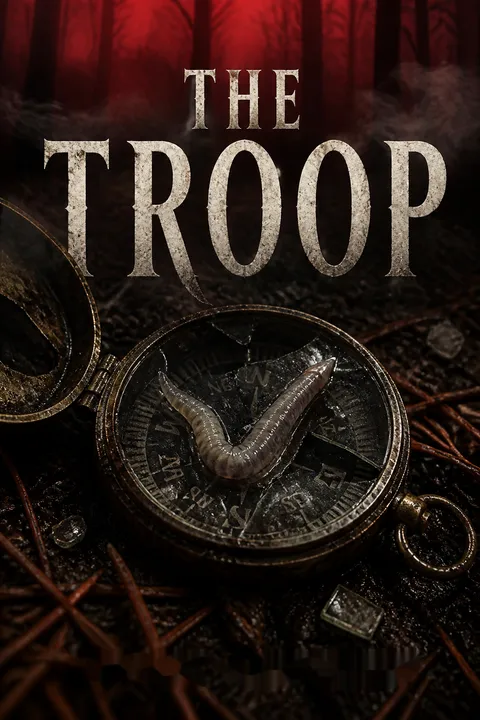


Plot Summary
Prologue
A sensational local news item describes a gaunt stranger7 who ate five diner breakfasts, chewed napkins, and stole a waitress’s truck. The waitress heard something moving beneath his skin.
The man7 drives to the northern coast, takes a boat, and crosses toward Falstaff Island, carrying a hunger that food cannot satisfy and a secret he fears will bring people after him.
The opening presents the horror first as a public rumor: a diner waitress reports an impossible appetite, while a sensationalist outlet turns her account into entertainment. That distance matters. The stranger is already being reduced to a nickname before anyone knows what has happened to him, and the story’s central threat enters the world through ordinary channels of gossip, transport, and appetite. His stolen truck and boat make the island-bound journey a consequence of desperation, not a random encounter. The strange movement beneath his skin gives the rumor a physical anchor, but leaves its cause unknown.
A Stranger Reaches Falstaff
Scoutmaster Tim Riggs6 has brought five fourteen-year-old Scouts to Falstaff Island for their final wilderness trip. The boys are Kent Jenks,4 the domineering son of the local police chief;4 Ephraim Elliot,3 quick-tempered and daring; Max Kirkwood,1 steady and observant; Newton Thornton,2 a bookish naturalist; and Shelley Longpre,5 a watchful, unnerving loner.
At night, Tim6 hears a boat and meets the emaciated stranger7 from the diner report. The man7 begs for food, and Tim’s6 medical instincts outweigh his alarm. He lets him into the cabin but keeps the boys behind a closed door. When Tim6 tries to radio the mainland, the stranger7 smashes the radio, cutting off their clearest route to help.
Tim’s first decision is compassionate, but it is also an assertion of professional identity: he sees a suffering person and assumes that care can be safely managed. The broken radio immediately removes the ordinary safeguards that might have made that confidence reasonable. Meanwhile, the boys’ established hierarchy matters from the outset. Kent expects authority to yield to him, while Newt’s knowledge and Max’s composure are easier to overlook. The island takes a familiar rite of passage and strips away its adults’ usual infrastructure, leaving every act of care, obedience, or defiance with greater consequences.
The Scouts Go Alone
At dawn, Tim6 sends the boys out to complete their navigation exercise while he watches the stranger.7 Kent4 takes the walkie-talkie from Max1 and leads the group, treating size and confidence as proof of command. His poor route choice carries them along a narrow cliffside trail, where the boys have to edge above the sea with their hands pressed to the rock.
Ephraim3 challenges Kent4 afterward, exposing the fear beneath Kent’s4 swagger. The boys glimpse military vessels and a helicopter offshore, but assume the activity is routine. At camp, Tim’s6 condition is worsening: after the stranger7 coughed on him, he has begun losing weight and feeling an unnatural hunger. He hides the change while trying to understand the patient7 alone.
The hike turns the boys’ social habits into survival liabilities. Kent takes the radio because he believes leadership means possession; the cliff shows how quickly that belief can endanger everyone. Ephraim’s challenge punctures Kent’s authority, but does not replace it with wiser judgment. The distant military presence offers a glimpse of adult intervention without actual protection, while Tim conceals his symptoms to preserve his role as the competent adult. Each group is already operating on a false assurance: the boys trust their leader’s confidence, and Tim trusts that his professional knowledge can keep the crisis contained.
The Stomach Opens
Tim6 sedates the stranger7 and decides to investigate the swollen abdomen, asking Max1 to help because he cannot manage the crude operation alone. He cuts into the man7 while Max1 holds gauze over his face. Instead of an ordinary stomach cavity, a thick white organism pushes through the incision, unfolds small mouths, and lashes at Tim.6 The stranger7 wakes in terror as the creature constricts his throat.
Tim6 cuts it, but the man7 dies. The boys learn that the intruder7 was not suffering from a familiar wasting disease, and Tim6 cannot explain the worm or establish whether anyone has been exposed. He admits that he is frightened. Kent4 treats that admission as weakness, while the others begin to see that their trusted adult6 has no workable plan.
The operation transforms uncertainty into direct evidence, but knowledge does not restore control. Tim’s medical authority collapses at the exact moment he chooses to act on it, and Max becomes an involuntary witness to a death he cannot interpret. The scene also changes what the boys expect from adulthood: Tim’s fear is no longer hidden behind competence, so Kent can recast it as failure. Yet the boys’ judgment is no clearer than Tim’s. They have seen the organism, but lack the concepts and resources needed to respond safely.
The Closet Mutiny
After the operation, Tim6 tells the Scouts to avoid the cabin and wait for the boat. He grows weaker and more ravenous, while Kent4 insists that the dead man’s7 body must be inspected and that Tim6 has endangered them. The boys swarm Tim,6 drag him into a utility closet, and lock the door. Kent4 drinks from the scotch bottle and later secretly devours the reserve food, unable to stop himself.
A violent storm closes over the island. When the boys refuse to enter the cabin, Ephraim3 punches Kent4 and tears open his knuckles; Max1 and Newt2 eventually help the weakened Kent4 reach shelter. Shelley5 discovers the missing food and uses it to expose Kent.4 Tim,6 trapped in the closet, becomes more ill as the storm tears at the cabin.
The mutiny is not simply a transfer of leadership. The boys imitate adult power without adult judgment: Kent invokes quarantine, then secretly gives in to the same hunger he condemns. Their violence toward Tim begins as panic but becomes a group act, and Newt’s reluctant participation shows how a crowd can override private conscience. The storm makes their choices immediate and material. They need shelter, yet the cabin contains the dead stranger, Tim’s isolation, and evidence of contagion. The supposed safety of adult authority has been replaced by a brittle hierarchy built on fear and force.
The Cabin Gives Way
The storm brings down a large oak, crushing the closet and killing Tim6 before the boys can free him. When Max1 and the others return to the damaged cabin, they find white worms spilling from Tim’s6 abdomen. The organisms move together toward their voices, and fine strands drift through the air. The sight confirms that the infection is not confined to the stranger.7
Outside, the boys see military ships holding position, but no rescuers arrive. Kent’s father,11 police chief Jeff Jenks,11 and Max’s father,12 coroner Reggie Kirkwood,12 steal a boat to reach the island; soldiers intercept them and destroy the vessel. The boys now have two dead men, a contaminated shelter, and no reliable way to leave.
Tim’s death is both a physical consequence of the storm and the irreversible end of the boys’ remaining connection to adult care. The worms emerging from his body make contagion visible as a collective force, not a single monster that can be cut in half and discarded. The fathers’ failed rescue sharpens the betrayal the boys feel, though the men are detained rather than indifferent. From the island, the distinction is impossible to see. The military’s silence turns rescue into an abstraction, and the Scouts must begin making decisions without knowing whether the adults are unable or unwilling to help.
No Rescue Is Coming
The boys begin dividing their dwindling options. Newt2 proposes gathering food, finding medicine for Kent,4 and repairing the boat. Max1 and Newt2 leave to forage while Ephraim3 stays behind, convinced that the worm has entered him through his wounded hands. Their search yields wild blueberries and mushrooms, but no reliable trap.
They also find a sea turtle stranded in a tide pool and, desperate for meat, drag it onto the beach and stab it repeatedly. Its slow death horrifies them. When baby turtles hatch nearby, the boys carry them into the ocean and shield them from birds. Their failed attempt to kill one animal quickly has made their need for food morally painful, not merely practical.
Newt’s list is an attempt to restore agency by breaking catastrophe into manageable tasks, and his knowledge gives the boys a temporary structure where adult help has failed. The turtle encounter tests that structure against the living world. Max and Newt need food, but their knives and fear turn a necessary act into prolonged suffering. Their effort to save the hatchlings does not undo the harm, yet it shows that empathy survives even when survival demands violence. This contrast becomes a measure of what the boys are trying not to lose: the ability to recognize another creature as more than a resource.
Shelley Feeds the Hunger
While the others are away, Shelley5 keeps Kent4 confined in the cellar and feeds him dead insects, then a piece of the stranger’s7 worm. Kent’s4 body and perception twist under the infection: he imagines himself becoming powerful even as his flesh is being consumed. Shelley5 is fascinated by the changes and drowns Kent4 in the shallows, demanding to witness what happens as he dies.
Worms pour from Kent’s4 body and reach Shelley.5 The boy who has spent years treating animals and classmates as objects5 now becomes a host himself. He retreats into the island’s caves, where hunger and the parasite reshape his body and judgment. Kent’s4 disappearance leaves Max1 and Newt2 without knowing whether he is alive.
Shelley’s cruelty is not an eruption of ordinary anger but a practiced way of making other beings into experiments. The infection intensifies that impulse by giving him a fantasy of transformation and parenthood, while the body beneath the fantasy is being destroyed. Kent’s imagined strength offers a grotesque counterpoint to his lifelong reliance on physical dominance: now even his sense of power is supplied by the parasite. Shelley’s decision to drown him turns curiosity into direct murder, and the worms’ transfer makes the observer part of the process he thought he could control.
Ephraim Turns the Knife
Ephraim’s3 fear of infection grows after he wounds Kent4 and hears Shelley5 claim that worms are moving beneath his skin. Alone, he cuts into his hands, face, and leg, trying to find the creature. When Max1 and Newt2 return, they discover him badly injured but alive. Shelley5 tells Ephraim3 that only fire can kill the parasite and gives him gasoline and a lighter.
Ephraim3 sets himself alight. Max1 and Newt2 arrive too late to save him. Max1 confronts Shelley,5 who stabs him in the abdomen; Newt2 strikes Shelley5 with a piece of wood, stopping the attack. The boys bury Ephraim,3 and Max’s1 grief hardens into the knowledge that their friendship cannot be restored by surviving the island.
Ephraim’s self-injury grows from a real threat filtered through a vulnerability Shelley deliberately manipulates. His history of using danger to manage anger makes the promise of a decisive act especially seductive: cutting and burning seem like ways to reclaim control. Shelley turns that impulse into a fatal deception. Max and Newt’s delayed return exposes the cost of separating from one another, but they cannot reduce the loss to a lesson or a mistake. Burying Ephraim is their first deliberate act of mourning, a small ritual performed in a place where almost every other form of care has failed.
The Cave Takes Newt
Max1 realizes the stranger7 swallowed the boat’s missing spark plugs, and he and Newt2 recover them from the corpse.7 Shelley5 steals them again and hides in a sea cave. Following the sweet reek of infection, the boys find the plugs beside Shelley’s5 apparently dead body. The infected boy5 rises and attacks.
Max1 escapes with the plugs while Shelley’s5 swollen abdomen ruptures over Newt,2 covering him with worms. Max1 sees the parasite move inside Shelley’s5 corpse and flees rather than risk being trapped. The encounter gives the boys a way to start the boat, but Newt2 has been exposed and is rapidly losing strength. Their route home is finally real, and the price of reaching it has become immediate.
The spark plugs turn a seemingly trivial detail from the stranger’s arrival into the material possibility of escape. Recovering them requires Max to enter the source of the horror rather than simply outrun it, while Newt’s exposure shows how rescue can reproduce the danger it is meant to end. Shelley’s body is no longer a stable boundary between person and parasite; it becomes the means by which infection reaches another host. Max’s retreat is not cowardice but a survival choice, though it leaves him carrying the practical solution and the emotional burden alone.
The Last Crossing
Newt2 vomits after taking the mushrooms he believes will expel the worms, and the sickness appears in the fluid. He develops an infection in his eye, while Max1 refuses to abandon him. A military helicopter passes overhead without helping. Max1 returns to the cave, retrieves the spark plugs, and gets the stolen boat running with fuel from the generator.
Newt2 sits at the bow as they cross toward the mainland. A black patrol fleet intercepts them. When Newt2 says he is hungry, a military sniper shoots him, following orders to fire on anyone using designated infection-related words. Max1 survives the crossing, but the adults waiting offshore have chosen containment over rescue.
The crossing makes the conflict between care and containment brutally literal. Newt’s attempt to purge the infection is a child’s improvised medicine, but his willingness to warn Max shows that he understands the risk to others. Max answers by staying beside him, refusing the clean separation that the military’s protocol demands. The sniper’s shot converts an ordinary symptom into a death sentence, revealing how a system designed to prevent mass infection can erase individual judgment. The boat finally carries the boys toward help, yet the boundary between rescue and execution is controlled by people who never speak to them.
The Survivors’ Silence
Max1 is taken to an isolated clinic and subjected to repeated tests before doctors declare him free of infection. The other boys are dead or missing, and Max1 remembers little of the island with confidence.
Evidence gathered afterward reveals that Dr. Clive Edgerton8 engineered the modified hydatid as a weight-loss treatment, while a military contractor secretly funded related work for weapon potential. Researcher Nathan Erikson9 admits he helped develop the organism and concealed the danger.
Admiral Brewer10 defends the quarantine as necessary, but testimony raises questions about what the military knew and why it withheld information. Max1 returns to North Point, where neighbors fear him, classmates avoid him, and the families who tried to reach the island carry their own losses.
The documentary fragments widen the story from a survival ordeal into an institutional failure. Edgerton’s ambition turns a body-image promise into a biological hazard, while Erikson’s complicity shows how expertise can serve secrecy when professional caution is subordinated to access and money. Brewer’s defense is not simply disproved: the risk of wider contagion is real, but the policy also treats children as expendable variables and information as a threat. Max’s medical clearance cannot reverse his social contamination. The town’s fear reproduces the military’s logic on a smaller scale, isolating the survivor after the physical emergency has ended.
The Island Still Calls
Back in North Point, Max1 struggles to resume an ordinary life. His neighbors keep their distance, he studies at home, and visits from men in protective suits renew the sense that his body remains under suspicion. He misses the troop, especially Newt2 and Ephraim,3 and cannot forget the turtle he helped kill. Eventually Max1 borrows a boat and returns to Falstaff Island.
The military has burned the island and poisoned the surrounding water, leaving blackened ground and a sterile shoreline. As he looks across the wreckage, a nameless hunger begins to stir inside him. The story ends without confirming whether it is memory, trauma, or renewed infection, leaving Max’s1 apparent survival under a final shadow.
The ending denies the comforting idea that containment can restore a clean before and after. Falstaff has been physically sterilized, but Max carries its aftermath in his habits, memories, and uncertain sensations. His guilt over the turtle sits beside grief for his friends, making survival feel less like victory than continued responsibility to the dead. The final hunger is deliberately unresolved: the body may be signaling infection, or the mind may be translating trauma into the sensation that ruled the island. Either possibility undermines the promise that official tests and scorched earth can close the event.
Analysis
The Troop makes hunger both a biological mechanism and a social pressure. The parasite turns appetite into an order that overwhelms judgment, but the boys’ ordinary appetites for status, control, and belonging have already shaped their relationships. Kent’s4 dominance, Ephraim’s3 aggression, Max’s1 quiet accommodation, Newt’s2 longing for recognition, and Shelley’s5 detached curiosity do not cause the outbreak, yet they determine how each boy meets it. The infection magnifies existing habits rather than replacing character with a single monstrous impulse.
The novel also treats care as necessary and dangerous. Tim6 admits the stranger7 because he cannot abandon someone in distress; Max1 helps Tim6 because he trusts him; Newt2 stays close to others even when exposure frightens him. These actions create intimacy, but intimacy can carry infection. The military response reverses the same dilemma at institutional scale. Brewer’s10 containment logic may prevent a catastrophe beyond the island, yet its secrecy and willingness to sacrifice the stranded boys make protection indistinguishable from abandonment to those being protected.
The turtle episode gives this moral pressure a concrete measure. Max1 and Newt2 need food, but their clumsy killing forces them to confront the difference between survival and indifference. Their care for the hatchlings cannot repair the animal’s suffering, just as Max’s1 later survival cannot restore his friends. The ending refuses a clean victory: the island is burned, Max1 is declared healthy, and still a new hunger rises as he looks toward the scorched shore. Whether that sensation is infection or trauma, the novel’s last uncertainty is about what survives containment. Bodies can be tested and landscapes sterilized; grief, guilt, and the memory of complicity remain harder to isolate.
Review Summary
The Troop received mostly positive reviews, praised for its intense horror, vivid descriptions, and well-developed characters. Many readers found it deeply disturbing and gory, comparing it to works by Stephen King. The novel's blend of body horror, survival elements, and psychological tension was widely appreciated. Some criticized its excessive gore and animal cruelty scenes. Overall, it was considered a compelling, fast-paced horror novel that left a lasting impression on readers, though not recommended for the faint-hearted.
People Also Read





Characters
Max Kirkwood
The steady-handed survivorMax is a Scout who tends to observe before acting. His calm is not indifference; it is a way of keeping fear from deciding for him. He is Ephraim’s3 closest friend and often accepts the group’s treatment of Newt2 without challenging it, a compromise that later weighs on him. Max trusts practical work: he helps Tim6 in the cabin, listens to Newt’s2 field knowledge, and keeps looking for a route home when hope becomes difficult to sustain. His bond with the other boys gives the ordeal its emotional center. He is not naturally fearless, but he can keep moving while frightened, and he is increasingly forced to examine what his choices cost other people.
Newton Thornton
The overlooked naturalistNewt is an observant, bookish Scout whose knowledge of plants, animals, weather, and survival often proves more useful than the confidence of the boys who mock him. He is raised by his protective mother13 and finds belonging in Scouting, even when the troop’s teasing leaves him isolated. Newt longs to be valued for more than his intelligence or appearance, and his invented online persona reflects that desire to be seen without prejudice. Beneath his anxious manner is discipline and resolve: he can enter danger when the group needs knowledge he alone can provide. His compassion for animals and his desire to care for others are central to how he understands himself.
Ephraim Elliot
The daredevil with a temperEphraim is fast, funny, physically daring, and prone to anger that he works hard to control. His absent, abusive father has left him afraid that violence is inherited, so he uses risk and motion to discharge feelings he cannot easily name. Max1 is his oldest friend and the person he trusts most. Ephraim can be cruel to Newt2, joining the troop’s teasing, but he also has a strong sense of fairness and an instinct to defend others. His bravado hides a vulnerable need for belonging, and his daring is both a source of courage and a way of avoiding helplessness.
Kent Jenks
The self-appointed leaderKent is the biggest boy in the troop and has learned to treat physical presence as a claim to authority. His father11, the local police chief11, teaches him to project certainty and to see control as a duty. Kent is not simply malicious: he can be protective and wants to believe he is capable of handling danger. But he often mistakes force for sound judgment, dismissing Newt’s2 expertise and challenging Tim’s6 authority. His understanding of right and wrong is shaped by a household where toughness is admired and apology is difficult. Beneath his swagger is a boy trying to live up to an image of invulnerability.
Shelley Longpre
The unreadable observerShelley is a quiet, long-limbed Scout whose blank expression makes other boys uneasy. Adults tend to underestimate him, while his troopmates keep a cautious distance rather than openly provoking him. Shelley watches behavior closely and understands how shame, fear, and group loyalties can be used to influence people. He has little ordinary attachment to the people around him and is fascinated by the physical vulnerability of living things. His apparent passivity is therefore misleading: he is not a natural follower, even when he lets stronger personalities take the lead. Shelley’s detachment is a defining part of his danger and his isolation.
Tim Riggs
The trusted ScoutmasterTim is a small-town doctor and the experienced Scoutmaster who has led the boys on their annual island trip for years. He is calm, considerate, and proud of treating his young charges with respect. As a physician, he is used to making practical decisions under pressure, but his work is generally routine and his confidence has limits he rarely acknowledges. Tim’s instinct to help the stranger7 reflects the medical ethic that shapes his identity. He also feels responsible for giving the boys a safe, meaningful experience, which makes it difficult for him to admit when a situation has moved beyond his training.
Tom Padgett
The desperate test subjectTom is an Ontario man whose life has been marked by poverty, social humiliation, and an intense relationship with food. Researchers recruit him for a secret experiment by offering money when he is short of options. He is not a scientist or a schemer; he is a vulnerable person who cannot fully grasp what he is agreeing to carry. His arrival on Falstaff Island brings the hidden experiment into contact with people who have no part in it.
Dr. Clive Edgerton
The brilliant experimenterEdgerton is an ambitious researcher whose intelligence is matched by a willingness to push past ethical limits. He is interested in biological systems as problems to solve and opportunities to exploit, rather than as lives that impose obligations. His work attracts commercial and military attention, giving his private experiments consequences far beyond his laboratory. Edgerton’s confidence in his own ability to direct nature obscures the danger of what he is creating.
Nathan Erikson
The compromised researcherErikson is a molecular biologist whose specialist knowledge makes him useful to Edgerton’s8 research. He is less visionary and forceful than his colleague, but he knows the work carries serious risks and still fails to report it. His later testimony reveals the pressures of professional dependence, secrecy, and ambition. Erikson understands the moral failure more clearly after the damage is done, but that recognition cannot undo his earlier silence.
Stonewall Brewer
The quarantine commanderBrewer is a senior military officer responsible for containment decisions during the Falstaff crisis. He believes decisive action can prevent a local outbreak from becoming a national disaster, and he is willing to accept severe collateral harm in pursuit of that goal. His testimony presents containment as disciplined risk management, while also revealing how easily command can treat information and individual lives as operational variables.
Jeff Jenks
Kent’s imposing fatherJeff is the town’s police chief and Kent’s4 larger-than-life father. He teaches his son4 to project authority and sees strength as a responsibility to control others. His stories about the town’s private scandals shape Kent’s4 distrust of conventional adult morality. Jeff’s confidence in his own ability to act is an important contrast to the limits imposed by the quarantine.
Reggie Kirkwood
Max’s practical fatherReggie is Max’s1 father, the county coroner, and a taxidermist. His work has taught Max1 that bodies are vulnerable and that care often involves confronting unpleasant physical realities. Reggie is a loving but imperfect parent whose choices around animals give Max1 an early example of how good intentions can still cause harm. He is one of the adults who tries to reach the island when the boys are stranded.
Elizabeth Thornton
Newt’s protective motherElizabeth is Newt’s2 devoted mother, a former beauty-pageant winner who has raised him largely on her own. Her protectiveness can embarrass her son2, but it comes from a deep awareness of how easily he is hurt by other children. She encourages his curiosity and tenderness toward living things, even as she worries that he is too exposed to a rough world.
Plot Devices
The modified hydatid
A body becomes a battlegroundEdgerton8 genetically alters a parasitic worm in pursuit of a weight-loss treatment. The organisms consume the host’s resources, drive extreme hunger, and spread through stages that can involve both large worms and tiny transmissible forms. Their effects blur physical illness with distorted perception, so infected characters may feel powerful or purposeful as their bodies fail. The parasite is also adaptable enough to make ordinary defenses unreliable. It is the central threat, but it functions beyond simple attack: it changes what hunger means, turns care into a route of exposure, and makes the body itself an uncertain boundary.
The documentary fragments
The outside world fills gapsNews items, interviews, lab notes, and testimony interrupt the boys’ limited understanding of events. These documents reveal Tom Padgett’s7 past, the experiment’s origins, the military quarantine, and the later investigation. Their formal, retrospective tone contrasts with the immediate confusion on the island. They also create an uneasy gap between what readers learn and what the Scouts can know, while leaving some questions unresolved, especially the extent of military foreknowledge and responsibility.
The Scout code
Rules become moral testsScouting’s promises of preparedness, loyalty, service, and respect for nature give the boys practical skills and a shared vocabulary. Tim6 uses the code to command obedience; Kent4 borrows it to justify control; Newt2 applies it through observation and care. As the group loses adult supervision, the rules stop functioning as simple instructions and become tests of judgment. The boys must decide when loyalty means staying with a friend, when obedience becomes dangerous, and whether survival allows them to abandon the respect for living things they were taught.
The island quarantine
Isolation magnifies every choiceFalstaff’s distance from the mainland turns a short camping trip into a sealed survival environment. The broken radio, disabled boat, storm, military cordon, and destruction of attempted rescue routes progressively eliminate outside help. The island’s scarce food and harsh terrain force the boys to make decisions with limited information. Quarantine also operates as a moral device: the authorities regard the island as a potential source of mass infection, while the children experience the same policy as abandonment.
The missing spark plugs
A small clue opens escapeThe stranger’s7 destruction of the boat’s spark plugs initially appears to be a practical obstacle. Max1 later sees the plugs inside the dead man7, revealing that the stranger7 swallowed them, likely to prevent pursuit or simply under the parasite’s hunger. Recovering them gives Max1 and Newt2 a possible route off the island, but Shelley5 steals them and draws the boys into his cave. The plugs therefore connect the first night’s mystery to the final crossing, making escape depend on returning to the body and place where the crisis began.
FAQ
Synopsis & Basic Details
What is The Troop about?
- A Wilderness Nightmare Unfolds: The Troop by Nick Cutter plunges five Boy Scouts and their scoutmaster, Tim Riggs, into a horrifying fight for survival on a remote Canadian island. What begins as a traditional camping trip quickly devolves into a bio-engineered nightmare when an emaciated stranger stumbles into their camp, carrying a voracious, rapidly mutating parasite.
- Descent into Primal Chaos: Cut off from the mainland by a mysterious military quarantine and a devastating storm, the boys must confront not only the external threat of the infection but also the internal breakdown of trust, sanity, and humanity as the parasite's influence turns them against each other. The narrative explores the brutal realities of isolation and the fragility of civilization.
- Body Horror & Psychological Terror: The story is a visceral exploration of body horror, as the parasite gruesomely transforms its hosts, coupled with deep psychological terror as the boys grapple with extreme hunger, paranoia, and the loss of their innocence. It's a relentless tale of survival where the line between victim and monster blurs.
Why should I read The Troop?
- Unflinching, Visceral Horror: For readers seeking genuinely disturbing and graphic horror, The Troop delivers an unvarnished portrayal of biological terror and human degradation. Nick Cutter doesn't shy away from the grotesque, making for a truly unsettling and memorable reading experience that pushes boundaries.
- Deep Psychological Exploration: Beyond the gore, the novel offers a compelling psychological study of boys under extreme duress, exploring themes of leadership, loyalty, betrayal, and the primal instincts that emerge when societal norms collapse. It's a modern Lord of the Flies with a biological twist, prompting reflection on human nature.
- Masterful Pacing & Structure: Cutter employs a unique narrative structure, interspersing the main story with unsettling "evidence logs" (news clippings, lab reports, testimonies). This technique not only builds suspense and provides crucial background information but also broadens the scope of the horror, hinting at a larger, more terrifying conspiracy.
What is the background of The Troop?
- Bio-engineered Parasite Origin: The core of the horror stems from a genetically modified hydatid worm, a bio-weapon developed by the sociopathic Dr. Clive Edgerton. His lab journals reveal a chilling pursuit of "holy grails" like weight loss and anti-aging, which inadvertently created a hyper-virulent, adaptable parasite capable of consuming its host from the inside out.
- Military Containment & Cover-up: The island setting is not accidental; it becomes a quarantined "petri dish" for military observation and containment. Interspersed testimonies from Admiral Stonewall Brewer and Dr. Nathan Erikson expose a ruthless, top-down decision to sacrifice the island's inhabitants to prevent a global pandemic, highlighting themes of governmental ruthlessness and the expendability of human life in the face of perceived greater good.
- Prince Edward Island Setting: The story is set off the coast of Prince Edward Island, a seemingly idyllic Canadian province known for its quiet charm and rural communities. This pastoral backdrop starkly contrasts with the horrific events, amplifying the sense of violation and making the horror feel more immediate and invasive, as it corrupts a place traditionally associated with innocence and tranquility.
What are the most memorable quotes in The Troop?
- "Adults are obsolete children.": This epigraph, attributed to Dr. Seuss, profoundly foreshadows the novel's central theme of adult failure and the boys' forced maturation. It suggests that adults, despite their supposed wisdom, are often ill-equipped to handle true chaos, leaving the children to navigate a world where traditional authority figures become irrelevant or even dangerous.
- "The wickedness of others becomes our own wickedness because it kindles something evil in our own hearts.": A quote from Carl Jung, recalled by Scoutmaster Tim Riggs, this line perfectly encapsulates the psychological contagion that spreads among the boys. It highlights how external horror can awaken latent darkness within individuals, transforming fear into cruelty and self-preservation into monstrous acts.
- "You hold on to life until it gets ripped away from you. Even if it gets ripped away in pieces. You just hold on.": Spoken by Max Kirkwood in the aftermath, this quote distills the novel's brutal philosophy of survival. It reflects the relentless, agonizing struggle of the infected characters to cling to life even as their bodies are consumed, and Max's own enduring, albeit traumatized, resilience.
What writing style, narrative choices, and literary techniques does Nick Cutter use?
- Unflinching Sensory Detail: Cutter employs highly graphic and visceral descriptions, particularly of body horror and decay, to immerse the reader in the grotesque reality of the parasite's effects. This includes detailed accounts of physical deterioration, internal squirming, and the sickening sweet smell of infection, creating a truly immersive and disturbing atmosphere.
- Epistolary and Fragmented Narrative: The novel masterfully uses an epistolary structure, interweaving the main third-person narrative with "evidence logs" like news articles, lab journals, and military testimonies. This fragmented approach builds suspense, provides crucial exposition from multiple perspectives, and expands the horror beyond the island, hinting at a larger, more sinister conspiracy.
- Psychological Realism and Symbolism: Cutter delves deep into the psychological states of the characters, portraying their descent into madness, paranoia, and primal behavior with chilling realism. The island itself becomes a potent symbol of isolation and a crucible for human nature, while the parasite embodies themes of unchecked scientific ambition and the fragility of the human body and mind.
1. Hidden Details & Subtle Connections
What are some minor details that add significant meaning?
- Tim's Mosquito Encounter Foreshadows: Early in the novel, Tim Riggs is overwhelmed by a swarm of mosquitoes after turning off the generator, feeling "beset by thousands, millions, of tiny assailants." This seemingly minor annoyance subtly foreshadows the true nature of the parasitic threat—a multitude of tiny, unseen entities that will relentlessly attack and consume the boys from within, overwhelming them.
- Newton's "Nerd Scent" and Resilience: Scoutmaster Tim's internal monologue describes Newton as having an "ineffable scent of isolation and lonely forbearance." This detail, while initially a cruel observation, later highlights Newton's unique resilience; his lifelong experience with social isolation and quiet endurance ironically prepares him better for the extreme psychological and physical torment of the island than his more "normal" peers.
- The Missing Spark Plugs' Origin: The initial mystery of the boat's missing spark plugs is a crucial plot point, but the later revelation that the "hungry man" (Tom Padgett) ate them is a chilling detail. Max's discovery of them inside the dead man's stomach ("shining in... his stomach") underscores the parasite's extreme hunger and the host's desperate, irrational actions to prevent capture, adding another layer to the horror of the infection.
What are some subtle foreshadowing and callbacks?
- Gurkha Story's Dark Echoes: Ephraim's campfire story about the Gurkhas, elite soldiers driven "batshit madmen" by blood and violence, subtly foreshadows the boys' own descent into primal savagery and madness. The detail about checking bootlaces for survival is a grim callback when Newton, despite his fear, still checks his, highlighting his ingrained adherence to rules even in chaos.
- Max's Shearwater Story and Parental Guilt: Max's memory of his father's attempts to seal off a bird's nest, inadvertently killing the birds, serves as a poignant callback to the military's "containment" strategy on the island. It foreshadows the tragic consequences of well-intentioned but ultimately destructive adult interventions, mirroring the parents' helplessness and the military's ruthless sacrifice of the boys for a "greater good."
- Tim's Parking Garage Memory: Tim's flashback to a "sick" man in a parking garage, whose face was "rotted black of a banana" and eyes harbored a "remote intellect," subtly foreshadows the horrifying physical and mental deterioration he will witness and experience. It's a premonition of the dehumanizing effects of the parasite, hinting at a conscious awareness within the ruined host.
What are some unexpected character connections?
- Shelley's Shared Sadism with Edgerton: While not directly connected, Shelley's innate sadism and detached curiosity about suffering ("He preferred to alter them. It was more interesting.") mirrors Dr. Edgerton's chilling scientific detachment and willingness to inflict extreme pain for "progress." Both characters find a perverse "pleasure" in manipulation and destruction, suggesting a shared, dark psychological archetype.
- Max and Newton's Evolving Interdependence: Initially, their relationship is defined by Newton's "nerd" status and Max's occasional bullying. However, as the crisis escalates, they become deeply interdependent, with Newton's intellect and Max's practicality forming a crucial survival unit. Their final moments together, marked by shared vulnerability and a desperate attempt to save each other, highlight an unexpected bond forged in extreme adversity.
- The Fathers' Parallel Desperation: The inter-chapter documents reveal that Kent's father, Jeff Jenks (police chief), and Max's father, Reggie Longpre (coroner), attempt a desperate, illegal boat trip to the island. This shared act of paternal desperation, despite their differing personalities and social standing, creates an unexpected bond between them, mirroring the boys' own struggles with loyalty and survival.
Who are the most significant supporting characters?
- Dr. Clive Edgerton (The Architect of Horror): Though never directly interacting with the boys, Edgerton is the unseen antagonist, a "ratshit crazy" genius whose bio-engineering experiments unleashed the parasite. His lab journals and Erikson's testimony reveal his chilling disregard for ethics and human life, making him the ultimate source of the island's nightmare and a symbol of scientific hubris.
- Dr. Nathan Erikson (The Complicit Witness): Edgerton's reluctant assistant, Erikson's testimony provides crucial, horrifying details about the parasite's development and its effects on test subjects. His internal conflict and eventual guilt highlight the moral compromises made in the pursuit of scientific "progress," serving as a cautionary figure who knew the truth but failed to act.
- Admiral Stonewall Brewer (The Ruthless Strategist): The military commander overseeing the quarantine, Brewer embodies the cold, utilitarian logic of containment at any cost. His testimony reveals the brutal decision to sacrifice the boys and sterilize the island, presenting a chilling perspective on the "greater good" and the dehumanizing nature of military protocol in a crisis.
2. Psychological, Emotional, & Relational Analysis
What are some unspoken motivations of the characters?
- Tim's Need for Paternal Connection: Scoutmaster Tim, described as "unmarried and childless," cherishes the annual trip as his "yearly vacation" and a chance to connect with the boys. His initial decision to help the "hungry man" stems not just from his Hippocratic oath but also an unspoken desire to nurture and protect, which tragically leads to his downfall and the boys' exposure.
- Kent's Drive for Dominance and Validation: Kent, the "alpha-male moniker," is deeply motivated by his father's lessons on leadership ("It's all how you present yourself, son.") and a desperate need to prove his strength and control. His increasingly aggressive actions, from taking the walkie-talkie to locking up Tim, are driven by a fear of weakness and a desire to maintain his perceived authority among the boys.
- Newton's Quest for Acceptance and Utility: Newton, often teased for being a "nerd," is implicitly motivated by a desire for acceptance and to prove his worth to his peers. His meticulous planning, knowledge of survival skills, and willingness to confront danger (like entering the cabin or eating the grub) are all subtle attempts to be seen as valuable and indispensable, culminating in his tragic self-sacrifice.
What psychological complexities do the characters exhibit?
- Denial and Rationalization as Coping Mechanisms: Tim initially rationalizes the stranger's condition as a "commonplace malady run amok" and later dismisses his own symptoms as a "fever." This denial, common in the face of overwhelming horror, allows him to maintain a semblance of control, but ultimately prevents him from taking truly decisive action until it's too late.
- The Contagion of Fear and Rage: The novel vividly portrays how fear, when unchecked, transmutes into rage and irrationality. Ephraim's inherited temper, exacerbated by terror, leads to self-mutilation and violence against Kent. Max's own "flash pot of rage" after Shelley stabs him demonstrates how extreme stress can strip away civility, revealing primal, aggressive instincts.
- Dehumanization and Objectification of the Infected: As the boys become infected, their peers increasingly view them as "things" rather than people. Shelley's internal monologue about Kent ("the boy-thing," "the Kent-thing") and Max's description of Ephraim's self-inflicted wounds as "a mark of madness" illustrate this psychological distancing, a defense mechanism against the horror of their friends' transformations.
What are the major emotional turning points?
- Tim's Decision to Let the Stranger In: This is the pivotal moment that sets the entire tragedy in motion. Despite his medical instincts screaming "Unclean! UNCLEAN!", Tim's compassion and adherence to the Hippocratic oath override his primal fear, leading him to invite the contagion into their sanctuary, marking the point of no return for the troop.
- The Boys Locking Up Scoutmaster Tim: This act represents a profound emotional and relational turning point, signifying the complete breakdown of adult authority and the boys' descent into a more primal, self-governing state. It's a shocking betrayal of trust, driven by fear and a desperate attempt to quarantine the perceived threat, even if it means sacrificing their leader.
- Max's Killing of the Turtle: This scene is a brutal emotional turning point for Max, forcing him to confront the raw savagery required for survival. His initial reluctance and subsequent desperate, repeated stabbing ("Please won't you just die") reveal the immense psychological toll of taking a life, leaving him "not hungry anymore" and deeply traumatized by the act.
How do relationship dynamics evolve?
- From Camaraderie to Suspicion and Betrayal: The initial "tight-knit" bond of Troop Fifty-Two rapidly erodes under pressure. The shared experience of horror transforms their relationships from mutual support to suspicion (e.g., Ephraim accusing Newton of stealing food), then to open conflict and betrayal (Kent's fight with Ephraim, the boys locking up Tim, Shelley's manipulation).
- The Collapse of Adult Authority: Scoutmaster Tim, initially a "knowledgeable and serene" leader, loses the boys' respect as he succumbs to fear and infection. His inability to protect them or control the situation leads to his imprisonment and eventual death, leaving a power vacuum that the boys struggle to fill, often with disastrous results.
- Shifting Power and Primal Hierarchy: As traditional authority figures disappear, a new, brutal hierarchy emerges based on physical strength (Kent), cunning (Shelley), or desperate practicality (Max and Newton). The boys' interactions become increasingly driven by primal instincts for survival, leading to a "boys' rules" mentality where "the big and strong take from the small and weak."
4. Interpretation & Debate
Which parts of the story remain ambiguous or open-ended?
- The Ultimate Fate of Kent and Shelley: While their transformations are horrifyingly detailed, their ultimate deaths are not explicitly shown in the same way as Tim's or Ephraim's. Kent is left in the cellar, consumed by the parasite, and Shelley is last seen consumed by worms in the ocean. Their final moments are left to the reader's imagination, emphasizing the dehumanizing nature of their demise.
- Max's Long-Term Psychological State: The ending leaves Max as the sole survivor, but his psychological scars are profound. The "evidence logs" suggest he remembers little of the ordeal, but his final monologue about the difficulty of killing and clinging to life hints at deep, unresolved trauma. The ambiguity lies in whether he truly achieves peace or is forever haunted by the island's horrors.
- The Full Extent of the Military's Complicity: While Admiral Brewer's testimony reveals a ruthless containment strategy and hints at a deeper conspiracy (e.g., his connection to Claude Lafleur, the locksmith who broke into Edgerton's lab), the precise nature of the military's involvement in the parasite's creation or its initial release remains somewhat ambiguous, leaving room for debate about their ultimate culpability.
What are some debatable, controversial scenes or moments in The Troop?
- Tim's Decision to Operate on the Stranger: Tim's choice to perform a gastrostomy on the infected man, involving Max, is highly debatable. While driven by a doctor's instinct to save a life, it directly exposes Max to the parasite and ultimately leads to Tim's own infection. Readers might question the ethics of involving a child in such a dangerous, unsanctioned procedure.
- Ephraim's Self-Mutilation: Ephraim's desperate attempts to cut the "worms" out of his own body, encouraged by Shelley, are among the most disturbing scenes. This graphic self-harm, driven by paranoia and manipulation, sparks debate about the limits of human sanity under extreme duress and the psychological impact of the parasite's "conqueror" effect.
- The Military's "Containment" Strategy: Admiral Brewer's unapologetic account of sacrificing the boys and sterilizing the island ("Nothing comes in, nothing gets out") is highly controversial. It forces readers to confront the ethical dilemma of sacrificing a few for the many, prompting debate about the morality of such extreme measures and the dehumanization inherent in military decision-making during a biological crisis.
The Troop Ending Explained: How It Ends & What It Means
- Max's Traumatized Survival: The novel concludes with Max Kirkwood as the sole survivor, rescued by the military after Newton's death. He is quarantined and subjected to extensive testing, eventually deemed "clean." However, his survival is deeply scarred; he struggles with memory loss, social isolation, and profound trauma, embodying the lasting psychological cost of the ordeal.
- The Military's Ruthless Containment: Newton and Max's escape attempt is thwarted by military snipers, who kill Newton based on a "trigger word" ("hungry") indicating infection. This reveals the military's absolute commitment to containment, prioritizing global safety over individual lives. The island is subsequently razed and sterilized, a chilling testament to the lengths taken to eradicate the biological threat.
- Loss of Innocence and the Nature of Humanity: The ending signifies a complete loss of innocence for Max and
About the Author


Download PDF
Download EPUB
.epub digital book format is ideal for reading ebooks on phones, tablets, and e-readers.








