

Plot Summary
Prologue
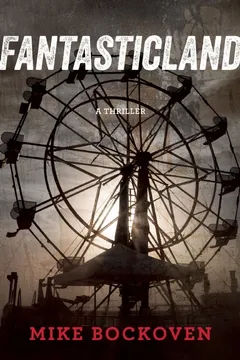
The account opens after Hurricane Sadie has devastated Florida and FantasticLand has become a crime scene. Of the 326 employees left inside the park, 207 are eventually evacuated; 119 remain missing. The reporter, Adam Jakes, describes bodies displayed among the rides and the park's towering Exclamation Point shattered beneath a sign promising guaranteed fun.
He warns that the interviews ahead cannot explain everything. They can, however, trace how fear, isolation, failed leadership, and the habits of a young workforce turned a place built for make-believe into a real battleground.
The opening makes the park's ruined spectacle both evidence and a trap for the reader. Its bright promise sits beside bodies and broken infrastructure, inviting the same appetite for shock that later drives the public to consume the survivors' stories. Jakes offers facts, but also admits that facts cannot settle the question of how ordinary people became violent. That uncertainty governs the book's form: each witness supplies a partial account, while the discrepancies reveal how fear, self-protection, and self-justification shape memory.
Sadie Reaches the Park
FantasticLand's elaborate storm plans were old, difficult to use, and rarely rehearsed as living procedures. When Hurricane Sadie veered north, managers sounded alarms, but the park still opened and buses carried visitors toward its gates. Aaron Hoffman and his family were among those caught in the reversal: he fought through the crowd to reach his frightened son Kendall, then joined a later evacuation bus.
Staff member Phil Mueller assembled every available van, tram, and coach to move people inland. The storm cut the park off before all the employees could leave. Of more than four hundred workers who had volunteered to stay under Operation Rapture, 326 remained, expecting to shelter briefly and protect the property until help arrived.
The disaster begins not with a lack of preparation but with preparation that has stopped functioning as knowledge. FantasticLand possesses manuals, shelters, supplies, and trained staff, yet a single failure to stop guest buses places families in danger and complicates evacuation. The difference between the Hoffmans' escape and the employees' entrapment is partly administrative timing. The park's systems promise control, but their age and fragmented ownership of decisions leave workers dependent on improvisation just as the storm makes improvisation most dangerous.
The Shelter Goes Dark
The storm shelters initially hold the remaining staff with food, water, radios, and room to spare. Managers restrict access to the Command Center to prevent panic, but the decision breeds resentment among employees who cannot learn what is happening outside.
Then the power fails. In the darkness, people grab for flashlights and stumble over one another; workers are injured, and several die in the confusion. First-shift manager Sam Garliek fights through the crowd, opens an exit, and restores the generators, but the losses cannot be undone.
Among the dead is Bryce Hockney, a worker who needed an inhaler. Garliek later presents himself as the person who imposed order, while other witnesses suspect his conduct in the shelter helped destroy his authority.
The shelter's failure is not simply a technical malfunction. Restricted information has already divided the group into those who trust management and those who feel managed, so darkness turns an existing conflict into bodily danger. Garliek's later insistence on his own heroism cannot repair the gap between intention and consequence. The shelter demonstrates a central irony: a space engineered to protect everyone becomes lethal when coordination fails and people no longer believe that others will act for their safety.
A Stanchion Makes a King
Once the staff emerge, they find flooded paths, no phones, no clear assignments, and no reliable supervisor. A young employee who had been climbing for fun falls and suffers catastrophic injuries.
Brock Hockney, a muscular Pirate Cove worker, kills him with a metal crowd-control stanchion, presenting the act as mercy. The gathered workers do not stop Brock; they watch, then spread the story. Garliek's reputation collapses further, partly because employees believe he killed Maria Flynn after she challenged him in the shelter, a claim the book leaves disputed.
Workers begin gathering with friends and colleagues rather than following the old chain of command. Brock's certainty attracts followers, while fear pushes others to organize defensively.
Brock's killing converts a private emergency into a public lesson about power. Whatever his stated motive, the spectacle teaches witnesses that the old rules no longer protect anyone and that violence can establish authority faster than procedure. The uncertain account of Maria Flynn's death deepens the same rupture: rumor fills the space where trustworthy leadership should be. The tribes do not arise from scarcity alone. They form because employees lose confidence that a common authority can interpret events fairly or keep them safe.
The Mole Men Go Below
Stuart Dietz and veteran maintenance worker Charlie Powers recognize how exposed the older workers are among the newly leaderless employees. They gather colleagues in the park's underground service tunnels, where their keys, technical knowledge, and familiarity with hidden routes offer some protection. After the storm eases, Carlos and Miguel volunteer to search the flooded woods for help.
Only Carlos is later reported to have returned, and even his fate remains uncertain. With the park's roads submerged and rescue delayed, the maintenance crew chooses to stay together underground. They establish regular head counts and meetings, turning a workplace network into a survival group later known as the Mole Men.
The Mole Men build authority from competence rather than theatrical force. Their knowledge of tunnels and equipment is practical, but their first attempt to find outside help exposes the limits of expertise when the surrounding landscape has become impassable. Their discipline offers a fragile alternative to the park's emerging tribes, yet even this group cannot eliminate uncertainty or protect everyone who ventures out. The tunnels function as both shelter and social boundary: safety comes from knowing who belongs, and that knowledge increasingly means keeping others out.
Tom's Patrol Ends in Blood
In Hero Haven, ride characters and shop workers gather around Riley Boyd, who has begun organizing food, shelter, and patrols. On their first outing, Tom and other members of the group encounter Pirates. Brock's followers capture Tom and cut off his hands, then leave them displayed on a stanchion as a warning.
Tom survives for several hours while his friends struggle to stop the bleeding without proper medical help. Riley sees that goodwill and a shared workplace cannot protect them by themselves. She takes a real sword from the comic shop and plants it in a table, making the group's decision to defend itself unmistakable. The Deadpools now have a leader, a name, and a reason to prepare for another attack.
Riley's leadership forms under the pressure of helpless witnessing. Tom's injury is not merely an attack on one friend; its deliberate display tells the Deadpools that the Pirates intend to define what safety means for everyone else. Riley responds by turning grief into a concrete commitment, but the sword also marks a narrowing of possibility. Her group gains cohesion through shared fear, and that cohesion will help it resist attack while making retreat or reconciliation harder to imagine.
The Brand at Pirate Cove
Cristobal Abasolo, a concession manager from Chile, leaves the poorly organized Fairy Prairie and joins the Deadpools, where his friend Travis works. During a patrol, Pirates surround Cristobal, Tom, and two others after they take food from a gift shop.
The Pirates offer membership as the alternative to punishment. A worker named Sam accepts and is branded; the group then orders him to brand Adrienne, a frightened Venezuelan employee hiding nearby. The heated iron pierces Adrienne's cheek and reaches her mouth.
While the Pirates rush to her, Cristobal slips away and hides until morning. His flight carries a warning back to the park: membership in a tribe can offer protection, but it can also demand that a newcomer hurt someone more vulnerable.
The loyalty test turns belonging into a transaction paid for with pain. The Pirates do not merely recruit; they require a newcomer to participate in coercion, making complicity the proof of membership. Cristobal's escape is a refusal of that bargain, but it does not offer a stable refuge. His experience also shows how language and group power interact: Adrienne's fear is less legible to those around her, while the ritual makes violence instantly legible to everyone watching.
Clara Claims the Golden Road
Clara Ann Clark finds frightened coworkers gathered around the fallen employee's body on the Golden Road. She sends the shop workers to secure their stores, then brings them together and assigns them food, shelter, and mutual protection. The group becomes the ShopGirls, with Clara as its organizer.
When looters later break into a shop, the women confront them together and drive them off, one member returning with a bloody ear as proof of the fight. Clara expands their defenses by training archers and arranging rooftop watches. The ShopGirls have enough supplies to share, but Clara's rules also make the stores their territory. Their solidarity offers frightened employees a purpose while drawing a hard line around who may enter.
Clara's organizing skill comes from giving panic a task. Rather than asking the women to overcome fear abstractly, she assigns posts, supplies, and duties, converting a crowd into a coordinated group. Her use of the dead employee as a warning creates unity but also binds the group to a violent symbol. The ShopGirls' success reveals the double edge of collective care: shared labor can preserve people, yet protection defined through exclusive territory can reproduce the siege mentality that threatens them.
Austin's Hidden Arsenal
Austin Rowland, a resourceful maintenance worker, persuades his girlfriend Sophie Ruskin to stay behind under Operation Rapture. He gathers cash, food, water, phones, and guns taken from the park's security locker, hiding them with Sophie in a storage space behind a ride.
They hope to trade supplies and stay ahead of trouble, but the flooded employee dormitories expose them to contaminated water and illness. As other groups grow suspicious and demand access to their stash, Austin disappears on one of his supply runs.
Pirate Chase Pounder later recounts seeing Brock beat Austin and shoot him after finding one of his guns. Sophie never learns what happened to her boyfriend. She remains with the weapons, a dangerous reserve no one can reliably account for.
Austin's talent for exchange, which once made him useful and popular, becomes a liability when trust collapses. His stockpile is both insurance and an invitation to be hunted. Sophie inherits the practical means to defend herself but not the knowledge of Austin's fate, leaving her with an unresolved loss and a weapon she did not seek as an identity. The subplot complicates any simple division between generous and selfish survival: preparation can protect a couple, but secrecy makes them appear threatening to everyone else.
Elvis Meets the Pirates
Elvis Springer initially keeps his close-knit Fantastic Future World crew apart from the worst of the park's violence. After Cristobal reaches them with news of the Pirates' attacks, Elvis and Karen cross the park to investigate and search for weapons.
The security station has already been stripped. At the Pirate Cove, guards block their way; Karen trips a hidden wire as they flee, and the Pirates catch and kill her. Elvis is rescued by Deadpools, but he returns to his people with the sight of Karen's body hanging in the distance.
He tells them to expect the worst and helps turn their makeshift tools into weapons. Soon after, he sees the severed heads and grisly displays at the World’s Circus, widening the Robots' belief that every other group may be a threat.
Elvis's shift from social caretaker to defensive organizer follows a sequence of evidence that narrows his options. Karen's death makes danger personal; the Circus displays then make it seem ubiquitous. His grief does not simply harden into aggression. It becomes an argument for preparedness that his crew can act on. The episode also shows how unreliable information grows from real events: the bodies are real, but their meaning expands through rumor until every unfamiliar territory appears capable of anything.
The Circus Becomes a Warning
Glenn Guignol and the World’s Circus workers, later called the Freaks, have horror props and effects ready for the park's approaching Fright Nights. After Elvis asks them to help resist the Pirates, Glenn instead turns the props into a deterrent.
His crew arranges fake body parts, eerie lighting, sounds, and planted messages to convince outsiders that the Circus is occupied by something far worse than a frightened group of workers. The display succeeds: visitors turn back, and stories of mutilation spread.
Glenn insists that the mysterious masked figures people call Warthogs are not his creation. Their identity remains unconfirmed, leaving the Freaks' calculated performance entangled with genuine, unverified accounts of people being hunted.
Glenn's strategy weaponizes the same imaginative infrastructure that once entertained visitors. The haunted displays protect the Freaks without requiring them to win a direct fight, but they also corrupt the park's shared sense of evidence. Once fake gore and real violence occupy the same landscape, witnesses cannot easily distinguish warning from threat. The Warthogs deepen that instability: uncertainty itself becomes a defensive resource, but it also makes the whole park more frightening than any one tribe could make it alone.
Sam Calls a Summit
As weeks pass, Sam Garliek tries to reclaim authority by inviting representatives of the scattered groups to meet at the Exclamation Point. The invitation promises cooperation and points to the danger of future arrests, but few trust him.
Riley brings Deadpools, Clara brings ShopGirls and archers, Elvis arrives with Robots, and Charlie Powers brings Mole Men. Glenn's Freaks enter in unsettling costumes; the Pirates arrive separately, with Brock Hockney attending without an escort.
The Fairy Prairie is scarcely represented after its workers have scattered or been absorbed by other groups. Louise Muskgrove climbs onto nearby scaffolding to record the meeting. The gathering briefly puts enemies within reach of one another, but nobody can agree who has the right to set the terms.
The summit is an attempt to restore a public space where disagreement can be managed, but its participants arrive with incompatible definitions of legitimacy. Sam invokes employment and law; the tribes rely on local loyalties and their own records of harm. Louise's wish to document events adds a second audience, the imagined world beyond the park, even though communication with that world remains impossible. The meeting is therefore both negotiation and performance, a final attempt to make a common account before violence overwhelms it.
The Cannon Under the Cloth
Brock answers Sam's appeal to law by accusing the park's management of abandoning its workers and dismissing the promise of later justice. Hidden beneath the meeting table's cloth is a real cannon. Brock fires it into the gathering and toward the base of the Exclamation Point.
The blast kills Charlie and other employees, injures survivors, and sends Louise from the scaffolding. The cannonball also strikes the landmark, showering the central plaza with fragments. Pirates then attack the scattered groups.
Some fight back with improvised weapons; others flee toward their own territory. In the aftermath, bodies are displayed on a wire near the broken Point. The summit meant to end the fighting becomes the event that makes a park-wide war seem unavoidable.
Brock's attack is effective not only because of its casualties but because it destroys the premise of deliberation. The cannon hides in plain sight, turning the meeting's hospitality into a weapon and exposing how badly its participants have misread one another. The shattered Point makes the loss of a shared civic center visible. Afterward, each group can interpret the massacre as proof that its own preparations were necessary, creating a self-sealing logic in which defense and retaliation become indistinguishable.
The Point Explodes Again
After the summit, the Mole Men decide that bringing down the damaged Exclamation Point could draw rescuers' attention from the air. Stuart Dietz inspects the blast site and finds that the cannonball has not weakened the landmark enough to topple it.
The workers gather demolition blocks and use generators and a jackhammer to open the base. Tomas, who has military demolition experience, calculates the charges but mistakes one-pound blocks for quarter-pound ones. The explosion tears apart part of the Point without bringing the whole structure down.
Its force shakes the tunnels and may kill people, though the survivors cannot establish who. Instead of producing a clear distress signal, the blast convinces already armed groups that another attack is underway.
The Mole Men's plan is rational within the information they possess, but the mistaken charge weight shows how fragile competence becomes when specialist tools are used without verification. Their intention is rescue, yet the result resembles an attack. This is a recurring causal pattern in the park: actions meant to secure survival are interpreted through fear and provoke the danger they were designed to prevent. The failed landmark also leaves the workers without the visible signal they hoped would reconnect them to the outside.
The Cannon Sinks
After the blast, Pirates and former Fairy Prairie workers attack the ShopGirls with a cannon and improvised weapons. Clara's archers fire from rooftops while the ShopGirls fight with bats, sticks, and scavenged armor, killing several attackers and forcing the rest to retreat. Clara then joins Deadpools in a strike team that rolls the Pirate cannon into a pond so it cannot be used again.
The plan succeeds, but inside a taffy shop the alliance breaks: Deadpool Daniel turns on the ShopGirls, attacks Drew, and is wounded by Clara, while Chase's friend Freckles is killed. Clara tells the shaken survivor that the Pirates acted because they expected their enemies to do the same. The victory leaves the allies less able to trust one another.
The sunken cannon is a genuine strategic success, yet it arrives amid a moral collapse that strategy cannot repair. The ShopGirls and Deadpools cooperate because they face a shared threat, then violence within their own refuge reveals that alliance has not restored trust. Clara's explanation gives the killings an internally coherent logic, but coherence is not innocence. The episode captures the tribes' deepest trap: every act of preemption can be presented as self-defense, while each new betrayal confirms that nobody can afford to stop acting first.
Gunfire Ends the Battle
Near the end, the Pirates attack the first-aid hut and demand that Gemma Albers or her assistant Morgan join them. When the women refuse to abandon neutral care, Pirates set the wet shelter alight and move on the ShopGirls. Deadpools and Robots arrive to help, and the confrontation becomes a large, confused fight. Then an unknown shooter begins firing at the Pirates.
The gunfire breaks their advance; survivors drag the wounded away, and the fighting subsides. A few days later, National Guard troops enter the park, find survivors and bodies, and evacuate 207 employees. They find no clear leader or reliable account of the gunfire. The park's ordeal ends in rescue, but its missing workers and unresolved crimes leave no clean reckoning.
The final gunfire interrupts violence without resolving its source or meaning. Because Sophie has access to weapons but no physical evidence identifies the shooter, the apparent rescue remains morally and narratively uncertain. The National Guard's arrival restores external authority, yet it cannot recover the missing or make the survivors' conflicting accounts align. The ending therefore resists the comforting structure of a single hero ending a siege. Rescue stops the immediate crisis; it does not explain why the crisis became possible or absolve those who acted within it.
Epilogue
Jakes closes by acknowledging that the interviews have produced detail without a final explanation. The park never reopens; it is demolished, while the disaster becomes a subject of media, merchandise, and public fascination. Jakes later visits Alice Barlow, a ShopGirl archer, but she breaks down before she can tell her story.
Her distress forces him to confront how his own reporting turns survivors into objects of curiosity. The book ends without solving the mystery of how a young woman who once protected animals could take part in the killing, or what any of the survivors would have done in her place.
The afterword turns the book's investigative frame back on its investigator. Jakes has gathered testimony, but his desire to know becomes another demand placed on survivors, and Alice's breakdown makes the cost of that demand visible. Public fascination continues the park's spectacle after demolition, translating private trauma into quizzes, merchandise, and entertainment. The unresolved ending is not a failure of reporting so much as a refusal to pretend that explanation can erase responsibility or pain. The book leaves readers with an ethical problem: understanding violence requires listening, but listening can itself become a form of consumption.
Analysis
FantasticLand's catastrophe is not a simple experiment in whether civilization survives without food. The employees have substantial stores of water, food, medicine, shelters, and equipment. What fails first is the social system that should distribute those resources: outdated plans, unclear authority, restricted information, and a lack of trust make abundance feel like something another group may seize. The themed lands then give fear a geography. Workers retreat to familiar sections, where local leaders can offer immediate protection, but every new boundary makes cooperation across the park harder.
The book's interview form matters because no witness sees the whole event. Sam Garliek casts himself as a rescuer; Brock Hockney presents violence as the natural law of an exceptional crisis; Clara, Riley, and Elvis describe decisions made under pressure; Sophie cannot explain Austin's disappearance, while Chase supplies a partial answer she never receives. Their contradictions are not merely puzzles. They show how people build identities that allow them to keep living with their actions. The reader must weigh testimony without imagining that one account will restore a clean moral order.
The park's props and landmarks sharpen that problem. A stanchion, a cannon, bows, Halloween gore, and the Exclamation Point are built for entertainment or crowd management, then repurposed as weapons, warnings, and signals. The change is not magical: it is practical, incremental, and carried out by workers who already know how to use the objects around them. The horror lies partly in that familiarity.
Finally, the book implicates its audience. FantasticLand becomes a media sensation, then a source of quizzes, merchandise, and further stories. Jakes's encounter with Alice forces him to see that documenting survivors can reproduce the spectacle he claims to investigate. The book offers no universal explanation for why these particular employees killed. It instead traces the conditions that made violent choices seem ordinary, while refusing to turn that explanation into absolution.
Review Summary
FantasticLand received mixed reviews, with many praising its intense, gory narrative and unique interview format. Readers found it gripping and entertaining, comparing it to Lord of the Flies and Battle Royale. The audiobook version was highly praised for its narration. Some critics found the premise unrealistic, questioning the rapid descent into violence. The book's commentary on social media dependence and millennial behavior was controversial. Overall, it was seen as a thrilling, if divisive, exploration of human nature in extreme circumstances.
People Also Read





Characters
Adam Jakes
The troubled investigatorJakes assembles the book's interviews as a reporter trying to establish what happened at FantasticLand. He values concrete evidence, but his own framing reveals a hunger for an explanation that the witnesses cannot supply. His attention to contradictions makes him a useful guide through competing accounts, while his growing discomfort with the public's appetite for violence complicates his role. He is not a neutral camera: he chooses whom to interview, what to include, and how to frame the survivors. His central tension is between the journalist's duty to document and the human obligation not to turn another person's worst experience into spectacle.
Alice Barlow
The haunted archerAlice is a young ShopGirl and one of the park's few archers. Before the disaster, she appears in family and school records as a bright student devoted to animals, a contrast that shapes Jakes's questions about ordinary people and violence. Her story frames the book even though she does not give a full account of her experience. Alice represents a survivor whose public image cannot explain her private actions, and whose silence deserves to be treated as more than an invitation to speculate.
Johnny Fresno
The park's imaginative founderJohnny Fresno, born Mohammad Assad Kassab, builds FantasticLand around immersion, spectacle, and a singular personal vision. He is a persuasive, generous presence who makes employees feel that their work matters. His determination to place the park near both trees and ocean gives the company its identity, while the elaborate emergency plans reflect the practical counterweight supplied by his CFO. Johnny's legacy is complicated: his imagination creates a beloved place, but the park's fragmented themed lands also shape how employees later separate into territories.
Ollie Tracks
The safety-minded CFOOllie Tracks, called Trolly by colleagues, is FantasticLand's CFO and Johnny Fresno's most effective business counterweight. He steers the founder away from costly impulses while investing heavily in emergency infrastructure, storm shelters, and disaster planning. His procedural thoroughness gives the park unusual resources, but the manuals he helps create become unwieldy and eventually fall out of regular use. Tracks represents foresight in institutional form: valuable, but not self-sustaining unless later leaders maintain it.
Ritchie Fresno
The burdened inheritorRitchie, Johnny's son, inherits FantasticLand and brings a sharper business focus than his father. He is proud of his operational skill and impatient with the mythology that measures him against the founder. He sees the park as both a profitable company and a legacy he never fully chose. When crisis arrives, his account reveals the limits of ownership at a distance: he can call executives and seek help, but he cannot reach the stranded workers or compel a failing institution to act well.
Phil Mueller
The personnel chiefMueller oversees FantasticLand personnel, training, and the workers who volunteer for Operation Rapture. A steady manager shaped by construction work, he thinks in terms of assigning people and supplying the tools they need. He organizes evacuation and directs the remaining staff toward shelters, but leaves before the storm traps them. His account mixes pride in his decisions with an awareness that the plan was flawed, illustrating the distance between a sound emergency speech and the long-term consequences of leaving young workers alone.
Sam Garliek
The discredited managerGarliek is a shift manager who expects formal authority to make people follow directions. He struggles to adapt when workers emerge from the shelter into a park where the usual hierarchy has lost credibility. Other witnesses describe him as abrasive and ineffectual, while his own account casts him as the man who tried to impose order. The conflicting testimony surrounding his conduct makes him a study in self-justification: he measures leadership by intention and procedure, while the people around him judge it by whether they feel protected.
Brock Hockney
The Pirate leaderBrock is a Pirate Cove performer who becomes the most commanding presence among the park's factions. He is physically imposing, articulate when he chooses to speak, and skilled at turning uncertainty into clear rules and collective purpose. His account frames violence as a response to institutional failure and extraordinary circumstances; his actions, as described by others, reveal how readily he uses fear and ritual to bind followers. Brock's defining psychological feature is his conviction that decisive force is more honest than restraint, a belief that makes him persuasive to frightened workers and dangerous to anyone outside his circle.
Jill Van Meveren
The trained defenderJill works as a soldier character in Hero Haven and has loved action stories and martial arts since childhood. At the park, she discovers that the physical skills she developed for confidence can matter beyond performance. She is observant about fear and group behavior, but she can also mistake early camaraderie for durable safety. Her account is candid, sometimes self-mocking, and attentive to how quickly ordinary routines change under pressure. Jill's central drive is to protect herself and her friends without surrendering the identity she built around being brave.
Riley Boyd
The Deadpools' strategistRiley organizes the workers who become the Deadpools after the shelter crisis. She is practical, decisive, and alert to the difference between temporary comfort and actual security. When others hesitate, she translates danger into assignments and plans. Her leadership is relational as well as tactical: people follow because she notices what they fear and gives them something useful to do. Riley's character exposes the strain of command among peers, where every protective decision can also ask others to accept risk on the leader's judgment.
Clara Ann Clark
The ShopGirls' commanderClara is a Golden Road gift-shop manager who once doubted her ability to command respect. When the workers around her freeze, she gives them practical duties and builds the ShopGirls into a disciplined group. She is blunt, perceptive, and unusually able to convert fear into collective action. Clara's care for her members is genuine, but it becomes inseparable from strict boundaries and readiness to fight. She understands that people need purpose, yet her confidence in that principle can leave little room for dissent or vulnerability.
Stuart Dietz
The blunt mechanicDietz is a veteran maintenance worker whose knowledge of the park's hidden systems gives him practical authority. He distrusts younger managers and prefers concrete tasks to speeches, though his account repeatedly admits when his group acted foolishly. His loyalty to the Mole Men is grounded in shared competence and mutual watchfulness. Dietz's plainspoken perspective cuts through grand narratives of heroism: he remembers the wrong decisions, the physical discomfort, and the people whose safety depended on choices he helped make.
Charlie Powers
The Mole Men's steady leaderPowers is an experienced maintenance worker whom Dietz regards as a natural leader. He listens to colleagues, explains plans calmly, and earns trust through attention rather than intimidation. His instinct is to find a practical route through danger, whether in the tunnels or across flooded ground. Charlie's strength is also a vulnerability: he believes cooperation can still work when others have begun to treat every gathering as a risk. He represents the possibility of leadership built on credibility and shared labor.
Elvis Springer
The Robots' caretakerElvis is a security manager in Fantastic Future World and a familiar, affectionate presence to its young employees. He knows the park and the people in it, and initially treats problems as manageable if the group stays together. When reports of violence reach him, he struggles between protecting his own community and facing threats elsewhere. Elvis's strength is his warmth; his weakness is the tendency to believe that a safe local arrangement can remain separate from the wider crisis.
Karen
Elvis's watchful partnerKaren works in security alongside Elvis and shares his willingness to investigate what is happening beyond their section. She is competent, curious, and attentive to the park's details, including sketching its deserted scenery. Her relationship with Elvis offers both of them a rare source of intimacy as normal structures disappear. Karen's presence shows how personal attachment can motivate people to take risks they might otherwise avoid.
Glenn Guignol
The master of misdirectionGlenn is a fire breather and theatrical specialist who leads the World’s Circus workers, known as the Freaks. He approaches danger through design, staging, and psychological effect rather than direct confrontation. Proud of his craft, he understands that what people imagine can be as powerful as what they see. Glenn's ingenuity helps his group avoid some fights, but his fabricated horrors also intensify the park's rumor system. He insists on distinguishing his work from the mysterious masked figures others call Warthogs.
Sophie Ruskin
The isolated ride operatorSophie operates a ride in Pirate Cove and falls in love with Austin, whose quick thinking and charm make him central to her life. She is direct, self-reliant, and initially trusts his ability to make a plan for almost any situation. As isolation strips away their ordinary supports, she must confront a world where resources attract danger and affection cannot guarantee safety. Her testimony is shaped by loyalty to Austin and by the unresolved need to understand what became of him.
Austin Rowland
The tireless hustlerAustin is a maintenance worker who learned early to provide for himself. He turns observation, favors, and practical knowledge into a successful informal economy inside the park. Charming and inventive, he makes people feel that he can find whatever they need. His instincts make him useful in a crisis, but they also lead him to accumulate resources and keep secrets. Austin's relationship with Sophie reveals a softer side beneath the hustle: he wants to protect the small world they have made together.
Chase Pounder
The reluctant PirateChase begins as a ride-line supervisor who has never faced more than ordinary workplace conflict. He feels an awkward responsibility toward the Fairy Prairie even when he recognizes that its workers are vulnerable. Fear and the desire for belonging make him susceptible to the Pirates' rituals, while his later testimony is marked by remorse and unusually frank self-examination. Chase's account shows how a person can participate in violence without imagining himself as violent, then live with the gap between self-image and action.
Cristobal Abasolo
The watchful outsiderCristobal is a Chilean concession manager who comes to Florida for seasonal work and becomes close to Travis, a Hero Haven performer. He is socially perceptive, attentive to danger, and willing to use Spanish to comfort a frightened coworker. His outsider's position gives him a clear view of how quickly formal titles stop mattering once workers lose faith in management. Cristobal's decisions are shaped by loyalty, fear, and a strong instinct for when a group is asking him to cross a moral line.
Gemma Albers
The exhausted medicGemma leads the park's first-aid station and stays behind to care for the stranded workers. She is conscientious, direct, and painfully aware of the limits of her training and supplies. As minor injuries become infections and battle wounds, she must face demands she cannot meet. Her relationship with Morgan develops from professional friction into mutual respect. Gemma's account resists the easy label of hero: she measures herself against both the help she gives and the suffering she cannot prevent.
Morgan
The calm first-aiderMorgan is a young first-aid worker who initially seems more drawn to social life than to preparation. Under pressure, she becomes calm, quick, and capable of handling more than her coworkers expect. Her bedside manner makes frightened employees trust her, while her practical strength helps Gemma keep the station functioning. Morgan demonstrates how crisis can reveal capacities that ordinary workplace judgments miss.
Aaron Hoffman
The evacuated fatherAaron is a visiting father who recounts FantasticLand's final hours before the hurricane. He is initially skeptical of the park's expense and dismissive of the storm's danger, partly because he wants his family trip to go well. When evacuation descends into a crowd crush, his attention narrows to finding his son Kendall and getting his family to safety. His experience provides a civilian contrast to the employees' longer entrapment and shows how quickly ordinary parental confidence can become protective instinct.
Maria Flynn
The demand for answersMaria is an employee who repeatedly asks managers why information is being withheld during the shelter emergency. Her insistence makes her a focus of resentment for Sam Garliek and a symbol of the staff's growing distrust. Accounts of what happened to her conflict, so her role in the story is inseparable from the uncertainty surrounding management's conduct.
Plot Devices
Operation Rapture
The stranded-staff planOperation Rapture is FantasticLand's emergency arrangement for employees who agree to remain on site during a disaster. Workers are promised wages and secure shelters, then assigned duties to protect the park after the storm. The plan supplies the initial reason 326 employees stay behind, but it assumes rescue will come quickly and that managers will return to supervise them. Once roads flood, power fails, and the chain of command disappears, the plan leaves young workers with resources but no durable structure for using them together.
The Exclamation Point
The broken civic landmarkThe massive Exclamation Point serves as the park's central orientation marker, visible from its different themed lands. During the siege it becomes both a target and a hoped-for signal to rescuers. The cannon damages it during the summit, and the Mole Men later try to demolish it to attract attention from the air. Its changing condition tracks the collapse of a shared center: once it is broken, each faction sees the park from its own territory rather than as one place.
The Themed Lands
Territory made believableFantasticLand's distinct sections have different landscapes, supplies, work cultures, and tools. The divisions are designed to make visitors feel they have entered several parks in one day. After the storm, employees return to familiar areas and organize around people and resources they know. This geography helps groups shelter and coordinate, but it also makes neighboring sections feel foreign and potentially hostile. The park's design turns an entertainment feature into a map for tribal identity.
The Missing Network
Isolation without an audienceThe employees lose phones, reliable power, Wi-Fi, and access to their usual social networks. The loss removes practical communication, but it also cuts off the habits through which they normally share experience and regulate their public identities. Boredom becomes intense, while rumors travel face to face without correction. People invent rituals, songs, patrols, and games to fill the silence. The absence of a functioning outside audience helps the park feel unreal, even as the consequences inside it become brutally tangible.
Fright Nights Props
Fear as a defenseThe World’s Circus stores fake blood, body parts, masks, and theatrical equipment for its Halloween attractions. Glenn Guignol's group uses these materials to make the Circus look occupied by something monstrous, hoping to deter attacks without fighting. The performance works, but it contaminates the park's already unreliable information network. Witnesses cannot always tell which horrors are staged, which are real, or whether the masked Warthogs belong to the Freaks at all.

Download PDF
Download EPUB
.epub digital book format is ideal for reading ebooks on phones, tablets, and e-readers.








