

Plot Summary
Fifty-Six Never Return
Journalist Adam Jakes begins with a brutal arithmetic: 372 people entered the Darnold Center to see Come Knocking on March 14, and 316 left alive. The dead include audience members, performers, and staff; the injured were attacked, burned, shot, or crushed in the building’s confusion. Jakes gathers testimony from workers, attendees, and people connected to the production, whose memories often conflict.
The show had run for years and sold out regularly, so the disaster was neither a special event nor an unforeseeable accident in the simple sense. His inquiry asks how a celebrated theatrical experiment accumulated enough ignored warnings, personal grievances, and operational weaknesses to make that night possible.
The opening statistic gives the book its governing problem: not only who died, but how an ordinary sold-out performance became a mass-casualty event. Jakes’s interview-based structure resists the comfort of a single omniscient account. Each witness knows one corridor, one injury, or one decision, while the reader must assemble the catastrophe from fragments. That form also makes uncertainty part of the subject. The competing testimonies do not erase responsibility; they show how people narrate their own conduct when the consequences have become impossible to avoid.
Masks Into the Netherworld
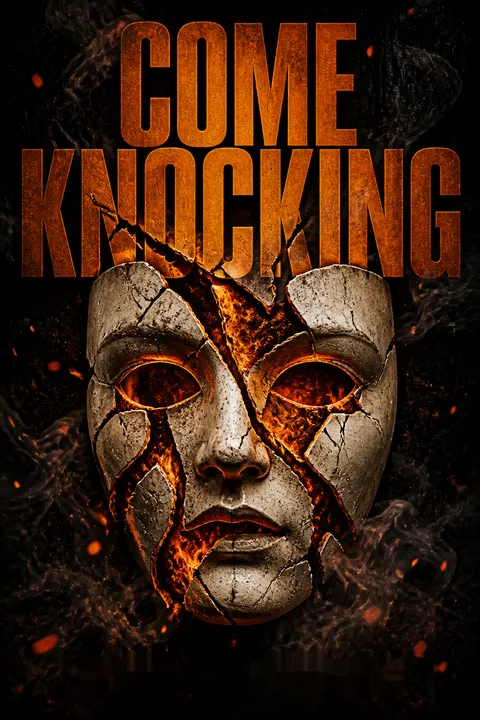
Come Knocking asks its audience to wear masks, remain silent, and avoid touching performers while freely exploring a six-floor world inspired by Dante and Chaucer. Each night runs three one-hour cycles, but visitors may follow the Knight, pursue a performer, or lose themselves in a single room.
The basement hosts the exuberant Human Jubilation; higher floors hold the Crypt, a frozen Judas, a desert, and a garden where the actors playing Life and Death wait apart from the chaos. Fans such as Cole Gardner relish the uncertainty, especially the private encounters that make each visit feel singular. Others, including preview attendee Sam Childs, find the dark, disorienting space frightening and difficult to navigate.
The production’s freedom is both its artistic engine and its first safety problem. Masks remove ordinary social cues, while silence makes it harder for a confused or distressed visitor to ask for help. The show treats uncertainty as a route to personal meaning, but that same uncertainty can leave people unable to distinguish performance from danger. Fans interpret disorientation as invitation; newcomers may experience it as abandonment. The format therefore depends on a fragile agreement between performers and audience, one that becomes harder to sustain as the crowd changes.
Bigger Than New York
Producers Clark Cardigan and Dan Darnold build Come Knocking into a celebrated New York production, drawing on a theatrical team that includes lighting technician Andrew Drebitt. Years of repetition gradually turn the work into a demanding job, while audiences become less familiar with its rules.
Drebitt sees more heckling, unwanted touching, and fights; performers begin leaving after bad nights. The producers try waivers and stricter warnings, but the show’s reputation keeps drawing visitors who expect a haunt, a club, or a conventional play.
Drebitt urges Darnold not to transfer a weakening production into a different city and building. Darnold proceeds. In Los Angeles, the smaller Crypt and elevated bar complicate an already difficult design.
The move west is not simply a change of scenery. It exposes the difference between an artwork and the conditions that make it work. The New York production relied on practiced staff, an experienced audience, and a building fitted to its unusual traffic. The Los Angeles version inherits the spectacle but not all of that support. Darnold’s appetite for scale helps create the show’s distinction, yet it also makes restraint feel like failure. The resulting risk is institutional: warnings are treated as obstacles to a successful property rather than evidence that the property needs to change.
Fandom Becomes a Weapon
Online complaints about Come Knocking gather into Who’s There, a forum where members exchange floor maps, performance schedules, and ideas for disrupting the show. Prop master Bryan Barker infiltrates a hostile Facebook group, dates a member named Joanna, and learns that she and others plan to interfere with a performance.
After security ejects their group, Barker’s deliberate show of recognition enrages Joanna; the ensuing threats help push the community into a private Discord. There, Reilly Pegg, a former Knight performer and influential organizer, gives scattered resentment a common target.
Some members still imagine pranks, while others discuss violence and conspiracy. Jagger Mora joins for the spectacle and later helps harass dancers, insisting that online cruelty is harmless because it is not physical.
The forum’s escalation depends on a conversion: criticism becomes identity, then identity becomes permission. Members gain belonging by sharing an enemy and by treating increasingly extreme ideas as proof of commitment. Barker’s deception and humiliation of Joanna give the group a concrete grievance, which Reilly can enlarge into a story of persecution. Online performance blurs the line between joking and planning, but it does not erase the real-world targets. The chapter shows how a community can make cruelty feel communal and therefore less personally accountable.
The Warnings Turn Physical
Before March 14, the harassment moves beyond insults and damaged props. Security guard C. S. Standish describes earlier attacks on performers, including an assault on Rodrigo Giminez and his partner Hao.
Dancers report being followed, grabbed, and taunted; Bella Evers is injured in a stairwell, though prop master Bryan Barker disputes that she was pushed. On March 13, a Who’s There member uses a taser against a dancer, and cast members retaliate.
That same night, a visitor blows a fireball behind Malcolm Rice’s bar, then a masked man threatens him with a knife and names possible ways to sabotage the show. Anna Rodriguez, known as Punky, sends anxious messages to her boyfriend, describing a cast that feels cornered and increasingly ready to fight.
These incidents make the coming catastrophe legible before it happens. Staff recognize a pattern of testing, retaliation, and rising fear, yet the warnings remain divided among departments and are not enough to stop the performance. Each assault changes what the next one means: a prank now looks like reconnaissance, and self-protection begins to resemble aggression. Punky’s fear matters because it is not an abstract mood. She is an exhausted performer weighing whether she might hurt someone or be hurt herself, with no reliable place to take that concern.
The Control Room Falls
On March 14, technical director Anders Petersen notices that his crew’s communication channels have gone silent and races toward the bar. Four intruders have forced their way into the control room behind it, injured Malcolm Rice, and barricaded the door. The director, Phillip, is inside with them. Without access to the booth, staff cannot coordinate security, manage effects, or warn performers when equipment fails.
Petersen tries to raise the alarm and sends workers to find the cast, but the system that normally keeps a complicated show coherent is already in enemy hands. One attacker uses the room’s controls to interfere with the performance. The staff’s assumption that someone else has called the police delays the first emergency call.
The control room is the production’s hidden nervous system. Its capture turns technical complexity into a weapon: effects that once created spectacle can now injure people, while communications failures prevent anyone from recognizing a shared emergency. The delay in calling police is not presented as a single villainous choice but as a chain of assumptions under stress. Each worker believes another person has covered a basic task. In a building built to encourage exploration, there is no reliable way to make everyone understand that the rules of the show have ended.
The Crypt Breaks Character
On the fourth floor, performer Penelope falls from her suspended entrance without the safety equipment that should have controlled her descent. Anders reaches her first and sees that she is gravely injured, but the music and dancing continue; masked visitors mistake his attempt to help for another scene.
The Demon Dancers finally understand that something is wrong and begin fighting people who are attacking them. Anna, already frightened by the worsening harassment, confronts a masked man with a knife and fatally stabs him.
On the fifth floor, attackers seize Rodrigo and Hao, bind them, and threaten Rodrigo with a blade. Anna and other dancers intervene, giving the two performers a chance to fight back. The cast’s choreography has become a struggle to survive.
The central horror is not merely that violence occurs, but that the show’s visual language conceals it. A fall, a scream, or a body on the floor can still look staged to people trained to expect theatrical extremes. The performers have to decide whether to preserve the fiction or break it, while the audience lacks the cues that would make that decision clear. Anna’s violence emerges from genuine danger and accumulated fear, but the same darkness makes it impossible to know whom to trust. The line between performance and self-defense collapses at the exact moment it is most needed.
A Couple Falls Into Hell
Audience member Talia Hills arrives with her husband, Brent, already estranged from him and involved with a coworker. The show briefly draws her in, and she begins to see its images as a way to confront the life she has avoided discussing. When she and Brent move toward an injured performer, a fight knocks him into an open grave. Talia reaches down to help and is caught by a timed flame effect.
She falls into the same confined space, where Brent has struck his head and is bleeding badly. With the exits and staff beyond reach, Talia holds his hand and tells him about her affair and the resentments she has kept from him. He dies before rescuers reach them; Talia survives with severe burns and the knowledge that her confession came too late.
The couple’s private crisis is overtaken by a public disaster, but the two are not interchangeable. Talia’s affair has already made intimacy feel like performance, and the crisis forces the truth into the open only when neither partner can leave. The grave literalizes their emotional confinement without turning Brent’s death into a moral punishment. The scene’s power comes from its unbearable timing: honesty arrives, yet it cannot repair the marriage or save the person who needed to hear it. Survival becomes a burden rather than a clean escape.
The Wheel Keeps Turning
An unnamed Who’s There member enters the building carrying knives and intending to disrupt the performance, not kill anyone. On the third floor, she abandons her assigned sabotage when a performer trapped on a rotating wheel begs for help. With the control room compromised, the wheel will not stop, and a moving flamethrower draws closer each time it passes.
She finds the emergency button, halts the mechanism, and starts freeing the actor. The flame effect ignites her hair and burns her scalp; the rescued performer also catches fire and later dies. Alone and injured, she reaches the bar, where Reilly’s voice comes over the speakers to condemn her for abandoning the plan. She escapes to a hospital and gives the police what she knows.
Her change of direction offers a small but crucial counterexample to the forum’s dehumanizing logic. Faced with a real person in immediate danger, she stops treating the production as an enemy symbol and acts to help. Yet the attempt cannot undo the system already set in motion. Reilly’s remote rebuke shows how tightly the online campaign has become a hierarchy: obedience matters more than the life she has just tried to save. Her rescue is morally meaningful, but the burning machinery makes clear that good intentions cannot compensate for deliberate sabotage.
The Gunman Enters the Jubilation
Ethan Appleton arrives armed with a rifle and an apocalyptic fantasy shaped by Who’s There. During the Human Jubilation, he shoots performers and audience members, killing twelve people. Security chief Shawn is among the dead, while Malcolm is wounded when a bullet grazes his head. Stagehand Evelyn Sweet-Bachman sees dancer Attila fall and takes a loose prop sword from the set.
She drives it into Ethan’s neck, then reaches his fallen gun and shoots him when he continues fighting. The gunman’s manifesto reveals that he imagined himself rescuing children from a conspiracy, though he had no evidence that children were being held in the building. The forum’s rhetoric has given his delusion an audience and a cause.
Ethan’s violence is not a rational extension of criticism or even of the forum’s stated pranks. His manifesto converts grievance into a private mythology in which murder becomes rescue and attention becomes proof of significance. The distinction matters: online members help create a climate of permission, but Ethan makes choices that exceed what many of them claim to have intended. Evelyn’s improvised resistance interrupts his power, yet it cannot restore the people already shot. Her action is courageous without being redemptive; the dead remain dead.
Every Exit Becomes a Fight
As smoke spreads through the building, audience member Brie Trulove searches for her boyfriend, Mike, then runs from the fighting and fire. A man stabs her; she fights back with his knife before a collapsing piece of the burning Satan set pierces her leg. She escapes without Mike, whose body she later identifies by his Social Distortion tattoo.
On the sixth floor, actor Franklin Hawley breaks windows and tries to guide visitors out, but locked doors and smoke trap people in the garden. He is badly injured while attempting to reach Lydia, the performer embodying Life. Outside, frightened survivors converge on too few responders, and panic becomes trampling and further assaults. Fifty-six people die; the production closes permanently.
The building’s designed exits become a final test of whether people can coordinate under fear. Instead, the emergency produces competing impulses to flee, search for loved ones, or fight whoever seems threatening. Brie’s survival is hard-won, but the loss of Mike turns escape into an unfinished act of grief. Franklin’s efforts expose the limits of individual heroism: he can break windows and open a door, but not control the crowd or reach everyone. The toll is both a count and a record of systems that failed at once.
The Grudge Beneath the Plot
After the disaster, Jakes obtains a letter Reilly Pegg left through a prison roommate before Reilly was killed in prison. Reilly says Clark Cardigan exploited him sexually, then replaced him as the Knight after a dispute, leaving him furious and fixated on the production. Clark confirms a sexual relationship but insists it was consensual and dismisses Reilly’s account.
Reilly’s grievance helps explain why he organized Who’s There and seized the control room, but it does not excuse the violence or the danger he unleashed. Clark rejects responsibility for the disaster, while lawsuits end Dumb Willie Productions’ future. The competing accounts leave the reader with a motive, not a simple verdict.
The late revelation reframes the conflict without resolving it. Reilly’s history makes his fixation more intelligible, but explanation is not exoneration; he converts a personal wound into a public catastrophe. Clark’s account preserves the power imbalance while denying its meaning, and the book offers no independent voice that can settle every detail. That uncertainty is ethically important. The disaster has identifiable perpetrators and preventable failures, but it cannot be reduced to one wounded man, one abusive producer, or one flawed show.
Epilogue
Jakes ends by resisting a single-cause explanation. He argues that the disaster grew through hidden pain, online conspiracy, ignored threats, institutional complacency, and escalating retaliation. One employee later tells him that staff saw violent posts in the Who’s There Discord and dismissed them as jokes.
For Jakes, that admission is the final warning: people had reasons to recognize danger, but chose to treat it as entertainment. The show is gone, yet the habits that made the attack possible remain. He leaves readers with no easy reassurance, only the demand to take threats and other people’s vulnerability seriously.
The epilogue shifts the question from what happened to what people chose not to believe. Jakes does not claim that a single act of vigilance would have prevented every death; he identifies a culture in which danger is repeatedly recast as spectacle, whether by trolls seeking laughs, producers chasing scale, or workers hoping someone else will act. This ending also implicates the reader, who has consumed the catastrophe as an assembled narrative. The book’s final challenge is not to feel appropriately horrified, but to recognize when entertainment has begun to resemble a warning.
Analysis
Come Knocking turns its audience’s freedom into the central dramatic paradox. The show asks visitors to surrender familiar rules: they wear masks, stay silent, wander without a guide, and decide what to follow. At its best, that structure makes spectators responsible for their own attention. At its worst, it removes the shared signals that let people recognize danger and coordinate help. The same ambiguity that creates intimacy also gives attackers cover.
The disaster grows through interacting systems rather than one isolated failure. The production relies on effects and a hidden control room; staff see escalating harassment but lack the authority or consensus to stop the show; an online forum rewards grievance and turns strangers into a community; and Reilly Pegg converts a personal history into organized retaliation. Ethan Appleton then carries that violent logic into a separate, more extreme delusion. The book distinguishes these roles without pretending that responsibility is simple. Reilly’s history may explain his fixation, but explanation cannot restore those he endangered. Clark’s denial does not erase his power over workers, and artistic ambition does not excuse operational negligence.
The interview format is essential to that moral complexity. A fan remembers transcendence, a frightened visitor remembers disorientation, and a worker remembers failed procedures. Their disagreement prevents the reader from settling for a neat story in which evil arrives from outside and everyone else is merely unlucky. Some people ignored threats because they looked like jokes; others escalated when they felt humiliated or unsafe; still others tried to help when the machinery had already been turned against them.
The book’s deepest warning concerns the conversion of fear into permission. Online cruelty feels unreal until it reaches a performer’s body. A staged scream sounds like entertainment until someone is dying. A warning seems excessive until the exits lock. The tragedy is not that people mistook fiction for reality once, but that the systems around them repeatedly trained them to dismiss what they saw. Jakes leaves readers with a practical implication: take threats seriously, make responsibility explicit, and do not confuse spectacle with safety.
People Also Read




Characters
Adam Jakes
Reluctant disaster chroniclerJakes is the journalist who gathers the testimony and arranges it into an account of the March 14 disaster. He approaches the assignment with experience of mass-death reporting and doubts about continuing to write such stories. His method is careful but not neutral in the sense of being untouched: he reveals his own judgments and ultimately examines how the public, staff, and institutions ignored warning signs. Because he lets witnesses contradict one another, he asks readers to distinguish evidence from self-protection. His role is less to deliver a final judicial ruling than to make the human and institutional chain of events visible.
Reilly Pegg
Online grievance organizerPegg is a former performer and an influential presence in the online community opposing Come Knocking. He is intelligent about performance and digital identity, and he understands how to make people feel seen by a group. His need for recognition and control sits beside a deep grievance against the production’s leadership. In Jakes’s account, Pegg’s skill at organizing and storytelling becomes inseparable from his capacity to nurture suspicion. He matters because he helps turn private resentment into collective action, while his history makes the motives behind that action morally complicated.
Clark Cardigan
Theatrical power brokerCardigan is the producer who handles the business and practical demands of Dumb Willie Productions. He sees production as a system of problems to solve and people to place, a perspective that helps him build ambitious shows but can make relationships feel transactional. His confidence in his own judgment is matched by a sharp resistance to being blamed or constrained. As a central figure in Pegg’s grievance and in the company’s history, Cardigan embodies the difference between artistic achievement and ethical responsibility. The book presents his account alongside accusations that he disputes.
Dan Darnold
Restless creative visionaryDarnold is Cardigan’s longtime creative partner and the driving imagination behind Come Knocking. He pushes for greater scale and sensory impact, often asking his staff to keep expanding what the production can do. That ambition produces the show’s distinctive world, but it also makes practical limits easier to disregard. Darnold is less visible than Cardigan in the interviews, yet his decisions shape the move from New York to Los Angeles and the production’s continued life there.
Bella Evers
Inventive embodied performerEvers is a dancer and experienced participant in interactive theater. A childhood shaped by instability led her to value performance as a chance to inhabit another self, and she treats movement as both craft and refuge. She is candid about the rough edges of the performers’ community and the physical demands of the show. Her account makes clear that performers are not simply props in an audience’s experience; they have boundaries, loyalties, and fear. Evers’s friendship with Anna gives the book an intimate view of the cast’s internal bonds.
Anna Rodriguez, known as Punky
Demon Dance firebrandRodriguez is a dancer whose work depends on stamina, precision, and a willingness to become physically exposed before an audience. She values the freedom of performance over conventional employment, but that freedom is precarious when harassment becomes part of the job. Her voice messages reveal a person trying to manage anxiety, anger, and financial pressure while asking for support from her boyfriend. Bella remembers her as funny, affectionate, and flawed, resisting any account that reduces her to a single violent moment.
Angus Schwartz
The Knight performerSchwartz plays the Knight, the clearest guide through the show’s otherwise fragmented story. He is confident in performance and accustomed to carrying an audience through the building, but he does not always recognize how much the surrounding cast is struggling. His account conveys the shock of seeing familiar choreography interrupted by actual violence. He provides one of the production’s most vivid perspectives on the night because his role requires him to move through several floors and notice when the performance no longer makes sense.
Malcolm Rice
Bartender and mediatorRice works at the Gummar Bar, where visitors begin and end their descent into the show. His talent is reading people: he can reassure confused guests, help couples find their footing, and charm someone who might otherwise escalate. That social ease is not bravado; it is a practiced way of staying safe in tense spaces. Rice’s account of threats at the bar also shows how quickly the familiar work of serving drinks can become a direct encounter with danger.
Anders Petersen
Meticulous technical engineerPetersen is the assistant technical director responsible for the systems and effects that keep Come Knocking operating. He values precision, communication, and procedure, and he describes failures in exact operational terms. That analytical temperament makes the loss of the control room especially frightening: he understands what can go wrong when the equipment is no longer under staff control. His testimony is also shaped by regret over decisions made under pressure, including assumptions that emergency services had already been contacted.
Talia Hills
Audience member in crisisHills attends Come Knocking with her husband, Brent, carrying an unresolved affair and years of disappointment in their marriage. She is drawn to the show as an experience that might help her confront what she has avoided saying. Her testimony is unusually frank about resentment, attraction, guilt, and parenthood. Rather than presenting her as a simple victim or a moral lesson, the book lets her describe how a private relationship can contain tenderness and harm at the same time.
Brent Hills
Talia’s estranged husbandBrent attends the performance with Talia despite having little interest in experimental theater. He has become increasingly distant from the artistic curiosity that once mattered to him, and his marriage has settled into unspoken disappointment. Talia’s account gives him depth through her conflicting judgments: she resents his habits and still recognizes his role as the father of their son. His presence makes the couple’s relationship more than a backdrop to the emergency.
Brie Trulove
Intuitive audience memberTrulove is an audience member who trusts her bodily sense that a situation has become unsafe. She comes to the show with her boyfriend, Mike, hoping to share an experience that had previously helped her make sense of recurring fears. Her account tracks the conflict between searching for someone she loves and protecting herself when danger becomes immediate. She speaks with lasting grief but also a firm awareness that she acted to survive.
Mike
Brie’s devoted partnerMike is Trulove’s affectionate boyfriend, more willing to accompany her to the show than to share all of her interests. His tattoo and his habit of indulging her plans become part of the way she remembers him. Through Brie’s testimony, he represents the ordinary intimacy that the disaster tears apart.
Ethan Appleton
Apocalyptic forum radicalAppleton is an isolated online participant whose writing frames personal failure and social anxiety as evidence that the world must be violently remade. He borrows the language of community and purpose to build a grand identity for himself. The manifesto shows how grievance can become a self-sealing belief system, especially when an online audience appears to validate it. His characterization is drawn from his own writing and the accounts of those around the disaster.
Rodrigo Giminez
Precision stunt fighterGiminez is a performer recruited for his fighting ability rather than conventional acting experience. He and Hao develop a demanding staged fight through repetition and mutual trust. Giminez’s direct, practical understanding of physical risk contrasts with the audience’s uncertainty about what is real. He takes pride in contributing an element that belongs specifically to the Los Angeles production.
Hao
Rodrigo’s trusted fight partnerHao is Giminez’s partner in the show’s staged fight. Their shared work builds a brotherly trust grounded in discipline rather than sentimentality. Hao’s physical commitment and loyalty to Giminez make him an important part of the performers’ protective network.
Evelyn Sweet-Bachman
Stagehand and defenderSweet-Bachman works on the first floor, where the Human Jubilation creates the show’s loudest, most crowded opening. She is frank about her attraction to performers and her own messy private life, but she takes her stage duties seriously. Her testimony focuses on the instant a familiar theatrical noise becomes unmistakably real. She is one of the workers whose ordinary knowledge of the set becomes consequential during the emergency.
Franklin Hawley
Poet playing DeathHawley performs Death on the quiet sixth floor, opposite Lydia’s embodiment of Life. He approaches the role as a restrained presence rather than a conventional monster and values the calm contrast his garden offers to the floors below. His account is measured and attentive to small details, including the smell of smoke and visitors’ changing expressions. The contrast between his composed stage persona and his practical response to danger reveals how quickly a carefully designed refuge can fail.
Cole Gardner
Devoted fandom moderatorGardner moderates the Come Knocking subreddit and believes deeply in the show’s artistic purpose. He helps new fans understand its many floors and encourages them to accept uncertainty rather than demand a conventional plot. His devotion also makes him a witness to the growing hostility surrounding the production.
Jagger Mora
Young online provocateurMora joins Who’s There as a young member attracted by its niche humor and the attention its arguments generate. He describes himself as a spectator rather than a serious threat, even while acknowledging that he helped harass performers. His self-justifications expose the gap between how people describe online cruelty and how it affects its targets.
Lydia
The garden’s figure of LifeLydia performs on the sixth floor as a masked embodiment of Life, paired with Hawley’s Death. Her presence gives the garden its sense of vulnerability and renewal. The role’s wordless design lets visitors project their own meanings onto her, making her connection with the audience central to the floor’s quiet atmosphere.
Plot Devices
The masks
Anonymity inside the showVisitors wear masks throughout the performance, concealing their faces and partially limiting their vision. The rule helps create the Netherworld’s altered social world, where strangers can move through the same scenes without ordinary introductions. It also makes it harder to identify who is an actor, audience member, or attacker, and it muffles the cues people rely on to read fear or ask for help.
The three cycles
A story that can be missedThe show repeats its one-hour sequence three times in an evening, while guests choose their own routes through six floors. A visitor can follow the Knight, remain in a room, or pursue a private encounter, but cannot see everything. This structure makes each guest’s experience distinct and gives the production its thematic force. It also scatters the audience and complicates efforts to coordinate staff or establish what is happening across the building.
The control room
Spectacle becomes a weaponHidden behind the bar, the control room governs communications, lights, cameras, doors, and many of the show’s effects. Staff rely on it to coordinate performers and respond to medical or security problems. Once intruders gain access, those same systems can be misused: effects continue without supervision, alarms and exits fail, and employees lose the ability to warn one another. The booth’s capture turns a technical vulnerability into the mechanism that magnifies the emergency.
Who’s There
A grievance networkThe online group gives critics of Come Knocking a place to exchange complaints, maps, schedules, and sabotage ideas. Its members do not share a single motive: some want jokes and disruption, others seek belonging or revenge, and some become consumed by conspiracy. Reilly Pegg’s influence helps the group move from mockery to coordinated action. The forum demonstrates how an online identity can reward escalation while leaving real performers to absorb its consequences.
Interviews and artifacts
A disaster pieced togetherJakes reconstructs the night through interviews, Reddit posts, voice memos, a manifesto, emergency calls, and a letter from prison. Each form carries a different kind of evidence and a different bias. Survivors remember physical sensations; staff explain systems; online participants defend their conduct; and the investigator weighs contradictions. The documentary structure makes the reader an active witness, assembling a timeline from partial accounts rather than receiving a single seamless explanation.
Download PDF
Download EPUB
.epub digital book format is ideal for reading ebooks on phones, tablets, and e-readers.








