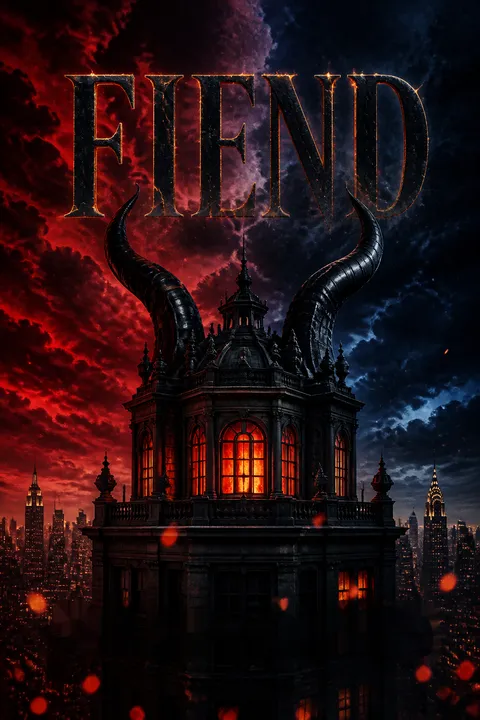


Plot Summary
The Tapping in the Walls
At nine, Maris Berisha slips into the servants' quarters after hearing tapping in the walls of her family's luxurious Manhattan home. Her older brother, Dardan, dismisses her fear, though she knows he once admitted seeing something strange himself. The doorman, Angelo, tells her that a child died in the penthouse before the Berishas moved in.
Maris's mother, Olga, insists the story is false, then dismisses the building manager's plea to keep Angelo employed. Maris begs her mother to reconsider, but the doorman disappears from her life. Alone in her room, Maris hears the tapping again and feels the house watching her. Her first lesson in Berisha power is that adults can silence people without making a mystery disappear.
Maris's fear is not treated as childish fantasy so much as an early form of attention. She notices what the family wants hidden, then watches Olga use wealth to remove the person who supplied evidence. The scene establishes the Berisha home as both sanctuary and instrument of control. Maris's request to spare Angelo also shows that she still expects kindness to matter, an expectation her family will repeatedly punish.
Smoke Over the Family
When Dardan is seven, he listens outside his parents' room as Zef and Olga argue. Black smoke gathers around his father, thickening until Dardan fears Olga is in danger. He fetches the house manager, who returns with him after the smoke has vanished and Zef claims Olga merely fainted.
The children are told to keep quiet. Soon afterward, Zef moves into a separate house nearby, visiting only for Sunday dinners. Dardan grows up believing the separation protects the family from his father's temper, though nobody explains how.
He is taught that his future role includes inheriting the family business and its private obligations. The boy who once wanted to sit beside his father learns instead to fear the force he may one day be required to control.
Dardan's childhood encounter gives the supernatural inheritance a psychological shape before anyone explains its rules. He responds to danger by summoning an adult, then keeps the secret because his parents' authority leaves no safe alternative. Zef's separate household looks like abandonment from a child's perspective, but it is also a form of containment. Dardan's later obedience grows from fear disguised as duty.
A Curse Under Glass
At a clan gathering, seven-year-old Maris hides inside a cabinet and watches relatives ask Zef for money and protection. When a relative named Zora confronts him over an affair, Zef erupts; moments later, she collapses and is left permanently incapacitated.
Maris hears her parents discuss moving Zora to a distant nursing home and treating the incident as an accident. Years later, after a friend calls the Berishas cursed, Maris privately asks a priest about the rumor.
He describes an old tale in which a bereaved mother bound a demon to the clan's headman. Maris later discovers Nora has found a secret box belonging to Zef, but he denies its significance and warns her away. The family keeps its oldest danger behind both locked doors and denials.
Maris's education comes through surveillance rather than explanation. She sees that the family can turn violence into a medical misfortune, then hears a religious account that gives the pattern a supernatural name. Zef's denial does not reassure her; it teaches her that knowledge itself is treated as disobedience. Nora's discovery of the box quietly plants a physical link between family secrecy and the legend.
A Death Before Congress
As an adult, Maris holds a vague advisory title at Berisha International, while her brother occupies the executive floor as heir apparent. A former lobbyist, Jack Hargrove, is due to testify that the company bribed lawmakers to secure approval for a Russian acquisition. Dardan favors legal pressure, but Maris argues that the testimony must be stopped before it reaches Congress.
The next morning, Hargrove is found hanged in a locked hotel room, his body bruised and badly damaged. Maris urges the communications team to present the death as suicide and takes the event as proof that her father acted on her advice. Zef praises her usefulness, then tells her the role he has chosen for her is marriage and producing an heir, not leadership.
Maris mistakes proximity to power for recognition. Her advice is adopted, but the outcome offers no proof that she understands the force behind it or can direct it. Hargrove's death converts corporate wrongdoing into physical horror, while Maris's instinct to manage appearances shows how readily she has absorbed the family's moral logic. Zef's marriage plan makes the gendered limits of her influence explicit.
Dardan Visits the Enemy
Dardan secretly travels to meet Andy Garrison, the father of his dead school friend Conner and Zef's longtime rival. Garrison asks him to help prove Zef caused Conner's fatal night-skiing accident and points to Hargrove's suspicious death as another pattern.
Dardan rejects the accusation: Zef was away, and Conner lost control on a dangerous trail. Yet Dardan carries his own guilt. He had an emergency beacon that could have brought rescuers closer, but resentment toward Conner kept him from pressing it.
Garrison's questions also force Dardan to face the inheritance he has hidden from Marcie and his friends: he believes the family protector is real, and that its power will eventually be his burden. He leaves the meeting frightened of both his father and his future.
Dardan's meeting puts two kinds of guilt beside each other. Garrison searches for a culprit outside himself, while Dardan knows he withheld a chance to help Conner and has never confessed it. His refusal to assist Garrison is not evidence of innocence or courage alone; it is also an attempt to keep a family secret intact. The inheritance feels less like privilege than an imposed repetition of harm.
Nora Steals the Lover
Nora, the youngest Berisha sibling, invites Maris's lover, Ricardo, to lunch, then draws him through an expensive boutique and a private sex show while supplying him with drugs. Nora knows he is a casual companion, but deliberately turns their encounter into a betrayal that will shake Maris's confidence. Soon after, Maris finds them together in Nora's bed and discovers Ricardo has posted a compromising photograph of her.
Furious, she storms into Dardan's office and threatens to tell Zef that he secretly met Garrison. The threat lands just as Dardan is trying to escape the family's control. Maris believes she has secured leverage over her brother; instead, she helps drive him toward a desperate decision about his inheritance.
The sisters use intimacy as a political instrument because their family has taught them that direct authority belongs elsewhere. Nora destabilizes Maris through a lover, while Maris turns Dardan's secret into a weapon. Their cruelty is not identical: Nora claims to be protecting her sister, while Maris wants to win. Both nonetheless reproduce the household's habit of controlling relatives through shame and concealed information.
A Proposal Becomes Escape
At Sunday dinner, Dardan announces his engagement to Marcie Franken, a longtime friend whose family is not Albanian. Zef and Olga reject the match, explaining that the future clan leader must marry within the community and produce heirs. Dardan tells them he will leave Berisha unless they let him build a life with Marcie.
He hopes his parents' refusal will free him from a destiny he never chose and give Maris room to inherit the company. Afterward, he feels relief for the first time in years. Before he can tell Marcie what happened, a late-night call summons him to headquarters. In the service stairwell, he paces and appears to speak to someone unseen. The family is about to discover that his attempted escape has not ended the danger.
Dardan's proposal is both a genuine reach toward intimacy and a calculated exit. Marcie represents a life in which marriage could be personal rather than a clan contract, but Dardan also uses the engagement to create a route away from succession. His optimism is fragile because he has learned to imagine freedom only as something his father must grant or deny.
The Stairwell Fall
Dardan is found dead at the base of a service staircase in Berisha headquarters. The police cannot yet explain how he fell, and Maris slips away from questioning to pressure a security employee into sending her the stairwell recording.
In the footage, Dardan paces, turns toward an empty landing, then seems to vault over the railing; a brief blur interrupts the image. Maris repeatedly watches it, suffering stabbing headaches whenever the blur appears. Grieving privately but eager to inherit, she visits Zef.
He names her interim CEO and puts her in Dardan's former executive position, but insists her future husband will lead the clan. Even as she gains the corporate title she wanted, Zef reserves the family's deepest authority for a man she has not married.
The footage turns Maris into both investigator and custodian of evidence. Her decision to conceal it echoes Zef's method of protecting the company, even while the recording unsettles her certainty about what happened. The promotion offers a real change in status, but its conditions repeat the family's central bargain: Maris may govern the enterprise only within limits set by patriarchal succession.
Rain at the Berisha Funeral
At Dardan's lavish funeral, Maris sees Andy Garrison among the mourners and wonders whether her threat pushed her brother into a corner. A plume of smoke curls near the family crypt, resembling the blur in the security recording. Before she can alert Nora, Olga rushes from the vault to report that Zef has collapsed.
He is taken to hospital and released, but his frailty makes Maris reconsider the family's supposed invulnerability. The funeral also exposes her to the public's anger at Berisha's business practices, while protesters and reporters gather outside. Maris has inherited Dardan's position, but the sight of the smoke and her father's sudden collapse leaves her unsure whether the promotion is a prize or an approaching danger.
The funeral assembles private grief, public scrutiny, and supernatural evidence in one place. Maris has long interpreted the family's good fortune as proof of protection, but the smoke makes that protection visible without making it comprehensible. Her father's collapse also destabilizes the hierarchy she has spent her life trying to enter. The new title cannot shield her from the family secret.
The Interview Breaks
During her first major interview as interim CEO, Maris expects friendly questions but faces scrutiny about bribery, factory conditions, and the company's record. A reporter also challenges her credentials and asks about Dardan's death.
As pain and confusion overwhelm her, Maris blurts out that her parents intend to make her marry so her husband can lead the clan. The communications director ends the interview, but the admission threatens the carefully managed image of Maris's promotion.
At the same time, public protests grow over Berisha's abuses. Maris resents the demonstrators and refuses Nora's suggestion that she promise reform. She still believes that toughness means preserving the old system, even as the people around her begin to fear what she may do.
The interview breaks through Maris's practiced corporate mask, revealing that her elevation is conditional and her authority divided. Her words are involuntary, yet they give public form to a private structure of control. Rather than use the moment to reconsider the company's conduct, she focuses on managing the damage. Her first public test therefore exposes both her vulnerability and her growing identification with Zef's methods.
Garrison's Last Meeting
Andy Garrison invites Maris to meet at a secluded conservancy building, offering a business partnership if she helps remove Zef and investigate Conner's death. He also claims Hargrove left behind files documenting Berisha crimes.
Maris rejects his demand and tells him to stop pursuing an accusation she cannot verify. As she turns to leave, Garrison collapses in violent convulsions. Maris considers calling an ambulance, then decides that being linked to the meeting could anger her father and drives away.
That evening, Zef tells her Garrison is dead of an apparent heart attack and warns that the circumstances may look suspicious. Before ending the call, he asks her to care for Olga. Maris hears a tenderness in his farewell she has spent years trying to earn.
Maris's choice not to seek help reveals how thoroughly fear has replaced ordinary moral judgment. She is not sure whether the death is natural or supernatural, but protecting her position takes precedence over a stranger's life. Zef's final tenderness intensifies the emotional trap: even after years of withholding affection, he can still draw Maris back through a moment of apparent recognition.
A Crown Without Instructions
Two weeks later, Maris finds Zef's body in his bed, horrifically torn apart. She pays the doctor and funeral director to avoid an autopsy and arranges cremation, then asks Olga what could have done this. Olga explains that the clan's head must control a demon bound to the family, and that Zef lived apart from his children because anger could unleash it.
The power tempts its bearer to act on every grievance. Olga says Zef's father trained him, but gives Maris no clear instructions for taking control. She also refuses to let Maris move back home, insisting that distance protects the family. Maris has the authority she coveted, but is left alone with a dangerous inheritance and no reliable guide.
The inheritance becomes an ethical and bodily burden rather than a metaphor for corporate power. Olga's explanation reframes Zef's absence as protection, but it does not erase the emotional damage caused by his choices. Maris's triumph is undercut by the lack of instruction and companionship. The family has transferred authority without transmitting the self-knowledge needed to use it safely.
The Protector Takes Ricardo
As protests intensify outside headquarters, Maris tries to assert control over Berisha's employees and public image. She visits Nora seeking support, but finds Ricardo there instead. Their argument over his affair with Nora stirs Maris's fury until black smoke gathers around her. The protector appears, and Ricardo recoils in terror.
Maris knows she could spare him, yet fears he will tell others what he saw; she silently allows the entity to take him. He vanishes without explanation. Maris has now used the inheritance herself, though she cannot tell whether she commanded the protector or merely yielded to it. The act leaves her with a missing man, a private secret, and a power that answers anger faster than reason.
This is the point where Maris moves from inheriting a capacity for violence to accepting its use. Her decision is not a sudden transformation but the culmination of years spent treating people as threats, assets, or obstacles. The protector magnifies that habit while making it feel like fate. Maris's uncertainty about control is crucial: she both exercises power and evades responsibility for what it does.
Nora Claims the Inheritance
Walter brings Maris a version of the stairwell video showing her push Dardan over the railing. She denies it and turns to Nora for support, but Nora has already helped the police place Maris in a psychiatric institution. There, she explains that the protector hid the original act and suppressed Maris's memory; Nora later altered the footage to conceal it.
She had controlled the entity through an ancient relic: the heart of the child whose death inspired the family curse, wrapped in the boy's ceremonial cord and his mother's wedding silk. Nora recalls that the protector once spared her as a lonely toddler and chose her company. Now head of the clan, she plans to free it rather than wield it. Maris is left restrained and abandoned.
Nora's revelation complicates the novel's division between perpetrator and rescuer. She manipulated events and concealed evidence, but her stated aim is to end a thousand-year captivity rather than inherit its violence. Maris, meanwhile, cannot separate her longing for authority from the harm she caused while seeking it. The final abandonment reverses her childhood wish to be noticed: she has power no longer, and no family member remains beside her.
Analysis
Fiend treats inherited power as a family system that converts private damage into institutional policy. The Berishas' business operates through bribery, coercion, and carefully managed accidents; their supernatural protector gives that same logic a literal body. The demon does not replace human responsibility. It amplifies desires the family already cultivates, then allows its members to call the consequences destiny, luck, or protection.
Maris's central conflict is not simply whether she can become powerful. She already knows how to read a room, anticipate weakness, and make herself useful to Zef. What she lacks is a model of leadership not built from his approval. Because recognition has been rationed throughout her childhood, she confuses being chosen with being loved and authority with proof that her injuries mattered. When the protector answers her anger, it makes this confusion lethal.
Dardan and Nora reveal two different responses to the same inheritance. Dardan attempts to reduce harm by becoming less like his father, but obedience and guilt keep him inside the machinery he distrusts. Nora is treated as irrelevant, so she learns to act from the margins, using intimacy and the family's hidden relic to intervene where formal authority excludes her. Her plan is not morally clean, but it rejects the assumption that the demon must remain a weapon.
The novel's most unsettling question is whether inherited violence can be ended without another act of control. Nora's intention to free the protector offers a possible break, not a guarantee of moral renewal. Maris is left confined, stripped of the power she pursued, while the family continues beyond her. The ending refuses the easy comfort of a reformed empire. It suggests that ending a legacy requires more than replacing its ruler: someone must stop treating other lives as instruments of family survival.
Review Summary
People Also Read








Characters
Maris Berisha
The overlooked strategistThe middle Berisha child, Maris is sharp, ambitious, and acutely alert to the ways people with power decide who deserves to be seen. Her father prizes her brother's inheritance and expects Maris to contribute through marriage, leaving her hungry for recognition and inclined to treat authority as proof of love. She is capable of strategic insight, but her judgment is compromised by resentment and a need to win. Her bond with Nora mixes affection, rivalry, and mutual surveillance. Maris's struggle centers on whether she can distinguish genuine leadership from the chance to repeat the coercion that shaped her.
Dardan Berisha
The burdened heirZef's only son and presumed successor, Dardan is raised to inherit both Berisha International and the family's private responsibilities. He is anxious, dutiful, and far less comfortable with cruelty than his father expects. His gentler connection with Marcie offers a glimpse of life outside the clan, while his friendship with Conner Garrison carries guilt he has never resolved. Dardan loves his sisters but does not always protect them, and his efforts to become a better man are constrained by the secrets he must keep. He represents the cost of being assigned a destiny before having the chance to choose one.
Nora Berisha
The ignored youngestThe youngest sibling, Nora is perceptive, impulsive, and publicly more critical of the family's wealth than her brother and sister. Her protests against Berisha's abuses coexist with a dependence on the money and protection she condemns. Dismissed by Zef as unstable, she learns to work from the edges of the family rather than seek permission at its center. Her relationship with Maris is intimate but volatile: she can be protective, mocking, and strategically cruel. Nora's sensitivity to exclusion gives her an unusual awareness of what family power does to those it claims to protect.
Zef Berisha
The commanding patriarchThe forceful head of the Berisha family and its global import-export business, Zef expects obedience and treats family life as part of the enterprise he must control. He favors his son as heir and directs his daughters toward roles he considers useful, while presenting the family's extraordinary good fortune as a blessing. His anger shapes the emotional climate of every room he enters. Zef's need to contain his own impulses suggests that his authority rests on a burden he cannot discuss openly. His children seek his approval even when they fear him.
Olga Berisha
The family keeperZef's wife and the mother of Dardan, Maris, and Nora, Olga maintains the family's elegant public life while managing its private silences. She is invested in beauty, tradition, and appearances, but her quiet decisions often reflect survival rather than simple agreement. Olga rarely challenges Zef directly, and her children inherit both her discretion and the cost of it. She understands that the family's power carries danger, yet she shares only fragments of what she knows. Her restrained care for her children is real, though it cannot undo the distance built into their household.
Andy Garrison
The grieving rivalA wealthy businessman and Zef's longtime adversary, Andy Garrison is the father of Conner, Dardan's school friend. He has spent years trying to understand the circumstances around his son's death and sees the Berishas' pattern of disasters as evidence of deliberate harm. His grief gives him persistence, but also narrows his ability to accept uncertainty. Garrison's calm manner conceals a determined investigator who knows how to recruit the Berisha children into his campaign.
Ricardo
The beautiful companionMaris's handsome, financially dependent lover, Ricardo enjoys the access and luxury that come with being close to a Berisha. He is more candid about his uncertain ambitions than Maris expects, and his relationship with her is casual even when it gives her unexpected emotional comfort. Nora recognizes his appetite for proximity to wealth and uses it to unsettle her sister. Ricardo's presence exposes how Maris's desire for control can coexist with a longing for uncomplicated intimacy.
Marcie Franken
Dardan's outside hopeA longtime friend of Dardan's from St. Albans, Marcie offers him an affectionate relationship not organized around Berisha obligations. She is warm, practical, and relatively unguarded about wanting a future with him. Her ordinary expectations make the family's rules more visible: she assumes a couple should choose one another without negotiating clan succession. Marcie's importance lies in the alternative life she represents, not in any knowledge of the Berisha secret.
Walter Slocomb
The loyal company lawyerA longtime Berisha attorney, Walter manages legal threats and understands how the company survives scandal. He is pragmatic, careful, and accustomed to carrying out Zef's wishes without asking questions the family does not want answered. His institutional loyalty is tested when Maris assumes authority and the company's internal secrets become impossible to contain. Walter's cautious manner makes him an effective survivor in a family where candor can be dangerous.
Sally Bright
The corporate messengerBerisha International's communications chief, Sally must turn crises into messages the public might accept. She is experienced enough to recognize the danger in Hargrove's death and uneasy about the family's reflex to call it suicide. Maris initially treats her as a professional obstacle, but Sally's work makes visible the labor required to protect Berisha's image. She is caught between corporate loyalty and the growing cost of defending the company's conduct.
Ajax Danielopoulos
The longtime operatorBerisha International's chief operating officer, Ajax has served Zef for years and knows how the company's practical machinery works. He contributes to crisis meetings with a steady, experienced manner, often helping translate Zef's anger into decisions. His long tenure gives him a place inside the family orbit without making him one of its children. Ajax represents the institutional continuity Maris must navigate as she rises within the company.
Jack Hargrove
The whistleblowerA former Berisha lobbyist, Hargrove plans to testify before Congress about the company's bribery of lawmakers. His departure initially seems routine to the people who once employed him, but his testimony threatens the acquisition and the family's political relationships. Hargrove's decision to expose wrongdoing makes him a direct challenge to Berisha's assumption that employees will remain silent.
Conner Garrison
Dardan's lost friendAndy Garrison's son and Dardan's school friend, Conner was a popular, confident athlete whose careless cruelty could leave lasting wounds. His death during a night-skiing trip becomes a source of grief and unresolved guilt for both families. Conner's relationship with Dardan matters not only because of their friendship, but because Dardan remembers the resentment that clouded his response when Conner was hurt.
Angelo
The kind doormanA longtime doorman in the Berishas' building, Angelo is one of the few adults who treats the children as people worth speaking to. He shares a troubling story with Maris, offering her an early glimpse of the unease surrounding their home. His kindness makes him a rare point of warmth in a household organized around rank.
The priest
The keeper of rumorA younger priest at the Berisha family's Orthodox church, he tells Maris an old story linking the clan to a curse and a demon. His account is framed as legend, yet it gives language to the fear surrounding the family. His willingness to speak openly makes him a brief but consequential source of forbidden knowledge.
Plot Devices
The family protector
Power shaped by angerAn ancient supernatural force is bound to the head of the Berisha clan. Family members believe it can remove threats and protect the clan, but its power is tied to the leader's impulses and is difficult to control. Its manifestations, including black smoke and apparently impossible deaths, blur the boundary between supernatural action and human responsibility. The protector embodies the family's dangerous belief that private wishes can be made into public consequences.
The heir's burden
Succession as a trapBerisha succession passes more than wealth and corporate authority to the next clan leader. The heir is expected to preserve family secrecy, control the protector, marry according to clan requirements, and accept a life of constant restraint. The rules explain why Dardan fears succession and why Maris's promotion cannot satisfy her: the company title and clan authority are treated as separate forms of power. The tradition turns inheritance into an obligation that no child has freely chosen.
The bound heart
An object that grants accessA preserved child's heart is wrapped in fabric from the boy's family's most meaningful possessions. It was used to bind the demon to the Berisha clan and can help someone communicate with or influence the protector before a full bond with the clan's head has formed. The relic turns an oral family legend into a material mechanism. Its intimate origin also places grief and maternal anger at the center of the family's inheritance, rather than treating the supernatural power as an abstract curse.
The stairwell recording
Evidence that changes shapeSecurity footage of Dardan's death first appears to show him alone, with a brief blur interrupting the image. Maris secretly obtains it and treats the blur as a clue, while headaches accompany her attempts to understand what it contains. Later, a version of the recording shows Maris pushing him. The footage gives the family a way to hide, distort, and eventually expose the event, turning surveillance into both evidence and an instrument of control.
Download PDF
Download EPUB
.epub digital book format is ideal for reading ebooks on phones, tablets, and e-readers.








