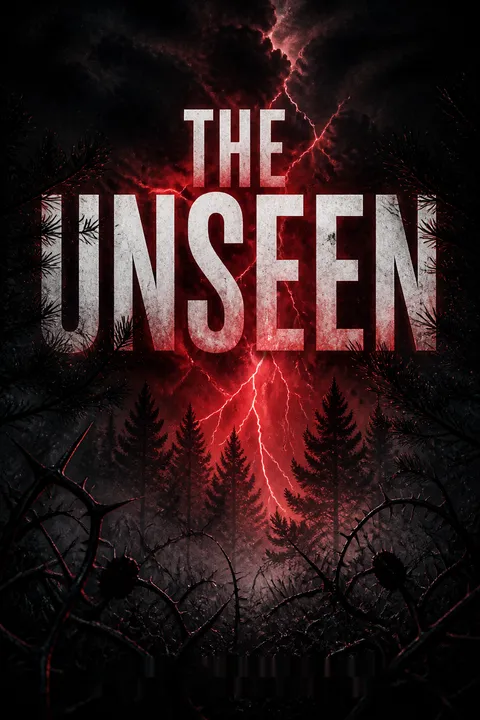


Plot Summary
Prologue
A newspaper alert describes six-year-old John Larusso vanishing after boarding his school bus in Golden, Colorado. His mother saw him leave for school; his teacher and driver both confirmed seeing him afterward.
Yet nobody saw him get off the bus, and the search finds no trace. The report introduces a growing pattern of children disappearing from familiar places, a pattern that will eventually point backward to a mystery the Hansens thought had just begun.
The opening report makes absence a public fact before it becomes Isla Hansen’s private wound. Its ordinary details, a bus route, a teacher’s confirmation, a child who always said goodbye, give the disappearance the shape of a solvable case. That confidence is quietly undermined by the lack of any plausible exit. The newspaper format also matters: the story’s horror spreads through records, alerts, and community appeals, while the people closest to the mystery remain unable to explain what they have seen.
A Boy Beyond the Garden
Six weeks before the main events, Isla Hansen is grieving Adam, the latest baby she has lost, and recoiling from every alert about missing children. Her marriage is strained, her older children are pulling away, and her depression has recently driven her to attempt suicide. While tending the neglected garden, she sees a small red-haired boy standing among the trees, miles from the nearest neighbor and without shoes.
Isla’s grief makes her imagine that Adam has sent him, but she also recognizes that he may be a missing child who needs help. She approaches slowly. The boy takes one step toward her, while her husband, Luke, and their teenage son August watch from the house, stunned by the stranger’s appearance.
The encounter binds Isla’s longing to a concrete act of rescue, but the two motives are not the same. She sees a vulnerable child and a possible answer to the loss of Adam at once. That fusion makes her compassion sincere and her judgment precarious. The garden, once a place she built with her children, now reflects neglect and stalled grief; the boy arrives from its border, turning the family’s private sorrow into an unexplained public mystery.
Rowan Gets a Name
Police and social services cannot identify the boy or find anyone searching for him. He does not speak, gives no recognizable signals about his needs, and has severely malformed joints and underdeveloped muscles. Social worker Helen Plummer warns Isla and Luke that he may require constant care for the rest of his life.
Luke sees the practical and emotional risks, but fears Isla may collapse again if he refuses. Isla insists the child belongs with them and asks to replace the system’s impersonal label with Rowan. At the children’s home, Rowan flinches at Helen’s voice, then moves toward Isla instead. Luke agrees to foster him, hoping the commitment will give his wife a reason to rejoin family life.
Naming Rowan is an act of recognition, but it also exposes how quickly Isla turns uncertainty into destiny. Luke’s agreement is loving and fearful rather than wholehearted, creating a fault line beneath the family’s new arrangement. Helen’s warnings describe genuine care needs, yet they cannot explain Rowan’s origin or condition. The placement therefore rests on an ethical imbalance: the adults must make a permanent-feeling decision about a child they know almost nothing about.
The Dogs Refuse Him
When the Hansens bring Rowan home, their usually friendly golden retrievers, Maize and Buster, charge the van, snarling and barking as if the child is a threat. Luke and August drag the dogs into the barn, leaving Isla to lead Rowan inside while Sophie cries and the other children watch uneasily. At dinner, Rowan sits in Isla’s place and ignores his food.
Eden meets his stare and suddenly appears to choke despite not having eaten; Luke forces a breath back into her while Rowan watches without visible concern. Isla remains strangely detached from the commotion. The family’s first meal together ends with the children frightened, Luke suspicious, and Isla treating Rowan’s presence as more important than their alarm.
The household’s ordinary systems of care begin to fail in small, bodily ways. The dogs react before the adults can form an explanation, while Eden’s choking makes danger feel intimate and inexplicable. Isla’s attention to Rowan narrows her responsiveness to her existing children, giving the supernatural tension a domestic cost before its cause is known. The dinner table, traditionally a place of shared routine, becomes a scene in which the family watches one another for signs of threat.
The Closet Opens
That night, five-year-old Sophie wakes to buzzing, a malfunctioning star projector, and the sense that a tall shadow has crossed her room. Her father checks the closet and finds Rowan crouched among the girls’ dresses. Isla gently guides him back to his room, but Sophie remains convinced the shadow was not Rowan. The next day, in the playroom, Sophie sits alone with him as her toys start switching on by themselves.
Rowan’s eyes seem to blink twice, and the room’s electrical hum intensifies until both children scream. Sophie’s ears bleed and she loses her hearing. At the emergency room, doctors find no physical injury to explain it. Isla worries obsessively about Rowan while Luke struggles to understand what happened to his daughter.
Sophie’s childlike explanations do not make the event less credible; they show how a young mind gives bodily sensations the nearest available form. The closet, the buzzing, and the toys translate an unseen force into household objects she knows how to fear. The adults’ responses split sharply: Luke seeks evidence, while Isla protects Rowan from blame. That disagreement turns a frightening medical mystery into a test of whose distress the family is willing to notice.
A Fall at Rodriguez’s
Olive arranges a visit to the Rodriguez family’s backyard so Rowan can meet children near his estimated age. He stays apart from the playset while Olive tries to explain the other children and encourage him to join them. Sebastian, one of the Rodriguez children, falls from the swing set and injures his shoulder.
His mother and Isla rush to help, and Olive calls Luke because there are suddenly too few adults to manage the children. As Sebastian is carried away, Olive sees Rowan staring at him with a look that resembles the horror on his mother’s face. The injury appears accidental, and Rowan never touches Sebastian, but Olive cannot shake the impression that his expression somehow belongs to the event.
Olive’s wish to be trusted with responsibility becomes a trap: she proposes the outing, then feels accountable for an accident she could not prevent. Rowan’s distance makes him difficult to include, while his uncanny attention makes ordinary mishaps feel charged with intention. The episode establishes a recurring horror mechanism in which no single event proves wrongdoing, yet the family’s perceptions accumulate faster than their explanations. Their uncertainty itself begins to isolate Rowan and destabilize Olive.
Maize Turns on Rowan
After the family returns, August lets Maize and Buster out of the barn, unable to bear their confinement. Maize charges Rowan, and the boy falls to the ground. Rowan releases a piercing scream that sends Buster running and knocks Maize onto her side. Maize gets up and flees, but the adults decide the dogs are now too dangerous to keep near Rowan.
Luke arranges for his brother Brian to take both animals permanently rather than risk sending them to a shelter. August is devastated: Maize is his closest companion, and he has spent the night in the barn so she would not be alone. In anger and fear, he retreats from his parents, convinced they have chosen Rowan over the family they already had.
The dogs’ removal converts an ambiguous threat into an irreversible family sacrifice. Luke and Isla frame the decision as safety, but August experiences it as proof that his place in the household has become conditional. His response is not merely teenage hostility: he has watched a beloved animal react with fear and then watched his parents dismiss the warning. The scene makes the cost of Isla’s rescue visible to the children who are being asked to accept it.
Sophie Loses the Sound
The day after Sophie’s ears bleed, Luke takes her for medical care, but the doctors cannot explain her sudden deafness. At home the next morning, Willow finds Rowan standing over Sophie with a hand against her head. Rowan runs from the room; Sophie then realizes she can hear again. Isla calls the recovery a miracle and plans a family outing, while Luke remains wary of Rowan’s presence around the children.
August, already shaken by Maize’s removal, has spent the night in the barn and later cannot explain what frightened him there. The family is left with two impossible changes: Sophie’s hearing has returned without treatment, and August’s fear is too profound to dismiss as anger about the dogs.
The recovery offers relief without restoring trust. Because no medical explanation accounts for either the loss or return of Sophie’s hearing, Isla can interpret the change as providence, while the others see Rowan’s proximity as alarming. The same evidence sustains incompatible narratives. August’s unexplained fear adds an important counterpoint: the children’s suspicions are not simply reactions to his appearance, but responses to experiences the adults cannot verify or safely discuss.
Ice Cream and Wasps
At Green Pines Park, Isla tries to include Rowan in a family celebration. When boys mock his appearance, wasps suddenly converge on one of them, Aiden, who is allergic and collapses in anaphylactic shock before his mother uses an epinephrine injector. Willow sees Rowan watching the swarm, and Isla dismisses the possibility that he caused it.
On the drive home, Sophie remembers screaming at Rowan in the playroom; he screamed back, and the force of it left her unable to hear. She confronts him again in the van. The electronics begin misbehaving, Isla drifts into a blank state, and the vehicle swerves into a roadside ditch. When Eden reaches them, Isla cannot explain the crash and appears more attentive to Rowan than to Sophie.
The outing turns public cruelty into physical danger, then carries the danger back into the family car. Willow’s account of the wasps remains perception rather than proof, but the emergency makes dismissing her feel increasingly costly. Sophie’s recovered memory gives her fear a specific cause, while Isla’s dissociation transforms a family vehicle into an unsafe space. The episode exposes a moral inversion: Isla’s effort to make Rowan belong leaves her own children feeling unseen and unprotected.
Skye Returns to Golden
Luke secretly calls Skye Berkley, Isla’s estranged mother, hoping she can explain Isla’s worsening trances and memories of her cousin Ruby Mae. Skye arrives in her RV and tells Luke that, when Isla was sixteen, she and Ruby vanished together for three days; Isla returned changed, but never remembered what happened.
Isla discovers her mother on the porch and attacks her, pressing her thumbs toward Skye’s eyes before Willow interrupts. At the same time, the family cannot find Sophie, and the Rodriguez family reports that Sebastian is missing too. Luke later finds Skye dead in her RV, with blood in her eyes and a note apologizing for abandoning Isla. The note lists children who disappeared in Golden in 1995.
Skye’s arrival makes inherited trauma tangible, but her account does not absolve her of abandoning Isla. The attack dramatizes how Isla’s lost time can turn intimate history into immediate violence. Meanwhile, Sophie’s disappearance collapses the distinction between the old mystery and the current one. Skye’s note is both confession and evidence: her remorse arrives too late to repair their relationship, yet it gives Luke a route toward understanding the repeated disappearances.
The Mystery Boy, 1995
Using Skye’s list, Luke searches for John Larusso, Abigail Steeple, and the other names. He finds missing-child reports from Golden dated July 1995, along with a newspaper story about Mary Martins taking in a nonverbal boy found on a trail. The boy was known locally as the Mystery Boy, and the date matches the disappearances of Isla and Ruby Mae.
Luke realizes Rowan’s presence cannot be explained as a recent case of abandonment. Elsewhere, the family’s children are vanishing: Willow disappears after approaching Skye’s RV, and Gus’s phone-location app places him at home even though he is nowhere anyone can find. The old records turn Rowan from an unexplained foster placement into part of a decades-long pattern.
The archive reverses the family’s sense of time. Rowan is not simply a stranger who arrived during the current wave of missing children; the 1995 report places a similar boy at the same historical rupture in Isla’s life. Public documentation, previously a distant backdrop, becomes the only stable evidence available to Luke. Yet the record can identify a pattern without explaining its mechanism, leaving him with knowledge just as the family’s capacity to act is collapsing.
The Shape Behind Rowan
As red lightning and electrical disturbances spread through the house, Isla finally remembers the storm that swallowed Ruby Mae. She also recognizes Rowan from an art market in 1995, before Ruby disappeared, and understands that the boy has been connected to her for decades.
Her lost pregnancies now appear linked to the same unseen visitors. When Luke tries to take Rowan away, Isla shields him instead. Rowan’s disguise gives way to a towering, inhuman figure, joined by others.
One of them immobilizes Isla and drives a needle-like finger into her eye. Luke finds her dead, while the children are caught in the same upheaval: Sophie and Willow vanish, Eden and Olive are drawn into the storm, and Gus sees missing children inside strange suspended pods.
Isla’s recognition overturns the story she used to survive: Rowan was not a gift sent to fill her empty arms, but a presence bound to the losses she had called miscarriages. Her maternal protectiveness persists even after she understands the danger, showing how the creature has exploited a real capacity for care. The red storm links memory, bodily violation, and abduction; what Isla once treated as hallucination becomes an account of events she could not safely remember.
Luke Drives Into the Storm
Luke searches for his children after the house’s electronics erupt and the family scatters. He leaves Isla’s body behind, promising himself he will return, and drives toward Noah’s house to find August. Red lights in the clouds hold his attention as he speeds down the highway. The car strikes an unseen barrier and is thrown into a violent wreck, leaving Luke gravely wounded.
As a tall figure approaches, he recognizes the presence connected to Rowan and to the disappearances. He dies, or appears to be dying, without rescuing his children or learning where they have been taken. The family’s attempt to give Rowan a home has ended with the adults gone and the children missing.
Luke’s final drive is an effort to recover agency after years of yielding decisions to Isla, then to circumstances he cannot understand. His belated recognition does not become rescue; the invisible barrier makes the limits of ordinary action literal. The ending refuses the consolations of solved mystery or restored family. Luke reaches understanding at the moment when knowledge can no longer protect anyone, leaving the reader with the cost of delayed recognition.
Epilogue
Three days later, Eden wakes in a rain-soaked park, naked and unable to remember how she got there. She is injured, her ears still buzzing, and finds a missing-person billboard bearing Sophie’s face. A tall, skeletal figure steps from behind a tree.
Eden cannot move as it approaches, and she feels something twisting inside her abdomen. The rain abruptly stops. Overhead, circular lights pulse in the sky, and the movement inside Eden seems to respond to them. She has returned, but the story gives no assurance that she has escaped what took her.
Eden’s return is not a resolution so much as a change in the form of captivity. The park is a recognizable public place, yet her nakedness, lost time, and bodily pain make her experience radically private and unprotected. The missing poster confirms Sophie remains absent, while the movement in Eden’s abdomen suggests that the abduction has altered her body. Her earlier fascination with other people’s tragedies has become lived vulnerability, without granting her the explanatory distance she once sought through podcasts.
Analysis
The Unseen builds its horror by making care itself difficult to distinguish from danger. Isla’s decision to foster Rowan begins in genuine compassion, but grief has narrowed her sense of what the family needs. Luke recognizes the costs yet avoids a direct confrontation because he fears another crisis. Their children experience the consequences as concrete losses: a bedroom, parental attention, the dogs, and eventually their own safety. Rowan’s silence intensifies this conflict because the adults cannot test their assumptions against an explanation from him.
The story also treats memory as a contested form of evidence. Isla’s fugues make her account suspect to her family, yet the memories she cannot access contain the history that explains the present. News clippings, missing-person posters, and Skye’s note provide an external record, but those documents do not restore the children or make the events manageable. The novel’s supernatural revelation therefore does not replace psychological ambiguity; it sharpens it. Isla’s trauma was real, her grief was real, and the extraordinary cause does not erase the harm caused by her choices or by the adults’ failure to listen to one another.
The repeated disappearances turn family loss into a literal, recurring structure. Isla’s pregnancies, Ruby Mae, the missing children, and the Hansens’ crisis are connected by an unseen force, but the characters experience each loss as singular and private. The final image of Eden suggests that survival may mean carrying the invasion forward rather than escaping it. The title’s unseen presence is both an external threat and a description of what the family fails to notice in plain sight: a child’s fear, a parent’s deterioration, a teenager’s warning, and the cost of mistaking devotion for certainty.
Review Summary
People Also Read







Characters
Isla Hansen
Grief-bound foster motherIsla is the emotional center of the Hansen family, a devoted mother whose desire for another child has become inseparable from repeated pregnancy losses and the death of Adam. She wants to make a difference in Rowan’s life, but grief also makes his arrival feel like an answer meant specifically for her. Her sensitivity to missing-child reports and unresolved memories shows how older trauma shapes her responses to the present. Isla can be loving, imaginative, and fiercely determined, yet depression and episodes of lost time leave her less available to the children who need her. Her central tension is between genuine compassion and the painful possibility that longing can distort what she believes she is seeing.
Luke Hansen
Wary, loyal fatherLuke is Isla’s husband and the father of their five surviving children. A software engineer who tries to keep the household stable, he approaches Rowan’s placement through practical questions about money, care, and safety. He agrees to foster Rowan largely because he fears what another refusal might do to Isla, a choice that mixes devotion with avoidance. Luke often suppresses disagreement until anxiety turns into anger, especially in his conflict with August. Still, he notices the children’s distress and tries to repair harm when he recognizes it. His struggle is to act as a protective partner without treating silence as kindness or allowing fear to make every decision for him.
Rowan
The unknown foster childRowan is a small, red-haired, nonverbal boy found near the Hansens’ rural Colorado home. His malformed limbs and unusual way of moving suggest severe deprivation or an unknown medical condition, while his stillness makes it difficult for the family to tell what he understands. Isla feels an immediate connection and insists on giving him a home; Luke sees a child whose needs may exceed what the family can manage. Rowan’s arrival forces each sibling to reveal a different response to vulnerability: curiosity, fear, resentment, guilt, or reluctant kindness. His silence makes him a screen for the family’s assumptions, but his unexplained reactions repeatedly challenge their confidence in those assumptions.
August Hansen (Gus)
Defiant eldest sonAugust, usually called Gus, is the Hansens’ seventeen-year-old son and eldest child. He wears punk clothes, listens to loud music, and uses sarcasm as armor against family conflict. He resents the attention Rowan receives, but his protectiveness toward his younger sisters and his deep bond with Maize complicate his rebellious pose. August is especially sensitive to being treated as the household’s reliable son while his own fears go unacknowledged. His clashes with Luke echo the father’s own difficult upbringing, making their arguments more than ordinary teenage defiance. Gus is perceptive about danger, though his anger often makes it hard for his family to hear what he is trying to warn them about.
Eden Hansen
The watchful older sisterEden is sixteen, observant, and drawn to true-crime stories about violence and disappearance. Her interest is partly intellectual and partly a way of studying danger from a safe distance. She often distrusts her mother’s behavior but tries to remain fair to Rowan, believing kindness matters even when fear feels justified. Eden’s position between Gus and the younger girls makes her a reluctant secondary caretaker, though she resents being expected to fill gaps left by the adults. Her quick humor masks an active moral imagination: she can picture what victims endure, but she also worries that watching suffering as entertainment has dulled her own response to real distress.
Olive Hansen
The responsible middle childThirteen-year-old Olive is conscientious, bookish, and eager to be treated as capable. She hopes to earn money babysitting and takes her responsibilities toward Sophie and Willow seriously. When Sebastian is hurt during the playdate she arranged, Olive blames herself, revealing how readily she turns care into a demand for perfect control. She often keeps her doubts to herself, a habit she recognizes in her father, and she is torn between following instructions and trusting her own observations. Olive’s decency is practical rather than showy: she helps, notices who is being ignored, and keeps trying to make sense of events even when certainty would be more comforting.
Willow Hansen
The intuitive younger sisterWillow is ten, thoughtful, and committed to being kind. She willingly gives up her bedroom for Rowan because she believes he needs it, but the sacrifice becomes harder once she sees how much the family changes around him. Willow notices details that others dismiss, especially shifts in her mother’s attention and the strange patterns surrounding Rowan. She is not fearless; she cries, doubts herself, and worries that adults will not believe her. Yet her instincts keep drawing her toward the places the family would rather avoid. Her need to protect Sophie sits alongside a child’s wish for familiar routines, making her courage feel earned rather than effortless.
Sophie Hansen
The youngest truth-tellerSophie is five, nearly six, and the youngest Hansen child. She relies on bedtime routines, favorite toys, and the comfort of her parents, and she is easily frightened by Rowan’s silent presence. Her descriptions of buzzing, shadows, and strange sensations are filtered through a child’s vivid imagination, which makes adults too quick to mistake fear for make-believe. Sophie can be stubborn when she feels unheard, but she also notices changes in her family with painful clarity. Her attachment to Willow and the dogs grounds her in a home where the adults’ attention is becoming unreliable.
Skye Berkley
Isla’s estranged motherSkye is Isla’s mother, a nomadic woman with a bohemian style and a history of estrangement from her daughter. Isla remembers her as unreliable and emotionally harmful, and Skye has missed much of her grandchildren’s lives. Her beliefs and manner can seem eccentric, but she also carries knowledge about Isla’s childhood and Ruby Mae’s disappearance. Skye is both a source of pain and a possible witness to the past, making her return emotionally fraught before she has explained anything.
Ruby Mae
The missing cousinRuby Mae is Isla’s cousin and closest childhood companion. The girls spent long summers together in the fields near Ruby’s home, sharing plans, games, and a sense of sisterhood. Ruby disappeared when they were teenagers, leaving a wound that shaped Isla’s relationship with her mother and her own memories. To Isla, Ruby is at once a vivid young woman and an unanswered absence, a figure whose last days remain difficult to recall clearly.
Helen Plummer
The cautious social workerHelen Plummer is the social worker handling Rowan’s case. Professional and direct, she explains that no agency has identified the boy or located family members. She warns Luke and Isla that Rowan’s communication and physical needs may require lifelong support. Helen cannot offer certainty about his past, but she makes sure the Hansens understand the responsibility they are accepting. Her role represents a system trying to manage an extraordinary case with incomplete information.
Noah
Gus’s trusted friendNoah is Gus’s best friend, an artistic teenager whose relaxed manner contrasts with Gus’s guarded intensity. Gus turns to him when he cannot explain what happened in the barn or speak honestly with his parents. Noah jokes, speculates, and listens without forcing Gus to perform toughness. Their friendship gives Gus a place to test frightening ideas, though neither boy has enough information to understand what is happening.
Maize and Buster
The family’s loyal dogsMaize and Buster are the Hansens’ golden retrievers and long-standing members of the household. Maize is especially close to Gus, while both dogs are known for being friendly with guests and children. Their sudden alarm around Rowan unsettles the family because it contradicts years of calm behavior. The dogs cannot explain what they sense, but their reactions become an early measure of how sharply the household has changed.
Clara Rodriguez
The neighbor and motherClara Rodriguez is the Hansens’ neighbor and mother of Sebastian, Maya, and Claudia. She welcomes Isla and the children into her backyard and responds quickly when Sebastian is injured. Her family offers Olive a glimpse of a more ordinary social world, but their home also becomes entangled in the growing disappearances. Clara’s fear is rooted in her fierce attachment to her children and her inability to protect them from an event she cannot explain.
Sebastian Rodriguez
The injured playmateSebastian is a young neighbor who plays with his sister Maya and the Hansen children. His injury during a backyard playdate makes Olive feel responsible and gives the family its first alarming accident outside their home. Sebastian is an ordinary child whose misfortune becomes part of a pattern no one can yet prove.
Aiden Parker
The park’s young targetAiden is a boy at Green Pines Park who joins other children in mocking Rowan. A wasp swarm reaches him, and his severe allergy turns the teasing into a medical emergency. His episode deepens Willow’s suspicion that Rowan’s presence is tied to the strange events, though she cannot establish how.
Adam Hansen
The lost infantAdam is the infant Isla and Luke lose before the story begins. Though he never appears in the present, his loss shapes Isla’s depression, her longing for another child, and her immediate attachment to Rowan. The rest of the family also lives in the wake of that grief, though each child responds differently to their mother’s absence.
Plot Devices
Missing-child reports
Turn grief into a patternAmber Alerts, newspaper stories, radio reports, and missing-person billboards recur throughout the book. They make each new disappearance visible to the community while repeatedly triggering Isla’s grief over Adam and her old trauma involving Ruby Mae. The reports also establish the mystery’s scale: children vanish from buses, bedrooms, parks, and familiar neighborhoods. Later, old reports and Skye’s list allow Luke to connect current events to the 1995 disappearances. The public records offer evidence, but never an explanation.
Rowan’s foster placement
Bring the unknown insideRowan’s status as an unidentified, nonverbal child gives the Hansens a morally compelling reason to take him in. His unknown history and severe physical differences invite conflicting interpretations: Isla sees a child in need, Luke sees a daunting responsibility, and the siblings alternate between pity and fear. The placement also puts Rowan inside the family’s most intimate spaces, including the dinner table and the children’s bedrooms. It creates the conditions for the household to mistake warning signs for adjustment problems and to treat ordinary caregiving as a test of loyalty.
Red lightning and static
Signal the unseen forceA metallic taste, electrical buzzing, malfunctioning toys, radio interference, weightlessness, and red lightning recur before major disturbances. At first, the family can blame these sensations on migraines, fear, or faulty electronics. Their repetition gradually makes them recognizable as signs of the force surrounding Rowan and the missing children. The storm imagery connects Isla’s teenage memories with the present crisis, while the silent lights in the sky point toward an abduction that ordinary explanations cannot contain.
Isla’s lost time
Hide history in memoryIsla’s fugues, visions, and gaps in memory initially appear consistent with grief, depression, or a history of trauma. As Rowan arrives, these episodes intensify and disrupt her ability to care for the children or remember her own actions. Her fractured recollections of Ruby Mae gradually become more specific, allowing the past to emerge through sensory flashes rather than a dependable account. The device makes Isla both a witness and an unreliable interpreter of her experience, delaying her understanding of how the present repeats her adolescence.
The 1995 paper trail
Make history searchableSkye’s handwritten list sends Luke to online archives, where missing-person notices and a local article about a nonverbal mystery boy converge on Golden in July 1995. The records transform family anecdotes into a pattern that can be checked against dates and names. Their blunt factual tone contrasts with the family’s emotional chaos, but the articles still leave central questions unanswered. They provide the critical link between Rowan’s present placement, Isla’s disappearance with Ruby Mae, and a much older set of missing children.
About the Author

Download PDF
Download EPUB
.epub digital book format is ideal for reading ebooks on phones, tablets, and e-readers.








