

Plot Summary
Prologue
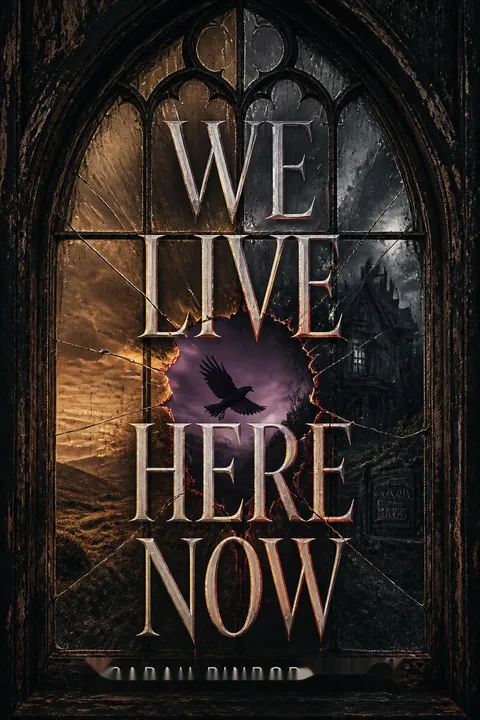
A raven keeps watch over the empty stone house through a full year, grieving a mate it knows is dead but cannot leave behind. The house fills the bird with dread, and when its mate once cried from inside, fear kept it from following.
As winter returns, cars arrive and people enter the house. The raven watches them settle in, unaware that its own grief will echo the secrets waiting within those walls.
The raven’s vigil introduces the novel’s central tension between knowing a loss is real and being unable to release it. Its fear of the house makes the animal an early witness rather than a guide: it observes danger but cannot explain it. The returning residents interrupt its solitary routine, linking human domestic life to the bird’s unresolved attachment. This opening also establishes the book’s uncanny method. The raven’s grief is literal, but its behavior quietly prepares the reader to see human relationships through the same mixture of devotion, guilt, and confinement.
The Lodge After the Coma
After three months in a coma, Emily Bennett leaves hospital with a badly injured leg, a long recovery ahead, and no job to return to. Her husband, Freddie, has moved them from their London flat to Larkin Lodge, a remote Devon house Emily once admired online. She had wanted a country home, but waking from a near-fatal fall has changed what safety means to her.
Freddie presents the move as a fresh start and has arranged everything while she was ill. Emily tries to welcome their new life, yet their affection feels strained and her private grief over a lost pregnancy shadows the rooms. Freddie’s guilt and anxious secrecy suggest that the move is more than a change of scenery.
The house arrives as both Emily’s chosen dream and Freddie’s practical escape, so the move begins with a quiet conflict over who gets to define their future. Emily’s physical dependence makes her newly vulnerable, while unemployment strips away a source of identity she had fought to earn. Freddie’s attentiveness can look loving, but his private guilt gives the gesture an unstable underside. The setting therefore does not simply threaten a recovering woman. It concentrates an existing imbalance: Emily needs reassurance, Freddie needs concealment, and each mistakes the other’s silence for consent.
A Raven in the Chimney
On her first night, Emily follows frantic sounds into an unused drawing room and finds a raven trapped after falling down the chimney. She opens a window and watches it fly into the fog, then discovers another raven’s desiccated body in the fireplace. The dead bird’s damaged wing will later prove significant, but for now Emily carries the corpse outside and cuts her foot on a rusty nail.
Freddie wakes to her panic and treats the sooty footprints on the landing as evidence of her own clumsiness. In daylight, a blond woman named Sally appears at the end of the drive, studying Larkin Lodge as if it were familiar. That night, Emily climbs to the beautiful top-floor suite and recoils from its oppressive cold.
The raven’s paired presence gives Emily’s first encounter with the house a concrete image of attachment surviving beyond death. Yet the incident also exposes how quickly her perceptions can be dismissed: Freddie explains away the soot, while Emily is already primed to doubt herself after illness. The nail ties supernatural unease to ordinary bodily risk, a particularly sharp fear for someone who has recently survived sepsis. Sally’s appearance adds a human mystery to the house’s atmosphere. Emily has not yet learned what connects these clues, but the story makes her uncertainty feel earned rather than merely credulous.
The Board Finds Something
Emily’s old friends arrive for a belated Christmas gathering: Cat and Russell, Iso and Mark. Their talk about marriage, personality, and the lies people tell at the start of love touches Emily’s unspoken secrets. When the group retrieves her old Ouija board, Emily and Iso feel the planchette move without their control.
It answers that a presence is there, then drives their hands across the board with an urgent demand to locate something. Emily asks whether someone was murdered in the house, but a knock at the door interrupts the session. The vicar, Paul Carr, explains that Larkin Lodge stands at a crossroads once used for the burial of people who died by suicide. Freddie dismisses the haunting, while Emily cannot dismiss what she felt.
The gathering turns private unease into a social test. Friends offer competing explanations for intimacy, including the possibility that people conceal themselves to be loved, while Emily’s concealed history makes the conversation more than casual philosophy. The Ouija board briefly gives her a form of evidence that does not depend on memory or medical authority, but its message remains incomplete. Paul’s account of crossroads burials supplies folklore, not proof, and Freddie’s skepticism leaves Emily isolated again. The scene’s tension comes from that gap: a sensation can be genuine to Emily without yet being legible to anyone else.
A Warning in the Books
After books tumble from Emily’s study shelves and arrange into a death warning, she searches local records for Larkin Lodge’s past. She learns that surgeon Christopher Hopper rebuilt the house, then finds an old photograph of actress Fortuna Carmichael and her husband, Gerald, who once lived there.
Sally and her artist husband, Joe Carter, remember no haunting, but Sally points Emily toward parish records. The vicar tells her that Gerald is buried locally while Fortuna still lives in a care home.
When Emily visits, Fortuna denies that the house has ghosts, then mutters that she found something and put it back. A cleaner, Mrs. Tucker, recalls a childhood dream of seeing Gerald dead upstairs. Emily now has a hidden object to find and a room everyone seems reluctant to discuss.
Emily’s research changes the haunting from an atmosphere into an investigation. Each source gives her partial, compromised knowledge: Sally and Joe remember little, parish records are incomplete, and Fortuna’s elderly recollections are guarded. Mrs. Tucker’s childhood account may be a dream, but it rhymes with Emily’s own experience of uncertain perception. The book warning also matters because it comes from ordinary objects rather than a dramatic apparition. The novel makes evidence feel emotionally charged before it becomes reliable, reflecting Emily’s larger predicament: she must act on clues while knowing that illness, fear, and guilt may distort how she reads them.
The Mailbox Confession
As noises, foul smells, and slamming windows grow harder to ignore, Emily flees the house in a thick fog and meets the postman, who mentions the roadside mailbox Freddie asked him to use. Inside, Emily finds overdue bills and final demands, then confronts Freddie when he returns. He admits that his gambling addiction has returned, that he owes dangerous people money, and that selling the London flat helped him pay them off.
He had chosen Larkin Lodge partly to keep Emily away from the truth. The confession explains his secretive phone use and financial evasions, but it does not repair their marriage. Emily has spent months believing Freddie stayed faithfully by her bedside; now she sees that his crisis continued while she was unconscious.
The mailbox makes secrecy material: the truth has been delivered to the edge of the property, close enough to reach but hidden from the house. Freddie’s addiction is real, yet his decision to conceal debt and manipulate the move deprives Emily of the chance to choose their shared future. His account asks for sympathy by invoking her illness, but it also redirects attention from the harm he caused. Emily’s shock is therefore double. She learns not only that their finances are unsafe, but that her remembered picture of Freddie’s loyalty may be incomplete.
A Party's Second Secret
At the housewarming party, Emily wakes at night and discovers her friends Cat and Mark having sex in the boot room while their spouses, Russell and Iso, sleep upstairs. She records them, then calls Mark and gets him to admit the affair began during the Ibiza holiday, shortly before Emily’s fall.
Rather than tell Iso, Emily uses the recording to demand 150,000 pounds from Mark, arguing that disclosure would damage his marriage and career. He agrees to arrange the money.
Emily’s choice brings relief from the financial danger Freddie created, but also makes her complicit in another couple’s deception. Meanwhile, Freddie later finds old work emails showing that Emily slept with her boss, Neil, before the holiday, partly while seeking a promotion.
The affair forces Emily to confront how easily the moral certainty she applies to Freddie can shift when her own survival is at stake. She does not expose Mark to protect Iso; she converts betrayal into financial leverage. The choice echoes Freddie’s gambling in an important way: both characters rationalize a concealed act as necessary for the people they love. Emily’s earlier affair with Neil deepens the symmetry, though the harms are not identical. The novel refuses a clean division between a wronged wife and a guilty husband. Instead, each secret becomes a private defense that further erodes the possibility of honest partnership.
The Room's Old Rule
Mrs. Tucker’s childhood story leads Emily to a hidden cupboard on the third floor, where she finds Christopher Hopper’s old ledger. Hopper records that a dead person placed in the primary suite returns alive, unaware of the death, but without the traits their killer despised.
Those traits remain trapped in the room. Burning personal items carrying the person’s hair or other traces can draw the separated part back and restore the whole person. Hopper describes killing a friend to test the room, then deliberately killing him again after restoring the traits he wanted removed.
Emily recognizes that the strange house has not merely hosted ghosts. Its room can divide a person into a favored self and a rejected one, leaving the house to hold what the living refuse to face.
The ledger gives the supernatural a chillingly procedural form. Hopper’s entries are not a tale of accidental evil; he treats the room as an instrument for editing another person. The mechanism literalizes a common relational fantasy: keep the qualities one loves and discard the qualities one finds intolerable. But the apparent improvement is purchased through violence and amnesia, not growth. Emily’s discovery also reframes the house’s clues as communications from severed parts of people rather than conventional spirits. The book gives her a way to interpret the past, while making clear that knowledge of the mechanism does not make its use ethically safe.
Sally Comes Back Whole
Emily gathers Sally’s hair from a salon, a used napkin, and other personal traces, then burns them in the top-floor room. The fire carries her into the memory of Sally and Joe’s past: during a drug-fueled argument, Joe shoved Sally, and she struck the nail in the floor. He waited days before hiding her body in the suite; she returned without the jealous, volatile traits he had resented.
Emily’s fire releases that missing part, making Sally whole again. Sally confirms the house has been feeding on people’s buried selves and urges Emily to leave Freddie. Soon afterward, Sally and Joe depart for Scotland. Later, Paul reports that Joe died in an apparent shower accident and Sally plans to leave the area.
Sally’s restoration turns the room’s theory into an intimate moral reckoning. Joe’s act did not simply preserve a beloved partner; it removed the part of Sally that made his desired relationship difficult. When Emily reconnects the two selves, Sally’s anger is not treated as a defect to be erased. It is part of her history and her capacity to recognize what was done to her. Emily’s choice also carries risk: she frees a person without knowing what that person will do next. The house’s power is not neutral, and neither is the decision to use it.
The Knife Between Them
Freddie finds Emily’s diary and sends its descriptions of the haunting to Paul and Dr. Canning, presenting her as unstable. He then discovers her old emails to Neil and understands that Emily cheated before the holiday and may have been pregnant by someone else. When he also learns she has blackmailed Mark for money, resentment overwhelms his fear of losing her.
Emily intends to tell Freddie about the money and her own betrayal, but he confronts her first in the kitchen. During the argument, Freddie grips a paring knife and stabs her. He watches her collapse, locks the house against the garden workers, and carries her body to the top-floor suite, choosing the same room that once returned Sally from death.
The knife is the point where the couple’s private accounting becomes irreversible violence. Freddie has reasons to feel betrayed, but his anger turns those injuries into permission to kill rather than a demand for truth. His habit of describing Emily as unstable has already prepared him to see her as a problem to manage, not a person whose choices he must face. Emily’s intention to confess might have opened a difficult path toward repair, but it arrives too late to matter. The room receives another couple’s worst impulses, while the novel asks whether anyone can truly control which parts of a person survive.
The Room Takes Two
Emily returns from the suite gentler, pregnant, and unable to remember Freddie’s attack. Sally’s letter helps her recover the truth and find the 150,000 pounds Mark sent. She later gives Freddie beer laced with sleeping medication and tells him the room can preserve the best of him for their child.
Believing he will live, Freddie crawls inside and dies; a kinder version emerges, with his debts and violence erased from his memory. Emily and Freddie then leave Larkin Lodge together.
The letter also reports that Sally’s returned self has left after Joe’s death. But inside the room, Emily and Freddie’s rejected selves remain conscious, resentful, and watching their happier counterparts depart. The survivors are not whole; the house has divided them.
The apparent reconciliation is the story’s most disturbing bargain. Emily’s restored self appears to choose mercy and a family future, but she achieves that future by deciding which parts of Freddie deserve to live. Freddie accepts the room under a false belief about what it will do, repeating the same pattern of concealment that shaped their marriage. Their escape is therefore real and false at once: the kinder selves can begin again, but the selves that remember violence remain trapped. The novel treats self-improvement as morally suspect when it depends on amputating memory, anger, or responsibility rather than integrating them.
New Owners, Same Hunger
As the happier Emily and Freddie move away with their unborn child, the trapped versions watch from the room. Emily’s rejected self regrets choosing goodness at the cost of escape, while Freddie’s remains consumed by resentment and blame. They see their friends Cat and Russell take possession of Larkin Lodge, delighted by the space and the chance to begin again.
The imprisoned pair recognize a pattern: the house draws couples carrying secrets and gives their buried impulses room to grow. With no clear route out, they decide to make themselves noticed, hoping the new owners will investigate the house and discover the ledger. The raven’s damaged mate still taps at the window, another presence with unfinished business inside the walls.
The ending denies the comfort of a clean escape. The house has released versions of Emily and Freddie that can form a family, but their rejected selves remain as witnesses to the cost of that apparent renewal. Cat and Russell’s arrival makes the plot cyclical without making it identical: the house will find new vulnerabilities, but the trapped pair now understand enough to try to intervene. The raven’s continued presence keeps grief and guilt in the frame, resisting any simple claim that what is discarded has vanished. Larkin Lodge survives because people keep mistaking a fresh start for a way to avoid their past.
Analysis
We Live Here Now turns the haunted-house story into a study of the stories partners tell themselves to preserve love. Emily and Freddie arrive at Larkin Lodge already concealing injuries that are not merely physical: she has betrayed him and lost a pregnancy, while he has returned to gambling and hidden the danger from her. The house does not invent their deceptions. It amplifies them, makes suspicion feel like evidence, and offers a supernatural shortcut to the fantasy that a partner can be improved by removing whatever is difficult to love.
The third-floor room literalizes that fantasy with brutal precision. Its returned person appears kinder because the traits a killer rejects have been separated, not healed. The apparent renewal of Emily and Freddie’s marriage is therefore ethically compromised. Their better selves can leave together, but the selves carrying anger, memory, and responsibility remain trapped. This makes the ending more unsettling than a simple haunting: the couple achieves happiness by accepting an incomplete account of who they are.
Emily’s unreliable perceptions are also more than a thriller device. Her recovery gives others a plausible reason to dismiss her, and she sometimes contributes to that dismissal by concealing her own actions. The reader must share her uncertainty without assuming that uncertainty makes her wrong. The novel’s strongest tension lies between rational explanation and bodily knowledge, especially when a clue is both medically deniable and emotionally urgent.
The ravens extend this argument beyond marriage. Their attachment, guilt, and reluctance to leave the dead echo the human characters, while their freedom remains uncertain. Across its intertwined couples, the novel suggests that intimacy becomes dangerous when one person treats another as a collection of desirable traits rather than a whole, changing self. Starting over is possible, but only if it does not depend on burying the parts that make accountability necessary.
Review Summary
We Live Here Now is a gothic thriller about a couple who move to a creepy country house after the wife's near-fatal accident. Readers praised the atmospheric writing, unique plot twists, and compelling suspense. However, some found the pacing slow and the characters unlikeable. The book explores themes of haunted houses, marital secrets, and unreliable narrators. While opinions varied, many readers found it an engrossing and unpredictable read, with a satisfying and shocking conclusion that left them thinking long after finishing.
People Also Read









Characters
Emily Bennett
Recovering truth-seekerEmily is a driven marketing professional whose confidence has long depended on competence, independence, and the belief that careful choices can keep life under control. A near-fatal accident leaves her physically impaired, unemployed, and uncertain whether her senses can be trusted. Her love of books and interest in the supernatural make her receptive to Larkin Lodge’s mysteries, while her private shame complicates her judgment of other people’s secrets. Emily wants safety and intimacy, but she also resists being reduced to a patient or a dependent wife. Her struggle is not simply to decide whether the house is haunted; she must learn how fear, guilt, and self-protection can each distort what she believes.
Freddie Bennett
Affectionate risk-takerFreddie is Emily’s husband, an easygoing man who values comfort, family, and the appearance of a settled life. His charm often softens his avoidance: rather than face a difficult truth, he hopes it will disappear or finds a way to keep others from seeing it. He has a history of gambling and is especially vulnerable when fear and uncertainty overwhelm him. Freddie’s love for Emily is genuine, but love does not prevent him from protecting his own interests or resenting the demands of care. His perspective exposes how a person can experience himself as frightened and deserving of sympathy while causing real harm to someone he claims to protect.
Sally Carter
Artist's watchful wifeSally is married to the charismatic artist Joe Carter and has a history with Larkin Lodge that predates Emily’s arrival. She is beautiful, perceptive, and interested in books and the supernatural, but her composed manner does not make her emotionally simple. Her relationship with Joe is unconventional, and she has had to negotiate the distance between the freedom he wants and the security she needs. Sally’s observations encourage Emily to trust her instincts, though the confidence of that advice can obscure how much Sally herself may be withholding. She embodies the tension between appearing accommodating and having strong feelings that cannot be neatly managed away.
Joe Carter
Magnetic painterJoe is a successful artist whose charisma makes people feel seen and desired. He paints women from life and maintains a relaxed attitude toward sex, freedom, and artistic intimacy. His marriage to Sally appears affectionate and secure, though his easy confidence can conceal how thoroughly he expects others to accommodate his needs. Joe is not merely a bohemian figure in Emily’s new community; his history at Larkin Lodge connects the house’s past to its present. His charm makes it difficult for Emily to know whether she is encountering an openhearted man or someone skilled at controlling the story others tell about him.
Paul Carr
Vicar and local guidePaul is the village vicar, a warm and talkative local who welcomes Emily and Freddie into the community. His knowledge of the church, local history, and village residents gives Emily useful leads as she investigates Larkin Lodge. He is compassionate but not credulous, and his faith does not make him endorse every supernatural explanation Emily considers. Paul’s role is to offer both human connection and a skeptical counterweight. He listens to people’s troubles, though his concern for Emily can sometimes reinforce the sense that others are discussing her without her consent.
Cat
Bookish old friendCat is one of Emily’s oldest friends, a thoughtful teacher who bonded with her through books at university. She is observant and principled, with a religious streak that shapes how she thinks about marriage and responsibility. Her steady concern for Emily makes her a source of comfort after the accident, and her presence connects Emily’s isolated new life to the friendships she left in London. Cat can be more complex than her conscientious public manner suggests, which reflects the novel’s interest in the difference between the person others trust and the private life they do not see.
Russell
Marriage-minded psychologistRussell is Cat’s husband and a psychology lecturer whose confident theories about personality and marriage often turn dinner conversation into a seminar. He is articulate, witty, and fond of examining the ways people present themselves to lovers. His observations resonate with Emily because she is already hiding parts of her own story. Russell’s tendency to hold forth can irritate Cat, but it also makes him a useful observer of the group’s shifting relationships. He represents the human appetite for explaining behavior, an appetite the novel tests against secrets that remain hidden even from close friends.
Iso
Glamorous oldest friendIso is Emily’s oldest friend, a lively and glamorous presence who has always brought energy to their circle. She is married to Mark and enjoys the comforts his success affords, while also working to sustain the image of a confident, desirable partner. Her friendship with Emily is affectionate and longstanding, though years and changing circumstances have made their closeness less effortless. Iso can be generous with praise and quick to turn a gathering into an occasion. Beneath that brightness, she has her own insecurities about whether she remains enough for the person she loves.
Mark
Wealthy finance friendMark is Iso’s successful husband and a longtime member of Emily’s close circle. His money and professional standing give him a confidence that can shade into entitlement, and he is accustomed to managing consequences rather than openly confronting them. Mark is socially polished and observant, capable of noticing when a friend is hiding something. His marriage to Iso appears enviable from the outside, but that appearance is one of the novel’s recurring tests: wealth, attractiveness, and a shared history do not guarantee honesty or emotional safety.
Fortuna Carmichael
Lodge's former ownerFortuna is a former actress who once lived at Larkin Lodge with her husband, Gerald. In old photographs she appears glamorous and self-possessed; in old age she is frail, guarded, and prone to anxious confusion. Emily visits her seeking the house’s history, but Fortuna offers fragments rather than a clear account. Her attachment to ordinary keepsakes suggests a private life that cannot be captured by the polished story of a celebrated marriage. Fortuna’s reticence makes her both a source of information and a reminder that memory may protect people from truths they cannot bear to revisit.
Mrs. Tucker
Cleaner with a childhood memoryMrs. Tucker is an elderly cleaner sent by Paul to help Emily manage the large house. As a child, she spent time at Larkin Lodge while her father worked as its gardener and remembers the former owners as vivid, almost theatrical figures. Her recollection of a frightening childhood experience in the top-floor suite gives Emily a new reason to search there. Mrs. Tucker is practical and kind, but her memories reveal how an apparently ordinary dream can retain the shape of something witnessed and then misunderstood.
Neil
Emily's ambitious bossNeil is Emily’s boss at her marketing company and the person whose approval matters to her career. His authority makes the boundary between professional advancement and personal intimacy particularly fraught. Although he appears briefly, his connection to Emily’s ambition helps explain the pressure she feels to prove her worth through work.
Plot Devices
Larkin Lodge
The house magnifies secretsThe remote house is built at a crossroads and has a history extending across several generations. Its cold rooms, strange noises, and recurring smells make it difficult for Emily to separate supernatural events from the effects of trauma and illness. The house is more than a haunted setting: it draws troubled couples and seems to intensify the qualities they would rather hide. Its central suite holds the clearest evidence of this power, while the surrounding house provides ambiguous clues that keep the characters arguing over what is real.
The third-floor suite
A room divides the deadChristopher Hopper’s ledger describes a room that returns a dead person to life without their memory of being killed. The revived person lacks the traits their killer most wanted to remove, and those traits remain trapped in the suite. Burning personal items connected to the person can draw the missing traits back. This mechanism makes the room a supernatural version of selective memory and coercive love: one person decides which parts of another are acceptable. Its apparent promise of improvement conceals an ongoing separation, as the discarded selves remain present and conscious within the house.
Christopher Hopper's ledger
The house's manualThe old surgeon’s journal explains how he learned to use the suite and records his experiments on a former friend. Emily finds it hidden in a false space inside a cupboard on the top floor, following clues from Fortuna and Mrs. Tucker. The ledger transforms scattered events into a repeatable pattern: death, return, and the possible restoration of the rejected self through personal effects. It also demonstrates that knowing the rules does not make their use humane. Hopper’s clinical record exposes how easily scientific curiosity can become a justification for murder and control.
The ravens
Grief watches the houseA raven watches Larkin Lodge across the seasons, while a dead mate’s damaged wing becomes a distinctive clue when Emily discovers a bird inside the house. The birds recur at moments when life, death, and unfinished attachment meet. Their story mirrors the human residents without turning them into simple symbols: the watching raven has its own fear, guilt, and difficulty moving on. The birds also link the prologue to the ending, reminding the reader that the house’s strange influence reaches beyond the people who live within it.
Messages and personal effects
Clues cross the veilThe Ouija board, fallen books, a fogged mirror, a recurring nail, and other disturbances give Emily fragments of information before she can explain them. Some clues point toward the hidden ledger or a trapped person; others can be mistaken for symptoms of post-sepsis illness or ordinary defects in an old house. Personal effects serve a different purpose: they carry the traces needed to reconnect a person’s separated selves. Together, these devices make interpretation part of the plot. Emily must decide not only what a sign means, but whether she can trust the mind receiving it.
About the Author
Other books by Sarah Pinborough



Download PDF
Download EPUB
.epub digital book format is ideal for reading ebooks on phones, tablets, and e-readers.








