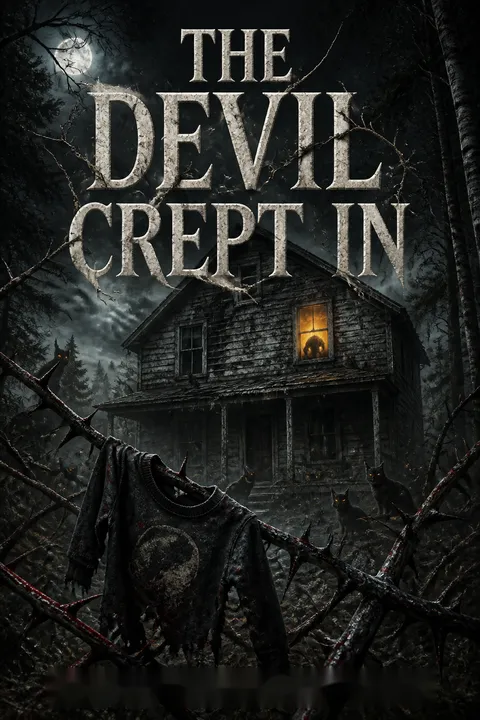


Plot Summary
Jude Vanishes
Twelve-year-old Jude Brighton disappears after spending the day with his cousin and closest friend, ten-year-old Stevie Clark. In Deer Valley, people readily believe Jude has run away: he skips rules, antagonizes adults, and has no friends beyond Stevie. Stevie knows his cousin would have told him about a plan to leave.
While Jude’s mother, Amanda, panics, Stevie’s own mother, Nicole, keeps him out of the search. Her husband, Terry, mocks Jude and threatens Stevie, part of the violence that has made home unsafe for both boys. Stevie is left with no way to help and no trusted adult who takes his fears seriously. Jude’s absence makes the forest feel suddenly close to the houses that border it.
The disappearance launches two mysteries at once: where Jude went, and what kind of danger the boys have already been living with. The adults’ readiness to call Jude a runaway turns his reputation into evidence against him, while Stevie’s exclusion repeats the powerlessness he experiences at home. His loyalty is not a sentimental promise. Jude is the one person who shares his private world and accepts him despite his stutter, missing fingertips, and frightening visions. The search therefore tests whether a child dismissed as unreliable can still be the person who sees most clearly.
Something in the Junk
After hearing rumors that Jude ran away, Stevie secretly checks the boys’ tree fort, then approaches the woods, where a dilapidated house waits beyond their usual paths. That night, he spots movement among Terry’s piles of scrap beside his home. A fender crashes over, and a pale, hunched figure bounds across the yard and over the fence into the forest.
Stevie cannot tell whether his mind has invented it, but the fallen metal and a fresh cut on his ankle are real. Terry catches him among the junk and drags him inside, where Stevie expects another beating. To endure it, he imagines Jude safely away at a theme park. His private hope now sits beside physical evidence he cannot explain.
Stevie’s uncertainty is not simply a horror-story device. His family has taught him that his perceptions will be treated as symptoms, while the adults around him have already shown that cruelty can be mistaken for ordinary household life. The wound and fallen fender give his sighting material weight, but they cannot make him credible to others. Imagining Jude elsewhere lets him withstand Terry’s violence, yet it also shows how easily hope becomes a refuge from knowledge. The chapter binds supernatural doubt to a real, ongoing pattern of abuse.
Jude’s Sweatshirt
On the third day, Stevie slips into the woods and asks to join the searchers. They try to send him away and threaten to call Terry, confirming how little they care about his reasons. Then a volunteer finds Jude’s black sweatshirt in the ferns. Stevie recognizes it immediately and bolts back toward town, unable to stop imagining what might have happened to its owner.
At home, he sees his mother crying and first mistakes her grief for surrender. Then he realizes Jude may have left the sweatshirt as a clue for someone who knows his habits. Stevie retrieves the notebook his mother confiscated and begins investigating for himself. The search has yielded no answer, but the discovery turns Stevie’s fear into a mission.
The sweatshirt changes the emotional grammar of the search. Until now, Stevie could protect himself with possibilities: Jude might have run away, or might still be hiding. The object makes the threat concrete without proving Jude dead, leaving a narrow space for action. Stevie’s decision to treat it as a clue is both an act of intelligence and a response to adult failure. True-crime television has given him a method, but the deeper motive is relational: if the community has already written Jude off, Stevie will refuse to let strangers define what his friend’s disappearance means.
The House Beyond Town
Stevie interviews townspeople and hears a warning from Mr. Greenwood, the general-store owner: something in the woods is not an ordinary predator. Retracing the route he and Jude took on the day of the disappearance, Stevie finds their hidden hammer untouched, then reaches the abandoned-looking house Jude had become fascinated with.
A figure shifts on its porch. Stevie runs, convinced something is pursuing him, and loses his field notebook in the escape. His mother grounds him after a teacher reports his frightened outburst.
Yet she later helps him print missing-person flyers, the first sign that she will stand beside him rather than merely restrain him. At Greenwood’s store, Stevie learns that the old man may know more, but must first answer a question about his brother’s vanished dog.
The house gives Stevie’s fear a location, and Greenwood’s warning confirms that local adults possess fragments of knowledge they have not shared with the children. Still, information arrives through evasions and riddles rather than straightforward protection. Stevie’s mother’s flyers matter because they mark a tentative change in their relationship: she does not accept his account of the creature, but she recognizes that his grief is real. The section also makes investigation costly. Stevie’s notebook is lost, his freedom curtailed, and his credibility weakened, even as he becomes more determined to keep asking.
Rosie’s Lost Hope
Years before Jude’s disappearance, Rosamund Aleksander longs for a child while living in isolation with her husband, Ansel, Deer Valley’s physician. After a miscarriage, Rosie flees south in Ansel’s car and stops at the Happy Hope Retreat, where its owner, Ras, offers her food and a place to rest.
She returns home, but soon afterward Ansel dies in a logging-road accident. Widowed and unexpectedly pregnant, Rosie withdraws further from town and avoids medical care. She gives birth alone to a severely malformed, silent infant and names him Otto.
Rosie initially wonders whether she can care for him at all; when she feels his heartbeat, she chooses to keep him secret and raise him herself. Grief, shame, and fierce need bind her to a child she does not understand.
Rosie’s history reframes the novel’s isolation as both chosen refuge and trap. She has been wounded by ridicule, loss, and the fear of being seen, so each withdrawal feels like self-protection. Her decision to hide Otto begins as an attempt to preserve the only attachment she has left, but it denies both of them the care and scrutiny that might have interrupted what follows. The retreat’s promise of hope becomes especially uneasy because it answers Rosie’s desperation without resolving its source. Her maternal commitment begins not in confidence, but in grief and a need to matter to someone.
A Hunger in the Woods
Otto cries constantly, bites Rosie while nursing, and suffers blistering burns in sunlight. As he grows, he crawls and moves on all fours, while Rosie’s health deteriorates from feeding him. A sick cat named Sasha becomes his companion and brings home mice, which Otto begins eating.
Soon other animals gather around the house; Otto attacks them, and Rosie buries their bodies and saves their collars. When six-year-old Max Larsen disappears with his dog, Rosie finds the child’s remains in her yard.
She conceals the death rather than surrendering Otto, and the police search without finding him. Years pass. Rosie builds a chicken enclosure to keep Otto away from town, but his appetite and her complicity continue. Her house becomes a private system for hiding consequences.
Otto’s hunger turns caregiving into a feedback loop: Rosie’s sacrifices keep him alive, his dependence isolates her, and that isolation makes concealment seem like the only available form of love. Sasha’s role is especially unsettling because companionship becomes a channel through which prey arrives. Rosie does not simply fail to understand the harm; after Max’s death, she actively protects Otto from accountability. The animal collars preserve what she refuses to face, transforming ordinary household storage into a record of buried violence. Her devotion is real, but it also becomes the mechanism that allows danger to spread.
Jude Comes Back
After Stevie gives up waiting for his brother to help, he sees Jude standing on Amanda’s porch in the night. He runs to embrace him, but Jude barely responds. Dirty and exhausted, he has no explanation for the days he was missing, and his mother postpones the police questions. The next day, Jude tells reporters that he cannot remember what happened.
Amanda presents his return as a blessing, while Stevie notices his blank stare, persistent scratching, and refusal to see him. When Stevie finally visits, Jude briefly jokes with him, then threatens him and rejects their tree fort. His mood shifts without warning, and his skin peels in the sun. Stevie’s friend has returned, but the small signs of recognition do not make him feel safe.
The homecoming reverses the expected reward: finding Jude does not end the mystery, it makes the mystery intimate. The adults accept silence as a reasonable response to trauma, while Stevie detects changes that cannot be explained by exhaustion alone. His hope is painful because every familiar gesture arrives beside a fresh sign of estrangement. Jude’s inconsistent behavior also destabilizes Stevie’s trust in himself. A joke suggests the old friendship survives; a threat suggests it has been replaced. The novel makes recognition unreliable before it makes it impossible.
The Dog That Returned
Stevie tells his mother that Jude is acting strangely, but she plans to speak with Amanda and cannot offer certainty. Stevie then asks his older brother, Duncan, about Noodle, the family dog who repeatedly escaped and finally vanished into the woods.
Duncan recalls that Noodle strained so hard against a tether he nearly choked, then ran off when released. Greenwood has described a stray cat who behaves similarly, and he reminds Stevie that Max Larsen had gone into the forest with a newly returned dog.
Stevie begins to connect the disappearances: local animals flee into the woods, sometimes return changed, and Deer Valley has no veterinary clinic. The pattern does not yet explain Jude, but it turns his case from a possible runaway into something larger.
The animal pattern supplies a crucial alternative to the town’s convenient story that Jude simply chose to leave. Stevie’s reasoning is piecemeal, built from details adults treat as irrelevant: a dog’s desperate escape, a cat’s refusal to stay, a missing veterinarian. The clues also echo the central human relationship. Both animals and Jude seem drawn away from domestic safety, yet their return does not restore the bond that should make home secure. Stevie’s investigation begins to move beyond personal loyalty toward a theory of how the town itself has been shaped by something in the woods.
Mother in the Woods
Jude urges Stevie toward the abandoned house, carrying the boys’ old hammer instead of gathering lumber for their fort. Stevie finally admits how frightened he is and asks why Jude has become so cruel. Jude tells him that a woman is inside the house and calls her his mother. His face and eyes change, and he grabs Stevie, who breaks free and runs.
As Jude follows, Stevie sees the pale, hunched creature watching from the trees. He reaches home shaken, then returns to Greenwood with Duncan’s story about Noodle. Greenwood explains that Max’s dog also escaped and came back before the boy disappeared. The pattern deepens, but Stevie cannot yet know whether Jude is leading him to rescue someone or into another trap.
The word mother turns a private fear into a question of origin and allegiance. Jude’s sudden physical and emotional changes suggest that whatever happened during his disappearance has altered more than his memory. Meanwhile, Stevie’s fear finally becomes explicit; he no longer mistakes bravery for the absence of terror. His return to Greenwood after fleeing shows a shift from instinctive survival to deliberate inquiry. The old man’s animal history offers an explanatory structure, but not a complete answer. Stevie now has enough evidence to keep going, while still lacking the certainty that might have saved him from what follows.
Rosie Opens the Vault
Rosie discovers Jude held in the hidden room beneath her stairs, where Otto has been keeping him. Seeing another child in danger forces her to confront the pattern she has protected since Max Larsen’s death. She buys chickens and uses their blood and meat to lure Otto away from the basement.
As he follows the trail, Rosie reaches Jude, but Otto attacks when he realizes she is helping him escape. Jude strikes Otto with a rolling pin, giving Rosie time to shove her son into Ansel’s reinforced vault and lock the door.
Rosie suspects that Ras, the retreat owner who comforted her after her miscarriage, may be Otto’s father. She has freed Jude, but the years of animal deaths and concealed bodies remain behind her, and Otto is still alive inside the house.
Rosie’s rescue is an ethical break, not a clean redemption. For decades, she has treated protecting Otto as inseparable from loving him; saving Jude forces her to recognize that maternal duty cannot mean permitting every harm. The chickens, previously a way to divert Otto from town, become a tool for interrupting his control. Yet the secret vault carries the history she has tried to contain, including the remains of Max. Rosie’s suspicion about Ras offers a possible origin for Otto’s nature, but it cannot absolve her choices or make the danger disappear.
The House Reveals Its Teeth
Stevie follows Jude back through the woods to the decaying farmhouse, using Greenwood’s cat as an uneasy guide. Inside, blood stains the floor and leads down to the basement. Stevie finds a woman’s severed leg and other remains, then sees Jude sitting beside the naked, hunched creature. Jude identifies the creature as his mother and turns toward Stevie with a strange fury.
Stevie strikes the creature with the hammer, first on the shoulder and then on the head, but the blow only gives him time to escape the house. Jude does not help him. Instead, he watches Stevie with open rage. Stevie reaches town believing Jude has been taken over by something, but the evidence he carries will be difficult for anyone to accept.
The farmhouse turns Stevie’s suspicions into physical evidence, but it does not offer the clarity he expects. He sees a body, a creature, and Jude together, yet cannot know who the woman was or how Jude understands his relationship to the creature. His decision to strike is an act of defense and desperation, not mastery over the threat. The scene also exposes a limit in Stevie’s loyalty: he can follow Jude into danger, but he cannot restore him through friendship alone. What remains is a terrible gap between what he witnessed and what he can prove.
Stevie Strikes Back
Back in Deer Valley, Stevie is still soaked in blood when Jude arrives at Amanda’s house and attacks his mother with the hammer. Stevie charges him, but Jude throws him into the kitchen counter and drags Amanda toward the door. Nicole and Terry rush in; Duncan follows. Stevie grabs a long grilling fork and drives it into Jude’s back, breaking his hold on Amanda.
Jude bites Stevie’s hand, tearing it badly, then turns toward the family again. Terry punches him, but the blow does not stop him. Stevie grabs the hammer and strikes Jude repeatedly until he falls. Only afterward does Stevie understand that the boy he killed was Jude, not the creature he believed had replaced him. He calls for his friend and begins to cry.
The climax makes Stevie’s greatest fear inseparable from his attempt to protect the people he loves. The abuse that once taught him to freeze has prepared him, in a grim way, to recognize the cost of inaction; this time he intervenes. But his courage does not produce a clean victory. He kills Jude while trying to stop an attack, and the belief that a monster had replaced his friend cannot undo that fact. The scene refuses the comforting division between innocence and violence: Stevie saves Amanda, yet must live with what his hands have done.
Epilogue
Three years later, Laurie Lewis, a teenager new to Deer Valley, investigates Max Larsen’s disappearance and Jude’s murder for her horror blog. She writes to Stevie, now confined in a facility, and hears his account of a creature in the woods that possessed Jude. The police records do not support his story, and Greenwood has disappeared.
Laurie visits the farmhouse, now being renovated by a white-haired man from the motorcycle shop, then studies a photograph that seems to show a shadow among the trees. Her restless dog has been escaping the yard. She plans another visit at dusk, not knowing that the old pattern may be starting again.
The epilogue does not confirm Stevie’s account, but it refuses to let official disbelief settle the question. Laurie finds no corpse, police record, or witness capable of validating him; what she does find is a suspicious shadow and a dog repeatedly escaping. Her decision to return with the dog reproduces the conditions that preceded earlier disappearances. The ending therefore shifts horror from a single monster to a failure of transmission: each generation hears the warning as an entertaining story, then walks into the same landscape. Laurie’s curiosity makes her an investigator, but also the next person at risk.
Analysis
The novel’s horror grows from a conflict over who is allowed to define reality. Stevie sees an inhuman danger, but his speech and history of frightening visions make adults interpret his testimony as illness. Rosie, meanwhile, sees the damage Otto causes and repeatedly recasts it as a private burden she must manage alone. In both cases, people closest to the danger are isolated from help, though for different reasons: Stevie is disbelieved, Rosie is ashamed and increasingly complicit.
The book also complicates the idea that love automatically protects. Stevie’s loyalty takes him into the woods and eventually into violence; Rosie’s maternal devotion preserves Otto while allowing his victims to disappear. Neither relationship is false, but affection becomes dangerous when it substitutes for boundaries, truth, or outside intervention. The town participates in that failure by reducing Jude to his reputation and treating missing animals as ordinary.
The structure makes these failures echo across generations. Max Larsen’s disappearance, the animals’ repeated flight, Jude’s return, and Laurie’s final curiosity show how a community can inherit warning signs without learning from them. Stevie’s crime-show habits let him assemble evidence, yet evidence cannot save him from mistaken certainty. The final violence is especially tragic because he acts to defend his family while misreading the person he loves most. The epilogue keeps the supernatural unresolved, but makes the human pattern plain: secrecy, stigma, and the desire for an easy explanation leave each new witness vulnerable to repeating the old mistake.
Review Summary
The Devil Crept In is a creepy, disturbing horror novel that follows 10-year-old Stevie as he investigates his cousin Jude's disappearance. The story builds slowly but intensifies, featuring graphic violence and supernatural elements. Readers praised Ahlborn's storytelling, character development, and ability to create a chilling atmosphere. Many found the book unputdownable, though some felt the ending left unanswered questions. Overall, it's recommended for horror fans who don't mind gore and enjoy psychological thrills, but it's not for the faint of heart.
People Also Read






Characters
Stevie Clark
Reluctant woods investigatorTen-year-old Stevie is Jude’s cousin and closest friend. He loves crime shows and records observations in a field notebook, but his stutter, verbal repetitions, missing fingertips, and vivid visions make adults quick to dismiss him. At home, he lives with his mother, Nicole, older brother Duncan, and abusive stepfather Terry, learning to stay quiet when Terry is angry. Jude gives Stevie companionship and a model of boldness, even when that boldness frightens him. Stevie’s determination to investigate grows from loyalty, but also from a need to trust his own perceptions in a family and town that repeatedly undermine them.
Jude Brighton
Defiant missing boyJude is twelve, Amanda’s son, and Stevie’s cousin. Tough, impulsive, and often cruel to other people, he has been angrier since his father died. He and Stevie build a tree fort, explore the woods, and share the private jokes that make Stevie feel less alone. Jude resists adults, rules, and sympathy, often turning vulnerability into aggression. His courage can be thrilling to Stevie, but his unpredictable threats also expose the fear beneath their friendship. Jude is not simply a rebellious child: his grief, isolation, and appetite for risk shape the way he approaches danger.
Rosamund Aleksander
Isolated motherRosie is the shy wife of Ansel, Deer Valley’s physician, and the mother of Otto. She carries deep insecurity from her father’s ridicule and finds social contact difficult, preferring the quiet of her home in the woods. Her longing for a child becomes bound up with grief, faith, and the belief that motherhood will give her life purpose. Rosie is capable of tenderness and practical resourcefulness, but isolation narrows the choices she can imagine. Her story examines how devotion can coexist with fear, denial, and a refusal to seek help.
Otto
Rosie’s unusual sonOtto is Rosie’s son, born with severe physical differences and intense needs. He cannot speak, moves awkwardly, and is unusually vulnerable to sunlight. Rosie raises him in secrecy, managing his care without medical support or help from the town. His dependence reshapes her daily life and isolates the household further. Otto’s behavior unsettles Rosie even as she feels responsible for protecting him. The relationship tests the limits of parental obligation and asks what care becomes when fear and secrecy replace outside support.
Amanda Brighton
Grieving motherAmanda, usually called Aunt Mandy by Stevie, is Jude’s mother and the widow of Scott Brighton. Gentle and socially awkward, she struggles to manage Jude’s anger while carrying her own grief. After he goes missing, she is overwhelmed by fear and clings to hope that he will return. Her protectiveness sometimes keeps people from asking Jude difficult questions, reflecting how love can become a form of avoidance when the truth feels unbearable.
Nicole Clark
Worn-down motherNicole is Stevie and Duncan’s mother and Amanda’s sister. She tries to keep her household functioning despite Terry’s violence and the strain of raising a child whose distress she does not know how to address. Nicole can comfort Amanda and support Stevie’s search, but she also restricts him and sometimes avoids what he is telling her. Her divided attention reflects a parent attempting to protect her children while living with limited money, fear, and her own exhaustion.
Terry Marks
Violent stepfatherTerry is Nicole’s husband and Stevie and Duncan’s stepfather. He uses money, intimidation, and physical force to control the household, while dismissing Stevie’s fears as nonsense. His presence teaches the boys to anticipate danger in ordinary domestic spaces. Terry’s aggression is not supernatural, but it helps establish why Stevie has learned to hide, endure, and doubt whether adults will help.
Duncan Clark
Aloof older brotherDuncan, usually called Dunk, is Stevie’s older brother, a high-school basketball player with little patience for his younger sibling. He mocks Stevie and avoids family problems, though memories of his vanished childhood dog reveal a more vulnerable side. Dunk’s account of the dog’s repeated attempts to escape gives Stevie an important clue. His mixture of callousness and buried attachment makes him a difficult, imperfect source of help.
Ansel Aleksander
Kind country doctorAnsel is Rosie’s husband and Deer Valley’s physician. He is warm, attentive, and more comfortable with people than Rosie, whom he meets after helping her through an embarrassing moment at a grocery store. He wants a child and builds their home in the woods to give Rosie a quieter life. His care offers a contrast to the cruelty Rosie knew growing up, while his death leaves her without the partner who might have helped her face later crises.
Ras
Retreat keeperRas, whose name is Nick, runs the Happy Hope Retreat in California. A white-haired, affable biker with a gift for drawing lonely people into conversation, he meets Rosie when she is fleeing grief after her miscarriage. He offers her a meal and a place to rest without demanding an explanation. His kindness leaves a strong impression on her, though his presence in her story carries an unsettling ambiguity.
Mr. Greenwood
Keeper of local cluesMr. Greenwood runs Deer Valley’s general store and knows the town’s old stories. He treats Stevie with a mixture of patience and severity, warning him away from the woods while offering fragments about missing animals and Max Larsen. His indirect way of teaching makes Stevie work for each piece of information. Greenwood recognizes patterns the police overlook, though he never gives Stevie a simple explanation.
Laurie Lewis
Teenage horror bloggerLaurie is a fifteen-year-old newcomer to Deer Valley who turns local crimes and legends into material for her horror blog. Her grandparents’ move has left her bored and displaced, and investigating gives her a sense of purpose. She writes to Stevie and visits the house he describes, trying to distinguish a compelling story from a documented crime. Her curiosity makes her an inheritor of the town’s unresolved history.
Maxwell Larsen
The town’s old missing childMaxwell Larsen is a young Deer Valley boy whose disappearance became a grim local story. His connection to a runaway dog gives Stevie a way to question the town’s assumptions about children and animals entering the woods.
Sasha
Rosie’s watchful catSasha is the gray-and-black cat Ansel gives Rosie. He roams the woods, remains close to Rosie through her isolation, and becomes an important companion in Otto’s childhood.
Plot Devices
Stevie’s Field Investigation
Child’s evidence trailStevie’s notebook, crime-show knowledge, and habit of retracing routes give the search a concrete method. He treats the sweatshirt as possible evidence, interviews shopkeepers, checks the hammer’s hiding place, and compares what adults say with what he has seen. His investigation repeatedly meets the limits of childhood: his mother confiscates his materials, searchers exclude him, and his speech makes people doubt his account. The device lets the reader follow clues through Stevie’s reasoning while preserving uncertainty about which perceptions are reliable.
The Animal Return Pattern
A warning in plain sightDeer Valley’s animals repeatedly escape into the woods, and some return behaving differently or drawn back toward the forest. Dunk’s account of Noodle, Greenwood’s story of the stray cat, and Max Larsen’s dog gradually form a pattern for Stevie. The absence of a veterinary clinic becomes another clue: the town has learned to treat animals disappearing as normal. What first looks like local background detail becomes a way to understand the danger surrounding Jude and the house.
The Abandoned House
A threshold into dangerThe farmhouse beyond the old logging road is introduced as a place Jude repeatedly wants to visit, then becomes the destination of Stevie’s investigation. Its broken fence, chicken coop, dark windows, blood-marked rooms, and concealed space beneath the stairs connect the children’s adventures to Rosie’s hidden history. The house functions as both a physical crime scene and a boundary between what the town believes and what its residents have concealed. Its apparent abandonment helps danger remain out of sight.
The Missing Sweatshirt
Hope disguised as evidenceThe search party’s discovery of Jude’s sweatshirt gives his disappearance a visible artifact and forces Stevie to accept that the danger is real. At first, the garment seems to confirm the town’s worst fear. Stevie instead considers that Jude may have left it deliberately as a clue. The sweatshirt cannot prove what happened, but it changes Stevie’s behavior: he retrieves his notebook, starts interviewing people, and refuses to treat the case as closed.
The Hidden Vault
Secrecy made physicalAnsel’s concealed, reinforced room beneath the stairs is designed to hold medical files, but Rosie uses it to contain Otto and the evidence of her household’s violence. The vault embodies the family’s strategy of hiding what cannot be managed openly. It keeps Otto and the consequences of his actions out of view, but it cannot resolve the danger or erase the people harmed. When Rosie finally locks Otto inside, the same structure becomes a temporary means of intervention rather than concealment.
About the Author


Download PDF
Download EPUB
.epub digital book format is ideal for reading ebooks on phones, tablets, and e-readers.








