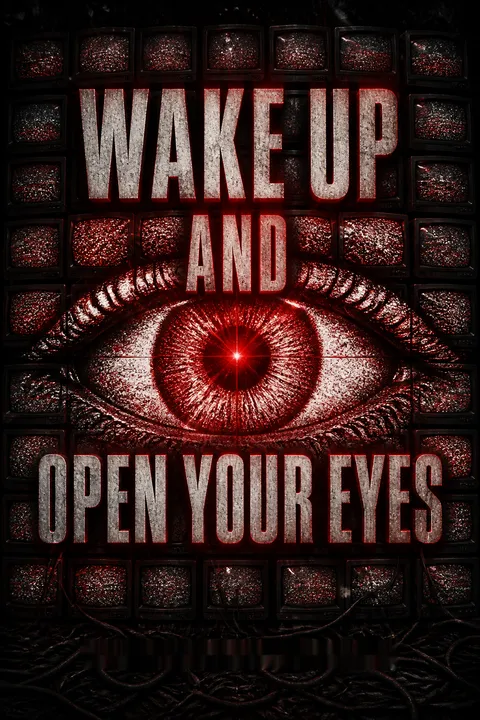


Plot Summary
The Screen Starts Calling
In mid-November, Asher Fairchild buys a huge television and tries watching Fax News, a conservative channel whose anger gives him a jolt of attention. His wife, Devon, attends yoga hoping to feel at home in her body, but compares herself unfavorably with the women around her.
Their sixteen-year-old, Caleb, hides behind a hoodie and posts that he wants to matter, while his younger brother Marcus longs for a tablet of his own. The family still gathers for pizza, yet Asher's attention keeps drifting to the screen and Caleb's to his phone. Each wants to be noticed or reassured; each begins looking away from the people at the table.
The novel first presents susceptibility as an unmet need, not a sudden conversion. Asher wants emotional force and a sense of usefulness; Devon wants a self beyond domestic routine; Caleb wants evidence that anyone sees him. Their screens answer those needs with immediate, frictionless attention. The dinner table offers genuine contact, but it requires listening and patience, qualities the family has already begun to neglect. By locating the danger in ordinary appetites for recognition, the story makes the later horror feel less like an alien invasion than a brutal exploitation of vulnerabilities already present.
A Click Opens the Door
A week later, Devon opens a wellness email connected to Larissa, the yoga acquaintance she hopes will become a friend. The link compromises Devon's account, sends spam to her contacts, and triggers thousands of dollars in unauthorized purchases. Embarrassed, she warns people not to trust the message, but the breach leaves her feeling exposed and foolish.
At dinner, Caleb's blunt post about wanting to matter suddenly gathers likes and retweets from unfamiliar accounts. One message praises his hidden potential, then vanishes when he blocks its sender. At home, a new ritual called Family Night cannot repair the distance: Marcus is ignored, Caleb resents the meal, and Devon briefly seems absent from herself.
The click and the viral post are parallel acts of consent under uncertainty. Devon is drawn by the promise of a healthier self; Caleb is drawn by the possibility of being seen. Their choices are small enough to feel reversible, which is precisely why they matter. The family interprets the resulting distress as embarrassment, bad manners, or adolescent sulking, not as a change in the conditions of their attention. The chapter's failed Family Night sharpens that misreading: a household can perform togetherness while its members are already seeking intimacy from strangers and systems outside the room.
Three Screens Recruit
By late November, Devon receives anonymous packages marked AWAKEN and finds Larissa's polished online persona, YOGAMAMA, offering spiritual guidance. Asher brings home a recliner and increasingly watches Paul Tammany, Fax's combative anchor, until the broadcast feels personally addressed to him. Caleb's anonymous contact returns as Elzegan, or E, and moves their exchanges from public posts into private messages.
E tells Caleb that his loneliness proves he has untapped strength and a special role. The three guides offer different vocabularies, wellness, patriotism, and belonging, but each makes distrust of family and ordinary expertise sound like independence. Their private screens become authorities the Fairchilds prefer to one another.
The recruiters succeed by translating alienation into destiny. YOGAMAMA turns Devon's dissatisfaction into a spiritual mission; Tammany translates Asher's anger into civic purpose; E recasts Caleb's humiliation as evidence of exceptional power. Their messages are not identical, but they share a coercive structure: affirm the wound, blame an outside enemy, then prescribe isolation and obedience as personal growth. The screens do not merely transmit beliefs. They supply relationships, complete with recognition and direction, that make the family members feel understood while steadily severing the ordinary checks that might challenge the new identities.
Purity Becomes a Pledge
In December, Devon follows YOGAMAMA into fasting and a punishing cleanse made from the powder in her packages, while Asher loses his job and spends more hours watching Fax. He becomes convinced he must defend his family, then turns that conviction against young Marcus during a forced father-son talk.
Asher's attention shifts from the boy to the screen, and he is drawn into its imagery. Caleb accepts E's demand to record a public purification challenge, swallowing the foul powder and posting his testimony. E then steers him toward a violent plan. Meanwhile, Marcus receives his own tablet and the repeated Baby Ghost video. The family's screens now give each person a separate script.
The section shows how ritual converts abstract belief into bodily commitment. Devon's fasting and Caleb's public challenge make submission visible and physical, while Asher's fixation recasts control of his household as protection. Marcus's new tablet appears to be a child's long-awaited treat, yet it extends the same screen-centered logic to the one family member least able to evaluate it. These acts also expose a generational pattern: adults pass down anxieties and habits they cannot name, while the children inherit the consequences. By the time the household fractures, each member has been trained to interpret harm as proof of awakening.
No Answer From Richmond
On December 18, Noah Fairchild, a Brooklyn father, listens to another anxious voicemail from his mother in Virginia. Her recent conspiracy talk has already widened the breach between them, especially after she described immigrants as a threat in front of Noah's Haitian-American wife, Alicia, and their daughter, Kelsey.
Noah has avoided her calls, hoping the old mother who read him books is still somewhere beneath the slogans. When she stops answering altogether, he calls his older brother, Asher, but gets no useful reassurance. Noah's worry over his parents overcomes his resentment. He promises Kelsey he will be back by Christmas and drives south alone, expecting to check on them and return quickly.
Noah's journey begins in the painful gap between love and accountability. He recognizes the damage in his mother's language, yet still imagines that patience might recover the person who raised him. His silence has protected his household from repeated conflict, but it has also postponed a reckoning he knows is overdue. The promise to Kelsey gives the trip its emotional measure: Noah is not only a son trying to rescue his parents, but a father choosing a temporary absence from the family he has built. His confidence that the visit will be brief reveals how little he understands about the scale of the crisis.
The House Behind the Door
After seven hours on the road, Noah reaches his childhood house and finds the lawn neglected, the door blocked by an overturned table, and every room filled with the sound of Fax News. He discovers his father gaunt and fixed on a dead screen, then finds his mother repeating the broadcast until switching it off briefly restores her recognition.
Noah tries to care for them, opening windows, clearing rubbish, and ordering food, but the television keeps turning itself back on. His mother becomes violently attached to its glow. When Noah attempts to feed her, both parents turn toward him with the same unnatural grin. The familiar home has become a place where the screen dictates its occupants' behavior.
The house makes a private political estrangement physically legible. Neglected food, broken photographs, the barricaded entrance, and the father's emptied recliner show that the Fairchilds' collapse has happened inside the domestic routines Noah remembers. His childhood memories initially tempt him to treat care as a route back to normality: clean the room, feed his mother, restore the family. The screens defeat that logic by restarting without permission and by controlling moments of recognition. Noah's horror is not simply that his parents have changed, but that the same home he associates with protection has become the machinery of their isolation.
The Screens Fight Back
When the living-room television switches itself on again, Noah smashes it, but his parents attack him in the dark. His mother bites away part of his ear; his father pins him down and chews his fingers. Noah forces a broken remote into his father's mouth and crushes his face to stop him, then traps his mother in a closet.
Shaken and bleeding, he turns to another television for actual news. Reports show violent incidents erupting across the country, including an attack at a school connected to Asher and a growing crisis near Caleb's school. The broadcast confirms that Noah's house is not an isolated disaster. The date his parents had anticipated has become a national catastrophe.
Destroying the television gives Noah a moment of relief, but not control. The attack demonstrates that the threat has moved beyond the apparatus that first carried it, and Noah's forced violence makes the loss of his parents irreversible in practical and emotional terms. The news then widens the scale without explaining the cause, turning his private emergency into a social collapse. The school reports also connect the Fairchild family's hidden crisis to the public world: the same messages that occupied the parents' home have reached children and strangers. Information remains available, but it arrives as fragmented evidence rather than a usable explanation.
A Nephew in the Pantry
Unable to reach Alicia or Kelsey, Noah leaves the house and heads toward Asher's home, hoping to find his sister-in-law and nephew. Inside, he finds the house filthy, the family dog dead, and young Marcus hiding in a pantry with an empty collection of AWAKEN packages. Devon, visibly injured and no longer acting like herself, attacks.
Noah cuts her with a pizza slicer and escapes the first assault, then returns for her car keys. When Devon rises again and embraces him from behind, he kicks her into the refrigerator and stomps her until she stops moving. Marcus remains stunned, clutching a tablet. Noah carries him out, taking responsibility for the child when no one else can.
The pantry scene reverses the meaning of refuge. Marcus is hidden among the packages that drew his mother into the wellness network, while the tablet in his hands is both comfort object and evidence of the family's abandonment. Noah's rescue is not a clean triumph: he has to kill Devon twice, first to survive and then to get away. His body responds before his beliefs can catch up, and the child who depends on him offers no immediate reassurance. The episode changes Noah's purpose. Returning to Alicia and Kelsey remains urgent, but he is now responsible for a traumatized nephew as well.
The Road Keeps Breaking
Noah takes Devon's car, but children chanting the Baby Ghost song swarm it, batter the windows, and force him to drive off before he crashes into a fire hydrant. He and Marcus continue on foot, with the boy often riding on Noah's shoulders. They pass burning vehicles and guarded homes, then join a small band of survivors led by Martha, a sporting-goods manager in bright hunting gear.
Martha shares supplies and information, while Craig offers theories no one trusts. The group's stories reveal that families across the country have been struck at once. Noah keeps moving despite exhaustion, trying to make a connection with Marcus through food, jokes, and the promise of Brooklyn's late-night bodegas.
The failed car escape strips away Noah's expectation that modern convenience will carry him through danger. The road becomes a sequence of improvised choices, while Marcus's silence makes caregiving harder than simply keeping pace. Martha's group offers a temporary social structure, but their competing explanations show that survivors have no shared account of what is happening. Noah's attempt to comfort Marcus through ordinary pleasures is touching and inadequate at once. The bodega story does not solve the boy's trauma; it gives him a small image of a future that might still contain choices, which is enough to keep their journey moving.
The Mall Becomes a Body
Crossing Washington with Martha's group, Noah reaches the National Mall and finds a mass of possessed people tangled in a frenzied, violent orgy that stretches toward the monuments and government buildings. The crowd begins attacking and consuming its own members, then notices the survivors.
Martha orders Noah to run with Marcus as the mob surges after them; she and Craig disappear behind the pursuing bodies. Noah escapes by hiding in a gutted taco truck, where a wary father with two children points a lead pipe at him and demands proof that he is not infected. The man shares warnings about the route ahead but refuses to shelter Noah and Marcus, sending them onward alone.
The Mall's familiar national symbols become helpless scenery, not protection or common ground. The mass violence makes the collapse difficult to categorize as a conventional protest, while the survivors' decision to flee rather than intervene shows how quickly ethical life narrows under threat. Martha's loss leaves Noah without the small community that had made the road feel navigable. The father in the truck reflects a harsher version of the same pressure: he is protecting his children, but his suspicion excludes another child in need. Noah's journey now depends on moving forward without assuming strangers will share his risk.
Baby Ghost in the Tunnel
Near Baltimore, Noah carries Marcus through the blocked Fort McHenry Tunnel, where the boy's familiar humming reveals that he has hidden another tablet beneath his clothes. Baby Ghost plays from its screen, and Marcus has become attached to the song. Noah tears the device away and smashes it, but voices inside abandoned cars join the tune and begin moving toward them.
He drags Marcus through the tunnel and straps him to his back with a belt when the boy fights to return to the voices. Emerging into daylight, Noah refuses to abandon him, even as Marcus bites and scratches. The song has turned their passage into another threat, and the tablet's disappearance has not ended its pull.
The tunnel literalizes the danger of a private feed: Noah cannot see the source of the voices, and Marcus has concealed the device close to his body. Smashing the tablet is a practical act, but the chorus already exists beyond the screen, suggesting that exposure has become communal and cannot be undone by removing one object. Noah's decision to bind Marcus to himself is both care and restraint, an uncomfortable answer to the child's resistance. Their relationship shifts from one-sided rescue toward a struggle over what protection means when the person being protected may be drawn toward the danger.
The Pig Farm Fails
After several days on foot, Noah reaches a farm and tries to use a video tutorial and a biblical story about demons entering pigs to free Marcus from the song. The boy keeps singing as the hungry pigs gather around them. Noah's faith in the supernatural explanation falters; he wonders whether the cruelty was already human and the possession story merely excuses it.
But when Marcus continues to sing, Noah's anger turns on the child. He begins choking his nephew and joins the song, while the pigs gather close. The attempted rescue becomes a surrender to the same compulsion Noah has spent the journey resisting. He has reached the farm hoping to save Marcus, but cannot protect him from himself.
Noah's reasoning reaches its most dangerous limit here. He seeks a technique that will transfer the threat into an animal, borrowing certainty from online instruction and religious precedent because uncertainty has become unbearable. His brief rejection of demons is morally important, but it offers no practical safety; the possibility that human cruelty is the source does not protect Marcus from Noah's own rage. The farm's hunger echoes the story's appetite for bodies, attention, and certainty. Noah's collapse makes the novel's central danger intimate: an explanatory story can become another instrument of harm when it replaces responsibility with a script.
Christmas at the Door
On Christmas Day, Noah and Marcus finally reach their Brooklyn home after covering hundreds of miles. Noah has kept the promise he made to Kelsey, but the person who arrives is no longer simply the exhausted father who left. The narration shifts into a collective voice as Alicia opens the door and Kelsey recognizes him.
Noah welcomes the reunion and moves toward his daughter, while the language surrounding him turns possessive and predatory. Marcus stands beside him, still alive but deeply altered by the journey. The ending stops at the threshold: Noah has reached his family, yet the very act of coming home may bring the danger through the door.
The ending fulfills Noah's promise in its literal form while exposing its tragic failure as a promise of safety. He reaches Alicia and Kelsey, but physical return does not mean psychological return. The shift from an individual voice to a collective one signals that the journey has changed the narrator's relation to himself, making reunion frightening rather than restorative. The doorway concentrates the novel's domestic horror: a family opens its home to someone it loves, with no reliable way to know what has come back with him. Christmas offers recognition and welcome, but not the protection those gestures once implied.
Analysis
Wake Up and Open Your Eyes treats political radicalization and digital dependence as forms of intimacy gone wrong. The people who influence the Fairchilds do not begin by demanding violence. They begin by paying attention. Each offers a tailored remedy for a private ache, then turns that relief into a reason to distrust anyone who might interrupt the relationship. This structure makes susceptibility less a matter of stupidity than of need: people can be perceptive about their own pain and still be manipulated by whoever claims to explain it.
The novel also refuses to keep blame at a safe distance. Fax News, influencer culture, anonymous recruiters, and viral children's media all provide channels for the disaster, but the families are already strained by resentment, racial prejudice, neglected children, and a habit of avoiding difficult conversation. Noah sees his parents' political transformation, yet his confidence that he can diagnose the problem does not prepare him to care for them or protect Marcus. The horror tests the difference between being correct about a belief and being responsible toward a person.
Screens become both portals and mirrors. Their images promise recognition, but they return distorted versions of what viewers already fear or desire. The recurring bodily imagery makes that process literal: ideas enter through attention and emerge as compulsions, while food, skin, and family affection become contaminated. Even the explanations offered after the outbreak repeat the same mistake, imposing certainty on evidence that cannot support it. The novel's bleakest insight is therefore not simply that media can deceive. It is that people may prefer a damaging story that grants them identity and purpose to an uncertain truth that leaves them accountable to one another.
Review Summary
Wake Up and Open Your Eyes receives polarized reviews. Many praise its political satire and horror elements, calling it a timely critique of media consumption and extremism. Others find it heavy-handed, gratuitous, and offensive. Readers appreciate the unique take on possession and zombie tropes, while some criticize the repetitive writing and explicit content. The book's political messaging is divisive, with some viewing it as necessary commentary and others as preachy. Overall, it's a controversial work that elicits strong reactions, both positive and negative, from readers.
People Also Read










Characters
Noah Fairchild
Reluctant family rescuerNoah is a forty-two-year-old Brooklyn father, Alicia's husband, Kelsey's father, and Asher's younger brother. He is thoughtful and affectionate, but often uses irony and political certainty to keep discomfort at a manageable distance. His unresolved bond with his mother makes her changing voice harder to dismiss, while his contempt for his family's beliefs complicates his impulse to help them. Noah wants to be a good son without exposing his wife and daughter to the prejudice he has witnessed. As the crisis intensifies, responsibility for Marcus forces him to act beyond the protective habits of analysis and debate. His central tension is between believing he understands the danger and learning how little understanding can substitute for action.
Devon Fairchild
Searching suburban motherDevon is Asher's wife and the mother of Caleb and Marcus. She has spent years organizing family life around the needs of others and feels increasingly estranged from her own body and ambitions. Yoga offers a possible way back to herself, but her desire for renewal makes her vulnerable to wellness influencers who present online affirmation as intimate friendship. Devon is not simply gullible: she is lonely, dissatisfied, and hungry for someone to take her complaints seriously. Her movement toward alternative health beliefs reveals how self-care language can become a tool for isolating a person from those who know her best. She embodies the appeal of a community that promises personal transformation while quietly demanding obedience.
Asher Fairchild
Angry older brotherAsher is Noah's older brother, Devon's husband, and father to Caleb and Marcus. He values being a provider and protector, but struggles to express fear or failure without converting them into irritation. His father's approval shaped him, and the familiar role of the decisive traditional son gives him a model to imitate when he feels uncertain. Asher initially treats cable news as a way to stay informed, then finds in it an outlet that names his anger and tells him what to do with it. His family sees his rigid attention to the screen as withdrawal and hostility. He represents the danger of confusing emotional intensity with insight and control with care.
Caleb Fairchild
Isolated teenage seekerCaleb is Asher and Devon's sixteen-year-old son and Marcus's older brother. Acne, social anxiety, and repeated humiliation have made him feel unseen at school and uncomfortable in his own family. He hides beneath a hoodie and uses social media to release thoughts he cannot voice in person. The attention he receives from anonymous accounts meets a real need, which makes their praise powerful even when it becomes intrusive. Caleb wants a purpose large enough to make his ordinary life feel meaningful. His story explores how a young person's search for identity can be redirected by people who flatter his pain and promise him importance without offering genuine care.
Marcus Fairchild
Screen-hungry youngest childMarcus is Asher and Devon's seven-year-old son and Caleb's younger brother. He wants attention, simple pleasures, and the same access to devices his family members take for granted. His repeated longing for a tablet makes screens feel like both a reward and a route into the family life happening around him. Marcus is observant in ways adults overlook: he notices changes in his parents' behavior and recognizes when home no longer feels safe. He depends on adults to interpret the world, yet the adults around him increasingly fail to do so. His need for comfort becomes especially poignant because the digital objects offered to soothe him also compete for his trust.
Alicia
Noah's steady partnerAlicia is Noah's wife and Kelsey's mother. Calm under pressure, she encourages Noah to seek practical help for his parents while recognizing the strain his family history places on their household. She has confronted Noah's mother about racist remarks directed at immigrants, including remarks that threaten the dignity of her own daughter. Alicia's steadiness is not passivity; she draws clear boundaries and protects Kelsey from being treated as an exception to her grandparents' prejudice. Her role anchors Noah to the family he chose, even when he is physically and emotionally pulled toward the family he came from.
Kelsey
Noah's perceptive daughterKelsey is Noah and Alicia's daughter, a city child comfortable in her Brooklyn neighborhood. She loves roller skating and has been preparing a holiday recital, while her father tries to shield her from the uglier divisions in his family. At school, she encounters a girl repeating the same language about waking up that adults have begun using elsewhere. Kelsey is young, but not insulated from the crisis's slogans or from the racial assumptions that shape her grandparents' behavior. Her promise to sing for Noah gives their separation a tender, ordinary stake.
Noah's mother
Former family storytellerNoah's mother raised Noah and Asher in Virginia and once made reading a private ritual of closeness, sharing books and voices with her younger son. She volunteered at the local library and expressed affection through cooking and attentive care. In later years, her political language grows harsher, creating a painful divide with Noah and Alicia. Noah continues to hear traces of the mother he remembers in the calls she leaves, which keeps him emotionally attached even as he recognizes the harm in her beliefs. Her contrast between nurturing memory and present estrangement shapes Noah's decision to return home.
Noah's father
Traditional family patriarchNoah and Asher's father is a retired sales representative who prizes conventional values, routine, and self-reliance. He favored Asher's resemblance to him and left Noah feeling overlooked, creating a durable wound between the brothers. His recliner and television define much of his domestic life, while his reluctance to use a phone reinforces his distance from Noah. He is not a man who explains his feelings; authority and silence do the work instead. The history of his household helps explain why his sons learned different ways of seeking approval.
Paul Tammany
Fax News provocateurPaul Tammany is the charismatic host of Fax News, a conservative television network that frames social change as an imminent threat. His combative style gives viewers a confident interpreter of events and directs their anger toward convenient enemies. For Asher, Tammany becomes more than an anchor: his voice supplies attention, certainty, and a sense of masculine purpose. The character shows how a media figure can function psychologically as a trusted companion, even while narrowing the viewer's picture of reality.
Larissa
Yoga acquaintance turned guruLarissa meets Devon in a yoga class and appears to offer the friendship Devon has been missing. Online, Devon encounters her as YOGAMAMA, a wellness persona built from affirmations, beauty, and promises of inner renewal. Larissa's identity becomes difficult to separate from that curated presence. She represents the seductive intimacy of influencer culture, where an audience member can feel personally addressed by a figure who is also selling a path to transformation.
Elzegan
Anonymous online recruiterKnown to Caleb as E, Elzegan first appears through anonymous social media accounts that reward Caleb's posts and insist that someone sees his true potential. The messages shift from reassurance to private contact and increasingly specific demands. Elzegan speaks with the confidence of a mentor while keeping its own identity hidden. That imbalance is central to its influence: Caleb reveals his insecurities, but receives only promises and instructions in return.
Anderson Cooper
Voice inside Noah's mindAnderson Cooper is a real-world news anchor whose measured reporting becomes the model for the voice narrating Noah's journey through the disaster. Noah's mind uses this familiar media voice to organize events and comment on his decisions, sometimes with more sarcasm than comfort. The voice reflects Noah's reliance on news and cultural commentary to interpret experience. It is not a neutral guide; it exposes his defensiveness even as it helps him keep moving.
Martha
Practical survivor leaderMartha manages a sporting-goods store and becomes the informal leader of a small group of survivors moving north. She gathers useful supplies and treats Noah and Marcus with more warmth than suspicion. Her practical outlook contrasts with Craig's appetite for grand theories. Martha does not pretend the danger has an easy explanation; she focuses on getting people through the next stretch of road.
Craig
Apocalypse theoristCraig travels with Martha's survivors and repeatedly offers confident explanations for the crisis, including theories about coordinated attacks. The group rarely trusts his claims, but his persistence reflects the widespread urge to turn incomplete evidence into a single story.
Rufus
Marcus's loyal dogRufus is the elderly family dog and Marcus's closest companion. The boy sneaks him food beneath the table, relying on the dog's affection when the adults are distracted. Their bond gives Marcus a small, dependable source of comfort in a household increasingly preoccupied with screens and conflict.
Plot Devices
Fax News
Broadcast as contagionFax News begins as a right-wing cable network that gives Asher's anger a steady stream of targets and gives Noah's parents a shared set of conspiracy stories. Its anchor, Paul Tammany, seems to address viewers personally. As the family's behavior worsens, television images and voices appear to act on their own, and switching off a set no longer reliably stops the influence. The channel links ordinary media habits to the supernatural horror, while the competing broadcasts and online reports make it difficult for survivors to establish what is true.
The Recruitment Feed
Need becomes leverageEmails, social accounts, influencer videos, and anonymous direct messages recruit characters by answering specific emotional needs. Devon is promised wellness and self-renewal, Asher is offered outrage with a sense of purpose, and Caleb is told that his isolation proves he is special. The approaches differ, but all encourage distrust of family and outside expertise, then direct their targets toward increasingly extreme actions. This device makes online radicalization part of the plot's mechanism rather than background detail, showing how personalized affirmation can become a path to control.
The AWAKEN Cleanse
Belief made bodilyNondescript packages marked AWAKEN arrive after Devon's online account is compromised. YOGAMAMA presents their contents as natural supplements and folds fasting, juice cleanses, and bodily purification into a promise of spiritual renewal. The same powder later becomes part of Caleb's public challenge, connecting the wellness plot to his recruitment. Food and cleansing, once ordinary household concerns, become rituals of obedience. The device turns online misinformation into physical practice and makes the body itself a site where characters act out their new beliefs.
Baby Ghost
A tune that travelsBaby Ghost is a children's video and repetitive song that Marcus loves because it is familiar, funny, and easy to replay. The family treats it as a harmless diversion, but the tune later appears among the voices and devices that draw people into the crisis. Its appeal is different from political news or wellness advice: it reaches children through comfort and repetition. The song's progression from an innocent favorite to a source of danger makes it one of the novel's most unsettling links between media and memory.
Found-Footage Reports
Evidence without consensusThe novel interrupts its main narrative with phone videos, livestreams, police recordings, and online explanations from people trying to document the violence. These fragments reveal attacks Noah cannot witness, including the violence at schools and the spread of disorder across the country. Yet the witnesses propose incompatible causes, from possession and infection to mass hysteria and conspiracy. The format broadens the scale while refusing a clean, authoritative explanation. It makes the reader confront the difference between seeing an event and knowing what it means.
Download PDF
Download EPUB
.epub digital book format is ideal for reading ebooks on phones, tablets, and e-readers.








