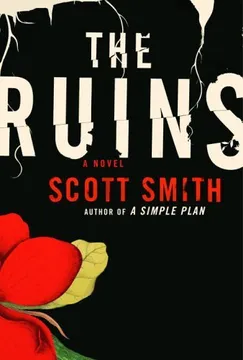


Plot Summary
Four Friends, One Detour
Amy and Stacy, best friends, are vacationing in Cancun with their boyfriends, Jeff and Eric. Jeff is practical and self-assured; Amy is already chafing at the heat and the trip’s easy drift.
On a day trip to Cozumel, they meet Mathias, a reserved German who guides them to a sunken wreck after their hired guide loses its marker. Later, three Greek travelers begin turning up wherever the group goes. Stacy kisses one of them, who calls himself Don Quixote, during a beach bonfire, but the encounter ends without consequence.
Mathias explains that he came to Mexico with his younger brother, Henrich, who disappeared after a fight. The friends accept his troubled account and try to cheer him, unaware that his private search will redirect their holiday.
The opening gives each traveler a social role before danger strips those roles away. Jeff’s confidence makes him the group’s default decision-maker, while Amy’s reluctance is treated as a flaw she must suppress to keep the peace. Stacy’s impulsive kiss and Eric’s cheerful ease establish a lighter register that will later become painfully inadequate. Mathias enters not as a clear threat but as a lonely guest whose distress invites kindness. The group’s willingness to help grows from vacation intimacy, a sense that a day’s inconvenience is manageable, and that assumption becomes the first condition of their vulnerability.
The Map to Coba’s Interior
During the second week, Mathias shows Amy and Jeff a note Henrich left behind. The note explains that Henrich met a young woman bound for an archaeological dig near an old mine, argued with Mathias about joining her, then slipped away while his brother was gone.
A hand-drawn map marks the dig beyond Coba. Mathias asks whether he should go after Henrich before their scheduled flight home. Jeff studies the route and sees a chance to trade beach lethargy for a jungle adventure; he volunteers the whole group.
Amy privately wants to refuse, but she has learned that objecting makes her seem difficult. She smiles and agrees. The choice turns a missing brother’s note into a group expedition, with Amy’s silence helping carry them toward a place she already fears.
The map is both practical instruction and a moral lever. Henrich’s departure challenges Mathias’s claim to know what is best for his brother, while the friends must decide whether loyalty means joining a search they barely understand. Jeff’s decision reveals how competence can conceal appetite: he frames the outing as helpful, but the prospect of exploration plainly excites him. Amy’s consent is less agreement than self-erasure. She anticipates the group’s judgment and edits her own wishes before anyone can reject them. The danger begins not with recklessness alone, but with a familiar social bargain: one person’s enthusiasm sets the course, and another’s hesitation is quietly absorbed.
A Road Without Return
Eric wakes hungover on the morning of departure, and Stacy hustles him into clothes before the bus to Coba leaves. One of the Greeks, Pablo, joins the excursion, carrying a copied map for his companions Juan and Don Quixote.
At the station, two boys snatch Stacy’s hat and sunglasses after one grabs her breast; the group presses on, distracted by tickets and the departing bus. In Coba, Jeff bargains for a yellow pickup large enough for all six. The driver studies Henrich’s map, warns Amy that the destination is no good, and offers to take them elsewhere.
She insists on the marked route. He drops them at a jungle track and drives away with his chained, barking dog still in the truck bed. No other vehicle appears, leaving the friends without an easy way back.
Several small losses quietly remove the group’s sense of control. Stacy’s assault and theft are absorbed into the rush to catch the bus, while Jeff’s haggling creates the appearance that practical problems can be managed through confidence. The driver’s warning is explicit enough to matter, yet Amy and Jeff each interpret it through what they already want: she focuses on finding Henrich, he on completing the excursion. Their isolation is not caused by a single foolish act. It accumulates through haste, misplaced assumptions, and the travelers’ habit of treating local knowledge as an obstacle to their own plan.
The Village Won’t Guide Them
The group follows Henrich’s map through oppressive heat, reaches a small Mayan village, and receives no welcome. A man at the well cannot or will not help them, and two boys watch from a distance rather than accept Jeff’s offer of money. The friends turn back, now worried about the long walk to the road. Amy suggests searching the edge of a cleared field, where Mathias finds palm fronds masking a narrow uphill path.
The village boys and a dog have followed them to the clearing; one boy rides away as the travelers uncover the entrance. Jeff offers a plausible story about archaeologists hiding valuable finds, but nobody believes it. With no useful alternative and the light already shifting, they enter the concealed track.
The village’s silence is a warning, but the travelers mistake refusal for inconvenience rather than information. Amy, who has been dismissed as a complainer, supplies the insight that advances them, making her contribution both useful and dangerous. Jeff’s explanation of the covered path restores order only by inventing a motive that reassures him. The Mayan boys’ departure should undermine that story, yet the group proceeds because turning back would mean acknowledging that they have lost control of the day. The hidden trail marks their transition from ordinary tourism into a space governed by rules they have not learned.
Flowers Above the Mine
The uphill track opens onto a broad strip of dark soil and a steep hill carpeted in green vines and red flowers. An orange tent sits near its summit. A bald Mayan man charges into the clearing on a frantic horse and orders the group back.
When Mathias tries to climb toward the tent, the man fires into the air; two younger men arrive with bows and arrows, then herd all six travelers uphill. At the top, the friends find two abandoned camps, equipment overtaken by vines, and a deep mine shaft.
No archaeologists answer their calls. When they take the descending path to leave, armed men block the way. Beneath a vine mound, Jeff and Mathias uncover Henrich’s body, pierced by arrows. The Mayans force them back up the hill, trapping them beside the mine.
The hill’s beauty functions as camouflage for a landscape already organized around death. The villagers’ contradictory gestures, first warning the travelers away, then forcing them uphill, seem irrational until the group recognizes that the hill itself is the boundary they are not allowed to cross. Henrich’s corpse resolves Mathias’s immediate search but destroys the story that made the journey seem purposeful. The abandoned camps and armed perimeter also alter the meaning of the Mayans: they are not simply hostile guards, but people enforcing a rule whose origin remains unclear. The friends have crossed into a system they cannot negotiate because they do not know what it protects.
The Rope Gives Way
A phone-like chirp rises from the mine shaft, and Pablo volunteers to descend on the camp’s crude rope and windlass. Mathias notices the plant’s acidic sap eating into the rope, but the warning comes too late: the line snaps, and Pablo crashes to the bottom. Eric descends on the remaining rope to reach him, then jumps the final distance when the line proves too short, cutting his knee on broken glass.
He finds a second tunnel branching from the shaft and stays beside the badly injured Greek. Above, Jeff, Mathias, Amy, and Stacy dismantle a tent to braid nylon extensions and build a makeshift backboard. They lower Amy to help; she and Eric lift Pablo onto it despite his pain, then secure him for the long haul to the surface.
The first rescue attempt establishes that ordinary materials are unreliable in this place. The vine does not merely overgrow the camp; its sap can destroy the rope, turning a sensible procedure into a trap. Eric’s jump is an act of loyalty, but it also adds another injury to a group already without medical help. Aboveground, Jeff’s practical improvisation gives the others a task and a temporary structure for hope. Yet the rescue itself requires them to hurt Pablo further while moving him. Their decency remains real, but it cannot protect them from the physical consequences of acting without tools, training, or time.
A Night on the Hill
The group gets Pablo to the surface after dark, but his back appears broken and Eric’s cut continues to bleed. They have little water, almost no food, and no way to contact help. Jeff assigns watches and begins planning how to collect rain, while Stacy stays beside Pablo and sings to quiet him.
Amy secretly drinks from the shared water jug, then lies awake, ashamed and angry when Jeff sees. As the night deepens, Jeff slips down the hill to test whether the guards can be evaded.
Birds cry out as he moves through the vines, and Mayan sentries raise their weapons at the clearing’s edge. He turns back without reaching the jungle. His failed escape confirms that the group cannot rely on darkness, and the night ends with them still trapped above the mine.
This first night reveals how quickly care becomes administration. Jeff responds to danger by assigning watches and rationing water, while Stacy offers comfort through presence rather than plans. Amy’s secret drink is a small breach, but its importance lies in the conditions that produce it: scarcity has arrived before the group can agree on how to share it. Jeff’s escape attempt tests whether the guards are merely an obstacle; their readiness turns the hill into a prison. The characters begin to occupy sharply different survival roles, yet none is sufficient. Organization can preserve attention, but it cannot create water, freedom, or trust.
The Hill Has Eaten
At dawn, Jeff circles the hill’s base and discovers mounds covering human remains, passports, jewelry, and the remnants of earlier visitors. He finds a warning scratched into a metal pan and realizes the vine, not the Mayans, has consumed the dead. When he returns, the plant has spread over Eric’s leg and crawled across Pablo’s lower body.
Mathias and Amy tear it away, exposing Pablo’s stripped legs; Jeff sees the tendrils move toward Amy’s vomit and drink it. The group learns that contact with the plant burns skin, and Jeff concludes that the Mayans keep people on the hill to contain it. He also notices that the vine mimics sounds and seems to respond to their actions. The threat is no longer only the armed perimeter.
Jeff’s walk converts a collection of eerie clues into a working explanation, but knowledge offers little protection. The discarded belongings show that the group is part of a repeated history, not an unprecedented accident. Their attempt to preserve human categories, murder by the Mayans or death by the plant, begins to fail once the vine visibly consumes bodies and responds to the living. Jeff’s theory of containment is plausible, yet it also makes the Mayans’ cruelty intelligible without making it benign. The most destabilizing change is epistemic: the landscape can observe, imitate, and exploit behavior, so even noticing danger may help it act.
A Stone Against Bone
Pablo’s exposed legs begin to decay, and the group understands that rescue may not arrive soon enough to save him. Jeff proposes removing both legs below the knees, arguing that the injuries are otherwise fatal. Mathias objects, but agrees to the group’s vote; Eric and Stacy support the operation, while Amy is away watching the trail.
Jeff and Mathias heat a knife and a stone in a small fire, bind Pablo to the backboard, and break and cut through each leg. They cauterize the stumps with a heated metal pan. Pablo survives the operation, but the vine immediately reaches for his severed feet and drags them away. Jeff’s desperate attempt to preserve a life has bought time at the cost of a brutal act and no assurance of recovery.
The amputation is the point where practical reasoning becomes morally irreversible. Jeff treats the decision as a problem of probabilities, while Mathias’s resistance recognizes that a life-saving procedure can also become an act of violence when performed without proper tools or consent. The vote distributes responsibility, but Amy’s absence means the group’s procedure is not truly collective. Once the plant takes the severed limbs, the operation’s human logic collides with a predator that does not distinguish rescue from injury. Jeff’s competence still matters, yet the scene exposes its limit: skill can help choose among terrible options without making any option safe or morally clean.
The Phone That Laughs
The phone-like ringing returns from the mine, reviving the hope that someone can call for help. Jeff and Amy descend together with a torch made from clothing soaked in tequila. The sound leads them along a side tunnel thick with pale vines. Amy rushes toward it, but Jeff realizes the flowers are producing the chirps.
Firelight reveals that the vines conceal a second shaft in the floor, with bones and the missing shovel at its bottom. A tendril lashes the torch from Jeff’s hand, and the pair escape through the tunnel as the plant’s flowers make a sound like laughter. Back on the hill, they understand that the call was a deliberate lure. The plant can use familiar sounds to draw them toward danger, not merely react to accidental contact.
The false phone turns hope into an instrument of predation. The group’s need for rescue is not a weakness the plant must create; it is already present, and the plant learns to shape it. Jeff’s caution saves Amy from the concealed shaft, while her eagerness shows how quickly desperation can outrun judgment. Their escape depends on fire, a resource that briefly interrupts the vines but does not defeat them. The episode also changes the meaning of sound: a familiar signal can no longer be trusted as evidence of human presence. Communication, once a bridge between strangers, becomes another surface the plant can imitate.
Voices Turn Them Apart
With rescue delayed, the friends drink Pablo’s tequila and eat beyond the agreed ration. Amy and Stacy quarrel over a little water spilled on Stacy’s foot; the vine repeats their insults in their own voices, then copies Eric’s and Jeff’s words.
Jeff returns from the perimeter and confronts them, but his anger deepens the fractures the plant is exploiting. Rain arrives, and Jeff catches water in a patched toolbox, a jug, and a Frisbee; the toolbox leaks, wasting much of what he gathered.
Amy argues with Jeff over his blame and her earlier decision to come. In the darkness, the vine grows over Amy’s face as she vomits and chokes. Jeff finds her too late and attempts CPR, but she is dead. Her absence leaves the others with grief, guilt, and fewer hands to survive.
The plant’s mimicry weaponizes intimacy: it does not need to invent grievances when it can replay the language people already use against one another. Alcohol briefly dulls fear, then worsens judgment and thirst, while the leaking container turns a rare storm into another failure of preparation. Jeff’s anger contains a valid alarm about their behavior, but its punitive form makes cooperation harder just when cooperation is essential. Amy’s death follows a conflict in which she reaches for help and Jeff does not respond in time. The horror lies not only in the plant’s action, but in how exhaustion and resentment make the group’s ordinary bonds less able to interrupt it.
Jeff Runs Into Arrows
After Amy’s death, Jeff searches the hill’s perimeter and weighs how long the group could last on its dwindling food. He considers preserving Amy’s body as a possible future food source, but Stacy rejects the idea, and they settle on enclosing her in a sleeping bag.
Jeff continues trying to organize survival, while the others withdraw into grief and exhaustion. During a later storm, he remains near the lower clearing and finally makes another attempt to escape, believing rain and darkness may conceal him from the guards.
He runs toward the jungle, but Mayan sentries see him and shoot him with arrows. Wounded, Jeff falls in the mud. The vines seize his body and draw it toward the hill. His death removes the group’s planner, and the others learn of it only after the storm has passed.
Jeff’s practical imagination has been both the group’s strongest resource and a defense against helplessness. His proposal concerning Amy’s body shows how survival can force people to translate a person into material, while Stacy’s refusal insists that some boundaries remain meaningful even when they cannot improve the odds. Jeff’s final escape is not simply a failure of strategy; he knows the danger and still chooses action over waiting. The arrows and vines make his death a joint consequence of human containment and biological predation. With him gone, the remaining survivors lose not only a leader but the role that had allowed them to imagine a plan could still master events.
Eric Cuts Too Deep
The plant grows beneath Eric’s skin, and his conviction that it is spreading overwhelms his ability to wait for help. Alone on the hill, he cuts into his body to remove the tendrils, opening wounds across his limbs and torso. Mathias and Stacy return from searching for Jeff and find Eric bleeding, half-stripped of skin, and holding the knife. Mathias tries to stop him.
Eric, reacting in panic, drives the blade into Mathias’s chest. The German falls, and the vines sweep over him before Stacy can pull him free. Eric is badly wounded and losing blood. He asks Stacy to end his suffering, and she takes the knife from Mathias’s body and pushes it into Eric’s chest. The group’s last two men are gone; Stacy is left alone on the hill.
Eric’s self-surgery makes bodily fear visible as an action that cannot be reversed. His belief that the plant is inside him is not wholly mistaken, but his attempt to prove and remove it becomes more destructive than the hidden growth itself. Mathias’s intervention is care, yet it arrives when Eric can no longer recognize it as care. The accidental stabbing collapses the distinction between defense and violence in a single movement. Stacy’s choice to kill Eric answers his plea, but it is not an uncomplicated act of mercy: she must become both the person who stays beside him and the person who ends his pain.
Stacy’s Last Choice
Stacy remains beside Eric as the vine takes his body, then gathers what food and drink remain. She knows she has no viable escape, no reliable warning to leave for future travelers, and no strength to endure another night alone. Remembering an old, drunken conversation about possible ways to die, she chooses the knife rather than the mine shaft or the armed Mayans.
She waits near the path as the afternoon passes, hoping her body might at least warn later visitors. When dusk arrives, she cuts her wrists. The vines draw her from the trail before she can die where newcomers would see her. Stacy’s final attempt to choose the manner of her death fails to leave a clear warning, and the hill’s cycle remains unbroken.
Stacy’s last decision grows from the same trait that once made her seem merely passive: she avoids conflict and cannot imagine sustaining herself through an indefinite future. Yet here she does act, making a deliberate choice rather than waiting for the plant or the guards to decide everything for her. Her wish to warn strangers echoes the group’s earlier failed signs, but she has no effective instrument left. The ending does not present agency as triumph. Stacy can choose a gesture, but the hill absorbs it, turning her body into part of the same landscape that has concealed every previous victim.
Three Days Too Late
Three days after the friends disappear, Juan and Don Quixote return with three Brazilian travelers they met in Cancun. The group jokes, shares beer and sandwiches, and follows the now well-trodden trail into the jungle.
A young Mayan girl watches them from across a field, waving and trying to draw their attention, but they cannot understand her urgency and continue. They reach the clearing, admire the flower-covered hill, share a beer, and take a photograph.
None of them recognizes the danger in the villagers’ behavior or understands why the girl is trying to stop them. They start up the slope, calling for Pablo. The story ends not with rescue or escape, but with new tourists entering the same trap, while the Mayans’ warning fails once again.
The closing return refuses the comfort of a solved mystery or a rescued survivor. The Brazilians and Greeks repeat the earlier group’s pattern: friendliness, appetite for adventure, and the assumption that a beautiful ruin is an attraction rather than a boundary. The girl’s warning is visible but unreadable to them, so the failure of communication begins before they reach the hill. Their photograph repeats Amy’s habit of framing danger as an image to take home. The cycle persists not because the visitors are uniquely foolish, but because tourism teaches them to interpret unfamiliar signs as scenery and local resistance as background.
Analysis
The novel makes misinterpretation its central mechanism of danger. The travelers repeatedly encounter signs they could act upon: the taxi driver’s warning, the village’s refusal to help, the camouflaged path, the Mayans’ armed perimeter. They read each sign through familiar assumptions about tourism, inconvenience, and human motives. That interpretive habit is understandable, but it becomes lethal in a place where the rules are not socially negotiable.
The group’s emotional differences are not simple strengths and weaknesses. Jeff’s planning supplies structure, yet his need to remain useful can harden into control. Amy sees danger early but struggles to make her objections count. Stacy’s tenderness keeps her attentive to other people, while her conflict avoidance leaves her vulnerable to passivity. Eric uses optimism and humor to make distress bearable until those habits fail. Mathias’s reserve helps him endure, but it also keeps grief difficult to share. The plant exploits these differences by mimicking voices and scents, turning memory and intimacy into unreliable evidence.
The Mayans complicate the usual division between human antagonists and natural menace. They confine the visitors through violence, but their perimeter appears designed to prevent the vine from spreading. This does not make their actions benevolent; it makes the crisis morally difficult to simplify. The Americans are victims of the guards and of the plant, while also being outsiders who cannot understand the boundary they have crossed.
Finally, the novel treats survival as more than resourcefulness. The characters improvise ropes, shelters, water collection, and medical procedures, but their ingenuity cannot overcome a threat that learns from each attempt. The most wrenching choices arise when care has no clean form: moving Pablo worsens his pain, Jeff’s operation may prolong it, and Stacy must decide whether mercy can require killing. The final visitors repeat the first group’s mistakes, suggesting that the hill’s danger persists wherever curiosity outruns attention to those who already know the place.
Review Summary
Readers are largely captivated by The Ruins, praising its tense atmosphere, vivid writing, and deeply unsettling horror. Many highlight Smith's strong characterization and the novel's ability to create genuine dread rather than simple fright. The carnivorous, intelligent vine is divisive — some find it brilliantly insidious, others struggle with its plausibility. Common criticisms include underdeveloped characters, lack of narrative resolution, and repetitive pacing. Despite polarizing opinions, the majority consider it a standout horror novel, frequently comparing it favorably to Stephen King's work.
People Also Read






Characters
Amy
The reluctant observerAmy is a small, observant traveler and Stacy’s closest friend. She dislikes the Cancun heat, the aimless holiday rhythm, and the pressure to pretend she is enjoying herself, yet she often suppresses objections rather than risk being isolated from the group. Her relationship with Jeff is affectionate but shaped by an imbalance: he is treated as the competent decision-maker, while she is expected to adapt. Amy notices details others overlook and can contribute practical ideas, especially when the group is lost. Photography is one of her ways of holding experience at a distance, turning events into images she can control. Beneath her complaints is a wish to be taken seriously without having to become louder or more certain than she feels.
Jeff
The capable plannerJeff is Amy’s boyfriend, an assured young man whose command of maps, practical details, and decisions makes others trust him. He likes being useful and is drawn to situations where knowledge can be converted into action. His steadiness is genuine, but it also protects him from uncertainty: when circumstances resist a plan, he tends to push harder rather than admit that no solution is available. With Amy, his confidence can become dismissive, especially when he believes her fear or frustration is slowing the group. Jeff’s self-image is tied to competence and responsibility. He wants to keep people safe, yet he can confuse control with care and has difficulty recognizing when a person needs comfort more than another instruction.
Stacy
The drifting comforterStacy is Amy’s best friend and Eric’s girlfriend, a daydreamer who prefers play, mimicry, and emotional closeness to planning. She is affectionate and intuitive, often noticing distress in others before she can explain what should be done. Her attraction to flirtation and her tendency to avoid conflict complicate her relationship with Eric, whose optimism assumes a stable future they have not really examined together. Stacy’s childhood memory of her uncle’s warning about drifting into an unintended life still shadows her adult choices. She worries that passivity will trap her, yet under pressure she often retreats into fantasy or caretaking. Her warmth is not naïveté alone: it is a way of keeping human connection alive when certainty fails.
Eric
The sunny improviserEric is Stacy’s boyfriend, a sociable optimist who expects to teach, make people laugh, and build a happy life with Stacy. He relies on humor, playful games, and confident stories to keep unease at bay. His charm helps him move easily among strangers, but his optimism is less a considered philosophy than a habit of assuming that things will work out. He is less disciplined than Jeff and more interested in the emotional drama of other people than in planning for practical consequences. Eric’s bond with Stacy is tender and playful, though he struggles to imagine the adulthood she may want. When fear becomes unavoidable, he reaches for familiar stories and words as a way to keep himself and others company.
Mathias
The guarded brotherMathias is a tall, reserved German traveler who met the group while diving in Cozumel. He has come to Mexico with his younger brother, Henrich, and carries a quiet worry about their strained relationship. He speaks little, watches carefully, and often lets others fill silences that he could occupy. His reserve can seem judgmental to Stacy, though his actions show concern for people around him. Mathias is accustomed to taking responsibility for Henrich, and the younger man resents being treated like a child. The tension between protection and respect shapes Mathias’s decisions. He is not naturally a leader, but his steadiness and practical skill make him an important presence when the group’s more talkative members begin to lose their footing.
Henrich
The impulsive brotherHenrich is Mathias’s younger brother, a restless traveler who resists his brother’s attempts to supervise him. After meeting a woman headed to an archaeological dig, he decides to abandon the beach holiday and follow her inland. His choice reflects romantic impulsiveness, but also a legitimate desire to make his own decisions. The note and map he leaves behind set the group’s journey in motion.
Pablo
The exuberant GreekPablo is one of three Greek travelers who attach themselves to the friends in Cancun. He is affectionate, sociable, and quick to turn a shared drink or game into an occasion for connection. Because he speaks neither English nor Spanish, he relies on pantomime, expressions, and persistent good humor to communicate. His apparent ease contrasts with Mathias’s reserve and Jeff’s managerial certainty. Stacy kissed him during a beach bonfire, though the encounter remained brief. Pablo’s role shows how companionship can flourish without fluent conversation, while also leaving the Americans unable to understand everything he tries to convey.
Juan
The Greek companionJuan is one of Pablo’s two Greek companions. The Greeks use adopted Spanish names, sometimes trading them around, and their lack of English or Spanish keeps their intentions partly opaque to the American travelers. He is a friendly presence in Cancun and part of the group’s loose, convivial orbit.
Don Quixote
The beachside flirtDon Quixote is one of the three Greek travelers, though the group’s shifting nicknames make it difficult to distinguish him from Juan and Pablo. Stacy kisses him at a bonfire, but he accepts her refusal to go further. He is part of the Greeks’ easy social presence in Cancun.
Antonio
The salsa-minded visitorAntonio is one of three Brazilian travelers who join Juan and Don Quixote on their later excursion. He brings a boom box and tries to teach the Greeks to dance salsa, helping establish the carefree mood of the final approach to the hill.
Ricardo
The sandwich carrierRicardo is a Brazilian traveler who brings a cooler of beer and sandwiches on the final expedition. He notices a young Mayan girl trying to attract the group’s attention, but the visitors fail to understand her warning.
Sofia
The new photographerSofia is one of the Brazilian travelers accompanying the Greeks at the end. The two Greeks are smitten with her, though she may be engaged to Ricardo. She photographs the flower-covered hill, unknowingly repeating the tourists’ habit of treating the dangerous place as a scenic discovery.
The bald Mayan
The armed gatekeeperThe bald Mayan is the first local man to confront the travelers near the village and later appears armed at the hill. He tries to turn them away before enforcing the boundary with a pistol. His behavior is severe but purposeful, suggesting that he is guarding against a danger the visitors do not yet understand. He leads other armed villagers and remains largely unreadable to the Americans because they share no language.
The Mayan girl
The unheard warningA young Mayan girl tries to stop the later visitors as they approach the hidden trail. She waves and runs into the jungle, but the travelers mistake her urgency for a puzzling local gesture and continue uphill. Her brief appearance gives the final expedition a chance to turn back that it cannot recognize.
The taxi driver
The first local warningThe heavyset driver in Coba studies Henrich’s map and warns Amy that the destination is dangerous. He offers to take the travelers elsewhere, but they insist on continuing. His warning is plain, though their limited Spanish and confidence in the map keep them from understanding its full weight.
Plot Devices
The Flowering Vine
A predator that learnsThe red-flowered vine first appears to be an unusual groundcover on the hill above the mine. It spreads across camps, clothing, and bodies, and its sap burns skin and damages rope. The plant also moves toward fluids and human remains, then begins imitating sounds and smells familiar to the group. Its apparent intelligence converts ordinary survival behavior into risk: water, rescue signals, voices, and even a familiar food scent can become bait. The vine is the story’s central antagonist, but its motives remain alien and unexplained. It does not offer a human reason for its behavior, which makes the group’s efforts to negotiate or predict it increasingly futile.
The Salted Clearing
A perimeter that imprisonsThe Mayans have cut a wide, barren ring around the vine-covered hill and keep armed guards along its edge. Salt in the soil appears to prevent the plant from crossing the cleared ground, while the guards prevent visitors from leaving the hill once they have entered it. This creates a grim paradox: the villagers’ violence is also containment. The boundary is easy for the tourists to interpret as hostility, but the bodies and the vine’s behavior suggest a quarantine without a safe exit. The device turns landscape into a prison and makes escape a conflict with both human guards and the plant.
Henrich’s Hand-Drawn Map
A route into dangerHenrich leaves Mathias a note and a hand-drawn map leading from Cancun through Coba to the archaeological camp. The map gives the friends a concrete destination and makes the journey feel navigable, even though it contains no reliable information about the site’s dangers or the lack of transport back. Its apparent precision encourages Jeff to treat the expedition as a manageable excursion. The map also explains why the group ignores the taxi driver’s warning: they believe they are following a known route to a known camp. What begins as a practical message from a brother becomes the instrument that brings strangers to the hill.
The Mine Shaft
A false route to rescueThe mine shaft offers a physical descent into the old camp and a possible way to reach a phone-like sound heard below. The group’s attempts to use it demand improvised ropes, a backboard, and dangerous descents. A side tunnel, hidden shaft, and missing shovel reveal that the underground space has been altered by the vine. The apparent ringing phone is not a human call for help but a sound produced by the plant to lure the searchers toward a concealed drop. The shaft turns rescue into a sequence of tests in which each descent trades hope for greater exposure.
Stolen Voices and Scents
Intimacy turned into baitAs the vine’s abilities become clearer, it reproduces sounds it has heard, including the travelers’ arguments and voices, and generates smells associated with bread, meat, and sweets. These imitations exploit needs the group cannot avoid: attention, reassurance, food, and the hope that another person is nearby. By repeating private insults, the plant aggravates existing tensions between Amy and Stacy, and between Eric and Stacy. By producing tempting food scents when the survivors are hungry, it makes deprivation feel personal. The device shows the plant learning from exposure, but never clarifies whether it understands the people it manipulates or simply reproduces patterns that work.

Download PDF
Download EPUB
.epub digital book format is ideal for reading ebooks on phones, tablets, and e-readers.








