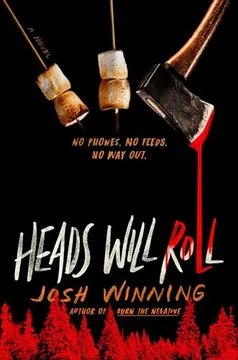


Plot Summary
The Actress Runs North
After an ill-judged tweet draws a storm of condemnation and threats, Willow, the actress known for playing sitcom heroine Willow McKenzie, flees Los Angeles for Camp Castaway, an isolated digital detox retreat. Her fiancé Matt has ended their engagement, her co-star Jenna has stopped responding, and the studio has fired her.
An agent found Willow injured beside Matt’s pool and gave her the camp’s paper brochure. Willow spends her last savings on two weeks without devices, hoping distance will quiet the strangers who now seem to know her every weakness. On the drive north, a new message reaches her phone with a threat aimed at Red. She arrives already frightened, but refuses to turn back.
Willow’s retreat begins as a practical response to exposure, yet her dependence on the phone makes escape feel almost like withdrawal. Her wish to be unreachable is not simply a rejection of fame: she has lost work, home, and intimacy at once. The threat arriving just before check-in converts that private collapse into suspense. The camp promises a boundary between public judgment and personal life, but the story immediately tests whether such a boundary can hold.
A Camp With One Rule
At check-in, groundskeeper Tye asks Willow to choose a camp name. She blurts out the name of the character who made her famous, then locks away her phone and feels an unexpected rush of relief. Around the first campfire, she meets mahjong player Misty, comic troublemaker Buck, guarded Kat, shy musician Kurt, writer Dani, and sports agent Apollo.
Most startling is Juniper Brown, Willow’s idol, who has vanished from Hollywood for years. Camp director Bebe arrives carrying an axe and demands the owner of a forbidden iPod. Nobody claims it, so she smashes it and burns the pieces. Buck follows with the tale of Knock-Knock Nancy, a headless woman said to haunt the woods. Apollo leaves after dinner, eager to return to ordinary life.
The camp’s welcome combines genuine warmth with a startling show of force. Bebe presents digital abstinence as mutual responsibility, but destroys the iPod without identifying its owner, turning care into public discipline. Willow’s chosen name reveals how thoroughly her performed self has become available to her even in retreat. Juniper’s presence offers a different model of celebrity: someone famous enough to be recognized, yet no longer willing to explain herself to the public.
Apollo Never Gets Home
In the car leaving camp, Apollo retrieves his phone and opens an app tied to the sexual attention and online compulsions he has struggled to control. A pale figure blocks the forest road. While the driver investigates, someone taps at Apollo’s window, drags him from the car, and decapitates him with an axe.
The attacker mutters about making people pay, turning Buck’s fireside legend into an immediate threat. Back at camp, Willow wakes to three knocks at her cabin door.
She finds nobody outside and steadies herself with a photograph of her brother Brandon, the one keepsake she brought instead of a phone full of memories. The next morning, yoga leaves Kurt gasping through a panic attack, while Willow begins to recognize grief beneath his awkwardness.
Apollo’s death makes the camp’s separation from the outside world dangerous rather than restorative: his phone returns not as a lifeline but as the last object he handles before being killed. The scene also introduces the story’s central uncertainty, whether the attacker is a legend, a prank, or a person using folklore as cover. Willow’s photograph offers a counterweight to the digital archive she surrendered, tying memory to a specific relationship rather than a stream of public reactions.
The Forest Starts Answering
Willow’s days at camp bring small comforts: she plays softball with the others, grows closer to Dani, and helps Kurt through his anxiety by showing him how to calm his breathing. But Buck misses activities, and Kat grows worried when he fails to return to his cabin. While looking for him, Willow sees a pale figure between the trees and finds an N carved into bark, with a doll’s head hidden in a hollow.
That night, Sadie, Bebe’s reclusive sister, bursts into Willow’s cabin and attacks her before Bebe explains that Sadie sometimes wanders in confusion. A police report about an assault turns up in the closet, while Brandon’s photograph disappears. Bebe asks Willow to keep Sadie’s visit secret.
The retreat’s gentle rituals give Willow enough security to notice other people’s distress, especially Kurt’s familiar mix of panic and shame. Yet each new clue makes that security harder to trust. The carved letter, doll head, missing photo, and unexplained police report are concrete intrusions into the sanctuary’s daily routine. Willow’s decision to keep quiet about Sadie shows how strongly she wants the camp to work, even when that desire requires her to ignore evidence that the rules and boundaries are failing.
Sadie Keeps Her Own Map
Willow and Dani recruit Kurt to search the older house where Bebe lives with Sadie. Inside, they find religious imagery and hear someone knocking; Sadie appears with a potato peeler, then retreats to draw. Her picture shows Buck and Kat beside a tree, with an axe-wielding figure nearby.
When Bebe returns, the three campers hide in a closet, where Sadie secretly presses an old flip phone into Willow’s hand. Back at camp, Bebe reports that police and rangers have searched without finding Buck or Kat. Willow later breaks into Bebe’s office with Dani and Kurt.
Doll heads fill a drawer, while papers hidden in Buck’s attic include camper histories and an account of a hit-and-run. Kurt admits his sister died in a car accident, and Willow hears Chef Jeff confirm that Nancy once lived at the camp and was murdered.
Sadie communicates through objects and drawings because the adults around her control what can be said openly. Her image of Buck and Kat turns the folklore into a possible eyewitness account, while the hidden phone suggests that Camp Castaway’s ban on technology conceals more than a wellness philosophy. Willow’s investigation also changes her role: she stops treating each oddity as a reason to retreat and starts gathering evidence, even when the facts implicate people she has begun to trust.
Costumes Become Confessions
During the camp’s end-of-the-world costume party, Misty arrives dressed as Eliza, Willow’s sitcom co-star, revealing that she knows exactly who Willow is. Pressed by the others, Willow admits that the tweet that helped get her canceled was her show’s familiar catchphrase, used carelessly in response to the failure of a protective bill.
She also acknowledges that she is bisexual and had hidden that part of herself. Misty challenges her as a performer still unsure of her own identity. Then Misty reveals that Dani is the Gossip Goblin, the anonymous account that amplified the tweet and helped turn it into a public scandal. Dani does not deny it. Hurt by the betrayal, Willow leaves the circle and refuses Dani’s attempt to explain.
The costume party makes performance literal: Misty’s outfit exposes the celebrity Willow hoped to conceal, while the circle demands that she speak without the safety of a script. Willow’s admission separates accountability from the simplistic label placed on her; she made a harmful mistake, but her sexuality was never evidence of hostility. Dani’s identity complicates that judgment. Her activism and her personal tenderness coexist with an act of public punishment she now regrets.
The Treehouse Holds the Dead
After the party, Willow and Juniper follow the knocking through the woods and find the decaying treehouse from Sadie’s drawing. Its walls carry religious slogans and Nancy’s name; a locked trunk holds dozens of old cell phones, and another box contains teeth. Buck appears, exhausted and terrified, insisting a woman with an axe has hunted him.
Below the treehouse, the campers find Kat’s headless body. Buck says he discovered her and hid nearby, then finally gives his real name: Caleb, the man identified in the police report for a violent assault. Willow does not believe his confusion proves he killed Kat. She insists they take her body back to camp, while Juniper and Kurt help carry it through the rain.
The treehouse makes the camp’s folklore material: the phones and teeth suggest an older pattern of secrecy, but they do not yet explain who is responsible. Kat’s body forces the campers to stop treating danger as atmosphere or game. Buck’s admission links him to the assault report, but Willow resists turning suspicion into certainty. Her insistence on carrying Kat back restores a measure of dignity to someone the camp’s hidden violence has tried to reduce to evidence.
The Camp Loses Its Signal
At the clubhouse, Bebe locks Buck in her office after he panics at the prospect of police questioning. The campers then find Apollo and Chef Jeff decapitated on the stairs, with a warning that the road belongs to the killer. When Bebe opens the phone lockers, every device is gone; the emergency phone in her safe has been smashed.
Willow and Bebe search for Dani and find her in Misty’s cabin, where Dani has been snooping. She returns Brandon’s photograph, which Misty had unknowingly kept, and produces fake identity cards belonging to Misty. Misty explains that she created false dating profiles and was publicly exposed on a television show, not that she committed the fraud Willow suspected. Dani and Willow begin to repair their trust.
The missing phones turn the camp’s central promise against its residents: the disconnection they chose now prevents them from summoning help. The dead bodies make the threat impossible to dismiss, while the warning converts the road into a trap rather than an exit. Misty’s history also dismantles a second easy verdict. Her deception harmed people, but the public spectacle that followed reduced her to a caricature, much as Willow has been reduced to a single tweet.
Nancy Was the Eldest Sister
At Bebe’s house, Willow discovers that a door behind a closet opens into the cramped space where Sadie says Nancy used to hide the sisters from their abusive father. Bebe confirms that Nancy was not merely a camper or a legend: she was their older sister, killed after their preacher father believed false rumors that she was pregnant.
Sadie explains that three knocks once meant it was safe to leave the cupboard. The doll heads hidden around camp were meant to protect the residents, not threaten them. Bebe admits the camp once operated as a Bible retreat and that her father disappeared into the woods after Nancy’s murder. She and Misty manage to reach police by radio. As they return, an attacker ambushes Juniper in the canteen.
The folklore’s emotional center shifts from punishment to protection. Nancy’s knocking began as a signal from a sister safeguarding two children, then survived as a frightening legend after their father’s violence erased its original meaning. Bebe’s retreat was built over that history, not outside it, and her attempt to remake the place cannot undo what happened there. The recovered meaning of the doll heads changes Willow’s understanding of Sadie from threat to witness.
Juniper Drives Through the Wall
The masked attacker stabs Juniper in the abdomen and chases her through the canteen. She fights back, reaches a private-hire BMW in the woods, and finds the keys beneath the seat while the attacker climbs into the back. Juniper starts the car and tears through the forest, but the attacker grabs her hair and the vehicle crashes through the canteen wall.
Juniper escapes the wreck and reaches the clubhouse window, where Willow, Dani, Bebe, and Misty see her calling for help. Willow runs inside with a knife. The attacker follows, no longer just a shape in the trees but an armed person who has already survived Juniper’s blows and is coming directly for the remaining campers.
Juniper’s action-hero identity becomes a tool rather than an invulnerable fantasy. Her training lets her resist, but the wound and the crash leave her dependent on the group’s response. The car, ordinarily a routine convenience, briefly becomes an escape route and then a battering ram into the camp’s false sense of safety. Her arrival at the window also reverses a familiar horror image: the person trapped outside is finally seen, but recognition alone cannot guarantee rescue.
The Preacher Takes His Due
The attacker enters the clubhouse wearing a priest’s robe and the face of Nathaniel Carver, Bebe and Sadie’s father. Bebe fires her gun but misses, and Nathaniel decapitates her before taking her head. He breaks Dani’s wrist, knocks Kurt unconscious, and stabs Willow with the knife she threw to Dani. Juniper keeps fighting despite her own wound, but Nathaniel kills her and carries away her head.
Misty is decapitated as she tries to help. Willow, Dani, and Kurt survive the first assault; Bebe’s office still holds Buck, while Tye and Sadie are missing. In the aftermath, Willow uses Bebe’s keys to free Buck. The survivors understand that the old family violence has returned in the hands of a living killer.
Nathaniel’s return literalizes the camp’s buried inheritance. His violence is not an abstract judgment from beyond the grave but the continuation of a father’s power to define which lives deserve protection. The heads he takes echo his crime against Nancy and his effort to control how victims are remembered. Willow’s wound and the loss of the people who offered guidance leave her without the comfort of spectator distance: she must act inside the horror she once watched with Brandon.
The Road Becomes a Trap
Willow, Dani, Kurt, and Buck leave the clubhouse on foot, carrying knives and hoping to meet the police. Nathaniel’s knocking sends Buck running ahead; a scream follows, and his head rolls back into the road. Kurt stays behind to confront the attacker while Dani leads the wounded Willow into the trees.
Separated from the others, Willow stumbles upon Nathaniel’s shack, decorated with human heads mounted on wicker figures. Inside, she finds Tye bound and gagged beside an altar. She frees him and faces Nathaniel outside. Willow attacks with a knife, but he overpowers her. A second figure stabs the preacher from behind, then removes a wig, mask, and robe. The attacker is Kurt, who has been working with Nathaniel.
The escape plan reproduces Willow’s original impulse to disappear, but now flight carries immediate costs: Buck dies, Kurt chooses confrontation, and Willow becomes separated from Dani. The shack exposes Nathaniel’s private system of violence, turning the camp’s warnings into trophies. Tye’s survival gives Willow a concrete reason to keep moving. Kurt’s unmasking then recasts the earlier signs of vulnerability, showing how care and trust can be manipulated without making those feelings themselves foolish.
Kurt Was the Second Killer
Kurt says his dead sister Courtney speaks to him through a phone, and claims she ordered him to punish the campers. He admits killing Apollo, Kat, Chef Jeff, and Buck, while Nathaniel killed the others. Kurt blames Tye for a fatal hit-and-run involving Courtney, though Tye had escaped responsibility by claiming she was driving.
Kurt had mistaken the iPod’s recording of Courtney for a living connection and treated a phone’s messages as proof that she had returned. Willow recognizes that his grief has hardened into a demand for revenge. When Kurt insists that everyone must die, she pretends to agree, then tricks him into turning away and knocks him unconscious with the flat of Nathaniel’s axe.
Kurt’s violence grows from a real injustice, but his certainty is sustained by technological deception and a desire to make grief obey a moral script. The phone does not bring Courtney back; it gives a voice to the conclusion Kurt already needs. Willow’s response depends on performance, the skill that once concealed her identity and now protects her life. She does not excuse Kurt’s actions, but she understands how his loss became an opening for manipulation.
Willow Leaves the Script
When Kurt falls, Willow realizes that the voice she has heard as sitcom Willow was Brandon’s remembered encouragement, not a separate self. She says goodbye to her brother and stops relying on his memory as a substitute for her own choices. Dani finds her, and together they return to Nathaniel’s shack.
They remove the heads from the wicker figures, including Nancy’s, so the victims can be returned to their families rather than left as the preacher’s display. At sunrise, they find Tye alive and tie Kurt to a tree until police arrive. Dani takes Willow’s hand. Willow no longer needs her old catchphrase to answer the people who tried to define her; she leaves the woods with her mistakes acknowledged and her identity unhidden.
The resolution does not erase responsibility or grief. Willow’s choice to recover the heads restores personhood to people whom Nathaniel turned into symbols, while her goodbye to Brandon separates love from dependence on an imagined voice. She can carry his influence without performing a version of herself for him. Her final movement toward Dani is not a return to uncomplicated trust; it is a decision to remain present with another person after both have caused harm.
Epilogue
In a later podcast transcript, Rebecca, the actress who played Willow McKenzie, hosts a new show with Nora, formerly known online as the Gossip Goblin.
They describe themselves as people who have survived public cancellation and announce that their first case will examine Knock-Knock Nancy. The story closes not with the legend settled, but with the two women choosing to investigate the history that Camp Castaway concealed.
The podcast turns survival into a form of public work. Rebecca and Nora do not pretend that their earlier actions were harmless or that a single apology can undo them; instead, they propose examining how a story becomes a weapon and whose version survives. Beginning with Nancy also extends the novel’s concern with historical judgment. The legend can be retold, challenged, and made more truthful, but only if the people speaking remain willing to question their own role in shaping it.
Analysis
Heads Will Roll places two kinds of judgment in the same isolated camp: the public judgment that follows a viral scandal and the private, authoritarian judgment preserved in the history of the Carver family. They are not morally identical. Willow has made a careless public mistake, while Nathaniel and the other violent acts in the story involve direct harm. Yet the plot shows how a culture of instant verdicts can flatten those distinctions, turning people into labels that seem to explain everything about them.
The campers arrive wanting to disconnect from the identities they have acquired online. Their chosen names, costumes, and group rituals offer temporary shelter, but they cannot make the past disappear. The retreat’s promise becomes dangerous when secrecy is treated as healing and Bebe’s authority goes unquestioned. Willow’s detective work matters because she learns to balance suspicion with compassion: she neither assumes Buck is innocent nor lets his past settle the question of Kat’s death.
The novel’s horror imagery is also an argument about memory. The headless legend conceals Nancy’s personhood, just as the public stories about Willow, Misty, and Dani reduce complicated lives to a single transgression. Returning the heads to their families becomes an act of restoration, not absolution. Willow’s final growth follows the same distinction. She accepts that her tweet caused harm, but refuses to let that mistake erase her sexuality, her history, or her capacity to choose differently. Accountability becomes meaningful only when it leaves room for people to change.
Review Summary
Heads Will Roll receives mixed but generally positive reviews, averaging 3.51/5. Readers praise its atmospheric summer camp setting, adult characters with complex backstories, and sharp social commentary on cancel culture and LGBTQ+ issues. Many love the creepy slasher vibes and strong final act, though some criticize pacing issues in the middle sections. The killer reveal divides readers, and an insta-romance subplot draws frequent criticism. Fans of classic slasher films tend to enjoy it most, with the audiobook version receiving particular praise.
Characters
Willow, later identified as Rebecca
Actor rebuilding her selfA sitcom actor who arrives at Camp Castaway using the name of her best-known character. Willow is quick-witted and observant, but years of managing her public image have taught her to hide preferences that might disrupt the reassuring persona others expect. Her wish for anonymity is tangled with exhaustion, shame, and grief for her brother Brandon. She is drawn to horror because it gives fear an honest shape, and she gradually uses that sensibility to notice danger and protect other campers. Her central tension is not whether she is good or bad, but whether she can accept responsibility for a mistake without allowing strangers to define her entire identity.
Dani
Writer behind a maskA novelist at work on a difficult book, Dani presents herself as blunt, funny, and comfortable with risk. She is attracted to Willow and offers companionship when Willow is still trying to disappear. Dani’s moral confidence comes from a genuine desire to defend queer people, but she has also learned how easily righteous anger can become cruelty when directed at a stranger online. Her character is shaped by the gap between the person she wants to be and the harm she has caused. She is capable of listening, revising her judgment, and staying present when another person has good reason not to trust her.
Kurt
Shy music-making camperA young musician who works in a coffee shop, Kurt is polite, anxious, and more comfortable expressing feeling through guitar than direct conversation. His panic attacks and awkward attention to Tye make him seem fragile, while his instinct to help other campers gives him a place in the group. He is grieving a sister and struggles with guilt that he has difficulty explaining. Kurt’s vulnerability is real, but it does not make him easy to understand; he keeps parts of his past private, leaving others to guess at the burden he carries.
Bebe
Camp’s stern caretakerBebe runs Camp Castaway with the force of someone who believes that order can protect people. She leads affirmations, enforces the digital fast, and presents the forest as a place where campers can begin again. Her warmth is sincere, but so is her insistence on keeping the camp’s history and her family’s troubles contained. Bebe’s care is shaped by a childhood spent under an authoritarian father and by her determination to turn a damaged place into something useful. She is both caretaker and gatekeeper, and those roles do not always align.
Juniper Brown
Retired action-film iconA celebrated actor known for formidable screen heroes, Juniper has withdrawn from Hollywood and keeps the other campers at a distance. Her dry humor and physical confidence make her seem unshakeable, but she knows that fame has never made her immune to private fear. Juniper resists being turned into an inspirational story or a public spectacle. She values autonomy, directness, and the right to decide which parts of herself others may see. Willow’s admiration gradually gives way to recognition of Juniper as a complicated person rather than a screen image.
Tye
Groundskeeper and instructorThe camp’s friendly groundskeeper also teaches yoga and leads activities. Tye offers Willow practical kindness when she arrives, making the retreat feel safer and more welcoming. His easy physical confidence contrasts with the awkwardness of campers who are still learning how to trust one another. He knows the land and its routines, but his own connection to the camp’s past is difficult for others to read.
Misty
Sharp-tongued mahjong playerA middle-aged camper with theatrical style and a quick, cutting wit, Misty is the camp’s mahjong champion. She often masks discomfort with bravado and enjoys being noticed, which makes it easy for others to mistake performance for confidence. Her history includes public humiliation and a need to begin again under a different name. Misty’s sharpness can injure people, but it also protects a loneliness she rarely reveals directly.
Buck, whose name is Caleb
Restless biker dreamerA shaggy, irreverent camper who dreams of rebuilding a motorcycle and traveling across the country, Buck fills silence with jokes and provocation. His closest bond at camp is with Kat, whose steadiness offsets his restless energy. He has a history he is reluctant to discuss and uses humor to keep other people from looking too closely. Beneath the antics is someone who wants friendship and a chance to leave an old version of himself behind.
Kat
Guarded online creatorAn IT worker and book-focused content creator, Kat is tough-talking, independent, and accustomed to fighting to be heard. Growing up with four brothers sharpened her defenses, while her online work once gave her a community that valued her opinions. She has a wary bond with Buck and a strong preference for people who do not demand that she soften herself to be accepted. Her guardedness conceals a history of public conflict and deep vulnerability.
Sadie
Reclusive camp-dwelling sisterBebe’s withdrawn sister moves through the camp in confused, unpredictable bursts. She communicates more readily through gestures, drawings, and objects than through conversation. Sadie’s attachment to doll heads and her repeated references to Nancy make her seem frightening to newcomers, but her behavior is rooted in memories that the rest of the camp has not yet understood. She remains closely bonded to Bebe, even when fear and anger disrupt their contact.
Nancy
Protective girl in legendThe central figure in the local Knock-Knock Nancy story, Nancy is remembered as an outspoken young woman who loved music, nature, and her younger sisters. The camp’s folklore has transformed her into a headless threat, obscuring the person behind the frightening ritual of three knocks. Her independence and her place in Bebe and Sadie’s family memory make her important to the history of the retreat.
Nathaniel Carver
Hardline religious preacherA preacher associated with Camp Castaway’s former religious retreat, Nathaniel represents a rigid moral authority that treats difference as evidence of wrongdoing. He is remembered through the beliefs and rules that shaped the lives of his daughters and the campers under his control. The old religious imagery in Bebe’s house and the stories surrounding Nancy keep his influence present even when the family tries to build a different life.
Brandon
Willow’s beloved brotherWillow’s younger brother shared her love of horror films and her dream of working in the movie business. Quiet, funny, and perceptive, Brandon was the person who saw beyond her public performance. His photograph gives Willow a tangible connection to their shared past, while her memories of him shape how she responds to other campers’ fear and loneliness.
Chef Jeff
Quiet kitchen veteranThe camp’s rarely seen cook has worked there for years and knows more about its past than he initially lets on. He is reserved, wary of questions, and emotionally attached to an earlier generation of campers.
Apollo, also known as Eric
Pansexual sports agentA powerful sports agent who checks out of camp early, Apollo has faced tabloid attention over his relationships with men and resents the assumptions made about his sexuality. His confident public image sits uneasily beside compulsions he has come to camp to manage.
Matt
Willow’s former fiancéAn actor whose relationship with Willow offered financial comfort and the appearance of a settled Hollywood life. Matt’s expectations of who Willow should be often reflect the public persona she performs, rather than the interests she has kept private.
Jenna
Willow’s former co-starWillow’s close friend and former roommate from the sitcom, Jenna once provided a sense of companionship within the pressures of television work. Her silence after the scandal deepens Willow’s isolation.
Courtney
Kurt’s musician sisterKurt’s sister taught him guitar and shared his love of music. Her life and death remain central to his grief, even though he struggles to tell others what happened.
Grams
Conservative family matriarchWillow and Brandon’s strict grandmother raised them after their parents died. Grams could be loving and attentive, but her conservative religious beliefs shaped the siblings’ home into a place where certain truths felt dangerous to express.
Nora, the Gossip Goblin
Former anonymous online criticA writer who used the anonymous identity Gossip Goblin to expose and criticize public figures, Nora believes she is defending people who face real discrimination. Her certainty can outrun her knowledge of the individuals she targets. The closing podcast presents her as someone attempting to confront the consequences of that work.
Plot Devices
Camp Castaway
A retreat without devicesThe camp’s rule requiring residents to surrender phones creates the isolation Willow initially wants and later fears. It also removes the campers’ ordinary ways to verify claims, contact authorities, or preserve evidence. The retreat’s wellness rituals promise self-reinvention, but its secrecy makes it possible for a threat to grow without outside scrutiny.
Knock-Knock Nancy
A legend hiding family historyBuck’s campfire story describes a headless woman who knocks on doors for her missing head. The tale gives the campers a ready-made explanation for strange sounds and missing people, making it both a source of fear and a disguise for human violence. Its meaning changes when Willow learns that the knocks began as a signal between sisters hiding from their father.
Doll Heads
Warnings mistaken for threatsSmall doll heads appear in cabins, trees, and Bebe’s office, often with notes or drawings nearby. Their disturbing appearance encourages Willow to read them as a killer’s calling card. Sadie’s explanation reverses that assumption: the objects are meant to protect the campers, connecting a family’s old hiding place to the danger unfolding in the present.
Camp Names and Costumes
Identity made visibleResidents choose names and costumes that let them set aside parts of their lives outside camp. For Willow, the name of her television character is both a disguise and a confession that she has lost track of where the role ends. The costumes later expose what the group has concealed, turning a playful gathering into a confrontation over public image, private identity, and accountability.
Phones and Recordings
Grief manipulated through devicesPhones recur as sources of compulsion, evidence, and false hope. Apollo returns to an app that feeds his compulsions, while Kurt clings to recordings of his sister and later mistakes messages on a phone for a living connection. The camp’s old devices and missing lockers also shape the mystery by cutting off communication and giving the killers control over what the residents can learn.
Download PDF
Download EPUB
.epub digital book format is ideal for reading ebooks on phones, tablets, and e-readers.








