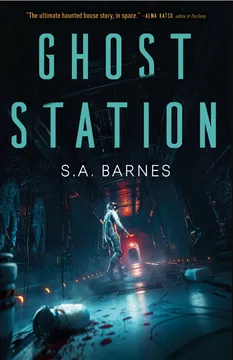


Plot Summary
The Assignment Before Cryosleep
In New Chicago, Ophelia Bray prepares for eighteen months with a Montrose exploration team after a patient with Eckhart-Reiser syndrome died by suicide under her care. Though an ethics committee cleared her, public anger and a wrongful-death lawsuit threaten the career she has built to help space workers.
Her friend Julius arrives to urge her to refuse the assignment, warning that Montrose may be setting her up to fail. His concern falters when Ophelia realizes her uncle Darwin has promised him help securing a license for another artificial pregnancy.
She sends Julius away and changes her emergency contact. Furious and newly alone, she enters cold sleep anyway, determined to make herself useful rather than let guilt or her powerful family decide who she is.
Ophelia’s decision is driven by both care and self-punishment. She wants to treat space workers before their distress becomes catastrophic, but she also treats professional usefulness as a possible payment toward an unpayable moral debt. Julius’s betrayal repeats the family’s method of control through favors and leverage, yet Ophelia’s response is not simply rejection: she still hopes that helping strangers will prove she can be more than her surname and the death she failed to prevent.
Awake Among the Dead
Three months later, Ophelia wakes in the Resilience’s cold-sleep room with no one there to release her. She frees herself from the tank, then sees two dark, silent pods and assumes their occupants are dead.
Her emergency restart attempts fail until mission commander Ethan Severin appears and pulls Suresh Patel from his tank. Suresh and scientific coordinator Liana Chong had sabotaged the seals as a hazing stunt. Ethan reprimands Suresh, but the crew’s first contact leaves Ophelia embarrassed and unwelcome.
She learns that the team lost systems manager Ava Olberman on its previous mission, and that Ethan accepted an on-site psychologist only to avoid mandatory evaluation leave. Her intended patients have already decided she is an intrusion.
The prank makes the crew’s grief visible through the wrong instrument. Suresh turns a serious safety system into a joke, while Ophelia experiences the fear of being trapped before she even meets her colleagues properly. Ethan’s anger protects the team’s practical survival, but his refusal of Ophelia’s authority also establishes the conflict she must navigate: care offered without trust can look like surveillance, and expertise alone cannot make people feel safe.
The Bray Name Lands
During the violent descent to Lyria 393-C, the team learns that Ophelia is a Bray, heir by birth to the wealthy Pinnacle family and employee of its competitor, Montrose. She insists that her relatives and their business have nothing to do with her work, but pilot Birch Osgoode’s hostility sharpens. The team settles inside a vast Pinnacle habitat, abandoned for six years and far larger than their small crew needs.
Ophelia finds the remains of Ava’s bunk and three origami flowers folded from a pink internal investigation report. Liana admits Ava had cared for her like a mother, then shuts down when Ophelia asks what she wishes they had done differently. Ophelia recognizes grief beneath the practiced insistence that everything is fine.
The habitat turns corporate history into a physical environment: Pinnacle’s oversized structure surrounds a handful of workers who cannot escape one another or its legacy. Ophelia is treated as a representative of wealth even as she resists the role, and the paper flowers expose how an official finding can become a private memorial. Liana’s abrupt retreat matters because grief is already present, but the team has learned that naming it can threaten the emotional discipline their work demands.
Clues in the Dark
As Ophelia tries to establish trust, she introduces portable immersive-reality sleep bands and learns that Liana is willing to test one. The system recreates a familiar lanai for Liana, briefly easing her tension. Elsewhere, Ophelia finds an abandoned Pinnacle suit bearing the name M.
Delacroix, along with a wedding ring and an obsolete tooth-shaped communication implant. She also discovers that the habitat’s generator was allowed to burn out. When Birch disappears, the crew searches the sprawling structure while Kate carries the mission firearm.
Ophelia sees a figure struggling through the storm beyond a window and rushes to report it, only to find Birch asleep in an airlock. His explanation does not match his sleep-band records, and his unease remains unexplained.
The objects in the habitat resist easy interpretation. A ring, an obsolete implant, and a serviceable suit are small, intimate traces that sit beside the larger institutional mystery of a deliberately neglected generator. Ophelia’s glimpse outside may be error, but the mismatch between Birch’s account and his recorded sleep makes her uncertainty consequential rather than merely atmospheric. Her professional tools offer comfort to Liana, yet those same tools cannot distinguish a symptom from a truth no one has disclosed.
Bodies Beneath the City
Ophelia joins Ethan at the alien city’s excavation, climbing into a structure through an unstable ladder and makeshift interior footholds. On a lower floor, she finds a severed, unusually long hand and then a mass of Lyrian bodies piled beneath collapsed stone. A parent still clutches a child. The arrangement looks less like an accident than a panicked flight blocked by something unknown.
Ethan records the discovery but agrees not to alarm the crew while they are still trapped in the storm. Ophelia cannot shake the sense that something is present in the ruins. Back at the habitat, she learns that Liana’s headache persists, while the team continues treating the investigation as ordinary fieldwork.
The bodies change the meaning of the city from archaeological prize to evidence of a mass death that may have been concealed. Ophelia reads the pile as a human pattern of flight, not because she knows Lyrian customs but because she recognizes what fear does to bodies moving toward an exit. Ethan’s agreement to keep the find private protects the crew from immediate panic, but it also repeats the habit of withholding information that has already made this mission dangerous.
Birch Names the Past
After Liana begins a session about Ava, the conversation breaks when the team discovers one tower sample apparently missing. Birch accuses inventory specialist Suresh of stealing it and beats him until Ethan restrains him.
Kate finds the vial lodged in its holder, but Ophelia notices Birch’s exhaustion, scratching, and disorientation. During a medical check, Birch turns on her, accusing her of tampering with his mind and identifying her by her childhood name, Lark Bledsoe.
He says his brother was killed during the massacre at Goliath, where Ophelia grew up. Ophelia does not yet explain the truth to the crew. The accusation transforms her private history into an immediate threat, while Birch’s symptoms deepen beyond anything a simple dispute can explain.
Birch’s accusation collapses the distance Ophelia has maintained between patient and clinician. He sees her not as an individual but as the inheritor of a company and a catastrophe that shaped his family. His suspicion is distorted, but its historical grievance is real. The scene also exposes the limits of Ophelia’s preferred role: she can interpret another person’s behavior, yet she cannot remain safely outside the consequences of her own past.
The Name Bloody Bledsoe
The next morning, Ophelia finds Birch dead in her office, his arm mutilated and a pair of medical scissors driven through one eye. Because she has sleepwalked, found her shoe in the central hub, and woken with blood on her face, she fears she may have killed him without knowing.
She tells Ethan that her real childhood was on Goliath, where her father, Field Bledsoe, became the infamous mass murderer Bloody Bledsoe. Ethan refuses to imprison her, pointing out that her guilt is not evidence.
While they move Birch’s body outside for temporary preservation, Ethan reveals that Ava had secretly sold samples through the New Silk Road to pay for experimental treatment for her daughter, Catrin. Kate connected Ava to the buyers, and Ethan had learned too late to stop her.
Ophelia’s confession is not a sudden cure for shame; it is a choice to let another person see the history she has used to explain and condemn herself. Ethan’s refusal to equate inheritance with guilt offers a counterweight to her fear that violence is in her blood. Meanwhile, Ava’s hidden decision complicates the team’s morality: the illegal trade grows from a daughter’s medical need and a system that refuses workers adequate support, not from simple greed.
The Ice Gives Up a Body
During Liana’s ice-core work, an autodriller punches into a human body buried beneath the snow. The dead worker wears a Pinnacle suit and has a recognizable cartoon tattoo, proof that the remains are not Lyrian.
The crew realizes the person was left on the planet, not deliberately buried, as years of snowfall covered him. Liana breaks down over the indignity of the discovery, while Ophelia sees parallels to Ava’s unexplained death. Symptoms spread: Kate has a nosebleed, Birch’s earlier gum bleeding returns to mind, and Ophelia’s arm develops moving bumps beneath the skin.
When Liana later sleepwalks and sees the dead outside, Ethan and Ophelia try the medical unit’s foreign-object removal setting. The device exposes a black, shifting particle that vanishes back beneath Liana’s skin.
The buried worker makes corporate concealment materially undeniable: the habitat’s abandoned possessions and damaged systems now belong to a team that may never have escaped. Liana’s distress is not only horror at death but grief at seeing a person reduced to a discarded obstacle. The failed procedure forces Ophelia to abandon a familiar diagnostic frame. Her clinical vocabulary can name headaches and delusions, but it cannot explain a substance that moves away from instruments and returns to a living body.
The Towers Call Them
The black particles in Birch’s saved sample match the material forming the two towering structures near the city. The team ventures out with samples, hoping to return them and halt the infection. Liana and Suresh move toward the towers as if drawn by a promise of belonging.
Ethan and Kate try to pull Liana free, while Ophelia knocks Suresh away when he touches one. They discover the missing rover beside the structures, with several dead Pinnacle crew members inside and another body beneath it.
The bodies show that Pinnacle’s team never escaped. Liana remains fastened to the tower, and Suresh’s right side is injured by the substance. Ophelia asks Ethan to abandon the rescue and help carry Suresh back; Ethan finally leaves Liana to save the survivors.
The towers exploit precisely what the crew lacks: rest, safety, and a place among people they have lost. The offer feels emotionally credible, which makes resistance harder than simply recognizing an external threat. Ophelia’s demand that Ethan retreat forces him to choose between the impossible rescue and the living person who can still be saved. The decision repeats the book’s central moral pressure, but this time responsibility means accepting a loss rather than pretending a commander can prevent every death.
Ophelia Breaks the Pattern
Back at the habitat, Ophelia realizes she may have wandered in her sleep and possibly harmed Birch, so she asks Ethan to lock her away. As the tower’s influence worsens, her speech breaks apart and she hallucinates her father.
Kate shoots Ethan during a confrontation and tries to make Ophelia the convenient explanation for the crisis. Locked in a bunk room, Ophelia finds a missing scalpel and uses it to puncture a weak wall seam, triggering the habitat’s emergency breach release. The resulting alarm unlocks the door.
Outside, she finds Ethan wounded. She concentrates on showing the hidden intelligence that she wants to save him, and her hands regain control long enough to press on his wound. She sedates Kate and gives herself and Ethan stimulants to stay conscious.
The scalpel is both a concrete hazard and the instrument of Ophelia’s agency. She does not defeat the influence by becoming fearless or denying her history; she acts despite the voice that uses her father’s image to control her. Her effort to communicate through an image of care also reverses her earlier reliance on diagnosis alone. The intelligence can invade memory, but Ophelia tests whether it can respond to intention, creating the narrow chance needed to keep Ethan alive.
A Wrench in the Dark
Ophelia gets Ethan and the badly injured Suresh to the lander, then turns back through the storm because she will not leave Kate behind. The habitat is dark after Kate sabotages its power, and Kate’s voice carries the tower’s collective influence as she tries to make Ophelia surrender. Ophelia retrieves a wrench and strikes Kate when she fires at her, stopping her without killing her.
She secures Kate on the antigravity sled and returns to the lander. Ethan, bleeding but still able to pilot, takes the controls while Ophelia follows his instructions through the storm. Suresh vomits and Kate raves during the ascent, but the lander clears the atmosphere and reaches the Resilience.
Ophelia’s return for Kate is a decisive break from the logic of inherited guilt. She does not rescue Kate to erase the engineer’s betrayal or to prove her own goodness; she refuses to let an enemy’s choices determine the limits of her own. The wrench echoes the mining tools associated with her father, but Ophelia uses force to stop an immediate attack and then stops. Her restraint is not innocence. It is deliberate self-command under pressure.
The Message Before Sleep
Aboard the Resilience, the medical unit treats Ethan and Suresh, while Kate is sedated and placed in cold sleep. Ophelia learns that Suresh will lose three fingers but keep his hand. Before entering her own tank, she sends her mother a message revealing that she knows Pinnacle and Montrose were connected to the illegal sample trade.
She threatens to give journalist Jazcinda Carruthers the full story if the companies endanger the returning crew or refuse to recover the dangerous material. Ophelia cannot know whether the threat will work or whether cold sleep will stop the intelligence in their bodies. She enters the tank anyway, trusting the crew’s survival to the only remaining plan: get home and force the corporations to respond.
Ophelia’s final act on the ship borrows the Bray family’s instrument of power, leverage, but redirects it toward protecting people rather than preserving status. The threat is not a clean moral victory: it makes her a participant in a familiar machinery of coercion. Yet she now chooses its target and purpose herself. Entering cold sleep remains an act of uncertainty, but she no longer treats uncertainty as proof that she should hide or that she must bear every consequence alone.
Epilogue
Eleven years later, Ophelia wakes in her tank to find her younger sister Dulcie grown and waiting outside. Dulcie explains that Ophelia’s delayed message reached Jazcinda, the resulting exposure forced their mother and Uncle Darwin from Pinnacle’s board, and scientists eventually learned to remove the alien residue from the surviving crew.
Ethan appears beside Dulcie, alive. Ophelia understands that she has lost more than a decade, but she no longer meets the future as a child waiting for someone else to decide whether she is safe. When the tank opens, she reaches for Ethan’s hand and draws in warm air.
The eleven-year gap gives the story a cost that cannot be negotiated away. Ophelia misses the years in which Dulcie became an adult, and no victory over the companies restores that time. Yet the delayed message has consequences beyond her private survival: it removes Darwin and her mother from power and helps force a scientific response. The final contact with Ethan does not erase danger or grief. It marks a shift from isolation toward chosen connection, while Ophelia’s first full breath makes survival feel bodily rather than symbolic.
Analysis
Ghost Station makes psychological horror out of a setting where every private weakness can become operationally dangerous. Ophelia arrives believing that observation, therapy, and better sleep can interrupt the cycle of Eckhart-Reiser syndrome. The mission instead confronts her with a crisis that imitates familiar symptoms while introducing a material threat her training cannot diagnose. The resulting uncertainty is not just a puzzle. It tests whether the crew can act responsibly without pretending they understand what is happening.
The novel links personal trauma to institutions without treating them as interchangeable. Ophelia’s fear of inheriting her father’s violence is intimate and bodily; Birch’s anger at the Bray family grows from the economic harm done to his community. Ava’s attempt to pay for Catrin’s treatment and Kate’s involvement in the New Silk Road show how corporate deprivation can make illegal choices seem like the only available choices. Those pressures do not absolve the harm, but they make blame more complicated than a single villain or diagnosis.
Ophelia’s development turns on the difference between guilt and responsibility. She begins by acting as if helping enough people might cancel what she cannot change. Ethan’s challenge forces her to choose without waiting for certainty that she is innocent, useful, or safe. She confronts the intelligence, risks herself to save Ethan, returns for Kate, and refuses to reproduce her father’s violence even when anger makes it tempting. The ending offers no simple cure for the companies or the lost years. It offers a harder kind of hope: Ophelia can acknowledge what shaped her, accept that some consequences remain, and still decide what she does next.
Review Summary
Ghost Station receives mixed reviews, averaging 3.58/5. Fans praise its atmospheric, slow-burn sci-fi horror, eerie alien planet setting, and complex protagonist Dr. Ophelia Bray. Many appreciate Barnes' matured writing and compelling world-building around ERS, a space-based psychological condition. Critics cite pacing issues, particularly a sluggish first half, underdeveloped supporting characters, and a romance subplot feeling forced. Some feel it underdelivers on horror elements, reading more like a thriller. Compared favorably to Barnes' debut, Dead Silence, though many consider that superior.
People Also Read






Characters
Ophelia Bray
Guilt-driven field psychologistA Montrose psychologist assigned to work with an exploration crew, Ophelia values practical help and early intervention because she has seen what untreated distress can do to isolated workers. Her wealthy family name makes people assume she is sheltered or complicit, while her own history makes her fear that she carries a more intimate inheritance of violence. She protects herself through professional distance, exact observation, and a relentless need to prove her usefulness. Beneath that discipline, she wants to be known as a person rather than a diagnosis or legacy. Her central struggle is learning to take responsibility for her choices without claiming responsibility for everything that has happened around her.
Ethan Severin
Protective mission commanderThe experienced commander of R&E team 356, Ethan measures himself by whether his people return alive. He is calm under operational pressure, protective of his team, and wary of corporate oversight that could cost them their livelihood. His disciplined manner conceals grief and a deep habit of accepting blame for losses beyond his control. Ophelia initially sees his authority as an obstacle, while he sees her as a corporate distraction. Their growing trust comes through concrete choices: he listens to her assessment, and she challenges him when his impulse to save everyone puts the rest of the crew at risk.
Kate Wakefield
Resourceful ship engineerKate keeps the ship and habitat functioning, relying on technical competence, blunt speech, and a practiced independence. She is close to her twin brother and understands how debt and corporate policy can narrow a worker’s choices. Her relationships with the crew are shaped by years of shared danger, including a loyalty that can make her protective and secretive at once. She resents outsiders who underestimate the material pressures of R&E work. Kate’s skill makes her indispensable, but her distrust of authority and fear for her family complicate her judgment when the crew’s survival conflicts with her plans.
Birch Osgoode
Withdrawn station-born pilotBirch pilots the Resilience and has spent six years on Ethan’s team. Quiet, self-contained, and difficult to read, he folds paper figures and avoids stimulants, preferring habits that give him a small measure of control. His history is marked by the loss of family and by the consequences of Pinnacle’s treatment of mining-station workers. He is wary of Ophelia and of the psychological interventions she represents, especially when he feels observed or manipulated. Birch’s guardedness is not simple hostility: it protects a person carrying memories that the rest of the crew only partly understands.
Liana Chong
Hopeful scientific coordinatorThe youngest member of the team, Liana is an aspiring astrobotanist who saves her earnings toward graduate study. She approaches field science with infectious enthusiasm, names the autodrillers, and takes their care seriously even when the others tease her. Ava had been a mentor and a maternal presence to her, leaving Liana with grief she wants the team to share rather than bury. Her openness makes her an early point of connection for Ophelia, though Liana has also learned to hide distress when she fears it will disrupt the crew.
Suresh Patel
Provocative inventory specialistSuresh manages supplies and uses teasing, grooming, and argument to occupy space in a cramped, high-pressure team. He needles Birch and Ophelia, often turning discomfort into comedy or provocation before anyone can ask what lies beneath it. His closeness with Liana has the ease of a sibling bond, full of irritation and loyalty. Suresh distrusts corporate language about mental health because he sees how a diagnosis can cost workers their jobs. His jokes can be cruel, but they also reveal a sharp awareness of the precarity surrounding the crew.
Ava Olberman
Absent crew's steady anchorAva was the team’s systems manager and a widow devoted to her adult daughter, Catrin. She cared for Liana when the younger scientist was new to the work and became one of the crew’s sources of practical reassurance. Her absence shapes the team’s silences, loyalties, and disagreements from the outset. Ava’s desire to secure treatment for her daughter reflects the pressure on workers whose families depend on them and whose employers do not cover every need.
Dulcie Bray
Ophelia's younger sisterDulcie is Ophelia’s younger half sister and the family member she feels closest to. Though separated by family conflict and Ophelia’s decision to leave Earth, Dulcie remains a source of affection and an emotional reason Ophelia wants to build a life independent of the Brays. Her gifts and messages carry a warmth absent from the family’s public machinery.
Julius Ogilvie
Compromised longtime friendJulius is Ophelia’s longtime friend and colleague in Montrose’s psychological evaluation program. He is perceptive enough to suspect the assignment may be designed to damage her career, but his concern is compromised by pressure from her uncle and his own hope for a family-planning license. Their friendship has genuine tenderness, which makes his decision to accept the offer especially painful for Ophelia.
Darwin Bray
Powerful family strategistOphelia’s uncle and a Pinnacle executive, Darwin uses wealth, access, and family obligation to influence the people around him. He wants Ophelia quiet when public attention threatens the Brays, and he treats personal relationships as channels through which a problem can be managed. His smooth public image conceals a more coercive private manner.
Regency Bray
Ophelia's distant motherRegency is Ophelia’s mother, caught between family loyalty and a daughter whose choices repeatedly unsettle the Bray establishment. She expresses worry and regret, but her attempts to reach Ophelia often reproduce the family’s pressure to stay quiet and avoid scandal. Her relationship with Ophelia is shaped by affection that rarely becomes dependable protection.
Field Bledsoe
Goliath's infamous crew chiefA mining-station worker whose name is inseparable from Goliath’s violent history, Field Bledsoe survives in public accounts, private memories, and the fears of people touched by the station. The competing stories about him make him more than a historical figure: he represents how trauma can persist through family, reputation, and institutional concealment.
Catrin Olberman
Ava's adult daughterCatrin is Ava’s adult daughter, living with a disability after a severe air-vehicle accident. Her need for costly experimental treatment shapes the pressures Ava faces as a parent and worker.
M. Delacroix
Pinnacle suit's former ownerDelacroix is identified by the name patch on an abandoned Pinnacle exploration suit. The suit becomes one of the first physical clues that the habitat’s previous occupants left behind more than an orderly empty station.
Rueben Monterra
Patient Ophelia could not saveRueben was a retired R&E pilot and one of Ophelia’s patients, struggling with depression, anxiety, and cognitive effects associated with extended cold-sleep travel. His death weighs heavily on her and helps explain why she accepts the assignment.
Plot Devices
Cold sleep
Suspends bodies, not historyCold sleep allows R&E crews to cross interstellar distances without consuming the food and power required to remain awake. It also creates a vulnerable transition: waking can leave the body weak, while extended use contributes to the neurological and psychological strain the crew is meant to manage. Ophelia begins and ends the mission inside a tank, making the technology both practical infrastructure and a frame around her changing relationship to fear. The crew ultimately relies on long-term cold sleep to survive the contamination, though it delays their return to ordinary life by eleven years.
Immersive sleep bands
Rebuild a familiar nightMontrose’s portable iVR bands use selected memories and personal data to recreate a familiar setting that can help users sleep. Ophelia brings them as a preventive mental-health tool, and Liana’s first experience in her grandmother’s lanai shows their promise. The bands also complicate trust because the team fears that a device connected to memory could invade the mind. Birch later blames his disturbing dreams on the system, even though Ophelia cannot establish that it caused his symptoms.
The black towers
Draw on the crew's lossesThe two smooth black structures near the Lyrian city appear at first to be landmarks or remnants of alien architecture. Their material matches the particles found inside the infected crew. As the influence spreads, the towers reach into personal memories and offer each person a version of home, reunion, or relief. The crew eventually tries to return samples to them, but proximity intensifies their control and turns the structures into the immediate danger at the story’s climax.
New Silk Road
Turns scarcity into dangerThe New Silk Road is an illicit market for samples and artifacts taken from claimed planets. Ethan reveals that Ava used it to seek money for Catrin’s treatment and that Kate connected her with buyers. The market explains why a team might hide samples from employers, but it also exposes everyone to unknown biological or technological risks. Its existence ties the crew’s private desperation to corporate neglect: workers take dangerous chances in a system where the companies benefit from exploration while refusing adequate pay and care.
The abandoned habitat
A crime scene disguised as shelterThe enormous Pinnacle habitat offers the crew refuge from Lyria’s storms, yet it contains abandoned personal effects, damaged laboratories, a burned-out generator, and an empty suit that first seems like a prank. Each discovery revises the assumption that the previous team simply departed. The habitat provides practical shelter while also concentrating the crew inside the physical remains of a concealed disaster. Its rooms, airlocks, and emergency systems later shape the search for Birch, the attempted rescue of Liana, and Ophelia’s effort to escape Kate.
Download PDF
Download EPUB
.epub digital book format is ideal for reading ebooks on phones, tablets, and e-readers.








