

Plot Summary
Prologue
Casino dealer Lena is driving to work when a man steps into the road. She swerves, flips her Jeep, and finds him crumpled against a tree. Stunned but unhurt, she runs for help, then returns to the body before an ambulance arrives.
A blood-mouthed coyote stands over him. The man is Noemi Broussard’s boyfriend, Roddy, though Lena does not yet know who he is or why he ran into her path.
The opening makes an ordinary traffic accident feel morally unstable before the reader knows the people involved. Lena’s overturned Jeep and Roddy’s stillness invite a familiar explanation, but the coyote makes the scene resist closure. Its presence is not proof of anything; it is an image that leaves several causes in play, including accident, suicide, and something beyond ordinary behavior. By giving the first account to the driver, the novel also lets trauma precede interpretation. Lena sees what happened, but she cannot yet know what it means.
The Uncle at the Door
Twelve years after leaving the reservation, Louie Broussard returns to the trailer where his sister Lula and niece Noemi live. Noemi is forty, unhappy with the years and money she has lost, but newly hopeful with Roddy Bishop, a younger television reporter she plans to meet that night.
Tribal police elder Luke Fisher arrives before she can leave and tells her Roddy has died on Grand Nacre Drive. The driver says Roddy stepped into her Jeep, and Luke has heard the coyote was beside his body. Noemi rejects the suggestion that Roddy chose to die. Their plans for a first tattoo, and the future she imagined with him, now seem to have vanished in a single evening.
Roddy’s death strikes Noemi at the point where hope has only just become credible. Her confidence is not rooted solely in romance: she has begun to imagine that past mistakes need not dictate what comes next. That makes the possible suicide explanation feel like an accusation against both Roddy and her judgment of him. Louie’s return adds a second unsettled history to the room. His silence and instinct to secure the door suggest that the reservation holds dangers he remembers, while Noemi’s grief demands an explanation he cannot yet give.
Aubrey Leaves the Casket
In 1986, sixteen-year-old Louie attends the wake of Aubrey Forstall, a disabled young man he barely knows. Before Louie arrives, Aubrey’s family has seen him rise in his casket and make a sound; at the house, Louie finds Aubrey’s sister Jeannie clutching his body. A dead rattlesnake lies by the doorway, its head bruised and its mouth bloodied.
The Forstalls take Aubrey to the hospital, where a medical examiner explains the movement as a postmortem reaction. Louie tries to accept that account, but the snake later disappears, leaving tracks in the dirt. When his friend Jean-Luc asks what happened, Louie recounts the wake, unsettled by how many witnesses fled in terror.
The first disturbance is carefully balanced between bodily fact and supernatural possibility. A medical explanation can account for a corpse’s movement, but it cannot explain the snake’s apparent departure, so skepticism remains possible without becoming reassuring. Louie’s response is shaped by childhood fear of the Takoda Vampire, a local legend attached to the murder of Horace Saucier. The story shows how communities use explanation to regain control, yet how a single unresolved detail can keep fear alive. Louie is not simply credulous; he is learning that what people witness and what they can prove may be different things.
The Roadside Has No Answers
Noemi drives to the crash site, but Roddy’s body has already been removed. Chief Cain Fisher, Luke’s son, keeps her behind the police tape and confirms the driver is a casino dealer, not someone Noemi recognizes. He refuses to let her confront the woman at the station that night, and Noemi’s furious U-turn punctures a tire on the scattered glass.
She runs to the Blue Gator instead of accepting a ride. There she finds Lula and Louie, and meets Grace Hebert, a reservation therapist whose offer of free help feels, to Noemi, like premature agreement that Roddy took his own life. She refuses to discuss it, asking only not to be left alone.
Noemi’s anger gives her something to do when grief has made her powerless. Cain’s restraint is sensible police work, but she experiences it as a barrier between herself and the one person who might explain Roddy’s final minutes. Her refusal of Grace’s help is not a rejection of care so much as a defense against a story she cannot accept. The Blue Gator gathers the novel’s emotional contrasts in one place: Lula drinks to blunt her pain, Louie avoids alcohol, and Noemi wants company without interpretation. Their different coping styles are already shaping how they can support one another.
Three Graves Go Bare
After Aubrey’s burial, Louie learns that three graves in the tribal cemetery have been disturbed. The missing remains belong to tribal leader Hilaire Broussard, Louie’s grandmother Caroline, and Horace Saucier. At the same time, Miss Shelby Mire has vanished after leaving to sing at Aubrey’s wake.
Her son Ernest, known as Ern, is housebound and depends on her care, so the community searches for her and arranges food for him. Ern tells Louie that Aubrey had lifted a pot of boiling water and thrown it across the kitchen before collapsing, an act impossible for someone who could barely walk. Louie begins to suspect the cemetery theft, the strange deaths, and Miss Shelby’s disappearance may belong to the same mystery.
The story widens from one frightening wake to a communal crisis involving the dead, the missing, and the living who depend on one another. The three graves connect family memory to tribal history, while Miss Shelby’s absence exposes how much care is provided privately and taken for granted. Ern’s account makes the supernatural possibility harder to dismiss, but the novel does not yet permit an easy culprit. Louie’s curiosity grows from fear into responsibility: the mysteries threaten people he loves and the stories that keep the community connected to its past.
Fay Runs Backward
Fay Lavergne, whose dementia has made her physically unsteady, wakes at night confused and convinced she needs to tend a garden. Her daughter Autumn leads her outside to sit in the cool air, then dozes beside her. Fay strips off her clothes, runs backward with impossible speed, and stops beside a broken septic tank lid.
When Autumn reaches for her, Fay grips her wrists and pulls her into the opening. Fay dies in the tank, while Autumn survives. At Fay’s wake, the body sits up and cries out, terrifying the mourners. Later, at the grave, Sam Peltier hears cries beneath the earth and Thomas digs up the casket, only to find Fay’s corpse still dead inside.
Fay’s death turns caregiving into a scene of unbearable uncertainty. Autumn’s exhaustion is ordinary, but the strength and apparent purpose in Fay’s final actions are not. The wake and graveyard episodes deepen the same uncertainty: grief can distort perception, yet Louie and Sam experience sounds that others cannot hear. The novel places people with dementia and disability at the center of supernatural horror without making their vulnerability a simple symbol. Their bodies become sites of unexplained violence, while their families are left to question whether love, vigilance, or medical knowledge could have changed anything.
Two Full Zoloft Bottles
Roddy’s sister Sara tells Noemi that the family found no suicide note, but a broken living-room mirror suggests he had been distressed before leaving home. Sara later finds two unopened Zoloft prescriptions hidden in his sock drawer and explains that Roddy had taken the medication since he was seventeen. Noemi had never known.
She remembers his withdrawn days and canceled plans, then learns that his former girlfriend, Brandy Chapman, recently told him she was engaged. Roddy replied politely, and the pair had not been in contact for years, but the new information still weakens Noemi’s certainty. His cheerful public persona and their private plans no longer feel like enough evidence to explain what happened.
Noemi’s investigation becomes a painful revision of intimacy. She has treated being chosen by Roddy as proof that she is secure and worthy; now she learns that he kept part of his history from her. The full medication bottles do not establish why he died, but they make it impossible for her to rely on her own impression of his happiness. His work as a reporter adds another layer: a practiced public face can be genuine and incomplete at once. The novel treats knowledge between lovers not as a possession but as something partial, shaped by what each person can bear to disclose.
Johnny Walks Into Fire
Louie takes paid work caring for toddler Johnny Deshautelle alongside his niece Noemi, and the children bring brief warmth to a summer darkened by strange deaths. Jean-Luc, Louie’s childhood friend, mocks Louie’s warrior-dance practice and shoots a woodpecker near the river. The bird later appears alive again, pecking at Louie’s trailer.
As Louie tends his worsening alcoholic mother, he keeps watching over the children. One day Johnny suddenly moves with unnatural force, runs into Louie’s backyard firepit, and dies despite Louie’s attempt to pull him out. At the wake, Johnny’s corpse sits up. Louie hears a warning that Noemi will be next, though the other mourners hear only the horror of the moment.
Johnny’s death collapses the distance between legend and household life. Louie has treated care as something he can perform through vigilance: feeding, bathing, and keeping the children safe. The fire shows the limits of that belief, because Johnny’s own actions seem to have been commandeered by a force Louie cannot see. Jean-Luc’s casual violence toward the woodpecker foreshadows a broader disregard for life, while Louie’s mother presents another form of danger rooted in human need and neglect. The warning about Noemi converts grief into a task, binding Louie’s old fear to his present obligation.
The Coyote Finds Home
Outside the Blue Gator, Jean-Luc fires at the coyote that had been seen beside Roddy’s body. The animal disappears, leaving a trail of blood that Noemi and Louie follow through the night. Louie suspects that its steady movement after being shot means it is not an ordinary wounded animal.
As they walk, Noemi receives more of Sara’s messages: Roddy had not recently contacted Brandy, and his sister is still searching his phone. The trail ends at an abandoned trailer, where the coyote lies dead beside a den containing three pups. Noemi realizes the animal may have been trying to reach its young. Its behavior remains uncanny, but it no longer looks like a simple predator.
The coyote turns the novel’s opening image inside out. At first it seems to confirm that Roddy’s death has been followed by animal violence; at the den, it becomes a parent trying to reach vulnerable young. This does not solve Roddy’s death, and that restraint matters. Noemi receives facts that can soften one suspicion without replacing it with certainty. Her growing compassion for the coyote parallels her painful effort to imagine Roddy as a person whose private life exceeded what she knew. The scene allows empathy without demanding that either mystery be explained away.
Bones Beneath the Stump
After Johnny’s funeral, Louie searches the riverbank for an agate that might protect Noemi. He finds Jean-Luc hiding a pillowcase in a hollow stump. Jean-Luc attacks when Louie pulls it free, nearly drowning him in the river, but Louie sees human bones spill from the bag.
Jean-Luc admits he dug them from the cemetery and chewed pieces because he believed consuming the dead would make him strong like the Takoda alligators. He also claims Louie owes him for supporting Louie’s account of Johnny’s death. Louie leaves without exposing him, stunned that his oldest friend has turned tradition into an excuse for desecration and coercion.
Jean-Luc’s betrayal is not merely a criminal revelation; it corrupts a relationship built through shared childhood rituals. He takes a story about respect for the dead and twists it into a private technology of power. His appeal to strength reveals how insecurity can turn cultural symbols into permission rather than obligation. Louie’s silence is morally complicated: Jean-Luc has protected him, but only by making that protection a debt. The episode also prepares Louie’s later struggle by making the difference between the alligator’s violence and the warrior’s disciplined strength impossible to ignore.
Noemi’s Teeth Turn Sharp
After Johnny’s wake, Louie tries to keep Noemi inside their trailer, fearing the warning he heard. Their mother Lula dismisses his fears as guilt over failing to save Johnny. Later, while Louie sleeps, the candle Grandpa Joe lit burns down. Noemi calls Louie’s name in an unnerving voice, holds a drawing over the flame, and seems to change into a creature with claws and sharp teeth.
When Louie grabs her, she bites his arm; Lula sees an ordinary hurt child and carries Noemi away from him. Outside, the dead woodpecker lies on the porch. Louie barricades himself in the hall, convinced that whatever took Johnny has reached Noemi and may now be inside him.
The scene makes perception itself a source of danger. Louie sees Noemi transformed, but Lula sees her daughter injured by a frightened uncle; neither account can simply cancel the other. The candle, intended as protection through Catholic symbolism, offers no reliable boundary. Louie’s attempt to keep Noemi safe risks making him frightening to her, a consequence that echoes his childhood fear of losing those who need him. The novel asks whether love can remain protective when fear governs it. Louie must learn that responsibility is not the same as control.
The Warrior Cuts the Gator
The force inside Louie drives him toward a cemetery, where Miss Shelby appears to him and tells an origin story in which warriors turn dangerous alligators into harmless lizards. She urges him to resist the hunger consuming his judgment. Louie runs to the river and sees himself reflected as a half-human alligator.
Remembering his warrior-dance lessons and the story’s image of facing an enemy, he puts on his regalia and begins the dance in the mud. When the creature attacks, Louie uses his grandfather’s antler-handled knife to cut it apart in the reflection. Its pieces become small anoles. Louie collapses, but wakes human, with the invading force gone from his body.
Louie’s victory depends on transforming inherited knowledge into action rather than treating tradition as a charm. The dance is not a display of invulnerability; it is a disciplined way to keep facing what would overwhelm him if he looked away. His knife, his regalia, and the stories taught by family work together, but none acts alone. The alligator’s defeat also refuses a simple separation between culture and modern crisis: an old practice becomes a resource for resisting a force that cannot be medically or legally named. Louie survives by choosing the role of warrior without mistaking violence for strength.
The Cost of Taking the Cans
Louie returns home from the river believing the supernatural danger has passed, only to find his mother dead in her locked room. He had hidden the beer she relied on, hoping to interrupt years of alcoholism; her body shows the cost of her dependence and the danger of stopping suddenly.
Lula explains that their mother had been drinking for years and that Louie could not make her well by removing the alcohol. His guilt remains fierce, because he had mistaken control of the cans for a cure. Before the funeral, he and Lula clean the room and make their mother’s hair beautiful. Louie keeps one can tab as a reminder of both her struggle and his limits.
This loss prevents the supernatural plot from absorbing every form of harm. The Meli Omahka can possess people, but Ma’s death also emerges from addiction, poverty, and the family’s lack of adequate support. Louie’s intervention is loving and dangerously incomplete: he recognizes the damage alcohol causes but not the risks of abrupt withdrawal. His guilt reflects a child’s fantasy of omnipotence, the belief that enough vigilance could repair a parent. Lula’s insistence that Ma’s choices were not Louie’s to control offers a more truthful form of care, though it cannot erase grief.
The Vampire in the Window
Louie confronts Ern, who has asked for Ma’s hidden beer. Louie accuses him of killing his mother and hiding her body beneath the couch; later, the police find Miss Shelby there, suffocated. Ern confesses that, as a boy, he threw the rock that caused the Hensley family’s fatal crash, then killed Horace when Horace threatened to reveal the truth.
He says the Meli Omahka entered him and fed his appetite, but Louie recognizes that Ern chose to harm people and used the spirit as an excuse. Ern’s confession connects the childhood vampire legend to the current violence. The police take him away after discovering Shelby’s body.
The revelation separates supernatural influence from moral responsibility without making either disappear. Ern’s account suggests that an evil force can intensify a person’s appetite for violence, but his choices remain his own: he acted to protect himself, conceal evidence, and preserve power. The vampire legend therefore becomes both a real source of terror and a convenient cover for human wrongdoing. Louie’s recognition matters because he refuses the explanation that would absolve Ern. The story’s central horror is not that people can be possessed, but that possession can offer an appealing story for actions someone has already chosen.
The Bones Go Back
After Ma’s death, Louie visits Jean-Luc and finds him quietly cutting fish as if nothing has changed. He tells Jean-Luc his mother is gone, then asks where the stolen bones are. Jean-Luc points him to the pillowcase hidden among old tires. Louie takes it to the cemetery and returns the remains to Horace’s open grave, burying them without exposing Jean-Luc to the authorities.
Their friendship is badly damaged, but Louie remembers the river games and childhood dares they shared, and leaves open the possibility of a future conversation. His act cannot undo what Jean-Luc did, but it restores the dead to the place from which they were taken.
Restitution is not reconciliation. Louie returns the bones because the dead deserve dignity, not because Jean-Luc has earned forgiveness. His decision to keep Jean-Luc’s secret repeats the novel’s concern with silence, but it differs from the silence that protected Ern: Louie does not mistake loyalty for innocence, and he has already confronted his friend. Remembering their childhood keeps the relationship human without softening its betrayal. The burial also gives Louie a concrete duty in a story where so much harm has resisted remedy. He cannot repair the past, but he can refuse to leave its violation untouched.
A Shirt Still Smells Like Roddy
In the present, Noemi and Louie meet Grace at the Resource Center and agree to return for support. Noemi then goes to the tribal police station, where Sara tells her Roddy loved her and gives her the blue shirt he wore on air. The investigation has not established whether Roddy’s death was accidental or intentional, and Noemi no longer pretends that certainty will come from defending their plans.
She accepts the shirt and remembers the private gestures that made their relationship more than a television image. Louie, meanwhile, recognizes that he cannot keep burying his own grief. Their first step toward help does not remove the loss; it gives both of them somewhere to carry it.
The shirt is a tangible bridge between Roddy’s public identity and the private relationship Noemi fears she never fully understood. Sara’s compassion does not settle the investigation, but it changes the emotional shape of their rivalry: Noemi can receive something from Roddy’s family without proving she knew him best. Choosing therapy is similarly modest and consequential. Neither character is cured by insight, yet both stop treating endurance as the only available response. The novel’s recovery is relational rather than triumphant, built from people who can acknowledge uncertainty and still offer one another practical care.
A Grave for the Coyote
After Noemi enters the police station, Louie returns to the reservation and reflects on his first homecoming after twelve years away. Ern’s trailer is abandoned, and the coyote’s three pups remain beneath its steps, still dependent on one another. Louie digs a grave and lifts the coyote from beneath the rock he had placed over its body.
He buries it, accepting that the animal’s strange behavior cannot explain Roddy’s death or undo what happened to the pups. The burial is an act of respect, not a solution. Louie has returned to the place that formed him, carrying both its pain and its traditions instead of trying to escape them again.
The coyote’s burial gives the novel a final action that is deliberately smaller than a revelation. Louie cannot know whether the animal’s role in Roddy’s death was supernatural, instinctive, or simply misunderstood. He can still acknowledge its life and its failed effort to reach its young. That gesture mirrors his broader change: he no longer treats unresolved pain as something that must be hidden to survive. The abandoned Mire trailer and the dependent pups also echo the novel’s repeated question of who cares for the vulnerable. Louie’s answer is not mastery, but presence.
Epilogue
At the pow wow, Noemi arrives wearing Roddy’s shirt tied around her waist. Lula and Louie meet her at the entrance, and the three share fry bread before joining the crowd. Noemi still grieves, but she no longer mistakes grief for proof that she cannot stand on her own.
Louie stays with his family and enters the dance circle, moving with more confidence than he had as a boy. Across the circle, Rosie sits beside Jean-Luc; she does not return Louie’s wave. The celebration holds sorrow and continuity together without pretending that every wound has closed.
The final gathering offers belonging without demanding reconciliation or emotional neatness. Noemi can carry Roddy’s shirt and still participate in a living community; Louie can dance while knowing that his past remains painful. Rosie’s refusal to wave is important because the ceremony does not magically repair every relationship. Instead, the pow wow provides a shared structure in which people can remember, mourn, and continue. The novel’s ending treats tradition as practice rather than nostalgia: it survives because people return to it, adapt it, and let it hold both their losses and their unfinished lives.
Analysis
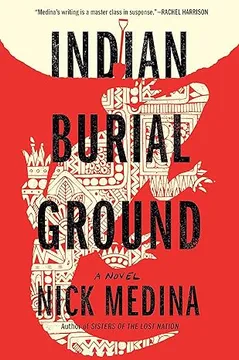
Indian Burial Ground braids a contemporary bereavement story with a 1986 supernatural mystery, allowing each timeline to revise the other. Noemi’s uncertainty about Roddy is not solved by a single clue: a broken mirror, hidden medication, a former girlfriend’s message, and his private low periods accumulate without proving whether his death was deliberate. That unresolved question is essential. The book distinguishes the desire for an answer from the ability to obtain one, then asks whether grief can be lived without certainty.
Louie’s past offers a harsher investigation into certainty. The Takoda Vampire begins as a childhood legend attached to Horace, then becomes a way the community interprets impossible deaths. Ern’s confession exposes the danger of letting a supernatural explanation erase agency. He may believe the Meli Omahka shaped his impulses, but he also acted to protect himself and hide what he had done. The horror therefore has two sources: an inhuman force that can overwhelm vulnerable people, and human beings who choose to turn fear, tradition, and silence to their advantage.
The novel’s treatment of care is equally unsentimental. Louie loves children and tries to protect his mother, but vigilance cannot prevent Johnny’s death or cure Ma’s alcoholism. His attempt to remove her alcohol is an act of concern with devastating limits, not a heroic solution. Noemi, meanwhile, has made romantic attachment carry too much of her self-worth. Her movement toward therapy and her willingness to receive support mark a change more credible than instant recovery.
Tradition provides methods of relation rather than magical guarantees. The drum, regalia, stories, burial practices, and warrior dance connect Louie to people who taught him how to face an enemy. Their value lies in what they ask of him: attention, discipline, respect for the dead, and responsibility to the living. The ending offers no universal victory over grief or evil. It offers people returning to one another, making room for unresolved pain, and continuing the work of care.
Review Summary
Indian Burial Ground receives mixed reviews, averaging 3.59/5. Many praise Nick Medina's storytelling, rich Indigenous folklore, and emotional depth, particularly Louie's 1986 timeline, which readers find compelling and haunting. The dual-timeline structure draws criticism for being confusing and unevenly paced, with several reviewers preferring Louie's perspective over Noemi's present-day narrative. Themes of addiction, generational trauma, and suicide are widely acknowledged as powerful, though some find the portrayal of certain characters problematic. Horror elements are described as unsettling and atmospheric, with the ending surprising many readers.
People Also Read








Characters
Noemi Broussard
Grieving central nieceNoemi is Lula’s daughter and Louie’s niece, a forty-year-old woman who fears that her best years and chances have already passed. She has spent much of her adult life seeking security through romantic relationships and risky ventures, including a failed frozen-yogurt business. Roddy’s attention makes her feel newly capable of imagining a future, which helps explain both her devotion and her dependence on his approval. Noemi is sharp, funny, impulsive, and emotionally direct, but she can mistake another person’s love for evidence of her own worth. Her story is driven by the difficult work of seeing herself as a person beyond the relationships that have shaped her.
Louie Broussard
Returning family protectorLouie is Noemi’s uncle, Lula’s younger brother, and the novel’s second central perspective. As a teenager on the reservation, he is observant, devoted to children, and unsure whether tradition can offer a future beyond the limits he sees around him. As an adult professor returning after years away, he carries guilt, unresolved fear, and the belief that leaving may have made him safer but less whole. He avoids alcohol and notices the ways it shapes his family, yet his instinct to protect can turn into an impossible demand that he control every danger. Louie’s attachment to stories, regalia, and the warrior dance gives him a language for facing what he cannot simply explain.
Lula Broussard
Noemi’s complicated motherLula is Noemi’s mother and Louie’s older sister. She is lively, stylish, and quick with humor, but her warmth often competes with exhaustion and dependence on alcohol. As a young parent, she relies heavily on Louie to help care for Noemi, while Louie quietly hopes she will become more present. Her relationship with him is intimate but marked by old grievances, including their different memories of the family they grew up in. Lula has learned to dismiss some pain as ordinary because acknowledging it might require change. Beneath her defiance is a woman who loves her daughter and brother, even when shame, fatigue, and self-protection make that love hard to express.
Roddy Bishop
Beloved television reporterRoddy is Noemi’s boyfriend, a local television reporter whose ambition is matched by charm and an easy public warmth. He is nine years younger than Noemi, but their relationship gives her a sense of possibility she has not felt in years. Roddy enjoys ordinary pleasures, jokes, animals, food, and time with people close to him, while his work requires a polished presence for viewers. His private history is more complex than Noemi initially understands, which becomes central to her effort to remember him honestly. Roddy matters not only as the person Noemi loses, but as a person she must learn to remember without making his choices a verdict on her own worth.
Ernest Mire
Isolated keeper of storiesErn is Miss Shelby’s adult son, a housebound man whose physical size and limited mobility have made him dependent on her care. He watches the reservation from his window and speaks in a flat, commanding manner that makes other people uneasy. His knowledge of folklore is extensive, and he often gives Louie information that the wider community cannot provide. Ern is both a guardian of stories and a person whose isolation has narrowed his life to food, watching, and memory. His conversations with Louie bring together the novel’s questions about tradition, loneliness, responsibility, and the stories people use to understand what they have done.
Jean-Luc Picote
Louie’s childhood friendJean-Luc, whom Louie often calls J.L., is the boyhood friend with whom Louie swims, explores the river, and imagines a life beyond the reservation. He is physically confident, irreverent, and hungry for status, money, and sexual experience. His bravado can make him funny company, but it also masks a contempt for vulnerability and a desire to feel powerful. Jean-Luc and Louie understand one another through shared memories, yet their ideas about tradition and strength diverge. He remains a complicated presence because their history is real even when his actions make trust difficult.
Grandpa Joe
Tribal elder and teacherGrandpa Joe is Louie’s grandfather and the family’s source of practical care, cultural teaching, and moral steadiness. As tribal chairman, he carries responsibility for the community as well as for his descendants. He gives Louie buckskin, a knife, and a drum, insisting that making regalia is part of learning rather than merely preparing for a performance. His views on economic development show that he worries prosperity could weaken the community as easily as poverty does. He is compassionate, but his own history is imperfect, and his silences leave younger family members to discover truths he has not shared.
Miss Shelby Mire
Ern’s devoted motherMiss Shelby is Ern’s mother, a respected singer and keeper of Takoda stories. She cares for her son with a devotion that neighbors understand but rarely see in full. Her knowledge of folklore gives her a place in the community’s ceremonies and in Louie’s understanding of the events around him. She is practical as well as tradition-minded, and her stories are not simple warnings meant to frighten children. Through her, the novel presents cultural memory as a living responsibility passed between people, not a collection of distant legends.
Rosie Deshautelle
Johnny’s grieving motherRosie is Johnny’s mother, Miss Doris’s daughter, and a longtime friend of Lula. She works, raises her son, and remains embedded in the close social life of the reservation. Rosie can be sharp and quick to judge, but her bluntness often protects deeper feelings she does not know how to voice. Her relationships with Louie and Jean-Luc are complicated by history, attraction, and old hurts. As a parent, she is fiercely attached to Johnny, and her fear of losing control over his care shapes how she sees other people’s choices.
Johnny Deshautelle
A child in Louie’s careJohnny is Rosie’s lively young son, a child who growls, runs, plays with blocks, and takes pleasure in Louie’s attention. Miss Doris wants him to have more company and confidence, so she asks Louie to care for him alongside Noemi. Johnny’s energy makes the home briefly feel playful rather than strained. His dependence on adults also reflects the novel’s recurring concern with who watches over children and how much can be asked of those who care for them.
Miss Doris
Johnny’s determined grandmotherMiss Doris is Rosie’s mother and Johnny’s grandmother. Her back and mobility are failing, but she remains socially active, opinionated, and determined to arrange the help her grandson needs. She trusts Louie because he has reliably helped her before, and she sees his responsibility as a strength rather than a burden. Her care is affectionate but can also become presumptive, especially when she makes plans for Johnny’s future without asking Rosie. She represents the practical, often invisible labor that holds the reservation together.
Sara Bishop
Roddy’s protective sisterSara is Roddy’s younger sister, close to him and guarded around Noemi. She is grieving and exhausted when she begins looking through her brother’s belongings, but her search yields information Noemi did not know. Sara’s reserve is not simple hostility: she is trying to protect her family and manage a loss she can barely process. As she shares what she finds, she and Noemi have to recognize that they loved different parts of the same person and cannot measure whose grief is more legitimate.
Grace Hebert
Reservation mental health therapistGrace works at the reservation’s Resource Center and offers Noemi and Lula accessible mental health support. She is careful not to impose a diagnosis or force a conversation before someone is ready. Her presence counters the assumption that grief and distress must be handled privately, especially in a community where help can be difficult to access. Grace’s role is modest but meaningful: she makes care available without presenting it as a cure or a judgment.
Luke Fisher
Former tribal police chiefLuke is the former chief of tribal police and the father of Cain Fisher, who holds the role in the present-day story. He is a familiar authority figure on the reservation, respected for his experience and his steady handling of crises. Luke tries to balance compassion for families with the need to investigate what has happened. His restraint can frustrate people who want immediate answers, but he understands that premature certainty can make a painful situation worse.
Cain Fisher
Chief handling Roddy’s caseCain is Luke Fisher’s son and the current chief of tribal police. He keeps Noemi from confronting the driver before investigators have completed their work. His caution frustrates her, but he treats Roddy’s death as a serious case rather than a settled explanation.
Fay Lavergne
Autumn’s motherFay is an older woman living with dementia in the care of her daughter Autumn and son-in-law Thomas. Her condition has made her increasingly frail and confused, requiring the family to watch over her closely. The people around her remember her as a mother and a familiar member of the community, not simply as a patient. Her story exposes the exhaustion and uncertainty that accompany caregiving when a loved one’s needs keep changing.
Autumn Lavergne
Fay’s devoted daughterAutumn is Fay’s daughter and Thomas’s wife. She helps care for her mother through the unpredictable effects of dementia, relying on small routines and physical reassurance to keep Fay calm. Autumn’s love is inseparable from fatigue, and she is vulnerable to the guilt that follows a caregiver’s brief lapse in vigilance. Her grief shows how impossible it can be to distinguish a preventable mistake from an event no one could have anticipated.
Thomas Lavergne
Fay’s son-in-lawThomas is Autumn’s husband and Fay’s son-in-law. He shares responsibility for the household and helps care for Fay, though practical pressures sometimes distract him. After tragedy, he searches for a reason that might make the event comprehensible and struggles with his own part in the decisions that preceded it.
Sam Peltier
Tribal police investigatorSam is a member of the tribal police force and works with Luke and Cain on the reservation’s cases. He helps search the cemetery and river, and his reactions show that official experience does not make inexplicable events easy to endure. He is dutiful, but the strange sounds he encounters unsettle him.
George Saucier
Horace’s reclusive fatherGeorge is Horace’s father, a grieving and reclusive man who rarely appears in public. The old feud between his family and the Hensleys has made him the subject of suspicion and rumor. He is difficult for Louie to read, partly because community stories have turned his solitude into something ominous.
Horace Saucier
Misunderstood local legendHorace is a quiet young man remembered through stories about his family and the Takoda Vampire. He struggled to communicate and was often treated as strange, leaving others to interpret his actions for him. His place in the community’s memory shows how easily rumor can turn a vulnerable person into a frightening legend.
Ben
Noemi’s former partnerBen is Noemi’s former boyfriend, with whom she shared a long, turbulent relationship. He pursued business opportunities and financial success, while Noemi wanted emotional security and a settled life. Their mismatch left her with little money and renewed fear that she had wasted her chances.
Brandy Chapman
Roddy’s former girlfriendBrandy is a former partner of Roddy’s who sends him news of her engagement. Her brief reappearance gives Noemi another detail to interpret, though the evidence does not show that the two had remained close. Brandy represents the parts of Roddy’s past that Noemi never knew firsthand.
Lena
Casino dealer and driverLena is a dealer at the casino who is driving to work when Roddy enters her path. Shaken by the crash, she seeks help and returns to his body. Her limited perspective introduces the novel’s central uncertainty before Noemi and Louie can begin asking what happened.
Plot Devices
The Meli Omahka
Folklore made presentA Takoda story describes a dangerous force that can escape the earth and influence the living. Within the novel, the Meli Omahka gives supernatural form to the violence that spreads through the reservation, while its legends provide Louie with a vocabulary for recognizing and resisting that force. The story does not let folklore erase personal responsibility: Ern invokes the spirit to explain his violence, but Louie insists that human choices remain consequential. This device ties the horror to local tradition while keeping the question of agency alive.
The Disturbed Graves
A trail through memoryThe stolen remains connect the community’s present crisis to its ancestral history. The graves belong to Louie’s family and to Horace, whose death generated the vampire legend. The missing bones initially suggest an outside desecrator, but their eventual discovery reveals a more intimate and troubling motive. The device makes the dead physically present in the plot and turns burial into an act of cultural respect as well as a practical clue.
Louie’s Warrior Regalia
Tradition as resistanceLouie assembles buckskin regalia for his first warrior dance using materials supplied by Grandpa Joe. The outfit, drum, feathers, and improvised can-tab ornaments give concrete form to Louie’s uncertain place in his family and community. When supernatural danger takes hold, the dance becomes more than ceremony: its disciplined movements help him face and fight the force inside him. The device makes cultural practice active in the climax rather than decorative background.
The Coyote’s Blood Trail
Ambiguity made visibleThe coyote appears over Roddy’s body, is shot by Jean-Luc, and then seems to move despite its wound. Louie and Noemi follow its blood through the reservation to a den containing three pups. The trail links the present-day death mystery to the novel’s broader supernatural atmosphere, but it does not establish how Roddy died. Its discovery instead complicates the image of the coyote, revealing a wounded parent trying to reach its young.
Alcohol and Empty Cans
Care’s painful limitsThe cans Louie collects for recycling become a visible measure of his mother’s drinking. He tries to protect her by removing the alcohol, but his action cannot treat her dependence and may contribute to the crisis that follows. In the present, Lula also drinks, though she resists being treated as identical to her mother. The cans therefore connect family patterns across generations and complicate the idea that love, vigilance, or good intentions are enough to heal addiction.
Download PDF
Download EPUB
.epub digital book format is ideal for reading ebooks on phones, tablets, and e-readers.








