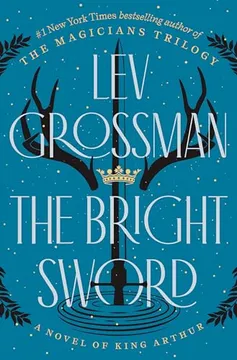


Plot Summary
The Chevron in the Grass
Seventeen-year-old Collum, an orphaned would-be knight from the island of Mull, defeats an older armored stranger in a field near Camelot. The man refuses to yield, then tries to stab Collum with a hidden knife. Collum kills him in the struggle. Shocked by what he has done, Collum buries the body beneath an ash tree rather than strip its armor, but takes an apple, dried meat, and a silver medal bearing a twisted staff.
The dead knight's shield carries three gold scepters and a chevron beneath hurried white paint. Collum rides on with the medal against his chest and the first certainty of his life giving way to dread: the man seemed to want death, and Collum may have given it to him.
The opening makes violence both Collum's proof of worth and the first moral problem he cannot solve by skill. He needs the victory to believe he can belong among Arthur's knights, yet the corpse exposes the danger of treating combat as a clean test of merit. His choice to bury the stranger, but keep the medal and food, holds compassion beside necessity. The shield's painted-over arms turn the dead knight into a mystery that Collum has literally carried away, making his ambition inseparable from an unresolved act.
The Woman at Two Moons
At an inn ten miles from Camelot, Collum meets a sharp-eyed woman with short auburn hair while he eats his first proper meal in days. She notices the medal and draws from him the story of the field, then suggests the dead knight sought death rather than victory. Collum also admits that he suspects the man wanted him to kill him.
The woman warns that Collum is already late and that a sword lies in the sea, but he cannot understand her meaning. When she abruptly leaves, he runs into the rain after her and finds himself trapped in a fairy ring, though he has barely moved from the inn. A huge one-handed drunk appears and says Collum is too late for Camelot. At dawn, the innkeeper's daughter remembers no auburn-haired woman.
The encounter unsettles Collum's habit of forcing the world into Christian certainty and familiar stories. The woman reads him more accurately than he reads himself, and her warning arrives as a puzzle rather than an instruction. His chase is less a romantic impulse than a sudden hunger to be noticed by someone who seems to see beyond his disguise. The fairy ring makes his inner uncertainty physical: he is already standing at a threshold between the story he wants and the stranger world actually waiting for him.
A Sword from Nothing
Collum's memories reveal why Camelot matters so much. His stepfather sends him to Lord Alasdair's household on Mull, where the promised knightly education never comes. Alasdair and his servants beat, starve, humiliate, and sexually abuse the motherless boy, who blames himself and sinks into despair.
The blacksmith's stories of the Round Table become his refuge. One day Collum seizes a wooden training sword from Alasdair's son and beats the other boys, drawing the attention of Marshal Aucassin, who teaches him the discipline of combat.
Years of practice make Collum a formidable fighter, but Alasdair eventually dismisses him. Collum steals Alasdair's armor and a horse, crosses to the mainland, and commits himself to reaching Camelot, the only future he can imagine.
Collum's longing for knighthood begins as a survival strategy. The Round Table offers an imagined world where strength does not have to serve an abuser and where fellowship might replace the isolation of Dubh Hall. Yet combat initially gives him something more immediate than justice: a field where his body can act before shame silences him. Aucassin's training converts that instinct into craft, but Collum still believes achievement will burn away his supposed unworthiness. His stolen armor makes that contradiction visible: he is already acting like a knight while convinced he has no right to be one.
Camelot Without Its King
Collum reaches Camelot expecting the center of Britain's glory, but the Great Hall holds only a handful of weary men. Sir Villiars attacks him when he insists on being judged for a place at the Round Table.
Sir Bedivere, the broad one-handed knight Collum recognizes from the inn, stops Villiars from stamping on him and offers him hospitality. Collum meets Sir Palomides, Sir Dinadan, and the tall Prince Constantine, then asks whether King Arthur is present.
Bedivere tells him Arthur died at Camlann, killed by his son Mordred after a revolt that began with Queen Guinevere's supposed affair with Sir Lancelot. Most of the Round Table died as well. Collum has arrived not at the beginning of a glorious career, but at the wreckage left after its end.
Camelot's grandeur survives, but its authority has drained away with Arthur. Collum's arrival reverses the promise that brought him south: the institution he hoped would remake him is itself grieving, divided, and unsure what it means. Bedivere's restrained disclosure contrasts with Villiars's violence, revealing that the remaining knights are not a unified heroic ideal but damaged people with competing accounts of the disaster. Collum's question about Arthur is therefore more than a request for information. He has come seeking a father-like source of order and learns that the figure is gone.
The Crown's Hidden Wound
Bedivere's memories reach back to Arthur's rise. As a young prince, Bedivere follows him after an unlikely boy draws the sword from a stone and is revealed as Uther's hidden son. Bedivere becomes Arthur's closest companion, though he loves him more deeply than Arthur can return.
Arthur defeats the Eleven Kings, drives back the Saxons, conquers the northern kingdoms, and binds Britain with Roman law and a new Round Table. Yet the king's confidence hides a wound: he knows Uther raped Igraine and that his own birth grew from that violence.
On a later adventure, Arthur fails to heal the suffering King Bran, then kills him at the king's request; the Waste Land blooms afterward. The episode leaves Arthur wondering whether serving God can also mean doing terrible harm.
Arthur's achievement is not presented as simple destiny. He makes a nation by learning quickly, exercising force, and replacing local cruelty with common law, but the foundations of his authority remain compromised by Uther's crimes and his own uncertain identity. Bedivere's love makes him both witness and interpreter, attentive to the private cost beneath public triumph. The Maimed King's release sharpens the book's central ethical difficulty: a merciful act can look like violence, and a restored land does not erase the suffering that preceded it. Arthur's greatness cannot resolve the moral debt of his inheritance.
The Green Knight's Price
Nimue, the king's adviser in magic, arrives at Camelot with news that King Rience is gathering forces to claim Britain. She supports Collum's proposal that the knights wait for a marvel before acting.
A forest opens inside the Great Hall, and the Green Knight rides through on a horse made of roots and branches, promising a secret to whoever defeats him. Sir Villiars takes the challenge, fights brilliantly, and is killed when the Green Knight breaks his knee and drives a blade through his neck.
Collum, feeling responsible for summoning the danger, challenges the stranger himself. He survives by trapping both swords in one hand and disarming his opponent with a schoolyard trick. The Green Knight reveals that another Round Table knight still lives and agrees to lead them to him.
Collum's first decisive act at Camelot is both courageous and reckless. His proposal reopens the possibility of wonder, but Villiars's death shows that wonder is not a harmless substitute for political power. When Collum fights, he wins not through knightly perfection but through an improvised trick learned from the rough world he came from. The victory is morally complicated: it saves him and earns the company's respect, yet cannot repay the life his idea cost. The Green Knight's promise redirects the survivors from mourning toward a quest, without assuring them that the quest will be just.
A Prince from Baghdad
Palomides's history begins in Baghdad, where he is a well-educated fourth son with no prospect of inheriting power. Curious about Britain, he travels west to see Arthur's kingdom and arrives expecting a less sophisticated world than his own.
During an outing with Camelot's ladies, he kills two men who threaten them and falls in love with Isolde the Beautiful, already married to King Mark and devoted to Sir Tristram. Palomides joins the Round Table, excels in combat, and takes up the endless hunt for the Questing Beast, Glatisant.
After Tristram defeats him, Palomides is baptized against his will. The knights later welcome him without mockery, and he contributes knowledge from Baghdad. Isolde and Tristram eventually die, leaving Palomides grieving and newly aware that he has spent years making their love story about himself.
Palomides's journey tests the difference between choosing a life and being chosen by a story. He leaves Baghdad to become a hero, only to find himself cast as an outsider and then as a comic rival in another couple's romance. His education and skill cannot make Isolde love him, and his conversion cannot simply replace one identity with another. The Round Table's welcome matters because it accepts him without requiring him to perform either exoticism or perfection. His later grief is not only romantic loss; it is recognition that desire can turn another person into an imagined prize.
The Last Knight's Trail
The Green Knight leads the party through the countryside. At Amesbury Abbey, the knights visit Guinevere, who has become a novice after Camlann. She refuses to provide a successor or endorse a new king, explaining that she is blamed for Arthur's fall and wants to tend to her own soul.
Soon Dinadan spots Sir Scipio tied naked across a horse between two men who claim he is a battlefield thief. Palomides defeats one captor in a deadly joust, and the company frees Scipio.
That night Bedivere admits Arthur survived the first hours after Camlann. He says he returned Excalibur to the sea, saw a woman's hand receive it, and watched a magical barge carry Arthur toward Avalon. A grave at Glastonbury nevertheless bore an inscription promising Arthur's return.
The survivors encounter two forms of uncertainty: Guinevere refuses the political role others want to assign her, while Bedivere cannot reconcile Arthur's departure with the grave that bears his name. Scipio's rescue shows the Round Table acting from principle even when it has few resources and no clear plan. Yet the deeper motive is not simply to locate a missing knight. Bedivere's account reopens hope that Arthur is alive, and hope becomes the fragile authority holding the company together. The story refuses to make that hope either a guarantee or a delusion.
A Crown in the Glass
A Cornish toll collector sends Collum into a strange garden where a well contains black ink. After he loses the others, he enters a tavern that unfolds into a raft on the Otherworld's river. Morgan le Fay appears as its queen and confirms that the missing knight is there.
Collum passes lost Roman soldiers and Sir Ganadal, who drowns while pursuing the Grail, before reaching a glass castle. The company has found Sir Kay, wandering in madness, and the fairies have made the knights drunk on enchanted food.
Morgan tells Collum how Uther took her family's land and erased its old culture, then claims the British throne as Arthur's closest living relative. Collum understands her grievance but refuses to support her rule. He fights off four fairy knights, rescues Kay, and sees wings and a crown in a mirror.
Morgan forces Collum to confront the cost of the Christian and Roman order he has idealized. Her story does not excuse every action she takes, but it makes the old kingdom's violence impossible to treat as a footnote. Collum's refusal is therefore not a clean moral victory. He chooses the political world that saved him from the one he left, while recognizing that its foundations harmed Morgan's family. The mirror's wings and crown complicate his certainty about who he is, but he still chooses responsibility over a claim to power he does not understand.
The Battle for Camelot
The party returns from the Otherworld to find King Rience's army attacking Camelot. Constantine has assembled a patchwork defense, and Nimue's destructive magic turns the battle when Camelot's line begins to collapse.
Collum fights in the press, killing several men and discovering that battle's exhilaration cannot protect him from what he has done. Rience's coalition breaks, though the king escapes. At the victory gathering, a boy named Melehan appears and claims the throne as Mordred's son, backed by an army waiting nearby.
The knights imprison him, only to learn he had been bluffing and wanted protection from the mobs hunting him. Collum tries to settle into Camelot, but the knights soon decide that his lies about his father and stolen armor make him a threat.
The battle gives Collum the test he has long imagined, then denies him the comfort of a simple answer. He fights effectively for Camelot, but the bodies left behind make his old belief in combat as a route to purification untenable. Nimue's magic saves the defenders while exacting a bodily and moral cost, echoing Arthur's use of force on a larger scale. Melehan's claim exposes the vacuum beneath victory: defeating one claimant does not create legitimate rule. The order Collum wants to preserve has no obvious heir and cannot be restored by courage alone.
Thrown Back into Life
The knights trick Collum into an armory and seal him inside a coffin, accusing him of lying about his parentage and conspiring with Morgan. They tip the coffin into Camelot's well. Collum breaks free underwater, discovers the well has become a passage to the sea, and washes ashore near Astolat.
Lord Numerius gives him work guarding a sacred fountain. Collum settles into the role, then is captured by a knight bearing a blue rooster and abandoned in a desert.
A black lion he rescues becomes his companion; after further captivity, a cursed ring, and a giant's castle, Collum wanders through repeated adventures and joins a mercenary company. Years later, he returns to the fountain and admits his broken oath. When he chooses to leave again, a silver shilling opens the well beneath it.
The coffin reenacts Collum's earliest experience of being discarded, but this time he fights his way out rather than accepting abandonment as proof that he deserves it. Astolat offers a safer identity, the dependable guardian who can serve without asking for belonging. His wandering turns that refuge into a cycle: rescues and captures repeat until he recognizes that passivity is also a choice. The shilling Nimue gave him becomes a literal fee for leaving his settled role. His return to the well marks a turn from being carried by events toward accepting the risk of choosing where he belongs.
The Medal Burns White
Collum emerges from the well in Camelot, where the knights welcome him back and properly knight him. Their decision about a successor remains unresolved. The medal from the dead knight suddenly burns and shines; Scipio identifies its twisted staff as a Roman centurion's insignia connected to Saint Longinus, whose spear pierced Christ.
Bedivere takes the light as a sign that the Round Table must seek the Holy Lance. Sir Kay, crushed by his return from the Otherworld and the loss of purpose, hangs himself.
The book's memories of Dagonet and Constantine's earlier Grail quest explain why the new mission terrifies the survivors: Galahad found the Grail, but only a few knights returned, and an angel declared that the relic was never meant to choose a king. Dagonet stole the angel's golden dagger rather than surrender it.
The medal turns an obscure death into the apparent beginning of a divinely authorized mission, but the earlier Grail story warns that a sacred object can demand more than it gives. Dagonet and Constantine's experience makes the new quest morally legible before it begins: divine approval is not the same as human safety, and success may not answer the political question. Kay's suicide is the cost of treating identity as inseparable from a dead order. The survivors choose the Lance anyway, partly from faith and partly because refusing the quest would mean accepting that no one will provide an answer.
The Champion at Hoxmead
On their journey, the company finds Lancelot at Hoxmead Abbey, where he has become a novice. He defeats every knight in a tournament before revealing himself, then refuses to return to Camelot or join the Lance quest.
Lancelot describes his first miracle, healing Sir Meliot's incurable wound, and the overwhelming certainty of God's love that followed. He says he spent his life trying to make himself perfect enough to feel that certainty again. He also explains that his earlier summons to Guinevere's chamber was sent by Mordred, not the queen.
Lancelot went there because he was in love with her, but she rejected him; Mordred's ambush turned the visit into an accusation of adultery. Lancelot still blames himself for killing the knights who came to arrest him and for the deaths that followed.
Lancelot's account reframes perfection as a response to an experience he cannot reproduce. His prowess is not simply pride or duty; it is an attempt to force a distant God to return the intimacy he once felt. The false accusation does not make him innocent of every consequence, since his own choices helped create the crisis, but it exposes how a persuasive story can harden into public truth. His refusal to leave the monastery is an attempt to stop using other people as instruments in his search for divine certainty.
Merlin Beneath the Hill
A Saxon hunting party attacks the knights during the night, and the next day Nimue recognizes the sulfurous smell of Merlin's burial mound. Merlin speaks from beneath the hill, mocks the survivors, and offers to make Collum a king if Nimue frees him.
His taunts expose their need, but Nimue refuses: she once learned magic as Merlin's apprentice, then escaped his attempted assault by calling on local spirits and trapping him in the realm of dreams beneath a falling star. She buried him in the hill.
Now she accepts one practical spell from him, a passage across Britain, but no bargain for his freedom. Her history explains why she distrusts power that calls itself indispensable. The spell opens a living arch between two trees and carries the company north.
Nimue's confrontation with Merlin is a struggle over who gets to define dependence. Merlin presents himself as the only person capable of repairing Britain, but his past conduct reveals that his offers of help are also methods of possession. Nimue accepts knowledge without surrendering authority, an important distinction in a world where every supernatural favor carries a price. Her refusal is not a denial of magic; it is a refusal to let skill become a claim over another person's body or future. The passage she obtains serves the quest without reopening Merlin's prison.
The Hunt Takes Palomides
The Wild Hunt pours through the knights' camp, carrying fairies, hounds, and their unwilling human prey. Morgan rides with the procession and confirms she has returned to Britain. She knows the company seeks Longinus's spear and says one of them must join the hunt because they have seen it. Palomides volunteers, then admits he is Uthman, a prince of Baghdad, rather than a native of the imaginary land Sarras.
He rides away on Glatisant, the Questing Beast he has pursued for years. Morgan also tells Bedivere that she saved Arthur from death and brought him to Avalon, though she will not say when he will recover. The knights continue north, now missing Palomides and facing the possibility that Morgan's claim will become a second war.
Palomides's departure completes a long movement from performing the role of foreign spectacle toward naming himself on his own terms. He chooses the Hunt rather than being taken by it, but the choice still costs the company one of its strongest fighters. Morgan's admission that Arthur is alive revives Bedivere's hope while deepening the conflict: the queen of the fairies has protected the king from the God he served. The Hunt turns the political question of succession into a supernatural contest, yet neither side offers a simple refuge from loss.
The Lance Breaks
Merlin's spell brings the survivors to a chapel high in the mountains, where Saint Longinus waits with the Holy Lance. He says the relic will reveal the rightful king. Before he can give it to them, Morgan arrives with Ysbaddaden, the giant, and an army of fairies.
Angels descend to defend the spear. Dagonet fights one of them with the golden dagger he stole on the Grail voyage, but the angel kills him. Palomides joins the fairy side of the battle, while Nimue's magic is suppressed and Bedivere falls unconscious.
A radiant woman reaches for the Lance, but Ysbaddaden strikes her down and snaps the relic in two. The angels leave, declaring the divine contest finished. Collum and the surviving knights gather Dagonet's body and find Longinus alive, but the promise of a new king is gone.
The battle strips away the comforting distinction between holy and monstrous. Angels kill, fairies fight for sovereignty, and humans are caught between powers that both claim the land. Dagonet's death makes the cost personal, while the broken Lance destroys the possibility that an artifact can settle Britain's future without human judgment. Morgan does not need to win outright; preventing God from winning is enough to change the political landscape. The survivors leave without a relic, a prophecy, or a clean account of who deserved to rule.
A False Galahad Reigns
After the survivors return to Camelot, they discover Lancelot wearing the crown under the name Galahad, his baptismal name. He has presented himself as the perfect knight returned from the dead and released Melehan, whom he has made king of Orkney. When Lancelot attacks the company, Guinevere steals a flying boat and lifts Bedivere, Nimue, Dinadan, and Collum from Camelot's parapet.
On the voyage, she tells them the truth about the chamber where Mordred accused her and Lancelot: she rejected Lancelot, who had entered her room by force to stage an apparent affair and provoke Mordred into a coup. She insists that her marriage to Arthur was real love, not the romance the kingdom later invented. Guinevere takes them to Avalon to find Arthur.
Lancelot's coronation exposes how easily a legend can be used as political machinery. The name Galahad lends him a ready-made aura of purity, even though the man beneath it is driven by an unresolved hunger for God's love. Guinevere's account challenges the story that destroyed Arthur's court, not by claiming that everyone acted blamelessly, but by restoring her agency to a narrative that made her a symbol of treachery. Her rescue turns that correction into action: she refuses both Lancelot's version of the past and his claim to rule the future.
The King Sleeps on Avalon
On Avalon, the company finds Arthur alive but gravely injured, sleeping in a tent beneath the care of Morgan and Palomides. Nimue attempts a powerful healing rite, but his shattered skull cannot be mended. Bedivere asks Morgan to let him see Arthur's dream.
In it, Arthur appears young and healthy, hunting a white stag with Bedivere and Guinevere beside him. He tells them that the hunt is his alone and urges them to pursue their own lives.
Before the dream ends, he recalls childhood visits from his half-sisters Morgan, Morgause, and Elaine; Morgan gave him their mother's coin and confessed her divided love for him. Arthur rides after the stag. Back in the tent, Bedivere and Guinevere cover his face. Arthur is dead, and Bedivere's missing hand has been restored.
Arthur's dream gives him a final agency that waking life denied him: he chooses to continue his own hunt rather than remain the object of others' devotion. His childhood memory complicates the opposition between Camelot and Morgan, showing that the king's family ties began before political enmity hardened them. Bedivere's restored hand is not a reward for victory; it arrives after he lets Arthur go. The scene ends the long suspension of hope without pretending that grief is cured. Arthur's companions can mourn him because they finally stop treating his return as their only future.
The Sword Below the Sea
As the company prepares to leave Avalon, Guinevere tells Collum that his mother was a flower-fairy and his father was Sir Bleoberys, the courtly knight he killed in the opening meadow. Bleoberys had left Camelot searching for his son and the woman he loved. Merlin then forces Guinevere's bronze caravel down toward the sea.
Collum dives with an anchor and reaches the ocean floor, where the Lady of the Lake waits with Excalibur. She says Arthur failed to fulfill the promise that had led her to lend him the sword, then plants it in a stone and challenges Collum to take it. Unable to pull it free, Collum uses the anchor to smash the rock. He rises from the depths carrying Excalibur, choosing to act without waiting for a prophecy to name him.
Collum's parentage does not grant him a clean inheritance. He learns that the stranger he killed was his father, and that the medal carried by the dead man helped lead the survivors toward a quest that ultimately failed. The revelation makes Collum responsible for a history he did not know, but it does not turn him into a hidden prince. His method of obtaining Excalibur matters: no divine inscription selects him, and no effortless miracle confirms his worth. He breaks the stone with an anchor, converting a test of pedigree into an act of chosen responsibility.
The Queen Takes the Sword
Collum comes ashore to find Lancelot holding Guinevere and the other survivors captive. Merlin calls him a false knight and uses magic to make Arondight shine, but Collum challenges Lancelot to prove his kingship against Excalibur. Their duel leaves Collum badly wounded and costs him part of two fingers.
He survives by abandoning formal swordplay, using the rough tactics of his childhood, then refusing to kill Lancelot after Guinevere stops him. Dinadan drives Arondight through Merlin's back. Rather than accept the crown, Collum gives Excalibur to Guinevere, and Bedivere kneels first.
The survivors sail toward Camelot, only to find the North Sea crowded with Saxon families fleeing floods and invasion. Years later, after Guinevere's son Bedivere rules a diminished Camelot, the last surviving Round Table knight, Dinadan, dies far from home.
Collum wins by accepting the parts of himself he once tried to erase: the fighter shaped by abuse, the lowborn man, and the person who can choose restraint after violence. He does not mistake victory for entitlement to rule. Giving Excalibur to Guinevere makes succession an act of political judgment rather than a test of male blood or supernatural approval. The Saxon migration immediately enlarges the problem beyond Camelot's rival claimants. The story ends with a fragile beginning, then jumps forward to Dinadan's solitary death, refusing the fantasy that one restored queen can stop history.
Epilogue
Guinevere's first journey toward Camelot reveals that the Saxons are arriving not only as warriors but as displaced families driven from their homes by rising seas and other conquerors. The new queen must decide how to meet people who have nowhere else to go, even as her weakened kingdom braces for conflict.
Years later, Camelot survives as the capital of a smaller realm under Bedivere, Guinevere's son. Dinadan, the last living knight of the Round Table, travels east alone and dies beneath an olive tree, watched by a tiny bird that seems to hold a spark of light. The old fellowship is gone, but its questions remain.
The final movement refuses to turn victory into restoration. Guinevere inherits a kingdom already transformed by invasion, migration, and the fading authority of the old powers. The Saxons are neither a simple enemy nor an abstract future; they are people fleeing danger, which makes the political response an ethical problem rather than a battle plan. Dinadan's death far from Camelot completes the passage from legendary fellowship to ordinary historical time. The small bird offers no prophecy, only a brief image of brightness in a dark world, preserving wonder without promising that wonder will save anyone.
Analysis
The Bright Sword treats Arthurian legend as an inheritance that is continually revised, not a stable past waiting to be recovered. Collum enters the story believing Camelot is a finished moral ideal, only to find that its order rests on conquest, compromised succession, and people who cannot agree about what their miracles mean. His own path from abused outsider to knight does not erase his past; it teaches him to act without needing a pedigree or divine certificate to make his choices legitimate.
The novel's supernatural conflict is also a conflict over cultural memory. Rome, Christianity, the old British gods, and Fairy all claim authority over the island, and each has helped shape it while also damaging or excluding someone. Morgan's grievance is real, but her vision of restoration cannot undo history. Merlin's claims to serve Britain conceal a hunger for control. Lancelot's pursuit of purity turns devotion into a force that can destroy the people it means to save. Against these grand systems, the survivors' most reliable acts are local and human: rescuing Scipio, listening to Guinevere, burying the dead, and refusing to let a symbol decide everything.
The book also questions the romance of heroic perfection. Arthur's dream of goodness makes him a great ruler, yet it leaves him unable to escape the sins of his father or his own failures. Collum wins not because he becomes flawless but because he accepts the rough, damaged person he is and chooses restraint when vengeance is possible. The ending does not promise a restored golden age. Guinevere must govern a transformed Britain, and the Saxons arrive as refugees as well as potential conquerors. History continues beyond the heroes' plans. The final image of Dinadan dying beneath an olive tree holds both sides of the book's question: people are made to desire brightness, but they must learn to live without certainty that the world will provide it.
Review Summary
Reviews for The Bright Sword are mixed, averaging 4.01/5. Many praise its fresh, modern take on Arthurian legend, highlighting rich characters, lyrical prose, and thoughtful exploration of queerness, mental illness, and identity. Fans of Grossman's previous work largely loved the focus on lesser-known knights and the post-Arthur setting. Critics found it overlong, overly episodic, and occasionally heavy-handed with contemporary themes. Pacing issues and dense flashback structures frustrated some readers, while others celebrated these same elements as true to the source material's tradition.
People Also Read




Characters
Collum
The unmade knightA strong, quick young man from Mull, Collum has been taught by neglect and abuse to assume that he is unworthy of affection or status. He wants knighthood partly for its adventure, but more deeply because Camelot seems to promise a home where strength can serve something honorable. His skill with weapons gives him confidence, while his bluntness, hunger, and poor manners mark the distance between his upbringing and courtly ideals. Collum is also capable of compassion, though he often recognizes it only after acting. His central struggle is to stop treating other people's judgments as the truth about him and to decide what responsibility means when neither blood nor prophecy guarantees his place.
Sir Bedivere
Arthur's steadfast companionA broad, disciplined knight born without his left hand, Bedivere builds his life around service to Arthur. He is practical, dryly humorous, and accustomed to carrying grief without asking anyone to notice. His love for Arthur is profound but unspoken, shaped by the knowledge that loyalty can be both an act of devotion and a way of avoiding his own desires. Bedivere often becomes the group's moral and logistical center, even when he doubts that he has the authority to lead. His steadiness is not the same as certainty: he wrestles with faith, responsibility, and the fear that his lifelong service may not be enough to protect the people he loves.
Nimue
The Christian enchantressNimue is Camelot's young adviser on magic, quick-minded and difficult to intimidate. Her practical command of spells and local spirits makes her indispensable, but she does not confuse competence with trust. She maintains her Christian faith while negotiating with powers that the church condemns, and she resists the idea that magic must require submission to a master. Nimue's precision can make her seem cold, especially when others want comfort rather than an answer. Beneath that reserve is a person who knows how easily dependence can become coercion. She is drawn to people who show their wounds honestly and is wary of those who call control protection.
Queen Guinevere
The clear-eyed queenGuinevere is politically astute, observant, and more practical than the romantic stories told about her. Her marriage to Arthur begins as a political alliance, but she comes to love him and understands the loneliness beneath his public brilliance. She can read a room without surrendering her own judgment, and she knows that women at court often exercise power indirectly because formal authority is denied them. Guinevere is neither a saint nor a helpless symbol. She is capable of anger, humor, and loyalty, and she dislikes being made responsible for events that men have chosen to narrate around her. Her political intelligence is matched by a fierce understanding of how stories shape reputations.
Lancelot
The perfecting championThe most celebrated fighter of the Round Table, Lancelot is disciplined, handsome, and almost unnervingly composed. His reputation rests on exceptional skill, but he is not simply a warrior who enjoys winning. He is driven by an intense spiritual hunger and by the belief that perfection might secure a lasting relationship with God. That discipline gives him extraordinary control over his body and emotions, though it can also make him difficult for others to read. Lancelot's kindness and courtesy are real, but they coexist with an uncompromising view of sin and duty. His connection to Arthur is both affectionate and politically charged, and his ideas about what Britain should become remain deeply consequential.
King Arthur
The burdened high kingArthur is a brilliant ruler who unites Britain's divided kingdoms through military force, law, and personal charisma. Raised without knowing his royal identity, he understands how easily appearances can deceive, yet he is never entirely sure that his own authority is legitimate. His desire to be good and to serve God is bound up with a longing for paternal approval. Arthur can be tender with individuals and ruthless when governing, a combination that makes him both beloved and feared. He is curious about the world and drawn to marvels, but he also sees the danger in treating perfection as a political necessity. His reign carries the tension between building a common nation and erasing the differences that already live within it.
Morgan le Fay
The dispossessed fairy queenMorgan is a powerful enchantress shaped by the violent displacement of her family and the suppression of Cornwall's older culture. She is clever, theatrical, and often funny, but her humor can turn sharp when people dismiss the history behind her anger. Morgan values the living land and its spirits, and she sees Christian rule as part of a conquest that took more than territory. Her motives are not reducible to revenge: she wants a future in which the old powers and peoples are not erased. Yet she can treat individuals as pieces in a larger struggle. Her relationship with Arthur is intimate and conflicted, marked by kinship, resentment, and a refusal to let others define what their family history means.
Sir Palomides
The searching outsiderPalomides is a prince and scholar from Baghdad who leaves an expansive, sophisticated home to discover Britain and become part of its most famous fellowship. The British call him a Saracen and imagine a homeland for him that does not exist, but he adapts without surrendering his wit or discernment. He is an accomplished horseman and fighter, intellectually curious, and vulnerable to grand romantic ideas. His long pursuit of Isolde and the Questing Beast reflects a deeper search for purpose, belonging, and a story in which he can be more than a supporting figure. Palomides brings knowledge of other cultures to Camelot and sees the kingdom's provincial limits even while becoming attached to it.
Sir Dinadan
The guarded witDinadan is a perceptive, fast-talking knight whose jokes often expose what the others are trying not to say. He is an accomplished fighter with an unusual, fluid style and a remarkable gift for seeing at a distance. His humor serves as armor against grief and against the pressure to perform conventional chivalry. Dinadan is private about his body and personal life, and he resists being turned into a curiosity by people who believe they know him. Beneath his irreverence is a careful observer of power, especially the ways institutions use shame to enforce obedience. His loyalty is genuine, though he dislikes ceremony and distrusts grand explanations.
Sir Scipio
The stranded Roman officerScipio is a hard-edged, disciplined soldier whose identity is built around Roman order. He keeps his equipment immaculate even when his troops lack basic supplies, and he approaches danger with the blunt confidence of an officer used to giving commands. His loyalty to empire makes him resistant to the Round Table's ideals, but he is also a capable fighter and a reliable ally when others are in danger. Scipio carries the habits of a vanished world into Britain's uncertain present. His immaculate bearing conceals a stubborn attachment to the people and institutions he believes he serves.
Sir Constantine
The reluctant princeA prince of Cornwall, Constantine is elegant, very tall, and known for his elaborate clothes and conspicuous stutter. He is more thoughtful and capable than people assume, but his father's expectations have left him uncertain about whether he wants power or merely wants to escape its demands. Arthur becomes an important father figure to him, and the Round Table offers a kind of belonging his family cannot provide. Constantine is gentle without being passive, and he can act decisively when a crisis demands it. His humor often softens the discomfort of being underestimated.
Merlin
The indispensable wizardMerlin is a centuries-old magician who survives regime changes by making himself useful to whoever holds power. He presents himself as a servant of Britain, and his strategic intelligence has shaped the kingdom's history, but his loyalty is inseparable from his desire to remain influential. Merlin is theatrical, manipulative, and confident that he understands other people better than they understand themselves. He uses knowledge as leverage and often treats students or rulers as instruments in a plan whose full purpose he withholds. His relationship with Nimue reveals the personal cost of his belief that being indispensable gives him the right to control others.
Sir Galahad
The immaculate Grail knightGalahad is a startlingly young, beautiful knight whose arrival at Camelot seems to reorder the entire court around him. He is physically formidable and unusually free of the worldly desires that complicate other knights' lives. His calmness can look like humility, but it also makes him difficult to know as an ordinary person. Galahad performs miraculous feats with little visible elation, as though he is carrying out a task rather than pursuing a personal ambition. His place in the stories of the Grail shapes the expectations placed on the older knights.
Sir Dagonet
The haunted fool-knightDagonet is a former traveling performer whose deadpan manner made him a favorite at Arthur's court. He approaches the world with suspicion and often sees disaster beneath the pageantry that others call miraculous. Juggling gives him a rare sense of order, a physical pattern he can control when his moods and fears cannot be managed. His low status among the knights does not make him stupid; it makes him unusually alert to the cost of being treated as comic relief. Dagonet's wit is often a defense, but his loyalty to the company runs deeper than his cynicism suggests.
Sir Melehan
Mordred's wary heirMelehan is the young son of Mordred, raised amid political danger and the knowledge that his father's name inspires hatred. He is poised enough to make a dramatic claim to Britain's throne, but his confidence masks the vulnerability of a child with few trustworthy protectors. Melehan is quick-witted and observant, and he understands that a claim can be both a weapon and a shield. His presence forces the older knights to confront the consequences of Arthur's family history.
Isolde
The desired queenIsolde is a princess known for her beauty and her sharp sense of humor. She is married to King Mark and deeply attached to Tristram, while Palomides reads her attention as a promise that she never makes. Isolde is not merely the object of a knight's romance: she has her own loyalties and navigates a court that treats women's marriages as political arrangements. Her presence reveals how easily a man's imagined story can obscure the person he claims to love.
Sir Tristram
Isolde's devoted knightTristram is a celebrated knight from Lyonesse and the beloved of Isolde. He is skilled, generous, and notably unwilling to answer Palomides's despair with cruelty, even when challenged to a fight. His decency can frustrate those who want him to play the villain in their private dramas. Tristram's relationship with Isolde is one of the great romances of the court, but the story also reveals the danger of treating romance as a complete account of either person's life.
Sir Bleoberys
The courtly wandererBleoberys is a Frankish knight remembered by Bedivere as courtly, sentimental, and unusually soft-hearted for a warrior. He carries old-fashioned arms and has spent a long time away from the center of Camelot. His reputation suggests a man whose manners conceal a private sorrow, though he does not explain it to the people he meets. He represents a form of chivalry gentler than the fame attached to the Round Table's strongest fighters.
Lord Alasdair
The cruel island lordAlasdair is a landowner on Mull whose debts and wounded pride make him cruel to the boy placed in his household. He uses the language of rank and obligation to disguise his failures of care. His authority is local and petty, but for Collum it shapes the first years of life and the first meaning of power.
The Lady of the Lake
Keeper of the swordThe Lady of the Lake is an ancient power associated with the waters and the making of Excalibur. She is wary of Christian kings and remembers promises made to her by people who later failed to honor them. Her manner is direct, even brusque, and she does not treat a famous sword as a simple gift. The Lady expects anyone who seeks the blade to prove what they intend to do with it.
Ystradel
The old-world princessYstradel is the daughter of King Bran and a keeper of Cornwall's pre-Roman traditions. She is composed, intelligent, and unwilling to flatter Christian rulers who have harmed her family and land. Her account of the Maimed King's history gives Arthur a perspective he cannot acquire from his own court. Ystradel speaks with the authority of someone whose culture has survived by refusing to disappear.
Elidir
The wounded land's heirElidir is Ystradel's brother and the heir to King Bran's kingdom. He is blunt about the cost of Arthur's intervention and distrusts the claim that Christian rule naturally means justice. His anger comes from watching his family and country bear the consequences of another ruler's choices.
King Bran
The maimed pagan kingBran is an old pagan king whose attempt to wield the Holy Lance leaves him gravely wounded and his kingdom barren. His condition becomes the center of a test Arthur cannot solve through ordinary courage or virtue. Bran's suffering forces the knights to consider whether a king's duty is to preserve life at any cost or to release a person from pain.
Plot Devices
The Round Table
A circle of shared ruleArthur's Round Table is both an elite fellowship and a tool of government. It gives Britain a common body of knights who travel beyond court to enforce law and encounter marvels, then return to report their deeds. Its circular form suggests equality, but its membership remains shaped by rank, reputation, and the king's approval. After Arthur's death, the Table becomes a small remnant trying to preserve the order that once made it powerful. Its survival depends less on the furniture or ritual than on whether its members can act together without a king to settle their disagreements.
Swords and stones
A test of rightful ruleThe sword in the stone establishes Arthur as king when no ordinary political settlement can prevent civil war. Excalibur, given to him by the Lady of the Lake, is a separate sword tied to an older and more ambiguous power. Across the story, weapons and stones promise to make sovereignty visible, but they do not remove the responsibility of choosing what kind of ruler Britain needs. The later sword test challenges Collum without an inscription or guarantee. His solution makes the old symbol serve a new age, where action matters more than inherited certainty.
The Longinus medal
A relic that redirects the questThe silver medal Collum takes from the dead knight bears a twisted staff associated with a Roman centurion. When it later burns with light, the survivors connect it to Saint Longinus and the Holy Lance. The token transforms an obscure killing into the apparent beginning of a divine mission and gives Bedivere a reason to keep fighting after Arthur's death. Its promise proves unreliable as a political guide: the Lance is destroyed before it can identify a successor. The medal's importance lies in how the survivors interpret it and in the actions that interpretation sets in motion.
The Otherworld
A mirror beyond the borderThe Otherworld is reached through thresholds that may look like an inn, a garden, a river, or a well. Time and direction behave unpredictably there, and food, bargains, and encounters can trap travelers in stories that are not theirs. It contains lost Romans, unfinished quests, fairy courts, and places that answer to powers other than Camelot. The realm makes Britain's supernatural history physically present, but it does not offer a clean alternative to human politics. Collum's journey through it reveals that the old powers have their own claims, grievances, and limits.
Miracles and quests
Tests with human costsThe marvels that draw Arthur's knights into adventures often appear to promise proof of virtue or divine favor. The Grail, the Green Knight, the Maimed King's curse, and the Holy Lance each test what the knights believe about worthiness. Yet success can bring loss, and supernatural signs do not always explain what the living should do next. The quests expose the danger of treating perfection as a condition for love, authority, or belonging. By the end, the survivors must act without waiting for a miracle to settle their political and moral disputes.

Download PDF
Download EPUB
.epub digital book format is ideal for reading ebooks on phones, tablets, and e-readers.








