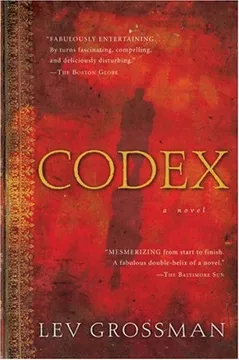


Plot Summary
The Earring and the Library
At twenty-five, Edward Wozny has built his life around investment banking and is about to transfer from New York to London. On his first vacation in four years, he stops to help a striking woman search for an earring and crushes it beneath his shoe. She accepts the ruined trinket with unexpected delight, then leaves in a limousine with her husband, Peter Went.
Edward continues to the Wents' apartment, where their employee Laura Crowlyk explains that an old family library has sat unopened in crates for decades. The job is to unpack and catalog it. Edward means to refuse, but the prospect of an unstructured afternoon and the Wents' enormous account keeps him from walking away.
Edward's first break from work does not feel like freedom. Without a schedule, he cannot decide what he wants, so the library's assigned task gives his empty vacation a ready-made purpose. The crushed earring is a small accident that draws him into the Wents' private world before he understands who the woman is. His decision to stay is less a sudden love of books than a first, hesitant refusal to return immediately to the professional machinery that has defined him.
The Locked Black Book
Laura leads Edward up a narrow spiral staircase into a cavernous, chilled library. Its crates have been untouched since the Wents shipped them from England before the Second World War. Edward opens one and finds old novels, reference works, and books in varied states of decay, then loses hours carefully unpacking them.
At the bottom of the crate he discovers a case holding a massive, ornamented volume secured by a rusted lock. The object grips his attention, but he cannot open it and knows nothing about its contents. Laura leaves him a cataloging manual, a laptop, and the name of a medieval author, Gervase of Langford, whose books the Duchess wants him to watch for. Edward returns the next day.
The library gives Edward a kind of attention his financial work does not: a task whose value lies in patient contact with particular objects, not in speed or profit. Yet the locked volume immediately turns cataloging into a mystery. The sealed book also gives physical form to the gap between knowing that something exists and knowing what it means. Edward is not yet a scholar or an investigator; he is simply curious enough to return, which is how the collection begins to alter his priorities.
The Game Beneath Reality
Edward's college friend Zeph gives him an unnamed computer game called MOMUS, and Edward installs it alone at home. Its landscape looks uncannily real: he wanders through trees, falls from a cliff, dies, and reappears at the starting point. When he returns to the game, the bridge has collapsed and the landscape has aged, as if time has continued while he slept.
Edward is already primed to seek a different kind of mastery. As a boy in Maine, he was a chess prodigy until puberty took his effortless skill away; later he tried to recover that feeling through school and banking. Exhausted by work, he finds MOMUS harder to leave than he expected.
The game offers Edward a substitute for the childhood certainty he lost when chess stopped making him exceptional. Its world appears to reward attention with visible consequences, while the adult world has rewarded him chiefly with more work. The strange passage of time unsettles him, but it also makes the game feel more consequential than an ordinary diversion. His fascination is therefore not simply technological. He is testing whether a designed world can offer the clarity, agency, and surprise that his carefully optimized life has drained away.
Margaret's Medieval Doubt
At the Chenoweth Rare Book and Manuscript Repository, Edward finds Margaret Napier studying a copy of Gervase of Langford's Chronicle. She reluctantly gives him fifteen minutes with it, then explains why the Duchess's requested book, A Viage to the Contree of the Cimmerians, is generally considered an eighteenth-century fabrication.
Edward hires Margaret as a consultant anyway. Over coffee, she sketches Gervase's life and the Viage's strange romance: a knight pursues a stag-headed challenger toward a sacred Rose Chapel, loses his family, and wanders through cycles of violence before reaching the bleak, twilight land of Cimmeria. The account ends without explaining the dark canyon where the knights vanish. Edward leaves wanting to know more.
Margaret's expertise does not simply supply facts; it challenges the terms of Edward's curiosity. She can distinguish a manuscript's physical evidence from later speculation, while he is drawn to the possibility that an impossible story might be true. Her detailed account makes the Viage compelling even as she argues against its authenticity. The contrast begins their partnership: Edward is willing to follow an intuition without proof, while Margaret trusts disciplined skepticism, though the book has already exposed a question she cannot dismiss.
The Key in the Dark
Margaret visits the Wents' library and recognizes that its uncataloged books may contain evidence about Gervase. Laura soon tells Edward that Peter has ordered all work stopped. As they leave, Margaret secretly exchanges the apartment key for a look-alike bicycle key, arguing that the collection might be sold or dismantled if they abandon it.
Edward warns her that the risk could damage his career, but finally agrees not to expose her. That night he joins Zeph at a multiplayer gaming party. In MOMUS, he is killed repeatedly, then breaks through a forbidden doorway into a peaceful landscape and begins to cry. The game makes his neglected life feel suddenly urgent, and he resolves to keep pursuing the Wents' library.
Edward's complicity begins not with a grand declaration but with a counterfeit key. He knows the choice is professionally reckless, yet the thought of returning to a life built around career advancement no longer feels like safety. The gaming party intensifies this conflict: virtual death is immediate and repeatable, while Edward's real choices have consequences he cannot reset. Margaret's willingness to risk access for the books also gives his vague dissatisfaction a concrete object and a companion, making it easier for him to act.
The Missing Twelfth Crate
Edward returns to the apartment and discovers Margaret has opened most of the crates. She finds fragments of a rare poem and begins examining the locked volume, but breaking its corroded clasp reveals only a hollow shell with colored traces along the page edges. They search Laura's paper-filled office for a shipping record.
A 1939 bill of lading lists twelve crates, although only eleven remain in the library. A letter from the former Duke says the family donated materials to the Chenoweth in 1941 and expected a special room to be built for them. Margaret reasons that the library may have hidden the donation in its overflow storage. She and Edward decide to travel to the Chenoweth Annex in Old Forge.
The mystery shifts from interpreting a text to reconstructing its material history. A missing crate, an old letter, and a delayed building project become more useful than speculation about what Gervase intended. The archive's bureaucratic disorder is not incidental: it creates a plausible hiding place for valuable objects without requiring a conspiratorial mastermind. Margaret and Edward also begin to trust each other's different abilities. Her bibliographic method identifies the trail; his willingness to pursue it turns records into action.
The Empty Cruttenden Case
Edward and Margaret drive north while she explains why the Viage's language might preserve traces of a medieval source. At the Annex, Margaret uses her former staff access to get them into the storage areas after closing. They search the uncataloged holdings, then break into a fenced junk space and find a large suitcase labeled for Cruttenden, the name on the original shipment.
Inside are books, but none matches Gervase's work. The codex is absent. Margaret lashes out at the empty case, then collapses in tears. Edward holds her until they kiss. They spend the night in the vault and escape at seven in the morning, carrying only a rare book Margaret has chosen to protect.
The failed search exposes the cost of treating scholarship as a puzzle with a guaranteed solution. Margaret's anger is not merely frustration over lost prestige; she has attached her stalled dissertation and her sense of intellectual purpose to the hope that Gervase can finally be understood. Edward's comfort becomes intimate because he stays after the practical objective has failed. Their closeness does not resolve the mystery, but it changes the search from a paid assignment into a shared emotional risk.
Cimmeria Calls Again
Back in New York, Edward develops a cold and postpones his London job. While feverish and increasingly absorbed in MOMUS, he watches the game accelerate through changing ages until New York lies under snow and ice. He cannot reach Margaret, who has withdrawn after their night in the Annex.
Blanche Went eventually calls and renews her request to find Gervase, asking Edward to keep the search from Peter. She later sends a curious, dreamlike letter that casts their real-life meeting as a romantic story and suggests that scattered pages must be put back in order. Edward is unsure whether it is a coded message, a fantasy, or evidence of Blanche's instability, but he cannot dismiss her appeal.
The game and the manuscript increasingly share a vocabulary of lost time, ruined landscapes, and worlds assembled from fragments. Edward's fever makes the boundary between distraction and investigation less stable, while Blanche's letter deliberately blurs private desire with literary form. Her secrecy binds him more tightly to the Wents even as it deprives him of reliable information. The episode also leaves Margaret's silence unresolved, revealing Edward's dependence on a partnership he had treated as temporary when it suited him.
The Duke's Countermove
At breakfast, Edward's former classmate Joe Fabrikant reveals that Peter has discussed the search and threatened to destroy the book if it surfaces. The next morning, Fabrikant brings Nick Harris, the man taking Edward's London position, and a lawyerly associate. They claim Blanche believes the codex contains a hidden message that could damage Peter, and portray her as unstable.
Nick asks Edward to stop communicating with her, then admits the Duke arranged Edward's London appointment. The meeting makes the job itself another lever in the family struggle. Edward promises not to contact Blanche, while privately recognizing that the warning has raised more questions than it answered.
The financial world Edward thought he had left returns as a system of leverage, reputation, and concealed allegiance. Nick's revelation that Peter arranged the London transfer collapses the apparent boundary between Edward's career and the Went family conflict. Fabrikant, meanwhile, is neither a clean ally nor simply an adversary; his business dependence on the Duke compromises him even as he tries to warn Edward. The scene reframes the codex as a political object whose value may lie less in rarity than in the power of its contents.
Alberto's Hidden World
Zeph sees that Edward's MOMUS game has entered an unusually elaborate frozen-world scenario and sends him to Alberto Hidalgo, a programming prodigy Edward knows as the Artiste. Alberto explains that Edward has stumbled into an Easter egg, a secret environment embedded in the game. He built it for Blanche and modeled its climate and landscapes in painstaking detail.
He also says he found the codex but chose not to tell her where it was, fearing what Peter might do if she used it against him. Alberto refuses to reveal the location. His clues about the virtual Went library, a bee, and the game's name lead Edward to suspect that the codex is hidden in the collection itself.
Alberto turns the game's apparent randomness into authored design, but refuses the comforting role of an all-knowing guide. His secret world was an attempt to communicate with Blanche, and its beauty carries the awkwardness of affection that was never delivered. He also provides the first credible confirmation that the codex exists, while withholding the answer Edward wants. The parallel between a hidden game level and a hidden manuscript makes discovery depend on noticing patterns across media rather than simply searching harder.
Codex Leaves Reassembled
Edward returns to the Wents' apartment and finds Margaret back at work. He tells her Alberto's clues, and they realize that the strange markings on books from the missing shipment may be instructions for reassembling Gervase's manuscript. One massive volume from the shelf named for Sir Urre contains parchment beneath its binding.
Edward and Margaret carry the relevant books to her Brooklyn apartment, where she carefully separates their covers and extracts the hidden leaves. The pages form a damaged but genuine medieval codex, written on fine vellum and decorated with costly pigments. Margaret notices erased writing beneath the text, making the manuscript a palimpsest. She then deciphers the illuminated initials as a second narrative.
The discovery depends on taking preservation's opposite seriously. The codex survived because later binders treated old writing as reusable material, not because anyone recognized it as priceless. Margaret's conservation expertise now requires her to damage newer books in order to recover older pages, a morally complicated act that reverses her usual vocation. Edward's contribution is not scholarly mastery but the willingness to connect Alberto's clue to Margaret's knowledge. Their collaboration finally makes the manuscript legible as both object and evidence.
Gervase's Dangerous Message
Margaret arranges the manuscript's decorated initials into a concealed sentence asking that a child be kept from harm. When she reorders the pages accordingly, the pictures form a continuous sequence: Gervase serves a noble couple, grows close to the woman, and later appears with her and a red-haired child. The images imply that Gervase fathered the Duchess's son while the child was raised as Peter's heir.
Margaret sees the revelation as the key to Gervase's sorrow and his romance, but Edward understands it could be used against the Duke. As Margaret explains the Viage's ending, its knight reaches the Rose Chapel and relinquishes his longing for home. Edward leaves the pages with Margaret and takes the empty binding case.
The cipher transforms an academic dispute into a family secret, but its evidence is visual and inferential rather than a plain confession. Margaret reads the images as a breakthrough in Gervase's emotional life; Edward sees the same sequence as ammunition in a living conflict. Their interpretations show how scholarship cannot control the uses to which knowledge is put. The Rose Chapel's ending sharpens the contrast: Gervase finds peace by relinquishing earthly attachments, while Edward is about to carry the consequences of a discovery he cannot fully own.
Across the Atlantic
Blanche sends Edward a last-minute ticket to England, and he leaves Margaret with the recovered pages, promising future support while concealing how little control he has. On the plane, he returns to MOMUS and follows Alberto's instructions, defeating the aliens and restoring the sun.
The game continues until Edward abandons the search for another objective and finds himself in a snowy Maine landscape from childhood, waiting for a school closure. At Heathrow, he sees Margaret with Peter, who carries her bag as they leave together through a separate passage. Edward tries to call her back but cannot reach her. He goes on alone, carrying the codex's empty binding case rather than its pages.
Edward's departure is a choice made under competing forms of longing. He wants entry into Blanche's world and a chance to escape the career he has outgrown, yet leaves the person who helped make the discovery possible. His final game sequence refuses a simple victory condition: restoring the sun is not enough, and the most compelling reward is a return to a childhood wish. Seeing Margaret beside Peter then punctures Edward's expectation that arrival in England will settle anything. The empty case makes his apparent possession a fragile fiction.
Weymarshe at Dawn
After an overnight drive across the English countryside, Edward reaches Weymarshe at dawn. Blanche is waiting with luggage and is visibly drunk. She tells him his arrival has exposed her and Laura to danger, strikes him, and says she is leaving rather than continuing their contest with Peter. Edward refuses to follow and watches her limousine depart.
When he opens the case, it contains stacks of cash instead of the manuscript, about half a million dollars. He cannot know exactly whose settlement the money represents. Alone on the cold steps, Edward considers returning to his banking job. The codex has changed his life, but it has not given him the escape or certainty he expected.
The final reversal strips the quest of its promised reward. Edward arrives at the estate expecting a decisive audience, only to find Blanche already in retreat and the case converted into money. Wealth can close an account, but it cannot restore trust or make his choices reversible. His return toward banking is not presented as a triumphant homecoming; it is a provisional recognition that ordinary life remains after the fantasy has failed. The ending leaves the manuscript's fate elsewhere, beyond Edward's control.
Analysis
Codex makes the act of reading inseparable from the desire to escape. Edward begins as a man whose talents have been converted into professional utility: his chess gift is gone, his banking skills are profitable, and even his vacation has to be justified. The Wents' library interrupts that system with objects that resist speed. Their books demand touch, patience, and interpretation, while MOMUS offers a more seductive alternative: an apparently responsive world that seems to have been made for him.
The novel does not simply oppose books to computers. Both the codex and the game contain hidden structures, and both reward people who can recognize patterns. Their difference lies in the human relationships behind them. Alberto builds a world for Blanche but cannot deliver its meaning directly. Gervase's concealed images preserve a family history that later readers can interpret but cannot safely control. Edward discovers that access to information is not the same as understanding what it will do to people.
Margaret and Edward embody competing forms of attention. Margaret knows how to preserve evidence, yet her devotion risks turning historical uncertainty into personal certainty. Edward can read incentives, but repeatedly mistakes proximity to wealth for influence over it. Their intimacy grows through shared labor, then strains when Edward chooses Blanche's invitation over Margaret's claim to the manuscript. Neither romance nor scholarship offers a clean escape from consequence.
The final retreat toward banking is deliberately unresolved. Edward has seen a life beyond his career, but the adventure does not replace ordinary life with a better-designed one. Blanche leaves, Margaret keeps the manuscript pages, and Edward sits with money that cannot explain what happened. The book's central caution is not that escape is foolish. It is that every imagined refuge has an author, a cost, and other people inside it.
Review Summary
Codex received mixed reviews, with an average rating of 3.04 out of 5. Many readers found the premise intriguing but were disappointed by the underdeveloped characters and unsatisfying ending. The book's strengths include its atmospheric writing and exploration of medieval literature. However, critics felt the plot lacked momentum and coherence, particularly regarding the video game subplot. Some appreciated the novel's literary elements, while others found it pretentious. Overall, readers were divided on whether the book's interesting concepts outweighed its flaws.
People Also Read


Characters
Edward Wozny
Restless banker in exileEdward is a young investment banker whose disciplined rise has left little room for interests he cannot monetize. Raised in Maine, he was once a gifted chess player, and the sudden loss of that talent taught him to distrust forms of excellence that cannot be held by effort alone. His father's death and his estrangement from his mother deepen his preference for stability, while long hours at work conceal how little he knows about himself outside it. He is observant, socially capable, and skilled at reading financial incentives, but he often mistakes control for safety. The Wents' books and Margaret's scholarship draw him toward a less predictable life, where curiosity and responsibility compete with ambition.
Margaret Napier
Unyielding medievalistMargaret is a Columbia medievalist whose knowledge of manuscripts is matched by exacting habits and a fiercely guarded emotional life. Home-schooled in a strict Christian household, she turned toward academic study as a form of independence after her father's death. She is blunt with Edward because she has little patience for displays of competence unsupported by knowledge, yet her apparent detachment conceals deep investment in what books preserve. Her research on Gervase has become both vocation and source of frustration: she senses that the historical record leaves something unresolved. Margaret's strength lies in sustained attention, though that same intensity can make scholarly questions feel personally urgent.
Blanche Went
Enigmatic duchessBlanche Went, Duchess of Bowmry, is the elegant woman Edward first encounters on the street. An English aristocrat with a playful, mercurial manner, she can charm a stranger into intimacy and then abruptly reassert the authority of her position. She is accustomed to inherited privilege, but her isolation from ordinary life makes her requests feel at once commanding and vulnerable. Blanche is drawn to stories, people, and projects that promise a way beyond the confines of Weymarshe. Her relationship with Edward begins with a small, accidental kindness, and she treats his willingness to help as evidence of a trust neither of them has yet earned.
Peter Went
Watchful English dukePeter Went is Blanche's husband and the Duke of Bowmry, a wealthy, private aristocrat whose influence reaches across family business and Edward's professional life. He appears first beside Blanche, composed and distant while she turns a public mishap into an occasion for amusement. Others describe him as polished, difficult to read, and accustomed to command. His health and long absences contribute to the mystery surrounding the Wents, while his position makes even an indirect instruction consequential. Peter represents a world in which family history, money, and reputation are closely guarded assets, and where outsiders may discover that their choices were shaped by powers they did not see.
Laura Crowlyk
Weymarshe's American agentLaura manages the Wents' New York household and serves as Blanche's intermediary. She is intelligent, guarded, and often dryly funny, but her attachment to England makes her ambitions personal as well as professional. Laura knows the apartment, its papers, and the family arrangements far better than Edward does, and she can shift from bureaucratic reserve to sudden warmth. Her friendship with Blanche reaches back to school, giving her insight into the Duchess that the Wents' employees do not share. She treats the library as a task with consequences, even when the family itself appears to have lost interest.
Zeph
Edward's unruly friendZeph is Edward's college friend, a huge, easygoing computer enthusiast who has remained close despite their different careers. He is playful, technically adept, and more comfortable in geek communities than Edward, whom he teases for taking himself too seriously. Zeph introduces Edward to MOMUS and understands its culture well enough to recognize when Edward is lost inside the game. Beneath the jokes, he pays attention to his friend's drift from ordinary life and tries to intervene without turning friendship into a lecture. His home with Caroline offers Edward a model of intimacy not organized around work.
Caroline
Zeph's perceptive partnerCaroline is Zeph's partner and a former colleague of Alberto's. Small, quick-witted, and technically capable, she balances Zeph's exuberance with a more practical reading of people and situations. She helps draw Edward into the social world around MOMUS and later notices how casually he is treating his move to London. Her concern is direct but not controlling; she and Zeph offer help with packing while leaving Edward room to make his own choices. Caroline's warmth and intelligence make their home feel like a counterpoint to Edward's solitary apartment and corporate routine.
Alberto Hidalgo, the Artiste
Programmer in the marginsAlberto is a small, socially literal programming prodigy whom Zeph and Caroline call the Artiste. He moves easily through systems and code, though ordinary conversation can leave him uncertain about other people's intentions. His work ranges from commercial software to complex simulations, and he has a talent for turning technical structures into expressive worlds. Alberto's connection to the Wents' computer systems and his involvement with MOMUS place him at the border between Edward's digital distraction and the manuscript mystery. He prefers to be judged by what he builds, not by how smoothly he navigates social expectations.
Joe Fabrikant
Ambitious college peerJoe Fabrikant is Edward's handsome former classmate and a successful young entrepreneur building the technology company InTech. He moves comfortably among powerful clients and knows how to use personal connections to obtain information. His dealings with the Wents give him access to details Edward lacks, but business pressures complicate his loyalties. Joe is an insider by instinct, unlike Edward, who has spent years trying to earn a place in the same world. His confidence can look like effortless charm, though it depends on a careful calculation of risk and advantage.
Nick Harris
The Duke's polished emissaryNick Harris is an English consultant who arrives in New York to take Edward's place at Esslin and Hart. Educated, mannered, and skilled at presenting threats as reasonable precautions, he acts on the Duke's behalf in the dispute over the codex. Nick's professional polish makes him difficult to read, and his own career is entangled with the Wents' interests. He believes Edward should understand the risks of continuing the search, but his warnings also reveal how much the Duke can influence events beyond his estate.
Edward's father
Absent childhood anchorEdward's father was an engineer who helped build a family business with Edward's mother. Their partnership fractured, and his death in a diving accident left Edward with grief complicated by anger at his father's recklessness. The loss contributes to Edward's hunger for stability and his habit of keeping personal history at a distance.
Plot Devices
MOMUS
Playable mirror worldMOMUS is a richly detailed computer game that begins as a landscape Edward explores alone and expands into a multiplayer combat world. Its clock and scenery continue to change, eventually producing a frozen future that resembles the Cimmeria described in the medieval text. The game gives Edward a place to act out his hunger for escape, while its hidden environment becomes a clue to the manuscript mystery. Its design also links the book's themes of authorship and interpretation to the digital world Alberto has built.
The Viage
Medieval mystery textThe Viage is a supposedly lost medieval romance attributed to Gervase of Langford. Margaret recounts its knight's pursuit of a stag-headed challenger, the unexplained darkness of a canyon, the destruction of the knight's home, and his eventual arrival in Cimmeria. Scholars consider the surviving account an eighteenth-century hoax, but the text's unusual structure and emotional intensity give Edward and Margaret reason to keep investigating. Its quest becomes a narrative mirror for their own search, without supplying a simple map to the answer.
The missing crate
Archival breadcrumb trailThe Wents' shipping papers record twelve crates sent to New York, while only eleven are visible in the apartment library. An old letter connects the absent crate to a donation at the Chenoweth Repository, whose unbuilt Went display room suggests the collection may have disappeared into storage. The clue moves the investigation from academic debate into physical trespass at the Annex. Its force comes from ordinary administrative records: a shipping list and a delayed institutional promise become the route to an extraordinary object.
The palimpsest codex
A book inside booksThe manuscript's parchment leaves have been separated and concealed inside the bindings of later books. Their unusual spine markings provide clues to sequence, while the recovered pages show traces of an older text scraped away beneath Gervase's writing. This layered construction makes the codex both artifact and archive: its survival depends on later readers treating it as scrap. Margaret's skills in bibliography and conservation allow the hidden pages to be recovered, but the process requires cutting apart books that would otherwise be preserved.
Illuminated initials
Images as cipherThe decorated initials in the codex seem unrelated to the surrounding passages. Margaret copies their letters, discovers a concealed sentence, and rearranges the leaves so that their miniature pictures form a visual sequence. The images imply a private family history absent from the ordinary text. This cipher turns artistic decoration into evidence and allows the manuscript to address readers who know how to look beyond its words. Its meaning remains potentially dangerous because the discovery can be read as both scholarship and leverage.
Download PDF
Download EPUB
.epub digital book format is ideal for reading ebooks on phones, tablets, and e-readers.








