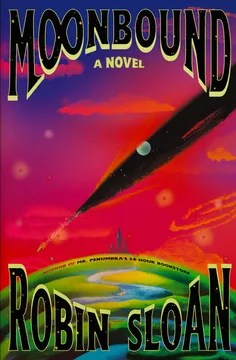


Plot Summary
Prologue
At humanity’s height, seven engineered dragons enter a passage through space and time, but return a year later convinced that the universe is dangerous. They tear a piece from the moon, build a citadel there, and bury Earth beneath a veil of dust.
Their forty-year war ends with humanity’s final invasion destroyed by its own turned-against-itself weapons. On the sinking assault ship Lascaux, operator Altissa Praxa dies trapped in a poisoned escape pod. The ancient chronicler embedded in her expects its own end, until a boy opens the pod eleven thousand years later.
The prologue makes catastrophe both historical fact and a problem of interpretation. Humanity’s confidence in cooperation and technological mastery becomes the condition of its defeat, while the dragons turn fear into a permanent policy. Yet the chronicler’s perspective complicates the apparent finality: a record can survive its subject, and an unexpected encounter can make history begin again. The prologue therefore supplies the scale of the loss without making the book a story of simple restoration. The world ahead has inherited the consequences, not the old civilization’s certainty that it can control them.
A Voice in the Tomb
Exploring a cave exposed by a storm, twelve-year-old Ariel de la Sauvage finds Altissa’s preserved body and unknowingly gives the dormant chronicler access to his senses. Its return to consciousness reveals a village of stone cottages, electric lights, talking animals, and a castle guarded by an airplane.
Ariel lives there with his older brother Kay, works among hounds for Master Heck, and studies weather and planets with Madame Betelgauze. At a squire’s contest, Kay’s athletic skill draws the village’s admiration, while Ariel remains unsure what future belongs to him.
During a fever that the chronicler’s clumsy integration causes, Ariel finally senses the presence in his mind. He welcomes the stranger, and the two begin their partnership.
Ariel’s first importance is not that he fits a heroic pattern, but that he is attentive enough to notice a dead woman and open himself to an unfamiliar presence. His curiosity gives the chronicler a route back into history. The castle’s mix of old forms and advanced remnants also prevents the future from reading as a clean technological progression. Ariel’s world is not a primitive stage awaiting correction; it is a functioning, peculiar society whose own rules the chronicler must learn.
The Wrong Sword
The chronicler calculates from the star Vega that eleven thousand years have passed, then recognizes the sword set in the churchyard stone as a clue to an Arthurian design. On Hallow’s End, Kay discovers that his ceremonial sword has vanished. Ariel ignores the stone’s famous blade and returns to Altissa’s tomb, where he takes her talking sword, Regret Minimization, for his brother.
Wizard Malory reveals that the castle, the village, and Ariel himself were designed around the stone’s sword. When Ariel’s choice disrupts his plan, Malory puts the crowd to sleep and tries to kill the boy. The chronicler burns the wizard’s command out of Ariel’s hearing, damaging itself as Ariel escapes into the forest.
Malory’s scheme depends on a story being treated as a script: if the right boy pulls the right sword, the intended political order should follow. Ariel’s decision is small and practical, motivated by his brother’s immediate disappointment, but it breaks that script. The chronicler initially interprets the boy through familiar legend, then must confront the limits of that habit. Agency here does not mean inventing a self from nothing. It means choosing a concrete obligation over a destiny designed by someone else.
The Bees Choose a Road
From a hidden crevice, Ariel watches Malory’s rangers search the valley. Kay finds him with the help of the golden elk, a creature carrying a beehive in its antlers. The bees direct the brothers toward Lord Mankeeper, an alleged enemy of evil wizards, in a drowned fortress beyond the bog.
Back in the tavern, Jesse, Elise, Gal, Percy, and Betelgauze agree that Ariel must leave Sauvage to find help, while Heck supplies the brothers with jackets, food, and Kay’s bow. Jesse also recalls seeing Malory meet a striped stranger who asked whether the boy was ready. The party chooses to stay behind, letting Ariel and Kay slip away through fog before Malory can seize them.
The bees and elk make the valley’s apparent idyll part of a much larger ecology, where cooperation crosses species without becoming sentimental. The villagers’ decision to help is equally important: they do not pretend they can defeat Malory, but they accept the cost of sending the brothers out alone. Heck’s handmade equipment expresses affection through useful labor, not grand declarations. The striped visitor’s remembered question hints that Ariel’s life has been planned, yet it is the villagers’ improvised care, rather than that design, that equips him to continue.
The Bog’s Last Door
At the narrow exit from Sauvage, Malory’s hound Cabal becomes a towering dog-headed fighter. Kay orders Regret Minimization to fire its missiles, blasting open a passage through the rocks, but cannot squeeze through after Ariel. He sends his brother onward with the sword and returns to protect the villagers. In the bog, Ariel and a beaver named Humboldt find Mankeeper preserved as a corpse, speaking through an old device.
Malory’s pursuing Lady of the Lake attacks them. When her blade reaches Ariel’s throat, the chronicler floods his reflexes with Altissa’s sword training. Ariel wounds the Lady, escapes to the fortress wall, and climbs out. The effort destroys the chronicler’s functioning body, leaving Ariel to continue alone.
Ariel’s escape is achieved through dependence, not solitary mastery. Kay gives him the weapon and accepts the danger of staying behind; Humboldt guides him through a landscape Ariel cannot read; the chronicler lends skill at a cost. Mankeeper’s preserved body offers knowledge without the living champion Ariel hoped to find. The sequence strips away the fantasy of a reliable rescuer and replaces it with fragile, partial aid. Ariel survives, but survival now means bearing obligations to people he cannot immediately reach.
The Road Has Company
After Humboldt turns back to his bog, Ariel crosses a vast aspen forest with no landmarks until a wind-borne figure points him toward a road. There he meets Clovis, a robot who walks in many bodies and escorts him to a self-operating inn. Clovis later guides him along the Rath-road, where animal travelers, pilgrims, and slow cargo haulers share the route.
After two weeks, Ariel reaches Rath Varia, a lively city that continually rebuilds itself. He takes an empty room, finds a bed and supplies at the Matter Circus recycling center, and learns that food and shelter are freely available while luxuries require a balance of recovered material. For the first time, he begins making a life outside Sauvage.
The road changes the scale of Ariel’s knowledge. He has moved from a valley whose boundaries seemed to be the world into a public network where movement itself creates community. Clovis’s many bodies make identity look less like a fixed container and more like continuity maintained through attention and communication. Rath Varia, meanwhile, turns waste into civic infrastructure. Its open welcome offers Ariel safety, but its scale also makes him newly anonymous, a comfort that cannot resolve his fear for Kay.
The Missing Birds
Cabal tracks Ariel to a Rath Varia night market, where wizards Agrippa and Hughes protect him long enough for Hughes to alter his scent. She also removes Malory’s hidden commands to make him sleep or die. Days later, Ariel meditates and restores the chronicler, then learns from Hughes how the world changed: a technology released during humanity’s defeat dispersed human minds into animals, allowing later wizards to draw people back into human bodies.
Most animals gained speech, but birds died in the upheaval. In the chronicler’s memory city, Ariel consults Altissa and discovers Plan Z, a hidden ship of sleeping operatives that may still await a signal. The possibility gives his worry for Kay a practical direction.
Hughes’s transformation gives Ariel a measure of control over the body Malory marked, while the history she explains recasts humanity’s disappearance as both extinction and preservation. The cost is not abstract: the birds are absent from every landscape the chronicler has seen. That loss resists easy optimism about survival. Ariel’s encounter with Altissa also makes memory useful without making it a substitute for action. The hidden operatives offer a chance, not a guarantee, and the chronicler’s renewed presence turns that uncertainty into a shared undertaking.
A Radio in the Ruins
Ariel needs a radio to call Plan Z, but the dragons forbid wireless signals after destroying the tiny inventor city of Rath Poldhu. Clovis first refuses to risk its special permission to transmit, then agrees to help, and Comptroller Cob directs Ariel to Roos Gangleri, known as Scrounger. On their journey to the ruined rat city of Instaur, Scrounger confronts Cabal, who has followed them.
Cabal explains that Malory is serving a faction of divided dragons that wants Ariel. Scrounger uses ecdysis powder, a wizard’s antidote, to undo Cabal’s engineered body; the dog-man escapes as an ordinary dog. At Instaur, the travelers repair a radio telescope, aim it toward the moon, and prepare Ariel’s signal.
This turning point replaces strength with knowledge of systems. Scrounger defeats Cabal not by overpowering him, but by recognizing that the wizard’s mark is a trap with a removable mechanism. Clovis’s decision to help also matters because the robot understands the risk to itself and chooses a limited, deliberate act of loyalty. The abandoned city of the rats gives the mission its material means, while the dragons’ ban on radio makes every attempt to communicate a political act.
Seven Notes Return
At the telescope, Ariel sings the seven-note signal while Clovis broadcasts it. A reply arrives from the hidden ship, then Clovis’s power runs out and the robot dies, having spent its remaining energy on the transmission. The next day, the Altamira lands in the ruined city. Its sole passenger is Rokeya Durga Darwin, a young operative trained to restart humanity’s resistance through stories and media.
She admits the promised myth meant to prepare the world for her never took hold. The ship’s descent tears open the dust veil, revealing blue sky and stars. Durga, Ariel, and Scrounger share the ship’s surviving food, while Ariel and Durga begin the uneasy work of joining his new world to her lost one.
The signal succeeds, but not in the way Ariel imagined: he summons one girl, not an army, and the cost is Clovis’s singular life. Durga’s arrival therefore sharpens the difference between a prepared plan and an actual future. Her training gives her purpose, yet the failure of the myth leaves her without the audience it was meant to create. The opening in the sky is both a practical breach of dragon law and an image of new information becoming visible. It does not restore the Anth; it makes their absence impossible to ignore.
The Beavers Say No
Durga asks the beaver firm Shivelight & Shadowtackle to join the fight against the dragons. Its leaders refuse, focused on a carbon war against the oceanic storm computer. In a formal debate, Durga misreads the rules: when asked to summarize her opponent fairly, she turns the argument into an attack, and the firm denies her aid.
Agassiz secretly helps Ariel and Durga query the firm’s living ledger, a network of reeds and fish that records events. It points them toward the College of Wyrd as the place to learn about both Malory and the dragons. The ledger’s intelligence tempts the chronicler with total knowledge, but Ariel withdraws before it can absorb him. The three flee as the beavers debate whether to kill them.
Durga’s defeat exposes a genuine mismatch between persuasive technique and a community built around reciprocal understanding. She knows how to move an audience, but the beavers require her to represent an opposing case without distortion. Their method makes fairness an intellectual discipline, not a polite decoration. The ledger offers another danger: comprehensive information could erase attention to individual lives. Ariel’s refusal protects the chronicler’s narrower, relational way of knowing, even as it leaves the group with incomplete answers.
The Wyrm’s Shallow Pool
At the College of Wyrd, scholar Laurentide introduces Ariel, Durga, and Agassiz to the college’s study of the Wyrm, a vast intelligence approached through increasingly difficult dives. Morgan Samphire recalls that Malory was once her fellow apprentice, unusually determined, and left after finding a quest in the Wyrm’s depths.
Durga and Ariel begin training in the Limpid Pool, where Ariel discovers he can hold his breath far longer than an ordinary boy and perceive dimensions beyond the familiar three. After weeks of lessons, he enters the Wyrm’s strange inner landscape and meets an aspect who calls herself Ingrid. She does not know Malory’s answer, but invites Ariel to return and speak with her about more than his pursuer.
The college makes learning bodily: Ariel cannot understand the Wyrm by collecting facts alone, because he must change how he experiences space. His unusual breath-holding is a clue to his engineered nature, but the narrative treats it first as a capacity to explore. Morgan’s account of Malory supplies history without solving the mystery. Ingrid’s invitation shifts the search from extracting an answer to sustaining a conversation, a distinction that will matter when Ariel becomes more than a means to someone else’s plan.
Usagi Leaves the Moon
Studying an old deck of cards, Durga recognizes that its grouped face cards represent the seven dragons and concludes that Ingrid is Usagi, their counselor. Ariel asks Ingrid directly. She confirms that she was once a dragon, but left the moon after centuries of fear and sleeplessness, building a vessel to reach Earth.
The scholars helped her become someone new. Durga asks Ariel to learn what he can, and he returns to Ingrid with questions about the divided dragon crew.
Their conversations gradually become personal: Ariel tells her about Sauvage, the golden elk, and college life; Ingrid describes the terror of finally allowing herself to sleep. Ariel’s relationship with her grows from intelligence-gathering into friendship, though Durga still needs a way to act on what he learns.
Durga’s card reading converts a familiar pastime into political intelligence, showing how cultural artifacts can preserve patterns their makers no longer understand. Ingrid’s account complicates the idea of a unified enemy: she is neither an innocent outsider nor a loyal agent of the moon. Her escape required accepting vulnerability, especially the risk of sleep. Ariel’s growing friendship with her changes the terms of Durga’s strategy. Information gathered through trust is not the same as information extracted from a target, and Ariel begins to recognize that distinction.
A Sword from the Well
When Malory appears at the College of Wyrd, Ariel dives into the dangerous Wyrm’s Well rather than let the wizard seize him. In its empty origin, he meets Ingrid, who gives him a small sword made from a thought. Ariel surfaces and uses Altissa’s remembered swordcraft to cut Malory’s arm.
Malory admits he sought the Wyrm’s advice on bargaining with the dragons and learned that they would obey a prince shaped by myth. He made Ariel for that role and now wants to use him to secure a passage off Earth. Ariel accepts the journey, but secretly intends to act with Ingrid rather than serve Malory’s design. Durga cannot endorse the plan, and Ariel leaves Wyrd with the wizard.
The sword’s arrival is not simply a reward for courage; Ariel reaches it by entering the very danger he has avoided, and by accepting help from a relationship he built over time. Malory’s confession clarifies the pressure around Ariel’s identity: even affection and apology are tangled with a wish to use him. Ariel’s agreement is therefore strategic, not submission. His choice remains morally risky because he conceals his purpose from Durga, whose distrust of the dragons is grounded in the history he has only recently learned.
The Gray Chapel
Malory takes Ariel to his icebound home, the Gray Chapel, where he builds a portal intended to carry them to the moon. On Ariel’s thirteenth birthday, the wizard explains that he distilled the boy from himself, while Kay and the villagers were decanted from animals and given traces of Malory’s nature. Ariel retreats into fantasies of kingship, and the chronicler loses access to his thoughts.
A bird, the first Ariel has ever seen, lands on the ice and urges him out of despair. Meanwhile, Malory enters the chronicler’s memory city and begins destroying it, having found the ancient intelligence embedded in Ariel. His attack threatens not only the chronicler’s survival but the record of everyone it has known.
Malory’s claim that Ariel comes from himself makes the boy’s origin intimate and coercive at once. The wizard has invested his own traits in the people he made, then treats that investment as a right to direct them. Ariel’s isolation narrows his inner world until the bird’s arrival interrupts the loop. Its appearance also makes the earlier loss of birds newly concrete. The chronicler’s endangered memory city raises a parallel question: whether preserving the past is enough if its keeper cannot remain open to change.
Sleep for the Dragons
Before Malory can destroy the chronicler, a new committee reaches the glacier: Kay, Heck, Betelgauze, Durga, Humboldt, and Agassiz. Hughes’s treatment has freed Kay from Malory’s commands, and the group binds the wizard. His portal opens onto the moon. Ariel crosses with the oyster sword Ingrid gave him, then refuses the throne prepared for him.
Instead, he presents the dragons with Ingrid’s gift: the idea of sleep. Their exhausted crew accepts it, and the citadel’s lights go dark as they finally rest. Ariel returns to Earth with Durga and the others. Malory’s mythic trap has failed, not because Ariel rejects stories, but because he uses one to offer the dragons a way out of fear rather than a new command.
Ariel’s return to the lunar story completes the book’s central contest over authorship. Malory wants a king who will make the dragons obey; Ariel carries a gift that asks them to stop, relinquish vigilance, and become vulnerable. The rescue party matters because his journey has created relationships beyond the original brotherly bond. The dragons’ sleep is not a military victory or a restored civilization. It is a pause that makes a different future possible, while leaving the political and ecological work on Earth unresolved.
Ariel of Earth
Back in Sauvage, Ariel and Durga retrieve Altissa’s belt from her tomb. The villagers dismantle the castle and use its stone for a shared account at Matter Circus; Heck and Betelgauze build a cabin, while Mankeeper receives a new home among the living. In Rath Varia, Durga turns the Altamira into a media headquarters, recruits Kay and the squires for a musical campaign, and circulates films and news.
Her popular show reshapes Ariel’s real journey into a new legend. Ariel visits Ingrid and tells her what happened on the moon. The chronicler, meanwhile, watches its old memory city change as Altissa and Kate set out to explore beyond it. The book ends with Ariel asking what comes next, now as a question he shares with the chronicler.
The ending does not restore the castle, the Anth, or the old sky in full. It distributes the work of rebuilding across practical choices: shared materials, a home for Mankeeper, new media, and friendships that cross species and generations. Durga’s fictionalized version of Ariel’s journey shows that stories can recruit people, but also revise the truth; her strategy differs from Malory’s because she offers a future rather than a fixed role. The chronicler’s companions leave the familiar memory district, suggesting that preservation itself must become exploratory.
Analysis
Moonbound treats the future not as a clean break from the past but as a crowded inheritance. Ariel’s valley contains castles, electric lights, airplanes, games, and speaking animals because civilizations do not simply replace one another. They leave materials, habits, stories, and wounds that later people reinterpret. The chronicler initially mistakes this layering for a puzzle to solve, then learns through Ariel that understanding a world requires meeting its inhabitants on their own terms. The novel’s central conflict is over who gets to author a life. Malory believes that creation entitles him to direct Ariel. His plan depends on making the boy perform a familiar myth, then using that role to bargain with the dragons. Ariel resists not through abstract rebellion but through specific loyalties: he seeks a sword for Kay, accepts help from strangers, and builds trust with Ingrid. His eventual refusal of the throne is meaningful because he has learned that a story can be offered as care rather than imposed as fate.
The book also questions what counts as progress. The Anth mastered cooperation and technology, yet lost a war through catastrophic misfortune. The posthuman world has its own forms of intelligence: beavers store history in living networks, scholars explore thought through bodily experience, and a robot finds meaning in walking. None is a diminished copy of humanity. Their methods expose the limits of treating human systems as universal.
Finally, the novel makes attention an ethical act. The chronicler’s archive, the beavers’ ledger, and Durga’s media campaign all preserve or shape information, but each can distort what it records. Ariel’s defining strength is his willingness to remain curious about creatures and places that do not serve his immediate quest. By the end, history has not returned to its former owners. It has become shared work among beings who can still ask what comes next.
Review Summary
Reviews for Moonbound are largely positive, averaging 3.96/5. Fans praise its wildly imaginative world-building, whimsical storytelling, and unique narrator — a symbiotic AI chronicler bonded to a young boy on an epic quest. Many readers loved its blend of science fiction, fantasy, and Arthurian legend, comparing it favorably to Narnia and Terry Pratchett. Critics felt it was overly derivative, lacked narrative drive, or tried to do too much at once. The ending was occasionally cited as rushed or anticlimactic, though most agreed Sloan's writing quality remains consistently high.
People Also Read




Characters
Ariel de la Sauvage
Restless valley boyAriel is a curious, observant boy raised in an isolated valley, where he maps forests, cares for hounds, and admires his older brother Kay. He longs to matter, though he has not settled on what that means. His instinct is to explore and to notice overlooked details, from a spider’s web to a gap in a story. He is neither a natural fighter nor a polished speaker, and his uncertainty often makes him hesitate. What distinguishes him is a willingness to choose for himself, especially when someone he loves is affected. His bond with the chronicler helps him see how inherited stories can guide without dictating the life he makes.
The Chronicler
Memory in the bloodAn ancient Anth intelligence built to record and advise, the chronicler survives through a fungal core layered with technology. It once accompanied operator Altissa Praxa and now shares Ariel’s perceptions and memories. The chronicler is devoted to the vanished civilization that made it, but its devotion includes curiosity about what followed, not only grief for what was lost. Its archival habits can make it overconfident in familiar narratives, and its desire to preserve experience sometimes conflicts with the risks of living. Through Ariel, it encounters a future no archive could have predicted and discovers that a faithful record must also leave room for surprise.
Altissa Praxa
Operator of the old warAltissa was a highly trained operator who fought the dragons during humanity’s final war. Serious, disciplined, and tactically gifted, she measures herself by intention and preparation. The chronicler remembers her as a formidable subject, but also as a person with habits and blind spots, including a concern for how she would be remembered. Her sword, Regret Minimization, carries some of her era’s martial capability into the future. In memory, Altissa remains an unsettled presence, still practicing and testing what she knows. She represents both the extraordinary competence of the Anth and the limits of a life organized around perpetual readiness.
Kay
Ariel’s admired brotherKay is Ariel’s older brother and the valley’s most promising squire. Athletic, generous, and naturally reassuring, he earns affection through skill and a sincere concern for others. Ariel admires him intensely, sometimes measuring his own quieter interests against Kay’s obvious talent. Kay does not treat his brother as a lesser person, however, and their closeness is built from shared jokes, chores, and years of living side by side. His confidence is not the same as invulnerability: he can be disappointed and afraid, even if he rarely shows it. Kay’s relationship with Ariel gives the boy a concrete reason to act when abstract destiny would not be enough.
Rokeya Durga Darwin
Last daughter of the AnthDurga is an operative trained to revive humanity’s cause through strategic storytelling, performance, and political persuasion. She has spent her life preparing for a future in which her own civilization may be gone, and she meets that possibility with discipline rather than denial. Her confidence is earned, but it can harden into a belief that the right argument should persuade any audience. Encounters with Ariel and the beavers test that assumption. Durga is resourceful, ambitious, and emotionally guarded, especially when confronting the loss of her family and culture. Her deepest commitment is to make a future imaginable to people who have been taught to accept the limits imposed on them.
Wizard Malory
Maker with a private questMalory is the elusive wizard who governs the Castle Sauvage from the margins of village life. He is handsome, tireless, technically gifted, and difficult to read; even his kindness can seem like another form of control. His interest in Ariel is unusually intense, and he expects the boy to fit a design the wizard has spent years pursuing. Malory’s emotional life is dominated by ambition and dissatisfaction with the boundaries of Earth. He is capable of care, but his idea of care is entangled with authorship: he believes that making someone gives him a claim on what they should become.
Ingrid
Scholar of many mindsIngrid is the personal presence Ariel encounters within the Wyrm, a vast intelligence studied by the scholars of Wyrd. She chooses a grounded, conversational form rather than one of overwhelming power, and prefers curiosity to display. Her unusual perspective makes her attentive to many scales of experience, from planetary events to a boy’s daily routines. She is candid about fear and uncertainty, though what she reveals comes gradually. Ingrid’s conversations with Ariel are relaxed, specific, and reciprocal. She is not simply a source of answers: her willingness to listen allows Ariel to experience companionship as something separate from strategy or obligation.
Clovis
Many-bodied road companionClovis is a distributed robot whose many forms communicate across the world and share a continuing identity. Cheerful, inquisitive, and always in motion, Clovis treats walking as a purpose in itself and welcomes the chance to meet someone new. The robot’s perspective is both practical and philosophical: it is curious about other beings, yet initially cautious about violating the terms of its rare permission to transmit. Clovis gives Ariel his first companionship beyond Sauvage and models a form of identity based on connection rather than a single body. Its easy manner does not make its choices trivial; it understands that helping can carry a cost.
Roos Gangleri
Fearless trash-pickerKnown as Scrounger, Roos Gangleri is Rath Varia’s most accomplished explorer of ruined places and discarded technology. He is exuberant, loud, and confident, but his bravado rests on careful preparation. He distrusts secretive promises and prefers practical effort, useful tools, and risks he can evaluate. His past employment by a wizard has made him wary of gifts that conceal a leash. Roos helps Ariel because the boy’s story catches his interest, but he never stops calculating what a journey might cost or yield. His adventurousness is not reckless innocence; it is a practiced willingness to move into danger with the right equipment.
Assistant Agister Agassiz
Beaver guide and learnerAgassiz is a thoughtful beaver employed by Shivelight & Shadowtackle. She knows the bog’s routes and ecological systems, and she enjoys turning observation into practical guidance. Her curiosity draws her beyond the regional office and into unfamiliar scholarship. Agassiz is patient with Ariel and Durga, but she is not merely a guide: she is interested in how different forms of knowledge might work together. Her calm, matter-of-fact manner makes her a useful counterweight to Durga’s urgency and Ariel’s uncertainty.
Humboldt
Keeper of the bogHumboldt is a beaver who knows the bog around the drowned Mortal Fortress and takes pride in its ecology. He is precise, informative, and easily offended when Ariel mistakes the bog for a swamp. His expertise is grounded in patient attention to water, moss, and safe paths. Humboldt helps Ariel cross terrain that would otherwise be impassable, while remaining committed to the place he oversees. He represents the practical knowledge Ariel needs when familiar maps and assumptions fail.
Lord Mankeeper
Voice beneath the bogMankeeper is a long-dead lord preserved in a bog, whose voice still emerges through an old device. Once a leader in battles against wizards, he is dryly humorous about his former reputation and skeptical of glory. He offers Ariel a perspective shaped by experience rather than prophecy, urging him to attend to his own needs instead of assuming Kay is helpless. Mankeeper’s stillness contrasts with the adventurous legend Ariel expects, but his practical advice helps redirect the boy toward the wider world.
Wizard Hughes
Transformative city wizardHughes is a guild-certified wizard in Rath Varia who specializes in bodily transformation. Curious and candid, she balances professional interest with genuine care for her clients. Ariel’s body presents her with an unfamiliar challenge, and she treats that uncertainty cautiously rather than pretending to understand it. Hughes also explains the city’s customs and the history of the Wild Hunt. Her practice shows a form of power based on consent, craft, and careful limits, in sharp contrast to Malory’s use of hidden commands.
Madame Betelgauze
Teacher of sky and signsBetelgauze teaches Ariel about weather, plants, sickness, and the planets. She mixes observation with divination, taking seriously both what can be measured and what might be possible. Her confidence can sound theatrical, but it encourages Ariel to look beyond the boundaries he has inherited. She is one of the adults who helps raise him, and she understands that his curiosity needs room rather than a prescribed career.
Master Heck
Maker of practical kindnessHeck is the Castle Sauvage’s hound keeper and a skilled leatherworker who has helped raise Ariel and Kay. Quiet and steady, he expresses affection by noticing what people need and making it well. He never demands that Ariel share his craft or become someone else’s apprentice. His patient acceptance gives the boy a rare sense of belonging without conditions.
Cabal
Malory’s relentless trackerCabal is Malory’s dog, later altered into a powerful upright hunter. He is driven by his assignment and by a desire for freedom from the body imposed on him. His keen nose makes him a persistent threat even when Ariel believes he has escaped. Cabal’s situation exposes the coercive underside of wizardry: his apparent strength conceals dependence on the person who changed him.
Morgan Samphire
Old scholar and Malory’s peerMorgan is a long-serving scholar of Wyrd whose attention can become so absorbed in thought that she seems almost insubstantial. She once studied alongside Malory and remembers both his stubborn effort and their intellectual closeness. Morgan loves puzzles and the pursuit of knowledge, but she has chosen the inward work of the college over the outward adventure Malory seeks. Her affection for him survives disagreement without obliging her to follow him.
Laurentide
Guide into the WyrmLaurentide is a scholar and teacher at Wyrd who guides new apprentices through the college’s demanding practices. She is capable, disciplined, and skeptical of claims that experience can be mastered quickly. Her teaching emphasizes the limits of explanation, especially when students encounter forms of thought that exceed ordinary dimensions. Laurentide provides a practical structure for Ariel and Durga as they begin their study.
Wizard Agrippa
Hughes’s curious colleagueAgrippa is a four-armed wizard who works alongside Hughes. He is sociable, amused by unusual forms, and professionally curious about Ariel’s body. His light manner helps make the city’s wizards seem approachable without erasing their power.
Jesse
Bard and keen observerJesse is the Castle Sauvage’s bard, one of the people who helped raise Ariel and Kay. He remembers an unsettling encounter involving Malory and a striped stranger, information that helps the others recognize that Ariel’s life is part of a larger design.
Gal and Percy
Kay’s fellow squiresGal and Percy are Kay’s friends among the squires. Their loyalty and willingness to join the village’s resistance give Ariel’s departure a wider circle of personal stakes than his bond with Kay alone.
The Seven Dragons
The moon’s divided crewThe seven dragons were engineered as a crew for humanity’s first voyage through a passage in space and time. Each had a distinct function, from command and navigation to communication and security. Their return transformed them from celebrated explorers into rulers of the moon and authors of Earth’s enforced silence. The surviving records describe them as brilliant, powerful, and deeply shaped by the stories used in their creation. Their history makes them more than a single antagonist: they are a damaged collective whose internal divisions matter to the fate of the planet.
Regional VP Carson
Beaver firm’s guarded leaderCarson leads the Shivelight & Shadowtackle regional office. She is focused on ecological survival and wary of political projects that might distract from the firm’s struggle with the storm computer. Her caution arises from responsibility for a living world, not simple indifference.
Plot Devices
The Chronicler
Memory carried between livesThe Anth-built intelligence lives within a human nervous system, recording perceptions and offering knowledge from earlier subjects. Its memories make Altissa’s experience available to Ariel, including the swordcraft that helps him survive the Lady of the Lake. Yet the chronicler’s presence is not neutral: it can interfere with Ariel’s senses, and its desire for comprehensive knowledge threatens its attention to individual lives. The device connects the novel’s ancient past to its transformed present while asking whether memory should preserve the familiar or remain open to the unforeseen.
The Stromatolite
A map that grows with ArielAriel’s handheld game system contains both a fantasy world and a tool for making custom terrain. He uses its map function to record the valley, mark discoveries, and later expand his understanding of the land beyond Sauvage. The device links play with practical exploration: its imaginary landscapes help Ariel interpret a world full of talking animals, ruins, roads, and unfamiliar ecologies. Its limited memory also reminds him that no map can contain everything he learns.
The Sword Pattern
Destiny offered, then alteredThe sword in the stone and the linked Arthurian figures are part of Malory’s attempt to shape Ariel into a prince the dragons will recognize. Ariel disrupts that arrangement when he chooses Altissa’s sword for Kay instead. Later, the Wyrm gives him a different sword, made from a thought. The repeated sword motif distinguishes a role imposed by design from an ability and purpose Ariel develops through choices, relationships, and experience.
The Living Ledger
Ecology made into an archiveShivelight & Shadowtackle gathers observations through reeds, roots, and fish that carry information across the beavers’ network. The beavers query this living record by weaving physical forms, turning ecological data into answers. The ledger directs Ariel, Durga, and Agassiz toward Wyrd, but its near-total reach also tempts the chronicler to surrender its individual perspective. The device makes information inseparable from the living systems that gather and preserve it.
The Hidden Radio Signal
A forbidden call across timeAriel’s attempt to summon Plan Z depends on a signal stored in the chronicler’s memories and a transmitter the dragons have outlawed. Clovis’s permission to use radio, Scrounger’s practical skill, and the ruined telescope at Instaur make the transmission possible. The signal connects a boy in the far future to a sleeper launched by the Anth, but the reply is not an army. It is one person, Durga, and the robot who helped summon her does not survive the effort.


Download PDF
Download EPUB
.epub digital book format is ideal for reading ebooks on phones, tablets, and e-readers.








