

Plot Summary
Prologue
A sudden cold gale drives the forest folk into a mountain village, where they help the villagers brace their homes against the storm. The three Wise Women disagree about its source. Uska believes the ancient dragon Kings have returned, while Yairi dismisses the idea; Brugge senses something stranger and more dangerous than either can explain.
Their charms and prayers cannot quiet the wind. By nightfall, a dark, rising sound rolls out of the forest, and the storm tears their words away. The prologue leaves the village beneath a force that seems to come from beyond ordinary nature.
The prologue establishes a world where wisdom is not the same as certainty. The Wise Women possess ritual knowledge and social authority, yet their old explanations fail when a new disturbance arrives. Their disagreement also prepares the novel’s central problem: people mistake familiar categories for understanding, whether they dismiss dragons as vermin or assume a king must be a hero. The gale’s silence at the end is not reassurance but the disappearance of the very tools the women use to make sense of danger. This opening makes the later crisis feel less like a sudden adventure than the arrival of a disorder already moving through the world.
Robert’s Dragon Trade
Robert Thrax earns his living clearing dragons from homes and barns, then selling the catch at Dragon Market. His father Elpidus taught him the trade, and Robert wears the old man’s dragonskin suit even though he hates what the work makes him do. At home, his mother Odelette and his younger siblings depend on his earnings, while his little dragons, Adelise, Lux, Fernand, and Reynald, share the house like unruly pets.
Robert handles them gently and insists that dragons have their own names and understand more than people think. The contrast troubles him: he can care for the creatures he keeps, yet he still poisons and sells others. He wants a life beyond his father’s profession, but has no clear path out.
Robert’s work makes his moral conflict material. He does not merely hold a distasteful job; he performs violence that feeds his family, so rejecting it would also mean rejecting a role built around responsibility. His private tenderness toward the dragonlets is not a simple proof of innocence, since he continues to kill dragons for a living. Instead, it is evidence of divided knowledge: he recognizes their individuality at home while the market and his profession reduce them to inventory. The inherited suit embodies that pressure. It protects him physically but threatens to turn his father’s history into Robert’s only imaginable future.
Cerise Finds Reginald
Princess Cerise endures another tedious audience with suitors, then retreats to her woodland hiding place to teach herself to read. There she meets Crown Prince Reginald of Corvinia, a handsome traveler who treats her as an ordinary local girl and gives her flowers meant for the Queen.
Cerise is smitten before she learns his identity. When Reginald reaches the castle, she panics at its grime and its roaming dragons, convinced she must make the place presentable for him. Her father, King Antoine, sends for Robert, the local exterminator, to clear the castle.
Reginald, meanwhile, admits no courtship plans and says he is merely wandering, while his valet Mortmain watches him closely. Cerise’s private longing has suddenly become a public crisis, drawing Robert into royal affairs.
Cerise’s infatuation begins with a misrecognition that briefly frees her from rank. Reginald sees a girl at a stream rather than a princess, and she experiences the unfamiliar vulnerability of being the less powerful person in an encounter. Her frantic attempt to clean the castle then reveals how quickly she translates desire into performance. She cannot tell Reginald who she is, but she can try to improve the setting in which he sees her. The moment also joins the courtly plot to Robert’s working life: a romantic impulse from the castle becomes a dangerous, paid task for someone whose social position is far below the people making the decision.
The Castle’s Deadly Burrows
Robert and his friend Ostvald reach Bellemontagne after dark and discover that dragons have spread through the walls, shafts, and Great Hall. The infestation is far larger than Robert expected, so he and Ostvald seal escape routes and force the creatures into cages with poisonous drachengift.
The poison works, but many dragons die before they can be removed, and Robert grows gray with exhaustion as he apologizes to them through his mask. The next day, Cerise visits with Reginald and recognizes Robert as the boy whose dragon once dragged him into her bedroom when they were children.
Their shared memory does not soften the job. The castle’s dead are piled in the keep, and Robert must help take the bodies to Dragon Market, where the Queen hopes to recover the cost.
This labor converts Robert’s private discomfort into a crisis he cannot compartmentalize. The scale of the infestation makes the job efficient by necessity, but efficiency does not protect him from seeing each animal as a life. His apology to dying dragons is a form of moral witness, even though it cannot undo what he is doing. Cerise’s childhood memory complicates the social distance between them: she remembers the incident as funny, while Robert remembers his father’s punishment. Their different recollections show how rank shapes the meaning of the same event. The castle’s bodies also turn royal neglect into a literal burden carried by workers and sold for profit.
Mortmain’s Dangerous Bargain
At Dragon Market, Robert sees two rare, brilliantly colored dragons in the importer Dagobert Swane’s cage and realizes he wants to buy them to set them free. Mortmain, Reginald’s valet, has noticed Robert’s interest and questions him about the dragons he has killed.
Robert admits that he wants to leave extermination behind and become a valet, traveling in a noble household. Mortmain reveals that he is training Reginald under orders from King Krije, who expects his son to prove himself through a heroic deed.
He proposes a bargain: Robert will help Reginald hunt a large dragon, and Mortmain will teach him the work of a valet. Robert accepts, though the supposed dragon hunt is meant to be staged around an ordinary rakai. The dream of escape now depends on helping a prince perform courage.
The bargain is built on mutual concealment. Robert wants a new identity, Mortmain needs a controlled route to satisfy King Krije, and Reginald wants relief from his father’s demands. Each man treats the other as an instrument, but the plan also exposes their shared dependence on performance. Robert’s wish to become a valet is not merely social ambition; he imagines service as a way to travel, learn, and make himself distinct from his father. Mortmain understands that a role can be both labor and authorship, since a valet quietly shapes a master’s choices. The rare dragons reveal that Robert’s compassion is stronger than his claimed indifference, even before he can admit what it means.
A Quest Becomes Royal
Mortmain’s lessons prepare Reginald to use a huge two-handed sword, while the prince privately resents the hunt and the crown waiting at home. Cerise worries that he is keeping his distance, then turns to her mother, Queen Hélène, for counsel about becoming a capable royal partner.
When Reginald publicly explains that his father requires proof of valor before he can choose a bride, he asks Bellemontagne to provide a worthy task rather than directly asking for Cerise’s hand. The court accepts the performance, and the planned rakai hunt becomes a royal expedition.
Cerise organizes a sprawling entourage of servants, soldiers, doctors, and rival princes. Robert, expecting a small working party, finds himself responsible for an unwieldy procession whose members barely understand the danger ahead.
The proposal scene gives Reginald a socially acceptable way to acknowledge desire while preserving the obligation that keeps him from acting freely. Cerise, meanwhile, begins to imagine marriage as work and political competence, not simply a prize for being beautiful. Yet the expedition’s size exposes a contradiction in courtly heroism: a supposedly individual test of courage becomes a spectacle sustained by servants and armed escorts. Robert understands the practical danger better than the people with titles, but the structure of the party makes his expertise hard to obey. The ceremony lets everyone believe the plan is under control, while its scale makes that control increasingly fragile.
The Village Is Gone
As the expedition climbs into the mountains, Robert finds the rakai scent unusually strong but sees no fresh tracks or signs of feeding. He tells Cerise that the animals they came to hunt may already be dead, and advises sending the company home while he, Reginald, and Mortmain investigate.
Cerise refuses to leave Reginald and insists on staying, despite Robert’s warning that her presence could distract him. The next day they reach a village reduced to wreckage, its inhabitants dead and its fields burned.
Robert finds no evidence that ordinary rakai caused the destruction. While Cerise organizes a camp and Reginald tries to steady the survivors, Robert searches the ruins alone, recognizing that the threat does not fit anything his father taught him.
The empty village transforms Robert’s expertise from a source of confidence into a measure of its limits. He can identify the absence of ordinary signs, but cannot yet explain the violence that replaced them. Cerise’s refusal to retreat comes from love and courage, but also from a fear that leaving Reginald would mean abandoning the person she has chosen. Her decision is not simply foolishness: it places her inside the consequences of a choice she believes she has the right to make. Robert’s anger at her exposes his own fear, while his inability to command her shows that knowledge and authority do not naturally coincide.
Robert Commands the Dragons
At sunset, three enormous dragons ambush the procession. Their fire and claws kill many people, while panicked horses scatter through the wreckage. Robert crawls through the attack to reach Cerise, then finds Reginald and Mortmain hiding nearby.
As the scarlet dragon approaches, Robert stands and faces it, driven by fury at the slaughter. He gives no intelligible order, yet the dragons respond to him: the two black creatures begin attacking one another, and the scarlet joins their violence.
Robert collapses when the danger passes, unable to explain what he has done. Cerise blames herself for refusing his advice, and Reginald admits that Robert saved them. The survivors bury their dead before beginning the journey home, carrying a victory that feels more like a wound.
Robert’s intervention is not a triumphant mastery scene. He acts from moral outrage, not confidence, and the dragons’ response exceeds his conscious understanding. That distinction matters because the event saves lives without giving him a clean heroic identity. The survivors have been rescued, but the cost is visible in the dead and in Cerise’s self-blame. Reginald’s first response is to recognize Robert’s courage, a truth that unsettles the established hierarchy between prince and worker. The scene also makes the novel’s central ethical question unavoidable: if dragons can understand and feel, then the power to command them may be less a gift than a responsibility.
A Heart Named Dragon
On the return journey, Mortmain proposes that Reginald receive public credit for the dragon fight so he can satisfy King Krije. Reginald refuses to claim the deed, but Robert agrees to let Mortmain tell the story if he will continue teaching him valet skills.
Back home, Robert’s family makes him recount the attack. Odelette interprets his ability to affect the dragons as evidence that the goddess Vardis gave him a dragon’s heart. Robert rejects the idea and insists he wants an ordinary life, not a heroic destiny.
He returns to work clearing a wyvern nest rather than accepting the identity his mother offers. In the stable, Mortmain tells him the old man Robert saw following the survivors may be connected to the unnatural dragons, and Robert suspects someone bred them.
The return does not settle the meaning of Robert’s act; it multiplies competing interpretations. Mortmain sees a useful story for a prince, Odelette sees a divine inheritance, and Robert sees an unwanted claim on his future. His refusal is not proof that the gift is false. It is a defense of ordinary human ties against a calling that threatens to make him exceptional and isolated. At the same time, his decision to keep doing exterminator work reveals how difficult it is to leave a role when family needs and habit bind him to it. The possibility that someone bred the attackers shifts the danger from animal behavior to deliberate human responsibility.
Reginald Rides Alone
After hearing that Robert suspects a wizard, Reginald leaves Bellemontagne alone, telling his friends he intends to make a lie true. Robert borrows a horse and sets out after him; Cerise follows, understanding that Reginald may be trying to prove himself without witnesses.
They stop at an inn, where Cerise and Robert argue over heroism, class, and his impossible plan to become a valet. She tells him that disguising herself has never made her less a princess, and he admits he wants an ordinary life.
That night an unseen force strikes Robert outside the stable, but he survives and recognizes the attack as connected to the dragon power he encountered before. The pair find Reginald on the road, shaken by a false dragon and ashamed of his fear.
The pursuit forces the three characters to confront the identities they have been trying to manage. Reginald treats his public image as a lie he must somehow redeem; Cerise wants to protect him without reducing him to a romantic ideal; Robert wants to escape the identity assigned by birth and work. Their argument makes class visible without resolving it: Cerise can understand constraint, but cannot experience Robert’s economic dependence. The attack on Robert confirms that the danger has followed them beyond the mountain massacre. Reginald’s fear of an illusion becomes a test of self-knowledge, not combat skill, and the group’s companionship begins to matter more than the roles each was meant to perform.
Dahr Returns to Corvinia
The old man appears as an illusion beside a pond and identifies himself as Dahr, the wizard King Krije once believed he had killed. Dahr calls Robert a dragonmaster and threatens him, then reveals that Reginald is escaping from a dragon illusion nearby. Robert and Cerise find the prince and bring him back.
Reginald explains that Krije claimed to have broken Dahr’s staff and beaten him to death, but Dahr now carries a staff of his own. The three ride toward Corvinia, where Dahr may be headed. Reginald briefly opens up about his homeland and his father, then vanishes before dawn, leaving Cerise a badly written note that says he has gone to fight. Robert and Cerise ride after him as Dahr’s dragons fill the sky.
Dahr’s appearance revises the story’s inherited history. Krije’s victory was not final, and the account passed down to Reginald was shaped by his father’s appetite for self-glorification. The wizard’s accusation gives Robert a new name, but Robert has not yet accepted it; the label functions as a threat as much as a revelation. Reginald’s departure repeats his old pattern of fleeing the self he fears, only now he frames it as sacrifice. Cerise and Robert pursue him because affection has become action. The dragons overhead convert the private family conflict between Krije and Dahr into a public danger for an entire kingdom.
Krije Becomes a Throne
Robert and Cerise reach Haults-Rivages as Dahr’s dragons descend on the city. King Krije rallies his soldiers, but their arrows cannot harm the creatures. Dahr arrives with Reginald, who has been captured, and taunts Krije before turning him into a golden statue. The wizard then uses six dragons’ unusual fire to melt the statue and shape it into a throne, preserving Krije’s awareness inside the gold.
Dahr claims he has united himself with the last dragon King, but Robert senses the creature is not truly his. Dahr demands that Robert remain with him, while Cerise and Reginald refuse to abandon him. Before they can escape, Robert addresses the great dragon, Grand-Jacques, by name, and it lowers its head to him.
Dahr’s conquest is deliberately theatrical: he turns a king into furniture so that political defeat becomes an ongoing humiliation. Krije’s consciousness trapped in the throne makes power bodily and intimate, not abstract. Dahr also mistakes proximity for union. His claim to be one with the King resembles the authoritarian fantasy of possessing what one can only dominate. Robert’s recognition of Grand-Jacques introduces a different relation, one based on address and response rather than ownership. The dragon’s lowered head does not make Robert its master, but it reveals a mutual awareness that Dahr’s elaborate coercion cannot manufacture. That difference will determine whether power becomes command or relationship.
The King Chooses Robert
Robert persuades Dahr to let the three companions leave, but the golden King follows them into a field. It pins Robert beneath its weight and probes his mind, while Reginald tries to strike it with the great sword.
Robert learns that the dragon is not obeying Dahr and asks it to spare the prince. The King turns on Reginald, and Cerise joins Robert in confronting it. Through the long night, Robert reaches toward the dragon without trying to command it, while Cerise refuses to leave him.
By dawn, Dahr appears and boasts that he has joined with the King. Cerise challenges his claim, then calls to Robert. Robert answers from within the dragon’s presence and reassures her that he is alive, describing himself not as a master but as a friend to dragons.
The confrontation distinguishes intimacy from possession at the level of consciousness. Robert’s mind enters contact with the King, but he does not become the creature or gain authority over it. His appeal works through recognition and restraint, while Dahr’s supposed union depends on a fantasy of control. Cerise’s role is equally crucial: she keeps calling Robert back to human connection, and her refusal to abandon him counters the seductive promise of dissolving into power. Reginald, too, is forced to see that courage cannot be reduced to wielding a weapon. The scene recasts mastery as a misleading word for a relationship that must preserve difference.
Dahr Falls, Robert Returns
Dahr turns against Cerise, and the King lifts her into its jaws while Robert speaks to her from within its presence. The dragon sets her safely down, confirming that Robert has not disappeared into it. Dahr attacks with fire, but Reginald hurls his great sword into the wizard’s back.
Dahr rises again, revealing that death has not ended him before, and threatens to transform Robert and Reginald into dragons. Robert admits that he once wanted to escape his humanity by joining the King, but chose his family and friends instead.
As Dahr prepares to act, the King takes flight and burns him to ash. The companions survive, but Krije remains trapped in the golden throne. Robert and Cerise return to Bellemontagne, with a promise to come back for the king.
Robert’s decisive change is not the discovery of greater power but the choice to remain finite. He recognizes the temptation Dahr embodies: to exchange loneliness and vulnerability for an apparently perfect union with something immense. His family and friends make human limits worth keeping. Reginald’s sword strike matters, but the King’s final action is not a weapon wielded by Robert; it is an independent refusal of Dahr. The unresolved golden throne prevents victory from becoming tidy. Krije is still captive, and the companions still owe him a return. Survival gives them a future task rather than erasing the cost of what they have endured.
The Valet’s Dream Changes
Back in Bellemontagne, Robert avoids visitors and struggles to sleep, while his new ice-white dragonlet, Marie-Galante, joins the household. Odelette finally persuades him that he owes Cerise an honest farewell before leaving with Reginald to free Krije.
Robert finds Reginald waiting in Cerise’s woodland clearing; the prince hopes to travel and drink before returning to Corvinia, and Robert suggests Mortmain might govern in his absence. Cerise arrives, and she and Robert acknowledge their love.
She makes clear that he cannot decide where she may go, even when he means to protect her. They agree to face her parents together. Robert’s old dream of becoming a valet has not vanished, but it no longer defines the life he wants. Their next journey remains ahead.
The ending does not make Robert’s identity simple; it makes his relationships harder to evade. His mother’s insistence that he speak to Cerise confronts the same impulse that once drove him toward a distant, controlled life as a valet: the hope that he can leave without being claimed by anyone. Cerise’s insistence that he cannot grant or deny her freedom turns romance into negotiation between equals, not rescue or possession. Reginald, meanwhile, can imagine a future that includes choice rather than merely obedience to Krije. The unresolved mission to restore the king keeps the ending open, but the emotional resolution is clear: the characters begin choosing their lives together.
Analysis
The novel’s fantasy adventure is organized around the gap between appearance and relationship. Reginald looks like a hero but doubts that he can act heroically; Cerise is admired for beauty while secretly teaching herself to read and preparing for political responsibility; Robert looks like a dragon killer but responds to dragons with attention and grief. These discrepancies are not mere comic reversals. They reveal how social roles become scripts that characters mistake for their identities.
Robert’s trade makes the ethical stakes unusually concrete. He kills dragons to support his family, and his compassion cannot absolve the harm. The tension is more demanding than a simple choice between good and evil because each option carries a cost: continuing the work violates what he knows of the creatures, while abandoning it threatens people he loves. His developing connection with dragons does not solve the problem by granting him dominion. The story repeatedly distinguishes communication from control, most sharply through Dahr’s mistaken belief that proximity to a King makes him one with it.
The royal plots echo this question of power. Krije expects Reginald to reproduce his own model of manhood, while Reginald must discover courage without becoming his father. Cerise’s decisions similarly resist being treated as an object of courtship or protection. Her insistence that Robert cannot decide her freedom is a crucial correction to the romance’s protective impulse. Love in this story becomes a practice of recognizing another person’s agency, not a reward for rescuing them.
The ending remains deliberately unfinished. Dahr is defeated, but Krije is still imprisoned, Robert’s identity remains difficult to name, and the companions must choose what to do next. That open future suits the book’s central argument: understanding is not possession, and a meaningful bond does not erase difference. Robert can listen to dragons without becoming one, and he can love Cerise without owning her choices. The most humane form of power in the novel is therefore not command, but attention joined to restraint.
Review Summary
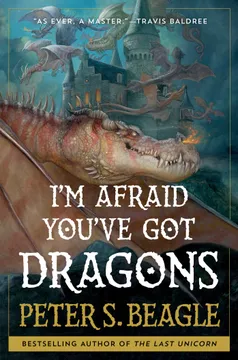
I'm Afraid You've Got Dragons receives mixed reviews, averaging 3.62 stars. Many praise its whimsical, satirical tone, charming characters, and beautiful prose, drawing comparisons to The Princess Bride. Readers appreciate the subverted fantasy tropes, particularly the reluctant dragon exterminator Robert, the independent Princess Cerise, and the surprisingly heroic Prince Reginald. Critics note the story feels unfinished, overly simplistic, or predictable, with some finding the pacing slow. Most agree it evokes a nostalgic, cozy fairy-tale atmosphere, though opinions differ on whether that's a strength or weakness.
Characters
Robert Thrax
Dragon-hearted exterminatorRobert is an eighteen-year-old dragon exterminator who inherited his father’s trade and helps support his mother and siblings. He is observant, careful with animals, and more compassionate than his work allows him to admit. His private life with his tame dragonlets shows the patience and attention he brings to creatures others call vermin. Robert longs to travel and become a valet, partly to escape the limits of his family’s profession and partly to build an identity of his own. He is not eager to be heroic; he distrusts grand destinies and prefers practical work. His central tension is between the life he believes he can choose and the unusual connection to dragons that keeps drawing him into danger.
Princess Cerise
Self-taught royalCerise is the only child of Bellemontagne’s King Antoine and Queen Hélène. Celebrated for her beauty, she is privately determined to teach herself to read, a desire she keeps hidden from court. Her years of rejecting suitors have made her practiced at managing appearances, though not at understanding her own longings. She is romantic but also decisive, capable of organizing an expedition, giving orders, and facing physical danger. Cerise wants to be valued as a person and a future ruler, not merely admired as a princess. Her relationship with Robert challenges her assumptions about class and heroism, while her bond with Reginald begins in the ideal of a perfect prince and grows more complicated.
Prince Reginald
Reluctant crown princeReginald is the handsome Crown Prince of Corvinia and the only son of King Krije. His appearance promises the traditional image of a heroic prince, but he is uneasy with combat, responsibility, and his father’s demands. He uses charm and agreeable manners as protection from a life he did not choose. Reginald is not simply cowardly or shallow: he is perceptive, affectionate, and capable of recognizing his own failings, though that honesty often arrives painfully. Cerise’s admiration initially makes him feel like the hero she expects; Robert’s practical knowledge exposes the gap between appearance and skill. His struggle is to discover what courage means when he cannot imitate his father.
Mortmain
Prince-shaping valetMortmain serves as Reginald’s valet and adviser, but his authority extends beyond clothing, meals, and travel. Under orders from King Krije, he is responsible for pushing Reginald toward the heroic identity his father demands. He is shrewd, composed, and skilled at guiding people without appearing to command them. Mortmain’s interest in Robert grows from recognizing both the young man’s unmet ambition and his unusual knowledge of dragons. He treats service as an art of influence, a perspective that attracts Robert even as it reveals the manipulation beneath courtly life. Mortmain’s loyalty is practical and layered, shaped by survival as much as affection.
Dahr
Vengeful wizardDahr is an old wizard associated with the conflict that made King Krije famous. He is intelligent, theatrical, and patient enough to make revenge feel like a carefully staged performance. His courtesy rarely conceals his contempt for ordinary human limits, and he enjoys turning other people’s assumptions against them. Dahr is fascinated by dragons and by the possibility of joining himself to powers beyond human scale. His relationship with Krije is personal, bitter, and rooted in a shared history of violence. He serves as a dark counterpoint to Robert: both seek a profound connection with dragons, but they approach that possibility from sharply different ideas of power.
King Krije
Corvinian war kingKrije rules Corvinia through force and believes strength is the foundation of kingship. He is loud, imposing, and suspicious of weakness, especially in his son Reginald, whom he considers unfit to inherit the kingdom. His affection is difficult to separate from his demands, and his idea of fatherhood is shaped by the same harsh standards he applies to rule. Krije’s history with Dahr gives his present authority a violent foundation. He is a man who trusts action more than reflection and expects others to prove themselves through danger. His relationship with Reginald is the emotional pressure behind much of the prince’s self-doubt.
Odelette Thrax
Protective dragon motherOdelette is Robert’s mother, a devoted cook and the center of a crowded working household. She is affectionate, outspoken, and proud of her son, while remaining keenly aware of the social limits imposed on their family. Her hopes for Robert often run ahead of his own wishes, and she interprets his gifts through faith in the goddess Vardis. Odelette’s warmth does not make her naïve: she understands people’s emotional needs and sees the loyalties Robert tries to deny. She values family bonds as an anchor, but her confidence in destiny can become another kind of pressure on a son who wants an ordinary life.
Ostvald Grandin
Steadfast working friendOstvald is Robert’s strong, slow-spoken friend and occasional assistant. He is dependable with tools, carts, and difficult physical work, though he often doubts the value of his own judgment. His quiet loyalty keeps him beside Robert through danger, and his affection for Elfrieda is complicated by years of feeling less clever or quick than his friends. Ostvald’s understated courage comes from persistence rather than confidence. He is often the person who keeps moving when others become overwhelmed.
Elfrieda Falke
Quick-footed childhood friendElfrieda is Robert and Ostvald’s longtime friend, known for her dancing lightness, sharp perceptions, and concern for Robert. She admires his kindness and skill, but her feelings are not as simple as Ostvald hopes. Elfrieda can be impulsive and stubborn, especially when someone she loves is in danger. Her confidence often hides fear rather than eliminating it. She becomes an important emotional counterweight to the romantic and royal complications surrounding the central trio.
King Antoine
Easygoing Bellemontagne kingAntoine is Cerise’s father and the ruler of Bellemontagne. He is warm, courteous, and slow to decide, preferring private excursions and long reflection to displays of authority. He loves his daughter but worries about the political danger attached to Reginald’s family. Antoine’s gentleness is matched by a practical understanding of his own limits, and he often relies on Hélène to handle difficult personal matters.
Queen Hélène
Pragmatic royal motherHélène is Cerise’s mother and Antoine’s wife. Though she can appear frail, she is direct, shrewd, and skilled at reading the motives of people around her. She handles money and politics with more precision than her husband, and gives Cerise advice about the work and emotional demands of royal life. Her protective instincts are tempered by romantic faith: she believes people may need to be maneuvered toward the lives they want.
Adelise
Green household dragonAdelise is one of Robert’s tame dragonlets. Small, green, and full of mischief, she joins the family’s household routines and has a strong personality of her own. Her close connection with Robert helps show how patiently he observes dragons and treats them as individuals.
Lux
Gray household dragonLux is a gray dragonlet who lives with Robert’s family. He is quick to hiss and challenge newcomers, but responds to Robert’s guidance and shares the household’s familiar routines.
Fernand
Sleepy household dragonFernand is one of Robert’s tame dragons. He is notably unbothered by commotion and often sleeps through the household’s activity, providing a quiet contrast to the more excitable dragonlets.
Reynald
Young scarlet dragonReynald is the smallest and most timid of Robert’s original household dragons. Curious about new arrivals, he tends to lag behind the others but remains part of their close domestic group.
Marie-Galante
Ice-white dragonletMarie-Galante is the ice-white dragonlet Robert brings into his household. Her striking color and demanding full name set her apart from the other little dragons, though she becomes part of the family’s shared life.
Brugge
Eldest village Wise WomanBrugge is the oldest of the three Wise Women in the prologue. She has long commanded respect, but the strange storm tests the confidence she normally places in ritual and authority.
Uska
Youngest village Wise WomanUska is the youngest Wise Woman, alert to signs her elders dismiss. Her suspicion that the ancient dragon Kings have returned makes her the first to treat the storm as a warning.
Yairi
Skeptical village Wise WomanYairi is an experienced Wise Woman who resists Uska’s alarm and trusts older explanations. Her confidence in established knowledge is challenged by the prologue’s inexplicable storm.
Dagobert Swane
Dragon-market importerSwane is a market merchant specializing in rare imported dragons. He is a shrewd haggler who understands Robert’s interest in the creatures well enough to tempt him with an offer.
Plot Devices
Dragon Market
Turns dragons into goodsDragon Market is the commercial center for captured dragons and the products made from their bodies. Buyers value different species for skins, meat, organs, and other uses, while trappers and exterminators absorb the danger and stigma of obtaining them. Robert’s familiarity with the market shows how thoroughly the culture treats dragons as commodities, even as he privately sees intelligence and individuality in them. The market also makes his family’s economic dependence concrete: refusing the trade is not a clean moral gesture when his earnings feed a household. Its cages and bargaining stalls bring Robert face to face with the gap between what he knows and what his society is willing to value.
Drachengift
Makes extermination possibleDrachengift is a poisonous powder Robert uses to drive dragons out of their burrows and into cages. Its potency fades after exposure to air, so timing and careful handling are essential. In the castle, it allows Robert and Ostvald to clear a vast infestation, but the captured dragons become paralyzed and many die before they can be removed. The tool is practical, inherited, and morally costly. Its use shows the skill behind Robert’s trade while also forcing him to witness the suffering his work causes. The method establishes that Robert’s expertise is real, but expertise alone cannot make a harmful system humane.
Mortmain’s Valet Lessons
Offers escape through serviceRobert’s desire to become a valet gives Mortmain a way to recruit him into Reginald’s staged quest. The lessons promise travel and a new social identity, while Mortmain’s own account of service reveals that a valet can shape a lord through advice, routine, and subtle influence. This device links Robert’s private ambition to the royal plot and makes the relationship between service and power a recurring question. Robert imagines that changing employers will free him from his father’s trade, but Mortmain’s teaching gradually exposes how much a servant can affect the choices of those who outrank him.
The Golden Throne
Makes conquest personalDahr transforms King Krije into gold, then uses dragonfire to shape the statue into a throne. Krije’s consciousness remains trapped within it, so the object is not simply a symbol of victory but the king’s continuing experience of humiliation and captivity. The throne makes Dahr’s revenge visible to everyone in the castle, and it gives Reginald a reason to return to Corvinia and confront his father’s fate. It also embodies the difference between power and relationship: Dahr can reshape Krije’s body and kingdom, but his desire to possess the dragon King is not the same as truly joining with it.
The Dragon Kings
Measure power beyond humansThe ancient Kings are immense dragons whose scale and independence place them beyond the ordinary categories Robert uses for the species he traps. Stories claim that they disappeared long ago, and the prologue’s mysterious storm raises the possibility that something of their power is moving again. The novel gradually distinguishes the Kings from the smaller dragons in Robert’s trade and from Dahr’s bred creations. They test the limits of human authority: neither a prince’s sword nor a wizard’s claim guarantees control. Their presence forces Robert to rethink what it means to know dragons, and whether any human can properly call one a possession or servant.

Download PDF
Download EPUB
.epub digital book format is ideal for reading ebooks on phones, tablets, and e-readers.








