

Plot Summary
The Menu on Cabrillo Street
Lois Clary has followed a tidy route from computer science in Michigan to a well-paid job programming robot arms in San Francisco. At General Dexterity, long hours and a stress-wracked stomach make her days blur into Slurry, a gray meal replacement. One evening, a handwritten menu for Clement Street Soup and Sourdough catches her eye.
She orders the double spicy combination, and the brothers’ soup and toasted bread ease her stomach enough for her to sleep. The meal offers more than comfort: for the first time, Lois feels the distance between the efficient life she has built and the life she is actually living. She begins calling the restaurant again.
The story begins with a small act of appetite interrupting a life organized around efficiency. Lois has been recruited and rewarded, yet her body registers the cost of a workplace that treats human limits as engineering problems. The soup matters because it produces an immediate, physical change: she sleeps. Food becomes the first kind of knowledge her professional world cannot supply, and the hand-lettered menu opens a door she did not know she wanted to enter.
Number One Eater
Repeated orders turn Beoreg, the cook, and Chaiman, his motorcycle-riding brother, into Lois’s first real friends in San Francisco. Beoreg’s bread becomes the meal’s quiet marvel; when Lois has a particularly bad day, he sends an extra-hot soup and more bread. Then visa problems force the brothers to leave.
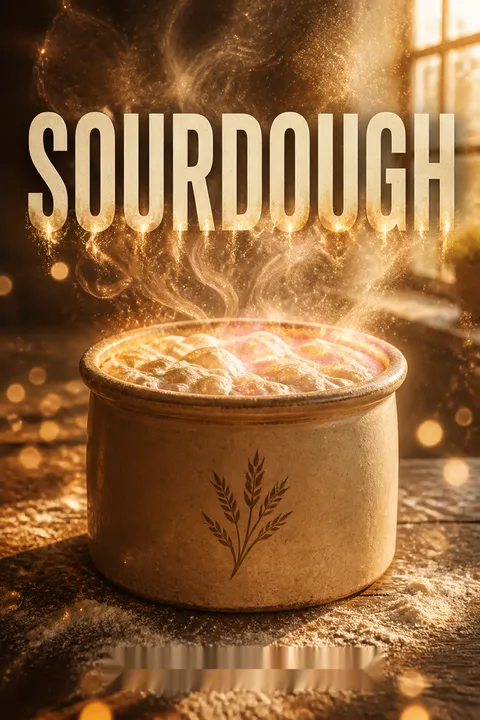
Before they go, they bring Lois a ceramic crock of sourdough starter, flour, utensils, and Chaiman’s CD of Mazg songs. Beoreg teaches her to feed the culture each day, and Lois promises to keep it alive despite never having cooked. Their affectionate nickname for her, number one eater, gives her a place in a relationship that had begun with nothing but a delivery order.
The gift changes the shape of Lois’s connection to food. Until now, she has been a grateful consumer; the crock makes her responsible for sustaining something beyond herself. Its daily feeding is an intimate, practical obligation rather than an abstract promise. The brothers’ departure gives that obligation emotional weight, while the music hints that the starter belongs to a culture and history Lois cannot yet identify. Their gift is both a goodbye and an invitation to begin.
A Loaf with a Face
After meeting the Bay Area Lois Club, Lois imagines her grandmother’s life beyond the family’s joke of Chicago Prison Loaf and recognizes how little she knows about making anything. She buys baking tools and follows a sourdough recipe, producing a misshapen but delicious loaf. Its crust appears to hold a pained face. The next loaves wear grinning ones.
Lois shares bread with her neighbor Cornelia and her awkward Slurry-table colleagues, then accepts Chef Kate’s offer to buy more. When the starter dries and smells wrong, Lois feeds it while playing the brothers’ CD. It revives, swells, and sings in the Mazg harmonies. Lois cannot explain what she hears, but she keeps baking.
Making bread gives Lois a form of competence that differs from programming: the result is eaten, so success must be renewed through work rather than preserved as code. Her grandmother’s bread becomes an imperfect inheritance, not a recipe to reproduce but evidence that food can carry memories. The faces and song disturb her rational habits without erasing them. Instead, she responds as a caretaker, testing, feeding, and listening. Wonder arrives through repeated attention, not a sudden conversion to the supernatural.
The Backyard Brick Oven
Chef Kate’s demand for eight loaves a day exceeds Lois’s small kitchen oven, so Lois follows advice from an online baking forum and builds a rough brick oven in the backyard. Her neighbor Cornelia helps transport the materials, then sits with her through the chilly firing.
The oven lets Lois bake four loaves at once; she begins supplying General Dexterity’s cafeteria and earns her first money from bread. Kate urges her to apply to a farmers market. At the Ferry Building audition, a panel rejects her for the established markets but sends her to the strange new Marrow Fair on Alameda. Its manager, Lily Belasco, offers Lois a place if she can bring a robot to make the bread.
The oven is Lois’s first piece of productive infrastructure: modest, ugly, and made with borrowed help. Unlike the robot arms at work, it does not eliminate repetition; it increases what her own labor can accomplish. Kate’s encouragement and Cornelia’s practical assistance make the shift from solitary hobby to public work a social achievement. The market rejection also redirects Lois toward a setting that values experiment over established credentials, though its request for robotic baking ensures her old technical world remains in play.
The Market Below Alameda
Lily gives Lois a plastic bone-shaped key that unlocks a door beneath an abandoned airfield. Behind it, the Marrow Fair fills a former munitions depot with pink-lit crops, unusual foods, a library, and vendors working through the night. Lois meets Horace Portacio, the market’s librarian, and Dr. Jaina Mitra, whose microbial Lembas cakes are meant to improve on Slurry.
Lily wants robot bread, so Lois persuades her manager, Peter, and General Dexterity’s founder, Andrei, to lend her a refurbished Vitruvian arm. At the previews, Lois’s face-marked loaves sell out quickly. She divides her days between bread and programming, while the starter’s strange nighttime activity grows more vivid.
The Marrow Fair literalizes the book’s central collision: advanced machinery, living organisms, and human craft share one improvised workspace. Lois enters with a key that is also a ticket into an alternative economy, but she is not simply escaping technology. She recruits a robot to serve a practice rooted in touch and repetition. The market’s novelty is attractive partly because it makes room for work that the conventional tech office would classify as peripheral, even as its commercial ambitions begin to resemble the systems it opposes.
The Eater’s Archive
As Lois’s bread business takes hold, Horace leads her into the deeper stacks of his archive and shows her a 1979 Café Candide menu featuring sourdough with a face in its crust. The celebrated restaurant’s founder, Charlotte Clingstone, recognizes the bread’s history when Lois visits.
She recalls Jim Bascule, a young baker who arrived with a starter left by a woman he loved in Brussels, baked face-marked loaves, and eventually returned to Europe. In Boonville, Lois finds Jim, now a winemaker. He says his father kept the starter alive and played it Grateful Dead music, which shaped its behavior. The encounter makes Lois see her gifted starter as part of a longer, uncertain chain.
Horace’s archive turns eating into evidence: menus and recipes preserve intimate histories that official accounts often overlook. Lois’s discovery does not deliver a neat origin story. Instead, it links her present to a past romance through a loaf, a starter, and music, while leaving uncertainty intact. Jim’s account strengthens the possibility that living food can carry traces of its treatment. The past does not explain the starter away; it complicates Lois’s sense of ownership and makes her inheritance feel less like a possession than a passage between people.
Confidence in the Motors
To teach her Vitruvian to bake, Lois must first confront General Dexterity’s notorious egg problem. She studies anatomy, practices cracking eggs by hand, and discovers that focusing too intensely makes her skill fall apart. She writes a brief ArmOS module that momentarily suspends the robot’s feedback loops just after the egg strikes the bowl.
In that tiny pause, the arm separates the shell cleanly. Lois names the code Confidence and sends it into the master software. With the market demanding more of her time, she sells her vested stock options and leaves General Dexterity. She buys the refurbished arm, financed by Mr. Marrow, and chooses physical work over the office’s promise of frictionless efficiency.
The egg problem is solved not by adding ever more observation but by allowing action to continue without constant correction. Lois recognizes the same trap in herself: self-monitoring can disrupt a skill that the body has already learned. Confidence is therefore both an engineering insight and a psychological one, though the code remains concretely useful to the robot. Leaving the company marks a choice about what kind of labor she wants, not a rejection of technology. She keeps the machine, but changes what it is for.
A Starter at War
As demand grows, Lois moves the starter into a large plastic tub and pushes it to produce more. It weakens, doubles slowly, and makes dense, sour-smelling loaves. Marrow Fair vendors direct her to Stephen Agrippa, a cheese maker who studies microbes as competing communities. He urges Lois to respect the starter and give it a rival.
Lois mixes it with a commercial King Arthur starter; the Mazg culture overwhelms its competitor and regains its vigor. The bread improves, but Lois now understands the cost of her solution: each feeding sacrifices a thriving community to keep the other alive. Beoreg’s letters and a Mazg tale of a kingdom consumed by its own culture sharpen her unease about the starter’s appetite.
Agrippa’s microbial vision expands Lois’s scale of moral attention. What looked like a practical fix becomes a conflict between communities whose inner lives remain largely inaccessible to human judgment. Lois’s intervention succeeds, but success is no longer morally neutral: she has engineered the starter’s recovery through deliberate competition. The Mazg story gives this anxiety a mythic form without settling it. The tension is not simply whether microbes are conscious; it is whether human power can remain innocent when its consequences are difficult to perceive.
The Lembas Bloom
Jaina sequences Lois’s starter and discovers an unusually diverse, stable microbial community. Slurry founder Dr. Klamath offers Lois a stake in Lembas Labs if she licenses it for industrial production, but Lois refuses because the starter is not hers to surrender. Jaina nevertheless uses it in her bioreactor.
The night before the Marrow Fair opens publicly, a hybrid of Lembas and the Mazg culture swells through the depot, consumes the lemon grove, and bursts above ground as a vast, face-patterned mass. Lois, Horace, Agrippa, his goats, and the Vitruvian break it apart; the goats devour the fragments. The bloom collapses, leaving the depot buried in edible Lembas and the market’s future transformed.
Jaina’s unauthorized experiment turns a disagreement about licensing into a crisis of scale. Lois understands the starter as a relationship requiring care; Klamath sees it as biological intellectual property, and Jaina sees an unprecedented system she might learn to reproduce. The resulting bloom makes those competing interpretations material. The community survives not through a single expert but through coordinated, imperfect action: robot force, human effort, Horace’s defense of the archive, and the goats’ appetite. The scene refuses to separate innovation from responsibility.
The Fair Goes Public
Firefighters rule the bloom safe to eat, and the people of the Bay Area arrive to break off pieces. The Marrow Fair opens beneath the spectacle, drawing fifty thousand visitors and turning its planned launch into an enormous public event. Slurry Systems and Lembas Labs face scrutiny after the experiment, while Jaina watches the remaining mass for clues to reproducing it.
A newspaper investigation identifies the market’s hidden patron as Charlotte Clingstone, the exacting founder of Café Candide. When Lois confronts her, Charlotte admits she wanted a place where she could experiment without endangering the restaurant and its farms. She again offers Lois an apprenticeship; Lois declines, choosing the market and her own work.
The bloom converts a concealed experiment into a public spectacle, but popular fascination does not settle questions of safety, ownership, or responsibility. The market succeeds through a disaster it did not plan, revealing how easily a story of innovation can be rewritten as a story of spectacle. Charlotte’s concealed role complicates her earlier opposition to the Marrow Fair: she is not simply defending tradition but protecting one institution while using another as a space for risk. Lois’s refusal of her apprenticeship marks a growing ability to choose without seeking approval from an established authority.
A New Table in Berlin
After telling the Lois Club what happened, Lois follows Old Lois’s advice and decides to visit Beoreg, who has opened a small restaurant in Berlin. Horace secures a book proposal, and Jaina and Klamath continue studying the bloom. Lois makes a plain starter from flour and water; unlike the Mazg culture, it only bubbles.
She leaves a portion with Cornelia, then sends Beoreg a refurbished Vitruvian and promises to bring Fresno chilies. Lois plans to learn cooking from him so she can teach the robot new kitchen skills. She will not bring the Mazg starter. Its songs and faces once drew her into a wider life, but its hunger has shown her the danger of ambition without restraint.
The ending does not restore Lois to her original life or ask her to renounce invention. She carries forward the robot, her skills, and the desire to build something with another person, while choosing a quieter starter whose limits are legible. That distinction matters: the novel does not condemn technology or ambition, but questions what happens when growth becomes its own justification. Lois’s next beginning is deliberately collaborative. She will learn before automating, and she will make room for human knowledge that cannot be downloaded in advance.
Analysis
Sourdough treats food as a meeting place for systems that usually remain separate: family memory, biological life, technical labor, commerce, and cultural identity. Lois begins as someone who can solve tightly specified problems but has barely learned how to feed herself. Baking changes her knowledge from abstract competence into an embodied routine. She must judge texture, timing, smell, and failure, then repeat the work because each successful loaf disappears. That repetition stands against General Dexterity’s dream of making labor obsolete, without making automation a simple villain. Lois’s robot is useful precisely because she gives it a task shaped by human learning.
The starter unsettles familiar divisions between living and manufactured things. It is cultivated, fed, and moved through containers, yet its behavior exceeds Lois’s control. Its unusual culture turns Agrippa’s ecological thinking into a moral problem: care can involve competition, and a solution that restores one community may destroy another. The story does not require certainty about microbial consciousness to make that problem meaningful. It asks how people behave when they know their actions have consequences but cannot fully perceive the lives affected.
Food also functions as a record of migration and belonging. Beoreg’s cooking, Lois’s grandmother’s prison bread, Jim’s music-fed starter, and Horace’s archived menus all carry histories that formal accounts might overlook. The recurring exchange of bread makes relationships visible through action. Lois is first a customer, then a caretaker, baker, vendor, and collaborator. Her growth is not a flight from ambition: she still wants to build and earn. Rather, she learns to distinguish productive curiosity from hunger without limits. The final choice of an ordinary starter is not a rejection of wonder. It is a decision to make a new life from knowledge, partnership, and work she can answer for.
Review Summary
Sourdough is a quirky, charming novel about a software engineer who discovers a passion for baking bread using a mysterious sourdough starter. Readers praised the book's unique blend of technology, food, and magical realism, as well as its witty writing and engaging characters. Many found it to be a fun, lighthearted read, though some felt the second half of the book became too fantastical. Overall, reviewers enjoyed the book's exploration of finding purpose and community, despite some mixed feelings about the ending.
People Also Read









Characters
Lois Clary
Programmer turned bakerLois is a gifted programmer who trusts detailed instructions and measurable results, but has little experience with food, family tradition, or making things by hand. Her move from Michigan to San Francisco is driven by the appeal of being chosen for difficult work; the job’s punishing pace leaves her physically depleted and socially isolated. She is observant and self-questioning, yet quick to commit when a practical challenge appears. Baking draws her toward sensory knowledge and relationships that cannot be reduced to performance metrics. Her central tension is not technology versus nature, but how to use her technical competence without allowing efficiency to define what deserves care.
Beoreg
Mazg cook and bakerBeoreg is the older of the two Mazg brothers who run Clement Street Soup and Sourdough. A skilled cook and baker, he expresses affection through feeding people and through the careful transfer of practical knowledge. His shyness contrasts with his confidence in the kitchen, while his wish for a restaurant with tables signals a desire to make Mazg food visible beyond private apartments. In his correspondence with Lois, he shares family stories and questions his community’s habit of remaining obscure. Food connects him to his mother and culture, but he is also willing to imagine a more public life.
Chaiman
Delivery rider and musicianChaiman is Beoreg’s younger brother, a warm delivery rider whose earbuds and motorcycle bring music into Lois’s otherwise quiet routine. He makes strangers feel welcomed and gives Lois the affectionate nickname that turns her from customer into friend. Music is his strongest attachment to Mazg culture, and his later creative work reshapes its traditional singing with modern production. His bond with Beoreg is playful but deep, built around shared family habits and a common wish to honor their mother.
Jaina Mitra
Microbial food scientistJaina is a driven scientist developing Lembas, a nutritious food made through microbial communities. She is ambitious, technically rigorous, and hungry for results, but her experiments expose how hard it is to control living systems by adjusting isolated variables. Her confidence can become impatience, especially when she believes a discovery might solve a large problem. At the Marrow Fair, she works beside growers and food makers whose approaches challenge her assumptions. Jaina’s scientific curiosity is genuine, as is her desire to make food more accessible; the tension between those aims and the risks of experimentation defines her presence.
Charlotte Clingstone
Restaurateur and culinary mentorCharlotte is the formidable founder of Café Candide, a restaurant whose influence reaches through generations of cooks and bakers. She protects the demanding, carefully cultivated world she has built, and evaluates new work with the practiced eye of someone responsible for people, farms, and a lasting reputation. Beneath her composure is a taste for experimentation and disruption that does not fit neatly with her public identity. Her encounters with Lois bring two models of food culture into contact: established craft passed through apprenticeships and new work assembled across technology, science, and informal collaboration.
Stephen Agrippa
Cheesemaker and microbe watcherAgrippa tends goats and makes unusual cheeses in a former military bunker beside the Marrow Fair. He studies fermentation as a vast, ongoing contest among microbial communities, speaking with fervor about life operating at scales people rarely notice. His methods are unconventional and his manner deliberately eccentric, but he offers Lois a way to think about her starter beyond kitchen technique. He expects her to observe and learn rather than surrender the problem to him.
Horace Portacio
Archivist of eatingHorace is the Marrow Fair’s librarian and a collector of restaurant menus, food histories, and the records left by devoted eaters. His excitement can turn any discovery into a lecture, but his curiosity serves a serious purpose: he believes meals preserve histories that official archives miss. He welcomes Lois into the Fair’s intellectual life and helps her trace the face-marked bread through old menus. His library is both a personal obsession and a resource for a community trying to imagine new food systems.
Lily Belasco
Marrow Fair market managerLily manages the Marrow Fair and recruits vendors whose ideas do not fit conventional markets. Her black leather jacket and dry humor make her seem renegade, but she is also a practical organizer responsible for turning an abandoned depot into a working food market. She spots the commercial and theatrical appeal of Lois’s bread and pushes her toward a robot-assisted version. Lily’s attention to novelty is balanced by the daily work of keeping a complicated venture open and connected.
Chef Kate
Cafeteria chef and first buyerKate runs the kitchen at General Dexterity and takes food seriously in a workplace that often treats meals as fuel. Her blunt humor masks a sharp commercial judgment: she recognizes the value of Lois’s bread and pushes her to sell it beyond the cafeteria. Kate’s own frustration with unappreciative diners informs her encouragement. She offers Lois both an early market for the bread and a practical example of what it means to feed people for a living.
Cornelia
Neighbor and practical allyCornelia lives above Lois in the Cabrillo Street house and earns money through on-demand delivery services. At first, she is a distant neighbor who rarely appears, but she lends Lois practical help when a bulky oven project exceeds the limits of Lois’s small car. Her sharp eye for opportunity and comfort with solitude make her a grounded counterpoint to Lois’s developing enthusiasm. Bread gradually gives the women a more companionable relationship.
Peter
Control team managerPeter manages Lois’s work on robot proprioception and embodies General Dexterity’s belief in relentless effort. He is demanding and closely aligned with the company’s pace, but he also recognizes Lois’s engineering ability and helps her secure a refurbished robot arm. His commitment to Slurry and his limited interest in ordinary food reveal how completely the company’s efficiency culture has shaped his habits.
Andrei
General Dexterity founderAndrei is the young founder of General Dexterity, a charismatic executive who frames robot automation as a way to remake human labor. He tracks employees’ roles and makes decisions quickly, encouraging a workplace where ambitious projects can attract attention. Lois approaches him to secure an arm for baking, and his response shows both the company’s openness to experimentation and its tendency to see new work through the lens of technical progress.
Jim Bascule
Baker turned winemakerJim is a former Café Candide baker whose face-marked sourdough and unusual starter appear in the restaurant’s old records. A romantic disappointment once sent him traveling, and he later became a winemaker in Boonville. His memories connect food, music, and affection, offering Lois a glimpse of the starter’s possible past without resolving every question about its origin.
Grandma Lois
Family baker and namesakeLois’s grandmother baked Chicago Prison Loaf, a dense bread learned through work at an industrial bakery. The family treated it as a joke, but it remains their clearest food tradition. Lois knows little about her grandmother’s earlier life, and remembering the bread prompts her to imagine the experiences and memories it might have carried.
Dr. Klamath
Slurry founder and investorKlamath founded Slurry Systems and argues that large-scale food production can deliver nutrition efficiently. His optimism is rooted in engineering and measurable output, though he understands that consumers resist the idea of food reduced to gray gel. He sees Jaina’s microbial research as a route to a more persuasive product and brings corporate scale into the Marrow Fair’s experimental world.
Carl
Marrow Fair ferry pilotCarl pilots the Omebushi, the small ferry connecting San Francisco to the Marrow Fair’s Alameda site. His steady early-morning service gives Lois a reliable passage to the market and becomes part of her new work routine. He is practical, unflustered, and willing to adjust his schedule when the market needs to begin earlier.
Plot Devices
The Mazg starter
Living inheritance and catalystBeoreg gives Lois a sourdough starter in a ceramic crock, along with flour, tools, and the Mazg songs that accompany its care. It must be fed, and its changing smells, growth, and sounds make Lois responsible for something she cannot fully explain. It connects food to kinship and cultural memory, while its unusual microbial community becomes central to the story’s conflict over care, competition, and commercial ownership.
The Mazg songs
Music that shapes fermentationChaiman’s CD carries traditional Mazg singing, first heard by Lois while she waits for food delivery. The songs accompany the starter’s revival and later influence its behavior in ways Lois cannot measure. Their recurrence links the brothers’ culture to the starter and makes sound a practical part of food-making, not merely background atmosphere.
The Vitruvian arm
Automation tested through craftLois uses a refurbished General Dexterity robot arm to mix dough and investigate the limits of machine control. Her work on proprioception leads to the Confidence module, which briefly interrupts feedback so the arm can crack an egg cleanly. The machine lets her combine technical skill with baking, raising questions about whether automation must erase human craft or can extend it.
The Marrow Fair
Experimental food-world incubatorLily Belasco’s underground market occupies a former munitions depot beneath Alameda’s abandoned airfield. It gathers food makers, scientists, growers, an archivist, and unusual equipment in one shared space. The Fair gives Lois a place to sell bread and work with a robot, while its competing projects expose different beliefs about innovation, tradition, and the future of food.
The Lembas bioreactor
Scale turns experiment dangerousJaina Mitra’s bioreactor grows a nutrient-rich food from microbial communities, with the ambition of making it more appealing and useful than liquid meal replacements. The machine gives her project industrial promise, especially after Slurry Systems offers resources and funding. Its interaction with Lois’s starter leads to an enormous growth that changes the market’s planned public opening.


Download PDF
Download EPUB
.epub digital book format is ideal for reading ebooks on phones, tablets, and e-readers.








