

Plot Summary
Ashmole 782 Opens
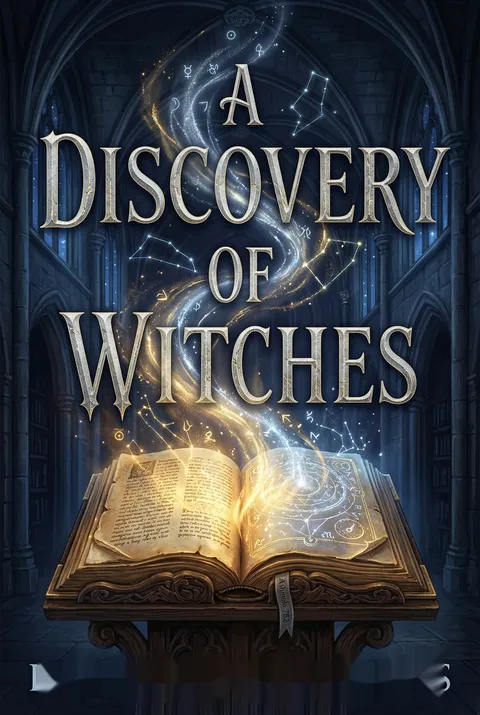
At Oxford’s Bodleian Library, historian Diana Bishop requests an alchemical manuscript called Ashmole 782. She has built her life around scholarship and away from the witchcraft she inherited, but the book shimmers, resists opening, and releases hidden writing when she angles its pages toward the light. Diana sees that it is a bewitched palimpsest, its text concealed beneath misleading alchemical pictures.
She also finds three leaves cut from the binding. Though the discovery calls to both her academic curiosity and her buried magic, she closes the book and returns it to storage. The library air shifts as it disappears, suggesting that the spell has reset and that her brief encounter has stirred something beyond her control.
Diana’s first breach is almost accidental, which makes the book’s response more unsettling than a deliberate spell would be. Her scholarly method depends on separating evidence from intuition, yet Ashmole 782 answers her touch in a way that collapses those categories. Returning it seems like a retreat to safety, but the reset turns avoidance into action: the spell has been disturbed, and the world around her begins to react. The scene makes her expertise both the tool that discovers the mystery and the habit that keeps her from recognizing her own role in it.
A Vampire in Oxford
The next evening, Diana uses a small spell to pull a book from a high shelf. A vampire’s stare catches her in the act. He is Matthew Clairmont, an Oxford biochemist who has read her work and is intrigued by her discovery. Matthew follows her home and searches for Ashmole 782, but finds only a glimpse of the extraordinary magic pulsing through her as she sleeps.
The next morning he secures a nearby library seat, while Diana tries to keep their relationship strictly professional. Creatures begin gathering around her, and an intrusive wizard threatens her with mental pressure. Matthew steps between them, then explains that the others believe Diana has found a long-lost book they all want.
Matthew’s introduction is deliberately double-edged. He protects Diana from a witch’s intrusion, but he also follows her home and searches her belongings, establishing that care and trespass can coexist in him. Diana reads his attention as another demand on her independence; he reads her refusal to acknowledge danger as vulnerability. The growing crowd of creatures transforms a private scholarly encounter into a public crisis. The manuscript is no longer merely an intellectual puzzle. It is a contested object around which old species rivalries and Diana’s untrained power are already gathering.
The Book Draws Crowds
Diana’s research into Matthew’s scientific papers reveals a career spanning neuroscience, wolves, blood, and genetics, far broader than a human lifetime should allow. At Blackwell’s, daemon designer Agatha Wilson tells her that daemons believe Ashmole 782 explains their beginnings and place in the world.
A newspaper report about bloodless murders in London adds a darker warning: creatures risk drawing human attention. Diana promises to remember the daemons’ need for the book’s secrets. Back in the library, she thanks Matthew for keeping the crowds at bay and agrees to call him Matthew. The small change in address loosens the distrust between them, though neither has yet explained what the other truly wants.
Agatha gives the book a moral dimension that neither Matthew nor the witches have supplied. For a daemon, the manuscript promises more than power: it may explain a people who lack the family histories and inherited traditions that stabilize witches and vampires. Diana’s promise complicates her emerging alliance with Matthew, because the knowledge cannot simply be claimed by whichever group can seize it. Meanwhile, her research into his publications makes him legible as a scientist before she understands him as a predator. Curiosity becomes the bridge between them, but also a way for each to study the other.
Yoga at the Old Lodge
Matthew takes Diana to a hidden yoga class at his Tudor manor, where witches, vampires, and daemons practice together under Amira’s guidance. The unfamiliar company first alarms Diana, but the class’s movement and meditation quiet her panic. Afterwards she learns that Matthew built the house in 1536 and has lived for centuries.
He tells her that science is his attempt to understand why he exists, while she admits that her history research began as a way to explain a world from which magic seemed to disappear. At his home, Matthew challenges her denial of her witchhood. Diana resists, afraid that using magic will make her achievements feel unearned and her life resemble the one her parents lost.
The Old Lodge briefly models a social order that the wider world forbids: different creatures sharing space without surrendering their differences. Yoga matters because it lets Diana experience her body as a source of steadiness rather than a threat, while Matthew sees how movement loosens the control she prizes. Their conversation exposes parallel defenses. He uses science to approach questions he cannot answer; she uses scholarship to keep magic at a distance. Neither is simply rejecting knowledge. Each is trying to control what knowledge might cost.
Matthew’s Long History
Matthew retreats to Scotland to hunt and confides in Hamish Osborne, his longtime daemon friend. He admits that Diana’s power and presence unsettle him, and Hamish recognizes that Matthew is falling in love. Matthew also reveals the shame he carries over two past relationships in which his hunger and anger caused devastating harm.
Back in Oxford, Diana faces witch Gillian Chamberlain, who blames her family for attracting danger and hints that her parents’ deaths may not have been caused by humans. Peter Knox later corners Diana and claims Ashmole 782 contains the source of witch power and the means to destroy vampires. His pressure makes Diana call Matthew for help, though she does not yet know how much of his history he has withheld.
Hamish functions as a witness who can name what Matthew refuses to name himself. His friendship exposes a conflict between Matthew’s conscience and his belief that dangerous instincts are permanent facts. At the same time, Diana’s encounters with Gillian and Knox recast the witch community as a source of threat, not simply kinship. Both protagonists are losing the social explanations that once protected them: Matthew cannot reduce his attraction to curiosity, and Diana cannot assume that shared ancestry guarantees safety. Their growing reliance begins in mutual isolation rather than uncomplicated trust.
Dinner and Disclosure
Diana invites Matthew to dinner and studies how a vampire can eat, choosing mostly raw foods and wine. In return, Matthew explains that he has searched for Ashmole 782 for more than a century. After Darwin’s On the Origin of Species made him reconsider alchemical ideas about transformation, he began looking for a lost book said to describe the origins of supernatural creatures.
Diana confirms that Ashmole 782 contains a hidden text, though she could not read it. Their exchange turns suspicion into a working alliance. When she kisses his cheek at the door, Matthew returns the affection, and their scholarly partnership becomes personal. The next day she follows him into his laboratory, where he studies creature genetics.
The dinner scene makes intimacy an exchange of methods. Diana learns about vampire appetite through observation and practical research; Matthew earns access to her knowledge by revealing the intellectual motive behind his search. Their shared interest in transformation links alchemy to evolutionary science without erasing the differences between them. The kiss does not resolve distrust, but it changes its stakes: withholding information can now wound a person rather than merely obstruct an investigation. The laboratory visit carries that shift into a more dangerous domain, where private affection meets evidence about entire populations.
Species Under Pressure
At Matthew’s laboratory, Diana sees records of worldwide vampire deaths and learns that failed attempts to make new vampires may signal species decline. Genetic comparisons suggest witches are losing power, while daemons show more instability; humans appear to be adapting more successfully.
Diana volunteers a blood sample, hoping to learn what her family has passed down. Matthew’s team finds that her DNA contains an unusual concentration of witch traits, though the full results remain unclear.
When she later recalls Ashmole 782, it does not come from the library. Knox confronts her, and a threatening photograph of her murdered parents arrives at her rooms. Matthew takes Diana to France, away from the Oxford creatures and the threats closing in.
The genetic evidence shifts the story’s scale from an individual romance to a problem of survival. Creature communities are not merely policing old customs; their populations may be changing in ways that threaten their continuity. Diana’s voluntary blood sample marks a change in her stance toward knowledge: she chooses investigation even when the results could unsettle her identity. Yet the evidence cannot protect her from political coercion. The photograph makes inherited danger intimate and bodily, collapsing the distance between species history and Diana’s childhood loss. Flight to France is both refuge and a concession that Oxford has become unsafe.
A House of Vampires
Matthew brings Diana to Sept-Tours, his family’s fortified home in France. His mother, Ysabeau, greets her with open hostility toward witches, while the housekeeper Marthe offers practical kindness.
Diana studies Matthew’s ancient copy of Aurora Consurgens and begins noticing that stress and movement release powers she has long suppressed. A vampire named Domenico arrives with a warning from the Congregation: witches and vampires are forbidden to form intimate bonds.
He also reminds Matthew that their relationship risks exposing all creatures to humans. Diana learns that the covenant is enforced by a council representing witches, vampires, and daemons. Matthew leaves for Oxford to deal with a threat to his laboratory, leaving Diana behind despite her protests.
Sept-Tours offers shelter without emotional ease. Ysabeau’s hostility is rooted in a history of loss and in the life she believes witchhood cost her, while Marthe’s care is expressed through food, warmth, and instruction. The covenant gives their conflict an institutional frame: private love can threaten a political system built to prevent human discovery. Matthew’s departure repeats a pattern of protection through exclusion. Diana is safer behind his walls, but the decision also reinforces the very dependency she resists.
The Water Takes Over
After Matthew leaves, Diana breaks down on Sept-Tours’ watchtower and unleashes witchwater, pouring water from her body until the wind turns it into a storm. Ysabeau and Marthe cannot reach her directly; Ysabeau sings her back to herself. While Matthew is away, Diana rides with Ysabeau, learns more about his human wife and child, and sees firsthand how vampires hunt.
She then searches Matthew’s study and discovers the seals and ledgers of the Knights of Lazarus, a hidden order he once led. When Matthew calls, he admits he loves her. He returns to Sept-Tours, and Diana chooses him despite the covenant and the dangers his history brings.
Witchwater externalizes grief as a literal loss of bodily boundaries. Diana’s power does not arrive as mastery but as an overwhelming identification with the element, making emotion both the trigger and the terrain of magic. Ysabeau’s song offers care without control, a contrast to Matthew’s protective commands. Diana’s discoveries in his study also complicate her love: the man she chooses has a political and military history far larger than he has admitted. Her decision is therefore not based on innocence about danger, but on a willingness to act despite incomplete knowledge.
A Dangerous Marriage
When Matthew comes back, he and Diana declare their love and accept the vampire bond that makes them a family in the eyes of his kind. Diana also reveals that she has discovered the Knights of Lazarus, the order behind Matthew’s hidden seals and fortune. At Sept-Tours she begins exploring her magic, learns to float during a dance, and sees that her abilities are far broader than she believed.
She insists on accompanying Matthew while he hunts. He eventually kills a stag as Diana watches, letting her understand both the predator’s discipline and the blood he needs to live. They become lovers, while Matthew warns that his old violence and his family’s rules cannot simply be wished away.
Their union does not dissolve danger; it makes responsibility mutual. Diana chooses Matthew while demanding access to the realities he has kept private, including hunting and the order he commands. The hunt is a test of whether love can bear knowledge of need without turning it into disgust or romantic fantasy. Her developing powers offer a counterweight to Matthew’s physical dominance, but neither can yet predict their consequences. The bond gives them belonging within vampire custom while making their relationship a direct challenge to the cross-species covenant.
Satu’s Hidden Castle
While Matthew sleeps after a night with Diana, witch Satu Järvinen flies her from Sept-Tours to a ruined castle. Satu claims Matthew has manipulated her and says witches murdered Diana’s parents, then demands that Diana reveal how she opened Ashmole 782. When Diana refuses, Satu tortures her with a magical mark burned across her back and cuts her repeatedly, trying to extract the power her parents concealed.
She finally drops Diana into an oubliette. There, injured and nearly broken, Diana hears her dead parents and remembers her mother’s childhood stories about magical ribbons. She realizes the stories were instructions, imagines the ribbon, and flies out of the pit to Matthew and his brother Baldwin.
Satu’s violence is framed as rescue and instruction, exposing how easily a language of sisterhood can be used to justify coercion. Her methods repeat the logic of the institutions she claims to oppose: Diana’s body becomes evidence to be opened and interpreted. The oubliette intensifies the central conflict between inherited power and imposed helplessness. Diana escapes not by mastering a formal spell but by recovering a story her mother planted in childhood. Memory becomes practical knowledge, and imagination becomes the first form of agency she can exercise under attack.
The Bishop House Letter
Matthew carries the injured Diana to New York, where Sarah and Emily nurse her at the Bishop house. Sarah heals many of her injuries, but Satu’s marks remain. A hidden letter from Diana’s mother reveals that Rebecca and Stephen deliberately spellbound their daughter to protect her from the Congregation until her destined partner appeared.
The house also produces a missing page from Ashmole 782, an alchemical wedding image bearing Matthew’s crest. Diana realizes the book’s magic recognized her because her parents had prepared her for it. Her DNA tests add another surprise: she is a chimera who absorbed cells from a vanished male twin, including traits associated with timewalking and other powers.
The letter reframes Diana’s childhood refusal of magic as the intended effect of protection, not evidence that she lacked power. That protection preserved her from immediate persecution but also left her unprepared when the threat arrived. The missing page links family history, alchemy, and Matthew’s identity in a tangible object, while the chimera discovery makes Diana’s body a record of biological inheritance and loss. Neither revelation gives her a simple answer. Each expands the number of people whose choices shaped her life before she could consent to them.
A Conventicle Forms
As Diana recovers, Matthew’s son Marcus and colleague Miriam explain that the hidden genetic results may mean witches and vampires could one day have children together. They also identify Diana’s unusual maternal lineage and the possibility that she carries a rare clan’s surviving traits.
The discussion becomes volatile when Miriam reveals Matthew’s past connection to Juliette Durand, a vampire who once helped cause the death of his friend Bertrand. The household nearly fractures over whether Matthew’s actions invite war.
Diana takes command, insisting that their struggle concerns the future of all creatures, not only her safety or the manuscript. Sarah, Emily, Marcus, Miriam, and the newcomers Sophie and Nathaniel form a tentative alliance around that principle.
The conventicle begins as a practical coalition, but its importance is ethical: its members agree to share danger across species rather than preserve safety through segregation. Miriam’s accusation forces Diana to confront the cost of Matthew’s protective violence without reducing him to it. The possibility of mixed children gives the alliance a future-oriented stake, though no one can yet know what such children would be. Diana’s insistence that this is larger than her romance marks her shift from a protected subject to a participant in collective decisions.
Juliette Strikes First
Soon after Diana begins recovering, vampire Juliette Durand finds the couple in the woods. She mirrors Diana’s movements, threatens to take her to the Congregation, and demands that Matthew prove his attachment by kissing her. When he refuses to abandon Diana, Juliette attacks, tearing open his throat and chest.
Diana hesitates before using lethal force, then unleashes witchfire that burns Juliette beyond recovery. Matthew collapses from blood loss. Diana refuses to let him die and offers her own blood; he first drinks from her arm, then bites her neck to take the fresher blood he needs. Diana’s life nearly ebbs away before Marcus and Miriam stabilize her with transfusions and treatment.
The attack converts the romance’s central tension into immediate bodily risk. Juliette has been shaped by Gerbert as an instrument, and her imitation of Diana turns intimacy into an experiment in possession. Diana’s hesitation matters: killing is not a clean expression of power but a decision she has never made before. Her blood saves Matthew, yet the act nearly kills her and forces the couple to confront the cost of their bond. Rescue does not equal triumph; it leaves both physically altered and emotionally accountable.
The Price of Survival
After the attack, Matthew refuses to leave Diana’s side, while Marcus and Miriam replace the blood she lost and Miriam repairs the wounds in her neck. Diana survives without becoming a vampire, but she realizes that saving Matthew involved more than a conscious choice: a maiden and an old woman appeared as she offered her blood, and she promised the goddess whatever was required.
She tells Matthew he must never ask her to leave him in danger, while he insists she must not use magic to prolong his life again. Their argument ends without undoing their devotion. Diana’s near death confirms that loving Matthew cannot be separated from the danger of his world or her own powers.
The aftermath denies the fantasy of a cost-free rescue. Diana remains a witch, but she has crossed a threshold by offering blood and making a bargain with forces she does not understand. Matthew’s demand that she never save him this way is an attempt to preserve her life by limiting her agency; her counterpromise rejects a different kind of abandonment. Their conflict reveals that protection can become control even when it springs from love. Recovery therefore requires not reassurance alone, but new terms for how each may risk the other.
The Oak’s Sacrifice
Once she can walk, Diana returns with Matthew to the clearing where Juliette died. She sees that the oak beside it has withered, its branches broken and its leaves fallen. Sarah explains that Diana drew the tree’s life into Matthew when she saved him. The damaged oak makes the price of her bargain visible, and Diana understands that the goddess may still claim what she promised.
The visit also marks a shift in Matthew’s judgment of her: he recognizes that she can fight, even if her power remains difficult to direct. They return home with the consequences of the attack unresolved and decide that Diana needs training beyond what Sarah can provide.
The dead oak turns supernatural cost into an ecological fact. Diana’s power has not simply healed Matthew; it has displaced vitality from another living thing, making rescue part of a wider system of exchange. This consequence complicates her self-image as someone who can act decisively without harming others. Matthew’s respect for her grows, but his recognition does not erase the need for skill or judgment. The scene moves the story from survival toward preparation, with the living landscape serving as a ledger of what magic has taken.
A Future in the Family
Daemon Sophie Wilson and her husband Nathaniel arrive at the Bishop house after Sophie dreams of Diana and senses danger around her unborn child. Sophie is herself a witch born into a daemon family, making the pregnancy a living challenge to the Congregation’s rigid divisions. She brings a silver figurine of Diana, once owned by Matthew’s father, and an old poppet linked to Bridget Bishop.
The household’s ghosts and living residents recognize that the danger is not confined to Diana and Matthew. With Sophie, Nathaniel, Marcus, and Miriam included, the group names itself a conventicle, a cross-species alliance committed to protecting one another and the future their children may represent.
Sophie’s pregnancy turns genetic speculation into a present relationship rather than a laboratory hypothesis. Her existence already crosses the categories the Congregation treats as fixed, while her dreams make her both vulnerable and perceptive. The objects she carries connect her family to Diana’s history and to Matthew’s past, suggesting that the current crisis has been anticipated across generations. Calling the group a conventicle is more than naming a gathering. It creates a counter-institution whose legitimacy comes from chosen solidarity rather than inherited rank.
Time Becomes Their Refuge
As Halloween approaches, Matthew decides that Diana needs a teacher and distance from the Congregation. They will travel into the past, where she can learn magic beyond Sarah’s reach. With Em’s guidance, Diana practices timewalking in short jumps, first returning minutes and then hours.
Carrying Matthew makes the passage slower and more complex, but they reach an earlier evening in the Bishop house together. Hamish arrives with legal documents, while the conventicle prepares to disperse: Sarah and Em will travel, Marcus will assume leadership of the Knights of Lazarus, and Nathaniel will join the order. The alliances are in place, but no one can guarantee when Diana and Matthew will return.
Timewalking offers escape from immediate surveillance, but it does not function as an easy reset. Every journey requires concentration, emotional direction, and a willingness to enter uncertainty together. Diana’s practice shifts power within the relationship: Matthew can guide and protect, but he cannot make the passage for her. Meanwhile, the documents Hamish prepares turn a magical departure into a real transfer of responsibility. Their absence will leave others to govern the conflict, so the journey is both a private refuge and a public succession.
The Old Lodge, 1590
On Halloween night, Diana and Matthew prepare to leave Madison. The house returns the missing page of Ashmole 782, and Sophie’s silver Diana figurine, Matthew’s chess piece, and a gold earring provide the objects that anchor their destination. Matthew reveals that the third guide is a manuscript of Doctor Faustus, dedicated by Christopher Marlowe, his daemon friend and lover.
Diana understands that they are going to England in 1590, where Matthew once lived and where witches may teach her. After saying goodbye to the family, the couple steps from the present into the Old Lodge. In a final coda, Sarah finds Matthew’s note and a copy of Marlowe’s poem, then burns them to protect the secret.
The departure brings the novel’s objects into alignment: a page, a figurine, a chess piece, and a manuscript become instruments for choosing a future through the past. Matthew’s history is no longer merely something Diana studies; it is the landscape they will inhabit together. Their journey also depends on trust, since Diana must direct the crossing and Matthew must follow. Sarah’s coda restores the book’s opening concern with hidden texts, but reverses its meaning: some knowledge must be protected until its time, while other knowledge must finally be faced.
Analysis
The novel makes classification its central pressure. Diana is a historian trained to sort evidence, yet the evidence repeatedly breaks the categories she relies on: alchemy behaves like science, magic appears through bodily need, and genetic study suggests that witches, vampires, and daemons may not be stable, separate populations. The Congregation responds to uncertainty by enforcing borders. Its rules promise secrecy and survival, but they also prevent communities from adapting or forming new bonds.
Diana and Matthew’s romance develops through a conflict between protection and autonomy. Matthew’s care is real, but his first response to danger is to decide for Diana, keep secrets, and move her away from threats. Diana’s resistance is not simply stubbornness. She understands that safety without knowledge can become another form of captivity. Their strongest moments come when each accepts that love requires exposure to truths that cannot be managed in advance.
The book also treats bodies as archives. Diana’s blood carries inherited capacities; Matthew’s scars hold the record of centuries of violence; the manuscript’s missing pages and hidden text preserve histories that institutions have tried to control. Objects become evidence, tools, and obligations. Even timewalking depends on material keepsakes and on the traveler’s emotional bond to a destination.
The ending does not resolve the conflict by defeating the Congregation. Instead, it assembles a small alternative: a conventicle and a restructured Knights of Lazarus, built across species rather than within them. Diana and Matthew leave for the past not to escape responsibility, but to learn what their present cannot teach them. Their journey asks whether inherited differences must remain prisons, or whether knowledge, affection, and adaptation can make a future possible.
Review Summary
A Discovery of Witches received mixed reviews. Many praised its blend of history, science, and romance, finding the story captivating and the world-building intriguing. Readers appreciated the academic setting and complex characters. However, some criticized the slow pacing, repetitive scenes, and the romance's development. Diana's character arc was divisive, with some enjoying her growth and others finding her increasingly passive. The book's length and detailed descriptions drew both praise and criticism. Overall, it polarized readers, with some hailing it as a masterpiece and others finding it disappointing.
People Also Read



Characters
Diana Bishop
Scholar at the crossroadsDiana is an American historian of alchemy, a tenured scholar whose intelligence, athletic discipline, and photographic memory have helped her build a life that appears orderly and self-made. She is also the daughter of powerful witches, though fear and childhood loss have made her reluctant to claim that inheritance. Diana’s instinct is to investigate rather than submit, but she often mistakes self-reliance for safety. Her relationship with Matthew challenges her belief that love and danger can be neatly separated. She is curious, stubborn, compassionate, and more courageous than she thinks, with a deep need to understand what her choices mean before she makes them.
Matthew Clairmont
Vampire scientist and knightMatthew is an ancient vampire, physician, biochemist, and scholar whose research ranges from the brain to genetics and species origins. His long life has made him disciplined and observant, but also secretive, possessive, and vulnerable to anger. He approaches intimacy as both a source of meaning and a danger he must control. Diana unsettles his habits because she refuses to be managed quietly and insists on seeing the realities beneath his cultivated restraint. Matthew’s loyalty to family and his desire to protect those he loves are genuine, but they can become coercive when fear overrides trust.
Sarah Bishop
Practical witch auntSarah is Diana’s outspoken aunt and guardian, a skilled witch known for potions, spells, and plain speech. She anchors the Bishop family in its community and expects its members to respect inherited knowledge, even when she cannot always explain every danger. Her protectiveness often appears as impatience, and her confidence can conceal fear when Diana faces risks she cannot control. Sarah values loyalty, competence, and family continuity, but she must learn to make room for Diana’s independent choices. Her warmth shows most clearly through action: she feeds, heals, argues, and stays.
Emily Mather
Seer and steady companionEmily is Diana’s longtime family friend and Sarah’s partner. A witch with intuitive gifts, she is gentle, perceptive, and less forceful than Sarah, often noticing emotional truths before others can name them. Emily’s care takes the form of listening, practical support, and quiet warnings. She is deeply attached to Diana and to the life she has built with Sarah, yet she understands that love cannot eliminate risk. Her calmness is not passivity: she helps hold the family together when fear threatens to turn protection into control.
Ysabeau de Clermont
Vampire matriarchYsabeau is Matthew’s mother, an elegant and formidable vampire whose long memory gives her a sharp grasp of family and political danger. She distrusts witches, partly because of losses that shaped her life, and initially treats Diana as a reminder of old wounds. Beneath her icy manner is a fierce maternal loyalty and a strong capacity for practical care. She observes more than she explains, and her guidance often arrives as a test rather than comfort. Ysabeau values family bonds, but she is capable of revising her judgment when someone proves brave and sincere.
Marcus Whitmore
Physician and vampire sonMarcus is Matthew’s vampire son, a physician and researcher whose modern ease contrasts with his father’s ancient habits. He is curious, sociable, and capable of warmth, but he also understands the predatory instincts that govern vampire life. Marcus approaches the crisis through science and practical organization, gathering evidence and helping coordinate the response. His affection for Matthew coexists with frustration at his father’s secrecy and authority. He wants to shape a life beyond the role assigned to him, while remaining deeply loyal to the family that made him.
Miriam Shephard
Vampire geneticistMiriam is Matthew’s research colleague and a highly disciplined vampire scientist. Her cool manner, sharp mind, and practical expertise make her an effective investigator, though she can be blunt about emotional matters. She studies creature genetics and understands how biological evidence may reshape old assumptions. Miriam is loyal to Matthew and the de Clermont family, but she is not afraid to challenge his decisions when she believes they endanger others.
Hamish Osborne
Daemon strategist and friendHamish is Matthew’s longtime daemon friend, a gifted financier and a measured observer of other people’s motives. His intelligence is practical rather than theatrical, and he often sees the emotional truth Matthew tries to hide. Hamish values loyalty but is willing to criticize his friend directly. His experience with politics, money, and organizational risk makes him useful when private conflict begins to threaten a wider community.
Sophie Wilson
Daemon potter and seerSophie is a daemon potter whose dreams and artistic work sometimes reveal people or events before she understands them. Warm, candid, and often dreamy, she trusts her instincts even when others question them. Her marriage to Nathaniel places her at the boundary between creature communities, and she approaches that difference without shame. Sophie’s art gives form to visions that might otherwise remain private or dismissed.
Nathaniel Wilson
Daemon husband and fatherNathaniel is Sophie’s husband and Agatha Wilson’s son. He is protective, wary of institutions, and quick to notice when powerful people try to make decisions for his family. His technical knowledge gives him a modern understanding of conflict that contrasts with Matthew’s military thinking. Nathaniel is cautious about trust, but his commitment to Sophie and their family is unwavering.
Marthe
De Clermont household anchorMarthe is an elderly vampire who serves as Ysabeau’s housekeeper and has known Matthew for centuries. She is practical, sharp-tongued, and deeply protective, showing affection through food, remedies, and direct instruction. Marthe’s knowledge of herbs and old customs gives her a steadiness that the younger characters often lack. She does not hesitate to challenge the de Clermonts when their behavior becomes foolish.
Baldwin de Clermont
Vampire brother and commanderBaldwin is Matthew’s older brother, a powerful vampire with a formidable reputation as a strategist and fighter. He believes family survival depends on discipline and clear authority, which brings him into frequent conflict with Matthew’s more personal loyalties. Baldwin is blunt and intimidating, but his judgment is valuable when emotions threaten to overwhelm planning.
Peter Knox
Ambitious Congregation witchPeter Knox is a witch who presents himself publicly as an expert on occult matters and works within the larger supernatural political order. He is ambitious, controlling, and convinced that witches should retain exclusive authority over their history and power. Knox treats knowledge as something to possess and manage, making Diana’s independence a challenge to his influence.
Satu Järvinen
Powerful Finnish witchSatu is a powerful witch associated with the Congregation. She believes Diana is endangered by Matthew and that witch power must be brought under witch control. Her confidence in her own abilities makes her dismissive of consent and resistant to evidence that contradicts her assumptions. Satu sees herself as a guardian of her people, but her methods reveal how easily protection can become domination.
Agatha Wilson
Daemon elder and designerAgatha is a celebrated daemon designer and Nathaniel’s mother. She is perceptive, thoughtful, and concerned that daemons be treated as a people with their own history rather than as unstable outsiders. Her conversations with Diana reveal the emotional need behind the daemons’ interest in Ashmole 782. Agatha’s warnings carry both maternal concern and political insight.
Gillian Chamberlain
Oxford witch and rivalGillian is an American classicist and witch who studies ancient papyri in Oxford. She wants Diana to join the local coven and views the Bishop family’s independence with resentment. Gillian’s belief in witch solidarity is entangled with old prejudices about who deserves authority. Her polished academic presence masks a sharp and politically charged sense of grievance.
Domenico Michele
Congregation vampire envoyDomenico is an old Venetian vampire and a representative of the Congregation. He uses courtesy as a form of pressure, treating political rules as binding regardless of personal feeling. His history with the de Clermont family gives his warnings a private edge, while his contempt for human vulnerability reveals how little he values lives outside his own kind.
Gerbert of Aurillac
Vampire scholar and manipulatorGerbert is a learned, acquisitive vampire with a long interest in magic, manuscripts, and the lives of witches. His scholarly curiosity is inseparable from a desire to possess what he studies. He uses knowledge, influence, and other people’s vulnerabilities as instruments, making him a dangerous figure within the Congregation.
Juliette Durand
Vampire shaped as a weaponJuliette is a vampire whose past ties her closely to Matthew and to Gerbert’s influence. Her intelligence and emotional volatility make her difficult to predict. She longs for affection and control at once, and those conflicting needs have left her vulnerable to manipulation. Her presence forces Matthew to confront the consequences of relationships he has kept hidden.
Bridget Bishop
Defiant Bishop ancestorBridget is Diana’s seventeenth-century ancestor, remembered in family history as an outspoken woman whose independence drew suspicion. Her legacy is part warning and part inheritance: the Bishop women have repeatedly had to protect their names, knowledge, and choices from outside control.
Plot Devices
Ashmole 782
Hidden history in a bookAshmole 782 is an alchemical manuscript whose visible images conceal a magically hidden text. Diana’s contact with it draws the attention of witches, vampires, and daemons, each of whom believes it may explain their origins or powers. Its missing leaves, false images, and changing accessibility make it both a scholarly puzzle and a political object. The book’s spell responds to Diana in a way the other creatures cannot reproduce, tying its mystery to her family and her unrecognized abilities.
The Creature Covenant
Rules enforced by the CongregationThe covenant restricts intimacy between witches, vampires, and daemons, as well as involvement in human politics and religion. A council called the Congregation enforces these rules in the name of keeping supernatural creatures hidden from humans. The covenant turns Diana and Matthew’s relationship into a public challenge and gives political leaders grounds to threaten them. Its strict divisions also conflict with the genetic evidence that creatures may be related and may be changing.
Spellbound Power
Magic tied to desire and needDiana’s parents bound her magic when she was a child, intending to keep it inaccessible until she reached a person and moment they believed would help protect her. Her powers surface most readily through strong emotion, movement, and urgent need rather than through formal spells. The distinction between magic and witchcraft becomes central: Diana can instinctively change the world, while learned spells require methods and words she has not mastered. This device shapes her struggle to become capable without surrendering her judgment.
Creature Genetics
Biology tests old divisionsMatthew’s laboratory studies the DNA of witches, vampires, and daemons alongside human genetic material. The research suggests that supernatural populations may be declining and that disease, heredity, and reproduction have altered their traits. Diana’s samples reveal an unusually complex inheritance that changes how the characters understand her abilities and the possibility of future generations. Genetics brings modern scientific methods into direct contact with the novel’s mythic and alchemical questions, without resolving every uncertainty.
Timewalking Objects
Keepsakes anchor a journeyA timewalker needs three objects connected to a particular time and place to navigate safely. Diana learns to move through time by focusing on desire and memory, then practices carrying Matthew with her. A figurine, a chess piece, an earring, and a manuscript eventually guide the couple toward a period in Matthew’s past. The method makes memory, ownership, and material history practical forces: objects do not merely symbolize the past, they help determine where the travelers can go.
FAQ
Synopsis & Basic Details
What is A Discovery of Witches about?
- A Witch's Scholarly Pursuit: Diana Bishop, a historian and reluctant witch, discovers a bewitched manuscript in Oxford's Bodleian Library, setting off a chain of events that draws her into a world of vampires, daemons, and witches.
- Forbidden Love and Ancient Secrets: Diana's encounter with the enigmatic vampire Matthew Clairmont leads to a forbidden love and a quest to uncover the secrets of the manuscript, which holds the key to the origins of all creatures.
- A Battle for Survival: As Diana and Matthew navigate their complex relationship, they must confront ancient laws, powerful enemies, and their own inner demons, all while trying to protect themselves and the future of their respective species.
Why should I read A Discovery of Witches?
- Intricate World-Building: The novel creates a rich and detailed world where witches, vampires, and daemons live alongside humans, each with their own history, culture, and motivations.
- Forbidden Romance: The love story between Diana and Matthew is a central draw, filled with tension, passion, and the challenges of a relationship that defies ancient laws and expectations.
- Intriguing Mystery: The quest to uncover the secrets of Ashmole 782 and the origins of creatures provides a compelling mystery that keeps readers engaged and eager to learn more.
What is the background of A Discovery of Witches?
- Historical and Academic Setting: The story is set in the academic world of Oxford University, with a focus on historical research and alchemical studies, blending real-world settings with supernatural elements.
- Supernatural Lineages: The novel explores the complex histories and traditions of witches, vampires, and daemons, each with their own unique powers, weaknesses, and social structures.
- Ancient Laws and Covenants: The story is influenced by the existence of a secret covenant among creatures, which forbids interspecies relationships and involvement in human affairs, creating a backdrop of tension and conflict.
What are the most memorable quotes in A Discovery of Witches?
- "It begins with absence and desire. It begins with blood and fear. It begins with a discovery of witches.": This opening line sets the tone for the entire novel, hinting at the themes of longing, danger, and the supernatural.
- "You don't believe everything you read, do you?": This line, spoken by Matthew to Diana, highlights the novel's theme of questioning established beliefs and seeking truth beyond the surface.
- "We're not supposed to mix. You know that. Humans are more likely to notice us when we do. No daemon or vampire is worth the risk.": Aunt Sarah's words emphasize the dangers of interspecies relationships and the importance of maintaining secrecy.
What writing style, narrative choices, and literary techniques does Deborah Harkness use?
- Detailed and Evocative Prose: Harkness uses rich, descriptive language to bring the settings and characters to life, immersing the reader in the world of the novel.
- Dual Narrative Perspective: The story is primarily told from Diana's point of view, but occasional glimpses into Matthew's thoughts and feelings provide a more complete understanding of their complex relationship.
- Foreshadowing and Symbolism: Harkness uses subtle hints and recurring symbols to foreshadow future events and deepen the novel's themes, encouraging readers to look for hidden meanings and connections.
Hidden Details & Subtle Connections
What are some minor details that add significant meaning?
- The Call Slip: The call slip that "doesn't want to let go" from Ashmole 782 foreshadows the manuscript's powerful pull on Diana and the difficulty she will have in escaping its influence.
- The Clove Scent: Matthew's distinctive scent of clove and cinnamon is not just a personal quirk but a recurring motif that connects him to the manuscript and foreshadows his growing influence on Diana.
- The Shimmering Pages: The faint, iridescent shimmer escaping from between the pages of Ashmole 782 is a subtle indication of the manuscript's magical nature and its ability to affect those who come into contact with it.
What are some subtle foreshadowing and callbacks?
- The Washing Machine: Diana's use of magic to fix her washing machine foreshadows her later, more significant use of her powers and her struggle to reconcile her identity as a witch with her desire for a normal life.
- The Daemon in the Beinecke: The daemon who followed Diana into the Beinecke Library at Yale foreshadows her later attraction to daemons and the way she draws creatures to her.
- The Color Symbolism: Diana's article on the color symbolism of alchemical transformation foreshadows the importance of color in the manuscript and the way it reflects the characters' inner states.
What are some unexpected character connections?
- Rebecca Bishop and Emily Mather: The deep friendship between Diana's mother and Em, and their shared history as witches, highlights the importance of female bonds and the legacy of witchcraft.
- Elias Ashmole and Matthew Clairmont: The connection between the historical alchemist and the vampire biochemist, both of whom are drawn to the same manuscript, suggests a shared intellectual curiosity and a deeper connection to the past.
- Gillian Chamberlain and Em Mather: The revelation that Em once dated Gillian's mother adds a layer of complexity to their interactions and highlights the interconnectedness of the magical world.
Who are the most significant supporting characters?
- Sarah Bishop: Diana's aunt is a powerful witch and a pillar of the Madison community, providing a link to Diana's past and a source of both support and conflict as Diana grapples with her identity.
- Emily Mather: Diana's mother's best friend and Sarah's partner, Em is a wise and compassionate witch who offers Diana a different perspective on magic and the importance of community.
- Miriam Shephard: Matthew's research colleague is a complex and intriguing vampire, whose sharp intellect and loyalty to Matthew make her a significant figure in the story.
Psychological, Emotional, & Relational Analysis
What are some unspoken motivations of the characters?
- Matthew's Desire for Knowledge: Beyond his stated interest in biochemistry, Matthew is driven by a deep-seated desire to understand the origins of his own species and the secrets of immortality, which he believes are hidden in Ashmole 782.
- Diana's Fear of Her Power: Diana's reluctance to embrace her magical abilities stems from a deep-seated fear of the power she inherited from her parents and the belief that it was responsible for their deaths.
- Ysabeau's Need for Control: Ysabeau's fierce protectiveness of Matthew and her distrust of witches are rooted in her own past traumas and her desire to maintain control over her family and their secrets.
What psychological complexities do the characters exhibit?
- Diana's Internal Conflict: Diana struggles with her identity as both a scholar and a witch, torn between her desire for a rational life and the pull of her magical heritage.
- Matthew's Internal Struggle: Matthew grapples with his vampire nature, his desire for blood, and his fear of losing control, all while trying to protect Diana and understand his own past.
- Sarah's Contradictory Nature: Sarah is a powerful witch who is both fiercely independent and deeply protective of her family, often displaying a mix of pragmatism and superstition.
What are the major emotional turning points?
- Diana's Decision to Recall Ashmole 782: Diana's decision to recall the manuscript marks a turning point in her journey, as she chooses to embrace her magical heritage and confront the mysteries that have been haunting her.
- Matthew's Confession of Love: Matthew's confession of love for Diana is a major emotional turning point, as he acknowledges his feelings and the risks he is willing to take for her.
- Diana's Vision of Her Parents: Diana's vision of her parents in the oubliette is a powerful emotional moment, as she confronts the pain of their loss and the secrets they kept from her.
How do relationship dynamics evolve?
- Diana and Matthew's Bond: Their relationship evolves from a wary curiosity to a deep and passionate love, marked by mutual respect, trust, and a shared desire to protect each other.
- Diana and Sarah's Relationship: Their relationship evolves from a strained dynamic to a more understanding and supportive one, as Sarah recognizes Diana's strength and her need to forge her own path.
- Matthew and Baldwin's Relationship: Their relationship is marked by a complex mix of loyalty, rivalry, and a shared history, as they navigate their roles within the de Clermont family and the Knights of Lazarus.
Interpretation & Debate
Which parts of the story remain ambiguous or open-ended?
- The Nature of the Spell on Ashmole 782: The exact nature of the spell on the manuscript and why it responded to Diana remains ambiguous, leaving room for further exploration in future installments.
- The True Purpose of the Congregation: The motivations and goals of the Congregation are not fully revealed, leaving readers to wonder about their true intentions and the extent of their power.
- The Origins of the Creatures: The novel hints at the possibility that all creatures share a common origin, but the details of this connection and the reasons for their differences remain open to interpretation.
What are some debatable, controversial scenes or moments in A Discovery of Witches?
- Matthew's Control Over Diana: Matthew's possessive behavior and his attempts to control Diana's actions are a source of debate, raising questions about the power dynamics in their relationship.
- The Use of Magic: Diana's reluctance to embrace her magical abilities and her attempts to control them are a source of debate, as some readers may question her choices and her reasons for avoiding her heritage.
- The Nature of the Covenant: The ancient laws and restrictions imposed by the covenant are a source of debate, as some readers may question their validity and the extent to which they should govern the lives of creatures.
A Discovery of Witches Ending Explained: How It Ends & What It Means
- A Journey into the Past: The novel ends with Diana and Matthew embarking on a journey into the past, leaving behind the present and the dangers that threaten them. This ending suggests that their quest for knowledge and understanding will continue in a new time and place.
- A Test of Love and Loyalty: The ending highlights the strength of Diana and Matthew's bond, as they choose to face the unknown together, despite the risks and challenges that lie ahead.
- A Promise of Future Conflicts: The ending leaves many questions unanswered, hinting at the ongoing conflict between creatures and the challenges that Diana and Matthew will face in their new world. The unresolved issues of the Congregation, the missing pages of Ashmole 782, and the nature of Diana's powers all suggest that their journey is far from over.
All Souls Series
About the Author
Other books by Deborah Harkness

Download PDF
Download EPUB
.epub digital book format is ideal for reading ebooks on phones, tablets, and e-readers.








