

Plot Summary
The Star Crosses Deserts
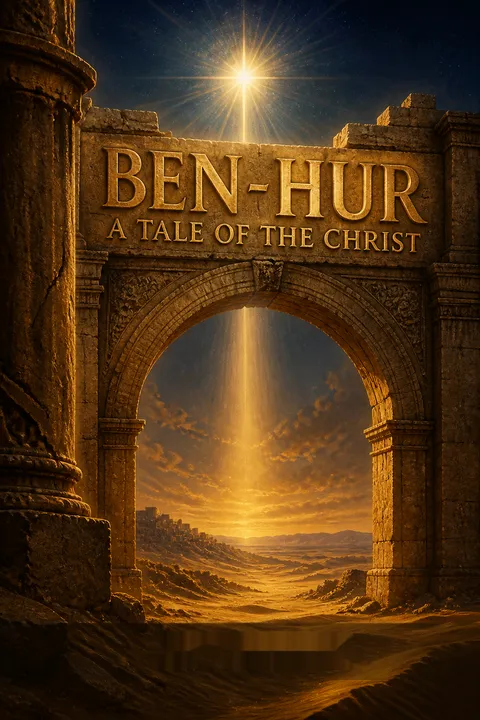
In Bethlehem, Joseph and Mary find shelter in a cave when the crowded inn has no room. Shepherds follow a heavenly sign to the newborn and leave convinced they have seen the promised Savior. Eleven days later, three travelers arrive from Greece, India, and Egypt, each guided by the same star. They bring gold, frankincense, and myrrh, and worship the child.
Herod, alarmed by their search for a newborn king, sends them toward Bethlehem and asks them to return with the location. Warned in a dream, they go home by another route. Herod responds by ordering the deaths of Bethlehem's young boys, while the child escapes with his parents. The visitors' shared faith gives the novel its first vision of a redemption wider than any nation.
The novel opens by making the Messiah a meeting point for people divided by geography, language, and religious inheritance. The travelers do not arrive with a common theory; their shared experience gives them a new one. Herod's response establishes the political danger of any claim to kingship, while the shepherds' visit locates sacred recognition among people without rank. The infant's helplessness also complicates the expectation of a conquering ruler. From the beginning, the story asks whether power can be recognized when it appears in a form that cannot command obedience.
Friendship Turns to Contempt
Twenty-one years later, Judah Ben-Hur welcomes back Messala, his Roman boyhood friend, but finds a man who mocks Jewish faith and treats Rome's rule as inevitable. Judah ends the friendship rather than accept his country's humiliation as a joke. At home, his mother answers his wounded pride with a history of Israel's leaders and a defense of service to God.
She permits Judah to pursue a soldier's training, provided he serves his people rather than Caesar. The exchange awakens his ambition and directs it toward war. Judah leaves the conversation resolved to choose a life beyond the family business, while his mother's fierce account of their inheritance gives him a moral standard against which he will later measure both Rome and himself.
Messala's return makes an intimate injury carry political weight. His contempt is not simply personal cruelty; it asks Judah to accept that Roman power defines what is valuable. Judah's mother answers by making family memory a source of self-respect, but her defense also strengthens his ambition to meet Rome on its own terms. The scene seeds a conflict between vocation and retaliation: Judah wants his life to matter, yet the example offered to him frames military achievement as a way to restore injured dignity.
A Tile Becomes a Sentence
As the new procurator Valerius Gratus rides through Jerusalem, a loose roof tile gives way beneath Judah's hand. Judah reaches to catch it, but the fragment strikes Gratus and knocks him from his horse.
The crowd assumes an assassination attempt and attacks the Roman soldiers; Messala identifies Judah instead of defending their friendship. Soldiers storm the Hur home, seize Judah's mother and younger sister Tirzah, and carry them away with the household. Judah begs Messala to protect them, but Messala leaves him to the soldiers.
Gratus condemns Judah to the galleys without a trial and orders his family hidden in the Tower of Antonia. Amrah, the family's nurse, escapes the guards by returning to the sealed house. Judah is marched toward a life sentence, believing his family lost.
The catastrophe turns a trivial accident into a state crime because Rome's authority treats suspicion as sufficient proof. Messala's betrayal is decisive precisely because it arrives through a childhood bond Judah still expects to matter. The punishment reaches beyond Judah: his mother and sister are erased from public life, and the family estate is confiscated. Amrah's return to the house preserves a witness and a thread of continuity, even as the Roman regime tries to make the Hurs disappear.
Water Before the Galleys
On the march through Nazareth, a young laborer approaches the exhausted Judah with water and quietly blesses him. Judah cannot know that the stranger is Jesus, but remembers the face. Three years of rowing follow.
On a Roman galley, commander Quintus Arrius notices Judah's unusual strength and learns that he was condemned without trial. During a naval battle, Arrius's ship sinks. Judah saves him from drowning, then refuses Arrius's request to kill him rather than risk capture by pirates.
A Roman ship rescues them both, and Arrius adopts Judah as his son and heir. For the first time since his arrest, Judah gains freedom, education, and a path toward the military life he had imagined. The water at Nazareth and the sea rescue become two distinct acts of mercy in his memory.
Judah's first encounter with Jesus is too brief for recognition, but it interrupts the story's brutal logic: a stranger helps without bargaining, while Roman institutions have condemned Judah without hearing him. Arrius's rescue reverses Judah's status, yet his refusal to kill his benefactor shows that hardship has not erased his moral boundaries. Freedom arrives through loyalty rather than vengeance, although Judah still intends to use his new position to recover his family and prepare for conflict.
The Heir Finds Simonides
Years later, Judah reaches Antioch and hears that Simonides, his father's former steward, has become its most powerful merchant. The Romans tortured Simonides while trying to seize the Hur family's hidden funds, leaving him severely disabled.
Judah visits him, but cannot prove his identity: the imprisonment and years away have separated him from every witness. Simonides says he knows the late Prince Hur, yet gives Judah no news of his mother or Tirzah. His daughter Esther offers a cup and meets Judah's grief with immediate kindness.
Judah leaves believing his family may be dead and refuses to demand Simonides's fortune, insisting he came only to ask about them. Simonides secretly sends Malluch to follow him. His caution protects the estate while testing the character of the young man who claims it.
The meeting places legal identity beside moral identity. Judah can document his Roman adoption, but the proof that matters to Simonides is harder: whether he is truly the son of the man whose estate the steward has protected. Simonides's restraint may feel cruel to Judah, yet it reflects the danger of entrusting great wealth to someone known only through a claim. Esther's small kindness contrasts with this careful withholding and gives Judah a first glimpse of the household as a place where affection and suspicion coexist.
A Kingdom Takes Shape
At Antioch's Grove of Daphne, Judah sees Messala again, now a celebrated charioteer. He also saves an elderly Egyptian, Balthasar, and his daughter Iras when Messala drives dangerously close to their camel.
The rescue wins Judah an invitation to Sheik Ilderim's Orchard of Palms, where the sheik offers his four prized horses for the race. Balthasar recounts how he and two other wise men found the infant Jesus, but interprets the promised Messiah as a Savior of souls, not a conqueror.
Simonides later supports the opposite reading with prophetic texts and urges Judah to organize Israel's fighters. Judah accepts the plan, convinced the Messiah will overthrow Rome. His belief gives his old desire for revenge a cause that feels larger and holier than himself.
Two rival readings of the Messiah now become plans for living. Balthasar understands redemption as spiritual transformation; Simonides and Ilderim imagine political liberation, which fits Judah's military training and personal grievance. Judah is drawn to the second vision because it gives purpose to his pain and a role for his ambition. The horses, the story of the star, and the proposed army appear to align, but the novel quietly shows how easily hope can be shaped by what a person most wants to hear.
The Circus Crowns Judah
Judah trains Ilderim's four Arab horses to run as one and enters the Antioch race against Messala. The crowd divides between their colors, while Roman nobles wager heavily on Messala. During the dangerous start, Judah yields the inside lane, then sweeps across the field to keep pace.
Messala lashes Judah's horses at a turn, but Judah steadies them and waits until the final rounds to unleash their speed. His chariot clips Messala's high axle, breaking the Roman's vehicle and throwing him beneath the racing teams.
Judah wins, while Messala survives with injuries that leave him unable to walk. The victory publicly reverses their old power balance and brings Judah wealth, fame, and the chance to reclaim the resources needed for his political campaign.
The race converts a private grievance into public spectacle. Judah wins not through the favored Roman equipment but through patience, precise control, and trust built with Ilderim's horses. Yet the victory also carries danger: the crowd sees a Jew defeat Rome, and Messala's bodily injury turns humiliation into a lasting motive for retaliation. Judah's skill is real, but his triumph still serves revenge, leaving open whether he can make power answer to a purpose beyond personal redress.
The Dead Man's Disguise
After the race, Iras lures Judah to the Roman-owned Palace of Idernee, where two hired fighters wait to kill him. Judah recognizes the former gladiator Thord and defeats his companion, then persuades Thord to help stage a false death rather than murder Messala.
A corpse in Judah's clothes gives his enemies reason to believe he is gone. Simonides then acknowledges Judah as the rightful heir, accounting for the fortune he has protected and grown.
Judah gives Simonides the business and releases him and Esther from legal service, but asks them to help finance a campaign against Rome. Simonides and Ilderim agree. Judah leaves Antioch with a new identity and a plan to train Israel's fighters, while Messala and Gratus believe their threat has vanished.
Judah's deception keeps him alive, but it also marks a shift from being acted upon to shaping events through strategy. He refuses the straightforward killing that revenge offers and instead uses the resemblance between two bodies to defeat a plot without another deliberate murder. Simonides's restored fortune gives Judah immense power; his decision to free Esther and Simonides shows that he can use authority generously, even as he commits that wealth to an armed cause.
The Tower Opens
When Pontius Pilate replaces Gratus, he orders the prisons inspected. The Tower of Antonia's keeper discovers that Gratus falsified his maps to conceal a cell where Ben-Hur's mother and Tirzah have been imprisoned for eight years. A blind, voiceless prisoner had secretly shared his food with them. The women are released, but the confinement has left both with leprosy.
That night they find Judah asleep outside their confiscated home. His mother recognizes him and kisses his sandal, but keeps herself away so he will not contract the disease. Amrah soon learns the women are alive and begins bringing them food and water. They make her promise not to tell Judah, fearing his love will draw him into their isolation.
The prison audit exposes the bureaucracy of disappearance: Gratus did not merely imprison the women, he altered records so their cell would cease to exist on paper. Their survival depends on the compassion of a fellow prisoner, who shares the little food he receives. Their decision to hide from Judah reverses the expected reunion. Love protects him by withholding truth, but also extends the separation that the Roman violence created.
Judah Leads the Galileans
Seeking support in Jerusalem, Judah joins Galilean visitors protesting Pilate's plan to use Temple funds for an aqueduct. When Pilate sends disguised soldiers to club the crowd, Judah leads the Galileans in tearing branches from trees and fighting back.
He restrains them from charging the better-armed guard, then defeats a centurion in single combat and escapes with them. The victory earns him a following. In Galilee, Judah organizes three legions, trains their officers in Roman tactics, and relies on Simonides for arms and Ilderim for supplies.
He believes these forces will serve the Messiah's coming war. His new leadership turns his private anger into a disciplined movement, though its purpose remains bound to his assumption that the Messiah will rule by conquest.
Judah's leadership is effective because he combines physical courage with restraint. He recognizes that the Galileans can win a street fight but cannot survive an assault by organized troops, so he directs both their attack and retreat. The three legions make his political hope tangible, while also deepening the ethical risk of his plan. He can now mobilize others, but he still believes that liberation requires the same military grammar Rome uses.
The Carpenter's Son
A letter from Malluch tells Judah that a wilderness preacher named John is preparing the way for the Messiah. Judah rides toward the Jordan and encounters Balthasar and Iras on the road. At Bethabara, John points out Jesus as the one he has been announcing.
Judah recognizes the face of the young man who gave him water in Nazareth before the galleys. He then follows Jesus, witnesses healings, the feeding of a crowd, and the raising of Lazarus, and struggles to reconcile such power with Jesus's refusal of wealth and political command.
Balthasar insists that the Messiah saves souls, while Judah keeps hoping for a king who can defeat Rome. The same miracles that persuade him Jesus is more than an ordinary man make his expected mission harder to understand.
Recognition links Judah's private past to the public ministry he has been trying to interpret. Jesus's first act toward him was an unremarkable kindness, not a demand for allegiance; the later miracles magnify that memory without resolving the political question Judah brings to them. The contrast between power and refusal is the novel's central test of interpretation. Judah sees what Jesus can do, but must learn to distinguish capacity from intention.
The Family Is Healed
As Jesus approaches Jerusalem, Ben-Hur's mother and Tirzah leave their tomb to seek healing, guided by Amrah. A disciple gives them water and directs them to wait beside the road. When Jesus passes amid pilgrims carrying palm branches, they call to him.
He tells the mother that her faith has brought healing, and the leprosy vanishes from both women. Judah, who has been following the procession, recognizes Amrah and then sees his mother and sister restored.
They embrace after years apart, and he takes them to tents outside the city while they complete the purification required by law. Their reunion repairs the loss at the heart of Judah's life, but it also forces him to consider whether Jesus's power serves a different purpose from the armed kingdom he has been preparing.
The healing resolves the story's most intimate wound through a public act that Judah cannot fit into his military scheme. His family returns not because his legions succeed, but because Jesus responds to a plea from people excluded by law and society. The mother and Tirzah's faith is active rather than passive: they leave their tomb and risk the road. Their restoration makes Judah's love concrete again, giving him something to protect beyond national pride.
A King Rides an Ass
On the day Jesus enters Jerusalem, Judah expects him to announce himself at the Temple and summon the forces Judah has assembled. Instead, Jesus arrives humbly on a young donkey, enters the Temple, and leaves without claiming a throne.
Iras later confronts Judah with knowledge of his secret legions and alliance with Ilderim. She reveals that Messala is behind her and demands twenty-six talents to keep the information from Sejanus. She also mocks Jesus for failing to seize power.
Judah refuses to pay and rejects her appeal to forgive Messala, then warns her that Rome will find no accessible fortune to seize. Her threat makes clear that his political campaign is exposed. Jesus's restraint, meanwhile, strips Judah's hopes of their last easy justification.
The donkey and the empty-handed departure from the Temple are not incidental failures of pageantry; they expose the assumptions Judah has placed on Jesus. Iras exploits the same political expectation, treating a messianic movement as an opportunity to bargain for money and influence. Judah's refusal to ransom himself shows resolve, but his anger remains tethered to retaliation. The crisis now demands more than tactical ingenuity: he must decide whether loyalty means forcing Jesus into his own design.
The Kiss in Gethsemane
On Passover night, Judah sees Judas lead priests and Roman soldiers to Gethsemane. Jesus identifies himself, asks that his followers be allowed to leave, and heals a man whose ear a disciple has cut off. Judah asks whether Jesus would accept a rescue, but receives no sign of recognition or consent. He escapes the crowd when it turns on him.
At dawn, two Galilean officers tell Judah that the rest of his forces have joined the priests in seeking Jesus's death. Judah can no longer call his legions to save the man they have rejected. He rides toward Golgotha with the officers, still uncertain whether to fight, but beginning to understand that Jesus is choosing a fate Judah cannot override.
Gethsemane brings Judah's political and moral conflicts into direct contact. Jesus's healing of a captive's injury rejects the logic of armed defense even when violence might protect him. Judah's question about rescue reveals his remaining hope that force can still intervene, but Jesus gives him no permission to act. The legions' defection then shows how little control Judah has over a movement built on expectations Jesus never endorsed.
The Cross Rewrites the Kingdom
At Golgotha, Judah watches Jesus endure mockery, nails, and the cross without retaliation. As the sky darkens, Jesus speaks of forgiveness and promises Paradise to a condemned thief. Simonides recognizes that the kingdom he expected cannot be an earthly empire.
Judah remembers Balthasar's teaching and accepts that Jesus is the Son of God and the Redeemer, not the conqueror he had imagined. Jesus dies; the earthquake scatters the crowd, and Balthasar, too frail to survive the ordeal, dies at the hill.
Simonides remains alive, his long dispute with Balthasar's vision ended. Judah's military ambition does not simply vanish, but its claim to holiness does. The cross changes his understanding of power from dominion over enemies to a love that meets suffering without returning it.
The crucifixion resolves the novel's competing interpretations through action rather than debate. Jesus does not merely describe a kingdom unlike Rome's; he refuses the means by which Judah expected a king to secure one. Simonides changes when a criminal's request and Jesus's promise make Paradise more than an abstraction. Judah's conversion is not a rejection of justice or courage, but a recognition that military victory cannot redeem the person who wins it.
The Fortune Serves the Dead
After the crucifixion, Judah marries Esther and builds a life with her, his mother, Tirzah, and their children. Iras returns years later to say that she has killed the disabled Messala, then disappears before Esther can persuade her to stay.
Simonides grows old, while news arrives that Nero is persecuting Christians in Rome. Judah receives the later Sheik Ilderim's inheritance, including the Orchard of Palms, and asks Simonides how to use the wealth. Simonides proposes protecting Christian burials, since Roman authorities respect the dead.
Judah sails for Rome with Esther beside him, beginning the catacomb work that the novel presents as an underground shelter for the persecuted Church. The fortune once intended to finance an armed kingdom now serves a community whose power depends on preserving the vulnerable.
The ending converts the novel's material inheritance into a new kind of political action. Judah does not abandon public responsibility; he redirects resources from armies to shelter and memory. The catacombs answer Rome's violence through a strategy that is practical, communal, and rooted in respect for the dead. Iras's final appearance preserves the cost of vengeance: she has outlived neither her hatred nor its damage. Judah's home with Esther and his family offers a quieter measure of victory than the one he once sought.
Analysis
Ben-Hur makes a political question carry the weight of a family tragedy. Judah is not drawn to revolt by abstraction. Rome has confiscated his home, enslaved him without trial, and hidden his mother and sister in a cell designed to erase them. His desire for a Jewish king therefore feels like justice, filial duty, and personal revenge at once. Simonides and Ilderim give that desire money, strategy, and allies, while the Galilean legions make it briefly look achievable.
The novel's central tension is that Judah's evidence about Jesus is stronger than his ability to interpret it. He witnesses healings, restored life, and the transformation of his own family, yet continues to expect military liberation. Balthasar sees a spiritual kingdom early, but his belief cannot simply be transferred to Judah as information. Judah must experience the failure of his political reading: Jesus accepts capture, refuses rescue, and dies without using power to defeat his enemies. The cross changes the meaning of strength from control to self-giving, and makes forgiveness a more radical answer to injustice than victory.
The restoration of Judah's family does not erase their suffering, but it breaks the hold that loss has over his choices. His final use of wealth is significant for the same reason. The fortune once gathered to support an armed kingdom becomes a means of protecting Christians under persecution. The novel does not ask Judah to stop acting in history. It asks him to change what action is for. Its ultimate measure of victory is neither Rome's defeat nor Judah's rank, but the preservation of a vulnerable community and the transformation of a man who once believed that only force could make the world answer for its wrongs.
Review Summary
Ben-Hur: A Tale of the Christ receives mixed reviews, with many praising its epic scope, historical detail, and spiritual themes. Readers appreciate the complex characters, thrilling action sequences, and the interweaving of fictional and biblical narratives. Some find the 19th-century writing style challenging and the pacing slow at times. The novel's exploration of revenge, redemption, and faith resonates with many readers. While some criticize its theological interpretations, others find it a powerful and moving tale that surpasses its film adaptations in depth and emotional impact.
Characters
Judah Ben-Hur
The dispossessed heirA Jerusalem prince's son, Judah is raised within a Jewish household that honors faith, family memory, and public duty. He is physically powerful, observant, and capable of disciplined leadership, but also ambitious and deeply vulnerable to humiliation. His friendship with Messala makes Roman contempt personal; his family's sudden loss then gives his military training an urgent purpose. Judah tends to interpret events through action and strategy, which makes him effective among soldiers but initially limits his understanding of spiritual motives. His bond with his mother and sister reveals the tenderness beneath his resolve. The novel follows him as he tries to reconcile justice, revenge, love, and a new understanding of the Messiah.
Messala
Judah's Roman rivalMessala is Judah's childhood companion, a Roman noble whose education and ambitions make him increasingly contemptuous of Jewish customs. He is witty, socially skilled, and adept at using ridicule to establish superiority. Beneath the polish lies a fierce commitment to Roman status and personal advancement. His relationship with Judah exposes how political hierarchy can deform intimacy: Messala expects affection to survive even as he belittles what Judah holds sacred. He functions as the personal face of an empire that treats loyalty as useful only while it serves power.
Ben-Hur's mother
Judah's moral compassJudah's unnamed mother is a learned, forceful woman whose devotion to Israel is matched by an unusually generous account of its history. She encourages her son to seek a meaningful life while warning him against measuring worth by Roman standards alone. Her love is both nurturing and intellectually demanding: she gives Judah a language for courage, but also asks him to respect what he cannot yet understand. Her memories of family, faith, and lineage shape the emotional foundation of the novel.
Tirzah
Judah's beloved sisterTirzah is Judah's younger sister, affectionate, musical, and closely attached to her mother and brother. Her playfulness brings warmth to the Hur household, while her fear of losing Judah reveals how deeply the family depends on its bonds. She is more than a symbol of innocence: she has her own tenderness and a strong instinct for the people she loves. Her relationship with Judah helps define what he believes he must recover and protect.
Amrah
The faithful family nurseAmrah, an Egyptian woman enslaved in the Hur household, has nursed Judah and Tirzah since childhood. She is practical, emotionally perceptive, and steadfast in her attachment to the family. Her loyalty is expressed through concrete work: she maintains the abandoned house, watches over the young people she raised, and carries news and provisions when others cannot. Amrah's perspective often links separated characters, and her instinct to protect the Hurs can lead her to keep painful secrets.
Quintus Arrius
Judah's Roman benefactorA seasoned Roman naval commander, Arrius is practical, disciplined, and attentive to physical courage. He notices Judah's strength on a galley and, more importantly, listens to the young man's account of his sentence. Arrius represents a Roman capacity for fairness that contrasts with the cruelty of Gratus and Messala. His regard gives Judah a place in Roman society without erasing Judah's Jewish identity.
Jesus of Nazareth
The unexpected MessiahJesus first appears to Judah as a young laborer who offers him water, then reappears as a teacher and healer whose authority does not resemble Roman command. He shows compassion to people others exclude, and his miracles draw crowds without making him pursue wealth, rank, or military power. His quietness is not passivity; it reflects a purpose that Judah, Simonides, and Balthasar struggle to interpret. The contrast between what Jesus can do and what he chooses to do drives the novel's central spiritual conflict.
Simonides
The crippled stewardSimonides is the Hur family's former steward, a shrewd merchant whose business skill and loyalty survive years of Roman torture. His disabled body contrasts with a formidable intellect and an exacting sense of responsibility. He protects the estate not merely as property but as a trust owed to the family he served. His political reading of the Messiah reflects a desire to turn accumulated wealth into historical action. Esther is the center of his private tenderness.
Esther
Simonides's devoted daughterEsther is Simonides's daughter, gentle in manner but strong in her devotion to him. She meets Judah with compassion when he arrives grieving and uncertain, and she sees the person beneath his Roman training and guarded behavior. Her feelings are expressed through care rather than display. Esther's loyalty to her father and her emotional honesty create a counterpoint to the more strategic relationships around Judah. She longs for a life shaped by affection, dignity, and service.
Iras
The alluring EgyptianIras is Balthasar's daughter, strikingly beautiful, clever, and skilled at reading the desires of others. She enjoys art, stories, attention, and the freedoms of a cosmopolitan life, while remaining skeptical of her father's religious devotion. Her attraction to power is as important as her attraction to beauty; she imagines that political change could elevate her. Iras often conceals calculation beneath charm, making her difficult for Judah to understand and trust.
Balthasar
The waiting Egyptian MagusBalthasar is one of the three travelers who worshipped Jesus as an infant. An elderly, devout Egyptian, he has spent his life waiting for the promised redemption and interprets it as the salvation of souls rather than the conquest of Rome. His faith is patient and experiential: he trusts what he witnessed, yet speaks with humility about what remains unknown. His conversations with Judah give spiritual meaning to the signs that others read politically.
Sheik Ilderim
The generous desert allyIlderim is a wealthy Arab sheik whose authority rests on generosity, courage, and the loyalty of his tribe. He loves his horses as companions rather than possessions and takes Roman injustice personally. His pride can make him explosive, but his hospitality is sincere and his promises carry weight. Ilderim gives Judah access to the horses, desert routes, and tribal support that make his plans possible.
Gaspar
The questioning Greek MagusGaspar, the Greek traveler, seeks an answer to the relationship between God and the human soul. His encounter with a Jewish scholar and the star that guides him toward Bethlehem turn philosophical longing into personal faith.
Melchior
The searching Indian MagusMelchior is an Indian Brahman who rejects a religious order that leaves the poor and excluded without compassion. His devotion to love expressed through service brings him into the journey to Bethlehem.
Judas Iscariot
The compromised discipleJudas is one of Jesus's followers, but his choices place him in conflict with the trust his role requires. His actions connect the private circle of disciples to the authorities seeking Jesus. The novel gives him less psychological space than Judah, but his betrayal sharply tests the difference between proximity to a teacher and fidelity to that teacher's purpose.
John the Baptist
The wilderness heraldJohn is an ascetic preacher whose public message draws people to the Jordan. He describes himself as a forerunner rather than the central figure and directs attention toward Jesus. His austere appearance and urgent preaching challenge the crowds' expectations of religious authority.
Pontius Pilate
The calculating procuratorPilate governs Judea as a Roman official who values order and imperial authority. His decision to inspect the prisons exposes abuses hidden by his predecessor, even as his response to public unrest shows the limits of his concern for Jewish life. Pilate's rule is neither simple benevolence nor unbroken cruelty; it is shaped by political calculation.
Caiaphas
The Temple's political high priestCaiaphas leads the Temple establishment and sees Jesus as a threat to religious and political stability. He is a public authority whose status depends on managing relations with Rome. His actions reveal how institutions can defend their power while claiming to protect sacred law.
Mary
Jesus's steadfast motherMary is Jesus's mother, present among the women who accompany him during his final ordeal. Her presence gives the public spectacle of punishment an intimate human cost. She remains close to her son when the crowd and authorities turn against him.
Herod the Great
The threatened rulerHerod is a powerful ruler whose authority is sustained by Roman approval and guarded by suspicion. The report of a newborn king awakens his fear of losing control, making him an early example of political power reacting violently to a rival it cannot yet see.
Thord
The Northman gladiatorThord is a formidable former gladiator who once trained Judah in Rome. He is blunt, physically imposing, and readily amused by practical solutions. His old connection to Judah becomes useful when Judah must escape a murder plot.
Plot Devices
The Star and the Magi
A universal signThe star draws three seekers from distant cultures to the infant Jesus and links their different traditions in a shared act of recognition. It also gives the novel a recurring measure of faith: Balthasar remembers the star as evidence of a promise, while Judah later struggles to interpret what that promise means. The sign begins the story's argument that redemption may belong to all peoples, not only to Israel. Its guidance is powerful but limited; it leads the Magi to the child without explaining the political and spiritual meaning of his future.
The Roman Galley
A sentence that reshapes JudahJudah's unjust condemnation places him at the oar, where Roman power is made physical through chains, exhaustion, and anonymity. The galley becomes the setting for his encounter with Arrius and for the rescue that restores his freedom. It also supplies Judah with the strength and practical experience he later uses in combat and leadership. The device joins his personal story to the machinery of empire: Rome can reduce a prince to a numbered slave, but it cannot fully extinguish the moral choices he makes under confinement.
The Chariot Race
Revenge made publicThe race pits Judah's patience and partnership with Ilderim's horses against Messala's Roman confidence. Its public audience turns a private history of betrayal into a visible contest between Jew and Roman, and the wagers give the outcome a financial consequence as well as an emotional one. Judah's victory wins support and money, while Messala's injury creates fresh danger. The spectacle marks a turning point in Judah's fortunes, but it does not settle the moral question of whether revenge can restore what Rome took.
Simonides's Hidden Fortune
Wealth protected for serviceSimonides preserves the Hur family's money through commercial networks and bills of exchange, placing it beyond Gratus's immediate reach. His fortune later gives Judah the means to train fighters, protect allies, and undertake work for the Christian community. The wealth does not carry a fixed moral meaning: Judah first treats it as the foundation for a political campaign, then commits it to a different kind of service. Its changing use makes the plot's central transformation materially visible.
The Competing Kingdoms
A test of interpretationBalthasar, Simonides, and Judah read the promised Messiah in different ways. Balthasar expects a Savior of souls; Simonides sees the king described by Israel's prophets; Judah hopes for a ruler who can defeat Rome. These interpretations shape what each character is willing to do, from patient witness to the building of legions. Jesus's conduct continually tests their assumptions. The device is not merely theological debate: it determines how Judah understands power, what he believes his wealth is for, and whether he will allow the Messiah to refuse the role he has prepared for him.
FAQ
Synopsis & Basic Details
What is Ben-Hur: A Tale of the Christ about?
- Epic Journey of Vengeance and Faith: Ben-Hur: A Tale of the Christ follows Judah Ben-Hur, a wealthy Jewish prince in Roman-occupied Judea, whose life is irrevocably shattered by the betrayal of his childhood friend, Messala. Falsely accused of attempted assassination, Ben-Hur is condemned to slavery in the Roman galleys, while his mother and sister are imprisoned.
- Quest for Justice and Identity: The narrative traces Ben-Hur's arduous journey from a vengeful galley slave, through his adoption by a Roman tribune, to his triumphant return as a respected figure. His path is driven by a burning desire for revenge against Messala and a desperate search for his lost family, intertwining with the burgeoning story of Jesus of Nazareth.
- Clash of Empires and Ideologies: Set against the tumultuous backdrop of the Roman Empire's dominion over Judea, the story explores themes of political oppression, cultural conflict, and personal transformation. It culminates in Ben-Hur's encounter with Jesus, which profoundly challenges his understanding of justice, power, and the true nature of the Messiah's kingdom.
Why should I read Ben-Hur: A Tale of the Christ?
- Rich Historical Immersion: Lew Wallace meticulously recreates the world of first-century Judea and the Roman Empire, offering readers a deeply researched and vivid portrayal of daily life, political tensions, and cultural nuances. The detailed descriptions of cities like Jerusalem and Antioch, Roman customs, and Jewish traditions provide an unparalleled sense of historical authenticity.
- Profound Spiritual Exploration: Beyond its thrilling plot, the novel is a powerful meditation on faith, forgiveness, and the human condition. It delves into the spiritual struggles of its characters, particularly Ben-Hur's journey from a desire for earthly vengeance to an embrace of Christ's message of love and redemption, offering a timeless message relevant to contemporary readers.
- Masterful Storytelling and Character Arcs: Wallace crafts a compelling narrative filled with dramatic tension, intricate plot twists, and deeply human characters. Ben-Hur's transformation, Messala's tragic ambition, and Esther's steadfast love are explored with psychological depth, making their emotional journeys resonate long after the final page.
What is the background of Ben-Hur: A Tale of the Christ?
- Roman Occupation and Jewish Messianic Hope: The story is set during a period of intense Roman rule over Judea, a time marked by deep resentment among the Jewish populace and fervent anticipation of a Messiah who would liberate them. This political and religious climate forms the essential backdrop for Ben-Hur's personal quest and his evolving understanding of the Christ.
- Cultural Crossroads of the Ancient World: The narrative spans diverse geographical and cultural landscapes, from the deserts of Arabia and the bustling markets of Jerusalem to the opulent Roman villas and the vibrant city of Antioch. This rich tapestry highlights the intermingling of Jewish, Roman, Greek, and Egyptian cultures, each contributing to the complex social fabric of the era.
- Author's Personal Spiritual Journey: Lew Wallace, a former Union general, politician, and lawyer, embarked on extensive research into Christianity after a conversation with an agnostic, Robert Ingersoll. This personal quest for understanding deeply influenced the novel, imbuing it with a respectful yet imaginative exploration of biblical events and figures, particularly the life of Jesus.
What are the most memorable quotes in Ben-Hur: A Tale of the Christ?
- "Father, forgive them, for they know not what they do.": Spoken by Jesus on the cross, this quote encapsulates the central theme of forgiveness and divine compassion, profoundly impacting Ben-Hur and serving as a pivotal moment of spiritual revelation. It highlights the radical nature of Christ's message against the backdrop of human cruelty.
- "I am the resurrection and the life.": This declaration by Jesus, heard by Ben-Hur at a critical juncture, offers the ultimate promise of eternal life and spiritual renewal, directly challenging Ben-Hur's earthly ambitions and his understanding of death and loss. It signifies the true nature of the kingdom Jesus offers.
- "Down Eros, up Mars!": Messala's repeated exclamation, particularly during his confrontation with Ben-Hur and the chariot race, vividly expresses his ruthless ambition, cynical worldview, and dedication to worldly power and conquest. It serves as a stark contrast to the spiritual values that Ben-Hur eventually embraces.
What writing style, narrative choices, and literary techniques does Lew Wallace use?
- Panoramic, Detailed Historical Realism: Wallace employs an omniscient narrator who provides extensive historical and geographical details, immersing the reader in the ancient world. His descriptions of landscapes, architecture, customs, and military formations are meticulously researched, creating a rich, almost documentary-like backdrop for the fictional narrative.
- Elevated, Formal Prose with Biblical Allusions: The writing style is often formal and elevated, echoing biblical language and classical literature. Wallace frequently uses rhetorical flourishes, extended metaphors, and direct addresses to the reader, lending the narrative an epic and authoritative tone. This choice reinforces the story's grand scope and its connection to sacred texts.
- Symbolic Juxtaposition and Parallelism: A key technique is the juxtaposition of characters, cultures, and ideologies to highlight thematic contrasts. The parallel lives of Ben-Hur and Jesus, the Roman and Jewish worlds, and the themes of vengeance versus forgiveness are constantly set against each other, driving the narrative's moral and spiritual arguments. The chariot race, for instance, is not just a physical contest but a symbolic clash of these opposing forces.
Hidden Details & Subtle Connections
What are some minor details that add significant meaning?
- The Significance of Names: Beyond the obvious "Ben-Hur" (son of Hur), many names carry subtle meaning. For instance, "Esther" (star) foreshadows her role as a guiding light and source of hope for Ben-Hur, contrasting with the literal star that guided the Magi. "Tirzah" (pleasantness) highlights her gentle nature and the profound loss her suffering represents.
- Recurring Animal Symbolism: The repeated mention of specific animals subtly reinforces character traits and thematic elements. Messala's horses are described as "mutilated" and "barbaric," reflecting his Roman cruelty and disregard for natural beauty, while Ilderim's Arab horses are "kings of their kind," embodying nobility and spirit, mirroring Ben-Hur's own journey from subjugation to inherent royalty.
- Architectural and Environmental Foreshadowing: The detailed descriptions of buildings and landscapes often carry symbolic weight. The "fortelesque" and "rude, unfinished" exterior of the Hur palace, despite its inner refinement, subtly foreshadows the family's vulnerability to Roman power. Conversely, the "lily dropped carelessly upon a great bare rock" description of Idernee's portico hints at Iras's deceptive beauty and underlying coldness.
What are some subtle foreshadowing and callbacks?
- The Three Magi's Prophecy of Universal Redemption: Early in the novel, Balthasar, Gaspar, and Melchior explicitly state that the King of the Jews will be a Redeemer "not of the Jews alone, but of all the nations of the earth." This subtly foreshadows Ben-Hur's eventual disillusionment with a purely political Messiah and his embrace of Christ's universal spiritual kingdom, a callback to the very first part of the story.
- Messala's "Eros is dead, Mars reigns!": This declaration by Messala after his initial confrontation with Judah foreshadows his complete dedication to war, conquest, and ruthless ambition, and his abandonment of any former affection. It is a chilling prophecy of his own moral decay and the destructive path he will follow, culminating in his physical ruin.
- The "Leprous" Cell and its Prophetic Irony: Gratus's description of cell V as "leprous" and intended for prisoners to "die, and be lost" is a grim foreshadowing of the fate of Ben-Hur's mother and sister in the adjacent cell VI. The irony is profound: they are indeed afflicted with leprosy, but are ultimately "found" and healed by the very Messiah whose coming Gratus unknowingly tried to suppress.
What are some unexpected character connections?
- Simonides's Ear-Mark as a Symbol of Enduring Loyalty: The detail of Simonides having his ear pierced to become a "servant forever" for Rachel, Esther's mother, is a profound and unexpected connection. It reveals his deep, self-sacrificing love and loyalty, contrasting sharply with Messala's self-serving ambition. This act, rooted in ancient law, elevates his servitude to a spiritual devotion, making his stewardship of the Hur fortune an act of love, not mere duty.
- Ben-Hur's Unconscious Echo of Messala's Ambition: Despite his hatred for Messala, Ben-Hur's initial drive for vengeance and his desire to lead a military uprising against Rome mirror Messala's own pursuit of power and glory, albeit for different ends. This subtle parallel highlights the corrupting influence of worldly ambition and the challenge Ben-Hur faces in truly transforming his spirit.
- Iras's Connection to Cleopatra and Egyptian Intrigue: Iras's character is subtly linked to Cleopatra, with references to her "arts" and the "love-signs" of Egypt. This connection hints at a deeper, historical pattern of Egyptian women using beauty and cunning for political influence, making Iras's manipulative nature and tragic end a continuation of a long-standing cultural archetype.
Who are the most significant supporting characters?
- Amrah, the Steadfast Nurse: Amrah's unwavering loyalty and maternal love for the Hur family are crucial. She is the silent guardian who risks everything to care for Miriam and Tirzah in their leprosy, embodying selfless devotion and providing a vital link to Ben-Hur's past. Her actions are driven by pure affection, contrasting with the political motivations of others.
- Malluch, the Resourceful Emissary: Malluch serves as Simonides's eyes and ears, and later Ben-Hur's trusted agent. His shrewdness, discretion, and ability to navigate both Roman and Jewish worlds are instrumental in gathering intelligence and executing plans. He represents the practical, worldly support necessary for Ben-Hur's complex endeavors.
- Sheik Ilderim, the Honorable Ally: Ilderim, the proud Arab sheik, provides Ben-Hur with the means to challenge Messala in the chariot race and later offers military support. His deep sense of honor, love for his horses, and fierce hatred of Rome make him a powerful and colorful ally, embodying the spirit of resistance against imperial oppression.
Psychological, Emotional, & Relational Analysis
What are some unspoken motivations of the characters?
- Messala's Deep-Seated Insecurity: While outwardly arrogant and ambitious, Messala's relentless pursuit of Roman favor and his cruel treatment of Ben-Hur can be interpreted as stemming from a profound insecurity. His need to assert dominance over his Jewish friend, whom he once admired, suggests a fear of being overshadowed or perceived as less Roman, driving his extreme actions.
- Simonides's Calculated Patience for Vengeance: Simonides's long-term stewardship of the Hur fortune and his seemingly detached demeanor mask a deep, burning desire for vengeance against Rome and Gratus. His meticulous planning and accumulation of wealth are not solely for Ben-Hur's restoration but also for a carefully orchestrated retribution, revealing a complex blend of loyalty and personal vendetta.
- Iras's Yearning for Power and Status: Iras's seductive charm and manipulative tactics are driven by a desire to escape the perceived limitations of her own identity as Balthasar's daughter and to secure a position of influence. Her pursuit of Ben-Hur, and later Messala, is less about love and more about aligning herself with power, reflecting a deep-seated ambition for social elevation.
What psychological complexities do the characters exhibit?
- Ben-Hur's Internal Conflict: Vengeance vs. Redemption: Ben-Hur's psychological journey is marked by a profound internal struggle. Initially consumed by a thirst for revenge against Messala, his experiences of suffering and his encounters with Jesus gradually introduce the conflicting ideal of forgiveness. This internal battle between his ingrained desire for retribution and the nascent stirrings of Christian compassion forms the core of his psychological complexity.
- Esther's Quiet Resilience and Moral Compass: Esther exhibits a quiet strength that belies her gentle demeanor. Her unwavering loyalty to Ben-Hur and her moral clarity, even when faced with his vengeful impulses or Iras's allure, demonstrate a deep psychological resilience. She acts as a moral anchor, her internal fortitude a stark contrast to the volatile emotions of those around her.
- Balthasar's Philosophical Detachment and Spiritual Longing: Balthasar's character is complex in his blend of ancient wisdom and childlike faith. His philosophical discussions often mask a deep spiritual yearning for the Messiah, a longing that transcends earthly concerns. His ability to maintain hope and belief despite years of waiting highlights a unique psychological state of patient, unwavering devotion.
What are the major emotional turning points?
- The Betrayal at the Parade: The moment Messala condemns Ben-Hur, accusing him of attempted assassination, is a catastrophic emotional turning point. It shatters Ben-Hur's innocence, transforms his love for Messala into bitter hatred, and plunges him into a world of suffering and injustice, setting the entire plot in motion.
- Ben-Hur's Rescue by Arrius: The providential rescue of Ben-Hur from the sinking galley by Quintus Arrius marks a significant emotional shift. It offers him a lifeline from despair, a new identity, and the first glimmer of hope for a future beyond slavery, initiating his path toward recovery and eventual return to power.
- The Healing of Miriam and Tirzah: The miraculous healing of Ben-Hur's mother and sister from leprosy by Jesus is an overwhelming emotional climax. It represents the ultimate restoration of his family, the triumph of divine compassion over human suffering, and a profound validation of Balthasar's faith, deeply impacting Ben-Hur's spiritual conversion.
How do relationship dynamics evolve?
- Ben-Hur and Messala: From Brotherhood to Bitter Enmity: Their relationship begins as a close childhood friendship, characterized by shared experiences and affection. However, Messala's Roman ambition and Judah's Jewish pride create an irreconcilable rift, leading to Messala's betrayal and Ben-Hur's burning desire for revenge. The chariot race is the physical manifestation of this evolved hatred, culminating in Messala's ruin.
- Ben-Hur and Esther: From Affection to Enduring Love: Esther initially appears as a quiet, supportive figure, a contrast to Iras's allure. Her steadfast loyalty, compassion, and moral strength gradually win Ben-Hur's heart, evolving their relationship from a respectful acquaintance to a deep, enduring love founded on shared faith and values, ultimately leading to marriage and a shared mission.
- Ben-Hur and Balthasar: From Skepticism to Shared Faith: Ben-Hur initially views Balthasar's spiritual quest for the Messiah with a degree of skepticism, focused on a political king. Over time, as Ben-Hur witnesses Jesus's miracles and teachings, and especially after the healing of his family, his understanding aligns with Balthasar's, transforming their dynamic into one of shared spiritual conviction and mutual respect.
Interpretation & Debate
Which parts of the story remain ambiguous or open-ended?
- The Exact Nature of Jesus's Divinity: While the novel clearly presents Jesus as the Son of God and Messiah, the precise theological implications of his divinity are often left to the reader's interpretation, particularly through the differing perspectives of Balthasar (spiritual savior) and Simonides (earthly king). Wallace focuses more on the impact of Jesus's presence and teachings rather than explicit doctrinal exposition.
- The Fate of Iras: Iras's ultimate end is left somewhat ambiguous. After Messala's defeat and her own betrayal, she disappears, with Ben-Hur searching for her in vain. The narrator hints at a tragic fate, suggesting the "blue bay... has yet its dark secrets," leaving her final demise and the full extent of her suffering to the reader's imagination. This open-endedness underscores the destructive consequences of her choices.
- The Scope of Ben-Hur's Future Leadership: While Ben-Hur dedicates his fortune and life to the nascent Christian Church, the specific nature of his leadership and influence in the decades following the crucifixion is not fully detailed. The narrative concludes with his commitment to building catacombs and supporting the persecuted, leaving the long-term impact of his actions and the full extent of his "kingdom" to be inferred by the reader.
What are some debatable, controversial scenes or moments in Ben-Hur: A Tale of the Christ?
- The Chariot Race's Morality: While a thrilling climax, the chariot race raises questions about Ben-Hur's commitment to vengeance. His deliberate act of crushing Messala's chariot, though framed as a strategic move, can be debated as a moment where his thirst for retribution still overrides nascent moral considerations, even as he is on a path to spiritual transformation. This scene highlights the complex struggle between justice and revenge.
- Simonides's Prolonged Deception of Ben-Hur: Simonides, despite his loyalty, withholds the Hur fortune and his knowledge of Ben-Hur's family for years, ostensibly to test Ben-Hur's character and ensure his worthiness. This paternalistic deception, though ultimately for a "good" cause, can be seen as manipulative and raises questions about the ethics of controlling another's destiny, even with benevolent intent.
- The Galileans' Abandonment of Jesus: The swift desertion of Ben-Hur's Galilean legions, who were ready to fight for a political king but not for a spiritual savior, is a controversial portrayal of Jewish messianic expectation. It highlights the profound misunderstanding of Jesus's mission by many of his contemporaries and can be interpreted as a critique of purely earthly ambitions, but also as a potentially harsh generalization of a complex historical reality.
Ben-Hur: A Tale of the Christ Ending Explained: How It Ends & What It Means
- The Triumph of Spiritual Over Earthly Kingdom: The novel concludes with Ben-Hur fully embracing Christianity, dedicating his vast fortune to supporting the persecuted early Church in Rome, particularly by funding the construction of the Catacombs of San Calixto. This signifies his complete transformation from a seeker of earthly vengeance and political power to a servant of Christ's spiritual kingdom. The ending emphasizes that true victory and lasting legacy are found not in conquest or material wealth, but in faith, love, and selfless service.
- Personal Redemption and Family Restoration: Ben-Hur marries Esther, and they raise a family, including Tirzah and his mother, Miriam, who were miraculously healed of leprosy by Jesus. This personal resolution underscores the themes of forgiveness, healing, and the restoration of what was lost. His family's reunion and their shared Christian faith represent a new beginning, free from the cycle of hatred and suffering that defined much of Ben-Hur's earlier life.
- The Enduring Power of Faith Amidst Persecution: The final scenes, set five years after the crucifixion, depict the early Christian community facing persecution under Nero. Ben-Hur's decision to use his wealth to build underground sanctuaries (catacombs) for the dead and for worship symbolizes the resilience and enduring power of the new faith. It suggests that while empires rise and fall, the "Kingdom Unseen" of Christ will ultimately prevail, offering hope and eternal life beyond the reach of worldly powers.
Download PDF
Download EPUB
.epub digital book format is ideal for reading ebooks on phones, tablets, and e-readers.








