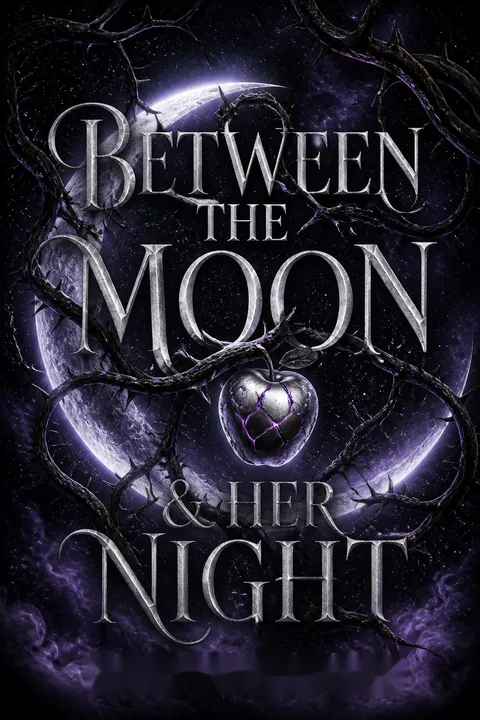


Plot Summary
Prologue
Aurelia1 was made to be the Goddess of Life,1 but the God of Death2 cursed her womb before she could bear children. Each return of the fever caused by that curse brought her a seed from him, and she planted them beside her chambers until thousands of trees replaced the family she could not have.
Her husband, King Aurelius,4 grew distant, then destroyed the orchard to fuel the killing of the Old Gods’ children. When Aurelia1 defied him, he broke her finger to keep her wedding ring in place. She fled to Death2 for help, and he agreed to shelter the escaping Demi Gods in Edenvale. Their past is tangled with cruelty and bargains, but now Aurelia1 must decide whether she can trust the god who cursed her.2
The orchard turns infertility into visible labor: Aurelia cannot create children, but she tends a living landscape that is entirely hers. Its destruction reveals how little Aurelius values the life she has made outside his authority. Death’s role is deliberately compromised. He has harmed Aurelia, yet he offers aid without demanding payment, while her husband’s supposedly lawful rule has become coercive. The prologue therefore begins not with a simple choice between good and evil, but with a woman learning that power, care, and possession can wear similar faces. Her first act of freedom is not choosing a new husband. It is choosing to leave the old one.
Fifty Ships to Edenvale
After freeing the imprisoned Demi Gods, Aurelia1 spends Aurelius’s4 gold to buy the guards’ cooperation and escape aboard fifty ships bound for Edenvale. She could light walk there alone, but stays with the refugees in case her former husband’s4 army catches them at sea. A young passenger offers her a bitter tonic for her nausea, then reveals herself as Ezra,3 the elusive Goddess of Free Will.3
Ezra’s3 questions make Aurelia1 explain that she remains because every life aboard deserves protection, not just lives that belong to her. The exchange gives Aurelia1 her first glimpse of a divine power that does not command her, and the fleet presses on toward safety with the threat of pursuit still hanging over it.
Aurelia’s decision to remain aboard is a small but decisive reversal of her old training. She once measured herself by how well she served a king; now she chooses responsibility without needing a title or reward. Ezra’s disguised presence makes free will more than an abstract principle. Aurelia has to exercise it while sick, frightened, and surrounded by people who depend on her. The scene also distinguishes protection from possession: she guards the refugees because she recognizes their value, not because they belong to her. Her compassion becomes an active political choice, rather than another role assigned by a ruler.
Mist Against the Crown
At Katlegin’s dock, Death2 greets Aurelia1 as the fleet unloads, and the pair have little time to reckon with their old bargain. Aurelius4 arrives with an armed force, intent on taking the refugees back. Death2 lends Aurelia1 enough power to raise the Endless Mist, a barrier that seals Edenvale from the rest of the world and answers to her will.
The refugees are safe, but Death2 now expects Aurelia1 to honor their agreement and become his bride. She refuses, unwilling to trade one life of service for another, and light walks away before he can stop her. Her choice leaves her without the protection of Edenvale and makes clear that surviving Aurelius4 does not mean she is ready to trust Death.2
The barrier is a political achievement and a personal test at once. Aurelia can accept Death’s power without surrendering her authority: she shapes the mist herself, then refuses the marriage attached to their bargain. This distinction matters because her past has taught her to mistake dependence for consent. The choice is neither a rejection of intimacy nor proof that she feels nothing for Death. It is an attempt to preserve the right to decide what those feelings mean. Her escape also carries a cost. Freedom is not yet safety, and her next choices must be made under real danger.
The Apothecary's Tonic
A month later, Aurelia1 searches Veylandria for a potion maker who might undo her deal with Death.2 She finds Ezra3 instead, who explains that their tattooed bargain cannot be broken by a remedy and warns that refusing it could make Aurelia’s1 skin rot. Ezra3 gives her a salve, then insists that she use her temporary freedom to experience life on her own terms.
At Hard Spirits, Aurelia1 drinks, dances, and discovers how little she knows about pleasure outside a palace. Death2 watches from the shadows, but Ezra3 challenges his impulse to keep Aurelia1 confined. He follows her back to the inn and wards her door against intruders, excluding himself from the danger he claims to fear.
Ezra refuses to offer the easy rescue Aurelia wants. Instead, she gives her knowledge and a limited period in which Aurelia can practice choosing for herself. The night out is not simply a romantic interlude; it lets Aurelia test pleasure without turning it into a duty to satisfy a partner. Death’s protective gesture remains morally ambiguous. Guarding the inn protects Aurelia, but his private access to her room shows how quickly care can slide into surveillance. The scene asks whether a person can be protected without being managed, a question that becomes central to their relationship.
Daggers in the Alley
Aurelius4 sends his brothers Malachai10 and Nicholas9 to the inn, and Aurelia1 flees before they can return her to the Immortal Realm. They pursue her through the city and into a dead-end alley, where Nicholas9 shoots at her. Death2 catches the arrow, then forces Aurelia1 to choose between going with him or returning to Aurelius.4 She chooses neither.
Her summoned daggers strike Death2 and Nicholas,9 giving her a chance to light walk away. The wounds expose a secret: Death,2 long believed incapable of bleeding, can be hurt by Aurelia.1 Nicholas9 recognizes that she may be a weapon against the Blood King,2 while Death2 realizes his own strategy has made her feel hunted rather than protected.
Aurelia’s refusal of both men is the clearest statement yet that escape is not the same as choosing a safer master. Her daggers are practical self-defense, but their effect changes the political balance: she can wound the one being most feared across the realms. Nicholas immediately sees her body as a resource to exploit, echoing Aurelius’s habit of defining her by what she can provide. Death understands too late that his ultimatum reproduces the structure he says he wants to rescue her from. The scene converts a private conflict over trust into a vulnerability that other rulers can weaponize.
The Storm Makes Them One
Aurelia1 escapes to a forest in Edenvale where Death2 often goes to be alone. She finds him and demands that he release her from their bargain, but he refuses. Their argument becomes a sword fight in the storm, and the old formality Aurelius4 demanded of her gives way to anger, skill, and blunt honesty.
Death2 admits he watched her for years, even when she was still longing for her husband.4 They kiss, and Aurelia1 chooses to continue their physical relationship. Death2 knows that sex will forge the mating bond and does not tell her. When she wakes in his castle, he explains that she is now his mate and that the bond has also suppressed her ability to light walk away.
The duel lets Aurelia recover a self that palace etiquette had buried: forceful, skilled, and willing to strike back. Yet the scene’s emotional intensity does not erase the ethical breach that follows. Aurelia consents to sex, but Death withholds what that act will permanently change. The distinction between bodily desire and informed consent is crucial, especially for a woman whose earlier marriage taught her that affection can coexist with control. The bond gives their attraction an almost cosmic explanation, but the narrative does not make that explanation a substitute for accountability. Aurelia’s anger at waking bound to him is therefore justified.
A Rose Takes Root
In the castle kitchen, Aurelia1 meets Early,12 an elderly soul separated for decades from his wife. She asks Death2 to grant him an audience, and he reunites the couple in the Spirit Realm’s Second Tier. Early’s12 ordinary longing helps Aurelia1 see that Death’s2 realm contains people, not merely the dead under a king’s administration.
Later, Death2 withdraws the curse that has prevented Aurelia1 from creating life. She grows a white rose from her palm, her first creation made entirely by her own power. She also meets Zahra6 and Dameon,7 who become allies in training her. These acts give Aurelia1 more than a new home: they return her purpose to her without making motherhood its only measure.
Aurelia’s first restored creation is a rose, not an heir. That choice quietly revises the role she was built to perform. Her power can be generative without being confined to reproduction, and her gift to Early makes care a public act rather than a private service to a husband. Death’s willingness to reunite the couple suggests a ruler capable of revising the Spirit Realm’s impersonal system. Yet the scene does not erase his earlier violations. Trust develops through concrete acts of repair, including giving Aurelia back a capacity that he had taken from her.
Feathers Fill the Empty Wing
Training with Zahra6 reveals that Aurelia1 has one feathered wing and one bare, incomplete one. Death2 fashions a feathered prosthetic from his own feathers, and after repeated falls, Aurelia1 manages to fly. Zahra6 also explains why Aurelia1 has been collecting the black feathers Death2 sheds: they are kept for a future child’s wings.
With Zahra,6 Aurelia1 returns to her old chambers and retrieves the feathers from the closet. There she remembers the corsets and humiliations Aurelius4 imposed, then burns the clothes that had made her perform his ideal of a wife. The fire becomes a private farewell to that imposed identity, even before she finds a new name for herself.
The prosthetic wing gives Aurelia a new capability, but its meaning depends on collaboration rather than rescue alone. Death supplies material; Aurelia must risk the falls and learn how to use it. The feathers carry a more complicated burden. Their instinctive association with a future child could repeat the reproductive destiny that once defined her, yet she chooses to reclaim them on her own terms. Burning the dresses is a refusal of the body discipline that made her look like a queen while keeping her politically powerless. She is not becoming whole by erasing every wound. She is deciding what to do with what remains.
The Name Sage Chooses
Arkyn,8 Aurelia’s1 friend from the Immortal Realm, arrives to ask Death2 to return her to Aurelius,4 whose rule is faltering. He offers Death2 the Immortal and Living Realms in exchange for Aurelia’s1 freedom and Aurelius’s4 safe passage. Aurelia1 refuses to return to the husband who abused her,4 and rejects the name given to her at birth, choosing Sage1 instead.
Death2 also refuses Arkyn’s8 offer, saying the realms are worthless without her. His answer matters because he uses her chosen name and declines power that could have restored his old kingdom. Sage1 leaves the exchange with a clearer sense of herself, though her reliance on Death2 and the bond still make the question of freely choosing him unresolved.
A name becomes a boundary Sage can set in public. Rejecting the title and identity attached to Aurelius is not cosmetic; it marks her attempt to author her own history. Arkyn’s bargain exposes how easily political actors turn a woman’s safety into currency, even when they believe they are helping her. Death’s refusal of the realms signals a real change in priorities, but his devotion does not by itself settle whether Sage has chosen him freely. The scene keeps affection and autonomy in tension. His choice is meaningful because it gives up power, while hers remains unfinished because the bond still shapes what she can do.
A Soul Beyond the Stars
Death2 gives Sage1 a manor in Belamour, a safe place in Edenvale where she can visit the Living Realm. He later takes her to a sacred place among the stars, where a vision pulls her soul from her body into a realm of strange winged beings. When she collapses, Ezra3 discovers that Sage’s1 soul is absent and that her blood changes from gold to red, then silver under a potion.
Ezra3 concludes that Sage1 carries mortal and ancient divine origins, though the meaning remains uncertain. She and her sisters stitch Sage’s1 soul back into her body. Sage1 remembers the vision and the unfamiliar name Nockrythiam, leaving Death2 with a mystery that predates the gods he knows.
The vision destabilizes the story’s established categories. Sage has been treated as a New God, but her body reveals a mixture that neither her husband nor her new mate fully understands. The silver blood turns identity into evidence rather than a fixed inheritance, while the vision suggests that the Three Realms may be only one layer of a larger order. This revelation also makes intimacy dangerous in a new way: Sage’s soul can leave the body Death believes he is protecting. Ezra’s response is practical, but the explanation remains provisional. Knowledge expands here without becoming mastery.
The Bargain Finally Breaks
Saphira5 tells Sage1 that Death2 had leaked her hiding place to Aurelius,4 hoping his men would force her back into the bargain. Death2 does not deny the manipulation; later, he recognizes that he had aligned himself with Sage’s abuser4 to secure what he wanted. Sage1 leaves, and Death2 takes her to Belamour, releases her from their deal, and gives her the manor as hers alone.
She lives there independently, tending flowers and testing Neptuah seeds after nausea makes her fear she is pregnant. The seeds do not sprout. For a time, Sage1 is relieved, then unexpectedly saddened. The freedom she demanded has arrived, but it cannot restore trust or make her feelings for Death2 disappear.
The revelation damages more than romantic trust. It shows that Death used the same coercive machinery as Aurelius, even if his motives and treatment differ. His release of the bargain is therefore more significant than another declaration of love: he gives up the mechanism that could compel Sage to return. Her mixed response to the negative pregnancy test likewise resists a simple reading. Relief protects the life she is rebuilding; sadness acknowledges a desire she has not yet chosen to act upon. The manor becomes an experiment in distance, allowing Sage to discover whether attachment can survive without captivity.
The King Loses His Sister
Saphira5 turns against Death2 and uses a net woven from an Ancient One’s hair to strip away his powers, then offers him to the giant imprisoned beneath the Spirit Realm. Zahra6 and Dameon7 break in and rescue him. Death2 regains his strength, defeats the giant, and punishes Saphira5 by tearing away her wings and exiling her from the realm.
Sage,1 living apart, feels Death’s2 grief through their bond and returns to him. She tells Zahra6 more of Aurelius’s4 abuse, then recognizes that her feelings for Death2 have survived the separation. When she tells him she chooses him as mate and king, the choice comes after he has released her, not because the bargain can force her to stay.
Saphira’s rebellion makes the costs of kingship bodily: Death must defend his authority, then inflicts a lasting punishment that damages his relationship with his sister. The rescue also reveals how precarious his power can be when stripped of its supernatural protections. Sage’s return is not a magical reset of the earlier betrayal. She has spent time away, named her abuse aloud to Zahra, and watched Death relinquish his claim. Her decision to choose him therefore carries a different weight from the bond’s pull. It is an act of trust made after distance, though the story soon tests whether love can protect them from political violence.
A Wedding Stopped Cold
One year later, Neptuah seeds sprout in Sage’s1 urine, confirming that she is pregnant, and she prepares to marry Death.2 Before the ceremony, Nicholas9 abducts her with an iron collar and takes her to the white-leafed tree that has always been her weakness. He believes her blood can also help him kill Death,2 but Sage’s1 first concern is the child she carries.
Nicholas9 binds her to the tree, whose roots and power tear through her body. Death2 reaches the Immortal Realm too late. He finds Aurelius4 already dead and Sage1 dying at the tree, then carries her body home. The white roses Sage1 planted in their castle turn black as she passes, and Death2 is left with both the wedding and the child they expected to lose.
The wedding preparations promise a future in which Sage’s body belongs first to herself, yet the attack turns that body back into a battleground for rival kings. Nicholas repeats the logic of both Aurelius and Death: he treats Sage’s blood and vulnerability as instruments for political ends. Her instinct to protect the child makes the threat intimate without reducing her to motherhood; she is defending a future she has only just begun to imagine. The blackening roses collapse the orchard’s old history into the present. Life is not defeated by a lack of power, but by violence that arrives before its protectors can respond.
Epilogue
Ezra3 urges Death2 not to keep Sage’s1 body in the crypt. Because Sage1 carries mortal and immortal blood, she may be reborn after an unknown interval, and Ezra3 offers to raise her in Edenvale, where she can grow up free and choose her future.
Death2 agrees to let her live among the people she cherished, and grants safe passage to Aurelius’s4 remains and Arkyn8 so the dead king4 can reincarnate nearby. He then accepts the Blade of Moram, a weapon forged to protect the realms. Ezra3 reveals that Nicholas9 cannot touch it, leaving Death2 with a possible means to pursue the man who stole Sage and their child.9
The ending refuses the usual romantic guarantee that reunion makes loss harmless. Death’s most loving act is to accept a future in which Sage may return without memories of him and grow up beyond his control. Ezra frames that distance as a form of care, not abandonment. Yet the decision does not settle the moral problem of what Sage would choose; she cannot speak for herself, so Death must act under uncertainty. The Blade of Moram shifts the story from mourning toward a new conflict, while its connection to Nicholas gives the cliffhanger a concrete direction. Love here means both waiting and refusing to let grief become ownership.
Analysis
The novel’s central conflict is not simply whether Sage1 will love Von.2 It is whether she can distinguish love from a claim made over her body and future. Aurelius4 calls her a wife while restricting her public role, using her blood and body to enforce compliance. Von2 begins from a different emotional place, but his decision to forge their bond without explaining its consequences repeats the same structural injury: he treats his desire as sufficient justification. The story gains moral force when it allows Sage1 to name that repetition rather than excusing it as destiny.
The repeated language of creation gives the relationship a material history. The orchard grows from Death’s seeds because Sage1 cannot create freely; Aurelius4 cuts it down and turns it into fuel for killing. When Von2 removes the curse, Sage’s1 first independent creation is a rose, not a child. That distinction matters. Her power becomes hers before she chooses whether to become a mother. The feathers, incomplete wing, and later flight extend the same pattern: recovery is neither a gift that makes her whole nor a return to an untouched past. It is a process of learning to move with what she has.
The Spirit Realm broadens the conflict beyond romance. Von’s2 rule over the dead is shaped by an unjust tier system, and Sage’s1 attention to Early’s12 separation from his wife makes governance answerable to ordinary grief. Her insistence that all lives matter also stands against Aurelius’s4 extermination plans and Nicholas’s9 appetite for power. The final tragedy shows the limits of personal devotion when political violence reaches the body. Von’s2 decision to let Sage1 be reborn without him is the book’s hardest test of love: he must protect her future by surrendering his place in it, while accepting that she may one day choose differently.
Review Summary
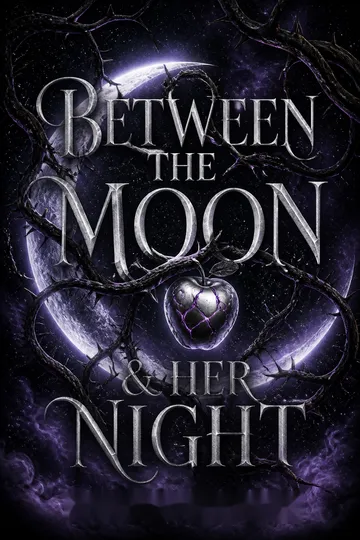
Between the Moon & Her Night is a highly praised prequel in the Between Life and Death series. Readers love the backstory of Von and Sage's relationship, praising the character development, world-building, and emotional depth. Many found it heartbreaking yet satisfying, with strong themes of healing and empowerment. The book is noted for its spicy content and morally grey characters. While most reviews are overwhelmingly positive, a few readers found it confusing or disliked certain aspects. Overall, fans consider it a must-read addition to the series.
People Also Read







Characters
Sage
Life's reclaimed voiceBorn Aurelia, Sage begins as the Goddess of Life and the wife of Aurelius4, but her divine title disguises how little authority she has over her own life. She has been taught to equate devotion with silence, and the curse on her ability to create reinforces her shame. Her compassion for the Demi Gods and for ordinary souls is not passive: she spends Aurelius’s4 gold to free prisoners, risks herself to protect refugees, and helps reunite a widower with his wife. She is curious, stubborn, and capable of anger as well as tenderness. Choosing the name Sage marks her effort to define herself apart from the kings who want to claim her.
Von
The death-bound kingKnown publicly as the God of Death and the Blood King, Von rules the Spirit Realm with formidable power and a practiced talent for manipulation. His fixation on Sage1 predates their relationship, and he initially confuses protecting her with deciding what is best for her. Beneath his theatrical arrogance is a ruler capable of changing his priorities: he aids the refugees, improves the Spirit Realm’s systems, and learns to give up claims that might keep Sage1 close. His care is expressed through acts such as cooking for her, restoring her creative power, and helping her fly. His central conflict is whether devotion can become generous enough to leave another person free.
Ezra
Free will's apothecaryEzra is the Goddess of Free Will, an ancient power who appears as a young woman and works as a potion maker. Her eccentric humor hides a sharp understanding of coercion, and she is willing to tell Sage1 when a hoped-for escape cannot be bought with a potion. She offers remedies, practical help, and perspective without making Sage’s1 decisions for her. Ezra also intervenes when Sage’s1 soul is in danger and challenges Von2 when his protectiveness becomes control. Her loyalties are difficult to read, but her consistent concern is that Sage1 have room to live beyond the claims of more powerful immortals.
Aurelius
The golden tyrantAurelius, the God of Life and King of the New Gods, is Sage’s1 former husband. He presents himself as a benevolent ruler, yet he expects Sage1 to produce heirs, keep to the role he assigns her, and tolerate his neglect. His treatment of her turns affection into a tool of control, making her question her own judgment long after she leaves him. His destruction of her orchard exposes the difference between his public image and his private values. Aurelius matters not only as Sage’s1 abuser, but as a ruler whose choices shape the danger facing the freed Demi Gods and the political conflict with Von2.
Saphira
War's grieving sisterSaphira is the Goddess of War and Von’s sister2, a proud commander whose sharp intelligence is matched by a fierce need to control her own fate. She has lost a bonded partner and carries that grief as a reason to close herself off from new attachments. Her loyalty to the Old Gods is entangled with anger over the realms Von2 gives up and fear that he is making the wrong choice. She can be perceptive about other people’s weaknesses, but often uses that insight to pressure or wound them. Her history with Zahra6 hints at a more tender self beneath the martial discipline and resentment.
Zahra
A companion's flameZahra is the Goddess of Companionship and a close friend of Von2 and Sage1. Warm, perceptive, and direct, she helps Sage1 train her elemental powers and offers the kind of listening that does not demand an immediate confession. Zahra has survived an emotionally abusive relationship of her own, so she recognizes how easily a person can mistake control for love. Her pregnancy and her bond with Dameon7 give Sage1 an example of intimacy built on mutual care. Zahra also remains compassionate toward Saphira5, preserving a complicated history rather than reducing her former friend to an enemy.
Dameon
Protection made fleshDameon is the God of Protection, Zahra’s bonded partner6, and one of Von’s2 trusted allies. His formidable appearance and flame magic are balanced by attentiveness to Zahra6 and their child. He worries about a prophecy concerning his family, but tries to keep that fear from overwhelming their happiness. When danger reaches Von2, Dameon acts decisively rather than waiting for the king to solve his own crisis. His partnership with Zahra6 gives Sage1 a visible model of strength that supports rather than eclipses another person.
Arkyn
A loyal court friendArkyn is a red-haired Demi God and Sage’s1 friend from the Immortal Realm. His loyalty to Aurelius4 and his concern for the stability of the New Gods pull him into conflict with Sage’s1 need to escape her former marriage. He approaches Von2 with a political bargain meant to secure Aurelia’s1 return, showing that even a sincere friend can mistake protection for restoration of the old order. Arkyn is a reminder of the life Sage1 left behind, as well as of the way court allegiances can obscure a person’s own wishes.
Nicholas
The ruthless princeNicholas is one of Aurelius’s brothers10, an impatient and ambitious New God who sees weakness as an opening to seize power. He is more openly aggressive than Malachai10 and is willing to use Sage’s1 vulnerability as leverage against both kings. His belief that political victory justifies brutality makes him dangerous even to members of his own family. He is an antagonist driven less by grief than by the chance to replace a failing ruler.
Malachai
The measured brotherMalachai is Aurelius’s other brother9 and a more diplomatic counterweight to Nicholas9. He tries to keep their pursuit of Sage1 from becoming an immediate fight and is alert to the implications of seeing Von2 bleed. His restraint does not free him from serving Aurelius’s4 interests, but it distinguishes him from Nicholas’s9 appetite for force. Malachai’s measured manner makes him a useful observer of the political dangers surrounding the kings.
Folkoln
Chaos at the barFolkoln is the God of Chaos, Von’s brother2, and the proprietor of Hard Spirits. He enjoys provocation and excess, often testing Von’s2 patience for amusement. Beneath the irreverence, he can recognize when his brother2 is in unfamiliar emotional territory and offers blunt, practical counsel. His plans to build taverns in the Living Realm also show an opportunistic streak that turns political tension into business. Folkoln provides a counterpoint to Von’s2 severity, though he is no model of restraint.
Early
A grieving widowerEarly is an elderly soul who works in the castle kitchen and has spent decades trying to reunite with his wife, Amelia. His gentle humor and persistent devotion show Sage1 the ordinary grief and hope contained within the Spirit Realm. His reunion gives her a concrete reason to question how its systems treat the dead.
Plot Devices
The tattooed bargain
A contract with teethDeals made through tattoos bind the parties to their terms, and refusing to fulfill one can cause the marked skin to rot. Sage1 traded her freedom to secure Aurelius’s4 release, then discovers that no potion maker can simply undo that choice. The bargain supplies the external pressure behind her flight and gives Von2 a means to claim her, even when she does not want to return. When he finally releases her, he gives up the clearest instrument of coercion he possesses. The device turns a political exchange into a bodily consequence and keeps the question of consent present even when the characters are apart.
The Endless Mist
A continent behind fogCreated by Sage1 with power lent by Von2, the Endless Mist surrounds Edenvale and blocks Aurelius’s4 army from entering. Unlike a wall controlled by a king, it answers to Sage1, who can allow passage or refuse it. The barrier makes a refuge possible for the liberated Demi Gods and gives Sage1 political authority of her own. It also changes the balance among the realms: Edenvale becomes both sanctuary and a sealed territory whose safety depends on the person Aurelius4 once dismissed as powerless. The mist protects the refugees, but it cannot protect Sage1 from every threat once she leaves its shelter.
The mating bond
Desire with consequencesThe bond connects Sage1 and Von2 through shared emotion, private communication, and an intense pull toward one another. It is formed during sex, but Von2 understands what will happen and Sage1 does not, turning a supernatural romance mechanism into a breach of informed consent. The bond can suppress Sage’s1 ability to light walk away, heighten desire, and later fall silent when she feels betrayed. It therefore does not function as proof that their relationship is healthy or inevitable. Instead, it amplifies the conflict between fate and choice, forcing the characters to distinguish the bond’s demands from the decisions they make for themselves.
Seeds and the white tree
Life's promise and weaknessDeath’s2 seeds let Sage1 grow an orchard despite the curse that prevents her from creating life, making the trees a record of both her suffering and her resourcefulness. A different tree, with white leaves, triggers severe illness in Sage1 and becomes a weapon against her. The contrast ties creation to vulnerability: the orchard expresses what Sage1 can build, while the white-leafed tree exposes what others can use to control her. Neptuah seeds later offer a test for pregnancy, giving Sage1 a way to ask whether a future child is already part of her life. The linked plant imagery makes bodily autonomy and the desire to create concrete throughout the story.
The Blade of Moram
A weapon against tyrannyThe Blade of Moram was forged by Ezra3 and her sisters to belong to the protector of the Three Realms. Aurelius4 could wear it but was weakened by touching it, and Ezra3 reveals that Nicholas9 cannot touch it either. After Sage’s1 death, Ezra3 gives the blade to Von2, turning an old symbol of legitimate protection into a possible answer to the immediate threat. Its history complicates the story’s power politics: a ruler can possess a weapon without being worthy or able to wield it. The blade’s arrival does not resolve the conflict, but it gives Von2 a specific path toward confronting Nicholas9.
FAQ
Synopsis & Basic Details
What is Between the Moon & Her Night about?
- A Goddess's Awakening: Between the Moon & Her Night follows Aurelia, the Goddess of Life, created as a consort to Aurelius, the God of Life, but stripped of her creative power and agency by the God of Death. Her journey begins as a pawn in divine power struggles, leading her to a desperate bargain with her tormentor.
- A Dark Bargain for Freedom: Forced into a deal with Von, the God of Death, Aurelia must navigate his possessive obsession while fighting for her autonomy and protecting the persecuted Demi Gods. The narrative explores her transformation from a submissive princess to a defiant goddess, challenging the patriarchal structures of her world.
- Love, Betrayal, and Rebirth: The story delves into complex themes of love, consent, and betrayal as Aurelia, later choosing the name Sage, forges an unbreakable bond with Von. It culminates in a tragic loss and the promise of reincarnation, setting the stage for a love that transcends death and offers a second chance at true freedom.
Why should I read Between the Moon & Her Night?
- Deeply Emotional & Transformative Arc: Readers seeking a dark fantasy romance with profound character development will be captivated by Sage's journey from victimhood to self-empowerment. Her struggle to reclaim agency and define her own worth, even in the face of overwhelming divine power, is both heartbreaking and inspiring.
- Complex Morally Grey Romance: The relationship between Sage and Von is a masterclass in morally grey dynamics, exploring obsession, manipulation, and eventual redemption. Their bond is intense, challenging, and ultimately transformative, offering a unique take on the "enemies-to-lovers" trope that delves into the psychological impact of their intertwined destinies.
- Rich World-Building & Mythology: Jaclyn Kot crafts a vivid world of Old and New Gods, intricate realms, and ancient prophecies. The story is steeped in unique mythological elements, from the creation of gods to the mechanics of reincarnation and the symbolism of natural elements, providing a lush backdrop for its epic romance and power struggles.
What is the background of Between the Moon & Her Night?
- Ancient Mythological Foundations: The world is built upon a deep history of Old Gods, predating the New Gods, with a cosmic Creator overseeing three realms: Immortal, Living, and Spirit. This ancient conflict, particularly the God of Death's original dominion and subsequent dethroning, forms the bedrock of the story's political and personal tensions.
- Patriarchal Divine Society: The narrative is set against a backdrop of a rigidly patriarchal divine society where female gods, like Aurelia, are often defined by their roles as consorts or mothers, with limited agency. This societal structure is a key driver of Aurelia's initial suffering and her eventual rebellion against imposed expectations.
- Inter-Realm Dynamics & Power Struggles: The story intricately weaves the interactions and conflicts between the Immortal, Living, and Spirit Realms. The control over these realms, the movement of souls, and the distinct magical properties of each (e.g., the Spirit Realm's unique environment, the Living Realm's mortality) are crucial to the plot and character motivations.
What are the most memorable quotes in Between the Moon & Her Night?
- "Since the dawn of time, I have spent millennia searching for an answer to the empty void inside. And now, at last, I have it. How fitting that she should be the very thing that can kill me.": This quote from Von, the God of Death, reveals his profound, almost existential obsession with Aurelia, establishing her as both his ultimate weakness and the key to his own fulfillment. It foreshadows their intertwined destiny and the unique nature of their bond.
- "I was used to living in a world of black, but then you came along, and for the first time in my life, everything was painted in rich, vibrant color—from the blue of your eyes to the pink beneath your moonlit skin to the red on your lips. The colors of you follow me everywhere I go.": Von's heartfelt confession to Sage beautifully encapsulates her transformative impact on his existence. It highlights the central theme of life bringing color to death, and his deep, enduring love for her, marking a significant shift in his character.
- "You are the light to my darkness. The moon to my night. I love you, Little Goddess.": This declaration from Von to Sage is a powerful summary of their cosmic connection and the duality of life and death. It solidifies their roles as complementary forces, emphasizing the profound love that has grown between them despite their tumultuous past, and echoing the book's title.
What writing style, narrative choices, and literary techniques does Jaclyn Kot use?
- Sensory-Rich, Evocative Prose: Jaclyn Kot employs a highly descriptive and sensory writing style, immersing readers in the vivid landscapes and intense emotional states of the characters. Her prose often uses strong metaphors and similes, such as "like glass in my arteries, shredding me apart," to convey pain, pleasure, and divine power.
- Dual Perspective & Internal Monologue: The narrative structure primarily alternates between Aurelia/Sage and Von's perspectives, offering deep insight into their complex motivations, internal conflicts, and evolving feelings. This choice allows readers to experience the story's emotional intensity from both sides, particularly the push-and-pull of their bond and their individual struggles with trauma and control.
- Mythic Allusion & Archetypal Storytelling: Kot weaves in elements of classical mythology, presenting gods with distinct domains and powers, while subverting traditional archetypes. The story uses archetypal journeys of self-discovery, redemption, and the hero's quest, but infuses them with dark fantasy tropes and a focus on female agency, making it both familiar and fresh.
Hidden Details & Subtle Connections
What are some minor details that add significant meaning?
- Von's Custom Sink: The detail that Von installed a sink in his private bath chamber "long before her creation" for his hopeful mate, only for Sage to stand at it centuries later, is a poignant symbol of their fated connection and his long-held longing. It subtly reinforces the idea that their bond was predestined, even before Aurelia existed, highlighting Von's deep, underlying devotion despite his initial cruelties.
- The Raven's Silence and Observation: The recurring presence of ravens, particularly the one on Sage's balcony, initially seems like a simple surveillance tool for Von. However, its silent observation and Sage's attempts to communicate with it subtly underscore her loneliness and her innate connection to the Spirit Realm, foreshadowing her eventual acceptance of her place there and her bond with its king.
- Sage's Unique Physiology: The revelation that Sage's ichor turns red and then silver when mixed with Ezra's tonic, and her need for regular sleep and food, are crucial subtle details. This hints at her unique dual nature—part mortal, part ancient immortal—which explains her vulnerabilities (like slow healing) and her profound connection to both life and death, making her truly the "Goddess of Life" in a way Aurelius never understood.
What are some subtle foreshadowing and callbacks?
- Von's Bleeding and Sage's Daggers: The first time Aurelia wounds Von on the battlefield, he bleeds red, a detail that shocks everyone as "The God of Death could not bleed." This is a subtle foreshadowing of their unique connection and Sage's inherent power over him, later echoed when her daggers wound him again, and his wounds heal slower due to her unique ichor. It hints at her being his "weakness" in a profound, physical way.
- Saphira's Past and Aryx's Death: Saphira's deep-seated anger and ambition are subtly foreshadowed by her initial coldness and later revealed to stem from the loss of her mate, Aryx, the God of Love. Her story of Aryx dying to protect the realm Von "carelessly traded" provides a powerful callback to her motivation for the coup, showing her actions as a twisted form of loyalty and grief, not just pure malice.
- The "Ancient Ones" and Nockrythiam: The casual mention of "Ancient Ones" and Von having "one locked in the lowest level" of the Spirit Realm subtly foreshadows the true nature of the giant goddess he imprisoned. Sage's brief awakening, calling Von "Nockrythiam," is a powerful callback to a forgotten past, hinting at a deeper, older connection between them that predates their current forms and suggests a cyclical nature to their story.
What are some unexpected character connections?
- Ezra's Deep Investment in Sage: Ezra, the Goddess of Free Will, initially appears as a whimsical guide, but her consistent, almost prophetic interventions (the nausea tonic, the pregnancy test, her final plea to Von) reveal a deeper, unexplained investment in Sage's well-being. Her statement, "I genuinely care for her, and I do want what is best for her," hints at a bond or understanding that transcends simple friendship, possibly tied to her role as a Spinner.
- Saphira and Zahra's Past Friendship: The revelation that Saphira and Zahra were once "close friends" is unexpected, given Saphira's current villainous role. This connection adds a layer of tragedy and complexity to Saphira's character, showing her capacity for loyalty and love, and explaining Zahra's initial reluctance to see her punished. It highlights how even divine relationships can be fractured by loss and ambition.
- Ithar's Role as the Ancient One's Feeder: Ithar, the oracle cursed by the Goddess of Fate, is unexpectedly revealed as the sole feeder of the imprisoned Ancient One. His unique ability to survive this task, due to his stripped power, creates a chilling connection between divine punishment, survival, and the maintenance of a greater, terrifying balance within the Spirit Realm.
Who are the most significant supporting characters?
- Ezravaynia (Ezra), the Catalyst of Choice: Beyond her role as a mentor, Ezra is the primary force pushing Sage towards self-agency and challenging Von's possessive tendencies. Her gifts (tonic, pregnancy test) and advice are pivotal, and her final counsel to Von regarding Sage's reincarnation is the ultimate act of ensuring Sage's freedom and a chance at a life chosen on her own terms.
- Saphira, the Embodiment of Wounded Loyalty: Von's sister, Saphira, is more than just an antagonist; she represents the devastating consequences of unaddressed grief and perceived betrayal. Her coup, fueled by the loss of her mate Aryx and her belief that Von "carelessly traded" the realms, serves as a dark mirror to Von's own possessiveness and highlights the deep-seated resentments within the Old Gods' family.
- Zahra, the Anchor of Empathy and Healing: As the Goddess of Companionship, Zahra provides Sage with crucial emotional support and a model of a healthy, loving relationship. Her own history of abuse and healing creates a safe space for Sage to confide in, and her unwavering empathy, even for Saphira, underscores the novel's themes of resilience and the power of female solidarity in a world of divine conflict.
Psychological, Emotional, & Relational Analysis
What are some unspoken motivations of the characters?
- Von's Desire for Reciprocal Devotion: Beyond simply "claiming" Sage, Von's unspoken motivation is a deep yearning for her to choose him, to reciprocate the profound, centuries-long obsession he feels. His manipulations, like sending the raven to Aurelius, are twisted attempts to force a situation where Sage would turn to him, hoping her choice, even under duress, would eventually lead to genuine affection, as evidenced by his later regret and desire for her to "choose him on her own this time."
- Sage's Fear of Losing Herself Again: Sage's initial resistance to the bond and her fierce assertion of independence stem from an unspoken, deep-seated fear of losing her identity and agency, as she did with Aurelius. Her reluctance to fully embrace Von, even when attracted, is a psychological defense mechanism against repeating past trauma, highlighting her struggle to differentiate genuine love from manipulative control.
- Aurelius's Need for Control as Self-Validation: Aurelius's constant need to control Aurelia, from her appearance to her ability to create, is an unspoken manifestation of his own insecurity and fragile ego. His frustration when the bond didn't form with her, and his subsequent legal changes, suggest his self-worth was deeply tied to his perceived power and dominion, making Aurelia's defiance a direct threat to his identity.
What psychological complexities do the characters exhibit?
- Trauma-Informed Attachment in Sage: Sage exhibits complex trauma responses, particularly in her relationship with Von. Her initial attraction to his dominance ("I was aching. For his touch. For him. All of him.") coexists with her fierce need for autonomy, reflecting the push-pull of trauma-informed attachment. Her journey is a psychological unraveling of what she thought love was versus what healthy love could be, complicated by the bond's intense emotional amplification.
- Von's Obsessive Love and Control: Von's character is a study in obsessive love, where his deep affection is intertwined with a need for control, stemming from millennia of solitude and his nature as the God of Death. His actions, like the "party trick" of dissolving clothes or marking Sage with his ichor, are expressions of both desire and possessiveness, revealing a complex internal struggle between his ancient, brutal instincts and his evolving capacity for tender, selfless love.
- Saphira's Grief-Driven Vengeance: Saphira's psychological complexity lies in how her profound grief over Aryx's death transmuted into a destructive ambition and a desire for vengeance against Von. Her inability to move past her loss, coupled with her belief that Von betrayed their family, drives her to extreme, self-sabotaging acts, showcasing how unresolved trauma can corrupt even powerful beings.
What are the major emotional turning points?
- Sage's Orchard Destruction: The moment Aurelius orders the destruction of her orchard, Sage experiences a profound emotional turning point. This act, weaponizing her only creation, shatters her last illusions about Aurelius's love and her own subservience, leading her to finally find her "voice" and "courage" and leave him, marking her first true act of self-liberation.
- Von's Confession of Longing: During their fight in the forest, Von's confession, "All the time that you spent longing for him, I was there, longing for you," is a major emotional turning point for Sage. It reveals a hidden depth to his obsession, shifting her perception of him from purely tormentor to a complex figure who has silently yearned for her, paving the way for their first consensual kiss and the forging of their bond.
- Sage's Acceptance of "Sage": The impulsive act of declaring "My name is—Sage!" during her confrontation with Arkyn is a powerful emotional turning point. It signifies her complete rejection of Aurelius's imposed identity ("Aurelia") and her embrace of a self-chosen name, symbolizing her full reclamation of agency and self-definition, independent of any male influence.
How do relationship dynamics evolve?
- Aurelia/Sage and Aurelius: From Illusion to Disgust: The relationship between Aurelia and Aurelius devolves from a perceived, albeit flawed, love into one of profound disgust and betrayal. Aurelia's initial blindness to his abuse ("I was blinded by love") gives way to a clear-eyed understanding of his manipulative and cruel nature, culminating in her complete rejection of him and his name.
- Aurelia/Sage and Von: From Captor/Captive to Mates/Partners: Their dynamic undergoes the most significant evolution, starting as a brutal captor-captive relationship rooted in ancient grudges and Von's possessive obsession. Through shared vulnerability, intense physical connection, and Von's gradual acts of care (healing her, making her food, building her a home), it transforms into a complex mating bond, eventually blossoming into a partnership based on mutual respect and love, despite Von's initial manipulations.
- Von and Saphira: From Sibling Loyalty to Betrayal and Exile: The relationship between Von and his sister Saphira deteriorates from a complex sibling bond, where he "raised them," into outright betrayal and brutal punishment. Saphira's grief and ambition lead her to conspire against him, resulting in her exile and the severing of their familial ties, highlighting the harsh realities of power and loyalty within their divine family.
Interpretation & Debate
Which parts of the story remain ambiguous or open-ended?
- The True Nature of Nockrythiam: Sage's brief awakening, calling Von "Nockrythiam," remains largely ambiguous. While Von dismisses it as a random name, the "warmth" and "deep, tender feeling" Sage experiences suggest a deeper, forgotten connection or identity. This leaves open the interpretation of whether Nockrythiam is Von's true, ancient name, a past incarnation, or a shared, primordial identity that predates their current forms, hinting at a vast, unexplored history.
- The Full Extent of Sage's Unique Physiology: Sage's "mortal" traits—her need for sleep, frequent hunger, and unique ichor—are explained as a combination of Aurelius's heart and her ancient origins, but the precise mechanics and implications are left open. This ambiguity allows for future exploration of her unique vulnerabilities and strengths, and how her dual nature might influence her reincarnation and future powers.
- The Ancient One's Ultimate Purpose: The giant Ancient One imprisoned in the Spirit Realm's lowest tier, who feeds on souls, remains a mysterious and terrifying entity. Her origins, the full scope of her powers (e.g., making others mortal), and her ultimate role in the cosmic balance are not fully explained. This leaves readers to ponder her significance beyond being a plot device for Saphira's betrayal, perhaps hinting at a larger, more ancient threat.
What are some debatable, controversial scenes or moments in Between the Moon & Her Night?
- Von's Manipulation of Sage's Freedom: The most controversial aspect is Von's deliberate manipulation of Sage's situation, particularly sending a raven to alert Aurelius's brothers to her location, thereby forcing her hand and solidifying their bond. This raises significant ethical questions about consent and agency, even if his ultimate goal was to protect her and lead to a loving relationship. Readers may debate whether his actions are justifiable given the outcome or if they undermine the authenticity of their bond.
- Saphira's Brutal Punishment: Von's decision to publicly strip Saphira of her wings and exile her for her betrayal is a moment of extreme brutality. While presented as a necessary act to maintain order and set a precedent, it sparks debate about the limits of justice, mercy, and familial loyalty. Some readers might view it as a justifiable act of kingship, while others might see it as excessive and cruel, especially given Saphira's own history of loss.
- The Nature of the Mating Bond: The mating bond itself is a source of debate, as it intensely amplifies emotions and desires, and initially restricts Sage's ability to light walk. This raises questions about whether the bond truly allows for free will or if it's another form of divine coercion. Sage's own internal conflict ("Is the bond making me like this?") highlights this ambiguity, prompting readers to consider the fine line between fated connection and imposed destiny.
Between the Moon & Her Night Ending Explained: How It Ends & What It Means
- Tragic Loss and Inevitable Reincarnation: The story culminates in Sage's tragic death, orchestrated by Nicholas, due to her life being linked to Aurelius, who also dies. This ending signifies the devastating consequences of past abuses and ongoing power struggles. However, it's not a definitive end, as Sage's unique physiology (mortal and ancient immortal blood) ensures her reincarnation, offering a cyclical pattern of life, death, and rebirth.
- Von's Profound Growth and Selfless Love: Von's reaction to Sage's death is a testament to his immense character development. His grief is overwhelming, leading him to tears for the first time in millennia, but he ultimately chooses to honor Sage's desire for freedom. His decision to let her reincarnate in Edenvale, free of her memories and his immediate influence, signifies his transformation from a
Between Life and Death Series

About the Author
Other books by Jaclyn Kot


Download PDF
Download EPUB
.epub digital book format is ideal for reading ebooks on phones, tablets, and e-readers.








