

Plot Summary
A Love Spell Finds Kane
At thirty, Willow Thorne runs Floramancy, a flower shop above the Victorian home her witch family has served from for generations. Tired of disastrous dates, she arranges jasmine, roses, and lavender into a love spell meant to find her destined partner.
Instead, a tiny fruit bat lands at her window and transforms into a naked, furious man. He demands to know how she summoned him. Willow recognizes his fangs as those of a vampire and, frightened by his advance, draws power from an ivy plant to send him away.
The spell leaves her shaken and wondering whether she has called her mate or made a dangerous mistake. Far away, Kane Drake crashes back into his penthouse, furious at the witch who expelled him and unable to forget their sudden connection.
Willow's spell begins as an attempt to make romance less uncertain: she would rather intervene than risk another humiliating date. Its result exposes the flaw in that strategy. Her magic can summon a person, but it cannot make that person safe, suitable, or willing. Kane arrives as both an actual threat and an interruption of her private hopes. His fruit-bat form also undercuts her assumptions about vampires before she even knows what he is. The scene establishes a comic engine built on mismatched power, while Willow's quick use of living plants shows that her capacity to protect herself is as important as her longing to be chosen.
Banishment Becomes a Date
Kane learns that the witch who summoned him works with plants, then finds Floramancy in Haven's Cross and confronts Willow while she serves a customer. When he presses her about the love spell, she sprays them both with plant food, then bites his neck in a panic.
The bite knocks him unconscious. With a customer rattling the locked door, Willow struggles to move him and eventually blurts out a second banishing spell. It sends Kane straight into his board meeting, where he materializes sprawled across the table.
He later calls her and turns the embarrassment into an invitation to dinner. Willow's friends, Bethany, a cupid-in-training, and Luna, a witch and tarot reader, urge her to accept, though Willow still cannot tell whether Kane wants a date or revenge.
Willow's repeated attempts to control the encounter produce increasingly public consequences, but the comedy does not erase the question of consent. Kane treats her spell as a reason to pursue her, while she keeps reaching for escape whenever his authority overwhelms her. The bite reverses their expected roles: the apparently vulnerable florist disables the vampire king, then has to hide him from customers. Bethany and Luna act as a social counterweight to Willow's fear, nudging her toward curiosity without solving the danger for her. Kane's invitation begins their courtship on uneven ground, since he can make an embarrassing event sound charming while Willow is still trying to understand what she has done.
A Bond at the Table
Before dinner, Kane learns that dozens of vampires at his company have become fatigued, disoriented, and hungry for blood instead of fruit. He orders quarantines and medical tests, but keeps his evening with Willow.
At the restaurant, she feels the pull of a fated-mate bond and realizes Kane is the vampire king as well as a powerful CEO. Their conversation turns from his intimidating privilege to a shared interest in rare plants, and Willow glimpses a more attentive man beneath his arrogance.
Still, she refuses his demand that she cancel a date Bethany arranged with Brad. Kane's possessive anger travels through their bond, but he eventually lets her keep her commitment. Their attraction deepens even as the outbreak threatens his people, and the cause of the illness remains unknown.
The restaurant date puts two kinds of attachment in conflict. Kane reads the bond as certainty and entitlement, while Willow insists that attraction does not erase her right to choose. Her decision to keep the Brad date is less a romantic preference than a defense of agency against a king accustomed to obedience. Their conversation about cultivation gives them common ground outside the supernatural bond, making their connection more than involuntary chemistry. Meanwhile, the spreading illness makes Kane's private pursuit ethically complicated: he has obligations beyond his desire, yet he postpones confronting them. The story's romance and crisis begin to share a cause, though neither character can yet see the link.
The Missing Florence Pages
Brad, a were-fox with an enthusiasm for supernatural postage stamps, gives Willow a genuinely interesting first date. Kane arrives at their café, interrupts Brad's account of an upcoming stamp auction, and overwhelms him with superior knowledge and wealth until Brad makes an excuse to leave.
Kane uses the stamp mystery to coax Willow into another dinner. At the supernatural library, Willow researches the stamps and discovers a stranger problem: Kane's ancestor Viktor Drake was recorded as the fated mate of Hazel Florence, a witch linked to Willow's family.
Official records then show Viktor marrying another woman, while the Florence grimoire's pages about Hazel have been torn out. The ghost librarian, Mrs. Haversham, warns Willow that mate bonds do not always end happily. Curious and alarmed, Willow agrees to meet Kane again.
Kane's sabotage of Brad's date exposes how easily courtship can become control when one person has immense social and financial power. His interruption is funny, but Brad's retreat is a real consequence: Kane displaces a possible relationship rather than earning Willow's attention openly. The library shifts the story from romantic friction to inherited history. Missing pages and contradictory records make archival absence feel active, as if someone has shaped what later generations are allowed to know. Mrs. Haversham's warning prevents the mate bond from functioning as a simple promise of happy destiny. Willow's curiosity now has two objects, Kane and the erased history that may make their connection dangerous.
Old Haven Below
Kane takes Willow to the Moonwater Club, then down through a concealed passage into Old Haven, a supernatural settlement preserved inside a magical air bubble beneath Lake Norman. In his mother's garden, he admits that most vampires are fruit-bat vampires who live on fruit, not blood.
Willow's relief changes her understanding of what a life with him might mean. Kane then explains that all vampires once belonged to this fruit-eating kind, until a witch's curse created blood drinkers. The recent illness is a return of that transformation, and the change can make its victims violent.
He identifies Hazel, the witch from Willow's research, as the source of the old curse, but withholds how their own bond may be reviving it. Willow leaves the dinner with new trust in Kane and far more reason to investigate his family history.
The underwater city makes Kane's power tangible, but the garden reveals the less public part of him: a keeper of plants and a son carrying his mother's work. His disclosure about fruit-eating vampires dismantles Willow's most frightening assumption and allows attraction to become imaginable rather than merely hazardous. Yet the history he offers is selective. He names Hazel and the curse without explaining the specific danger of their bond, so intimacy remains entangled with concealment. Old Haven itself embodies the novel's preference for adaptation over destruction: its inhabitants survived a flood by making a hidden world within it. That image quietly anticipates the possibility of surviving a curse without repeating its old violence.
A Garden Kiss, a Warning
At Haven's Harvest, the farm Kane owns, Willow returns to the place where Marcus attacked her and finds a protective garden Kane has built with plants drawn from her research. His attention to her work softens her anger, and she agrees to a careful kiss.
At the Fall Festival, the high priestess Morana draws Willow aside and warns that the Drake and Florence bloodlines are approaching a crossroads. Her reading points to concealed family knowledge, a coming trial, and a choice that may require painful sacrifice.
Morana also tells Willow to ask Kane about Marianne Thorne, a name from her family history. Kane later finds Willow at the festival and asks her to dance beneath the lanterns. Willow accepts the invitation in principle, but Morana's warning follows her through the celebration.
The garden kiss marks a meaningful shift because Kane answers Willow's fear with attention to her craft, not merely with claims about fate. He has studied her work and made a place that could protect people, a gesture that recognizes her expertise. Morana's warning then complicates that tenderness before it can settle into uncomplicated romance. Her prophecy gives the past a future-facing pressure, while the name Marianne links private affection to family history. Willow does not treat the warning as an order to flee; she continues toward Kane while remaining alert to the choices ahead. The section lets hope and apprehension coexist, rather than allowing either the mate bond or prophecy to dictate her response.
The Fruit Crown
At the festival, Kane buys Willow's remaining flowers so she can leave her booth, then spends the freed hour walking with her. He explains that Haven's Harvest began as a way to protect his people's food supply and preserve the garden work he inherited from his mother.
Their pumpkin entries both lose to a child's simple carving, and the shared defeat makes Kane choose Willow's company over a crucial business meeting. They drink beer, dance, and walk to her apartment. There, Willow turns their awkward intimacy into a joke by wearing fruit in her hair as a crown for the fruit-bat vampire.
Their laughter gives way to mutual desire, and they complete the mate bond through sex and reciprocal vampire bites. Kane leaves before she wakes, however, leaving Willow alone with a bond that has changed her magic.
The festival courtship becomes persuasive when Kane spends time listening rather than merely asserting that Willow belongs with him. His account of Haven's Harvest reveals care behind his commercial empire, and losing to a child lets both characters relinquish the need to dominate. Willow's fruit crown is comic precisely because it makes her an active author of the encounter, not a passive prize in vampire courtship. Completing the bond is a chosen intimacy, yet Kane's departure before dawn unsettles that choice. The new connection has bodily and magical consequences, but it does not automatically supply trust or communication. The section ends with closeness achieved and emotional security still unresolved.
The Plants Wake Speaking
When Willow wakes alone, every plant in her apartment has burst into bloom. Her friends recognize the growth as an effect of the mate bond, and a moonflower communicates that she must return to the grimoire.
Using the flower's nectar, Willow reveals Hazel's hidden writing: a daughter named Marianne was concealed within the Florence line, and the curse was meant to confront future Drakes with the consequences of betrayal. Willow understands that the renewed bond between her and Kane is linked to vampires reverting toward blood drinking.
She begins hearing memories and warnings from plants, including a dying succulent that connects Drake blood with Florence magic. The discovery turns her enhanced floramancy into a means of recovering suppressed history, but it also makes Willow fear that her love is endangering Kane's people.
The plants' sudden voices transform Willow's specialization from a business skill into an alternative archive. Where official family records have been edited or destroyed, living things preserve impressions that human institutions fail to keep. The grimoire's hidden writing makes knowledge a material problem: truth is present, but access requires a relationship with the natural world. Willow's new power is not simply an upgrade. It binds her emotions to her environment, making private distress visible in blossoms, growth, and decay. Her first major interpretation is frightening, since the bond appears to trigger harm. The same connection that grants her access to history also burdens her with responsibility for its consequences.
The King Begins to Turn
As transformed vampires multiply, Kane's board questions his leadership and the West Coast coven suspends merger talks. Kane develops blood dreams, finds his fruit no longer satisfies him, and discovers that a version of himself has ravaged his rooftop greenhouse.
He seeks the reclusive witch Elspeth, who knows the hidden history behind Hazel's curse. Elspeth explains that an earlier Drake, Michael, used a blood ritual to sever his mate bond with Patty, redirecting the damage onto her and helping trigger the curse's harsher effects.
Records also connect their daughter Marianne to Willow's line. Kane learns that their bond may be awakening the transformation throughout his territory. Rather than tell Willow, he searches for a way to sever their connection and protect her, repeating the family pattern of making a life-altering choice alone.
Kane's corporate crisis externalizes the flaw in his self-conception: he believes competence means absorbing every danger himself and deciding for everyone else. The damaged greenhouse turns that belief inward, making the threatened transformation visible as a divided self that he cannot manage through executive authority. Elspeth's history offers more than a frightening precedent. Michael's betrayal shows how a supposed act of protection can become a deliberate transfer of suffering to a partner. Kane recognizes enough to fear repetition, but not enough to stop reenacting it. His silence toward Willow is therefore not neutral; it is the very unilateralism that the family curse appears designed to test.
Willow Finds the Severance Plan
Hurt by Kane's silence, Willow opens her side of the bond in a deliberate attempt to make him feel her absence and desire. Her plants surge into wild growth, and their shared awareness lets her follow Kane's presence through the greenery to his tower.
She sees him discussing a dangerous bond-severing procedure with researchers, including the possibility that Willow could die. Furious, she drives to the tower, commands its ornamental plants to overwhelm security, and confronts Kane in his damaged greenhouse. His transformation is already visible.
He admits that the curse is spreading and that he means to protect her, while Willow reveals what she has learned about Hazel's test. She makes him promise not to attempt severance or sacrifice without her knowledge. Kane agrees, but secretly continues seeking the ritual details.
Willow's use of the bond begins in anger, a bid to make Kane experience the emotional cost of his withdrawal. It becomes literal surveillance when the plant network carries her attention into his office, an escalation that raises questions about privacy as well as power. Her entrance through the tower's greenery dramatizes the difference between Kane's institutional security and Willow's relational, living network. In the confrontation, she identifies the central repetition: he is deciding her fate without including her. His promise is a partial repair, not a resolution, because he still treats secrecy as protection. The scene makes trust behavioral. It cannot be restored by declaring affection while continuing to withhold consequential information.
A Sanctuary Against Hunger
Willow searches Hazel's grimoire for practical help and turns the back of Floramancy into a living treatment sanctuary. Her first tincture, made with botanical ingredients and her freely given blood, quiets the hunger of Martin, a newly transformed vampire; more patients arrive.
The relief is temporary, but it gives them rest and Kane's community time. Elspeth visits despite Kane's instructions and explains that the old remedy needs fresh bloodroot. She also clarifies the curse's deeper demand: the Drakes must surrender power for love, not necessarily life.
The grimoire and plant memories reinforce that the curse tests whether a Drake will choose partnership over authority. Willow now has both a way to ease the symptoms and a better account of what might end them, though Kane remains dangerously ill.
The sanctuary gives Willow agency that does not depend on Kane's permission or proximity. She converts inherited knowledge into care, treating people whom the vampire hierarchy has contained but cannot yet heal. The tincture's temporary success matters because it shifts the crisis from an abstract catastrophe to individual bodies who can rest and speak again. Elspeth's explanation then reframes sacrifice: the point is not martyrdom but surrendering the power that makes unilateral control possible. Willow's discovery also complicates her own role. Her blood contributes to the remedy, yet she is not merely a resource to be consumed; she chooses when and how to offer it. Healing here requires both biology and consent.
Bloodroot Beneath the Lake
The incomplete tincture helps Kane for several hours, then intensifies his hunger as the transformation advances. With no time to wait for a full moon, he reaches Willow's sanctuary and asks for help.
Willow gives him a concentrated dose to keep him lucid and learns that his mother cultivated a year-round strain of bloodroot beneath Lake Norman. They travel to the closed Moonwater Club and descend into Old Haven, where Kane's failing control makes every heartbeat around him a temptation.
In his mother's sealed garden, the bloodroot recognizes both the Drake and Florence lineages and cooperates with Willow's harvest. The plants help restrain and support Kane as he fights the hunger. Willow secures enough Moonwater bloodroot to complete the remedy and gets him back to her sanctuary alive.
Kane's return reverses the earlier pattern: this time he asks Willow for help instead of deciding that distance will protect her. The request is not a complete reconciliation, but it acknowledges dependence. His mother's garden gives the cure a family history beyond the curse, suggesting that earlier generations anticipated cooperation even when the official record concealed it. The bloodroot can be harvested only because Willow and Kane's lineages approach it together. The dangerous trip also makes trust physical: Willow stays near a vampire whose hunger centers on her, while Kane repeatedly chooses restraint. Neither choice erases risk. Their shared task makes partnership a practice rather than a promise.
Tears Break the Curse
Back at Floramancy, Willow combines the Moonwater bloodroot with the tincture and seven drops of her own blood. When Kane drinks the completed remedy, the transformation recedes and he regains control.
Willow then explains that the curse requires equal, genuine sacrifice from both bloodlines: her shop and botanical legacy, his crown, company, and power. Together they name what they are prepared to surrender and weep for its real value. Their tears create a golden light that breaks the curse.
The early transformations reverse, though vampires already fully changed will need continued help. They realize the sacrifice was their willingness to relinquish power and legacy, not the actual destruction of their lives. Kane and Willow can keep their work and begin building it together.
The climax resolves the novel's central confusion between sacrifice and self-destruction. Kane has assumed that protecting others requires his death or the removal of Willow from his life; Willow's research reveals that the curse tests a different capacity, the willingness to give up status and control. Their tears matter because they register genuine grief, not because suffering itself is virtuous. The ritual also requires equality: neither partner can make the other's sacrifice on their behalf. Its result is not a return to the untouched past. Fully transformed vampires remain changed, and care continues to be necessary. The curse ends through a new relation to power, not through a magical erasure of consequences.
Epilogue
Six months later, Willow and Kane live mostly above Floramancy while developing Drake and Floramancy Botanical Solutions. Their work combines his agricultural resources with her plant knowledge to produce blood substitutes and reduce future transformations. A skeptical West Coast delegation is due to assess their partnership, but Willow and Kane plan the meeting as equals, including Martin, whose experience can speak to the new treatments.
Kane gives Willow a seed from his mother's garden, trusting her to help it grow. They decide to plant it together in the rooftop greenhouse, a space once marked by conflict and now shared as a place of research. Their bond has become less a command than a daily practice of joint decisions.
The epilogue measures the resolution through institutions and ordinary habits, not only through romance. Kane's new partnership changes who gets included in decisions, while the joint company turns the repaired bloodline relationship into material work. Martin's role ensures that those harmed by the crisis help shape its response rather than serving as passive evidence of success. The inherited seed is a compact image of the future: Kane does not simply hand Willow a relic to preserve; he asks her to cultivate it with him. Their home remains modest by his standards, and their work remains politically contested. The ending presents reconciliation as something sustained through shared labor, not guaranteed by a completed bond.
Analysis
The novel uses paranormal-romance comedy to make a precise argument about the difference between fate and permission. Willow's spell can summon Kane, and the mate bond can intensify their feelings, but neither mechanism makes a relationship ethical by itself. Kane's most damaging behavior comes when he treats protection as a license to decide for Willow. His family history makes that habit more than a personal flaw: successive Drakes have confused duty with the right to sacrifice a partner without consultation. The curse becomes an inherited structure of decision-making, not simply a supernatural punishment.
Willow's floramancy offers a countermodel to Kane's corporate and royal power. She listens to plants, gathers dispersed memories, and turns a shop into a sanctuary where afflicted vampires receive care. Her work is effective because it is relational and specific. The grimoire's missing pages and the plants' retained impressions also suggest that official histories can be controlled, while knowledge persists in forms that powerful institutions discount. Healing begins when Willow treats people as individuals rather than as a problem to contain.
The final ritual makes both characters confront the value of what they have built. Kane must be willing to surrender authority; Willow must be willing to surrender the family legacy that gives her life continuity. Their genuine grief matters, but actual ruin does not. This distinction prevents the story from glorifying martyrdom. The curse is broken when each recognizes that love requires risk without unilateral control. The epilogue then tests that insight in practical terms: the couple shares research, includes former patients, and negotiates with other vampire communities. Their happily-ever-after is not an escape from responsibility. It is a more collaborative way to carry it.
Review Summary
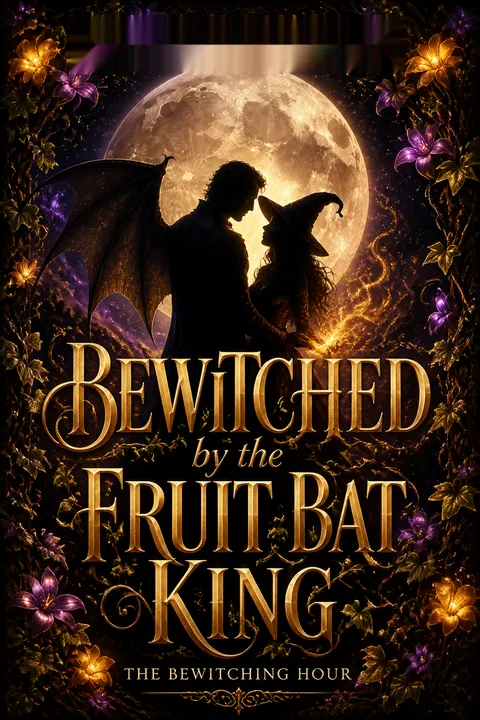
Bewitched by the Fruit Bat King is a charming paranormal romance about a witch and a fruit bat vampire king who become fated mates. Readers praise the unique premise, witty banter, and cozy small-town atmosphere. The slow-burn romance and family curse plot keep readers engaged, though some felt the pacing dragged at times. Many enjoyed the quirky characters and magical elements, but a few wanted more romantic development. Overall, it's recommended for those seeking a light, fun paranormal rom-com with autumn vibes.
People Also Read
Characters
Willow Thorne
The plant-wise witchWillow is a thirty-year-old witch who runs Floramancy, a flower shop housed in her family's old Victorian home. Her specialty, floramancy, makes plants both her craft and her way of understanding the world. She is warm, inventive, and prone to comic improvisation, but her wish for romance does not make her passive: she challenges people who mistake power for permission. Her family legacy gives her a sense of continuity, while her independent shop represents the life she has made for herself. Willow's defining tension is between believing that fate can offer meaning and insisting that it cannot make choices in her place. She is most perceptive when tending something others overlook.
Kane Drake
The fruit-bat kingKane is a centuries-old fruit-bat vampire, CEO of Kane Industries, and ruler of the Eastern vampire court. He combines old-world polish with modern corporate command, and he is accustomed to solving problems through money, strategy, and personal authority. His agricultural ventures reveal a more private commitment: he values the gardens and food systems that sustain his community, partly because they connect him to his mother. Kane's care is real, but so is his tendency to confuse protection with making decisions for others. Willow unsettles his practiced control by questioning his assumptions and taking her own expertise seriously. Beneath the king's composure is a man who wants to be chosen, though he must learn that intimacy cannot be managed like an empire.
Luna
The clear-eyed friendLuna is Willow's witch friend, a crystal-shop owner and tarot reader with a silver pixie cut and a talent for noticing what her friends avoid saying. Her readings offer warnings rather than certainty, and her humor helps Willow face frightening possibilities without pretending they are harmless. Luna supports Willow's independence while stepping in with practical help when the supernatural crisis reaches Floramancy.
Bethany
The matchmaking cupidBethany is Willow's cheerful friend and a cupid-in-training whose matchmaking often produces chaotic results. She is quick to celebrate romantic possibility, sometimes before Willow is ready, but her enthusiasm comes from genuine affection rather than judgment. Bethany brings levity to tense conversations and joins Luna in making sure Willow is not left alone with either her fears or her decisions.
Morana
The fate-reading priestessMorana is an ancient high priestess and supernatural adviser whose antiquities shop conceals a formidable store of knowledge. She enjoys unsettling powerful visitors, Kane included, but her warnings are more serious than her teasing manner suggests. Morana sees patterns that Willow and Kane have not yet recognized and uses prophecy to direct Willow toward questions, not to dictate a single future.
Elspeth
The keeper of old truthsElspeth is a reclusive, exceptionally old witch who preserves forbidden histories and charges dearly for her knowledge. She is blunt about danger and uninterested in comforting Kane with a convenient answer. Her understanding of the Drake and Florence past makes her an important interpreter of the curse, though she insists that the living must discover what their choices mean for themselves.
Marcus
The gentle farm managerMarcus is a fruit-bat vampire who manages part of Kane's agricultural operation. He is known for patience, care for the land, and attention to the plants and bees around him. His ordinary gentleness makes the sudden illness affecting Kane's workers especially alarming to Willow and Kane, who know him as a trusted member of their community.
Martin
The first patientMartin is a vampire in the early stages of transformation who comes to Willow's sanctuary for treatment. He is frightened by his dwindling control but willing to trust her experimental remedy. His experience helps Willow understand the practical needs of the afflicted community and gives Kane's people a voice beyond corporate reports.
Atlas
Kane's watchful AIAtlas is Kane's artificial intelligence assistant, connected to his office, vehicle, and watch. It monitors schedules, security, and vampire health reports, while its dry observations expose Kane's habit of ignoring advice when romance or pride is involved. Atlas serves as a practical link between Kane's personal decisions and the larger crisis affecting his organization.
Margaret
The unflappable executiveMargaret is Kane's human executive assistant, trusted with his supernatural identity and responsible for keeping his corporate world functional. Her calm competence gives her room to tease him without being intimidated. She tracks the business consequences of his choices and voices concerns that Kane's board and AI sometimes leave unsaid.
Mrs. Haversham
The ghostly librarianMrs. Haversham is a long-dead librarian who works in Haven's Cross's supernatural library. She knows the town's gossip as well as its stacks and steers Willow toward historical records while cautioning her that official histories leave important gaps.
Brad
The stamp-loving were-foxBrad is a were-fox accountant with an earnest fascination for enchanted stamps and supernatural collecting. He offers Willow a genuinely engaging date before Kane's interruption turns the meeting into a contest of knowledge and privilege.
Hazel Florence
The ancestral witchHazel is a powerful witch from the Florence family whose history survives in damaged records, a grimoire, and the memories of plants. Her legacy shapes the questions Willow asks about love, family, and the burden carried by later generations. Hazel remains a figure whose motives must be recovered from evidence rather than accepted from official accounts.
Viktor Drake
The ancestral vampireViktor is a historical member of the Drake line whose name appears beside Hazel Florence in old records. The gaps and contradictions surrounding their history make him central to Willow and Kane's investigation of their families, though his full significance is obscured at first.
Michael Drake
The past's warningMichael is a former Drake ruler whose relationship with Patty Florence appears in the hidden history of the curse. Kane learns about him through Elspeth's account and archival research, where his choices offer a troubling precedent for the present.
Plot Devices
The summoning spell
Romance gone sidewaysWillow's midnight flower spell is meant to find her destined love, but instead it transports Kane from his bat form into her apartment. The spell gives the romance its improbable first encounter and creates an immediate conflict: Willow must reckon with the person her magic has drawn to her, while Kane has to confront a bond he did not seek. Her later attempts to banish him keep turning panic into comic public consequences. The spell also introduces the novel's central distinction between fate and consent. It can create a connection, but it cannot determine what Willow and Kane do with it.
The mate bond
Connection with consequencesThe bond links Willow and Kane emotionally and magically, making each aware of the other's presence and intensifying their attraction. It strengthens Willow's floramancy and makes Kane's longing difficult to ignore, but it does not create immediate trust. As the old curse reawakens, the bond is also connected to the worsening transformations among the vampires. Its dramatic function is double-edged: it pulls the pair together while making their choices consequential for people beyond the relationship. The story tests whether they treat the bond as ownership imposed by fate or as a connection they must choose and negotiate.
The hidden grimoire
A living family archiveThe Florence grimoire contains gaps and coded writing that conceal the history linking Willow's family to the Drake line. Moonflower nectar reveals hidden text, while Willow's growing connection to plants lets her access memories held in living things. The device makes research an active magical process rather than a matter of finding one intact document. It also contrasts the official record, which has been edited or lost, with the less orderly memories preserved by plants. Each recovered fragment changes Willow's understanding of the curse, the remedy, and the choices available to her and Kane.
The botanical tincture
Relief before resolutionWillow develops a tincture from the Florence grimoire to quiet the blood hunger of vampires undergoing transformation. The early formula gives Martin and other patients temporary relief, and a dose helps Kane regain enough clarity to seek the Moonwater bloodroot. Its limited duration creates urgency without making the remedy a complete cure. The final version combines botanical ingredients, Drake-linked bloodroot, and Willow's freely given blood. This device converts inherited knowledge into practical care, buying time for the characters to address the curse while showing that medical relief and structural resolution are different tasks.
The sacrifice ritual
A test of shared powerThe curse can be ended only when a Drake and a Florence willingly name what they are prepared to surrender and grieve its real value. Kane faces the loss of his crown, company, and authority; Willow faces the loss of Floramancy and her family's shop. Their tears create the magic that breaks the curse. The ritual's crucial distinction is between willingness and actual destruction: both must truly accept the loss, but the curse does not require them to erase their lives afterward. The device resolves the inherited pattern by requiring equal participation rather than one partner deciding what the other should give up.
Download PDF
Download EPUB
.epub digital book format is ideal for reading ebooks on phones, tablets, and e-readers.








