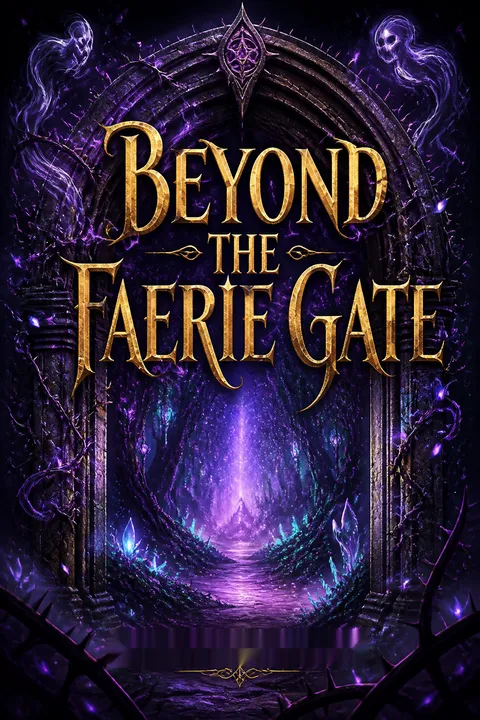


Plot Summary
A Funeral Hides a Bargain
At her father’s funeral, Rhoswyn Rose1 expects grief but feels relief after years of caring for the bitter, disabled man. Her brother Tom13 and sister-in-law Clair14 want her to marry Colbert,18 a miller she knows abuses his mother. Then Clair14 leads Rose1 to spy on a secret church meeting. There Rose1 hears that her parents once exchanged a changeling child for Tom’s13 healing, village protection, and gold.
The child was Rose,1 and her twenty-fifth birthday is tomorrow. When Rose1 protests, the men discover her listening. She runs into the woods, where raiders seize her. A huge wolf bursts from her cottage and tears into them, saving her before she can understand what the village’s bargain means.
The opening makes care work both Rose’s burden and her only recognized social value. Her father’s funeral does not restore a loving family bond; instead, it exposes how the village plans to transfer her from one male authority to another. The changeling revelation reframes her lifelong illness and her isolation, but the immediate danger is not magic. It is the ordinary community that has already discussed her marriage without her. Her flight is therefore a first act of self-preservation, even before she knows what she is escaping toward.
The Fae Claim Her
The wolf is Jaro,2 a fae knight who changes back into a towering man and waits for Rose1 in her home. Tom13 confirms that their parents accepted a bargain with the fae when he was dying, then kept Rose’s1 origins secret. Jaro2 explains that the iron around her has weakened her and concealed her true appearance.
She is high fae, not human, and her mother12 was Diana,12 the fourth Nicnevin, or high queen. Rose1 is due to return to Faerie now that she has reached the age of maturity. Tom13 wants the village gate destroyed so his family can leave its warden’s duties. Rose1 bargains with him to investigate Colbert’s18 abuse and name a future child after her, then agrees to go.
Rose’s first response to revelation is not wonder but anger at the people who chose what she could know. The bargain makes love and exploitation difficult to separate: Tom’s life was saved, but Rose paid through a childhood shaped by illness and concealment. Her demand that Tom investigate Colbert turns the negotiation into a moral test. She does not ask her brother to make her departure easier; she asks him to face the harm he dismissed. Even as she loses one family, she insists that its members remain accountable to her.
The Gate Turns to Ash
Jaro2 leads Rose1 through the forest gate, explaining that her mother12 ordered her hidden until her twenty-fifth birthday because enemies might seize her. The crossing destroys the gate under Rose’s1 hand, fulfilling Tom’s13 bargain. Pain knocks her unconscious, her human glamour vanishes, and her true form appears: pointed ears, violet eyes, fuller features, and six delicate wings.
The barren land around her erupts into grass and leaves as her presence reconnects Faerie to its goddess. Before she can recover, Drystan3 arrives on horseback with news of Fomorian pursuers. He sends Rose1 ahead with himself and Jaro2 racing behind, while the newly restored country makes her return impossible to conceal.
The crossing makes Rose’s homecoming physically productive and personally costly. The realm revives through her, but she experiences that renewal as pain and loss of control, not as an easy display of power. Destroying the gate also makes her choice consequential: she cannot simply treat Faerie as a temporary visit or return to the life she left. Her body and the land change together, suggesting that queenship is not an office she can put on later. It is already happening through her presence, before she understands what she is.
Spring Blooms Underfoot
Drystan3 carries Rose1 toward Iondell while Fomorians pursue them through the forest. When warriors surround the riders, Drystan3 removes his own head and fights with a flaming whip made of bone, opening a path for their escape. He reveals that Elfhame’s capital is under siege, so the group crosses into the Spring Court instead.
Rose’s1 presence turns a grey, muddy landscape into flowering fields, and farmers kneel to thank the goddess. At the inn, Rose1 learns from her three strange companions that Mab,9 Maeve,10 and Titania11 are fae guides sent by Danu. Jaro2 teaches Rose1 to use glamour to disguise her violet eyes. She begins to enjoy Faerie, though she still cannot find her missing Guards.
The first journey gives Rose a double education. Drystan’s grotesque combat shows that Faerie’s beauty does not make it safe, while the Spring Court’s sudden bloom reveals that her return affects everyone who lives there. Her guides provide knowledge, but they also preserve the intimacy of her old inner life: what she thought were hallucinations were companions who helped her survive. Practicing glamour is a small but important move from being transformed by magic to using it deliberately. For the first time, curiosity begins to compete with fear.
The Bolt and the Bond
The group camps on the road, but Fomorians attack before dawn. Rose1 recognizes one of her five Guard in the grey-blue warrior fighting Drystan:3 Caed,6 a Fomorian who commands ghostly swords. The reason for his hostility is unclear, and Jaro2 orders Rose1 to flee on Drystan’s3 horse, Blizzard. Crossbowmen pursue her across the meadow.
One bolt wounds Blizzard; a second strikes Rose1 in the chest. She dies before her protectors can reach her. Drystan3 sees a new line appear beside the mark on his hand, proof that the Nicnevin has died for the first time. The others find Rose’s1 scorched clothes, but her body is gone, leaving them to race toward the place where she may return.
Caed’s appearance complicates the simple division between protector and enemy before Rose has any chance to understand it. She senses his place in her Guard even as his men pursue her, making the bond feel less like reassurance than a dangerous contradiction. Her death is also the first moment when the story’s supernatural protections fail in practical terms: her companions can be immortal through their connection to her, but they cannot keep her from being hurt. The scorched mark turns a private catastrophe into visible evidence of failure.
Danu Offers a Choice
Rose1 wakes in darkness with Danu, the goddess who created the fae and calls her daughter. Danu shows her that Rose’s1 return can help the realm, but asks whether she wants to live again or rest in the Otherworld. Rose1 chooses to return, unwilling to leave her people and a future daughter with the same abandonment she endured.
Rebirth brings hours of searing pain in a hidden cave. When she emerges naked and alone, the surrounding land blooms again. Mab9 and Titania11 help her find food, while Maeve10 urges her to try flying. Rose1 cannot yet lift herself, so she follows the bonds connecting her to her Guards. She chooses the nearest, a redcap whose eager presence promises both danger and help.
Danu’s offer gives Rose agency at the precise moment when her body has been most completely taken from her. Choosing life is not a triumphant reflex; she has to imagine the consequences of leaving someone else to inherit her unfinished burden. Her decision is ethical before it is political. Yet survival does not make her instantly capable. She returns without clothes, companions, or basic skills, and must begin again by eating and walking. The scene replaces the fantasy of effortless destiny with a more intimate question: what does a chosen life require from the person who chooses it?
The Redcap’s Court
Following her bond, Rose1 reaches Lorcan,4 a pale, quick-moving redcap who can blink between places. He brings her to his improvised Court of Blades, then carries her across Faerie to show what her return is restoring. The journey drains her until she collapses in the Winter Court, but Lorcan4 brings her back to his home and watches over her.
When she wakes, he puts his hat on her head without explaining its meaning. His priestess, Kitarni,7 arrives and tells Rose1 that accepting a redcap’s hat signals a mating proposal. Lorcan4 assumes she has accepted him, while Rose1 has barely learned the rules of Faerie. Kitarni7 identifies her six royal brothers and begins teaching her about her new family and court.
Lorcan’s exuberant courtship is funny partly because it exposes a serious cultural mismatch. He interprets an object as a binding declaration; Rose experiences it as a practical gesture from someone who moves too quickly for her to assess. Kitarni’s presence supplies a needed counterweight, translating not just language but consequences. Rose’s new identity is becoming legible to others faster than it is to her. The episode also establishes her recurring problem: kindness offered without explanation can still remove choice, especially in a world where bargains and symbols carry literal force.
Five Mates, One Prisoner
Kitarni7 explains that Rose’s1 five Guards are also her fated mates, and that her first fae fever may soon make desire difficult to manage. Lorcan4 flirts openly, while Jaro2 and Drystan3 object to his advances. Rose1 learns that her remaining Guard, the tattooed púca Bricriu,5 is somewhere in Siabetha.
A sudden pull through their bond shows him suffering, and the group recognizes the brothel called the Toxic Orchid as the likely source. Jaro2 and Drystan3 leave to negotiate his release, intending to keep Rose1 safe. Rose1 knows the bond is draining her and that the captive may be in danger, but the men’s decision to exclude her only strengthens her resolve to act for herself.
The revelation of five mates adds intimacy to a story already crowded with duties, but the important tension is not simply desire. Rose has been raised to expect one marriage, while Faerie treats her body and relationships as matters of communal destiny. Her hesitation is a sensible response to information arriving faster than consent can be formed. The bond with Bricriu makes this question concrete: connection allows Rose to feel another person’s suffering, but it can also drain her. Her protectors frame restraint as safety; Rose experiences it as another form of being managed.
The Orchid Burns
Rose1 wakes to learn that Bricriu5 is held by the Toxic Orchid’s madam and that the men plan to bargain for him. She leaves the inn with Lorcan4 and follows the bond to the brothel, where patrons cheer at the cries of those imprisoned inside. Reaching for Danu’s power, Rose1 sends lightning through the crowd and sets the nightshade-covered building ablaze.
She throws the madam through a wall, opens the locked cells, and carries Bricriu5 out. Her magic heals the iron burns and injuries that had left him starving and near death. By the time Jaro2 and Drystan3 return, the brothel has collapsed in flames. Rose1 has saved her Guard, but her power and the Goddess’s rage have made her presence impossible to hide.
Rose’s rescue is the first time she acts from anger rather than merely enduring events. The force of that anger makes her effective, but it also unsettles her because she cannot separate her own will from Danu’s. Bricriu’s captivity exposes the distance between Faerie’s ideals and its actual institutions: a society that condemns slavery still tolerates debt arrangements that can become coercion. Rose does not wait for a legal distinction to protect him. Her choice establishes a political ethic rooted in the body of the person harmed, not in the wording of a contract.
A Queen Draws Notice
At the Summer Temple, Kitarni7 shields Rose1 from King Eero,16 who demands an audience after the destruction of the Toxic Orchid. The high priestess7 cites the law protecting a Nicnevin’s Guard and refuses to let Eero16 dictate the meeting. Rose1 declines his dinner invitation, knowing that accepting would look like favouring his court.
Lorcan4 has already carried a letter from her eldest brother Florian8 through the siege at Elfhame. The message confirms that Florian8 is alive and wants her home. Rose’s1 group leaves Siabetha for the capital, where the city is still surrounded by Fomorians. She is no longer able to travel unnoticed: her restored lands and the burning brothel have announced both her return and her power.
Eero’s response makes clear that Rose’s power is not only magical. Her decisions about audiences, visits, and public attention will be read as political alignments, whether she intends them or not. Kitarni models a form of authority that does not need to shout to resist a king. Rose’s refusal is cautious rather than defiant, but it is still her first deliberate diplomatic choice. The letter from Florian gives the journey emotional weight: Elfhame is not merely a seat of power, but a family she has never known and a home that expects her to lead.
Home Beneath Siege
Lorcan4 blinks the party inside Elfhame’s defenses, where Florian,8 commander of the palace guard, meets Rose1 and confirms that their parents are gone. The people of the city line the route to the palace, showering her with flowers. Rose1 is overwhelmed by their welcome and by the palace built for flying fae, especially since her wings still will not open.
At her first formal ball, she is introduced as the fifth Nicnevin and hears Danu’s voice affirm her place before the assembled court. Jaro2 introduces Rose1 to his mother and sisters, giving her a glimpse of the family he lost when he answered her Call. A duke20 then insults her under-fae Guards and questions Danu’s choice, leaving Rose1 angry and unsure how to navigate court politics.
The welcome gives Rose what she has lacked throughout the book: public recognition without the demand that she first prove she deserves affection. Yet the ceremony magnifies her fear of being an impostor. The city sees a queen; she sees the skills she has not learned and the wings she cannot use. Meeting Jaro’s family complicates his role as protector by showing the personal cost of his oath. The duke’s insult then tests whether the pageantry has translated into real authority. Rose is honored in public, but the court remains a place where her judgment will be challenged.
Blood on the Ballroom
After leaving the ball, Rose1 finds Bricriu5 cornered by fae who once used him. Maeve10 helps Rose1 draw on Danu’s anger, and Rose1 crushes one aggressor’s skull before driving the others away. Horrified by her own violence, she runs to the outer wall. Caed6 appears there, asks who made her cry, and is attacked by Jaro2 and Drystan3 before he can explain himself.
Rather than resume the fight, Caed6 surrenders as a willing prisoner, arguing that the bond makes his death dangerous to Rose.1 The guards take him into the palace dungeon. Rose’s1 response to Bricriu’s5 past has made her power visible, while Caed’s6 unexpected surrender brings the enemy’s prince within reach of the family he has fought.
The ballroom attack marks a sharp shift from Rose’s first use of power at the brothel. There, she acted to rescue someone from a system of captivity; here, she kills in a moment of possessive fury before she can decide what justice requires. Her horror afterward suggests that power does not automatically resolve moral uncertainty. Caed’s surrender provides a counter-image to the court’s easy categories: the enemy prince enters the palace not as a conqueror but as a prisoner who knows his bond matters. Rose’s world is becoming harder to divide into people she should save and people she should fear.
Dead Queens Speak
Rose1 learns that the three figures who have guided her since childhood are the previous Nicnevins, sent by Danu. Drystan3 identifies her unseelie gift as necromancy: Rose1 can summon the dead and draw on their powers. Her earlier lightning and healing came through the ancestors who touched her.
When she visits Caed6 in the dungeon, his injuries and damaged hand provoke her to call on the dead Nicnevin Titania,11 who restores him. The act costs Rose1 strength but also clarifies that her power can heal as well as harm. Her Guards want her to conceal the necromancy until she can control it, since many fae distrust those who deal with the dead. Rose1 resists being kept ignorant again.
The revelation transforms Rose’s private history into a lineage. Her companions were not symptoms of illness but a form of education she had been forced to keep secret, and the necromancy that others fear is also the means by which she learned to survive. Healing Caed is especially revealing: Rose uses a gift associated with death to restore someone whose political identity makes him dangerous. This does not erase his actions or settle the war, but it shows that her power answers to more than inherited prejudice. The conflict now concerns who gets to decide what knowledge Rose can bear.
Riding with the Dead
On Samhain, Drystan3 brings Rose1 with the Wild Hunt, a company that gathers the dead and guides them toward the Otherworld. She sees his hidden role as Lord of the Hunt and watches barghests and valravne track spirits through Faerie.
Drystan3 handles frightened souls gently and restrains those who fight. Rose1 recognizes that the procession includes an unusually large number of dead children. Drystan3 explains that Faerie’s failing magic during the Nicnevin’s absence caused deaths and failed births.
Rose1 also rescues a runt barghest pup from its pack and names him Wraith,23 despite Drystan’s3 warning that the creature will become dangerous. As the last spirits pass into the Otherworld, Rose1 understands that her return has already changed the realm, but cannot undo its lost years.
The Hunt gives the book’s political crisis a human scale. The dead are not an abstract cost of weakened magic; they are children carried gently by creatures that are frightening to the living. Rose’s response is grief rather than self-defense, even when Drystan says she was not responsible for her exile. Her rescue of Wraith repeats that instinct in miniature: she refuses to let vulnerability be treated as proof that a life is expendable. Drystan’s work complicates his severity, revealing a man who can be compassionate when he is not trying to control Rose.
The Second Scorched Mark
While Rose1 rides with the Hunt, Caed’s6 cousin Praedra15 breaks him out of the dungeon and leads him back toward Rose’s1 quarters. Florian8 intercepts them, but their iron explosives wound him and disable Jaromir’s2 protective magic.
Caed6 and Praedra15 fight the Guards until Rose1 returns and rushes between Florian8 and Praedra.15 Praedra’s15 iron blade pierces Rose’s1 throat. Rose1 dies a second time, leaving another scorched mark on the palace floor as Caed6 and Praedra15 escape using a pair of flying metal wings.
Florian8 survives with severe iron poisoning, Lorcan4 is found badly broken after falling from the palace, and Jaro2 is named Florian’s8 successor as commander. Jaro2 and Drystan3 prepare to find Rose1 when she returns from Danu’s cave, while the war and the Guard remain unresolved.
The ending makes Rose’s instinct to protect others both her defining strength and the vulnerability her enemies can exploit. She enters the fight not to defeat Caed but to stop the people around him from killing one another, and the act costs her life again. Rebirth offers no clean reset: Florian is poisoned, Lorcan is gravely injured, and the Fomorian pair escape with knowledge of the palace. Jaro’s new command gives the survivors a practical task, but it cannot replace the missing queen. The final state is deliberately unfinished, with Rose’s return and the fate of her bond still ahead.
Analysis
Beyond the Faerie Gate builds its fantasy around a woman whose life has been explained to her by other people. Rose1 is first called sick, then burdensome, then a changeling, then a queen. Each label contains some truth, but none is sufficient to tell her who she is. Her development comes from learning to question the terms that others use to protect, claim, or govern her.
The book makes care morally complicated. Tom’s13 family sheltered Rose,1 yet concealed her origins and expected her to marry. The Guards defend her, yet sometimes withhold knowledge and make decisions in her name. Lorcan’s4 affection can be generous, but his assumptions about courtship outrun Rose’s1 understanding. These relationships do not reduce to good protectors and bad controllers. Instead, the story asks whether devotion respects a person’s right to know what is being asked of them.
Rose’s1 power repeats that question at a larger scale. Her return revives the courts, but she cannot restore what was lost during her absence. Her anger destroys the Toxic Orchid and kills an aggressor at the ball, making it clear that power can protect the vulnerable while also overwhelming her judgment. Necromancy, a feared ability, gives her access to the wisdom and gifts of past queens. The dead are not merely a source of strength; they are a lineage Rose1 can consult without being forced to imitate.
The Wild Hunt sharpens the novel’s account of consequence. The dead children make the political crisis intimate, while Rose’s1 rescue of Wraith23 shows how quickly she identifies with lives deemed expendable. Her repeated deaths do not erase the damage around her. Each return leaves allies wounded, enemies escaping, and the work of leadership unfinished. The book closes by refusing the comfort of a completed transformation: Rose1 has chosen to live and lead, but her world will demand that she decide what kind of queen she becomes.
Review Summary
Beyond the Faerie Gate receives generally positive reviews, averaging 4.26/5. Readers consistently praise the rich worldbuilding, drawing on Gaelic folklore and mythology. The character Lorcan (Lore) emerges as a fan favorite for his unhinged, entertaining personality. Common criticisms include slow pacing, insufficient character development between Rose and her Guard, and Rose being perceived as overly naive or timid. Many readers appreciate the slow-burn romance while others find the lack of intimate moments frustrating. Most intend to continue the series despite minor disappointments.
People Also Read

Characters
Rhoswyn Rose
The reluctant high queenRaised in a human village as a sickly herbalist, Rose has spent her life being treated as fragile, strange, and dependent. She is observant, stubborn, and more morally decisive than she believes, especially when she sees someone being controlled or harmed. Her dry humor and curiosity survive even when her understanding of the world collapses. As the fifth Nicnevin, she must navigate a culture whose rules she did not grow up learning, while distinguishing her own wishes from the power of Danu. Rose’s central psychological struggle is not whether she deserves authority, but whether she can exercise it without becoming another person who decides other people’s lives for them.
Jaromir Jaro
The wolf sworn protectorA high-fae wolf shifter and knight of Elfhame, Jaro has spent decades guarding Rose1 from the human side of the gate. He is loyal, physically protective, and most comfortable when a danger can be met directly. That instinct makes him reassuring but can also lead him to underestimate Rose’s1 need for information and agency. His warmth appears in practical gestures: food, patience, and small efforts to help her feel at home. Jaro’s sense of duty is bound to both his queen and his old life as a soldier, so Rose’s1 return reunites him with a family and a position he believed he had abandoned.
Drystan
The headless winter huntsmanA blunt, disciplined warrior from the Winter Court, Drystan is the most guarded member of Rose’s1 Guard. His unusual ability to separate his head from his body is tied to his place in the Wild Hunt, whose duties require him to confront the dead and the frightened living. He values preparation, restraint, and competence, and his impatience with Rose1 often comes from fear that she will be hurt. Drystan hides tenderness beneath severity, especially when grief or responsibility is involved. His reserve is not simple dislike; it is a defense shaped by a life in which emotional exposure and loss have carried real danger.
Lorcan
The restless redcap suitorLorcan is a redcap whose magical hat stores objects, changes shape, and must be fed blood. He can blink himself and what he carries across great distances, giving him a freedom of movement that matches his restless, impulsive temperament. He delights in danger, jokes at inappropriate moments, and pursues Rose1 with an intensity that can be both entertaining and overwhelming. Beneath the chaos is a surprisingly attentive instinct: he brings food, warmth, and company when she is isolated. Lorcan’s biggest blind spot is assuming that his own sense of devotion makes his intentions clear to Rose1.
Bricriu Bree
The guarded tattooed bardBricriu is a púca, a fae whose tattoos can manifest as animal traits or separate creatures. His ink includes multiple predators and instruments, reflecting both unusual magical potential and a life that once involved music. He is wary of touch, watches others before trusting them, and carries himself with the caution of someone whose boundaries have repeatedly been ignored. Rose’s1 directness unsettles him, but her refusal to define him by his worst experiences gives him room to choose how close he wants to be. His quietness is not emptiness; it is a form of self-protection.
Caed
The enemy-born oathbound princeA Fomorian prince and formidable military leader, Caed is shaped by a culture that prizes strength, survival, and resistance to the fae. He fights with ghostly swords and has learned to use both strategy and provocation against people who underestimate him. His dry humor obscures a more complicated relationship to loyalty, especially when his own choices conflict with his inherited duties. Caed is difficult to read because he can be simultaneously defiant and attentive, hostile and protective. His presence forces Rose’s1 circle to confront whether an enemy’s origin determines his moral character.
Kitarni
The patient dryad priestessKitarni is a dryad and Rose’s1 High Priestess, responsible for teaching her the history, rituals, and political customs she was denied as a child. Calm under pressure, she explains difficult subjects without treating Rose’s1 ignorance as a personal failure. Her loyalty to Danu’s temple does not make her blindly deferential to kings; she can defend the Nicnevin’s boundaries with quiet authority. Kitarni’s knowledge is practical as well as spiritual, and she understands that Rose1 needs both education and room to decide. She is one of the first people in Faerie to treat Rose1 as a learner rather than a problem.
Florian
The soldier brotherRose’s1 eldest fae brother is the Knight Commander of Elfhame’s defenses. Florian is imposing, disciplined, and accustomed to carrying responsibility for a besieged city. Beneath his gruff manner is a careful older brother who tries to give Rose1 practical instruction without pretending she is already prepared for everything. He shares family stories and makes space for her to ask questions, even while military pressure limits his time. Florian’s identity is built around service, but his bond with Rose1 offers him a relationship beyond command and warfare.
Mab
The measured guideOne of Rose’s1 three lifelong guides, Mab is calm, observant, and sparing with advice. She teaches Rose1 about plants and survival, and often steadies her when the other guides become impatient. Mab is one of the former Nicnevins, and her quiet manner reflects a preference for clear judgment over force.
Maeve
The blunt warrior guideMaeve is a former Nicnevin and a battle-minded guide who teaches Rose1 self-defense. She favors directness, jokes freely, and is quick to defend Rose1, though her impatience can make her advice abrasive. Maeve represents the part of Rose’s1 inner world that insists survival sometimes requires aggression.
Titania
The tender guideTitania, another former Nicnevin, is the warmest and most nurturing of Rose’s1 three guides. She helps Rose1 understand Faerie’s customs and reassures her when public attention feels unbearable. Her patience offers Rose1 a model of care that does not require obedience or shame.
Diana
The absent fae motherDiana was Rose’s1 fae mother and the fourth Nicnevin. Her decision to have Rose1 raised away from Faerie was intended to protect her from those who might exploit the future queen. Though Rose1 never knew her, Diana’s choices shape the conditions of her life and the legacy she inherits.
Tom
The human village brotherTom is Rose’s1 human brother, a blacksmith who has spent much of his life acting as her caretaker. He loves her, but his protectiveness can become paternalistic, and he has accepted village assumptions that leave Rose1 without a voice. His own longing to move his family beyond the village complicates their separation.
Clair
Rose’s practical sister-in-lawClair is Tom’s13 wife and mother to their large family. She cares about Rose1 but assumes marriage and household protection are the safest options available to her. Her curiosity about the village’s secret meetings helps uncover the bargain that has shaped Rose’s1 life.
Praedra
The inventive Fomorian cousinPraedra is Caed’s6 cousin, a skilled inventor and fighter who relies on clever devices as readily as a blade. She is bold, stubborn, and quick to pursue a plan once she has conceived it. Her confidence can be reckless, but she is fiercely loyal to Caed6 and does not abandon him when danger rises.
Eero
The calculating Summer KingThe ruler of the Summer Court, Eero is politically polished and inclined to turn social invitations into leverage. He dislikes being denied access and tests whether Rose1 can be drawn into favoring his court. His charm is strategic rather than generous, making him a difficult figure for a new queen to assess.
Ghislane
The watchful housekeeperGhislane is the palace’s long-serving head housekeeper and a banshee. She knows the household’s habits and history, and her care for its people runs deeper than her formal duties. Her presence offers Rose1 a link to the mother12 and court she never knew.
Colbert
The coercive village millerColbert is the miller who repeatedly seeks to marry Rose1 despite her refusal. His respectable standing in the village contrasts with Rose’s1 private knowledge of his cruelty toward his mother.
Reverend Michael
The judgmental village priestReverend Michael is the village priest, suspicious of Rose1 and quick to judge her. His authority helps make the village’s narrow expectations feel like moral law.
Harlen
The insulting court dukeHarlen is a duke from the Autumn Court who questions Rose’s1 judgment and disparages her under-fae Guards. He embodies the courtly prejudice she must learn to confront.
Ogrim
The jovial Hunt beastmasterOgrim is an ogre associated with the Wild Hunt and its dangerous creatures. He is cheerful and outspoken, even when discussing the hard realities of the Hunt.
Annis
The swamp wise necromancerAnnis is a kikimora who serves the Wild Hunt and understands the dead. Her unsettling manner and blunt observations make her a sharp contrast to Rose’s1 gentler temperament.
Wraith
The rescued Hunt pupWraith is a runt barghest pup whom Rose1 saves from its litter. Barghests are dangerous soul-eating hounds, but the pup’s vulnerability awakens Rose’s1 instinct to protect the life others dismiss.
Plot Devices
The village gate bargain
The price of concealmentRose’s1 human parents accepted a bargain that saved the dying Tom13 and secured protection and prosperity for their village in exchange for raising a fae changeling until her twenty-fifth birthday. The bargain explains why Rose1 grew up away from Faerie, why her return occurs at maturity, and why the village’s leaders conceal her identity. Tom’s13 later request to destroy the portal gives Rose1 a way to bargain with him on her own terms. The device links an intimate family decision to political consequences across two worlds.
The Nicnevin's Call
A bond that locates and drainsThe Call connects Rose1 to the five fae sworn to guard her. It lets her sense their direction and distress, drawing her toward a missing or endangered Guard. The same connection can pull energy from Rose1 to heal a Guard, sometimes leaving her weak or unconscious. Marks on the Guards’ hands record their oath and register Rose’s1 deaths. The Call makes intimacy inseparable from practical danger: it can bring Rose1 to those she loves, but it can also make her feel pain and risk her own strength.
Iron and glamour
A hidden body revealedIron is lethal to fae, and Rose’s1 long exposure to it has contributed to her illness while suppressing her powers and concealing her true appearance. A powerful glamour laid over her at birth lasts until she reaches maturity. When she crosses into Faerie, the glamour falls away, revealing her wings, pointed ears, and violet eyes. Rose1 later learns the simpler glamour used by fae to disguise features. The contrast between harmful iron and protective illusion gives her history a physical explanation without making the years of suffering unreal.
Danu's cycle
Death becomes a choiceThe Nicnevin is Danu’s living connection to the land. Her presence restores Faerie’s magic, but she can also return after death through the goddess’s cave, where Danu offers her the choice to live again or pass into the Otherworld. Each return is agonizing, and each death leaves a mark on the Guards and the ground. This cycle allows Rose1 to survive mortal wounds without making death inconsequential. It turns survival into repeated consent and gives the story a way to measure both the cost of her role and the failures of her protectors.
The Wild Hunt
A passage for the deadOn Samhain, Drystan3 leads the Wild Hunt through Faerie to gather the dead and guide them into the Otherworld. Barghests track spirits, valravne help locate them, and the Hunt’s riders confront those who resist or need comfort. The Hunt gives Rose1 a direct view of the afterlife and reveals how the Nicnevin’s absence has affected fae life, especially the unusually high number of dead children. It also places Rose1 away from the palace at a moment when Caed6 and Praedra15 attempt to escape, linking a sacred duty to the final attack.
About the Author


Download PDF
Download EPUB
.epub digital book format is ideal for reading ebooks on phones, tablets, and e-readers.








