

Key Takeaways
Stop treating men and women as gender’s only legitimate possibilities
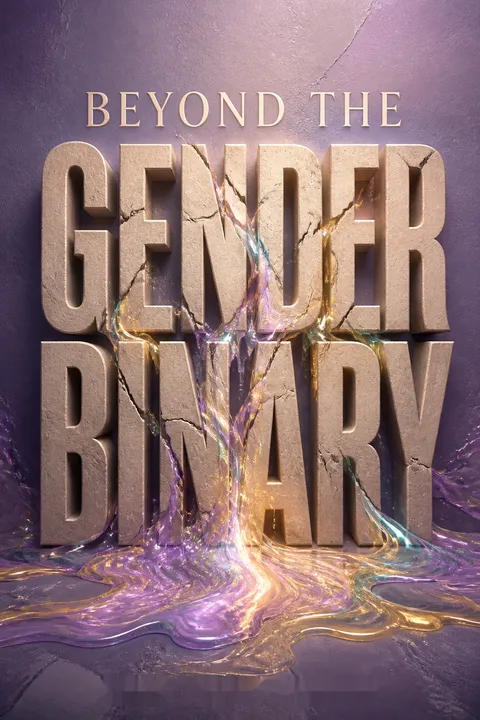
The map is political. Vaid-Menon defines the gender binary as the belief that there are only two distinct, opposite genders: man and woman. The book argues that this is not a neutral description of everyone’s experience. It is a system that assigns people narrow roles, then treats anyone outside those roles as a problem to correct.
More possibilities, not fewer. Moving beyond the binary does not require erasing men or women. It means recognizing that these identities are among many, and that people can define their own relationships to gender. The central question shifts from whether someone fits the available boxes to why those boxes are treated as the only legitimate choices.
The argument is strongest when it distinguishes expanding a category system from abolishing every identity within it. A larger map can preserve the meaning of man and woman while ending their monopoly on legitimacy. This is a useful distinction in any debate about classification: adding options is not the same as forcing everyone to choose a new one. The claim also invites a practical test. When a rule says it merely describes gender, does it instead decide who receives recognition, safety, or access? That question turns an abstract argument about labels into scrutiny of how institutions use them.
Ask who benefits when gender rules pass for common sense
Familiar is not universal. The book describes how gender gets assigned before a child can express a preference. That assignment shapes clothing, toys, emotional expectations, and ideas about strength or care. Repetition makes these choices seem inevitable, even though they are cultural rules rather than natural instructions.
History widens the frame. Vaid-Menon points to identities and traditions beyond the Western man-woman divide, including two-spirit people among some Indigenous communities, hijra in South Asia, waria in Indonesia, and muxe in Mexico. The point is not that these terms all mean the same thing. Their presence challenges the claim that one culture’s categories describe everyone, everywhere.
The idea of common sense is powerful because it names how a local convention can disguise itself as a universal fact. Once a rule feels natural, people stop asking who benefits from it or who pays for its enforcement. The cross-cultural examples strengthen that challenge, but they should not be flattened into interchangeable versions of one modern identity. Each tradition has its own history and social meaning. The most careful lesson is not that every culture has the same gender system, but that human societies have organized gender in more than one way.
Notice how public shame becomes private self-censorship
Joy met a boundary. As a child, Vaid-Menon danced in family gatherings and enjoyed clothes and performance. At a school talent show, classmates laughed and told them that boys should not behave that way. The ridicule turned a source of delight into a reason for shame. Over time, they tried to hide gestures, voice, and clothing that others judged too feminine.
The policing moved inward. Vaid-Menon describes avoiding school bathrooms and retreating into study, while constantly monitoring how their body might attract attention. Years later, wearing a dress in public felt like recovering a part of the self that had been suppressed. The story shows how exclusion can shape not only what others do, but what a person learns to forbid themselves from doing.
The shift from external ridicule to internal monitoring explains why the absence of a visible aggressor does not necessarily mean a person feels free. Social rules can become self-enforced, which makes their effects difficult to identify and easy to misread as personal preference. The story also resists a simplistic account of resilience: reclaiming expression matters, but it does not undo the years spent avoiding scrutiny. A useful question for families and schools is whether a child’s quiet conformity reflects comfort, or a learned strategy for staying safe.
Make self-discovery safer through relationships that affirm, not correct
Support changed the choice. After high school, Vaid-Menon sought friends who welcomed honest conversations about identity. When they explained that neither man nor woman described them and that expressing femininity mattered, their friends promised continued care even if the choice brought losses. That support helped make public self-expression possible despite the risk of harassment.
Belonging can be chosen. The book describes these close relationships as chosen family: people who offer care and connection beyond biological kinship. At twenty, Vaid-Menon wore a dress in public for the first time and felt more present in their body. The experience suggests that becoming oneself is not always a solitary act; supportive relationships can help make authenticity bearable.
Identity is often described as an inward discovery, but this account shows how social response shapes what a person can safely explore. Affirmation does not decide someone’s identity for them. It makes room for that person to decide without having to manage every listener’s fear. Chosen family also offers a concrete model of care, though it should not become a substitute for safe homes, schools, and services. People without a reliable personal network still deserve protection. Community support can sustain self-expression, while institutions remain responsible for reducing the danger around it.
Separate what bodies can do from what gender rules demand
Roles arrive early. The book describes children being assigned different colors, toys, and expectations according to whether they are called boys or girls. Boys may be encouraged toward toughness and discouraged from showing emotion; girls may be expected to be agreeable or to accept care rather than lead. Repeated messages make these roles appear to follow naturally from a child’s body.
Variation disrupts the script. Vaid-Menon argues that people vary widely within categories, and that bodily traits do not dictate how someone must dress, speak, or behave. Recognizing that variation does not require denying that bodies differ. It means questioning the leap from a physical difference to a rule about a person’s character, interests, or rightful place.
This distinction helps separate observation from prescription. A bodily trait can be real without carrying an instruction about clothing, temperament, or social authority. Confusion arises when descriptions of physical variation are treated as proof that familiar roles are inevitable. The argument is most persuasive when it avoids replacing one oversimplification with another: bodies matter to people’s lives, but they do not produce a single uniform experience of gender. Asking what a fact establishes, and what someone is merely attaching to it, is a practical way to test claims that present social rules as biology.
Treat objections as power tactics, not neutral requests for proof
Four arguments recur. Vaid-Menon groups common objections into four patterns: dismissal denies that gender-diverse people are real; inconvenience treats inclusion as an unreasonable burden; biology presents social expectations as fixed facts; and slippery-slope claims predict unrelated disasters if people gain recognition. Naming the pattern helps reveal when a conversation has shifted away from the lives at stake.
The harms are measurable. The 2015 US Transgender Survey reported that 30 percent of respondents had experienced workplace discrimination, 23 percent housing discrimination, and 77 percent mistreatment at school. These figures challenge claims that recognition is merely a matter of personal comfort. The book argues that public debate often centers on other people’s unease while overlooking the material risks faced by trans and gender non-conforming people.
The four patterns offer a useful diagnostic: they help distinguish a genuine question from a familiar maneuver that keeps a group’s existence on trial. The survey figures also shift attention from hypothetical inconvenience to reported treatment in schools, housing, and work. Still, identifying a pattern should not replace listening to the substance of a specific concern. The strongest use of this framework is analytical, not automatic: ask what evidence is being offered, whose experience is missing, and whether the argument addresses actual harm or merely predicts discomfort.
Treat biological claims with historical humility
Science has a history. Vaid-Menon argues that scientific descriptions of sex have changed over time, and that social assumptions influence which questions researchers ask and which differences they emphasize. The book notes that intersex people are born with sex traits that do not fit standard male or female categories, yet some receive non-consensual, medically unnecessary surgeries intended to make their bodies conform.
No single path proves identity. Some transgender people experience distress about their bodies; others do not. Some pursue medical transition, while others do not. Vaid-Menon argues that medical treatment should be a personal choice, not a test of whether someone is authentically trans. The point is not that biology is irrelevant, but that biological facts do not dictate one social role or one valid life story.
Historical humility is valuable wherever scientific categories shape access to rights or care. It encourages careful distinctions among bodily traits, identity, and social expectations, rather than treating one as a complete explanation of the others. The discussion of intersex people makes the stakes visible: classification can lead to interventions that prioritize conformity over consent. At the same time, questioning how categories are built should not be mistaken for dismissing biology. A more precise conversation asks what biological information can establish, what it cannot establish, and who gets to decide how it is used.
Measure inclusion by safety, healthcare, work, and public access
Tolerance is not enough. The book distinguishes being left alone from being welcomed into shared life. A person may be nominally tolerated while still facing barriers to healthcare, employment, housing, or public spaces. Vaid-Menon argues that inclusion must be judged by whether people can move through ordinary settings with dignity and safety, not simply by whether others claim to accept their existence.
Language can make room. Gender-neutral terms can describe groups without pretending everyone shares one gendered experience. For example, referring to people who give birth can include women who give birth, as well as trans men and nonbinary people who do. Such language need not erase women’s identities. It can make a statement more accurate while leaving individuals free to name themselves.
This closing vision turns recognition into a question of design: which everyday systems assume everyone is a man or a woman, and what would need to change for more people to participate? Language is one visible place to begin, but its value depends on material conditions. Inclusive wording cannot compensate for denied care or unsafe public spaces. Nor does every setting need to ignore gender; sometimes gender-specific language describes a real experience. The aim is precision without exclusion, and practical access without forcing people to prove they belong.
Analysis
This short book combines memoir, political argument, and a field guide to recurring objections. Its structure matters: the case for changing gender norms begins with a person’s experience of being watched and shamed, then expands to childhood socialization, cultural variation, public policy, and the language of science. The personal narrative is not decorative evidence. It shows how a broad system becomes bodily: a child stops dancing, edits their voice, and avoids a school bathroom. Those details make abstract claims about norms legible as daily costs.
The book’s central achievement is separating the existence of men and women from the demand that everyone fit exclusively into those categories. That distinction prevents a common misreading: recognition of nonbinary people is not a claim that binary identities are unreal. It is a challenge to their status as the only acceptable options. The argument also shows how a classification can function as power, shaping which people are believed, protected, or treated as ordinary.
A useful point of nuance concerns the explanation for hostility. Vaid-Menon often reads policing as insecurity displaced onto gender-diverse people. This can illuminate why someone might punish in others the freedom they deny themselves. It may not explain every case, since conformity can also be maintained through habit, institutional incentives, or fear of social penalties without conscious personal insecurity. That qualification does not weaken the account of harm; it makes the causes more plural.
The book’s most practical invitation is to examine supposedly neutral rules by their consequences. Does a category help people describe themselves, or does it decide who counts? Does a policy protect access, or make recognition conditional on appearance, diagnosis, or medical treatment? These questions carry the argument beyond terminology. The proposed alternative is not a world without gender, but one in which people can shape its meaning without having to surrender safety or dignity to fit a narrow script.
Review Summary
Beyond the Gender Binary received mostly positive reviews for its accessible introduction to non-binary identities and dismantling of gender stereotypes. Readers appreciated Vaid-Menon's personal anecdotes and clear arguments against common misconceptions. Many found it empowering and eye-opening, praising its concise yet impactful writing. Some critics felt it was too short and surface-level, lacking depth on certain topics. A few expressed discomfort with some statements. Overall, it was seen as a good starting point for understanding gender diversity, though not comprehensive enough for those already familiar with the subject.
People Also Read



Glossary
Gender binary
Two exclusive gender categoriesThe cultural belief that there are only two distinct, opposite genders, man and woman. In the book, the binary is more than a way to describe people: it is a system that assigns expectations and treats those who do not fit its categories as abnormal or illegitimate.
Nonbinary
Not exclusively man or womanA term for people whose gender is not exclusively that of a man or a woman. The book emphasizes that nonbinary people do not all share one appearance, experience, or approach to medical transition. The term describes a broad range of self-understandings, not a single prescribed way to live.
Gender non-conforming
Defying expected gender expressionA description of people who visibly or otherwise depart from society’s expectations about how men or women should look or behave. Gender non-conformity does not by itself determine a person’s gender: some gender non-conforming people are men or women, while others are nonbinary.
Normative
Socially treated as the standardThe book distinguishes normative from normal. Normal refers to what is common or numerically frequent, while normative describes what society elevates as the proper or valued standard. Gender-diverse people may be treated as outside the norm not because their experiences are unreal, but because society privileges particular forms of masculinity and femininity.
Self-determination
Defining one’s own genderThe principle that people have the right to identify and describe their own gender rather than having others decide whether that identity is authentic. In the book, self-determination also rejects a single required appearance, diagnosis, or medical pathway as proof that someone is truly trans or nonbinary.
Chosen family
A voluntarily formed support networkA network of close relationships formed through mutual care and commitment rather than biological kinship alone. Vaid-Menon describes finding friends who offered love and support while they explored their gender expression. Chosen family can provide belonging and practical emotional support, especially when relatives or institutions are not affirming.
Download PDF
Download EPUB
.epub digital book format is ideal for reading ebooks on phones, tablets, and e-readers.








