

Key Takeaways
Judge a birth by how you were treated, not whether it followed the script.
The experience is more than the outcome. Hamilton’s central claim is that the emotional quality of birth often depends less on the exact route of delivery than on whether the birthing person feels respected, informed, and cared for. Her own first birth included an induction, an epidural, a long pushing stage, and a vacuum-assisted delivery. It did not match her imagined plan, yet she remembers feeling supported by a nurse who explained what was happening and listened to what she needed.
Connection changes the memory. Hamilton compares this with facing the same illness in a comforting home or an exposed, frightening setting: the physical event may be similar, but the experience is not. Her aim is not to promise a perfect birth. It is to help people create conditions in which even an unexpected birth can feel like their own.
This framing usefully separates clinical outcome from the quality of care surrounding it. In trauma-informed practice, safety, choice, collaboration, and trust are not decorative extras; they affect how people experience vulnerability. The claim should not be read as saying that good communication erases pain, loss, or medical harm. Rather, it identifies a meaningful part of the experience that care teams can influence even when they cannot control the outcome. That distinction gives patients a realistic target: not a flawless script, but care that preserves dignity when the script changes.
Tell your team how you learn before labor makes thinking harder.
Make your needs easy to see. Hamilton encourages patients to identify how they prefer information: perhaps slowly, in plain language, step by step, with frequent updates, or with visual explanations. In her own induction, she asked her nurse to explain each step simply and demonstrate what a cervical-ripening insert looked like. Knowing what she needed helped the nurse provide care in a way she could understand.
Put preferences in one place. The Birth Vibes Profile is a brief guide for a care team, covering communication, support, environment, compassion, closure, and adaptability. It is not a medical order sheet. It tells staff who the patient is, what helps them feel safe, and what matters most if circumstances change. Patients can share it with their nurse and support people, then ask for a different pace or explanation if needed.
This approach resembles a communication passport used in disability and acute-care settings: a compact account of what helps someone understand and participate. It is especially valuable when stress, pain, fatigue, or unfamiliar terminology make it harder to advocate in real time. A profile cannot guarantee that every clinician will read or follow it, so the document works best when a support person also knows its priorities. Its deeper value is translation: it turns a private preference into practical instructions a rotating team can act on.
Choose birth companions for their behavior, not their family title.
Support is a job, not a label. A partner, parent, or close relative may be important in ordinary life but still fail to provide the calm and respect needed during labor. Hamilton suggests thinking about how a partner behaves when someone is sick or vulnerable, rather than assuming labor will transform them into a different person. Patients can choose a trusted friend, relative, doula, or no personal companion if that feels safest.
Give helpful people direction. In one story, Meghan wanted her enthusiastic mother present but needed help managing the intensity. She and her nurse agreed on code words for asking the nurse to redirect the room or ask the mother to step out. Giving the mother concrete tasks, such as timing contractions and helping with positions, turned overwhelming energy into useful support.
The useful distinction here is between emotional closeness and functional support. Under pressure, the best companion is often the person who can notice what is needed, regulate their own distress, and respect the patient’s decisions. Assigning tasks also gives anxious relatives a role without making the laboring person responsible for managing them. Still, a code word is only as effective as the staff member who hears it and the unit’s ability to respond. Naming a backup plan makes the strategy more robust.
Keep your birth plan flexible by protecting values, not every detail.
A plan is a guide, not a contract. Hamilton distinguishes a birth plan that communicates priorities from a rigid checklist that cannot absorb new information. In her story of Brittany, the patient’s water had been broken for two days, she developed a fever, and the baby showed concerning signs. Brittany initially avoided discussion because she feared interventions would lead automatically to a C-section. Once her nurse built trust and her midwife explained options, risks, benefits, and alternatives, Brittany chose a path that differed from the team’s preferred recommendation but reflected her informed decision.
Adaptability preserves agency. Hamilton calls this readiness to adjust plans while holding onto core values. A patient might prioritize avoiding unnecessary intervention, staying mobile, or having time to understand a recommendation. New facts may change which choices best serve those priorities. In a true emergency, there may be little time for a full discussion, but the team can explain what happened afterward.
This is a strong account of agency as an ongoing process rather than a one-time declaration. The case also shows why trust and information are prerequisites for meaningful choice: withholding discussion can feel protective, but it can leave a patient deciding without important context. At the same time, a patient’s choice need not align with a clinician’s recommendation to count as informed. The framework works best when flexibility is not used to pressure someone into compliance, but to help them distinguish a cherished value from one particular way of expressing it.
Shape the room and name your triggers before vulnerability peaks.
Small details can change the atmosphere. Hamilton recommends personalizing a hospital room with familiar sounds, dimmer lighting, meaningful photos, comfortable blankets, and scents that have already been tested. In Alex’s story, her planned support person became too ill to stay. Her sister arrived, softened the lighting, added familiar music and affirmations, and helped Alex feel supported while she labored.
Make comfort specific. The same touch or sound can soothe one person and distress another. Hamilton gives examples such as a patient who found cotton balls frightening after a childhood hospitalization, and another who felt trapped when a hospital door was closed. A patient does not owe the team their personal history, but can choose to share a trigger or comfort and request a practical adjustment. The book also stresses that racial trauma and bias can shape how safe a patient feels in medical settings.
The environment is not merely aesthetic. Familiar cues can support a sense of predictability, while patient-specific adjustments signal that the person is being treated as an individual rather than a task. This is particularly important when a patient’s fear reflects a history of discrimination or medical trauma, not simply nerves about an unfamiliar room. Personal preparation has limits, however: patients should not bear the burden of fixing unsafe systems or educating staff about basic respectful care. Environmental changes help, but they cannot substitute for institutional accountability.
Treat consent as a conversation, not a signature or announcement.
A signature is not the whole process. Hamilton describes informed consent as a voluntary decision made by a capable patient who understands the proposed intervention, how it works, its risks and benefits, alternatives, and what may happen without it. Consent can be declined or withdrawn. Saying “we are going to do this” is not the same as asking permission and making space for a decision.
Ask for the missing information. Patients can ask what has changed, how urgent the decision is, what happens if they wait, and whether another option exists. The book also encourages patients to discuss preferences with providers before labor, notice whether a provider listens respectfully, and request a different nurse if the relationship is not working. Patients who feel dismissed can involve a support person, ask for a second opinion, or seek assessment at the hospital when a concern remains unresolved.
Consent is both ethical and practical: people are more able to make decisions when they understand the choice and believe they can say no without punishment. The book’s emphasis on questions and teach-back, where a patient restates what they understood, makes consent more than paperwork. Yet the ability to exercise that right is uneven, especially in urgent care and for patients facing bias, language barriers, or limited access to alternatives. The responsibility cannot sit solely with the patient. Clinicians and institutions must make genuine participation possible.
Build a pain-relief menu, not a pass-or-fail promise.
Pain management is a set of tools. Hamilton describes nonmedical options such as movement, water, hydration, breathing, music, distraction, and an environmental reset. She also discusses nitrous oxide, which can reduce anxiety and distance someone from pain without reliably eliminating it; IV opioid medicine, which can take the edge off but may cause sedation and affect the baby; and an epidural, which often provides the strongest relief but has possible side effects and does not always remove every sensation.
Prepare, then reassess. Someone planning an unmedicated birth can still learn about medication in advance. Fatigue, a long labor, or changing medical circumstances may alter what feels manageable. Hamilton describes labor as a challenge, not a test of character. Practicing preferred coping techniques with a support person before labor can also reduce the need to teach them during a contraction.
A menu makes room for changing needs without treating medication as defeat or unmedicated birth as the superior achievement. That matters because pain is not a clean measure of courage, and the same intervention can feel helpful to one patient and unpleasant to another. The book’s practical strength is its attention to expectations: nitrous is not a promise of numbness, and an epidural can leave pressure or some pain. Treatment choices should still be individualized with qualified clinicians, since medical history and labor conditions can change which options are appropriate.
Learn the tradeoffs behind interventions before urgency narrows the choices.
Birth decisions have alternatives and risks on both sides. Induction can be medically recommended or chosen for personal reasons, and its length and outcome are difficult to predict. Methods may include a Foley balloon, medicines to soften the cervix, breaking the water, or Pitocin to start or strengthen contractions. Monitoring may be continuous or intermittent, depending on risk and circumstances. Vacuum or forceps can sometimes help with a vaginal delivery; a C-section may be scheduled or become necessary during labor.
Know the exceptional fast-moving situations. Hamilton explains that conditions such as cord prolapse, uterine rupture, severe shoulder dystocia, or persistent fetal distress can require rapid action. Her discussion aims to make terms less mysterious, not to predict that these events will occur. Questions about urgency, alternatives, and likely next steps are useful when time allows. The book is educational, not a substitute for individualized advice from a health-care professional.
This section gives readers a map of the decision landscape, which can reduce the fear produced by unfamiliar terms. It also resists a simplistic division between “natural” and “medical” birth: each intervention can offer a benefit while introducing a risk, and declining it also has consequences that depend on the situation. A general guide cannot resolve those tradeoffs for a particular pregnancy. Risk estimates, local protocols, and clinician expertise vary, so the most useful preparation is informed conversation with the team responsible for the patient’s care.
Prepare for the first days, not only the moment of birth.
The birthday is only the start. Hamilton reminds readers that a due date is an estimate: only about 5 percent of babies arrive on that exact day. A go bag can be useful, but the hospital can supply essentials if plans move quickly. The book also asks parents to consider feeding methods before birth, while emphasizing that they can change their minds and that breastfeeding may take time and support to establish.
Make newborn decisions with current advice. The book reviews common newborn offerings, including eye ointment, hepatitis B vaccination, and vitamin K to reduce the risk of dangerous bleeding. It also discusses circumcision as a decision with potential benefits, risks, and ethical questions. These choices deserve a conversation with the baby’s pediatric clinician. Hamilton’s broader point is to make decisions with reliable, current information rather than online pressure or assumptions about what a “good” parent must choose.
Extending preparation beyond delivery helps counter the cultural tendency to treat birth as the whole story, when recovery and newborn care begin immediately. The book’s nonjudgmental approach to feeding is especially valuable because parental identity can become tangled with one method. Its medical sections are necessarily time-sensitive, particularly where guidelines and policy debates change. A reader should use them as prompts for discussion, not as the final authority. That caution is especially important for newborn medications, where an individual baby’s health and the latest clinical guidance matter.
Ask for a debrief, and make room for grief without deadlines.
Unanswered questions can magnify fear. After a difficult or confusing birth, Hamilton recommends asking the people who were present what happened, why decisions were made, and what the next steps mean. If the care team changes shifts or the patient leaves without answers, a postpartum appointment can be arranged for a longer debrief. Closure does not mean deciding that everything was fine; it means having a fuller account of the experience.
Loss deserves recognition, not a timetable. In the book’s story of Monique, a nurse helps her family honor babies who died before viability, including photographs and other tangible keepsakes. Hamilton also describes options such as journaling, rituals, peer support, and setting boundaries with people whose comments worsen grief. These are invitations, not requirements. The central message is that a baby’s existence and a parent’s grief need not be minimized because others are uncomfortable.
A debrief can help restore narrative coherence after events that unfolded too quickly to understand in the moment. In bereavement care, concrete rituals and keepsakes can give grief a place in family life, while peer support can reduce the isolation that follows loss. These practices are not universal remedies, and some people may prefer privacy or find particular rituals painful. The humane principle is permission: offer information, memory-making, and companionship without prescribing how a person should grieve or when they should feel better.
Analysis
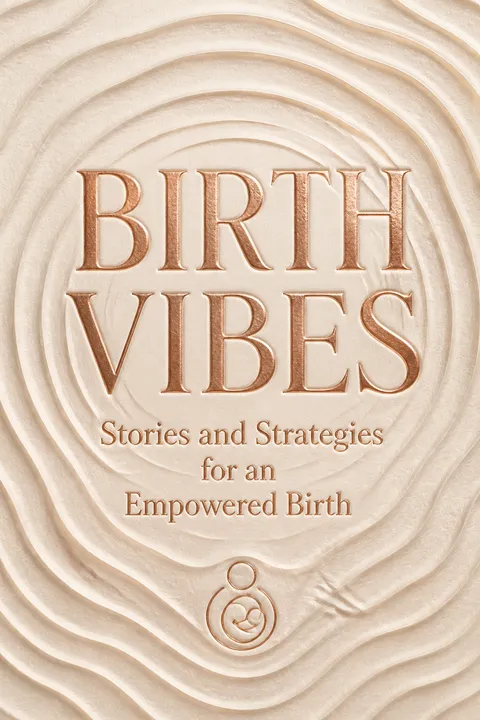
Birth Vibes is part memoir, part practical guide, and part argument about what respectful maternity care should feel like. Its governing idea is not that patients can control birth, but that they can prepare for uncertainty by clarifying what helps them feel safe, informed, and respected. The stories make that claim concrete: Jen’s own changing expectations, Alice’s nurse protecting her choice of pain relief, Brittany learning to hear new medical information, and Anaya’s fear shaped by racial harm all show that care is relational as well as technical.
The book’s most useful contribution is its reframing of a birth plan. Rather than a fixed list of desired procedures, a plan can communicate underlying values and preferred ways of being treated. That distinction can preserve agency when circumstances shift. The Birth Vibes Profile operationalizes the idea by asking patients to describe communication, support, environment, personal comforts and triggers, and what they need if plans change or a debrief becomes necessary.
The narrative also refuses the false choice between blind deference to clinicians and rejecting medical intervention wholesale. It presents interventions as tools with benefits, risks, and alternatives, while insisting that patients deserve explanations and voluntary consent. The practical value of this stance depends on trustworthy clinicians and functioning institutions. A patient cannot personally correct staffing shortages, discriminatory patterns, limited access to doulas, or a culture that treats questions as defiance. The burden of advocacy must therefore be shared by providers and systems. Because the book is written by a bedside nurse, its stories are vivid and its procedural explanations accessible. That same strength calls for care: individual experiences illustrate possibilities but do not establish how common an outcome is, and medical guidance can change. The publisher’s and author’s cautions matter. Readers should use the information to prepare questions for their own qualified care team, not to diagnose themselves or override individualized advice. At its best, the book equips readers not to script an unpredictable birth, but to recognize what respectful care looks like and ask for it.
Glossary
Birth Vibes
Personalized birth-care approachHamilton’s approach to preparing for birth by identifying the nonmedical conditions that help a person feel safe, respected, and supported. It combines communication preferences, support choices, environment, personal comforts and triggers, adaptability, and the need for closure. The aim is to preserve a meaningful sense of agency even when the medical course differs from the original plan.
Birth Vibes Profile
Care-team preference guideA short document a pregnant person can complete and share with their care team. It summarizes how they prefer to receive information, who they want present, what makes the room feel safer, what comforts or triggers them, and which values matter if plans change. It is intended to help clinicians understand the person, not to function as a binding medical order.
Vibe Check
Story-based reflection promptHamilton’s name for the reflection that follows each chapter story. A Vibe Check identifies the birth-experience element illustrated by the story, explains why it matters, and offers prompts for applying it to a reader’s own preferences. It turns a patient narrative into a practical exercise in preparing for care.
informed consent
Voluntary, informed medical choiceA process in which a capable patient receives and understands information about a proposed intervention, including how it is performed, its risks and benefits, alternatives, and possible outcomes. The patient then decides voluntarily whether to accept it and may decline or withdraw consent. A signed form alone, or a clinician announcing a plan, does not complete this process.
expectant management
Monitoring before interventionA clinical approach in which the care team monitors a patient’s condition without intervening immediately, when immediate action is not required and waiting may be appropriate. Hamilton notes that providers vary in how readily they recommend interventions, and that expectant management may suit some situations but is not automatically safer or preferable in every case.
Bishop score
Estimate of cervical readinessA scoring system used to estimate how prepared the cervix is for labor induction. It combines cervical dilation, thinning, softness, position, and the baby’s station. A lower score generally suggests that induction may take longer or be less likely to succeed, while a higher score suggests greater readiness. It is an estimate, not a guarantee of outcome.
TOLAC
Labor after prior cesareanTrial of labor after cesarean describes an attempt to labor vaginally after a previous cesarean birth. If that labor results in a vaginal birth, the outcome is called a VBAC, or vaginal birth after cesarean. The choice depends on the patient’s history, the type of uterine incision, current circumstances, and the care setting’s ability to respond to complications.
gate control theory
Competing sensations alter painA theory of pain perception suggesting that the nervous system can process only a limited amount of sensory input at a time. In the book, it explains why another sensation, such as squeezing a textured object during a contraction, may compete with pain signals and make pain feel less intense. It is presented as one possible coping aid, not a guarantee of pain relief.
Download PDF
Download EPUB
.epub digital book format is ideal for reading ebooks on phones, tablets, and e-readers.








