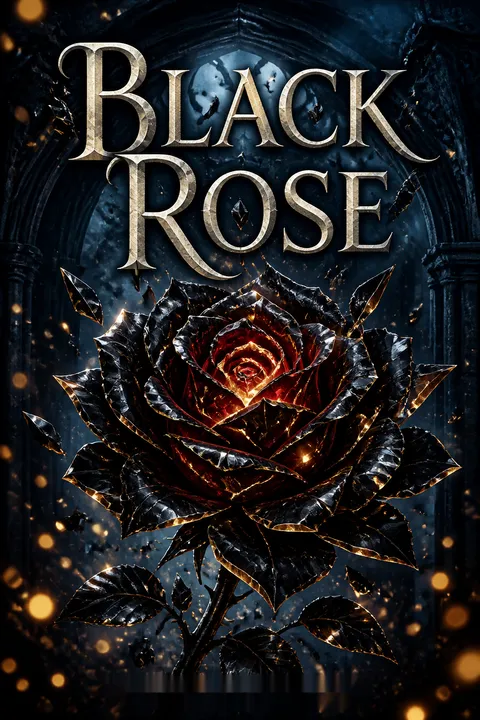


Plot Summary
Prologue
In the past, Bellamy, a witch leader, learns that his apprentice Dahlia and another witch, Livia, have died. He blames Dahlia’s failure on her feelings for the vampire she was sent to kill, Valtu.
Then Atlas Poe reports that the twins in San Francisco are unprotected. Bellamy decides to travel there himself, take the children and their mother, and kill anyone who stands in his way. His grief is real, but it does not soften his appetite for control.
The prologue makes Bellamy’s care inseparable from possession. He mourns Dahlia as a daughter, yet describes her weaknesses as failures of usefulness, and immediately turns her death into justification for another operation. His tenderness never challenges his authority; it is folded into it. The twins become his next opportunity because he sees vulnerable people as instruments in a larger design. This opening also plants the conflict between genuine attachment and coercive protection, a tension that later shapes Rose’s family and Valtu’s choices.
Rose Remembers Everything
At twenty-one, Rose Harper completes the vampire transition she has anticipated since childhood, but blood awakens more than hunger. Memories flood back: she has lived before as Mina, Lucy, and Dahlia, and Valtu, the vampire known as Dracula, has been her lover in each life. As Dahlia, she was a witch sent to kill him, and he killed her before learning who she was.
Rose demands answers from her parents, John and Yvonne, and recognizes their old names, Wolf and Amethyst. Her father confirms that Valtu killed the vampires Aleksi and Saara, though Saara may have survived, and that he took the dangerous Book of Verimagiaa. Rose’s new identity arrives not as peace, but as a past she can no longer escape.
Rose’s transition is a reversal of the promised coming-of-age ritual. She expected becoming a vampire to settle the question of who she was; instead, blood gives her more selves to carry and more unfinished grief to interpret. Her memory does not erase Rose, but forces her to negotiate continuity across radically different lives. The scene also makes knowledge bodily: appetite and recollection arrive together, so identity is not an abstract discovery but an experience that changes what she wants and fears. Her urgency to find Valtu is both romantic longing and an attempt to make a disjointed self legible.
A Family in Hiding
Wolf and Amethyst explain that Amethyst asked Lenore, a vampire with witch ancestry, to turn her after her own mother died. Amethyst survived the transformation without becoming a monster and later gave birth to Dylan and Rose, an impossibility that drew dangerous attention.
The family changed names and moved repeatedly to escape witches and vampires who might exploit their biology. Rose’s anger at their lies collides with evidence of power she cannot explain: during an argument, lightning strikes the deck outside.
Her parents fear that the children inherited Amethyst’s unusual capacity, making them valuable to the vampire supremacists Saara and Enoch. Rose decides she needs Lenore and Solon’s help, even if her parents would forbid the search.
The family secret turns protection into a morally complicated inheritance. Wolf and Amethyst have hidden facts to keep their children safe, but secrecy has also denied Rose and Dylan the ability to understand the danger surrounding them. Rose’s lightning strike makes the parents’ fear concrete: the threat is not merely what others might do to the family, but what the family itself may contain. Her anger is therefore justified without being simple. She recognizes that love can motivate concealment, while also insisting that safety purchased through ignorance has a cost.
Venice After Dahlia
In the earlier Venice timeline, Valtu holds Dahlia’s body after killing her in a burst of rage, devastated that he has destroyed the lover he had only just rediscovered. Lenore and Solon insist that they must conceal the deaths before the witches notice. At Dahlia’s apartment, they find another witch searching for the Blade of Mordernes.
Valtu learns that she suspected the guild had sent Dahlia into danger, but grief overtakes restraint: he breaks her neck before she can explain more. The three vampires take both bodies out by boat and sink them in the waters beyond Lido. Valtu apologizes as Dahlia disappears beneath the surface, but the burial leaves him with no answer for his guilt.
Valtu’s first response to grief is to convert it into action, but the action repeats the violence he regrets. He cannot undo Dahlia’s death, so he kills the person who might connect her to the wider conspiracy, making his need for control another source of harm. The hurried burial also denies him a communal ritual of mourning; the body must be hidden because his own survival takes precedence over public truth. The scene establishes that Valtu’s monstrosity is not a fixed nature. It is a pattern he recognizes, then reenacts when pain overwhelms his judgment.
Poveglia Burns
Still grieving, Valtu joins Lenore, Solon, Bitrus, and Van Helsing in an assault on Poveglia, where Saara and Aleksi keep the Book of Verimagiaa and terrorize humans. Saara has captured Valtu’s student Kate, hoping to provoke him. When Valtu demands the book, a demonic creature drags it across the chapel floor and places it in his hands.
The creature then decapitates Aleksi. Valtu and his allies overpower Saara, and Valtu sets her alight, believing the fire has killed her. On returning to Venice, they learn Bellamy and Atlas have attacked Wolf and Amethyst’s home and taken their infant, Leif. Valtu refuses to help, choosing the book and his hope of resurrecting Dahlia over the endangered family.
The book enters Valtu’s life as both a tool and an emotional substitute. He tells himself its power can restore Dahlia, while its apparent choice of him makes possession feel like destiny rather than appetite. The raid also exposes how grief narrows his moral field: he can act decisively against Saara’s violence, yet cannot extend that concern to a stolen child once the book offers a private route out of pain. His refusal is consequential, not passive. It marks the moment when self-preservation begins to masquerade as the only form of hope.
The Blank-Slate Spell
Years pass in Venice. Valtu teaches music, withdraws from friends, and studies the grimoire for a way to bring Dahlia back, but the needed necromancy spell never appears. Instead, the book reveals a potion that erases memory. Solon visits and urges him to help find Leif and Bellamy, but Valtu says the book has shown him no tracking magic and announces that he is leaving the city.
He then drinks the potion, erasing Dahlia, Lucy, and Mina from his conscious memory. The choice removes the immediate pain, but it also strips away the relationships that once made him compassionate. He settles in a hidden mountain castle with the book and its disturbing supernatural guardians.
Valtu’s self-erasure is an extreme form of avoidance that confuses freedom from pain with freedom itself. The spell works by severing memory, not by repairing the conditions that made grief unbearable, so relief comes at the cost of his capacity to understand his own behavior. His refusal to help Solon is the external consequence of the same inward decision: he cannot act on bonds he has chosen not to remember. The book’s promise is seductive because it turns an ethical crisis into a technical solution, allowing Valtu to treat emotional survival as a problem that can be deleted.
The Twin No One Knew
Rose and Dylan travel secretly to San Francisco, where Lenore and Solon run a guarded vampire club beneath the Westerfeld House. They recognize Rose as Dahlia and are stunned to learn she is Wolf and Amethyst’s daughter. Solon reveals the family’s omitted loss: Dylan was born Liam, a twin, and the witches took his brother Leif from the house when he was one year old.
The raid came from Bellamy’s group, which believed Amethyst’s unusual blood could help create vampires who would not become monsters. Rose also learns that Valtu has lived in Mittenwald for years and deliberately used the book’s erasure spell to forget her. Lenore offers to arrange Rose’s journey to Germany, though Solon warns Valtu may not welcome her.
The twin revelation turns Rose’s personal quest into a family obligation. Leif is not merely a stranger to be rescued; his absence is a wound that shaped the hidden life Rose was born into. The discovery also rearranges her understanding of protection: the parents’ secrecy was not only about their own unusual history but about a child lost before Rose arrived. Meanwhile, Valtu’s erasure introduces an asymmetry that drives the romance. Rose remembers a shared life; he does not. Her decision to find him therefore risks not just rejection, but a second encounter with the person who once loved and killed her.
Dracula's Mountain Castle
Van Helsing meets Rose in Austria and drives her toward Mittenwald, warning that Valtu has become dangerous and does not remember her. To get her inside his guarded castle, the doctor presents her as a vampire admirer seeking Valtu’s company. Valtu studies Rose without recognition, accepts her for the night, and uses magic to conceal the difficult climb to his fortress carved into the mountain.
He locks her in a room fitted with chains, then approaches her as a sexual guest rather than a returning love. Rose plays along because she believes intimacy may awaken his memory, but his coldness makes clear that the man she remembers is not available to her simply because she has found him.
The castle literalizes Valtu’s emotional architecture: hidden, difficult to reach, and built to keep others out. Rose’s arrival destabilizes that structure, but her method requires her to perform a role that reduces her to a desired body. The contradiction is psychologically acute: she chooses erotic closeness as a route toward recognition, even while the encounter confirms that he cannot yet recognize her. Valtu’s control over the setting and the terms of intimacy contrasts with Rose’s greater knowledge of their history. She is not powerless, but her agency must operate inside a fiction she has chosen.
A Demon Cuts Her Free
During Rose’s first night, a grotesque infant apparition crawls toward her, recalling the children she lost in earlier lives. The demon that haunts Valtu’s castle cuts through her restraints and opens the door. When it reaches for Rose downstairs, Valtu claims her as his and orders the creature away.
He then keeps her near him, though the attraction between them does not make him gentle or safe. In the following days, Rose uses their shared music and physical intimacy to draw out moments of warmth, while Valtu remains unable to explain the pull he feels toward her. The haunting makes their private history visible before Valtu can consciously remember it.
The infant apparition gives Rose’s reincarnation a material, frightening form: the past is not a story she can calmly recount but an injury that intrudes on her body and present surroundings. The demon’s unexpected intervention complicates the simple division between threat and protection. It is dangerous, yet it releases Rose, while Valtu’s declaration of possession protects her by reproducing the control that also endangers her. Their intimacy offers moments of recognition through habit and sensation, but the scene refuses to confuse familiarity with safety. Memory may be absent, yet the body still registers attachment and loss.
The Feast He Forced
Valtu summons a teenage human to their dinner and cuts his arm, insisting Rose must feed from the living. Her vampire hunger overwhelms her objections; she drinks until the boy is near death, then stops. Valtu releases the boy from his compulsion and kills him with a knife, calling the death a sacrifice.
Rose recoils from the cruelty and from how satisfying the blood felt. That night, the boy’s ghost attacks her in a locked torture chamber. Terrified, Rose summons lightning that burns the apparition to ash and leaves a pentacle scorched into the floor. Valtu sees the magic and realizes she may be a witch as well as a vampire, a possibility Rose herself cannot yet explain.
The forced feeding tests whether Rose’s ethical identity can survive the body’s new appetite. Her choice to stop matters, but it cannot undo the harm already done; the scene rejects the comforting idea that good intentions make predation harmless. Valtu’s killing of the boy exposes his distorted moral logic, in which a promise can be technically kept while its humane purpose is betrayed. Rose’s lightning emerges from fear rather than mastery, linking power to vulnerability. The burned pentacle is a concrete sign that the self she is becoming contains capacities neither her parents nor she fully understand.
Rose Names Herself
When Valtu confronts her about the pentacle and her knowledge of the demon, Rose stops pretending to be an ordinary vampire. She explains that she is also Dahlia, the witch he killed, and the earlier women he loved. Valtu rejects her account and orders her out. Rose leaves the castle, but the demon catches her on the snowy mountainside.
Valtu follows and commands it to release her, insisting that she has always belonged to him. When the demon attacks, Rose calls down lightning deliberately and destroys it. Valtu recognizes that her power is real, learns that Bellamy stole Leif from her parents, and agrees to help her find the witch and recover her brother.
Rose’s disclosure ends the bargain she has been living under: she refuses to keep offering her body while concealing the identity that gives the relationship its meaning. Valtu’s rejection is painful, but his rescue complicates it; even without conscious memory, he acts on an attachment he cannot explain. Rose’s destruction of the demon makes her more than the object of that attachment. She becomes an agent capable of changing the supernatural order surrounding Valtu. Their new alliance therefore begins not with a recovered romance, but with a negotiation between her self-determination and his instinct to claim and protect.
The Book Opens Again
Rose and Valtu turn from confession to the search for Leif. The Book of Verimagiaa, which has stayed mostly blank for years, begins producing spells when Rose touches its pages. Together they uncover magic for finding a person, and Rose uses it to glimpse Bellamy and Leif in Istanbul.
The new connection also makes Valtu’s growing affection harder to dismiss: he begins to care for Rose even without recovering his memories. Their plans become a joint effort, though the old pattern of Valtu wanting to protect her and Rose insisting on choosing for herself remains. The book gives them a destination, not certainty about what Bellamy has done or how dangerous the reunion will be.
The grimoire’s response to Rose shifts authority in the relationship. Valtu has possessed the book for decades, but her touch unlocks what his solitary study could not, making knowledge a collaboration rather than a private instrument. This change also reframes his earlier isolation: the book was not simply withholding a solution; Valtu lacked the relationship and perspective that could call it forth. The tracking spell provides a plot direction without resolving the emotional problem between the lovers. Rose and Valtu can work together before he remembers her, suggesting that intimacy may be rebuilt through present choices rather than restored only by recovered history.
The Second Erasure
In Istanbul, Rose spots Leif leaving a ruined building with Atlas Poe, but Atlas recognizes her as a vampire and stabs her with the Blade of Mordernes. Valtu tackles him, then teleports Rose back to their hotel before the wound can worsen. While she showers, she finds a note Valtu has written to himself, explaining that he plans to drink the erasure potion again after their mission.
On the balcony, he does so despite Rose’s pleas. She destroys the Book of Verimagiaa with a burst of lightning, and the shock breaks the spell: Valtu’s memories of Mina, Lucy, Dahlia, and Rose return. He understands what he has done and begs her forgiveness. The reunion is real, but Bellamy and Leif remain at large.
The second erasure makes Valtu’s central conflict explicit: he would rather preempt future grief than risk loving someone whose life may be lost. The note reveals that this is not an impulsive relapse but a plan, which makes Rose’s discovery a confrontation with his chosen philosophy. Destroying the book is an act of desperation and agency at once; she sacrifices the instrument that might have helped find Leif to stop Valtu from erasing their bond again. Memory returns through destruction rather than obedience, challenging the assumption that their love can be made safe by controlling the past.
Bellamy Falls in Istanbul
Rose, Valtu, and Solon search Istanbul’s Spice Bazaar while Wolf, Amethyst, Lenore, and Van Helsing investigate the building where Leif was last seen. Bellamy appears and freezes the crowded market in time. He taunts Rose about the family he destroyed, then uses magic to drain her strength. Rose manages to draw the Blade of Mordernes from her boot and drives it into Bellamy’s heart, ending his immortality.
As time resumes, Atlas attacks Rose with barbed wire, but Valtu kills him by tearing off his head. Rose and Valtu help Solon defeat another witch, then escape the bazaar before the human crowd can understand what happened. The other team returns with Leif, alive but deeply disoriented by his sudden freedom.
The climax makes Rose’s former training serve a purpose Bellamy never intended. He shaped her into a weapon, and she turns that training against him, using the slayer’s blade rather than relying solely on newly discovered magic. Her victory is not a simple reversal of power: Bellamy still injures and weakens her, and Valtu’s violence helps secure the escape. The frozen bazaar also externalizes the antagonist’s control over other people’s reality. When time resumes, the group must leave behind public chaos and private casualties, a reminder that defeating a tyrant does not automatically repair the lives he has altered.
Two Brothers Meet
Van Helsing and the others use hypnosis and medical intervention to help Leif understand that Wolf and Amethyst are his parents and Dylan is his twin. The explanations do not erase his years with Bellamy’s group, and Leif remains guarded, unsure whether to trust the people claiming him. Rose approaches gently, telling him she is available without demanding immediate closeness.
Five days later, the family returns to Oregon. Dylan meets the brother he never knew and recognizes their resemblance, easing the first tense moments with humor. Leif gives no easy promise of recovery, but he accepts the family’s presence. Rose and Valtu remain together, and the rescued twin’s future becomes a shared, unfinished task rather than another secret.
The reunion refuses a convenient restoration. Leif is physically home, but his history cannot be reversed by revealing his birth family, and the text treats trust as something that must be built after rescue. Rose’s offer of support without demanding intimacy contrasts with Bellamy’s coercive version of family, where belonging was imposed and used to justify exploitation. Dylan’s humor provides a small bridge, not a cure. The scene also completes Rose’s movement from an isolated search for Valtu to participation in a wider family structure, one that includes people whose pain cannot be solved on her timetable.
Epilogue
Years later, Rose and Valtu have returned to Venice and built a life around the city’s music and vampire community. After a long struggle to conceive, Rose goes into labor at home. Valtu waits with Wolf and Amethyst, frightened by the possibility of another loss, until the baby arrives safely.
Their son, Constantine, gives the couple a future they once believed grief had taken from them. Leif is still working through his trauma in Barcelona with Van Helsing’s support, while Dylan and the other allies remain connected to the family. The ending does not erase the past; it gives Rose and Valtu a life that can grow beyond it.
The birth answers the novel’s recurring history of lost children without pretending that love guarantees safety. Rose and Valtu’s son is not a replacement for the children they lost, nor does his arrival repair Leif’s trauma. Instead, the family’s happiness comes after years of uncertainty, including a period when pregnancy seemed impossible. Valtu’s fear in the delivery room shows that memory has not made him invulnerable; it has made him able to remain present despite fear. The ending values continuity over erasure: the couple’s future is meaningful precisely because it does not require them to deny the losses that preceded it.
Analysis
Black Rose treats memory as both the foundation of intimacy and a source of pain that cannot be safely removed. Valtu’s spell seems to offer an escape from grief, but it actually removes the emotional knowledge that would help him understand why he has become cruel and isolated. His story challenges the fantasy that forgetting is neutral: what disappears is not only sorrow, but the relationships and moral obligations that gave his life shape. Rose’s persistence is not simply romantic idealism. She insists that present identity remains valid even when it contains earlier selves, and she refuses to let Valtu’s memory loss define what their history means.
The novel also distinguishes protection from control. Wolf and Amethyst hide their history to protect their children, Bellamy calls exploitation a sacrifice for the greater good, and Valtu tries to keep Rose safe by claiming authority over her choices. These actions are not morally equivalent, but each reveals how easily care can become a rationale for withholding agency. Rose’s strongest decisions come when she refuses both abandonment and possession: she pursues Leif, challenges Valtu’s violence, and uses her power on her own terms. The vampire body intensifies these questions. Hunger makes moral choice physical, and Rose’s feeding from the captive boy gives her no clean innocence, even though she stops before killing him. The scene asks whether restraint matters when harm has already begun. By contrast, the final family reunion and Constantine’s birth do not undo the losses that came before. They offer continuation instead of erasure. The ending’s hope rests on a difficult premise: love is worth the vulnerability it creates, not because grief can be prevented, but because a life organized around avoiding grief eventually becomes another form of loss.
Review Summary
Black Rose received mixed reviews, with many readers disappointed compared to its predecessor. Critics praised the gothic atmosphere and steamy romance but found the plot underdeveloped and rushed. Some felt the main character Valtu became unlikable, while others appreciated the emotional depth. Readers enjoyed the vampire elements and reincarnation theme but wanted more world-building. The book's spicy scenes were widely praised, though some felt they overshadowed the story. Overall, fans of the first book had high expectations that weren't entirely met.
Characters
Rose Harper
The returning vampireRose is a newly transitioned vampire raised by Wolf and Amethyst on the Oregon coast. Curious, stubborn, and emotionally direct, she responds to uncertainty by seeking the people and histories her parents kept from her. Her heightened hunger unsettles her because she wants to remain morally distinct from predators who treat humans as food or tools. She is also drawn to music, family, and the possibility that identity can contain more than one version of a person. Rose does not confuse devotion with passivity: she pursues Valtu, challenges him when he harms others, and insists that the search for Leif is her responsibility too.
Valtu Aminoff
The grieving immortalValtu is an ancient vampire, music teacher, and the historical inspiration behind Dracula. He is charismatic and intensely physical, with a capacity for tenderness that exists beside possessiveness and violence. Across his long life, repeated losses have taught him to fear attachment as a sentence to endless grief. His hunger for control reaches beyond people to the magic book he keeps close. Valtu can be generous, witty, and protective, but those traits do not erase his capacity to harm. His central psychological struggle is whether he can accept love and responsibility without trying to secure himself against every future loss.
Dylan Harper
Rose's irreverent brotherDylan is Rose’s older brother, a bartender with a laid-back manner and a habit of using humor when a situation grows too strange. He accompanies Rose to San Francisco rather than letting her make the journey alone, even while questioning her impulsive plans. His protectiveness is understated but genuine, and the family revelations force him to confront how much of his own history was withheld. Dylan’s ease with Rose gives their close-knit family a recognizably ordinary warmth amid supernatural danger.
Leif
The missing twinLeif is a young vampire whose history is bound to the danger surrounding Wolf and Amethyst’s family. He is guarded and tightly self-contained, with a difficult past that makes trust slow and uncertain. His resemblance to Dylan offers a striking reminder of the family life that was interrupted before Rose was born. Leif’s presence matters not because he can be quickly restored to an earlier self, but because his future depends on whether others can offer care without demanding that he recover on their schedule.
Wolf Eriksen
Rose's protective fatherWolf, known publicly as John Harper, is a strong, watchful vampire and Amethyst’s partner. He helps move the family from place to place to keep their unusual circumstances hidden. His secrecy comes from fear for his children, but his protective instincts can become controlling when danger rises. Wolf is blunt, loyal, and not easily intimidated, especially when Rose is at risk. Beneath his guarded manner is a father trying to balance the family’s safety with the truth his children deserve.
Amethyst
The transformed motherAmethyst, who has lived under the name Yvonne Harper, was turned into a vampire by Lenore after the death of her own mother. Her unusual survival and later ability to have children make her a target for people who see her biology as an opportunity. She is loving and emotionally perceptive, though years of hiding have taught her to withhold painful truths from her children. Her choices come from a wish to protect the family and preserve her life with Wolf, even when secrecy strains the trust she wants to keep.
Bellamy
The witch who recruitsBellamy is a powerful witch and former leader who gathers vulnerable or ostracized witches into his own faction. He presents himself as a guardian and teacher, but his concern is entangled with discipline, utility, and the pursuit of power. Bellamy is patient enough to shape people over time and ruthless enough to treat family bonds as expendable when they obstruct his plans. His calm authority makes him more dangerous than a simple brute: he can make exploitation resemble mentorship, and make control sound like care.
Lenore
The witch-blooded vampireLenore is a vampire with witch ancestry, Solon’s partner, and a close friend to Wolf and Amethyst. Her magic and practical knowledge make her an important ally when ordinary protections fail. She is quick-witted and confident, but she carries guilt about choices that affected Dahlia and Valtu. Lenore’s instinct is to help directly, even when that means challenging Solon’s caution. Her relationships show that supernatural power can serve care, though good intentions do not prevent her from making mistakes.
Solon
The guarded first vampireSolon, also called Absolon Stavig, is an ancient vampire and Lenore’s partner. He is measured, wary, and experienced in magic, with a strong sense of the consequences that follow power. Solon tries to keep Valtu connected to his friends and urges him to help the family threatened by Bellamy. His caution can sound like pessimism, but it comes from having seen how easily supernatural conflicts spill onto vulnerable people. He respects Rose’s resolve while remaining alert to what Valtu’s choices may cost.
Abraham Van Helsing
The vampire doctorVan Helsing is a researcher and physician who has known Valtu and Rose across different periods of their lives. He created blood pills that offer vampires an alternative to feeding on humans, though he understands that many still crave fresh blood. His scientific curiosity is balanced by concern for the people he studies, and he helps Rose travel while warning her about the danger ahead. Van Helsing often acts as a bridge between old supernatural conflicts and newer efforts to understand them.
Atlas Poe
Bellamy's witch enforcerAtlas is a powerful witch expelled from the guild after causing a human death. He works with Bellamy’s faction and can use magic to disappear or attack with startling speed. His history of exclusion helps explain why he gravitates toward a group willing to accept dangerous methods, though it does not excuse his violence. Atlas is volatile and confrontational, a sharp contrast to Bellamy’s composed authority.
Saara
The vampire supremacistSaara is a ruthless vampire who seeks to dominate humans and punish vampires who resist her vision. She rules through spectacle, intimidation, and the use of supernatural creatures to guard her territory. Her alliance with her brother Aleksi places her at the center of the danger surrounding Venice and the Book of Verimagiaa. Saara’s appetite for power is more openly predatory than Valtu’s, making her a dark reflection of what vampire life can become when restraint is treated as weakness.
Bitrus
Valtu's steady old friendBitrus is one of Valtu’s trusted friends in Venice and a steady presence during the campaign against Saara and Aleksi. He helps plan the Poveglia raid and later takes over the Red Room, a vampire feeding club. Bitrus is cautious about the Book of Verimagiaa and attentive to how grief affects Valtu, though he cannot make Valtu accept help. His loyalty is practical rather than sentimental.
Mina, Lucy, and Dahlia
Rose's earlier selvesMina, Lucy, and Dahlia are the names attached to Rose’s earlier lives, each with distinct circumstances and memories. Through them, the story connects different eras of Valtu’s life and gives Rose a history larger than her present identity. Their experiences include love, danger, and loss, but they do not erase Rose Harper or reduce her to a repetition. They are remembered parts of one continuing person, shaping what Rose fears, desires, and recognizes.
Aleksi
Saara's brutal brotherAleksi is Saara’s brother and partner in the violent rule of the rogue vampires on Poveglia. He helps guard their territory and the magic book they have taken. His confidence in force makes him an immediate threat to Valtu and his allies.
Livia
Bellamy's witch apprenticeLivia is a witch connected to Bellamy’s faction and to his plans in the opening. Her reported death prompts Bellamy to reassess the vulnerabilities around the family he intends to target.
Kate Rutherford
Valtu's captured studentKate is an English piano student of Valtu’s who is taken by Saara and used to provoke him during the Poveglia confrontation. Her predicament forces Valtu to choose between maintaining his cover and responding to a human he knows.
Celina
A witch in Bellamy's circleCelina is a witch associated with Bellamy’s group and Leif’s life among them. Her presence helps show that the faction offers its own version of family, built around shared secrets and power.
Enoch
Saara's vampire allyEnoch is aligned with Saara and shares her ambition to build a vampire faction capable of ruling over humans. He remains a looming name in the wider conflict rather than a central on-page presence in Rose and Valtu’s search.
Ezra
A defender of the householdEzra is a vampire present when Bellamy’s witches attack Wolf and Amethyst’s home. He helps defend the family and later becomes a figure whose account of the attack is assessed by Solon.
Plot Devices
Reincarnation
A love that returnsRose’s memories connect her present life to earlier lives as Mina, Lucy, and Dahlia, all bound to Valtu. The device makes past events active rather than merely historical: Rose carries emotional recognition that Valtu has deliberately lost. It also complicates identity, since Rose remains her own person even as she inherits memories, relationships, and unresolved losses. Reincarnation drives her search for Valtu and sets up the story’s repeated question of whether love can survive changes in body, memory, and circumstance.
Book of Verimagiaa
Magic with a willThe grimoire contains spells usable by vampires and appears to reveal its pages selectively. Valtu takes it from the rogue vampires on Poveglia, hoping to find a way to restore Dahlia, then relies on its power for decades. The book’s blank pages delay the search for Bellamy and Leif until Rose’s touch makes new spells appear, including a spell to locate someone. Its influence encourages Valtu to treat magic as a solution to emotional pain, while its destruction becomes part of the struggle over whether he will erase Rose again.
Tabula Rasa Potion
Grief erased by magicThe potion produced from the book removes Valtu’s conscious memories of Rose’s earlier identities and their love. He drinks it after Dahlia’s death because he cannot bear the guilt and grief, then prepares to use it again when his feelings for Rose return. Its effect creates the central emotional imbalance: Rose remembers, while Valtu must encounter her without knowing why she feels familiar. The potion offers relief by removing memory, but it cannot produce genuine healing; it leaves Valtu’s pain buried and his relationships altered.
Blade of Mordernes
A weapon against immortalsThe blade is a witch-slayer’s weapon and a danger to vampires, capable of leaving wounds that do not heal normally. Dahlia’s guild connection brings it into the Venice story, and the witches use it again in Istanbul. Rose carries the blade into the final confrontation and uses it against Bellamy, whose immortality depends on vampire blood. The weapon links Rose’s training as a slayer to her later fight for family, turning a tool once associated with the role Bellamy imposed on her into an instrument she chooses to use.
Rose's Witchcraft
Power awakened through memoryAfter Rose becomes a vampire and regains memories of Dahlia, she begins to manifest elemental magic, most visibly through lightning. At first the power arrives under extreme fear, striking a deck and destroying a ghostly attacker. Later Rose learns to call the lightning deliberately, and her magical ability helps her survive the demon’s attack and confront Bellamy. Her powers connect past identity with present agency: she does not simply inherit Dahlia’s role as a weapon, but begins deciding how to use what has returned to her.
About the Author
Other books by Karina Halle





Download PDF
Download EPUB
.epub digital book format is ideal for reading ebooks on phones, tablets, and e-readers.








