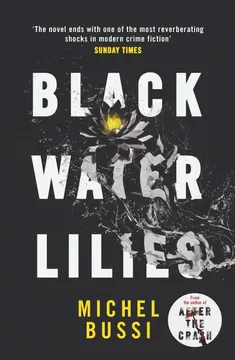


Plot Summary
Three Women, One Corpse
At dawn in Giverny, an elderly resident1 spots ophthalmologist Jérôme Morval7 dead in the stream: stabbed, struck on the head, and deliberately positioned with his face underwater. From her tower window, she watches the police arrive but chooses to remain silent, convinced she knows more than they do.
Inspector Laurenç Sérénac5 finds a postcard in Morval’s7 pocket, marked for an eleven-year-old’s birthday and carrying a clue linked to a poem taught at the village school. The victim7 had no children, making the card more troubling than informative. The old woman1 keeps to the shadows while the village gathers around the crime scene. Her silence leaves Sérénac5 to follow the message into the lives of Giverny’s women and children.
The deliberately composed body makes the murder resemble an image arranged for an observer, but the postcard refuses to settle into a single interpretation. The old woman’s decision to withhold what she knows establishes the story’s central problem: seeing is not the same as understanding, and witnesses may protect a private order rather than help the law. Giverny’s celebrated beauty compounds that uncertainty. Its familiar postcard surface conceals violence, while the murder itself becomes a message whose recipient is missing. The opening invites the reader to treat art, landscape, and crime as evidence, then quietly warns that evidence can be staged.
A Teacher in the Frame
Sérénac5 and his meticulous deputy, Sylvio Bénavides,6 learn that Morval7 collected Impressionist art and pursued women, including Stéphanie Dupain,3 Giverny’s admired schoolteacher. His wife,8 Patricia,8 appears to grieve sincerely, but confirms that her husband7 often lived apart from her and dreamed of owning a Monet.
At the school, Sérénac5 meets Stéphanie3 and discovers that the postcard’s literary clue refers to a poem she teaches her pupils. She admits that Morval7 knew her, while denying an affair. Her warmth and carefully managed reserve unsettle the inspector,5 who is attracted to her even as he questions her. The birthday message still points toward a child, so Stéphanie3 agrees to prepare a list of her pupils for the police.
Sérénac’s investigation is compromised almost as soon as it begins: he recognizes the teacher as a possible suspect, yet reads her gestures through desire. The scene makes attraction a form of selective attention. He notices Stéphanie’s elegance more readily than the contradictions in her account, while Bénavides tries to keep the inquiry divided into testable possibilities. Patricia’s grief complicates the expected portrait of the abandoned wife, showing that Morval’s infidelity did not erase her attachment. The school, meanwhile, turns a private birthday clue into a public system of names and ages. A child’s identity may be the case’s key, but the adults are already interpreting it through their own wants.
The Girl Who Paints
Eleven-year-old Fanette Morelle2 is a gifted painter raised by a tired, protective mother who refuses to discuss the girl’s absent father. Fanette2 hopes to enter an international art competition sponsored by the Robinson Foundation, whose prize could take her abroad.
She secretly paints in the meadow with James,9 an elderly American artist9 who praises her talent but warns that ambition demands self-direction. Fanette2 resists his lectures and imagines sharing a future with Paul,10 the gentle boy who loves her.
Vincent,11 another child in their circle, watches her with unnerving intensity. Her mother rejects the competition as another promise that might lead to disappointment. Fanette2 responds by writing questions about her father on the kitchen slate, but receives tears and silence instead of answers.
Fanette’s artistic ambition is inseparable from her search for a father: James supplies encouragement and a language for talent, while her mother’s silence leaves the child to invent an origin for her gifts. The competition gives that longing a practical shape, a journey out of Giverny, but it also creates a reason for others to fear her departure. Her friends experience her independence differently: Paul supports it, while Vincent’s attention feels possessive. The scene refuses to treat genius as simple promise. Fanette’s talent opens a possible future, yet every adult who names it also tries to direct what she should sacrifice for it.
Five Photographs, False Trail
An anonymous envelope delivers five photographs of Morval7 with different women, including Stéphanie3 walking beside him. Numbers on the backs suggest the pictures record more than dates, but Sérénac5 distrusts evidence supplied by an unseen source.
The investigators identify several women and learn that one, Aline Malétras, once worked for the Robinson Foundation. Another image shows an unidentified woman in a maid’s uniform with Morval.7 Bénavides6 maps three possible motives: sexual jealousy, a valuable Monet, or a hidden child.
Jacques Dupain,4 Stéphanie’s husband,4 rises on the suspect list because he is intensely jealous and has no clear alibi. Sérénac’s5 interest in Stéphanie3 clouds his judgment, while Bénavides6 warns that the photographs may have been chosen to steer them.
The photographs function as both evidence and manipulation. They encourage the police to collapse distinct relationships into one pattern of adultery, although the images do not prove that every woman was Morval’s lover. Sérénac understands this intellectually but remains emotionally susceptible to the photograph of Stéphanie. Bénavides’ lists and categories are less glamorous than intuition, yet they preserve distinctions the case needs. The mystery’s competing explanations also reflect Giverny’s economy: desire, art, and inheritance all circulate through the same small community. By making an anonymous sender control what the police see, the novel turns investigation into a struggle over framing, not merely fact gathering.
The Painter Vanishes
After James9 leaves Fanette2 in the meadow, he discovers a threatening message carved inside his paint box, warning him away from the girl. The next day, Fanette2 finds flattened wheat, scattered paint, and James’s9 body with a fatal wound. She runs for her mother, but when they return, the corpse has disappeared.
Her mother insists she may have imagined the painter9 and refuses to involve the police, fearing the attention will bring trouble. Fanette2 searches the field with Paul10 and finds traces that support her memory, but no body or equipment. Vincent11 denies knowing James.9 Fanette2 cannot prove what happened, so she decides to investigate for herself and asks Paul10 to help her find someone who will believe her.
The missing body makes Fanette’s testimony vulnerable precisely when she most needs it to be trusted. Her mother’s dismissal protects their household from scrutiny, but it also repeats the family silence that has already shaped Fanette’s ideas about her father. The evidence in the field is material yet incomplete: paint and crushed wheat confirm an event without identifying its cause. Fanette’s choice to investigate is therefore both courageous and psychologically necessary. If she accepts the adults’ version, she must also doubt her own perception. The scene links artistic observation to survival: the child who studies color and composition must now read a landscape for traces of violence.
The Brook Keeps Evidence
The police investigate Morval’s7 art dealings and question Amadou Kandy,12 a gallery owner who once helped him search for a Monet. Kandy’s12 connection to the Murer family reveals that Morval7 had tried to acquire a real Water Lilies painting from an elderly woman on Sark, a scheme that ended in her ruin.
The trail offers a possible motive but no clear killer. Bénavides6 uncovers a 1937 report about Albert Rosalba,15 an eleven-year-old found drowned in the same stream with his skull crushed.
Albert’s mother14 never believed the death was accidental, but the family left Giverny after the villagers refused to speak. The old woman in the mill1 searches for a photograph of Albert, while the inspectors continue to weigh art, affairs, and children as connected clues.
The expansion into art history and the 1937 drowning appears to multiply the case beyond control, but both strands expose the same local habit: Giverny protects its image by turning inconvenient events into rumor or accident. Kandy’s dealings show how cultural reverence can mask ordinary greed, while the Rosalba family’s departure reveals the social cost of silence. The mystery’s historical depth also challenges the investigators’ faith in a clean chronology. A crime scene may carry older meanings even when official records have closed the file. Bénavides senses that the child clue is central; Sérénac keeps returning to Stéphanie, illustrating how personal attachment can narrow a detective’s field of vision.
Boots Before the Arrest
A forensic search of Giverny’s boots finds no match for the muddy print near Morval’s7 body, but Jacques Dupain’s4 pair has conveniently disappeared. When officers dredge the stream, they recover an old Winsor & Newton paint box.
Inside is a possessive threat resembling Jacques’s4 handwriting, and Sérénac5 treats it as the breakthrough he needs. He arrests Jacques4 during a hunt, despite Bénavides’6 concern that the evidence may be planted. Jacques4 nearly raises his rifle against the police before Bénavides6 helps defuse the standoff.
New analysis then undermines the case: the writing may have been made by a child, and the blood on the box belongs to neither Jacques4 nor Morval.7 Sérénac5 must arrange Jacques’s4 release, though he remains convinced of his guilt.
The paint box is an unusually persuasive false object: it combines the case’s artistic setting with a threat that seems to confirm the jealous-husband theory. Sérénac turns resemblance into certainty, while Bénavides attends to the qualifications in the expert reports. Their disagreement is not simply temperament. Sérénac wants a coherent motive; Bénavides tolerates unresolved evidence long enough to notice when it contradicts the story. The arrest shows how quickly suspicion can become institutional force. Jacques’s near-violence strengthens the image of a dangerous husband, but it does not prove murder. The recovered object thus tests whether investigators can distinguish a clue from an invitation to believe.
A Wife Chooses Her Story
As Jacques4 is held, Stéphanie3 tells the police he was in bed with her on the morning Morval7 died, contradicting her earlier account that he had gone hunting. She admits she wants a child and claims the couple were together, but Sérénac5 recognizes that her testimony is false.
Their attraction intensifies at Monet’s house, where Stéphanie3 confides that she feels trapped in Giverny and does not love her husband.4 She also insists that Jacques4 is incapable of murder. Sérénac5 cannot reconcile her desire to escape with her loyalty to him.
After the paint-box evidence collapses, Jacques4 is released, and Stéphanie3 tells him she intends to leave. He listens without open anger, but the marriage remains a cage built from affection, dependence, and her fear of choosing wrongly.
Stéphanie’s false alibi is not merely an attempt to protect a husband; it exposes how difficult freedom becomes when it depends on another person’s punishment. She wants to leave Jacques, yet refuses to make his imprisonment the price of her escape. Sérénac’s romantic reading of her distress risks turning her into a prize rather than a decision-maker. Her confession about childlessness and emotional emptiness gives the attraction a deeper context, but does not resolve whether she wants him or the possibility of another life. The section makes desire ethically unstable: rescue can resemble possession, and a woman’s wish to leave may be mistaken for consent to be carried away.
Nettles Island Standoff
Sérénac5 waits at Nettles Island for Stéphanie,3 but Jacques4 arrives first with a hunting rifle. He knows about the meeting and demands that the inspector5 leave Giverny without disrupting the marriage. Sérénac5 refuses to write the farewell note Jacques4 wants, insisting that Stéphanie3 must decide for herself.
Jacques4 then shoots Neptune at close range, making the threat unmistakable. Sérénac,5 shocked and covered in the dog’s blood, cannot safely reach for the gun.
Stéphanie3 arrives to find a note from the inspector5 and blood on her clothes; Jacques4 appears with Neptune’s body and tells her the dog died in a hunting accident. She accepts his help and returns home with him, while Sérénac5 leaves, apparently surrendering the relationship and the investigation.
The dog’s death converts abstract jealousy into coercive power. Jacques does not need to shoot Sérénac to control him; he demonstrates that anyone Stéphanie loves can become leverage. Sérénac’s insistence on her freedom is morally sound, but his presence has helped create a dangerous triangle in which every man claims to act for her. Stéphanie’s return with Jacques reads as refuge after shock, not a clear endorsement of the marriage. The scene also exposes the limits of the inspector’s romantic confidence: he can interpret clues, but cannot protect someone by declaring her free. Here, violence speaks louder than the language of choice.
The Painting Turns Black
While Stéphanie3 believes Sérénac5 has left her behind, Fanette2 sends Paul10 to retrieve her hidden competition painting. Vincent11 confronts him and demands that he destroy it so Fanette2 cannot leave Giverny.
He carries a bloodied painter’s knife, and Paul10 recognizes that Vincent11 may be connected to James’s9 disappearance. Paul10 overpowers him briefly, but slips on the bank and strikes his head beside the stream. Vincent11 holds him underwater until he stops moving.
Fanette2 learns of Paul’s10 death and blames herself for sending him to the wash house. At Monet’s pond, she covers her bright, unfinished Water Lilies with dark paint. She tells Vincent11 she is finished with painting and with the identity of the gifted girl everyone expected her to become.
Fanette’s painting becomes the visible form of a choice the adults have made dangerous: leaving. Vincent’s attack is framed as protection, but it is protection stripped of the other person’s agency, the same logic that governs possessive love elsewhere in the story. Paul’s death turns Fanette’s ambition into guilt, and her blackened canvas records grief as an act rather than a mood. The parallel between artistic color and imagined futures is concrete: the girl does not merely lose confidence; she destroys the work meant to carry her beyond Giverny. Her renunciation shows how violence can force a person to mistake survival for surrender.
The Guardian Confesses
The elderly narrator’s1 frame finally opens on 13 May 2010, when her dying husband, Jacques,4 asks her to retrieve a hidden metal chest. Inside are a painter’s knife, a copy of Aragon’s poetry, and relics that restore her buried memories. The narrator1 is Stéphanie Dupain,3 once the child Fanette.2
Jacques4 was the boy she called Vincent;11 their friend Paul10 was Albert Rosalba.15 In 1937, Jacques4 fought Albert,15 who fell and drowned, then killed the American painter James9 to stop him encouraging Fanette2 to leave.
Decades later, Jacques4 murdered Morval7 after the doctor7 resumed pursuing Stéphanie,3 and drove Sérénac5 away with threats. The supposed 2010 investigation has been the old woman’s1 imaginative reconstruction of the past, shaped by Jacques’s4 confession and the evidence she has carried for years.
The revelation changes not only who committed the crimes but the status of the narrative itself. The child’s names were private roles assigned by Fanette, and the 2010 case replays the old pattern in a heightened present. Jacques’s self-description as a protector exposes the psychological structure of coercive control: he treats Stéphanie’s desire as a threat to be managed, then recasts violence as devotion. Her memory has been fractured into stories because the truth was too intimate to hold whole. The hidden chest makes remembering physical. Its objects convert a lifetime of apparently disconnected clues into evidence of a single person’s possessive design.
Silver Ribbons Return
After Jacques4 is taken to hospital, the narrator1 spends twelve days revisiting the village and reconstructing what happened. She plans to end her life, believing that the child Fanette2 and the young teacher Stéphanie3 were both erased by decades beside Jacques.4 Before she can jump from the mill, a taxi brings an elderly visitor: Laurenç Sérénac,5 now known to her by the name Laurentin.
His voice and his tenderness toward Neptune awaken memories she had buried. She retrieves the silver ribbons once given to her by Paul10 and ties them into her hair. When Sérénac5 reaches her room, she turns toward him with the expression of the girl she used to be. The story closes not with an escape from Giverny, but with her willingness to be seen again.
The final reunion does not undo the years stolen from Stéphanie, and the novel wisely offers no late romance capable of balancing that loss. Instead, the silver ribbons reconnect three versions of the same woman: the child who loved Paul, the teacher who imagined leaving with Sérénac, and the elderly survivor who has nearly mistaken endurance for the end of selfhood. Her choice to open the door is small but consequential. Recognition arrives after the possibility of a shared life has passed, yet it interrupts her planned disappearance. The ending values witness over rescue: Sérénac cannot return her youth, but his arrival lets her reclaim its name and image.
Analysis
Black Water Lilies builds its mystery around a problem of interpretation. Giverny is a place where landscapes have been preserved, marketed, and repeatedly reproduced, so characters learn to treat appearances as reliable. The crime scene, the photographs, the paintings, and even the village’s reputation all seem to offer readable surfaces. Yet each surface is selective. A photograph can imply an affair that never occurred; a paint box can direct suspicion toward the wrong person; a beautiful setting can conceal decades of coercion.
The novel’s most unsettling psychological idea is that possessiveness can describe itself as care. Jacques4 imagines himself as Stéphanie’s3 protector, but his protection depends on controlling the people and choices around her. His logic is not detached from affection; that is what makes it dangerous. He turns the beloved person into a possession whose freedom feels like a threat. The repeated childhood nicknames make this dynamic legible across time: the children’s games offer a first vocabulary for desire, rivalry, and control, while the adults continue acting out those roles under more respectable names.
Art gives the characters another way to imagine escape. Fanette’s2 painting is not merely a prodigy’s accomplishment; it is a possible passage out of the life her mother fears she will inherit. When violence makes that future feel responsible for loss, Fanette2 paints over it. The blackened canvas materializes the cost of survival under pressure. Stéphanie’s3 eventual return to the silver ribbons does not repair what was taken, but it restores a connection to the self she once tried to silence.
The nested timeline makes the reader experience the same difficulty as the narrator:1 the truth arrives not as a clean revelation but as a rearrangement of memories. The novel suggests that seeing clearly requires more than attention. It requires the willingness to question the story that makes one feel safest, especially when that story calls domination love.
Review Summary
Black Water Lilies receives mixed but generally positive reviews, averaging 4.04/5. Readers praise its enchanting Giverny setting, clever narrative structure, and stunning twist ending. The story weaves three women's lives alongside Monet's impressionist legacy and a murder mystery. Many found the middle sections slow and overly focused on art history, while the finale drew near-universal acclaim for its shocking, ingenious reveal. Some felt manipulated by the narrative's deliberate misdirection, while others celebrated it as masterful storytelling. The atmospheric French provincial setting and rich character development resonated deeply with most readers.
People Also Read


Characters
The elderly narrator
Giverny's watchful recluseAn eighty-four-year-old resident of Giverny, she watches the village from a tower and has lived through its transformation into a destination for tourists and artists. Her sharp observations coexist with isolation, physical frailty, and a habit of withholding what she knows. She notices details other people overlook, but her account is filtered through memory, grief, and the need to make sense of a life shaped by old choices. The paintings and paths of Giverny are not abstractions to her; they are places where she has loved, lost, and tried to imagine another future.
Fanette Morelle
The gifted young painterAn eleven-year-old with a striking talent for painting, Fanette wants to enter an international competition and see a world beyond her village. Raised by a hardworking mother who will not explain her absent father, she invents possibilities to fill the silence. Fanette is imaginative, funny, and sometimes impatient with friends who do not share her ambitions. Her attachment to Paul10 gives her a tender counterweight to her hunger for escape, while the attention of adults and peers makes her talent feel both liberating and burdensome.
Stéphanie Dupain
Giverny's admired schoolteacherA beautiful, cultivated teacher in her thirties, Stéphanie was born and raised in Giverny and now teaches its village children. She makes art and poetry accessible to them, especially through the annual Robinson Foundation competition. Her public warmth conceals a private dissatisfaction with marriage, routine, and the narrowness of her life. Stéphanie longs for a child and for a relationship that feels emotionally vivid, but she is also careful about the consequences of acting on desire. Her connection to the village is both a source of belonging and a limit she struggles to define.
Jacques Dupain
The devoted village husbandStéphanie’s husband3 is a Vernon estate agent whose quiet manner and practical habits make him seem dependable. He has known her since childhood and has built much of his life around her. Jacques is attentive to domestic details and hopes to provide the home and family he believes she wants. His deep attachment can look generous, yet his sensitivity to change and fear of losing her create tension in their marriage. He embodies the difficult boundary between devotion and the wish to decide what another person needs.
Laurenç Sérénac
The outsider inspectorA young police inspector newly transferred to Vernon, Sérénac brings confidence, a quick wit, and a genuine interest in art. His southern manner contrasts with the reserve he encounters in Normandy, and he tries to make investigation feel collaborative rather than hierarchical. He is perceptive about crime scenes but less disciplined when his attraction to Stéphanie3 enters the case. Sérénac’s impulse is to trust instinct and move decisively; the inquiry tests whether that confidence can coexist with patience, ethical distance, and respect for a woman’s independent choices.
Sylvio Bénavides
The methodical deputySérénac’s5 deputy is a careful, organized investigator who prefers lists, records, and evidence to intuition. His measured temperament can make him seem timid, but he repeatedly identifies connections his superior overlooks. He is a devoted husband to Béatrice13 and expects to become a father, which sharpens his concern when the case points toward a child. His practical intelligence complements Sérénac’s5 instinctive style, though he must learn to voice disagreement without surrendering his own judgment.
Jérôme Morval
The murdered art collectorA successful Paris ophthalmologist born in Giverny, Morval is known for his medical skill, his collection of paintings, and his ambition to own a Monet Water Lilies. He has returned to the village as a wealthy local figure, but his relationships are marked by infidelity and a taste for pursuit. Morval’s cultivated interest in art does not make him a disinterested aesthete: paintings carry status, money, and the promise of personal triumph for him. His death forces the village to confront the distance between public respectability and private conduct.
Patricia Morval
The watchful widowMorval’s wife7 grew up in Giverny and has spent much of her marriage financially dependent on a husband7 who frequently lived elsewhere. She is reserved, precise, and more emotionally attached to him than his public reputation might suggest. The paintings in their house preserve a world organized around his taste and presence. Patricia’s guarded manner makes her difficult for Sérénac5 to read, while her knowledge of village history and her capacity for independent thought give her a perspective the official inquiry does not initially possess.
James
The American painterAn elderly American artist who paints outdoors in Giverny, James has left behind family life in Connecticut to pursue a long-held artistic dream. He encourages Fanette’s2 talent and teaches her to observe closely, though his advice about ambition and sacrifice sometimes confuses her. He is solitary, often sleepy, and regarded by villagers as an eccentric outsider. His presence gives Fanette2 an adult who treats her artistic ability seriously, while his own choices make the costs of artistic freedom visible.
Paul
Fanette's tender confidantPaul is Fanette’s2 closest childhood friend and quietly loves her. Gentle and loyal, he encourages her painting and shares her dreams of a future beyond Giverny, even when he cannot follow every idea she expresses. He is less ambitious than Fanette2 but understands how much her talent matters to her. His romantic gestures, including the silver ribbons he offers her, reveal a sweetness that balances the possessiveness present elsewhere in the children’s circle.
Vincent
The watchful schoolboyOne of Fanette’s2 classmates, Vincent often appears at the edge of her activities, watching rather than joining in. His attachment to her is intense, and his silences can unsettle her even before she understands why. He belongs to the group of children who give one another painterly nicknames, but his attention distinguishes him from their ordinary games. Vincent’s character asks how easily care can become surveillance when a person believes closeness gives them a claim.
Amadou Kandy
The shrewd gallery ownerKandy runs Giverny’s oldest art gallery, a crowded shop whose apparent disorder conceals a dealer’s sharp eye. He knew Morval7 as a client and understands the market surrounding Impressionist paintings. Funny, sociable, and commercially astute, he invents stories and nicknames to entertain customers, but he is not naive about money or status. His knowledge of art history gives the inspectors useful context, even as his own dealings make him an obvious person to question.
Béatrice Bénavides
Sylvio's perceptive wifeSylvio’s6 pregnant wife is warm, direct, and quick to recognize the emotional dynamics her husband6 and Sérénac5 miss. She teases Sylvio6 affectionately while offering a woman’s perspective on Morval’s7 photographs and Stéphanie’s3 behavior. Her impending motherhood gives Sylvio’s6 investigative concern about children a personal dimension. Béatrice combines humor with perceptiveness, and her presence reveals the steadiness and tenderness beneath her husband’s6 procedural reserve.
Louise Rosalba
A mother who remembersLouise Rosalba is the mother of Albert15, a boy whose childhood death remains a source of sorrow and suspicion. In old age, she is physically frail but retains memories that official records and village gossip have failed to resolve. Her grief was compounded by the refusal of others to believe her, and her testimony carries the weight of decades spent without justice. Louise represents the human cost of treating a community’s silence as proof that nothing happened.
Albert Rosalba
The missing village boyAlbert belongs to an earlier generation of Giverny’s schoolchildren and becomes part of the village’s unresolved history. His family’s experience challenges the assumption that the stream’s old tragedy was simply an accident. Though he appears chiefly through records and remembered photographs, Albert connects the children’s world to the adults’ present and gives the investigation a history older than Morval’s7 death.
Camille
The boastful classmateA clever, heavyset boy in Fanette’s2 class, Camille likes riddles, facts, and displaying what he knows. His enthusiasm often irritates Fanette2, but it also shows the children’s different ways of seeking approval. He is part of the close-knit school group and is more vulnerable and considerate than his bragging suggests.
Mary
The anxious classmateMary is a classmate who cries easily and feels excluded by Fanette’s2 popularity. She is often treated as a nuisance by the other children, yet her sensitivity reflects the social pressures of their small group. Her presence helps define Fanette’s2 sharp judgments and the uneven loyalties among the pupils.
Plot Devices
The Water Lilies
Art as evidenceMonet’s Water Lilies recur as postcards, canvases, treasured originals, and symbols of artistic ambition. Morval’s7 desire to own a painting suggests an art-crime motive, while Fanette’s2 competition entry gives the image a future-facing meaning. The rumored black version and the old woman’s1 concealed painting make color itself part of the mystery. The paintings are never just decorative: characters use them to express possession, aspiration, memory, and grief. Their changing meanings help the novel distinguish the public market value of art from the private lives it can preserve or distort.
Aragon's Poem
A coded warningA line from a poem taught to Giverny’s schoolchildren appears on the postcard found with Morval7. At first, it seems to connect the victim7 to an eleven-year-old, the school, or an unknown family secret. The poem also gives Stéphanie3 a vocabulary for thinking about dreams that resist social permission. Its significance grows as the story links childhood ambitions, the adults’ thwarted desires, and a warning that someone has carried across decades. The literary clue is therefore both a practical lead and a statement about the danger of wanting a life beyond the one assigned.
The Old School Photograph
Memory made evidenceA photograph of Giverny’s 1936 to 1937 school class allows an investigator to revisit a drowning that the local authorities treated as accidental. The picture gives a face and a social setting to a case that had been reduced to a brief report. For the elderly witness1, it is also a private object tied to memories she has suppressed. The photograph ultimately links the children’s nicknames, their friendships, and the adult relationships that followed. It demonstrates how an image can preserve facts while leaving their meaning unresolved until someone is willing to look again.
The Paint Box
A planted-looking clueThe old Winsor & Newton box is dredged from the stream after police search the muddy crime scene and collect boots from Giverny residents. Its carved threat seems to support the theory that Morval7 was killed by a jealous husband. Yet the handwriting analysis is uncertain, and the blood does not match Morval7 or Jacques4. The box’s age and association with an artist point beyond the obvious suspects. It carries the case’s most important physical connection between a forgotten killing and the present inquiry, while demonstrating how a convincing object can mislead investigators who want the evidence to confirm a theory.
The Nested Timeline
A memory disguised as caseworkThe story first presents a thirteen-day murder investigation as a contemporary sequence, then reveals that its emotional and criminal core belongs to earlier events in Giverny. The elderly narrator’s1 memories, Jacques’s4 final confession, and the imagined reenactment overlap rather than align neatly. Names used by the children become roles that disguise adult identities, while art and recurring places make the different periods feel continuous. This structure asks the reader to revise not only the suspects but the apparent present tense of the entire mystery. The timeline is a psychological device: memory has made a story from trauma before it can make a complete account.
Download PDF
Download EPUB
.epub digital book format is ideal for reading ebooks on phones, tablets, and e-readers.








