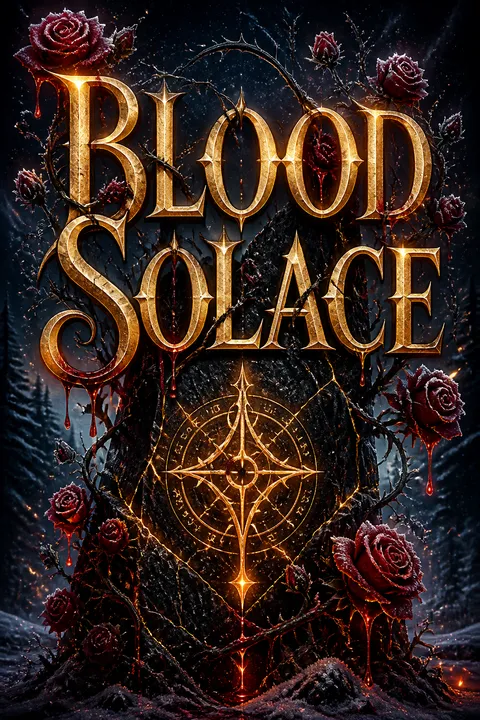


Plot Summary
Migration Without a Beacon
At the Autumn Equinox, Hesperine diplomat Lio waits above the northern capital for Tenebra’s Summit Beacon, the signal that would reopen peace talks and give him a reason to return to Cassia. No fire appears. For six months he has lived apart from her, filling a scroll with evidence of her secret work against her tyrant father, King Lucis.
Only now does he understand that his misery is not ordinary longing: Cassia is his Grace, the one person whose blood can end his Craving. His uncle Argyros finds him keeping watch and urges him back to his duties. Lio finally admits he wants to return to Tenebra, exposing how thoroughly love has divided his loyalty to diplomacy and home.
Lio’s opening crisis makes political distance bodily. He cannot treat Tenebra as a diplomatic question because Cassia’s danger and his own hunger have made the conflict intimate. His scroll of her deeds is both a record and a substitute for contact, a way of turning helplessness into attention. The absent beacon removes the official route back to her, forcing him to confront the difference between a duty he can perform and a person he cannot bear to abandon.
Weddings Replace Peace
The Queens’ Master Envoys, Basir and Kumeta, confirm that Cordium is mobilizing for war and that Lucis intends to cooperate with its mages rather than renew the Oath with Orthros. Their reports bring worse news: the king will allow popular young lord Flavian to ask Cassia for the Autumn Greeting dance, a public promise of marriage. Lio’s hope for a new Summit collapses.
Prince Rudhira rejects Lio’s request to join the field, fearing for his young Ritual son, and urges him to continue training at home. Alone, Lio tries to quiet the Craving with deer blood, but his body rejects it. He weeps in the snow, then forces himself toward the training ring, knowing he cannot help Cassia by simply wishing himself across the border.
The threat arrives through two institutions that make private life political: the royal marriage market and the religious orders preparing war. Cassia’s possible marriage is frightening not only because Lio loves her, but because he knows Lucis treats daughters as instruments of rule. His physical collapse also exposes a mismatch between Hesperine expectations of immortal time and a mortal woman’s limited safety. Lio must decide whether patience is care or merely a respectable name for inaction.
The Secret Leaves Lio
Mak and Lyros, Lio’s Trial brothers and fellow Stewards, find him injured after he demands a punishing match. When they recognize the symptoms of the Craving, Lio finally tells them that Cassia is his Grace and that he left her in Tenebra without understanding what their bond meant. He explains how she helped expose Dalos’s assassination plot and save the Eriphite children.
His friends agree to guard the secret, though they fear his months of withdrawal will become fatal. At home, Lio tells his parents the truth. They welcome Cassia as family and offer him their blood, but he asks them to wait until the Autumn Greeting reveals whether she truly needs rescue. Zoe, the traumatized child he brought from Tenebra, remains his reason to endure.
Confession changes Lio’s isolation into shared responsibility, but it does not solve the ethical problem. His friends and parents can ease his suffering, yet none can decide whether intervention would protect Cassia or erase her agency. Zoe sharpens that dilemma: Lio left Tenebra partly to give a child a safe childhood, and he fears that returning to save one person could endanger many. The section links care to restraint while showing that restraint can become its own form of harm.
The Shrine Burns
While Lio suffers in Orthros, Cassia secretly listens from inside Lucis’s hearth as he bargains with Cordium. She has been using his own plans and the free lords’ fears to delay a war, but the arrival of Dexion Chrysanthos, Dalos’s more politically skilled Aithourian rival, convinces her that delay will not be enough.
When Chrysanthos discovers an ancient shrine of Hespera on the palace grounds, Cassia runs there with her liegehound, Knight. She cannot save the roses, so she pries out the shrine’s glyph stone and hides with it beneath an ash tree. Blood and Will awaken its protective shadow, concealing her from the searching mages. After they burn the shrine, she carries the stone into Solorum’s secret passages.
Cassia’s resistance depends on reading power where others see ordinary details: a land grant, a king’s private conversation, a flower garden. The shrine’s destruction makes the cost of her strategy physical, while the relic preserves something the fire cannot erase. Her use of blood does not make her a conventional mage; it reveals a capacity for action that official categories have excluded. The moment turns her secrecy from mere camouflage into a relationship with inherited memory and sacred protection.
Solia’s Dress, Cassia’s Choice
Lucis tells Cassia she is already promised to Flavian, then orders Knight confined so he cannot accompany her to the festival. Cassia wears the golden gown her sister Solia wore before her own fatal Autumn Greeting, turning the king’s reminder into an act of defiance. She accepts Flavian’s dance and performs the ritual before the court, while quietly strengthening ties with Lady Valentia and Sabina, Flavian’s true beloved.
When Flavian takes Cassia into the woods, she urges him to stop treating his bond with Sabina as disposable. He does not yet know how to answer, but Cassia has made the truth impossible to ignore. Sabina, in turn, accepts Cassia’s friendship and joins her effort to win support among the women of court.
The inherited gown carries two meanings at once: Lucis’s power to repeat the past and Cassia’s refusal to let that past dictate her response. Rather than reject the ritual outright, she uses its public stage to build alliances and protect another woman from the same machinery of male duty. Her conversation with Flavian reveals a sharp distinction between affection and entitlement. Cassia can recognize his decency while still demanding that he act responsibly.
A Summit Built by Lio
After learning Cassia danced with Flavian, Lio stops waiting for the king to reopen talks. He writes a proposal for a Solstice Summit in Orthros, where mortals and Hesperines can meet on Hesperine ground. Before the vote, he reconciles with Xandra, his former intended, and asks for her support as a royal firstblood.
At the Circle, he names Cassia as the hidden ally who has held Lucis and the mages apart, then argues that a human embassy could make war harder to sell. His parents and uncle speak in favor; Xandra, Rudhira, and finally Kassandra vote yes. Lio also admits Cassia is his Grace, then collapses from hunger before the Circle can finish responding.
Lio’s proposal turns diplomacy from a process of waiting for permission into an attempt to change what each side can imagine. He does not conceal his personal stake, but places it beside a political argument rather than disguising it as neutrality. His reconciliation with Xandra also matters: he learns that respect means seeing people as capable, not putting them on pedestals. The vote makes his risk collective. Orthros can no longer claim that safety is simply the absence of contact.
The King Sends Cassia
The Queens approve Lio’s proposal, and their beacon invites a Tenebran embassy to Orthros. Before the delegation leaves, Cassia spies on Chrysanthos as he prepares to conceal his power through essential displacement, a ritual performed by Gift Collector Skleros.
Skleros transfers most of Chrysanthos’s magic into a prisoner and uses the young mage Tychon as a channel. Cassia also learns that the king plans to use heart hunters against Hesperines and their human allies.
Lucis then accepts the invitation but names Cassia as his representative, calculating that she is expendable. Instead, she welcomes the assignment. She expands the journey from the king’s small official party to a much larger delegation by spreading word of the invitation across Tenebra.
The invitation is both an opening and a trap. Lucis believes he can send Cassia into danger while using the journey to advance his own aims; Cassia sees a passage into the one place where he cannot command her. Skleros’s ritual complicates the usual categories of strength and visibility: the enemy can hide its power by relocating it into another body. The episode prepares the later battle while showing that political access can be seized from an opponent’s apparent generosity.
Buried at the Border
Near the border, heart hunters trigger an avalanche against the fifty-six travelers. Cassia is buried, but Knight digs her free before the hunters surround them and seize him. Lio reaches her in time, using his mind magic to turn the attackers’ fears against them and control a vast force of hunters and dogs. The enemy mage of dreams abruptly destroys the attackers’ minds to prevent Lio identifying him.
Lio collapses from the magical strain, unable to tell whether he caused the deaths. The Stand rescues the survivors, while Lio carries Cassia across the ward to Waystar and then leaves her with healers, afraid his hunger will make him dangerous. He later frees Knight from a magical restraint and returns him to Cassia.
The rescue reverses the expected roles: Cassia has spent months protecting Hesperines, but now Lio’s power carries her across the border. Yet victory does not feel clean to him. His ability to enter hundreds of minds grants tactical control while exposing him to the moral horror of lives ending from within. The unanswered question of responsibility makes restraint more difficult than combat. Cassia survives the ambush, but Lio’s self-trust becomes the next danger.
The Hunger Breaks
At Waystar, Cassia gives the Stand intelligence on Chrysanthos, Tychon, Eudias, and Skleros, while the Hesperines collect the embassy’s weapons. Lio, convinced he may have killed hundreds, asks Mak and Lyros to bind his Will with blood shackles so he cannot feed on Cassia before she chooses it. Once they reach Selas, he and Cassia finally meet in private.
She reminds him of their promise to speak honestly, and he admits his fear and months of deprivation. Cassia offers her blood. Their reunion restores his strength, though she faints from pleasure and the force of his healing. When she wakes, Lio makes clear that he wants her freely, not as someone trapped by his need.
The blood shackles make consent concrete rather than sentimental. Lio knows that love does not automatically neutralize hunger or power, so he asks his friends to restrict his choices until Cassia acts. Her reassurance then restores more than his body: it lets him accept care without treating his need as a moral failure. Their reunion is not a return to the past unchanged. They must build a form of intimacy capable of holding both desire and fear.
The Harbor of Hespera
During the voyage to Selas, Cassia and Lio resume their private closeness while discussing the politics awaiting them. At Harbor, she sees the capital’s lights, its statues of the founders, and the Hesperines’ history beyond the hostile stories told in Tenebra. Lio introduces her to his parents and the elders, while Chrysanthos poses as a harmless Tenebran mage.
Queen Alea later reveals herself privately and recognizes that Cassia carries a living Sanctuary ward, awakened from the stolen shrine’s glyph stone and strengthened by Lio’s blood. The relic now protects Cassia from the mages’ detection. Alea tells her that the shrine’s long-dead keeper, Makaria, is still saving lives through the ward Cassia carries.
Orthros is not merely a refuge from Tenebra; it is a counter-history made visible in architecture, ritual, and ordinary hospitality. Cassia’s arrival lets her test whether the people she has defended will recognize her as more than a useful mortal. The glyph shard connects her political choices to a much older lineage of resistance, without making her power a borrowed identity. She is welcomed because of what she has done, while the ward gives her a new form of protection she herself helped awaken.
The Departure Threat
At a private meeting of Orthros’s leaders, Cassia and Lio begin planning the Solstice Summit and weighing the motives of the Tenebran lords. The First Prince, Rudhira, arrives and reveals that the Queens have considered the Departure, a permanent withdrawal of every Hesperine from Tenebra. Cassia understands what that would mean for abandoned children and the dying who rely on Hesperine mercy.
Rudhira also reveals his hidden life as Hold Lord Justinian, who has used an eastern stronghold to protect the last Hesperite community. Cassia warns that Chrysanthos’s witch hunt could endanger them. The leaders make her a working partner, seeking her knowledge of Tenebra’s factions and the mages’ concealed abilities.
The Departure gives the peace effort a human cost beyond Lio and Cassia’s relationship. It would save Hesperines by abandoning the very people their sacred practices exist to protect. Rudhira’s double life also complicates the boundary between diplomacy and covert action: the Hesperines have survived by working within Tenebra, not by remaining untouched by it. Cassia’s knowledge is treated as expertise, but the meeting also risks asking her to carry another impossible burden.
A Brave Gardener Arrives
Lio brings Cassia to House Komnena’s barn, where his young adopted sister Zoe lives among her two goats. Zoe recognizes Cassia as the Brave Gardener from Lio’s bedtime stories and gives her a betony seedling to begin a new garden. Cassia, who has never been allowed to hold a child, sits with Zoe and hears her speak of Solia, the sister Cassia lost.
Together they let Knight meet the child and her goats; the dangerous hound accepts Zoe as someone to protect. Later, Cassia tells Zoe a story about the first garden she planted for Solia. The child falls asleep in Cassia’s lap, creating a new bond between the woman who saved her and the family that gave her a home.
This quiet meeting gives Cassia something her victories in court could not: a relationship with one of the lives those victories preserved. Zoe’s admiration might have made Cassia into a distant legend, but the seedling and shared story turn that admiration into mutual care. The scene also lets Cassia remember Solia without being alone in the memory. Her political work has protected a child; now that child helps her imagine kinship beyond grief.
Three Names in Memory
The First Prince asks Cassia to revisit the night she tried to recover Solia’s body after the rebellion. With Lio guiding her through the memory and shaping her recollections into an illusion, Cassia recalls details she could not previously retrieve. She remembers her rescuers calling one another by name: Alkaios, Nephalea, and Iskhyra.
Rudhira recognizes them as Hesperines errant who have worked in Tenebra for years, and recent reports place Alkaios near the southern border. The revelation gives the Prince’s Charge a trail to follow and gives Cassia hope that the people who saved her as a child may still be alive. Sharing the memory also changes its weight: Lio and the Hesperines help her face it without carrying it alone.
The memory work turns intimacy into a practical form of investigation. Lio does not take control of Cassia’s recollection; he accompanies her while she supplies the details, allowing protection and agency to coexist. The names transform anonymous rescuers into people the Charge can seek, while the act of remembering changes Cassia’s relation to the trauma itself. What once appeared only as a wound now also contains evidence, gratitude, and the possibility of reunion.
A Home Still Unfinished
After the family gathering, Lio takes Cassia through his unfinished tower, showing her the quiet places where he worked and the window seat where he endured the months apart. She brings rose seeds from the shrine and begins imagining how plants might fill the empty shelves. Lio admits he has no proper bed because he had not expected to build a life alone after initiation.
In the tower’s open loft, he shows her two stained-glass windows: one for their roses, one for her betony. Cassia recognizes the gift as an invitation to share his future. She accepts, then resolves that the Summit must win lasting peace, not just for their kingdoms, but for the life and family she now wants beside him.
The unfinished tower makes the ending an offer rather than a completed domestic resolution. Cassia’s seeds and Lio’s empty shelves are practical signs of a future neither can create alone. The windows transform private longing into shared craft: his glass holds her symbols, while her plants will eventually occupy his space. Her decision to stay is not coerced by his dependence or by immediate danger. It emerges as a desire of her own, even as the political struggle remains unresolved.
Analysis
Blood Solace makes political conflict intimate without reducing it to romance. Cassia and Lio must negotiate not only between Tenebra and Orthros, but between protection and autonomy. Lio’s first instinct is to rescue Cassia from a danger she has chosen to confront; his growth comes when he constructs a route that lets her reach him without surrendering her cause. Cassia, meanwhile, learns that accepting care need not mean yielding control. Her decisions remain active even when she rests in another person’s arms. The book’s most revealing contrast is between systems that call themselves protective and the people they actually endanger. Lucis invokes order while sacrificing his daughter and subjects. The Mage Orders claim religious authority while hunting those who offer refuge, healing, and mercy. Orthros is not presented as flawless, but its laws are judged by whether they preserve choice and shelter the vulnerable. The threatened Departure is especially painful because it would protect Hesperines by abandoning Hesperites and the mortal communities that rely on them.
Memory also functions as political evidence. Cassia’s recollection of the Hesperines who saved her sister eventually gives the Charge names to pursue, while her grief becomes easier to bear when shared rather than suppressed. Her stolen shrine stone makes the same argument materially: traditions can survive their destruction when someone carries their meaning forward.
The ending offers no settled peace. Instead, Lio’s unfinished tower, Cassia’s rose seeds, and the new invitation to share a home make the future tangible but conditional. Their private happiness is not an escape from politics. It gives them something specific to protect as the Solstice Summit begins.
Review Summary
Blood Solace receives mixed reviews, averaging 4.02 stars. Fans praise the intricate world-building, political intrigue, and the deeply romantic connection between Lio and Cassia. Many adore the Hesperine culture and found-family dynamics. Critics, however, find the pacing painfully slow, noting that little plot actually occurs, with Lio's prolonged suffering feeling repetitive. Several readers DNF'd or abandoned the series, citing excessive fluff and an overly perfect Hesperine society. The spicy scenes, particularly one involving feet, divided readers considerably.
Characters
Cassia
The hidden royal dissenterCassia is King Lucis’s illegitimate daughter, a perceptive gardener who has learned to survive by reading people, managing appearances, and turning scraps of information into leverage. Solia’s murder and the king’s cruelty sharpen her suspicion, but they do not extinguish her capacity for attachment. She protects others through practical acts, from aiding an abused servant to helping endangered children. Her restraint is strategic rather than coldness: she often hides feeling because the wrong person could use it against her. What she wants is not simply escape, but a world in which justice does not require her to become indifferent.
Lio
The diplomat bound by loveLio is a young Hesperine ambassador, glassmaker, and powerful mind mage raised to value diplomacy and careful service. His first experience of mortal suffering in Tenebra unsettles the comfortable distance he once kept between Orthros and the world beyond its ward. He is conscientious to the point of self-reproach, often mistaking vulnerability for failure and trying to protect others by withholding his own distress. His humor and tenderness coexist with fierce loyalty. Lio’s central struggle is to act without confusing love with control, and to trust that others can share the moral weight he carries.
King Lucis
Tenebra’s controlling kingLucis rules through force, selective favors, surveillance, and the conviction that order matters more than individual lives. He treats loyalty as something to purchase or compel, including within his own household. His political skill is real, which makes his cruelty more dangerous: he understands how to exploit divisions among nobles and how to use religious authority to strengthen the crown. Cassia knows his habits well enough to anticipate many of his moves, but she cannot assume that his attention has turned away from her.
Zoe
The rescued child finding safetyZoe is a young Eriphite child brought to Orthros after surviving hunger, isolation, and the loss of her mortal family. She is shy with unfamiliar people and often clings to familiar routines, her mantle, and her two goats. Having been forced to care for other children too early, she worries about their safety even when adults have taken responsibility. Her fascination with Lio’s stories gives her a way to understand the world at a safe distance. She needs patience rather than pressure, and responds to kindness through small, deliberate acts of trust.
Argyros
Lio’s mentor and uncleArgyros is an elder Hesperine diplomat and one of Orthros’s most accomplished mind mages. As Lio’s uncle and mentor, he expects discipline but is not indifferent to the cost of his nephew’s ambition. His reserve can make him difficult to read, and his long experience has taught him that even good intentions may have disastrous consequences. He values peace without mistaking it for passivity, and his relationship with Lio carries the intimacy of a lifelong teacher and the strain of two people who do not always agree about what protection requires.
Komnena
The healer who welcomes newcomersKomnena is Lio’s mother, a respected mind healer and the Queens’ Chamberlain. She helps newcomers recover and settle into life in Orthros, drawing on her own difficult transition from mortal life. Her warmth is practical: she notices discomfort, offers food, and creates spaces where people can speak without being hurried. She is protective of Lio, but respects his capacity to make consequential choices. Her patience allows both Zoe and Cassia to approach family life at their own pace.
Apollon
Lio’s powerful, patient fatherApollon is a founder of Orthros, a master builder, and a former warrior whose formidable strength is matched by gentleness toward his family. He waited a long time for a child and sees fatherhood as a greater honor than political status. His protection is generous, sometimes so immediate that Lio must insist on making his own decisions. Apollon’s long history in conflict gives him a sober understanding of violence, while his home and stained glass reveal his desire to make beauty that can outlast it.
Rudhira
The First Prince and field commanderRudhira is the eldest child of the Queens and commander of the Prince’s Charge, the Hesperines who work beyond Orthros. A healer and experienced leader, he takes responsibility for missing Hesperines and the communities that depend on them. He is cautious with young warriors, including Lio, but does not confuse caution with cowardice. His judgment carries the burden of long service, and he understands the cost of making decisions when the available choices all involve risk.
Mak
Lio’s candid warrior cousinMak is Lio’s cousin, Trial brother, and a Steward in the Stand. He is a powerful fighter with an open, teasing manner that can quickly give way to anger when someone he loves is in danger. His directness helps Lio recognize when self-sacrifice has become self-neglect. Mak’s bond with Lyros gives him a secure understanding of devotion, but he also carries unresolved worry about his missing sister.
Lyros
Lio’s perceptive Trial brotherLyros is a skilled warder and fighter, Lio’s Trial brother, and Mak’s Grace. He is observant, measured, and often able to name an emotional problem without shaming the person caught in it. His calm complements Mak’s bluntness, and together they provide Lio with dependable friendship. Lyros respects individual choice but understands that freedom does not require facing every danger alone.
Xandra
Lio’s honest royal friendXandra is a royal firstblood, scholar, and sericulturalist who raises silkworms and approaches her work with meticulous curiosity. She and Lio once believed they might be suited to one another, but their friendship is more durable than that expectation. Xandra is emotionally forceful and dislikes being treated as fragile or idealized. Her willingness to challenge Lio helps him understand that respect means trusting a friend’s strength, not trying to protect them from every possible hurt.
Hippolyta
The Guardian of OrthrosHippolyta is Orthros’s legendary warrior and the founder of its defensive Stand. She is compact, disciplined, and far more formidable than her size suggests. Her authority comes from long experience rather than display, and she expects her Stewards to accept risk in service of others. As Argyros’s Grace and the mother of children who have served Abroad, she understands the private cost of Hesperine duty.
Chrysanthos
The Aithourian political threatChrysanthos is a high-ranking war mage from the Aithourian Circle, trained in fire and political maneuvering. Unlike a blunt battlefield aggressor, he studies how to make institutions serve his aims and presents coercion as a reasonable bargain. His rivalry with Dalos has sharpened his ambition, and he is keenly aware of the value of reputation. Chrysanthos regards Hesperines as enemies to be understood and defeated, not neighbors with whom peace might be possible.
Flavian
The king’s celebrated young lordFlavian is the popular heir of Segetia, admired for charm, athleticism, and loyalty to King Lucis. He is accustomed to easing tension with humor and to being regarded as a desirable match. Beneath the reputation, he is a man shaped by family obligation and political service, sometimes too willing to let others define what he must do. Cassia recognizes both his decency and the harm caused when good intentions become an excuse for avoiding difficult responsibility.
Sabina
Hadria’s guarded heirSabina is Lord Hadrian’s daughter and heir, a proud, perceptive woman raised amid a generations-long feud with Segetia. She has her father’s temper and her mother’s political intelligence, but she is also capable of loyalty and fairness. Her feelings for Flavian are complicated by the expectations placed on both their houses. Cassia sees in Sabina a potential ally, not a rival, and offers the kind of honesty that court life rarely permits.
Perita
Cassia’s loyal confidantePerita is Cassia’s handmaiden and closest human friend, married to Callen. Her warmth is paired with a keen eye for changes in Cassia’s behavior, clothing, and mood. She has experienced vulnerability to powerful men herself, so her loyalty is not abstract. Perita protects Cassia through practical assistance and frank counsel, while preserving her own dignity and future. Her trust gives Cassia a rare place to speak more honestly than court custom allows.
Callen
Cassia’s steadfast bodyguardCallen is Perita’s husband and Cassia’s trusted bodyguard. Formerly a capable soldier, he carries a lasting leg injury from imprisonment after defending himself against an abusive guard. He is proud, dutiful, and protective, sometimes pushing himself beyond what his injury permits. His loyalty to Cassia is grounded in gratitude and mutual respect, not mere service.
Basir
Orthros’s veteran master envoyBasir is a powerful Hesperine mind mage and one of Orthros’s senior Master Envoys. He and his Grace, Kumeta, gather information abroad while appearing to serve as ordinary diplomats. His severity reflects centuries of work in dangerous places, not indifference. Basir values preparation and precision, and his knowledge gives Orthros a clearer view of threats its leaders cannot observe directly.
Kumeta
The envoys’ perceptive strategistKumeta is a light mage, veteran diplomat, and Basir’s Grace. She is frank, observant, and willing to puncture the assumptions of both friends and political rivals. Her work as a Master Envoy places her close to dangerous events, while her devotion to Basir gives her a private tenderness beneath her sharp public manner. Together, the two serve as Orthros’s eyes and ears beyond the ward.
Skleros
The armed necromancerSkleros is a Tenebran-born necromancer affiliated with the Order of Hypnos and a renowned Gift Collector. He combines magic with blades, tools, and alchemical substances, exploiting gaps in the Orders’ rules about mages using weapons. He is practical, secretive, and confident in his ability to survive encounters that would kill other people. His presence in the embassy makes him a threat distinct from the Aithourian war mages.
Eudias
The uneasy apprentice mageEudias is a young mage trained in weather magic and attached to the Aithourian Circle. Quiet and visibly uncomfortable around his superiors, he is often treated as a tool rather than a colleague. His practical knowledge of farming hints at a life and skill set beyond war, though the Order’s demands limit how freely he can pursue either.
Plot Devices
The Equinox Oath and Beacon
Peace’s visible signalThe old treaty governs how Hesperines and Tenebrans may coexist, while the Summit Beacon signals the king’s willingness to renew it. At the opening, its absence tells Lio that Lucis is choosing Cordium over negotiations. Later, the Hesperines reverse the expected arrangement by lighting their own signal and inviting a Tenebran embassy into Orthros. The Oath therefore functions as both a legal safeguard and a measure of political intent. Its possible replacement by a Solstice Oath gives the story a concrete diplomatic goal, while the threat of the Departure raises the cost of failure.
Grace and the Craving
Love made bodily necessaryA Grace is a Hesperine bond that allows two partners to sustain one another, but separation after drinking one another’s blood produces the Craving. Lio does not recognize his bond with Cassia until he has returned to Orthros, where animal blood cannot ease his symptoms. This makes romance inseparable from physical need, but the story does not treat need as permission. Lio’s friends place blood shackles on him so he cannot feed before Cassia chooses him again. The device presses the lovers toward reunion while forcing them to distinguish desire, dependence, and consent.
The Glyph Stone
A sanctuary carried forwardThe glyph stone marks the ancient shrine of Hespera on the palace grounds, where Cassia and Lio once met. When Chrysanthos burns the shrine, Cassia saves the stone and discovers that blood and Will can awaken its protective magic. She carries it through Solorum and into Orthros, where a shard becomes a wearable Sanctuary ward. The relic protects her from magical detection and preserves the shrine’s connection to its former keeper, Makaria. It gives Cassia a defense she has made herself, while carrying the memory of earlier Hesperites who risked their lives for others.
The Solstice Summit
An invitation into dangerLio’s proposal invites Tenebran leaders and mages to Orthros instead of waiting for King Lucis to reconvene the Equinox Summit. The plan aims to humanize the Hesperines, encourage trade, delay war, and bring Cordian mages within reach of Orthros’s defenses. It is risky by design: the guests include hostile war mages, and the Hesperines must protect them while learning how their magic is concealed. For Cassia, the invitation also creates a route to Lio without requiring her to abandon her work in Tenebra. The summit turns a diplomatic meeting into a test of whether contact can interrupt inherited hatred.
The Blood Union
Emotion shared as evidenceHesperines sense the emotions of living creatures through the Blood Union, and Graced partners can experience an even more intimate connection. The Union lets characters detect fear, affection, and strain that spoken words conceal, so it changes how secrecy works in the story. Lio can feel Cassia’s distress across distance, and she can read his care through his actions even without sharing the magic. At the same time, the Union does not erase misunderstanding: Lio still misreads Cassia’s needs, and Cassia cannot know his private guilt. The device makes empathy powerful but incomplete, requiring characters to speak as well as sense.
Blood Grace Series

About the Author
Other books by Vela Roth


Download PDF
Download EPUB
.epub digital book format is ideal for reading ebooks on phones, tablets, and e-readers.








